Conservation of Resilient Biodiversity
through Propagation, Dissemination and Education
Sacred Succulents is conservation oriented mail-order nursery & seedbank,
private research garden and biopreserve,
located in the hills of western Sonoma County, California.
◊
Website updated: 10/3/26
◊
Important Note:
Today is the Final Day to order plants to ship this year!
10/3 is the last day to confirm plant/cutting orders to ship in 2026;
[Email to confirm orders: benkamm@monitor.net]
Plant orders placed after this date will be reserved to ship spring 2027
Seed & book orders will continue to ship year round in batches.
◊
My friend, the author John Crowley, passed away at 83 the morning of August 8th. I’m told it was peaceful… John was a writer capable of astounding emotional acuity and imagination, he enriched the world immeasurably with his uncanny speculative fiction and insightful essays. John’s friendship the past quarter century meant a great deal to me. His writing affected me like no others’…
I’ve written something about him on Substack, see –
https://benkamm.substack.com/p/the-living-heart-of-the-dead
Important Update on the Nursery Renovations:
9/11/26 – Despite a seeming constant obstacle-course of challenges and thwarted plans this year, we’ve finally begun to make some progress with the crucial nursery renovations. Still, we have far to go and with the extreme El Niño imminent it’s now looking like the renovations will dominate the rest of 2026 for us and into 2027. We must ask for you to bear with us during our ongoing efforts to revitalize the nursery.
Your patronage and donations continue to be vital to our endeavors.
What this means for Orders:
All orders are most welcome!
We continue to list exciting new plants and accept your orders,
just know we’re operating at reduced capacity as we focus on critical renovations.
Shipping will remain intermittent as we continue to mail orders in batches every few weeks.
October 3 is the last day to place plant/cutting orders to ship in 2026.
Gratitude for your patience & understanding as we tackle these massive endeavors!
Like everything in 2026, the cost of materials for the renovations has shot up significantly, far higher than my project estimates last year… we currently need to raise near $8–10K more to finish the first phase of irrigation work throughout the nursery (this includes purchase & installation of the rest of the pricey hydro-trays) and fortify everything for this El Niño winter..
We can’t do this without you!
Please keep the Tax-Deductible Donations coming — every little bit helps!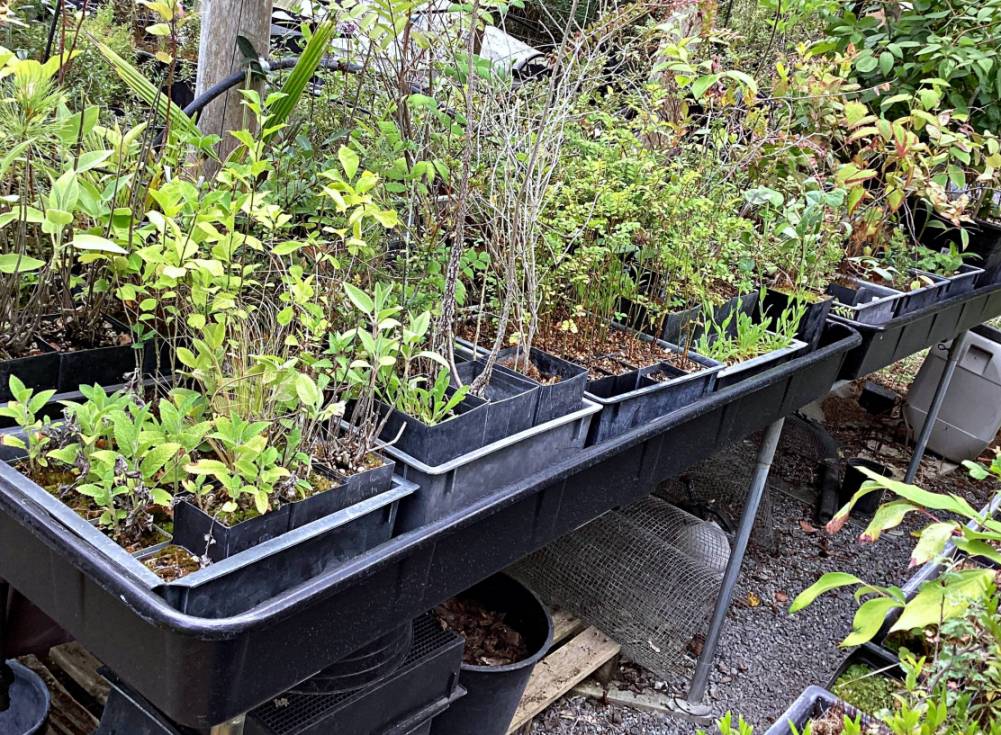 Newly installed hydro-trays for irrigation
We may be slow to respond, but inquiries can be sent to benkamm@monitor.net
◊
Help Fund Nursery & Garden Renovations Crucial to Our Future
We seek your support funding extensive renovations to the aging infrastructure of our nursery & gardens—endeavors integral to preserving the high diversity of rare & endangered plants here in the face of ongoing losses from increasingly erratic climatic shifts.
Click here for tax-deductible donations
via our new 501c3 fiscal-sponsor, Panax.
◊
“It’s often passionate individuals that are responsible for stewardship of biodiversity and Ben has dedicated his life’s work to sacred succulent diversity. Contribute your support to keep this treasured living collection alive.”
— Susan Leopold, Ph.D., Director of United Plant Savers, Founder of Panax
♥
To receive our periodic emails (usually every 4–8 weeks) listing new plants,
sales & auction fundraisers, news from our gardens, greenhouses, research & travels, sign up at –
http://lists.sonic.net/mailman/listinfo/sacredsucculents
For those interested in our idiosyncratic writing and musing on all manner of topics beyond the botanical, check out and subscribe for free to our new Substack: https://benkamm.substack.com/about
__
The SPECIMEN PLANT LIST is updated for August:
Cactaceae
[Trichocereus]
Other Succulents & Xerophytes
Andean Ethnobotanicals
Neotropical Blueberries
Other Beneficial Plants
Specimen Seed
NOTE: Plant Orders placed after 10/3/26 will ship spring 2027.
___
Also see our Andean Tubers & Other Crops page for current offerings
___
Select New Books and Rare & Used Editions available
___
Last chance at Botanical Products
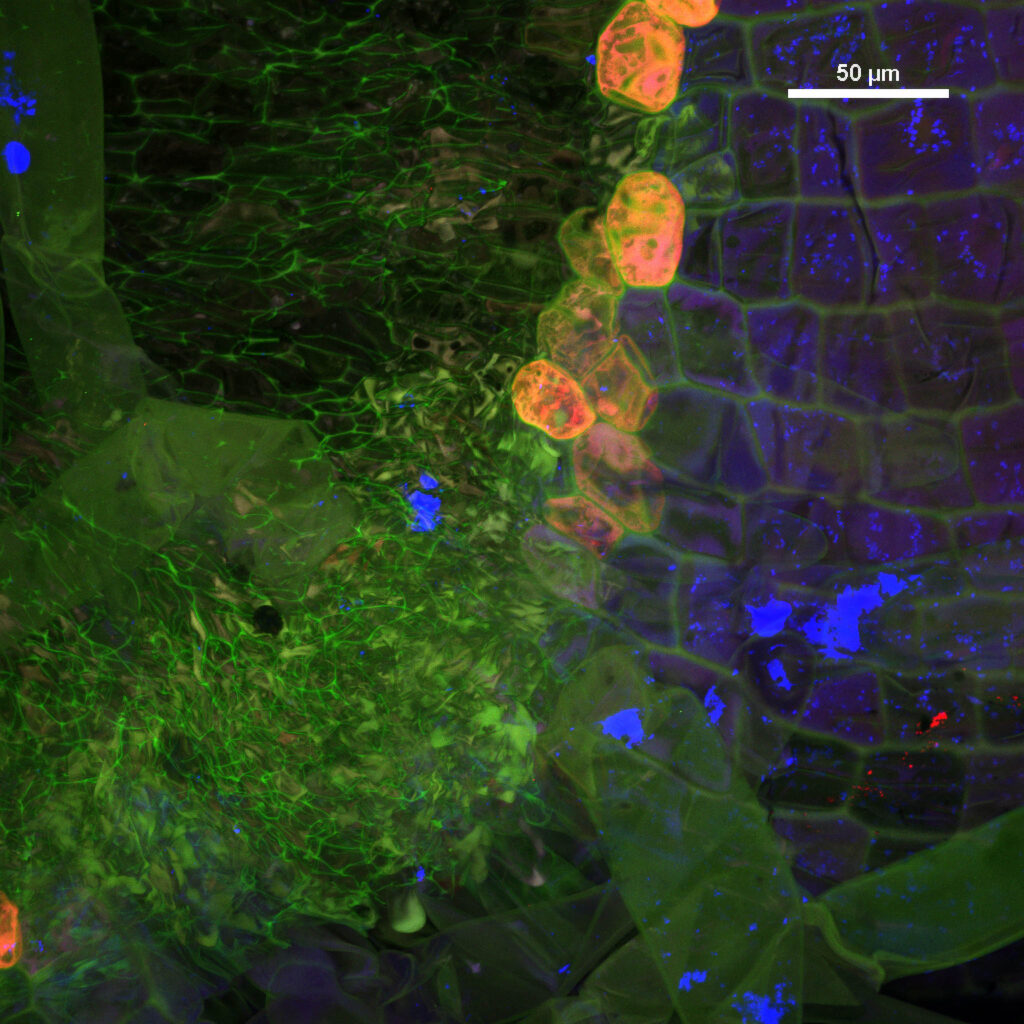 ↑ Trichocereus pachanoi scanned at St. Lawrence University’s Microscopy & Imagery Center, from Microcosms: A Homage to Sacred Plants of the Americas (https://www.microcosmssacredplants.org/), used with permission of Jill Pflugheber & Steven F. White, © 2023. ↓
Read my commentary on the Microcosms project:
https://www.microcosmssacredplants.org/commentary/ben-kamm/
Order the New Book! ___
___
“Sacred Succulents is… a preserve and repository of many rare species… It is also the lifelong passion project of ethnobotanist Ben Kamm, who has devoted decades to locating, preserving, propagating and distributing rare plants… This fine work is not supported by an institution, or any pool of wealth. It is supported by independent folks who care about preserving biodiversity, and the continuity of knowledge that must attend these species. A donation to help Sacred Succulents upgrade their facility is a vote for carrying these plants and our knowledge of them into the future.”
—Kat Harrison, Ethnobotanist, Co-Founder and Director of Botanical Dimensions
♥
A bit about Sacred Succulents:
A small family-run business, Sacred Succulents was founded in 1997, born from our love of plants and a calling to the sacred duty of their conservation through propagation, dissemination and education. We are involved with the preservation of a perpetually increasing diversity of plants at our biosanctuary here in northern California. We have long been the premier nursery for Trichocereus cactus offerings, and while our early focus was succulents and xerophytes, our international field work, ethnobotanical research, and the ever growing necessity of species sustentation has us propagating a cornucopia of unusual and wonderful beneficial plants from remote and immediate regions of our fertile planet. Many plants we steward are seriously endangered in habitat, we offer them to you in the hopes of the preservation of these species.
We hold the vision that the self-destructive ways of the dominant world cultures may ultimately provide fertile compost for the blossoming of novel nurturing cultures… and that the diversity of plants we’ve helped bank in suburban yards, private collections and botanical gardens, may be utilized to repopulate what remains of the habitats in which their ancestors once evolved, while new suitable habitats are established around the world. We feel that involvement in such endeavors is intrinsic to human reciprocity with nature. We are dedicated to creating fertility watersheds and align ourselves with the generative powers of our planet. Widespread dispersal of plants along with propagation on an individual level is one of the most viable means of helping protect and “back-up” wild populations, while assuring the evolutionary expansion of these botanical wonders.
◊
~ We strive toward maximizing biodiversity in our gardens and offerings ~
~ Plant diversity is essential to resiliency during times of adversity ~
~ Gardens & greenhouses are bio-banks for the future ~
◊
Collectively, we have introduced hundreds of new plants into cultivation,
hopefully safeguarding some from extinction and cultural loss.
To assure distribution of the highest levels of genetic diversity, the majority of our plants are seed grown.
◊
Outside certain botanical gardens, we steward one of the foremost collections of Andean plants in North America
—this includes some of the leading collections of Bomarea, Echeveria, Nicotiana, Peperomia, Puya, Trichocereus,
Andean forest species, Neotropical Blueberries, and Andean heirloom crops, tubers & their wild progenitors.
We also house some of the preeminent collections of Ephedra from around the world,
Burseraceae like Boswellia (Frankincense) & Bursera (Copal, Palo Santo),
Asian Huckleberries (Agapetes, Gaultheria, Vaccinium), obscure medicinals & edibles, and more.
♦
We all have the strange grace to live in this time of climatic change and massive biological extinction recognized to be greater than anything the biosphere has experienced in 65 million years. Plant extinctions have been estimated at a loss of nearly 2 species a day. Along with this extinction is the loss of our collective human heritage, as the cultures, languages, dreams and songs that were intimately woven to those species disappear with them. Amongst thousands of known food plants, the world’s food supply relies on a scant dozen. We must do much more than save heirloom varieties and landraces of the major crops. We encourage you to relearn the forgotten indigenous foods and medicines of your region and of your lineage. Where habitat still exists, these are often disappearing from the fields and forests for lack of tending. Each and every one of us are co-creators of our ecosystems. Experiment with strange and rare edible plants, expand your palate. These are the seeds of true health and food security.
Whether you have a bright window in a city apartment, a suburban house with a yard, or access to acres of land, you can take part in the nurturing of endangered plants, propagate them and pass along the seeds, starts, attendant aspirations and ethnobotanical knowledge to friends. Realize the power we each have to assist our vanishing flora, acting as conservationists through a simple and joyful role as gardeners, horticulturalists, admirers of plants. These small endeavors help to put us in resonance with the viridian heartbeat of the biosphere, a reminder of earthly things like soil, weather and mooncycles in a world increasingly adrift in the navel gaze of cyberspace. Attention to seasonal gifts such as spring flowers can refresh our wonder in the delicate fortitude of life in all its myriad forms. There is so much life and potential to celebrate all around us!
♦
As a small family endeavor, your support of our work is vital and goes a long way!
♦
Sacred Succulents unique work has been recognized by numerous researchers, conservationists, and botanical gardens. To help safeguard our conservation efforts propagating rare species over the decades, we have donated or distributed hundreds of plants to botanical gardens and institutions—to name just a few: UC Berkeley Botanical Gardens (which houses the largest number of our Andean BK field accessions), the Huntington Botanical Gardens, the Seattle Spheres, the California Academy of Sciences, the New York Botanical Garden, the Parque de las Leyendas, the CSU Fullerton Greenhouses, the San Luis Obispo Botanical Gardens, the Ventura Botanical Gardens, and more.
♦
“Ben Kamm of Sacred Succulents has done great service to people and the planet through his preservation efforts… Hands-on practitioners like Ben have done more to protect plant diversity than all the governments in the world. Not only are we losing species and habitats, but are losing the rare class of dedicated plantsmen who do the important work of collecting and maintaining plants from endangered habitats. Ben has devoted his life to these plants, and we need to make sure he can continue for decades to come. Now is the time to step up and support this work!”
— David Theodoropoulos, Conservationist, Seedsman, Director of J.L. Hudson Seeds [founded 1911] since 1973
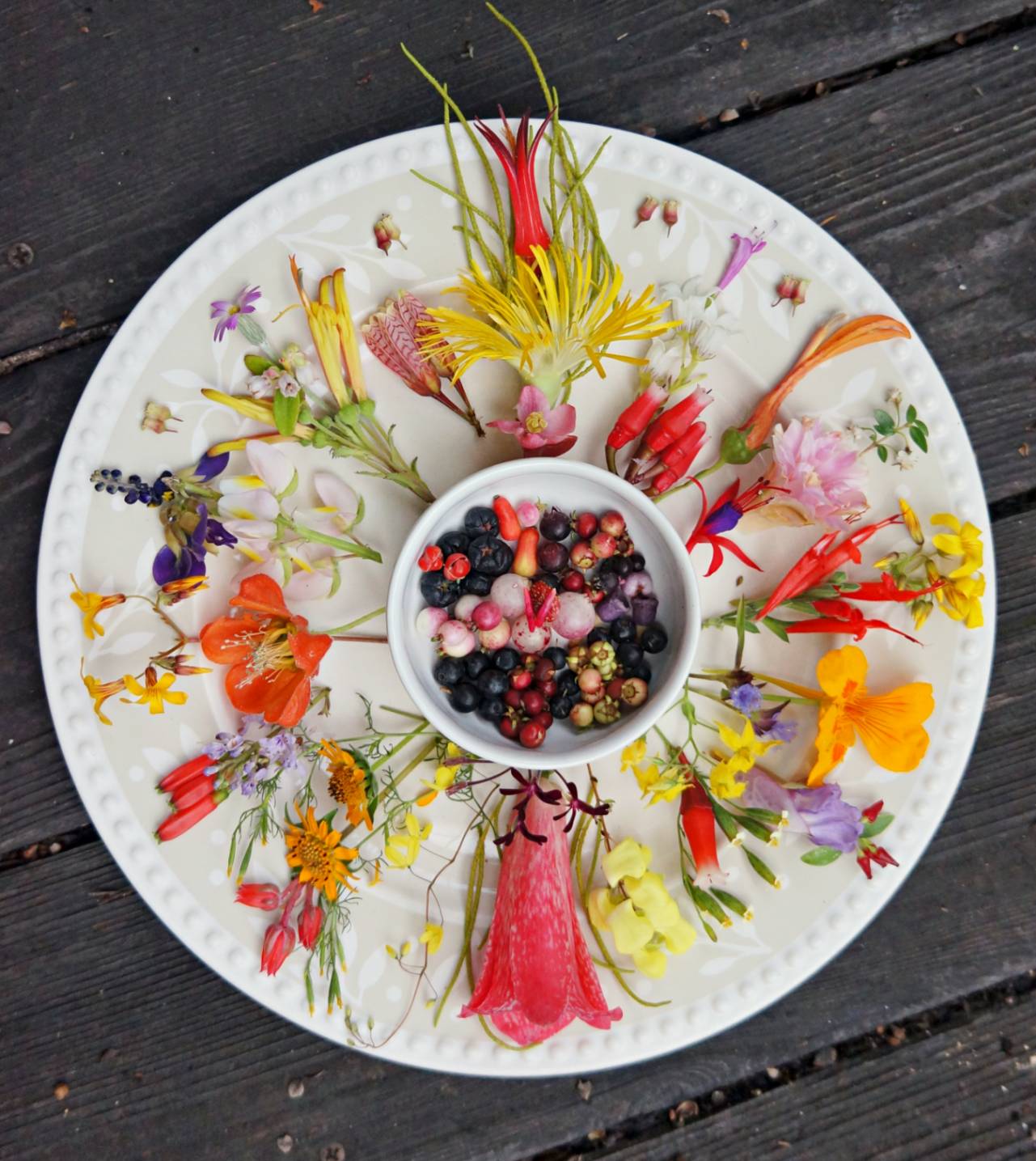
California Natives and Exotics:
I was conceived amongst the granite, pine and snowmelt of the California Sierras; born in the Central Valley as suburban sprawl and agricultural folly consumed the last fertile remnants of its once great wetlands and ancient oaken orchards; raised near the sand and shale beaches, among the cow-bit vales and volcanic hills of the Coastal Ranges. Verdant and honey colored California is the land of my birth, where I’ve always lived, but does this make me native? My maternal great-grandmother moved out west from Oklahoma, fleeing her Indian identity and seeking a better life, my grandmother and mother were born here—a classic case of bioinvasion? Over fifty years ago, my father rambled here from the East Coast and fully naturalized, but is he still an obvious exotic? Is “native” not a relative term? What scientific merit does it truly hold? We use such terms with care, for are we not all “native” to this fecund planet? Nature does not conform to such transitory simian notions of of how she should behave, or comply with our abstract ideas of geographical boundaries. California’s diverse terrain boasts 6,000+ “native” species. She has flung open her golden arms to lovingly embrace a just-as-impressive number of so called “exotics”, some long lost lovers like Ginkgo returning after millions of years in the hands of peripatetic primates. I spent my childhood wandering the central California landscapes, in perpetual romance with the land. In my youthful eyes the biologically rich groves of introduced Eucalyptus were just as sacred as the native oak forests. I’ve spent the last 3 decades exploring northern California and many native seeds have found their way home to our gardens to thrive alongside transplants and refugees from the far reaches of our rapidly changing planet.
We encourage everyone, especially those who live in the state, to experiment with growing a few of California’s plants, in particular the rare species. Try cultivating the lily family (Allium, Brodiaea, Calochortus, Camassia, Erythronium, Fritillaria, Lilium, Triteleia, etc.) not only for their incomparable blossoms, but also for their edible bulbs. Plant Perideridea and Claytonia in your vegetable garden for spring greens, Chia for the nutritious seed; Amelanchier, Vaccinium, Gaultheria, and Rubus in the perennial garden or food forest for the delicious berries; minty-Monardella and sweet-Satureja for tea; sage-scented Salvia & Artemisia, Angelica, Grindelia, etc., for medicine…
A large portion of California’s ecosystems were the result of at least ten thousand years of interaction between the land and peoples who relied directly on the local flora for food, medicine, tools, shelter, etc. From the formerly mighty oak to the humble tarweed, all were once kin of man. Though this has irrevocably changed, true sustainable conservation can only come from each of us rediscovering and maintaining meaningful relations with the ecosystems and their inhabitants around us. Scapegoating so called “exotic” plants as the cause of ecosystem loss cannot hide the fact that the true blame lies with each of us and our alienation from the land that numbs our hearts into complicity with the continual destruction of habitat from urban sprawl, industrial agriculture, server-farms for our metastasizing digital deliriums & addictions, etc., etc. These hungry ghosts of “progress” are unarguably the primary cause of biodiversity loss and extinction. We can never truly restore the indigenous landscapes the Spanish first encountered here, or all the vistas that inspired John Muir’s splendorous paper scratching, but we can plant the seeds of something new that integrates and honors California’s botanical inheritance and all the strange, fabulous species that have found a new home in this golden and green land.
♥
“California has always been a figment of its own imagination, ever struggling for identity, ever inventing itself.”
–Kevin Starr, Professor of History, University of Southern California
♥
See our Botanical Reflections page for a smattering of our writing—childhood botanical musings, our floral assessment of a remote Incan site, strange genealogy, lost friends, and pondering the fictions of taxonomy.
For those interested in our idiosyncratic writing and musing on all manner of topics beyond the botanical, check out and subscribe for free to our new Substack: https://benkamm.substack.com/about
__
Here is some of our published research:
Echeveria cerrateana a new species from Ancash, Peru
The Crassulaceae of Cusco Peru part 1: subfamily Echeverioideae
The Crassulaceae of Cusco Peru part 2: subfamily Sedoideae
Exploring the Anthropogenic Vegetation at an Ancient Incan Site [→pg 5]
♥
“In the effort to conserve biological elements of Andean culture and fragile xerophytic ecosystems, Sacred Succulents is on the cutting edge—a trend setter decades ahead of most others engaged in this kind of work. Sacred Succulents has risen to the occasion by tirelessly collecting, propagating, and distributing these botanical treasures along with collection notes about their cultural and ecological contexts. Frankly, projects like Sacred Succulents should be set up in every bioregion on the planet to help multiply and distribute local germ-plasm and knowledge. This work deserves the same level of funding and support that the moon landing and green revolution received.”
— Neil Logan, Ethnobotanist, Agroforester, Author of Legacy Legumes: Trees of Renewal and Abundance
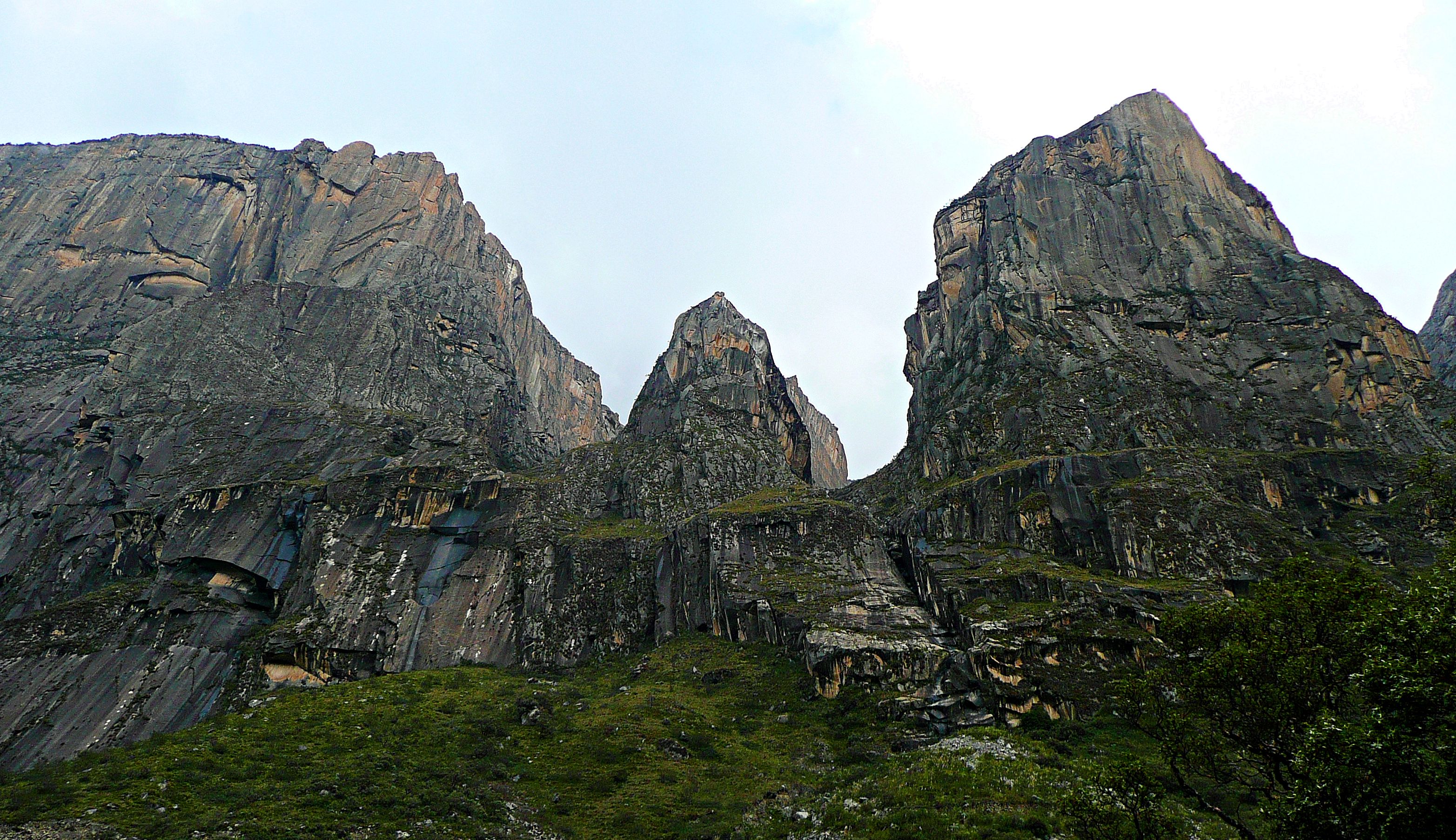 Above Polylepis forest, Lagunas de Llanganuco, Cordillera Blanca, Ancash, Peru
♣
News & Updates:
__
10/1/26
Important note regarding orders:
Date Extended! October 3 now is the last day to confirm plant/cutting orders to ship in 2026; plant orders placed after this date will be reserved to ship spring 2027.
Seed and book orders will continue to ship year round in intermittent batches.
__
8/10/26
My friend, the author John Crowley, passed away at 83 the morning of August 8th. I’m told it was peaceful… John was a writer capable of astounding emotional acuity and imagination, he enriched the world immeasurably with his uncanny speculative fiction and insightful essays. John’s friendship the past quarter century meant a great deal to me. His writing affected me like no others’… his nimble knack with language, the grace of his mellifluous prose, has encouraged me to continually cultivate empathy and enchantment with life, see splendor in the quotidian…
I’ve written something about him on Substack, see –
https://benkamm.substack.com/p/the-living-heart-of-the-dead
7/22/26
We now have copies of Microcosms: Sacred Plants of the Americas, a book to which we contributed plants, photos and writing. Order yours today!
◊
For those interested in our idiosyncratic writing and musing on all manner of topics beyond the botanical, check out and subscribe for free to our new Substack: https://benkamm.substack.com/about
Our first post is an assemblage of musings on Moby-Dick, whales, and other miscellanea written while “under the influence” of Melville’s queer book earlier this year: https://benkamm.substack.com/p/a-multifarious-maelstrom
_
Important Renovation Updates:
Despite a seeming constant obstacle-course of challenges (death, weather extremes, family, injury, etc) and thwarted plans this year, we have finally begun to make some progress with the crucial nursery renovations… which feels like a minor miracle! Still, we have far to go and it’s now looking like the renovations will dominate the rest of 2026 for us… far from ideal, we can only ask for you to bear with us during our ongoing efforts to revitalize the nursery.
Your patronage and donations continue to be vital to our endeavors.
What this means for Orders:
All orders are most welcome!
We continue to list exciting new plants and accept your orders,
just know we’re operating at reduced capacity as we focus on critical renovations.
Shipping will remain intermittent as we continue to mail orders in batches every few weeks.
Email for estimates benkamm@monitor.net
October 3 is the last day to place plant/cutting orders to ship in 2026.
Gratitude for your patience & understanding as we tackle these massive endeavors!
While propagation will be minimal this year, we already have a medley of new offerings lined up for release as we find the time to list them. Expect the web updates to be a bit slow, we’re juggling a lot right now!
Like everything in 2026, the cost of materials for the renovations has shot up significantly in recent months, far higher than my project estimates last year… we currently need to raise near $8–10K more to finish the first phase of irrigation work throughout the nursery (this includes purchase & installation of the rest of the pricey hydro-trays).
You have our abiding gratitude, we can’t do this without you!
Please keep the tax-deductible donations coming — every little bit helps!
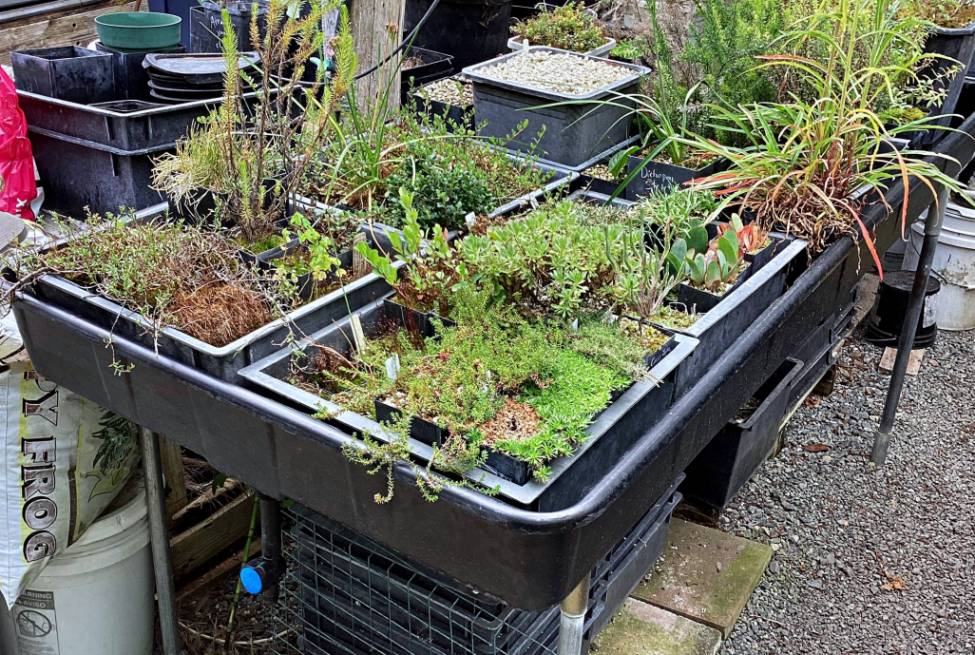
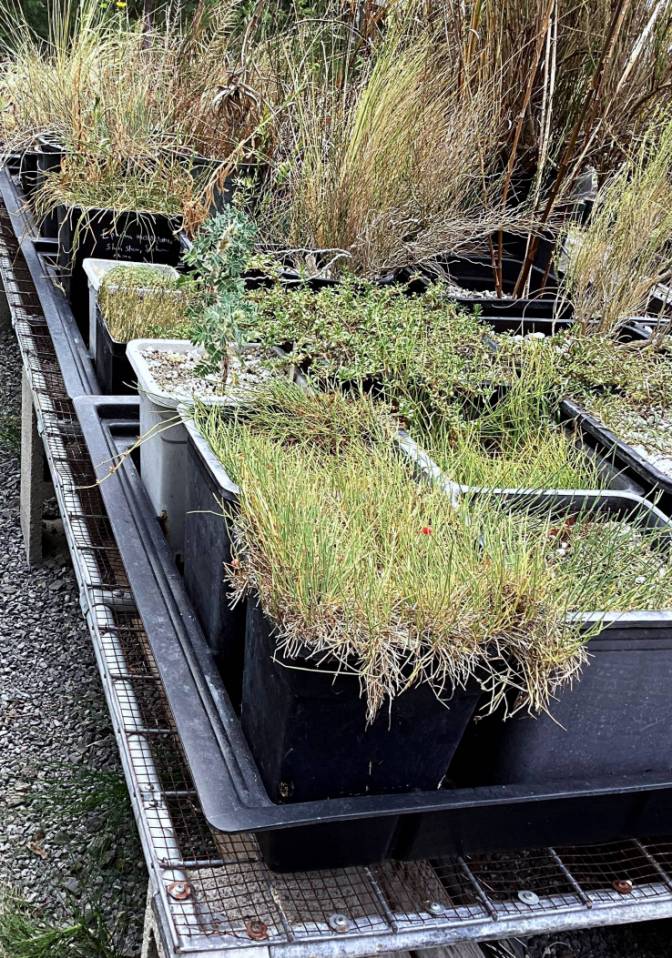 ↑ Newly installed hydro-trays for flood irrigation ↑
2/7/26
We are heartbroken to report the sudden death of our friend, Matt Teel [7/11/78—1/22/26]. Matt was an incomparably kind person and skilled plantsman — we met a couple decades ago when he was working at Yerba Buena nursery propagating California natives and we bonded over our diverse love of plants, along with shared interests in horticulture, ethnobotany, conservation, hiking, etc. He’d been a contributor of seed and an enthusiastic patron and supporter of Sacred Succulents for over 20 years. He is sorely missed…
___
12/17/25
Sacred Succulents now has fiscal-sponsorship via the 501c3 non-profit organization, Panax!
We have a new fundraiser page through them were you can make tax-deductible donations to support our endeavors and critical renovations to the nursery & conservancy-garden.
Here you can make your tax-deductible donation by credit card or as a direct transfer from a US bank account. Contributions of $1K+ can also select to donate by check.
(Note: When making your donation, after you enter your personal data, the platform asks for a 17% contribution — this is optional. To opt-out, click on the drop-down menu [under where it says “Help keep Zeffy free for Panax”], select “Other” and enter “0” in the contribution box below.)
For smaller donations, or for those that don’t require the tax-deduction status, donations should still be made via our BetterWorld campaign [where 7-11% more of the donation goes directly to us]: https://ssbp.betterworld.org
___
11/30/25
Since 2017, we’ve lost nearly 30% of our plant collection due to increasingly erratic weather.
It’s now vital we install comprehensive irrigation systems to help mitigate weather extremes and curtail further losses.
Please donate to our new fundraiser—your contribution is essential for us to accomplish this massive undertaking!
___
7/11/25 Our dear friend Jonathan Ott died unexpectedly on July 3rd.
The past couple years we’d been working together to fulfill his dream of publishing a deluxe edition series of his books, only a few dozen of the first set in the series have been produced so far. While Jonathan got nearly all of the 12 planned volumes print ready, he died intestate and the future of this project is currently uncertain.
Check back for updates [or sign up for the Ott Book email list].
I’ve know Jonathan for over 31 years, we met when I was barely 19 and his impact on my life has been tremendous. The loss of his friendship is quite a blow, let alone his contributions to the world.
In the past year Jonathan was the most productive (accomplishing an astonishing amount of work—finishing new books and updating nearly all of his titles), and the happiest, I’d ever known him to be; in September he wrote me in his polychrome style:
“I’m really grateful you proposed this project, as it is just what I long have desired for all my books—to get them into optimal typographic shape and in the optimal state of manufacture… and I am really happy being back in my element doing what most I love: writing, yes… but also creating books! It is hardly ‹work› to me; rather, what I most love doing!”
We sincerely hope to honor our dear friend’s wishes and preserve his legacy by eventually publishing the entire book series, but it could take months, or even years, to clarify things with his estate…
We miss Jonathan terribly, yet feel profound gratitude and joy for who he was. The world is much richer for his time here.
___
4/25/25
A new study in Nature Communication confirms a global increase in the frequency and severity of rapid temperature flips and the negative impacts this is having on agriculture, communities and ecosystems in general. We’ve increasingly experienced the hazards of this first hand, overnight spikes from cool to hot have been particularly damaging to many plants we grow, contributing to the devastating loss of over 1/4 of the species in our nursery and gardens over the last 8 years. Mitigating against extremes is no easy task, especially with the broad diversity of plants we grow, yet we continue to endeavor.
___
12/31/24
What a year… Despite many losses and challenges, we still firmly believe in the power of conservation through cultivation, that the garden & greenhouse are bio-banks for the future, and that plant diversity is essential to resilience during these times of adversity.
You have our deep appreciation for your support & compassion through the tumult of recent years. We still have significant renovation work to get the nursery back on track and return Sacred Succulents to full operation, but some notable progress has been made this year.
It has been our humble pleasure to encourage deeper relations with plants for over 25 years now.
You have our sincere gratitude for your ongoing support of our endeavors.
As we all face the inevitable challenges of an increasingly erratic climate, may your plants & gardens provide some respite and many sublime moments of joy in the coming years!
___
For further updates and nursery news, see our NEWS PAGE
Public Domain Pledge
An important terms of business note to all our customers:
In order to be in line with our mission to support the preservation of botanical biodiversity, following the lead of J.L. Hudson Seeds and in recognition that the biodiversity of the Earth is the common heritage of all life, all of our seed and plant offerings are now Public Domain. This means that all plants and seeds are supplied solely under the following conditions: We expressly prohibit the use of any seeds or plants supplied by us, or their progeny, in any form of genetic engineering, breeding, or research which will result in any form of life patent, variety protection, trademarks, breeder’s rights or any form of intellectual property applied to living things which would compromise the Public Domain status of the seeds, plants, their progeny and any genetic material therein. We expressly prohibit the transfer to any third party of any seeds, plants, their progeny or any portion of their genetic material without these prohibitions in place. Commercial propagation is encouraged, but in the unlikely event that large-scale commercial distribution is achieved, benefit-sharing along the path towards the source, in accordance with the spirit of the International Convention on Biological Diversity, will be undertaken. Thank you for your understanding and support!
♥
We acknowledge that the world’s biological diversity is a common inheritance shared by all;
the right to having a personal individual relationship with the myriad life forms of the planet is intrinsic to this.
These are the very fibers that weave us.
♥
“We must look for help not so much to the stamen counters as to the plants themselves.”
– Luther Burbank
♥
“The greatest service which can be rendered any country is to add a useful plant to its culture“
– Thomas Jefferson
Plant Auction-Fundraisers
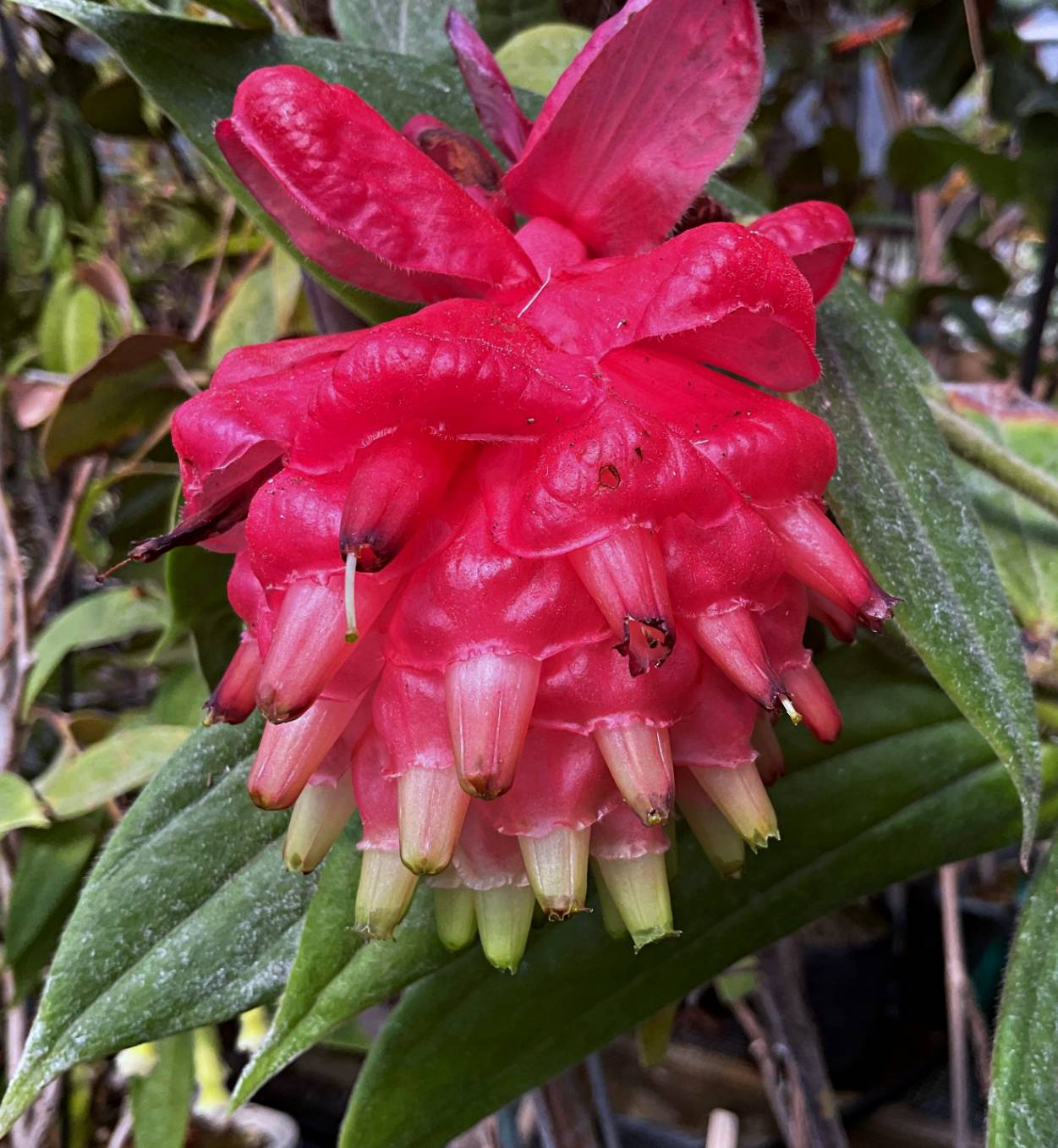 ↑ Cavendishia micayensis ↑
The Equinox Plant Auction-Fundraiser is now closed.
The auction closed at 6pm PST 9/29/25. New auction coming autumn, 2026!
__
After the damage we’ve sustained the last several winters’ storms and increasing heat spikes throughout the year taking a toll, these auctions are a big help in raising the support the nursery so vitally needs to continue—know that your auction purchases directly fund much needed nursery repairs, essential renovations to our aging infrastructure, ongoing irrigation installation [after 20 years of hand-watering, we can no longer keep up and continue to lose plants due to a climatic shift towards hotter & drier], etc. Purchases also support our research and writing projects, as well as our continual conservation work—which includes propagating an untold number of rare and endangered plants that we’ve had waiting here for years, but have not had the time to multiply and distribute… We are deeply grateful for your love of plants and support of our work!
♦
You can also support our vital work by becoming a Sacred Succulents patron via https://ssbp.betterworld.org
or through a Tax-Deductible Donation.
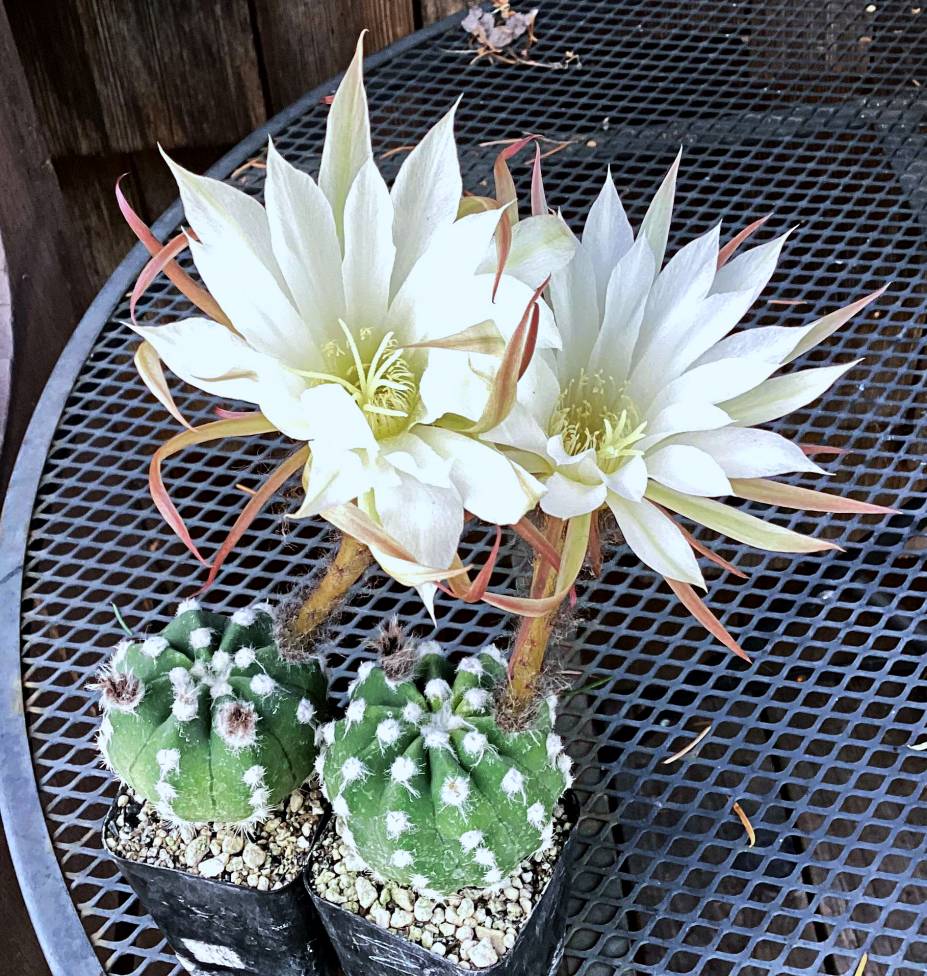 ↑ Echinopis subdenudata X E. eyreisii/Trichocereus terscheckii ↑
♥
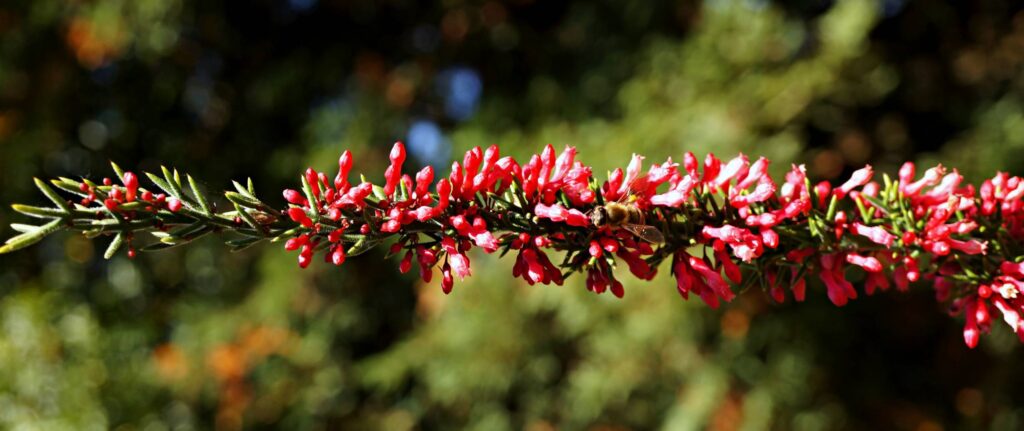 ↑ Colletia ulicina ↑
How To Place an Order:
Yes, we are an anachronism and do not take online payment.
We know it may be a stretch in this age of one click shopping,
but to place an order you must do the following:
Email your order as an inquiry, including your shipping address, to – benkamm@monitor.net
I can then confirm stock, price and give the estimated ship time for your order.
(Due to the volume of email and nursery demands, it may take me a couple days to respond.)
Once confirmed, you can print out an order form, clearly listing botanical name & variety
and mail with full payment (check, money order or cash; no credit cards) to:
Sacred Succulents, P.O. Box 781, Sebastopol, CA 95473 USA
Please note: We do not have a mobile device and
often only check our emails in the morning Monday to Friday,
so if you don’t get an immediate response from us—do not fret! We will get back to you.
We’ve had some ongoing issues with our Hushmail email.
If you haven’t received a response from us, please try again through our always reliable benkamm@monitor.net
__
We do not have a retail store set up for on site shopping,
but you can arrange to pick up an order from our physical locale in Occidental, CA.
Email us your order and we can arrange a time for you to pick up (usually at least 1–2 weeks ahead).
We are not currently doing any nursery visits or tours, we hope to resume in 2027.
_
You can now support our conservation work, nursery renovations, research, writing, etc.,
through becoming a Sacred Succulents patron.
___
2026 Shipping Schedule:
[We are taking orders primarily from the Books & Products, Specimen List Plants, Auction Plants and Andean Tubers page. Outside those lists, we are not taking retail seed orders until a later date. Any other web pages or catalog PDFs are for reference, though you are welcome to email inquiries about plant availability & price.]
__
Spring & Summer: We are limiting our shipping of plants & seeds this year — new orders will ship in intermittent batches every 3–6 weeks, inquire for details. This is so that we can give our full attention to the critical tasks of installing irrigation and other renovations to revitalize the nursery & conservation-research gardens here. We may not resume full normal operations until later in 2027, exact date TBA.
Autumn & Winter: October 3 is the last day to mail in plant orders & have them shipped in 2026;
Plant orders placed after this date will be reserved to ship spring 2027
The exception to shipping delays or hiatus is Seed, Books & Products, which we’ll continue to ship year round in intermittent batches.
___
Additional Info:
As a small family operation, we are involved with the conservation of a perpetually increasing diversity of plants at our biosanctuary here in northern California. Over the years we have learned of the special relationships various cultures have with the botanical realm—medicine, food, magic/religion and utility; through the myriad human relations with plants we have come to understand more completely why they are revered and considered sacred. We offer ethnobotanical information in our listing to help further this understanding, offer cultural context, rekindle human-plant relations, provide leads to promising plants for competent researchers, and for historical curiosity. We make no claims as to the accuracy of this information, it is compiled from many sources, some of which may be unfounded. This website is not a guide to usage; edible, medicinal, or otherwise. We sell all plants and seeds strictly for growing purposes. Placing an order commits to an understanding and agreement to these terms. We do not sell wild collected plants. We do support and encourage the ethical wildcrafting of seed. To assure distribution of the highest levels of genetic diversity the majority of our plants are grown from seed.
As a small family-run endeavor, your support is vital and goes a long way!
________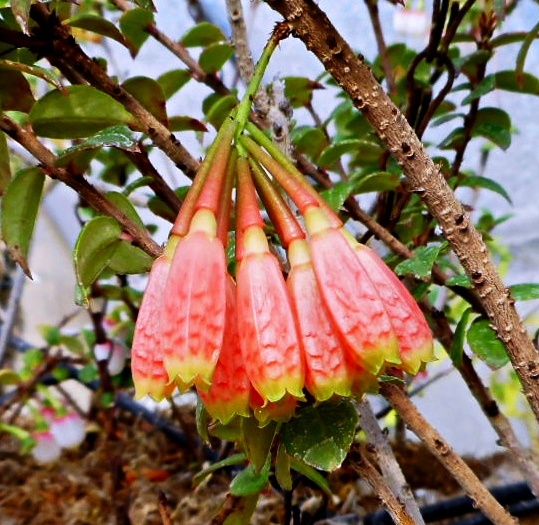 ↑ Agapetes sp. SEH25095 ↑
♣
The Specimen Plant List
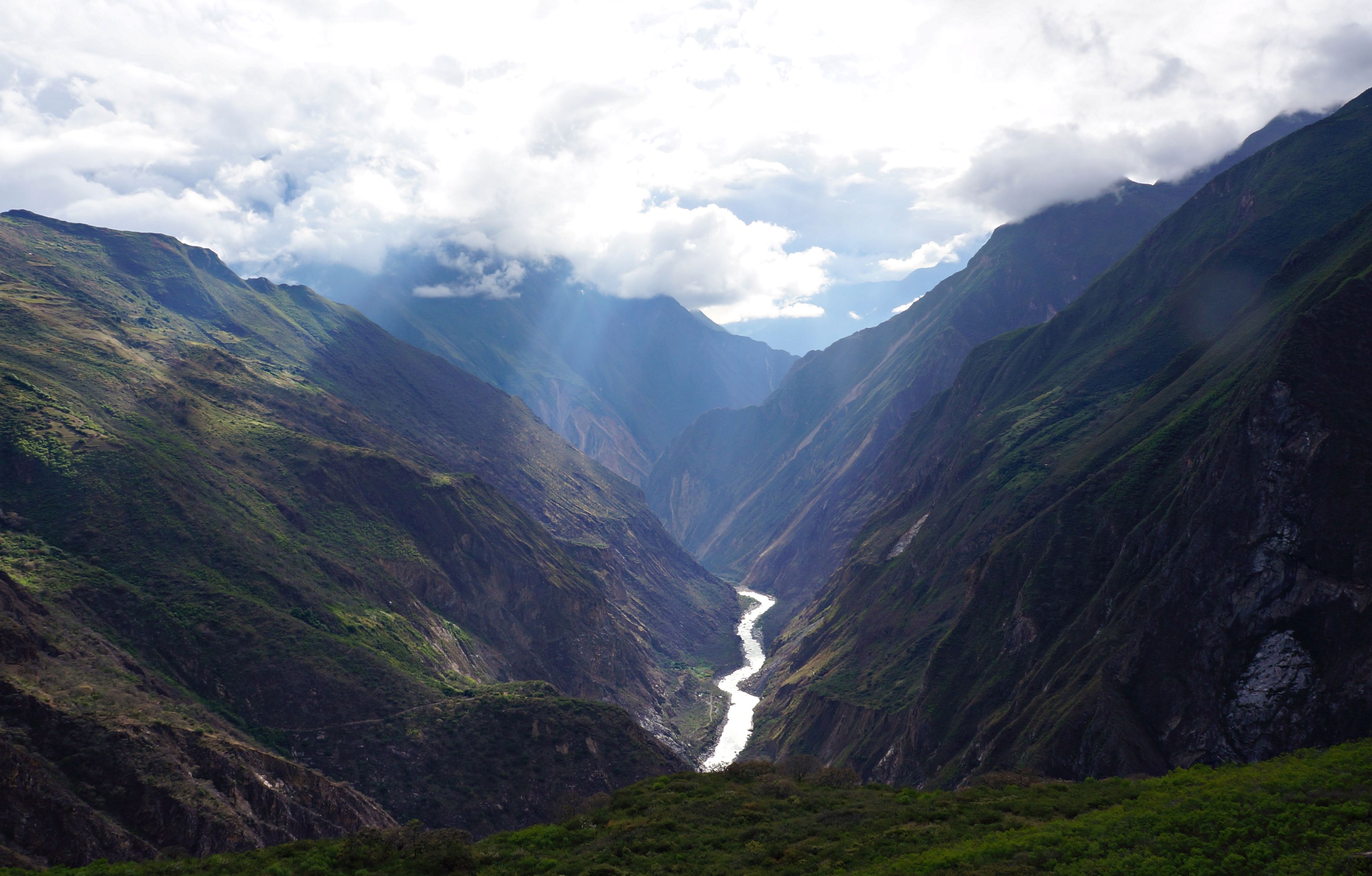 Above the Apurimac, looking south, Cusco Dept., Peru
September 2026 Specimen Plant Offerings
We do our best to fully update this list monthly—by the second week of each month. So check back!
List updated 10/3/26
[September sale prices remain active]
Important Note:
Today is the Final Day to order plants to ship this year!
10/3 is the last day to confirm plant/cutting orders to ship in 2026;
[Email to confirm orders: benkamm@monitor.net]
Plant orders placed after this date will be reserved to ship spring 2027
Seed & book orders will continue to ship year round in batches.
Cactaceae
[Trichocereus]
Other Succulents & Xerophytes
Andean Ethnobotanicals
Neotropical Blueberries
Other Beneficial Plants
Specimen Seed
_
See our Andean Tubers & Other Crops page for offerings.
_
Important Update on the Nursery Renovations:
9/11/26 – Despite a seeming constant obstacle-course of challenges and thwarted plans this year, we’ve finally begun to make some progress with the crucial nursery renovations. Still, we have far to go and with the extreme El Niño imminent it’s now looking like the renovations will dominate the rest of 2026 for us. We must ask for you to bear with us during our ongoing efforts to revitalize the nursery.
Your patronage and donations continue to be vital to our endeavors.
What this means for Orders:
All orders are most welcome!
We continue to list exciting new plants and accept your orders,
just know we’re operating at reduced capacity as we focus on critical renovations.
Shipping will remain intermittent as we continue to mail orders in batches every few weeks.
October 3 is the last day to place plant/cutting orders to ship in 2026.
Gratitude for your patience & understanding as we tackle these massive endeavors!
Like everything in 2026, the cost of materials for the renovations has shot up significantly, far higher than my project estimates last year… we currently need to raise near $8–10K more to finish the first phase of irrigation work throughout the nursery (this includes purchase & installation of the rest of the pricey hydro-trays) and fortify everything for this El Niño winter..
We can’t do this without you!
Please keep the Tax-Deductible Donations coming — every little bit helps!
♥
We are limiting our shipping of plants & seeds this year. Many species are selling out, so place your order now to reserve for shipping! These shipping delays are required for us to focus on the critical tasks of installing irrigation and stabilizing, salvaging and propagating the thousands of plants in the nursery and gardens that have been battered by years of erratic, extreme weather. This is now essential to preserve the high diversity of rare & endangered plants here, get us back on track to offer our fuller listing of plants & seeds, and for us to make available the many hundreds of species we’ve never released publicly…
◊
Help Fund Nursery & Garden Renovations Crucial to Our Future
We seek your support funding extensive renovations to the aging infrastructure of our nursery & gardens—endeavors integral to preserving the high diversity of rare & endangered plants here in the face of ongoing losses from increasingly erratic climatic shifts.
Click here for tax-deductible donations
via our new 501c3 fiscal-sponsor, Panax.
♣
To receive our periodic (usually every 4–8 weeks) emails listing new plants, sales & auction fundraisers, news from our gardens, greenhouses, research & travels, sign up at –
http://lists.sonic.net/mailman/listinfo/sacredsucculents
◊
Ordering Specimen Plants:
Specimen orders can be combined with other items—books, auction plants, products, etc.
Many of these plants are one-of-a-kind and will not be available again!
To purchase plants/seeds, please email first to confirm availability – benkamm@monitor.net
& provide your full shipping address in the email.
Download Order Form
◊
Shipping & Handling for Specimen Plants (USA only)
First Class Priority Mail = $10.00 for the first plant, $2 each additional plant.
Express mail = Inquire for current costs
If you want your plants shipped potted add $2.00 extra per plant ordered—
cuttings and large plants cannot be sent potted; Trichocereus over 5-6″ are only sent bareroot.
*Plants marked with a single asterisk* are large, heavy & have special shipping charges =
$18.00 for the first plant, $2 each additional plant.
**Plants marked with double asterisk** are extra large and/or heavy. We charge you the USPS postage cost plus a $6 handling fee on the total order. Please note: Shipping costs for these will be significant for folks in eastern states (for example a 36″ Trichocereus sent to the East Coast would be around $45-70+ shipping but less than half that for the West Coast). You may inquire the approximate shipping cost by emailing us your zipcode.
***Plants are too large to ship – available for pick up, by appointment, at our home in Occidental.
Email to reserve plants and arrange pick up. For those further away, we will consider shipping, but the plants will need to be cut into smaller sizes—email for shipping quotes.
◊
Heat Packs: For folks in colder regions, we can ship your plant order with a Heat Pack for a $5 fee per pack.
◊
Shipping and Handling for Specimen Seed Packets
First Class Mail USA: $5.00 (seeds ride free when ordered with plants)
International: First Class $20, or Priority Mail $48 (quickest, most secure, recommended!)
__
California residents add 7.25% sales tax. Sonoma county residents 9.25%.
___
GIFT CERTIFICATES are excellent gifts: available for any amount, please inquire
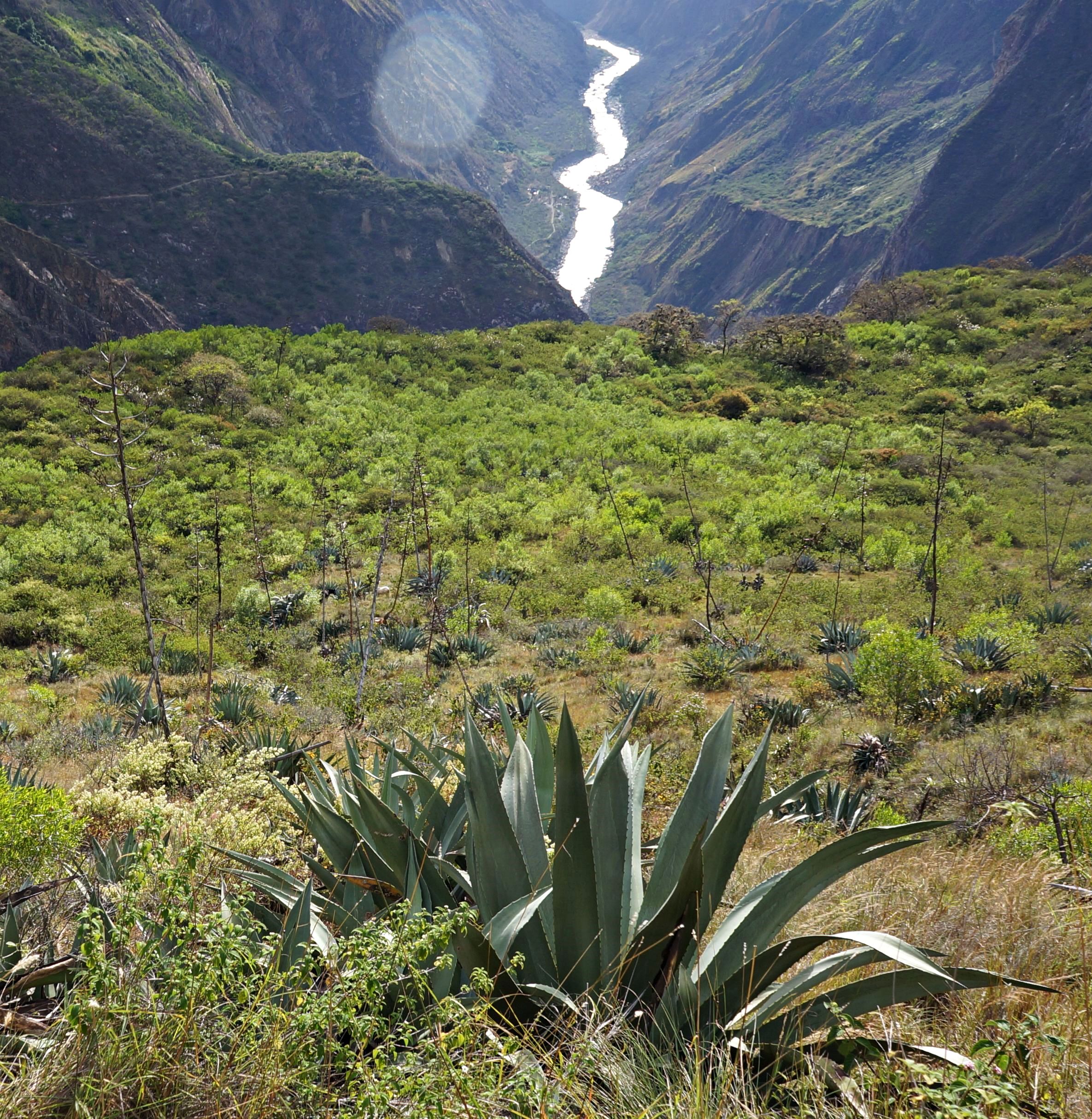 Agave cordillerensis, Apurimac, Cusco Dept., Peru
◊
Key to Specimen Plant Listings:
Genus, species, Accession# or ‘Clone name’, (=synonym), “common” or “local names” ♥ New ♥ (a recent addition)
Plant family. Plant description. Z# = USDA hardiness zones
[ # quantity originally listed] → # still available ~ approximate plant size, age (if seed grown), $price
* or ** after the price denotes a heavy or oversize plant, see the shipping info above.
NOTE:
September sale prices remain active.
Orders placed now will be shipped in 2–4 weeks—
pay now to reserve plants before they sell out!
Today is the Final Day to order plants to ship this year!
10/3 is the last day to confirm plant/cutting orders to ship in 2026;
[Email to confirm orders: benkamm@monitor.net]
Plant orders placed after this date will be reserved to ship spring 2027
___
♣
Specimen Plant List
[We can only ship plants to US addresses]
Please keep track of the accession numbers some plants come with—well documented accessions allow plants to be traced to the geographical locations in habitat where they were collected; this gives each accession long-term value for scientific research and is essential to conserving genetic diversity ex-situ, especially of rare and endangered species.
♣
Cactaceae
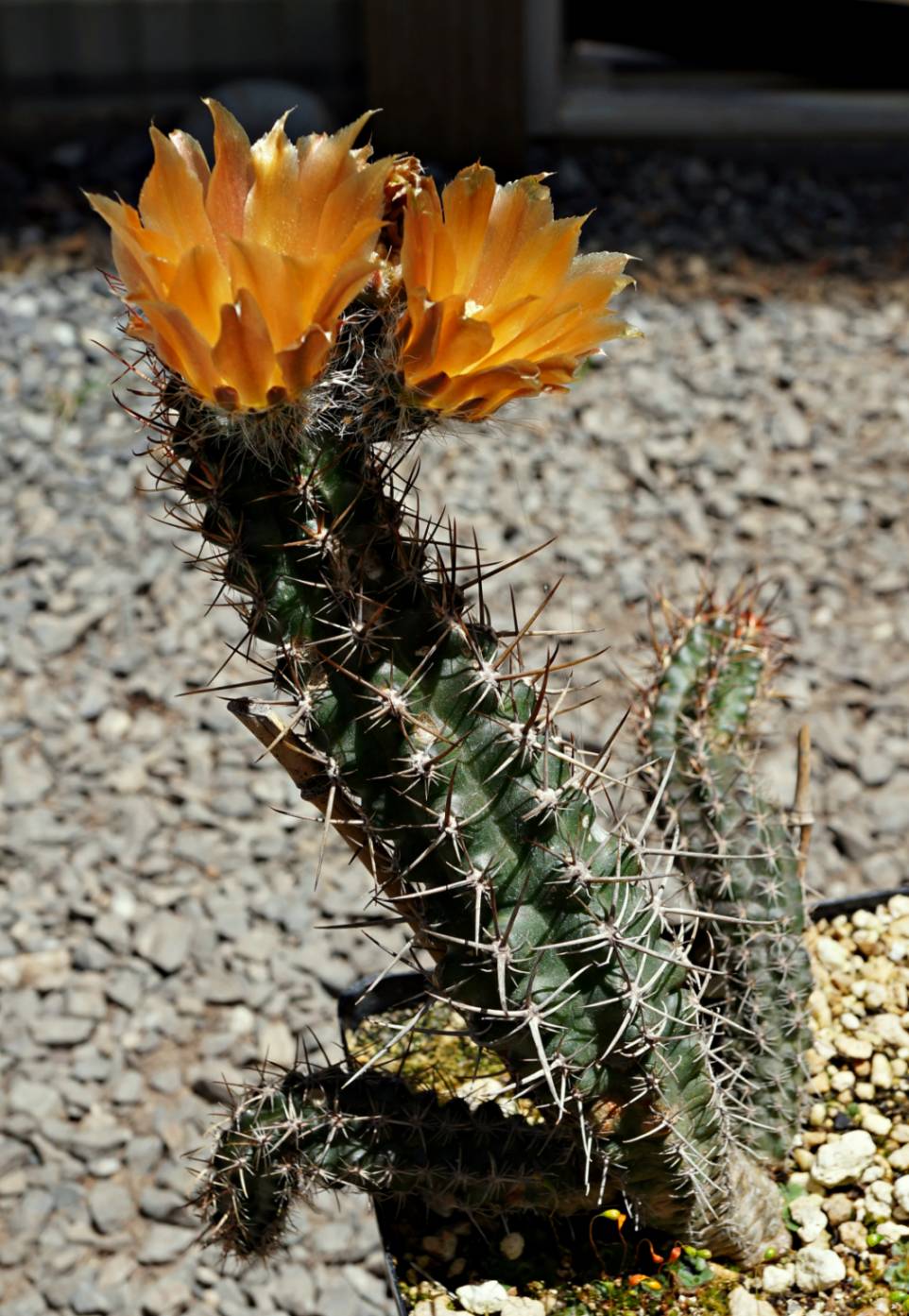
Austrocactus philipii
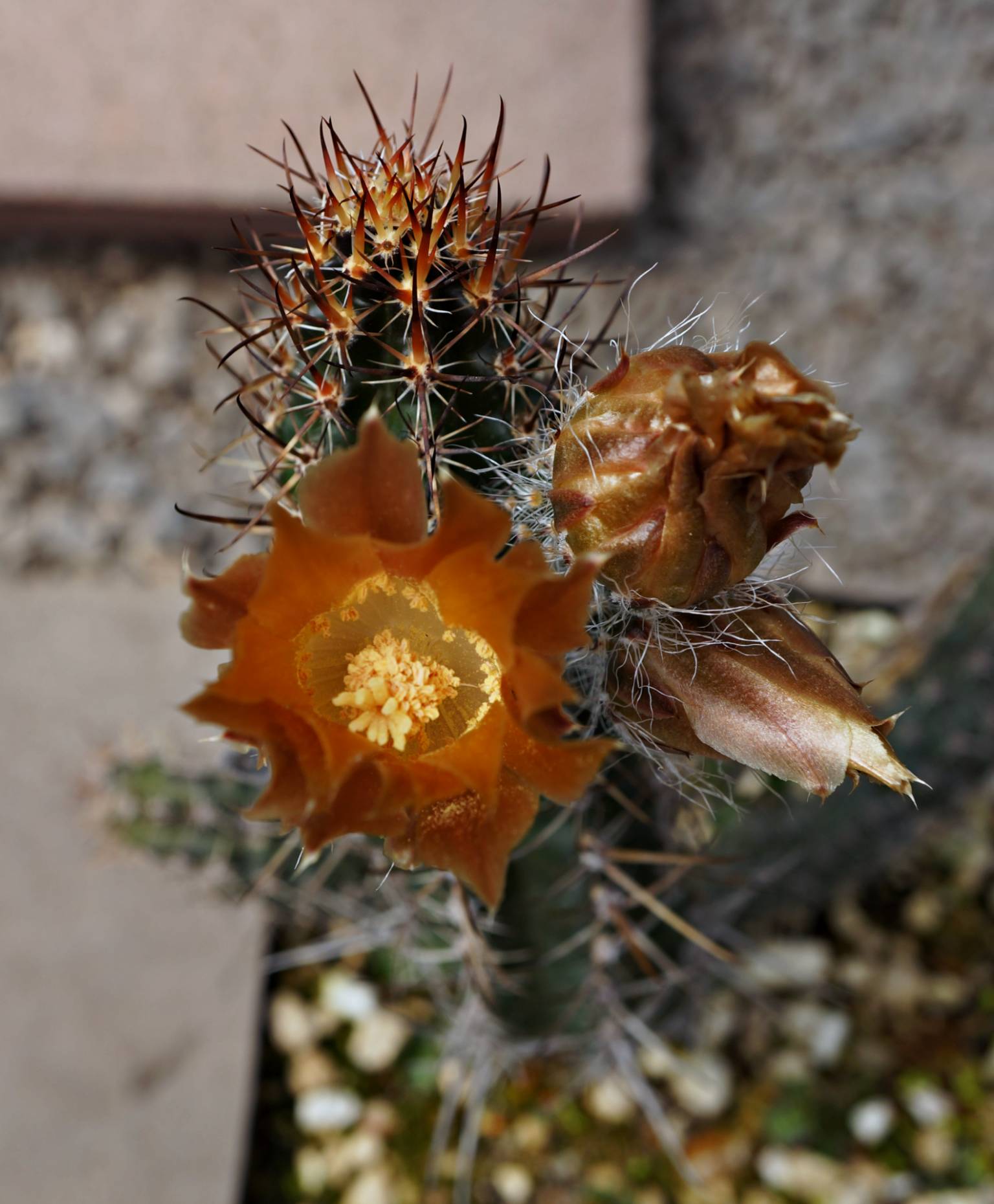
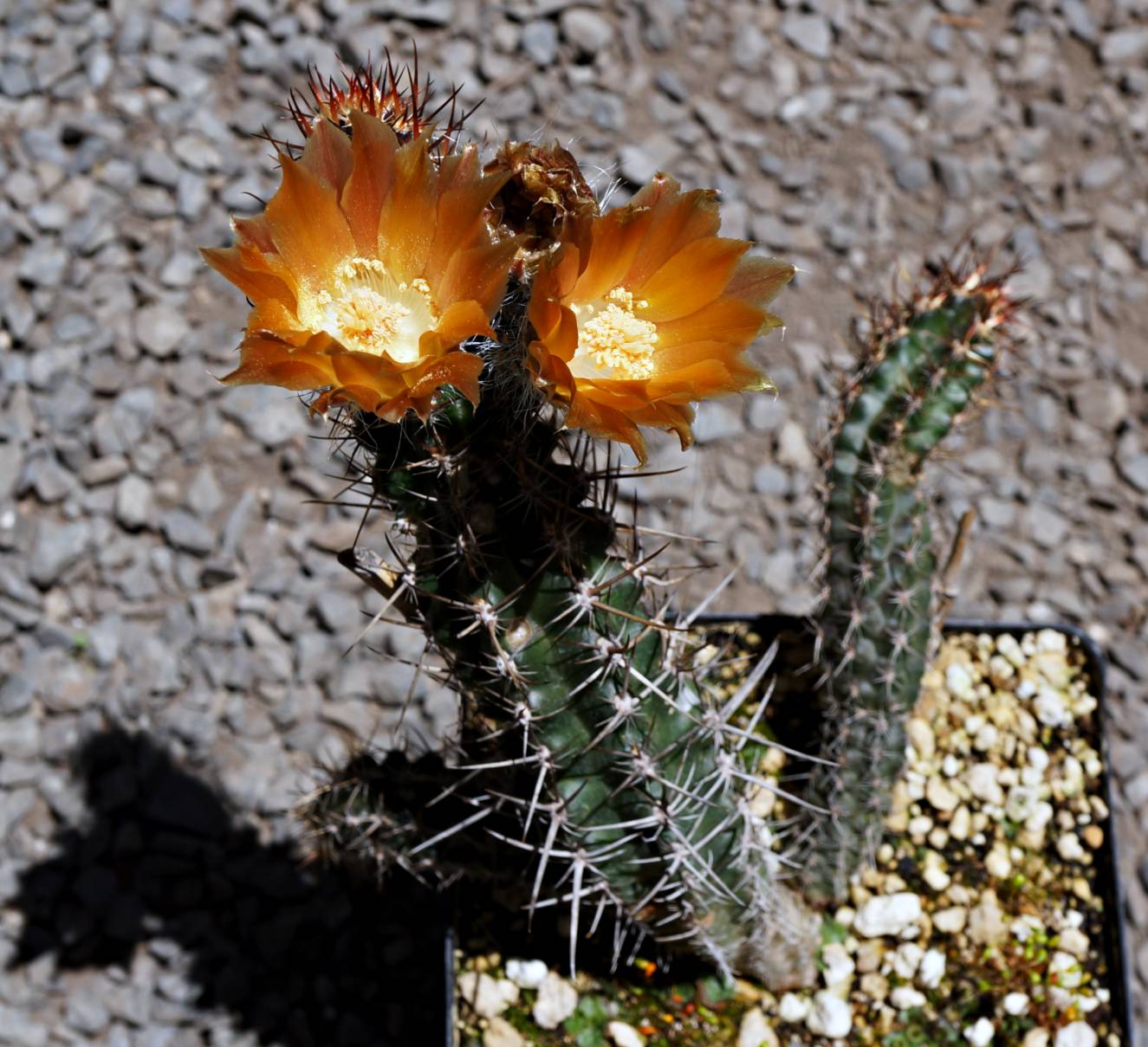
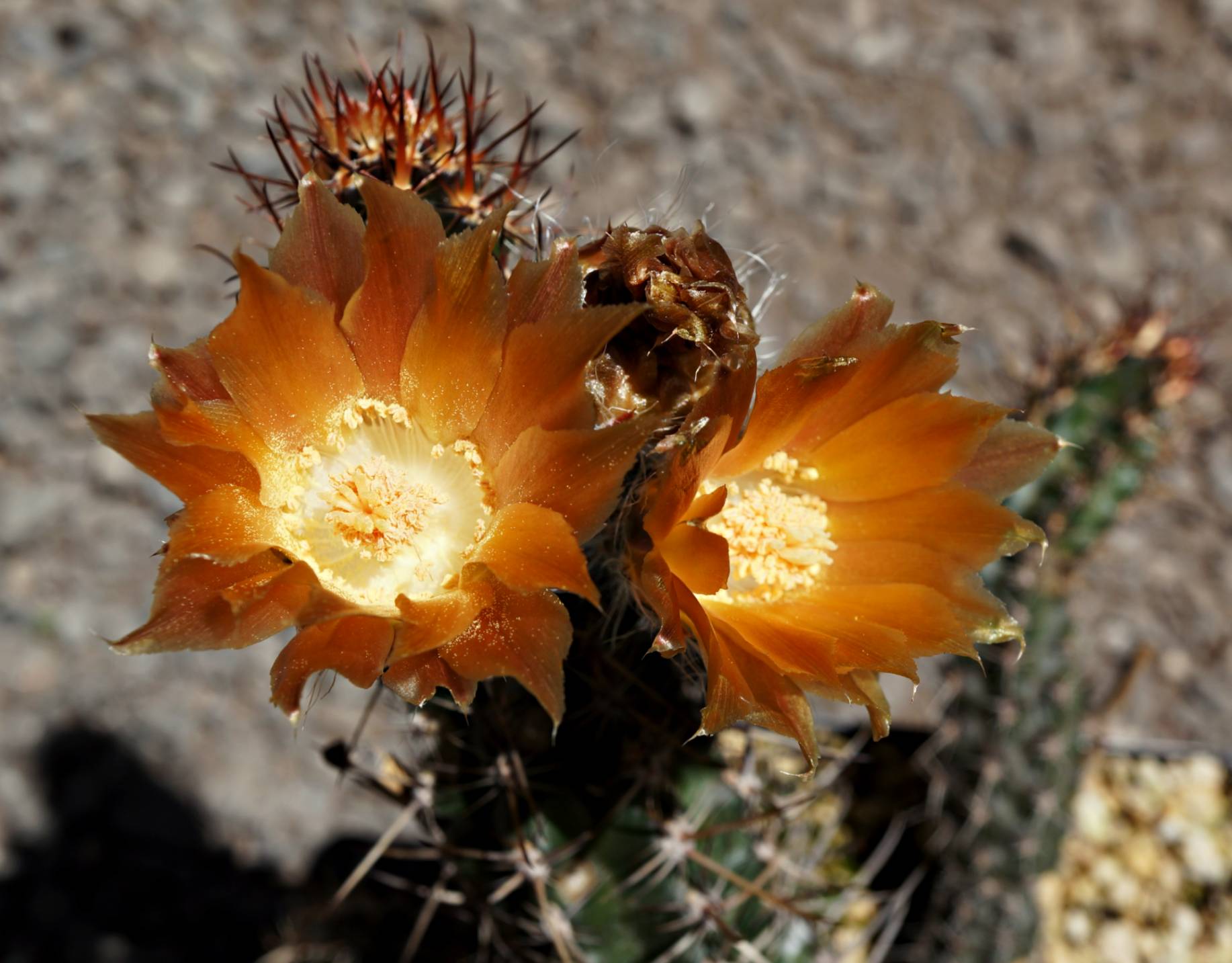
Possibly the rarest cactus in Chile! Beautiful small columns to 5–8″+ high, reminiscent of some Echinocereus species. Clustering, dark green-brown stems 1–1.5″ diameter with 6–8 ribs, somewhat tuberculate. 3–4 central spines to 1″, red-black to yellow/gray, slightly curved at the ends, 6–8+ small radial spines. Blooms winter to early spring with relatively large funnelform flowers, a vivifying shiny yellow-orange-bronze color—distinct from most cacti. Grape size green fruit with an excellent kiwi-like flavor. An endangered endemic from just two restricted locations in the mountains of central Chile at 6600′ and 7300′. Grows amongst exposed rocks with Ephedra chilensis, Berberis empetrifolia and Mulinum spinosum. In cultivation it wants bright exposure and a well draining, gritty soil (we use about 75% pumice/perlite). Dislikes hot, moist conditions, which may lead to rot. Prefers a dry summer rest. Can tolerate significant cold, rainfall and prolonged snow. This is our first offering of cuttings (which may or may not have some roots) from several seed grown clones. Z6b–7a
[ 6 ] → 1 ~ 1.5–2.5″+ cutting $60
___
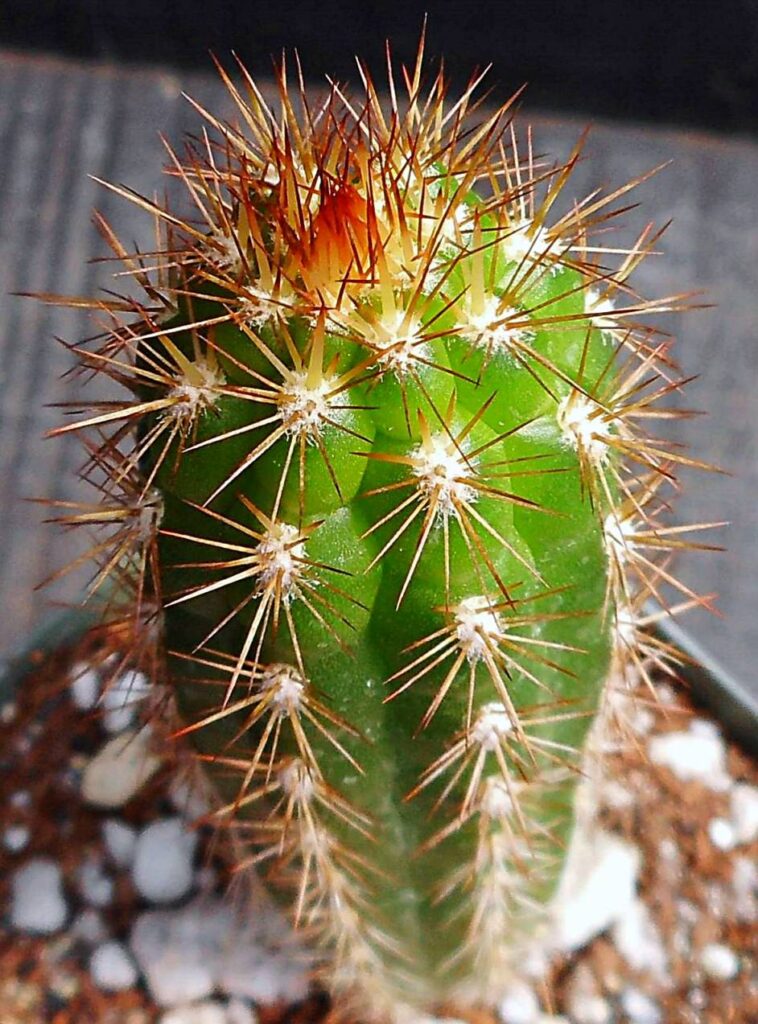
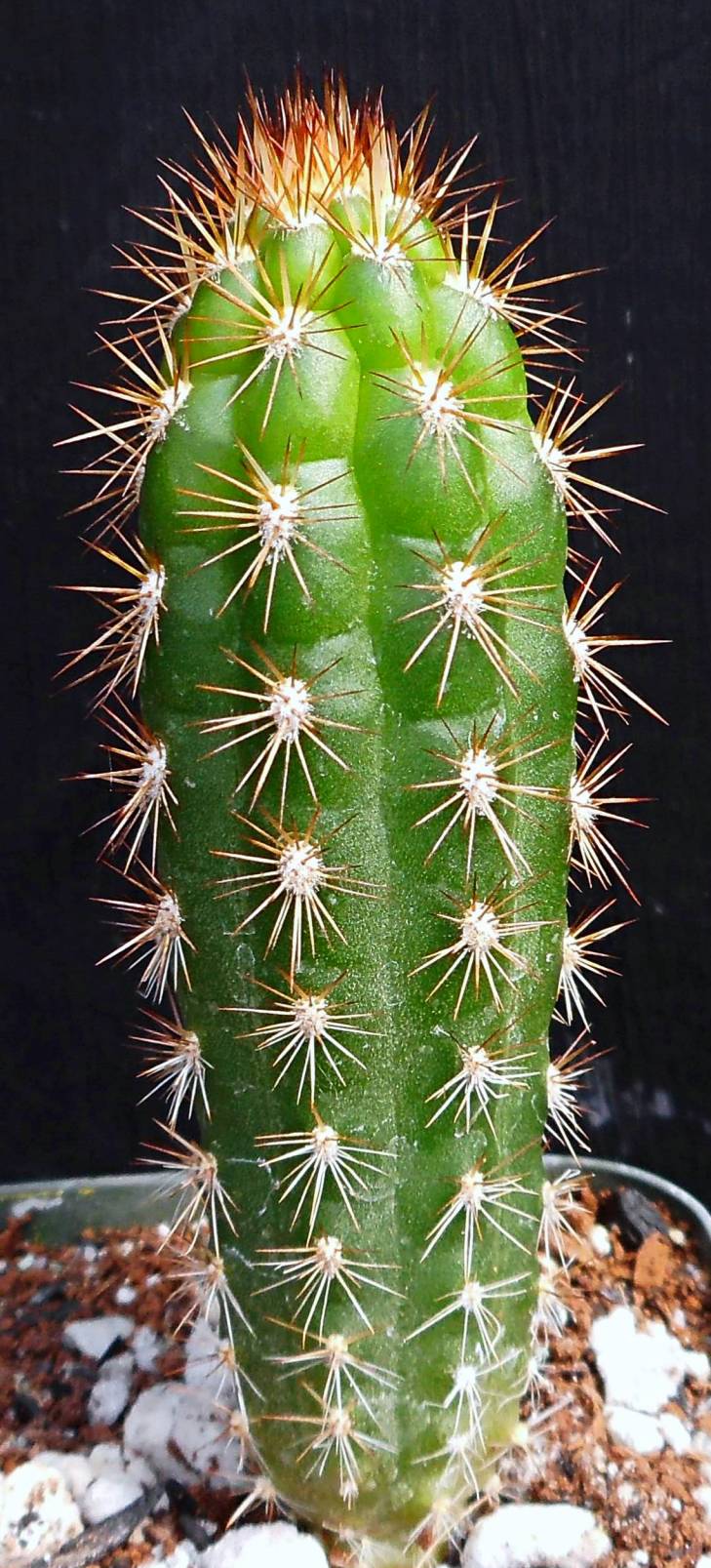
Borzicactus icosagonus v. roseiflorus NL042408a X Borzicactus fieldianus BK09508.4
A completely new hybrid we are quite excited about! The proud parents: N. Logan’s accession from southern Ecuador of the exceedingly rare B. icosagonus v. roseiflorus: a sprawling, mostly prostrate plant with slender stems, small reddish to golden spines, tubular hot-pink flowers that flare feathery at the tips, and globose, red-skinned, juicy fruit; fertilized by our Chavín de Huántar accession of B. fieldianus, a shrubby columnar species with diamond shaped tuberculate ribs, dark green skin, gray spines, orange-red tubular flowers and yellow fruit. So far, the brood show the best traits of their parents—deep green, tuberculate ribs, fuzzy areoles, red-golden spines. We’re sure this hybrid will only grow more beautiful as it matures. We have a small number of seedlings to offer here for the very first time outside of auction. We wonder what uniqueness of blossom and tastiness of fruit awaits. Be the first to find out! Z9b?
[ 6 ] → 2 ~ 4–5″+ plants 3 years old $64.50 each September SALE! $59.50 each; or 2 for $99
[ 8 ] → 2 ~ 2–3″+ plants 3 years old $44.50 each September SALE! $39.50 each; or 2 for $69
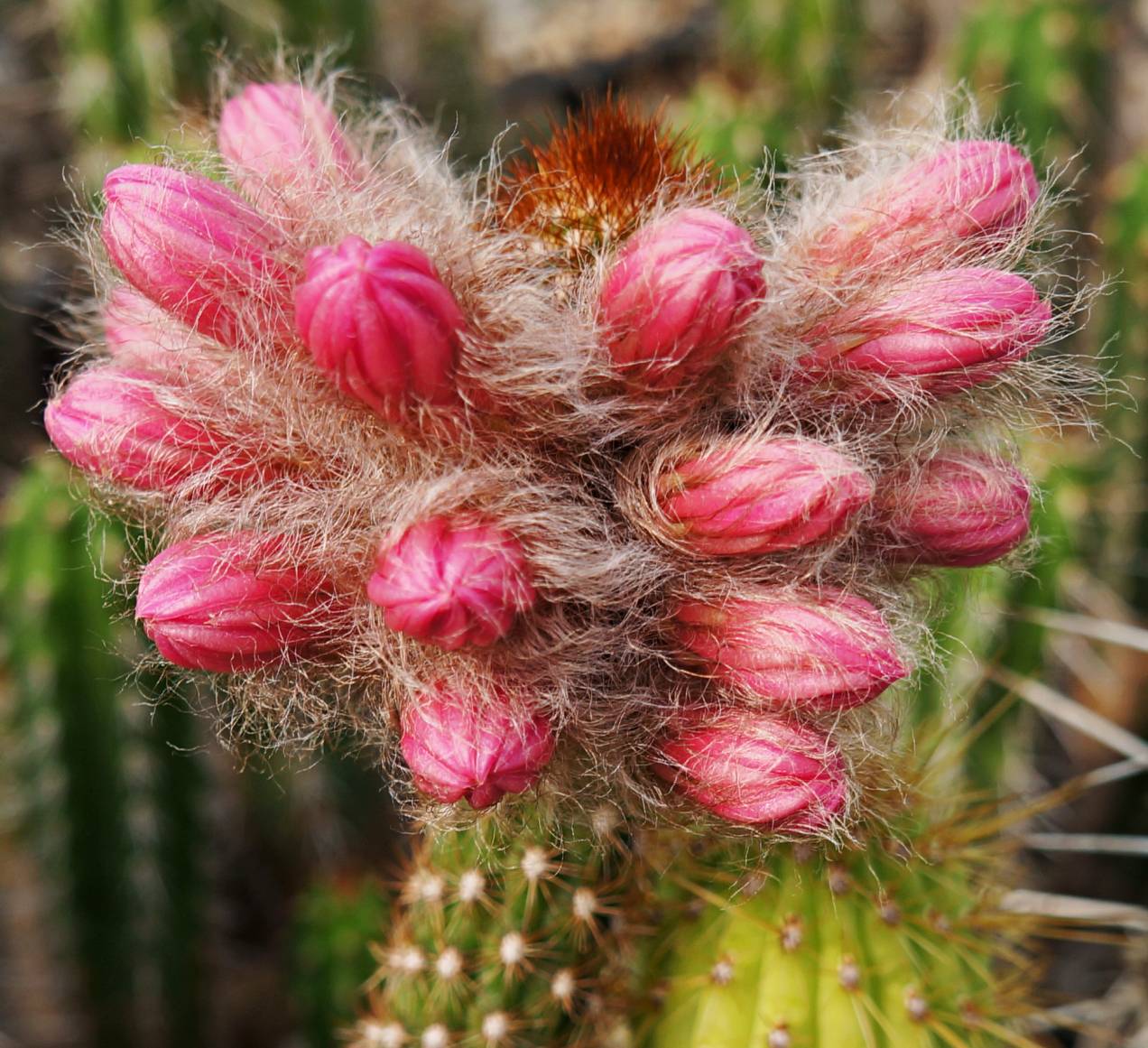
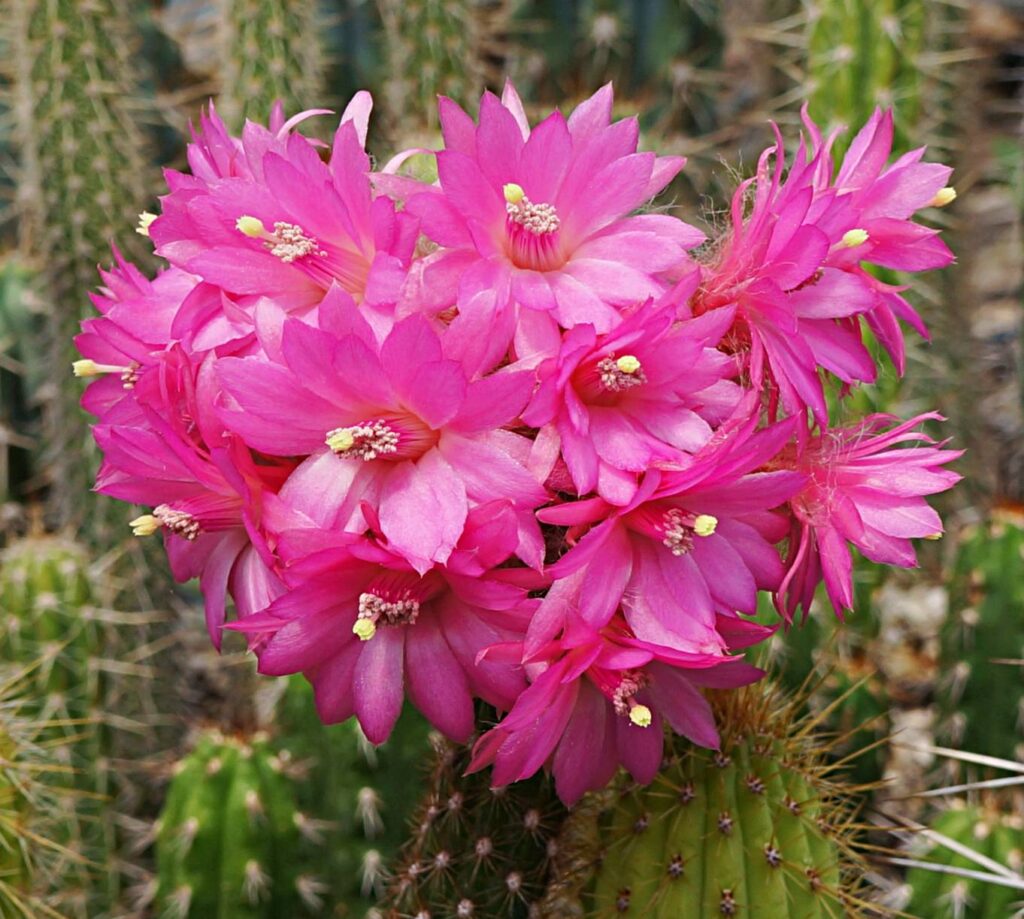
 ↑ An example of the hybrid seedlings on offer ↑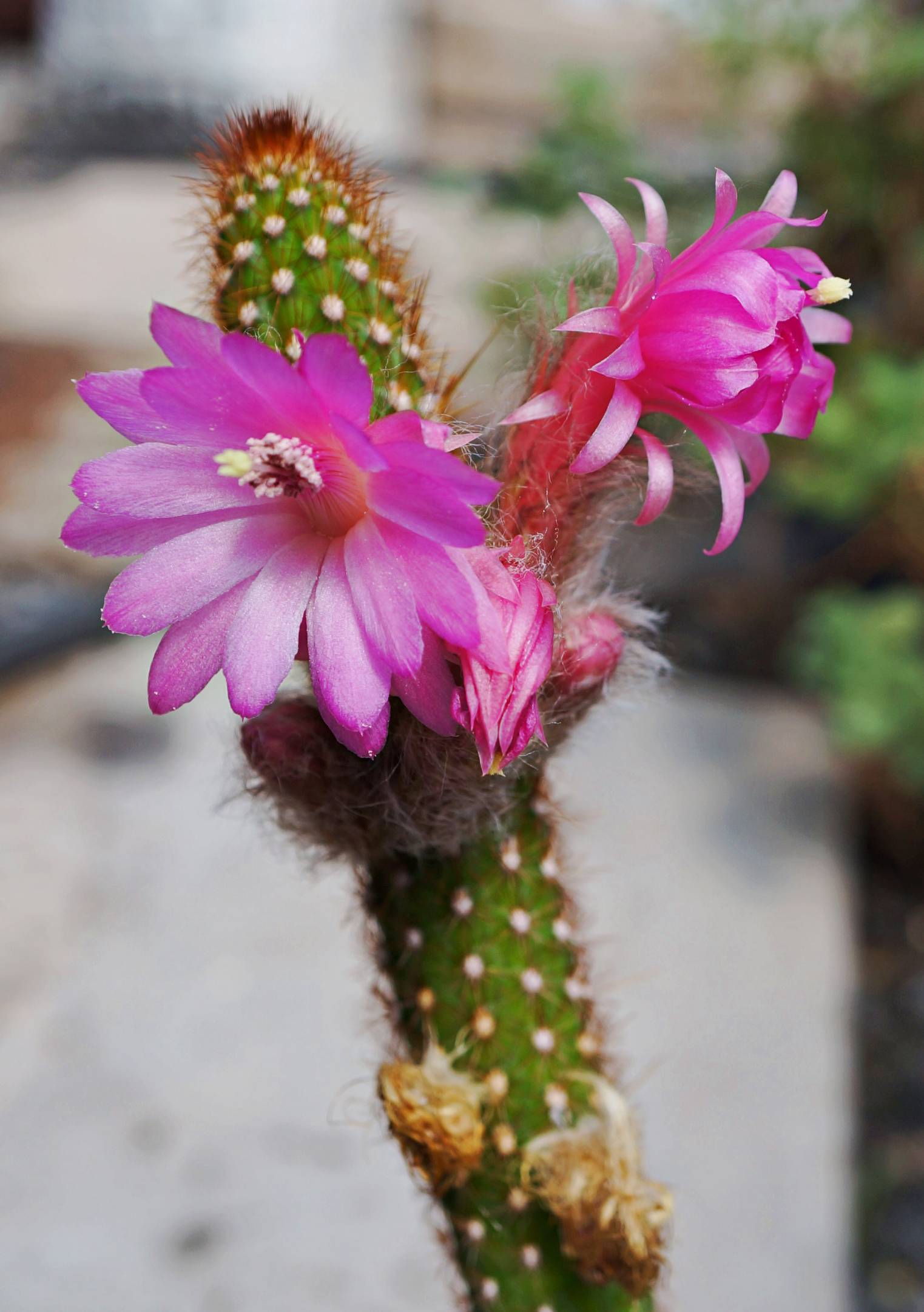
 ↑ Mother plant ↑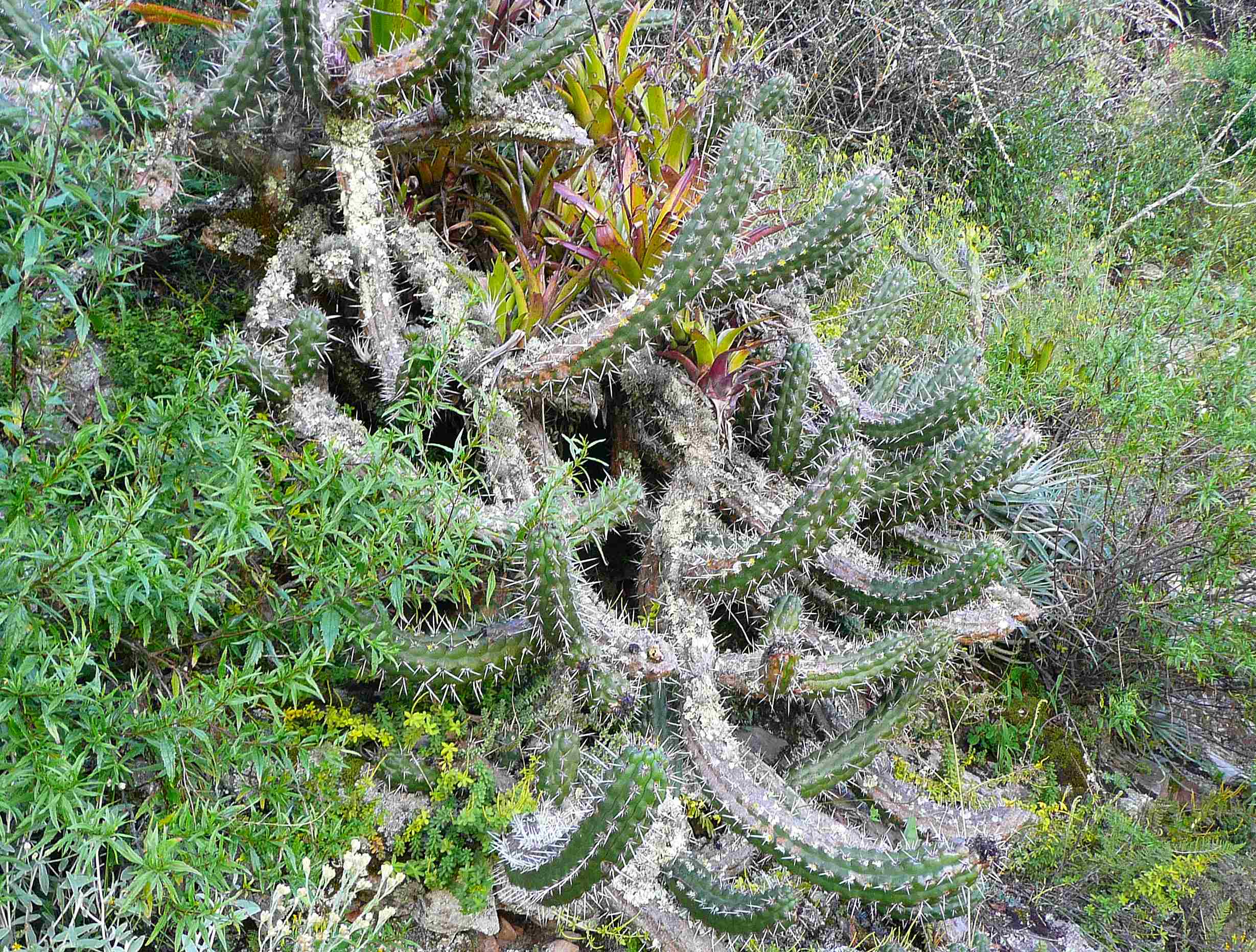
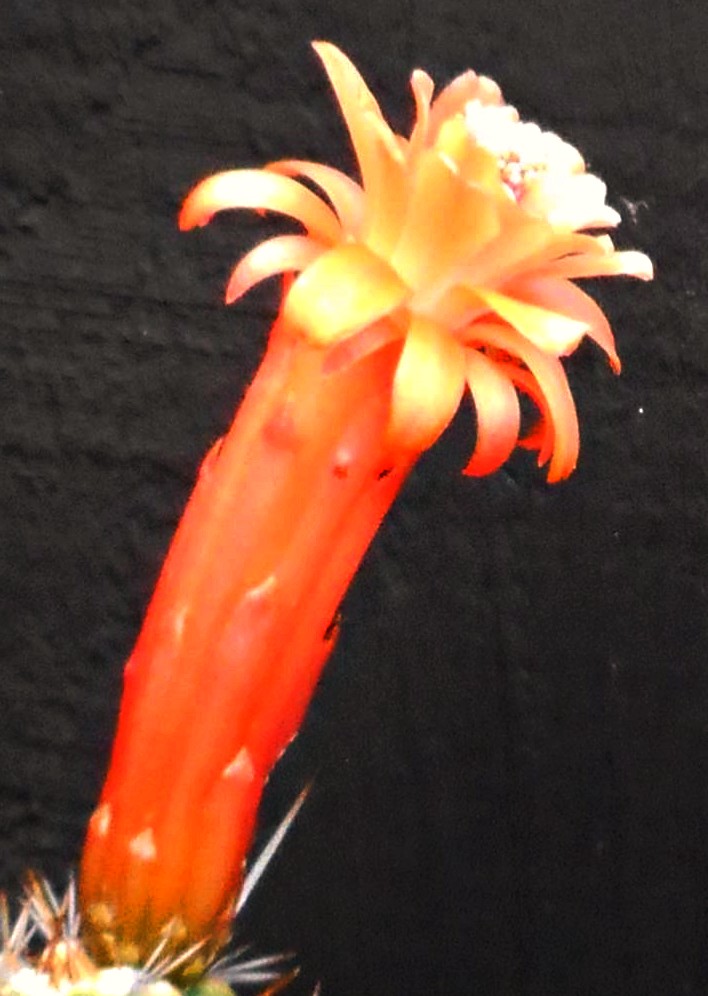
 ↑ Father plant ↑
___
Cleistocactus xylorhizus BK08611.1 X Borzicactus fieldianus BK09508.4 ♥ NEW ♥
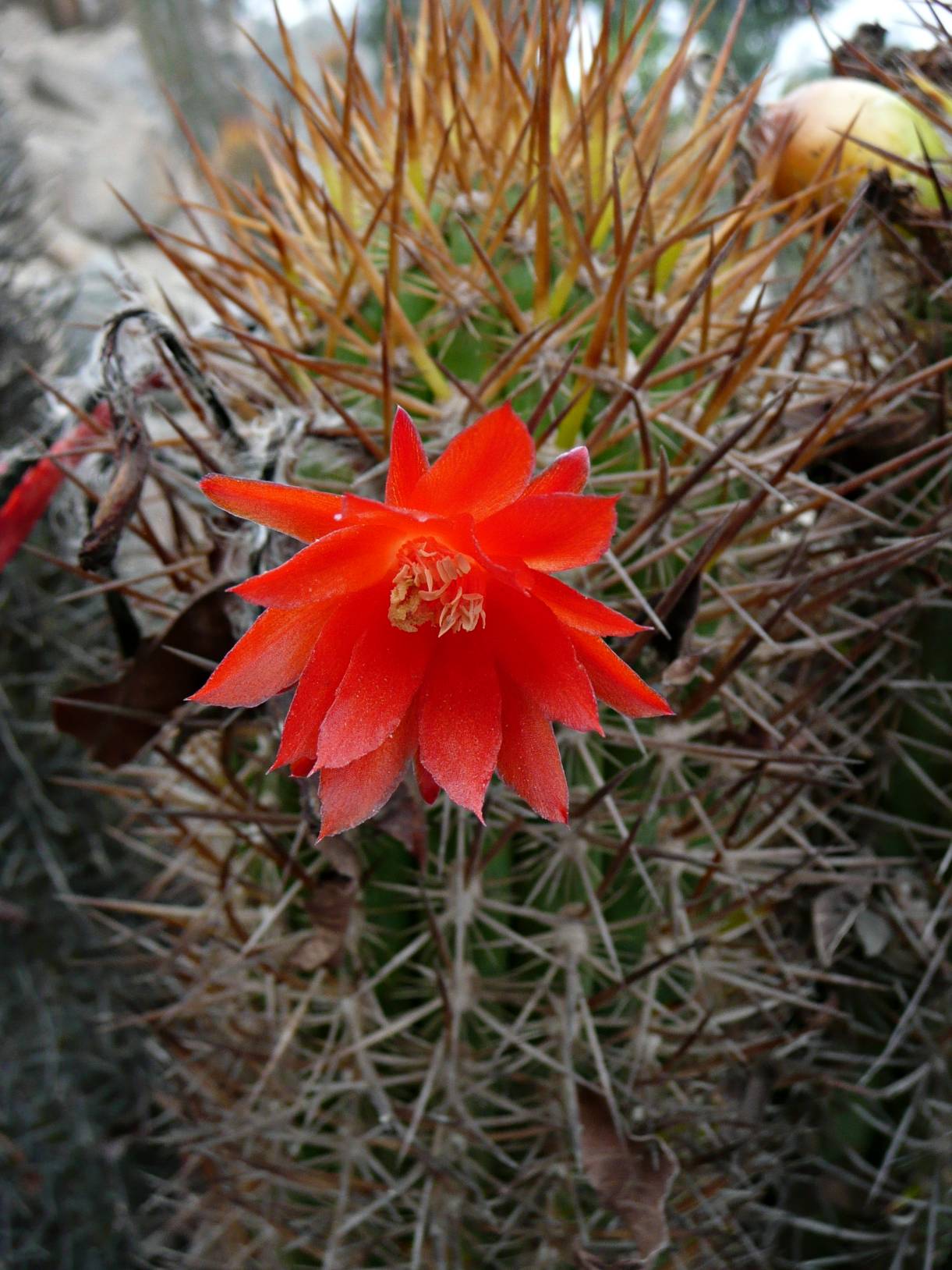
Our first time offering outside of auction; a completely new and exciting intergeneric hybrid! We crossed the exceedingly endangered Cleistocactus xylorhizus[endemic to Lima Dept., Peru and possibly extinct in the wild: a sprawling plant to 3’+, with thick stems densely covered in stout, tortuos spines from brown to gray, red tubular flowers, and red-skinned, sweet fruit] with out our Chavín de Huántar accession of Borzicactus fieldianus [a shrubby columnar species with diamond shaped tuberculate ribs, dark green skin, gray spines, orange-red tubular flowers and yellow edible fruit]. The children have deep green, tuberculate ribs developing; while they still have their soft juvenile spines, we expect these to develop into something distinct and gorgeous. This unique hybrid is one to watch as it matures—be the first to grow it! Z9b/10a?
[ 5 ] → 3 ~ 5–6″+ plants 3+ years old $75 each September SALE! $69 each; or 2 for $126
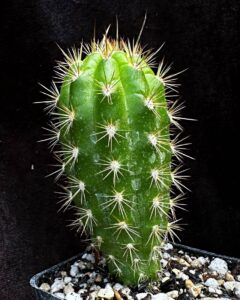
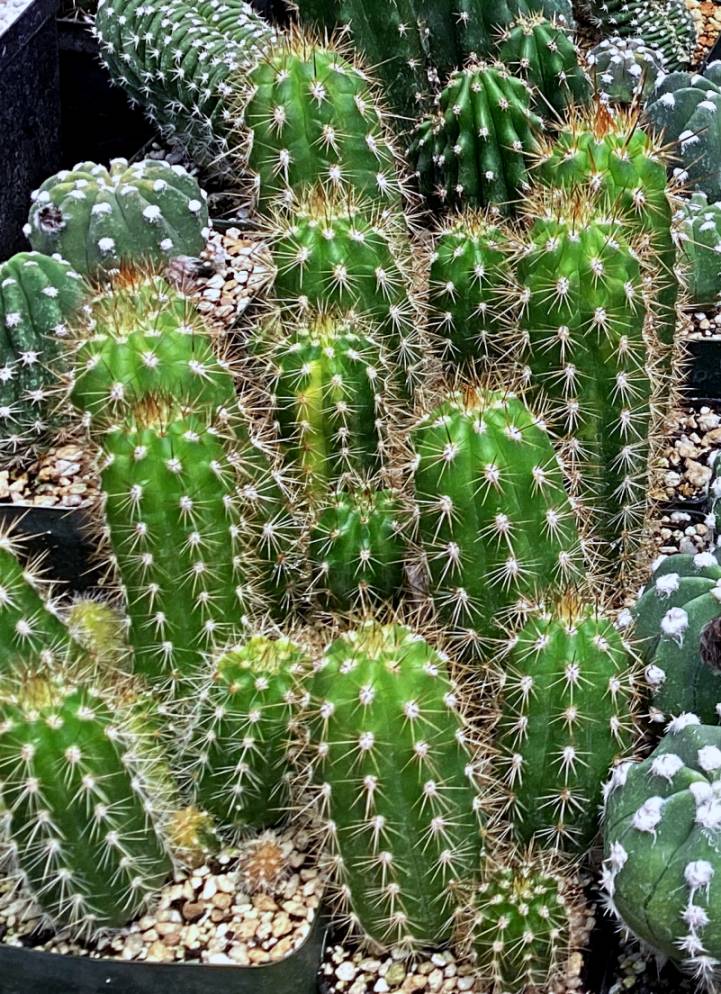 ↑ Examples of specimen plants ↑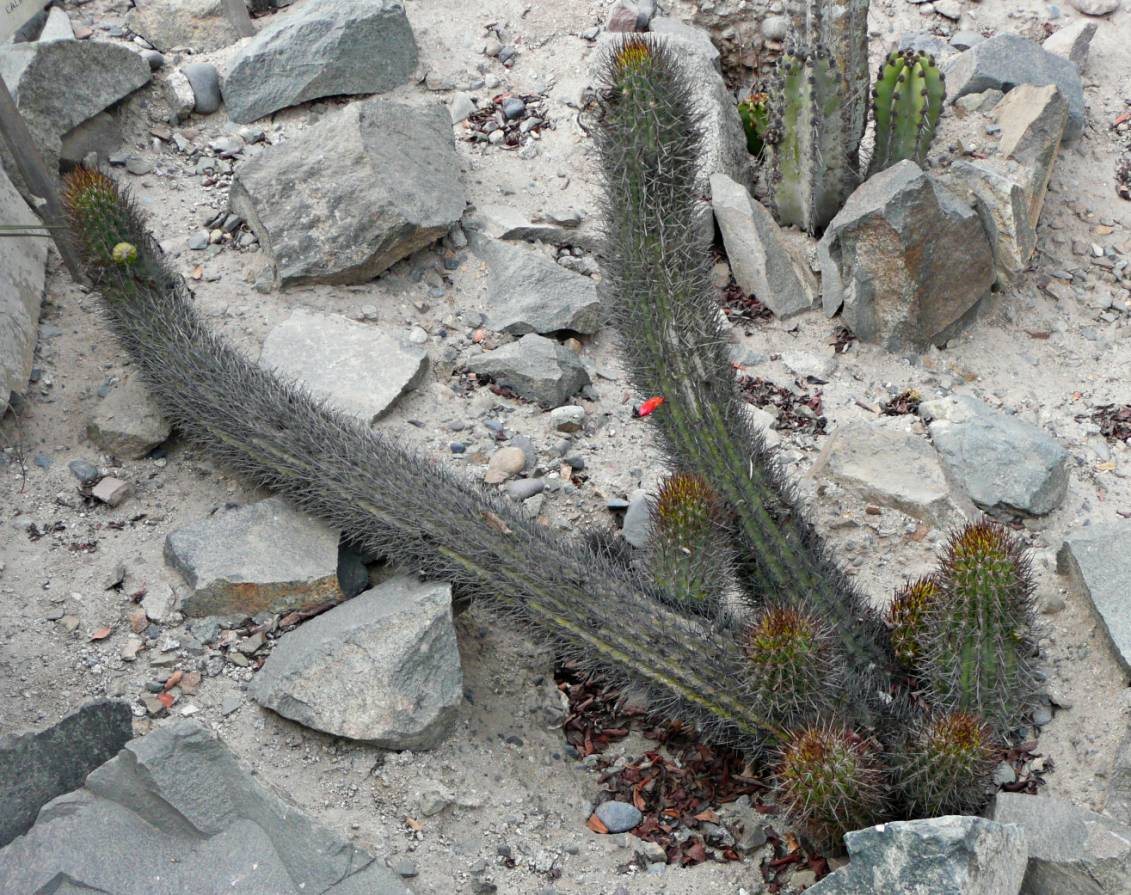
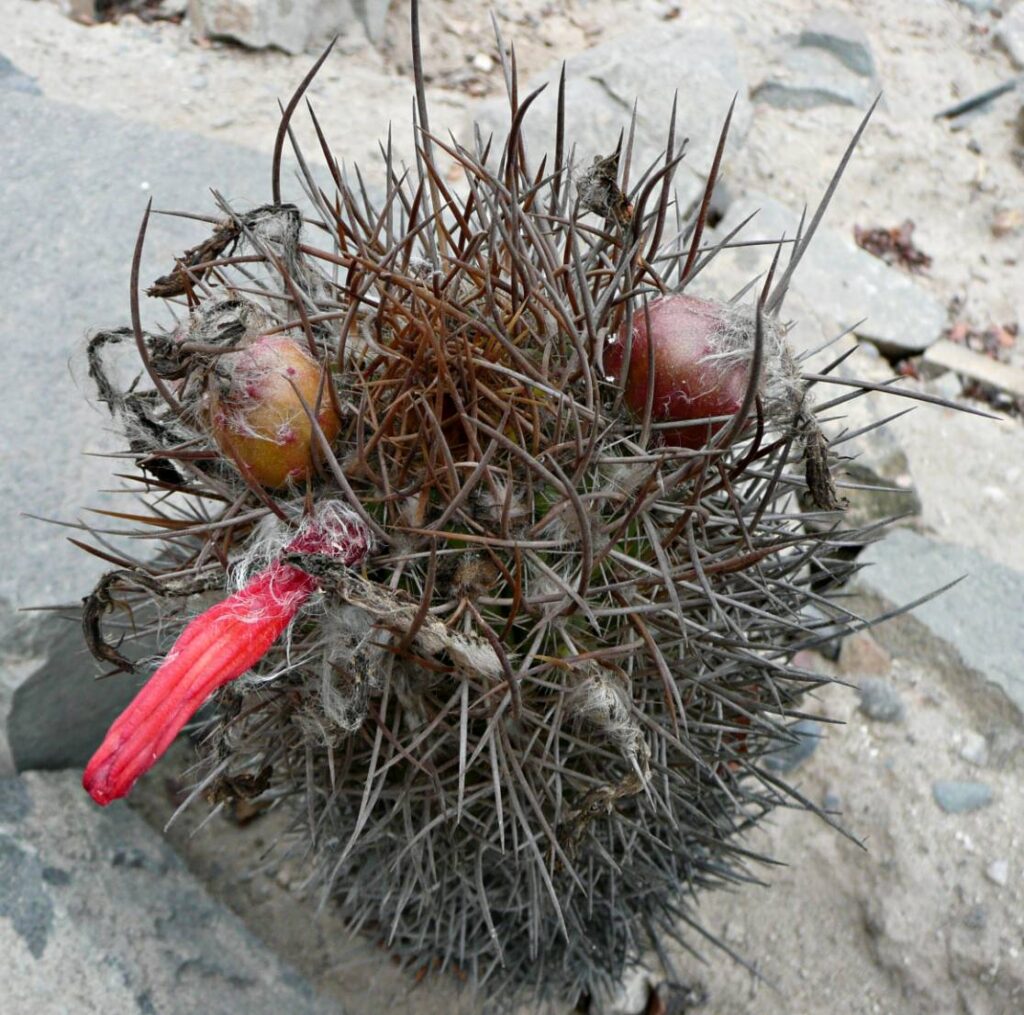 ↑ Cleistocactus xylorhizus, mother species, Lima, Peru ↑
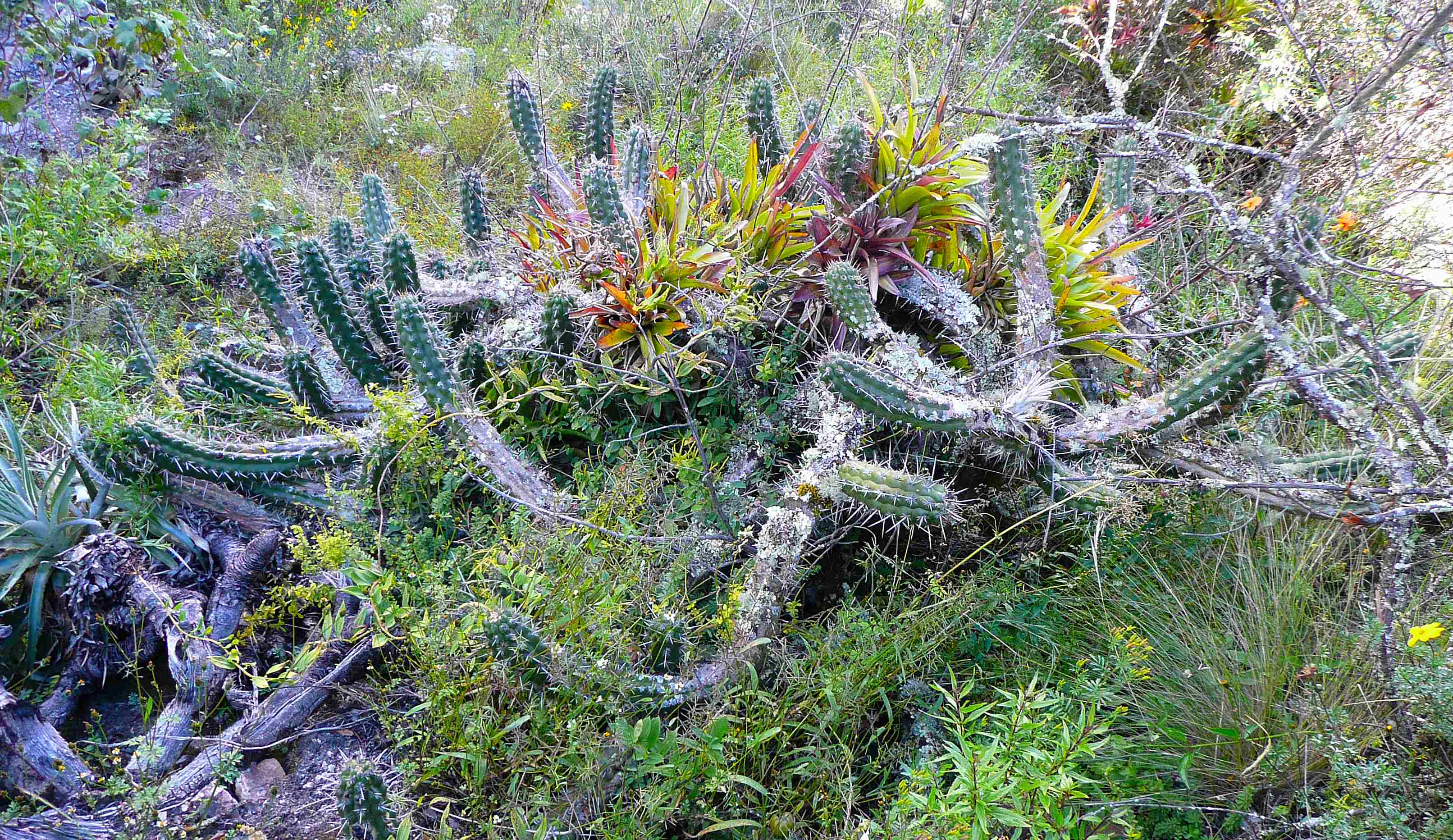 ↑ Borzicactus fieldianus BK09508.4 father plant ↑
___
Corryocactus melanotrichus BK08603.4 “K’usa k’usa”
Upright, slender columnar stems to 1–3″diameter, forming candelabra stands to 6–8’+ tall, well armed with long spines. Endowed with purplish flowers and fat, round fruit to over 3″ with a delicious sweet-sour flesh, reminiscent of kiwi. Seed from populations at Hacienda Huajchilla, south La Paz City, Bolivia, near 10,000′, remnant dry forest/semi-arid thorn scrub in the broad valley carved out by the Rio La Paz. It commonly grew alongside Trichocereus bridgesii, Ephedra americana, Prosopis aff. alba, Puya sp., etc.—when we visited in 2008 & 2010, the whole area was under development as a wealthy suburb and these specific populations are undoubtedly now gone. We were told that this region was once among the favored spots for local Aymara herbalists to collect medicinal plants and harvest Achuma. The fruit is said to be useful for inflammation and as an analgesic. Cut sections of stem, along with several other spiny cacti, are sold at the famous Mercado de las Brujas & La Hechiceria (Witches’ Market) in La Paz for use in misa offerings or made into an infusion to wash with for good luck. A hardy species worth growing for the fruit alone. We’ve only offered cuttings a few times. Z9a
[ 6 ] → 2 ~ 5–7″+ cuttings $27.50 each
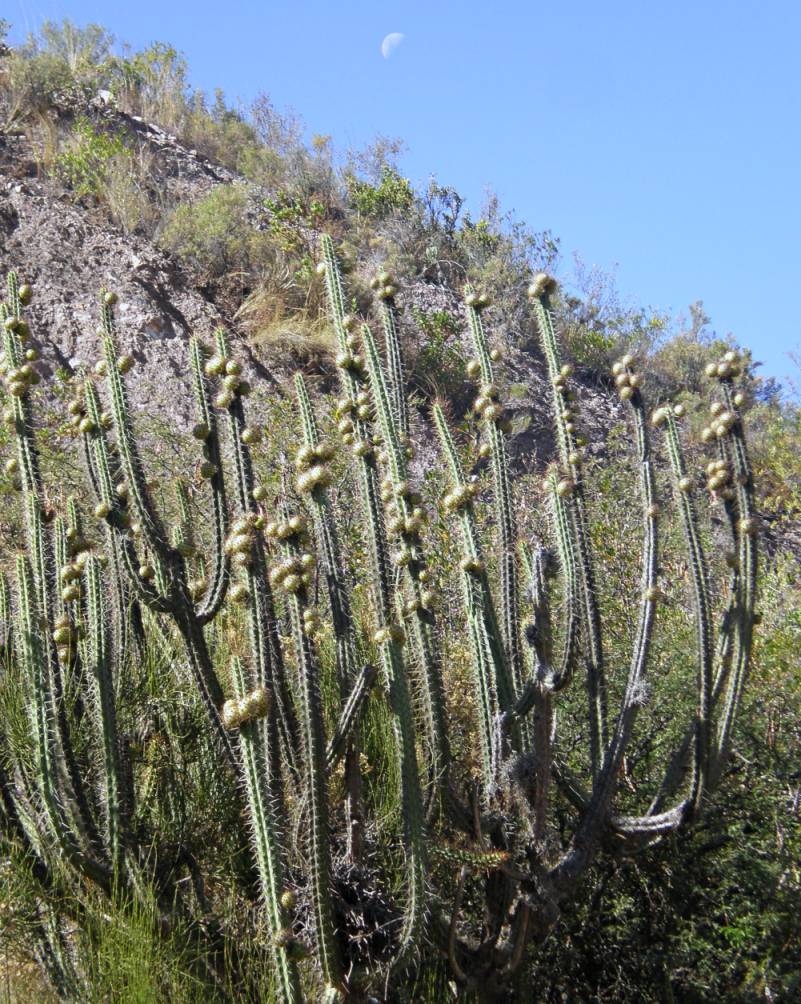 ↑ Mother plant in fruit, Hacienda Huajchilla, La Paz Dept., Bolivia ↑
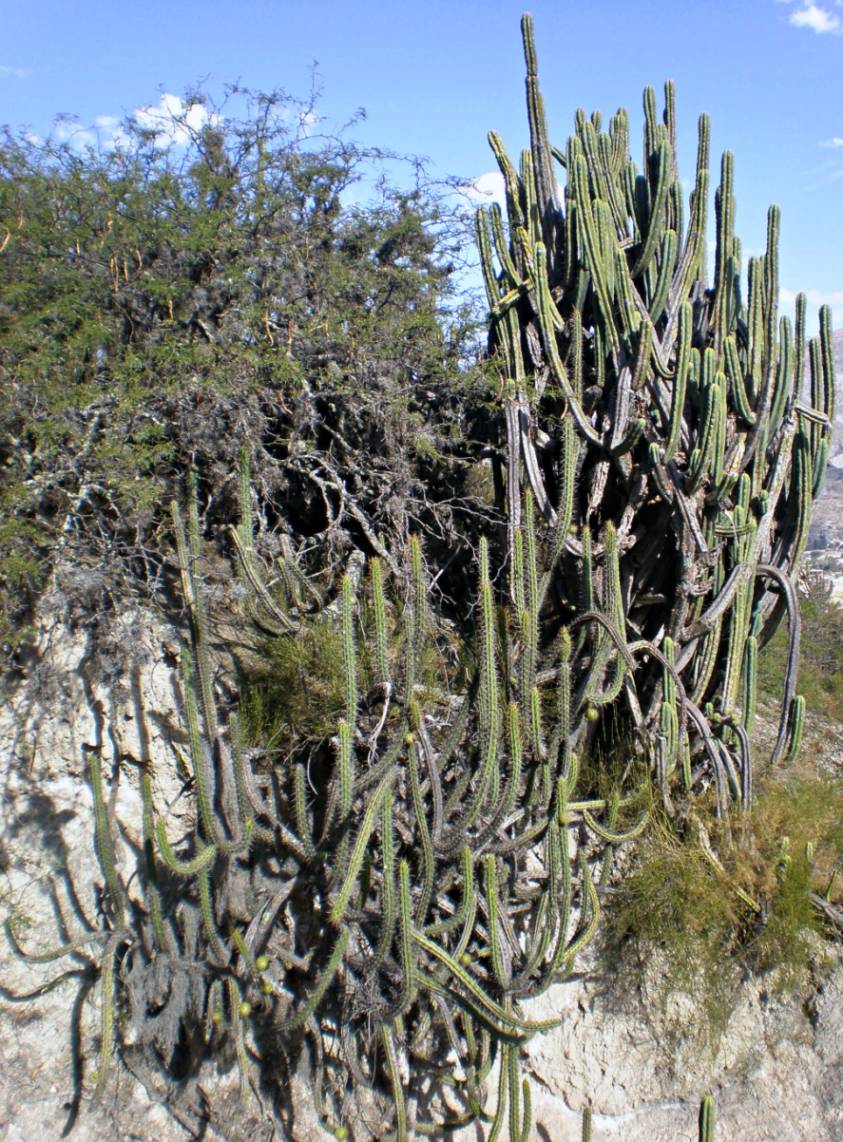 ↑ Corryocactus melanotrichus (front) growing with Trichocereus bridgesii, Prosopis & Ephedra, on the slopes above Huajchilla ↑
___
Echinopsis eyreisii X Trichocereus terscheckii
This awe-inspiring hybrid has been one of the most asked after plants in our collection for years. A matching of opposites—the dwarf, clumping Echinopsis eyreisii fertilized by the gargantuan Trichocereus terscheckii. The progeny look like a robust T. terscheckii with a few extra ribs on massively thick stems to 12″+, closely spaced, large furry areoles, short, stout spines, and white/pink funnel flowers with very furry tubes. In fact, the plant looks similar to the the nearly spineless new growth we’ve seen on large T. terscheckii in habitat once they grow beyond the reach of possible herbivores. One of our early hybrids, germinated back in 1998. Only 3 seedlings of this cross survived (and 2 of the opposite). The plants have been very slow growing, after 26 years they are just over 4′ tall. We had expected this hybrid to pup readily like its mother, but after 2 decades we became impatient and cut the top from one [clone A]—which forced pupping. Only offered a few times before via auction. Here is your only opportunity to obtain a rooted cutting—become one of the lucky few to grow this botanical wonder; impress your friends & neighbors… make covetous collectors drool! Z8a/b
1 ~ 7″ tall, 7″+ diameter plant $333** SOLD
1 ~ Approximately 4.5″ tall, 4.75″+ diameter cutting with roots $269 SOLD
1 ~ Approximately 4″ diameter cutting $235 ♥ New ♥
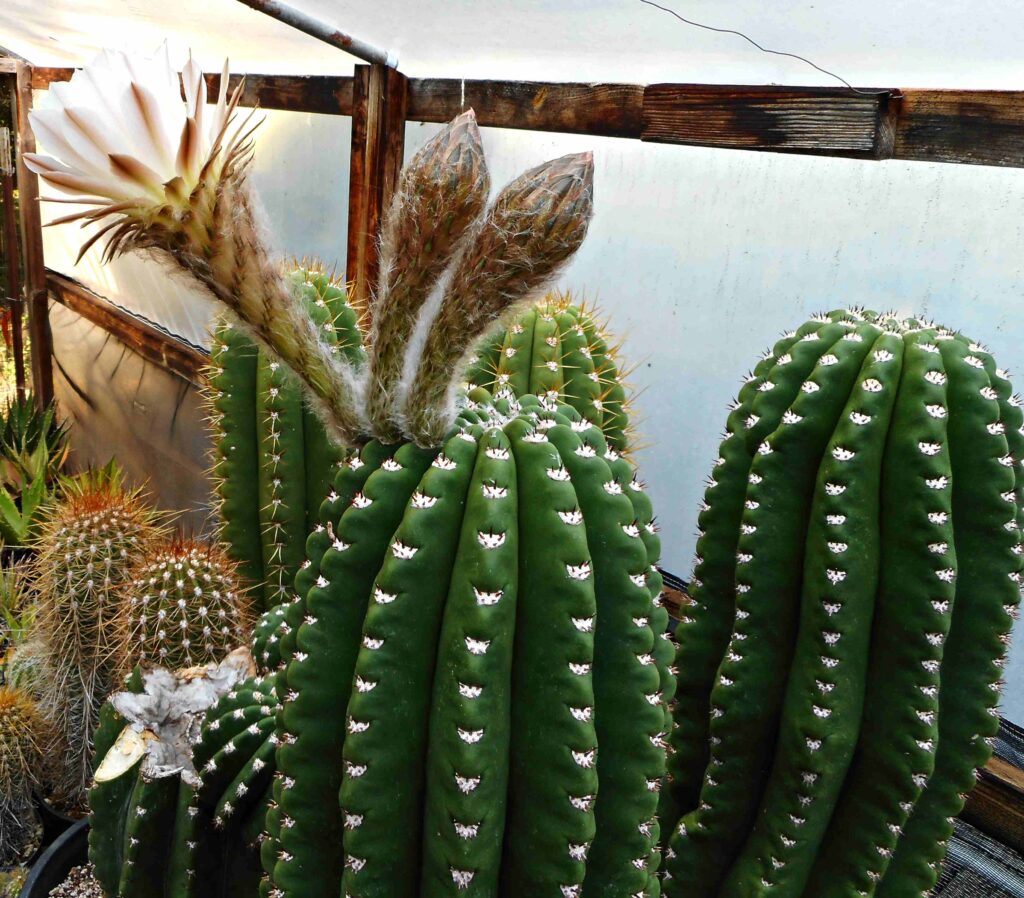 ↑ Echinopsis eyreisii X Trichocereus terscheckii mature specimens & blooms ↑
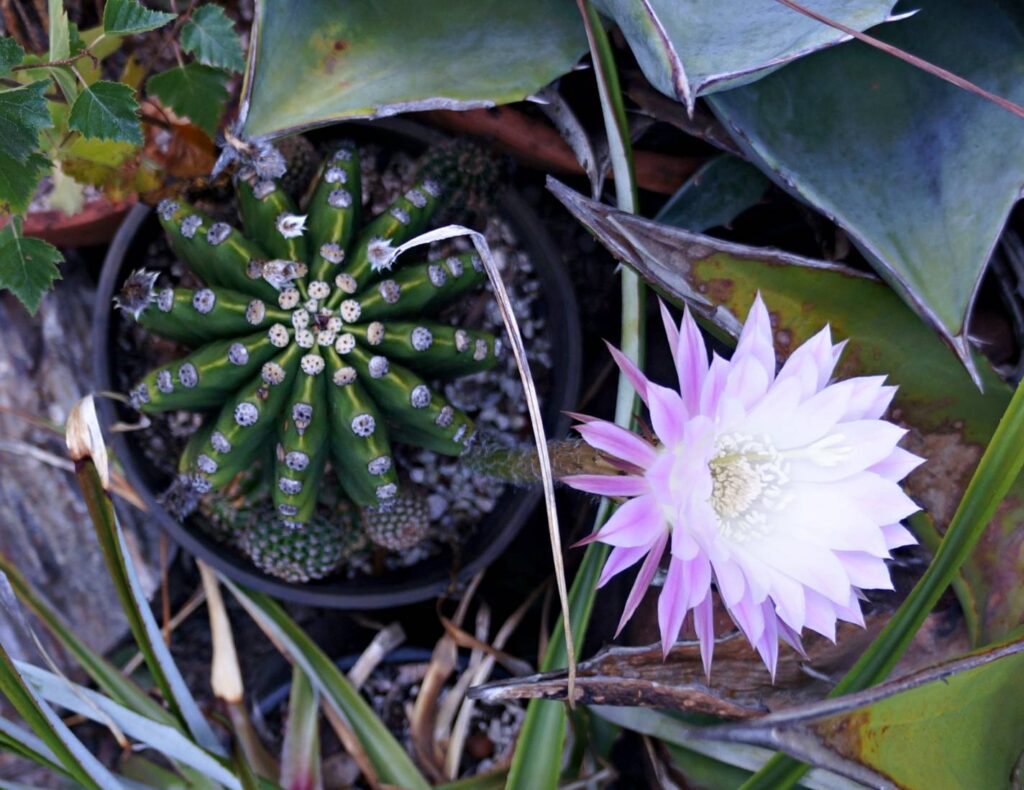 ↑ Echinopsis eyreisii mother plant ↑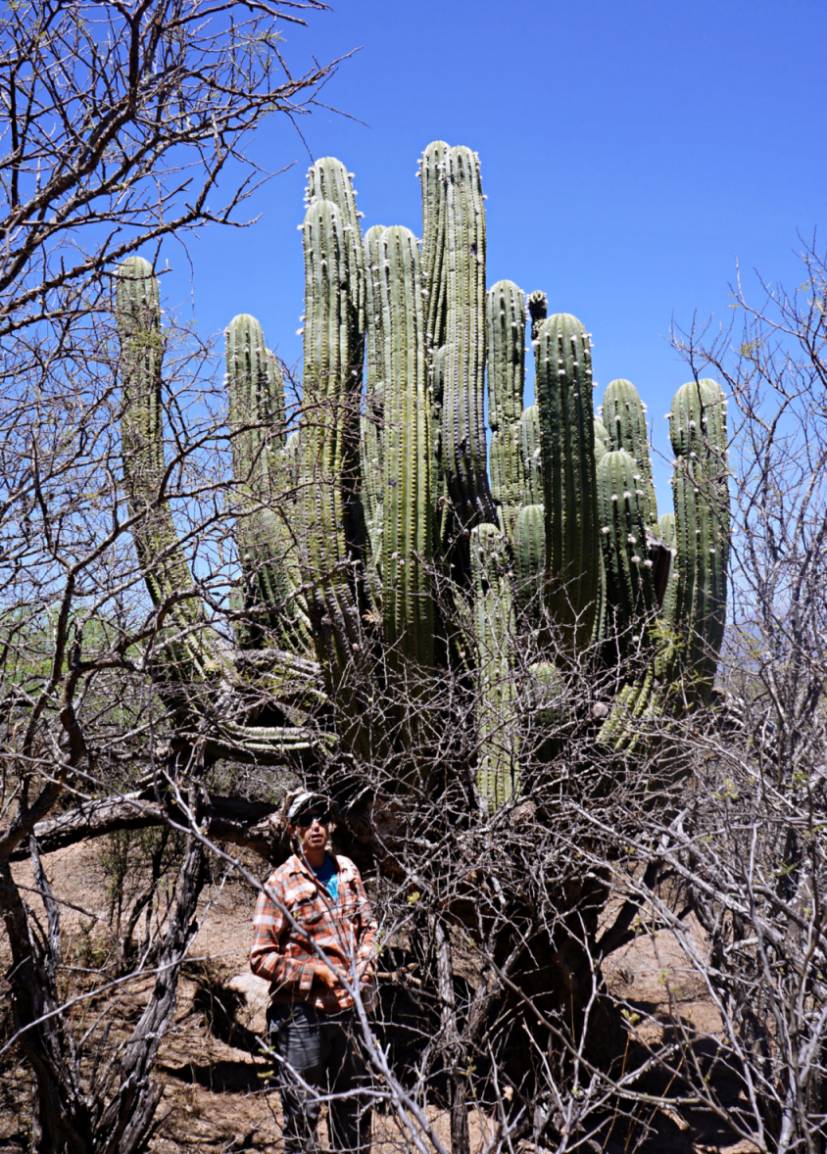
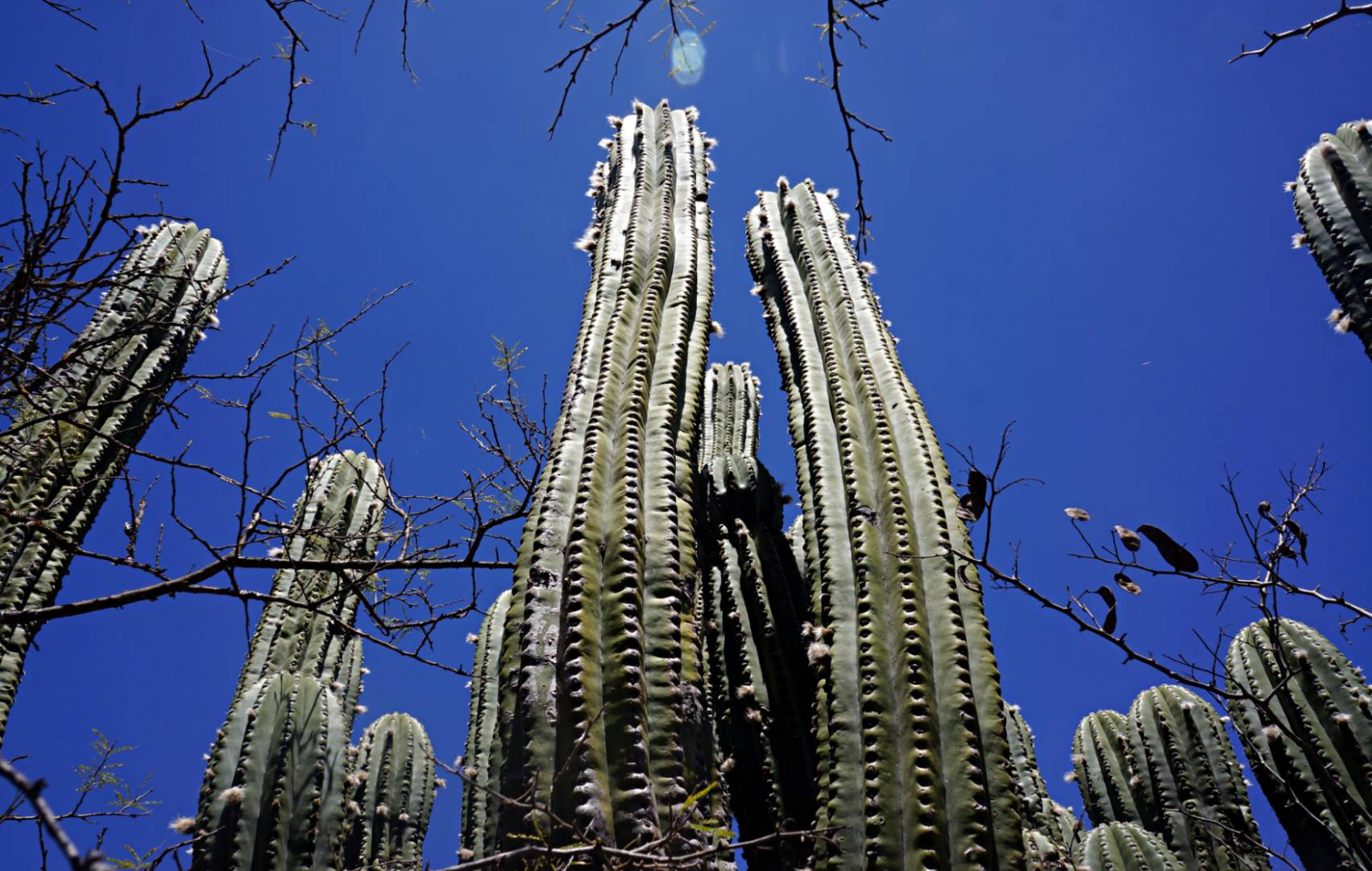 ↑ The father species, Trichocereus terscheckii, in Salta, Argentina ↑
___
Echinopsis subdenudata ‘Fuzzy Navel’ X Trichocereus peruvianus/ ‘Juul’s Giant’ hybrid f. monstrosus
Since releasing this fun furry hybrid via auction in 2023, we’ve gotten repeated requests for plants—we are pleased to have a few hale and happy seedlings up to size to offer here for the first time. The young progeny of this novel pairing already have thick areoles with abundant fleece—we eagerly anticipate the maturation of this sure-to-be unparalleled pilose beauty! We were surprised when one specimen recently bloomed for us with a heavenly scented white flower with a very furry, slender floral tube! The mother, Echinopsis subdenudata ‘Fuzzy Navel’, is a tiny spined, clustering plant with small globular stems to 4″+ bearing fluffy tufts of velvet-soft, white fur at each ‘polka-dot’ areole; sweetly scented white blossoms with long, slender floral tubes; impregnated by our robust T. peruvianus/’Juul’s Giant’ aberration, beloved for its fat bluish stems, highly diverse monstrose to cristate growth, and large mutant blossoms. We’ve already observed some mutations, including crests, among the scant seedlings and there is a distinct possibility of monstrose growth developing as these plants mature. Until now, only a few of these remarkable wooly hybrids have been distributed (going for $95–150+/plant), we finally have enough up to size to reduce the price, though once these beauties sell out, that’s it for our stock! Z9a?
[ 9 ] → 2 ~ 2–3″+ plants 4 years old $69 each September SALE! $64 each; or 2 for $112
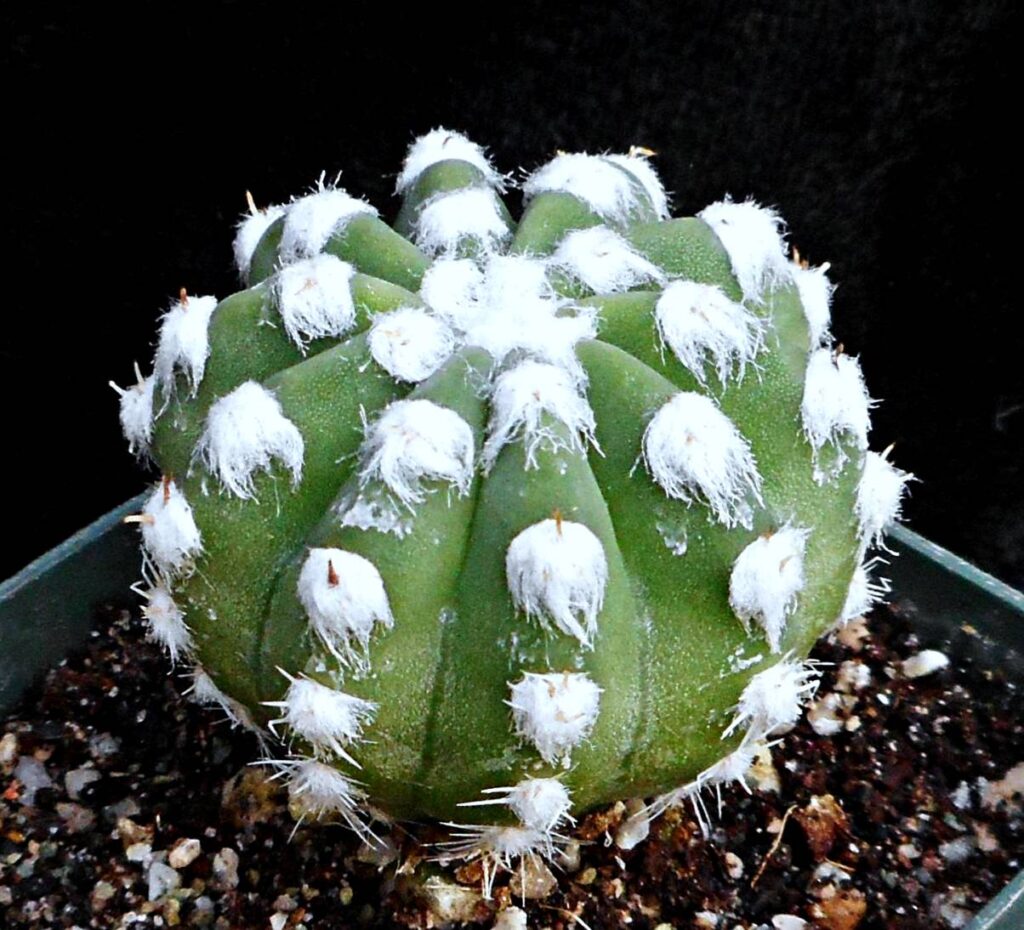
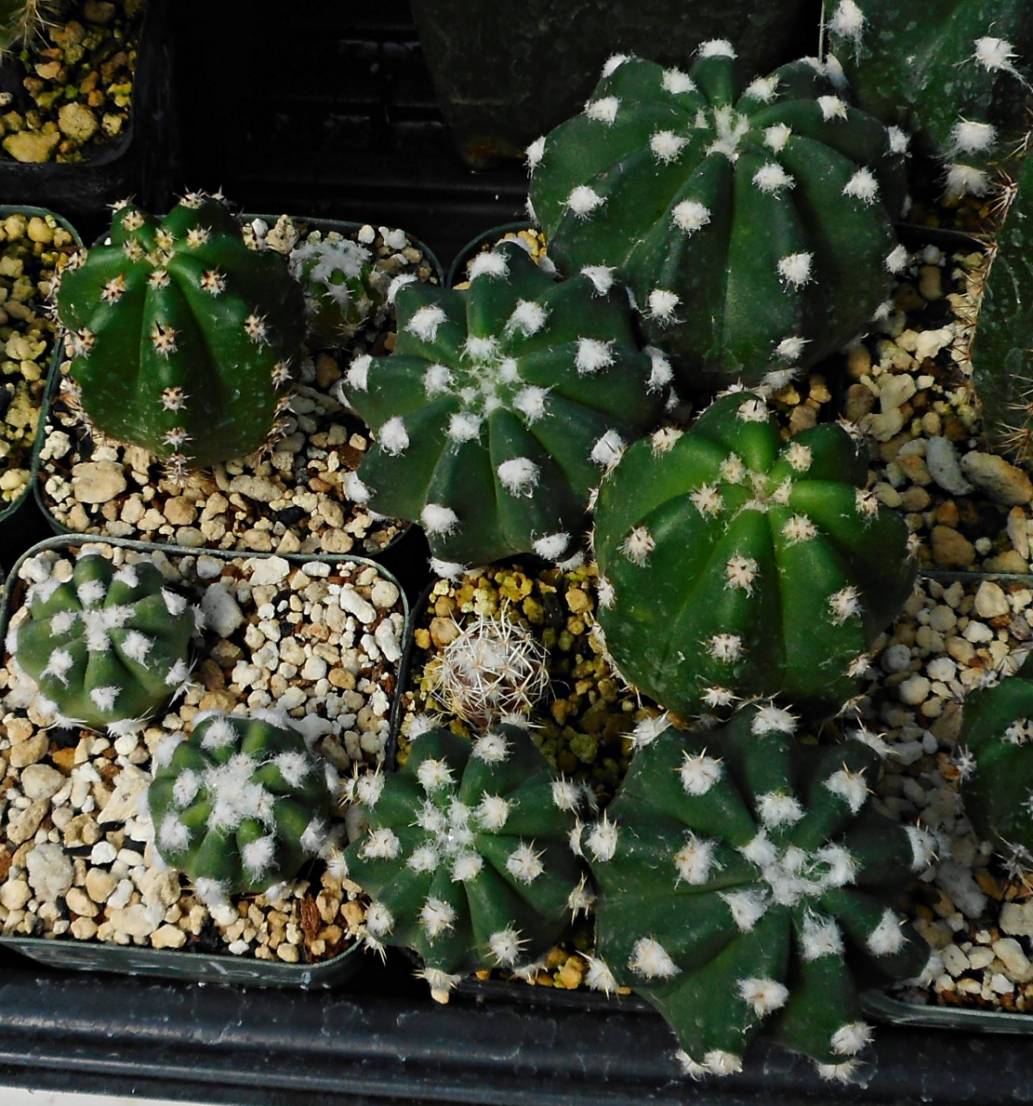 ↑ Examples of specimens ↑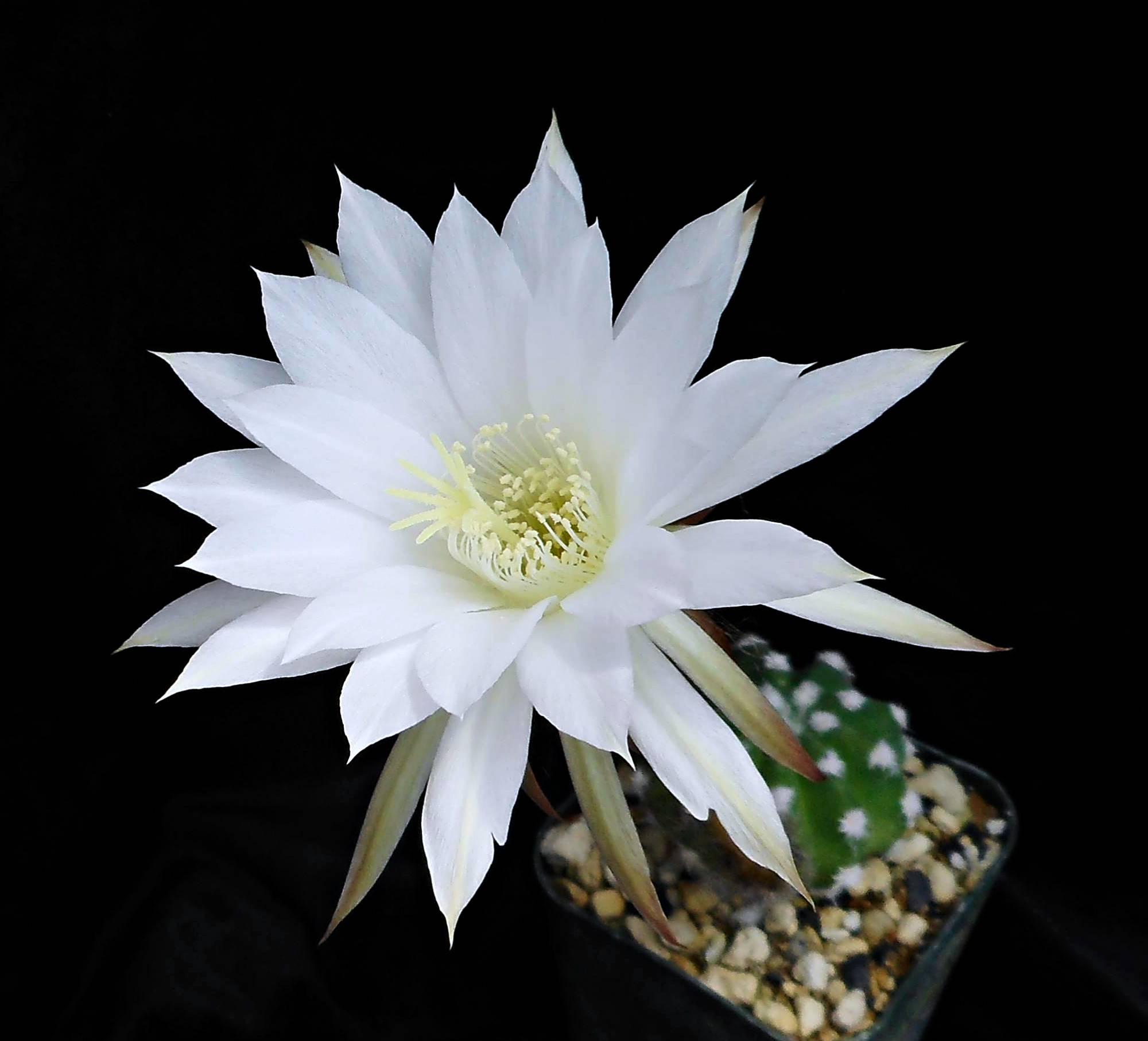
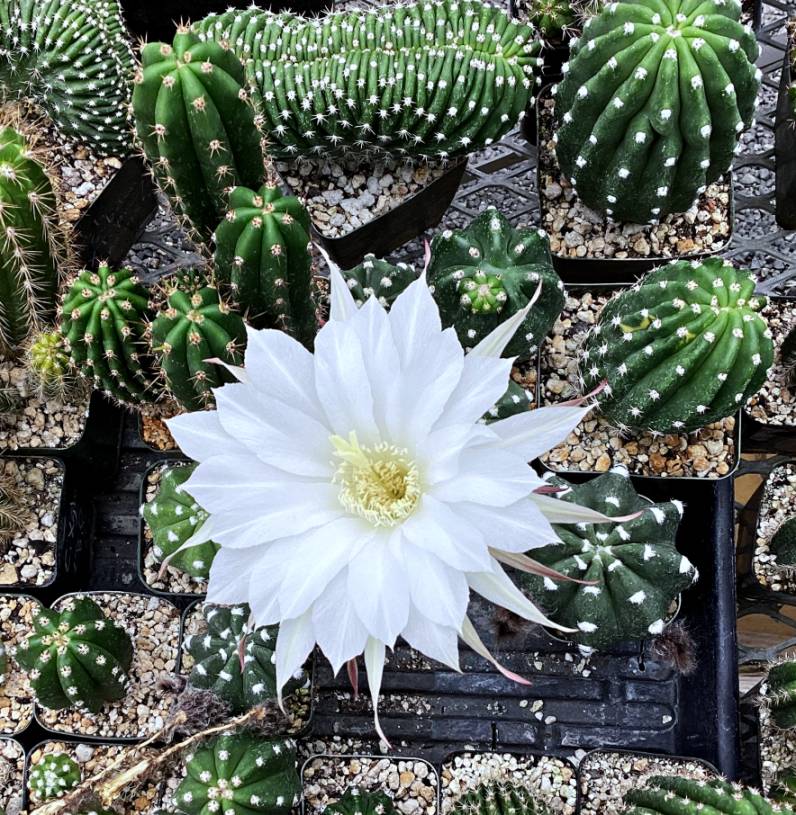
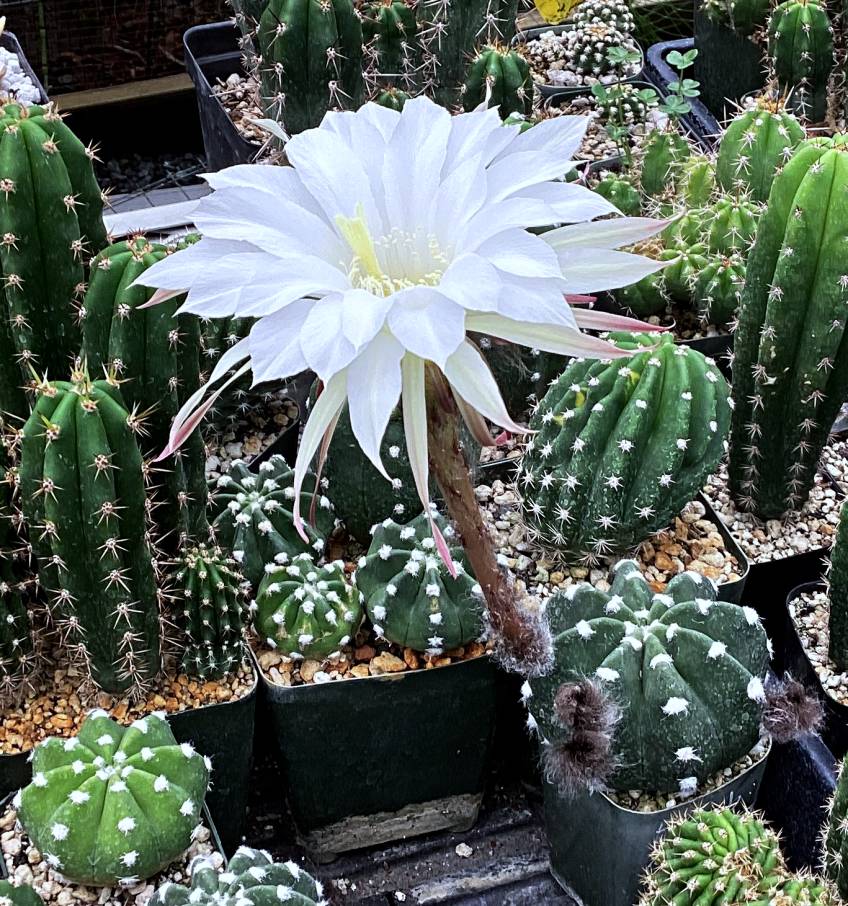 ↑ Awesome blossoms! ↑
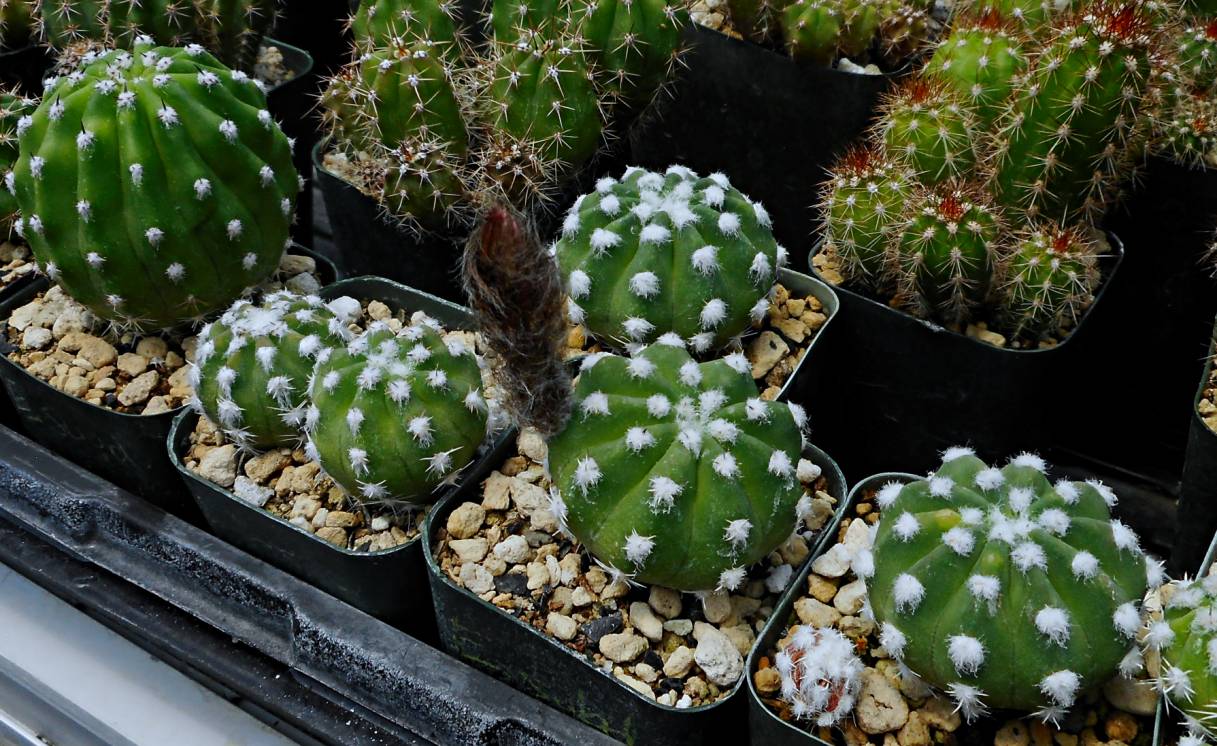 ↑ Examples of specimens, center plant with flower bud ↑
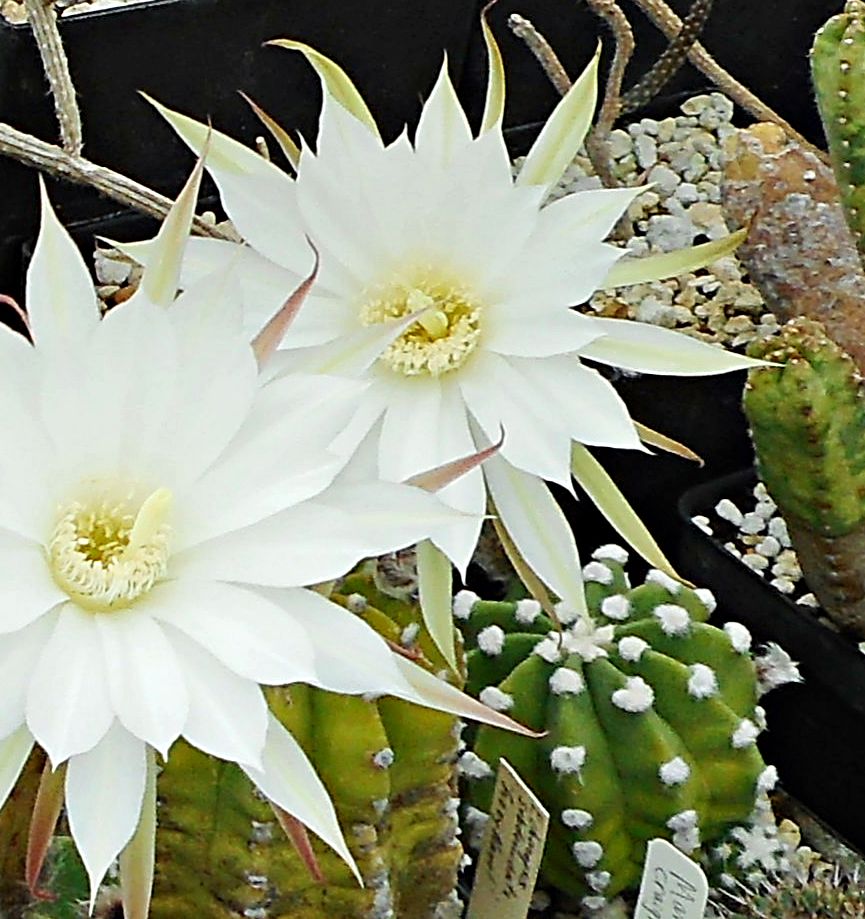 ↑ Echinopsis subdenudata ‘Fuzzy Navel’ mother plant ↑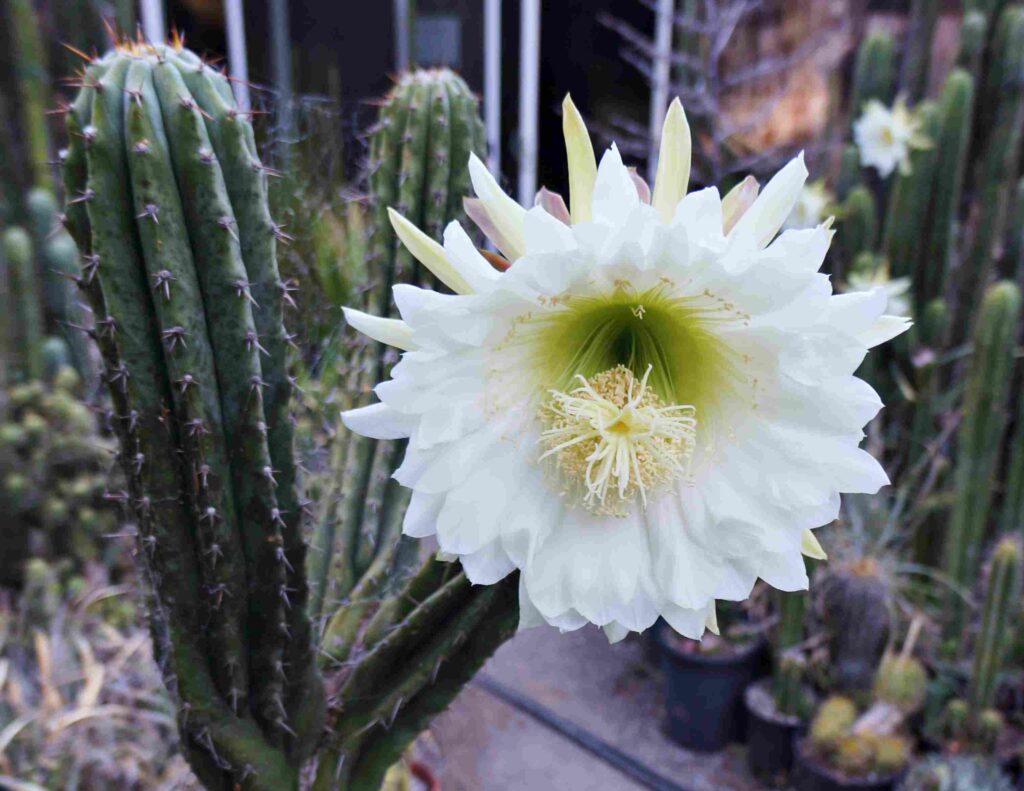
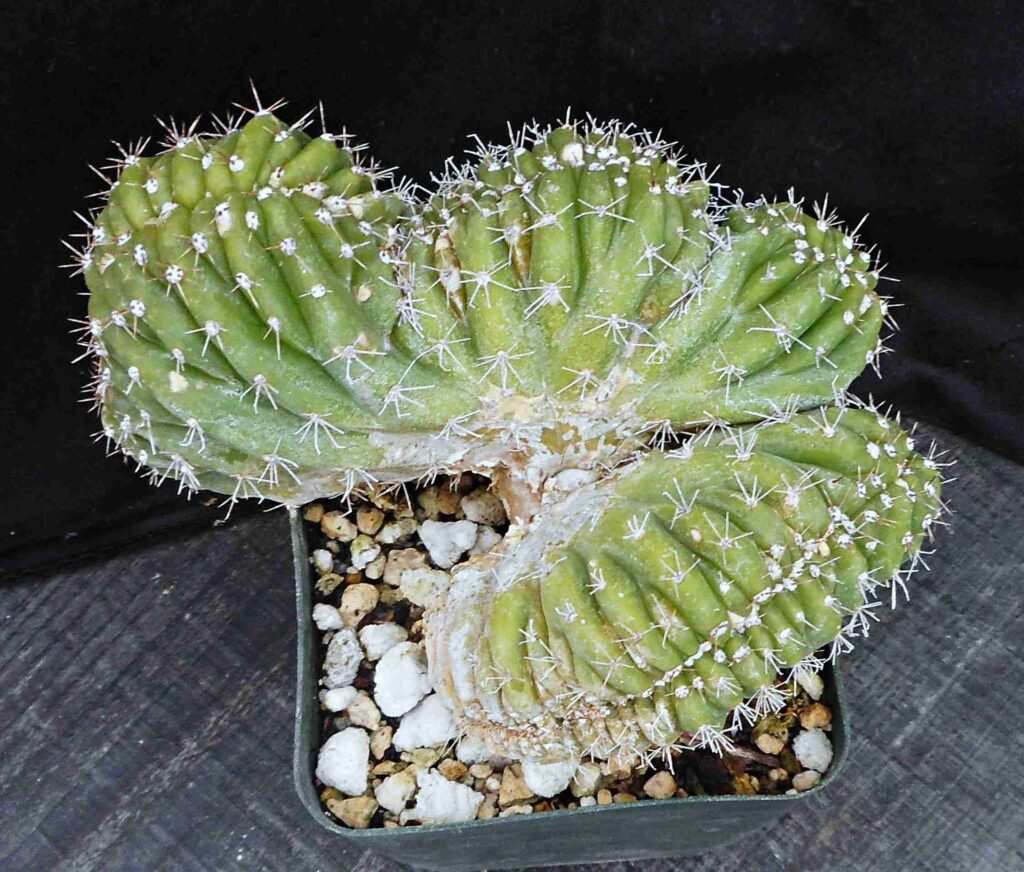
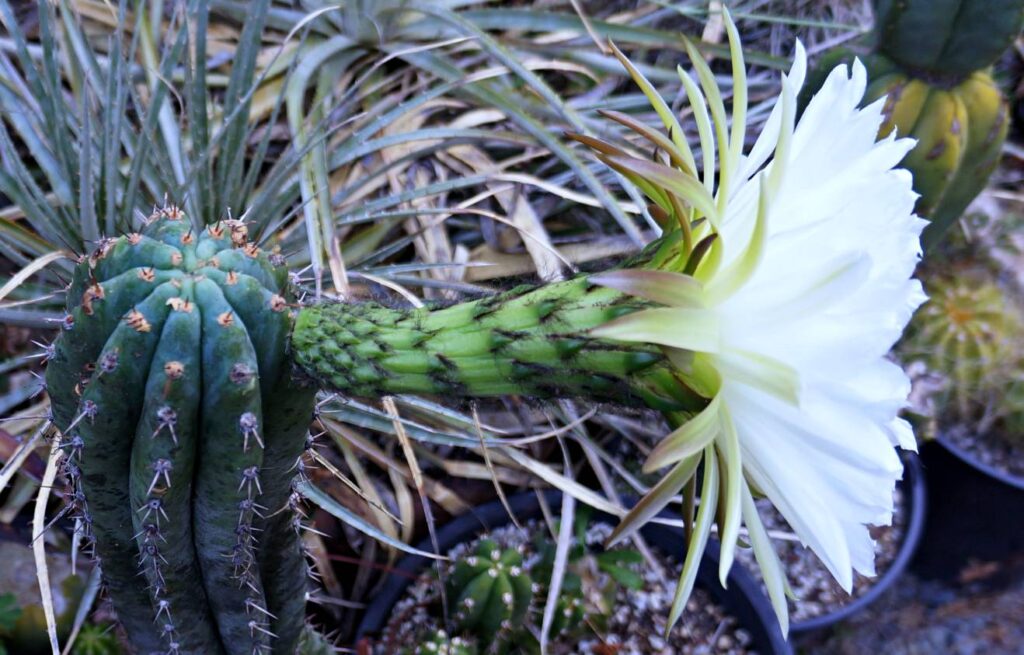 ↑ Trichocereus peruvianus/ ‘Juul’s Giant’ hybrid f. monstrosus father plant: a diversity of forms ↑
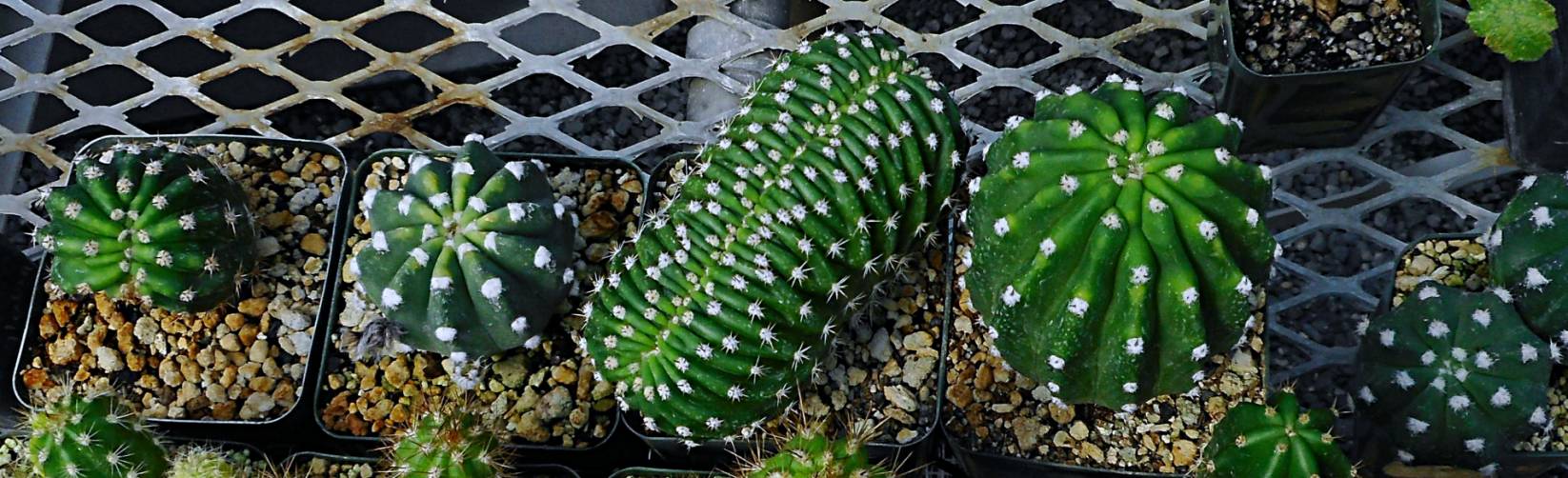 ↑ An example of observable mutations in the siblings of the specimen plants [these plants are not for sale] ↑
___
Pereskiopsis porteri BK10117.5
Shrubby cactus thin cylindrical stems to 6′ and succulent true leaves that are edible. A primitive Opuntia relative with 1″+ spines and glochids. Rose-like yellow flowers. Orange fruit with a sweet-tart edible pulp. The perfect grafting stock for cactus seedlings. Our seed accession from the dry-forests of south Baja. Very rarely offered seed grown plants! Z10a
[5 ] → 1 ~ 4–6″+ plant 3-4 years old $17.50 SOLD
___
About the genus Trichocereus
For nearly three decades, Sacred Succulents has been the premier nursery for Trichocereus offerings. Bolstered by our Andean field studies of the ethnobotany, ecology, distribution and taxonomy of these important columnar cacti, we have long encouraged conservation via propagation and dissemination of the numerous species, scientific accessions (including our BK accessions), and select heirloom clones, in addition to the hundreds of novel hybrids we’ve produced over the years—inadvertently inspiring a surprising surge of horticultural enthusiasm that continues to grow!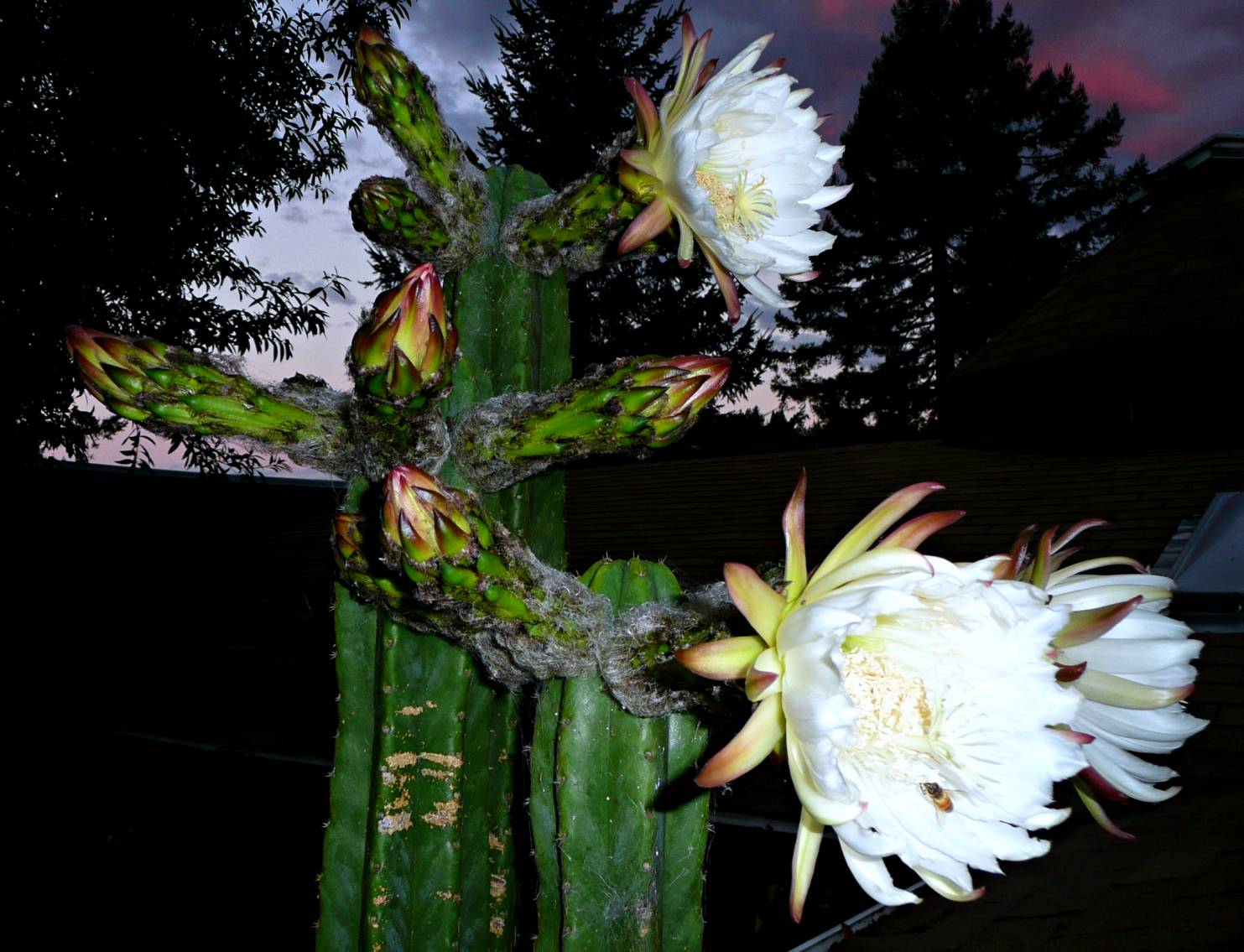
Trichocereus is a large genus of some 50–80+ species native to the Andes of Ecuador, Peru, Bolivia, Argentina and Chile. Decades ago Trichocereus was merged with the closely related genus Echinopsis, then recently segregated again to Trichocereus, but with questionable changes, leading to great confusion. In many ways this genus is a perfect case study in the absurd modern trends in armchair taxonomy. Here we recognize Trichocereus as a distinct genus, variable in size and form, sometimes low growing multi-branching colonies, others tall candelabra-like stands (the “San Pedros”), to imposing tree-like giants. All produce large, multi-petalled, funnel shaped flowers—these magnificent blossoms are either white and nocturnal with a heavenly scent, or variously colored and diurnal. The grape to egg-size fruits are edible with a delicious, juicy pulp and crunchy, nutritious seeds. Often mistakenly thought of as sun-baked desert plants, many of these species are in fact integral members of forest ecosystems—from Prosopis and Anadenanthera dry forests to Polylepis cloudforests. The oldest depiction of a succulent plant (and possibly of its propagation) is an anthropomorphic being carrying what is assumed to be a rooted Trichocereus cutting at the 3000 year old temple of Chavín de Huantar in the central Peruvian Andes. Today cuttings are often planted as living fences throughout South America. Flower petals and the inner flesh of most species are excellent external remedies for wounds and burns much like Aloe vera. A medley of species, known locally as “San Pedro”, “Huachuma” in Quechua, or “Achuma” in Aymara, are central to the Curanderismo healing traditions of the Andes. The cut stems of some species are traditionally used to “purify” water and in certain regions made into an esteemed shampoo. All are relatively fast growing, very easy care for, and fairly cold & wet tolerant. For the best growth provide a rich, well-draining soil, plenty of horizontal root room, bright light, regular water and balanced nutrients during spring and summer. Trichocereus provide some of the best long lived grafting stocks. We began hybridizing Trichocereus in 1996 and have introduced hundreds of unique crosses over the years. Increasingly popular as drought hardy landscape specimens, there has been a surge of interest in the horticultural merit of Trichocereus. In fact, in what we have come to think of as Trichomania, the number of collectors has skyrocketed in past decade from a couple hundred worldwide to many thousands!
— We offer all Trichocereus strictly for growing purposes —
Note: For optimal haleness and resilience, we grow our Trichocereus “hard”, it is not unusual for the cuttings we offer to have a bit of a weathered look, similar to plants in habitat, as many come from our mother plants grown outside year round, exposed to the full barrage of northern California elements—winter months of heavy rain, regular frost in the mid to low 20°s F (& usually 1-2 weeks in the high to mid teens), then the hot summer sun and recurring dry periods. The seedlings and plants in the greenhouse are grown in bright filtered light, are given seasonal dry cycles, and exposed to cold in the high to mid 30°s F during winter. We feed all of our Trichocereus enough organic food to support vigor, but we do not push them for maximum growth—heavy fertilizing may produce fast growth with an alluring “unblemished” look, but 30 years of experience has demonstrated that such plants tend to be notably less sturdy and more prone to pests & problems. Our goal has always been to offer the hardiest plants possible!
Trichocereus Companions:
In habitat, Trichocereus occur with a diverse array of companion plants and we encourage you to try growing them with some of their commonly associated Andean species: in grouped plantings, in pots side by side, or even in the same pots—many associates are low growing or groundcovers that can be planted around the base of the columns. Consider your climate, growing environment and how the following plant allies may complement your Trichocereus specimens: cacti such as Borzicactus spp., Cleistocactus spp., Corryocactus spp., Armatocereus spp., Lobivia spp., etc.; small succulents such as Peperomia galioides & other aromatic Peperomia spp., Echeveria & Sedum & Villadia spp., Pilea spp., shrubby Ephedra spp., to larger succulent companions like Agave cordillerensis & Furcraea spp., floriferous Puya & other terrestrial bromeliads (Abromeitiella, Deuterocohnia, etc.), or caudiciform papaya like Carica & Jacaratia; the xerophytic Barbaceniopsis vargesii; flowering bulbs—Cypella, Eustephia, Stenomesson, etc.; ferns like Blechnum, Cheilanthes & Pellaea spp.; climbers such as Bomarea spp., Ipomoea & Dioscorea spp., Passiflora spp., Mutisia acuminata, etc.; low shrubs like the xerophytic perennial tobacco Nicotiana benavidesii & other Nicotiana spp., Siphocampylus tupaeformis, Baccharis spp., Calceolaria spp., Begonia spp., the furry leafed Lessingianthus asteroflorus, Salvia spp., fruiting Lycium, Myrteola & Ugni spp., Pernettya & Vaccinium & other neotropical blueberries (Disterigma, Cavendishia, Ceratostema, Macleania, Satyria, etc.),; tall shrubs & trees like Colletia ulicina, Luma spp., Buddleja spp., Aristotelia chilensis, Sambucus peruviana, Anadenanthera colubrina, Polylepis & Escallonia spp., Alnus & Podocarpus spp., Geoffroa & Zizyphus; etc. Or use your imagination and choose plants from other regions of the world to fit a similar companion niche! (Check throughout the Specimen List for such plants).
___
We are involved in a long term interdisciplinary field study of the ethnobotany, ecology, distribution and taxonomy of Trichocereus cacti.
We are currently working on a full descriptive and photographic account of our BK field accessions.
We hope to have it completed by 2026, periodically check the page for updates [last update 9/29/25].
Purchase of plants helps to fund ongoing research and conservation.
♣
Trichocereus companion plant special offer:
The following 4 companion species for $50 [$66+ value] plus $16 shipping (while supplies last!):
Agave cordillerensis, Eustephia sp.BK14512.9, Pilea serpyllacea, and Nicotiana benavidesii.
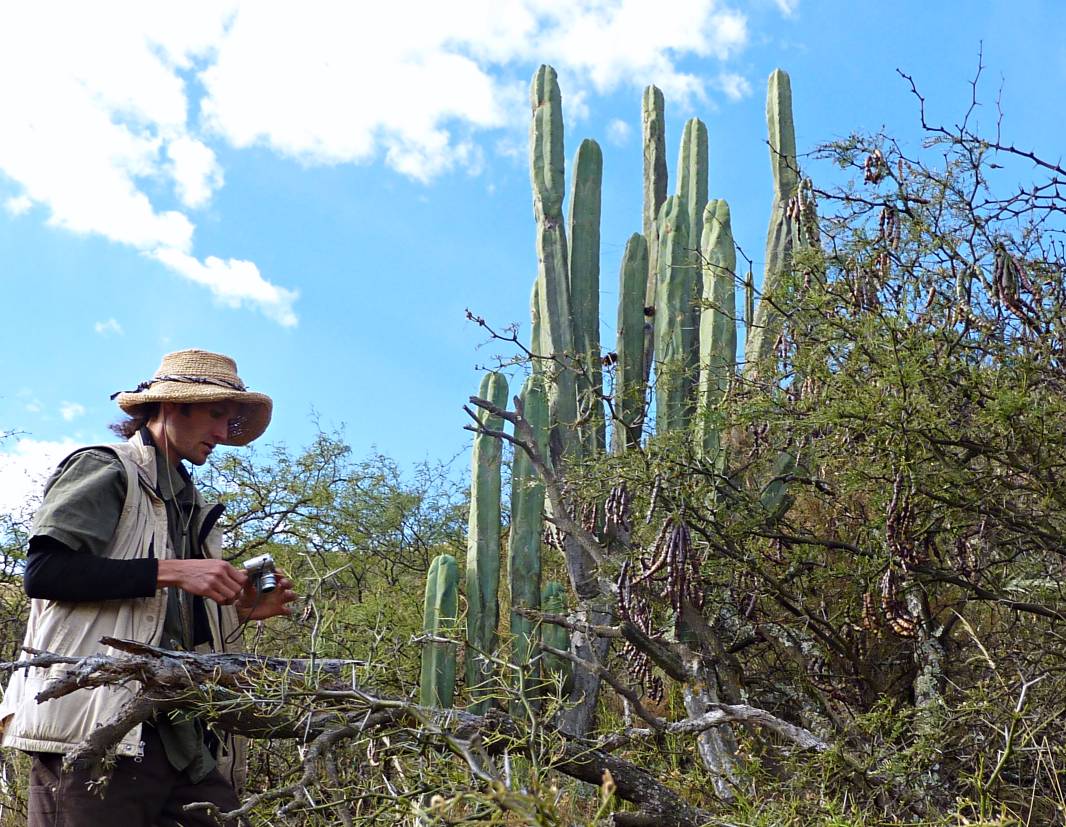 Ben with a Trichocereus bridgesii mutant and Prosopis sp., above Huajchilla, La Paz Dept., Bolivia
__
All BK numbers are originally from our Andean seed accessions.
___
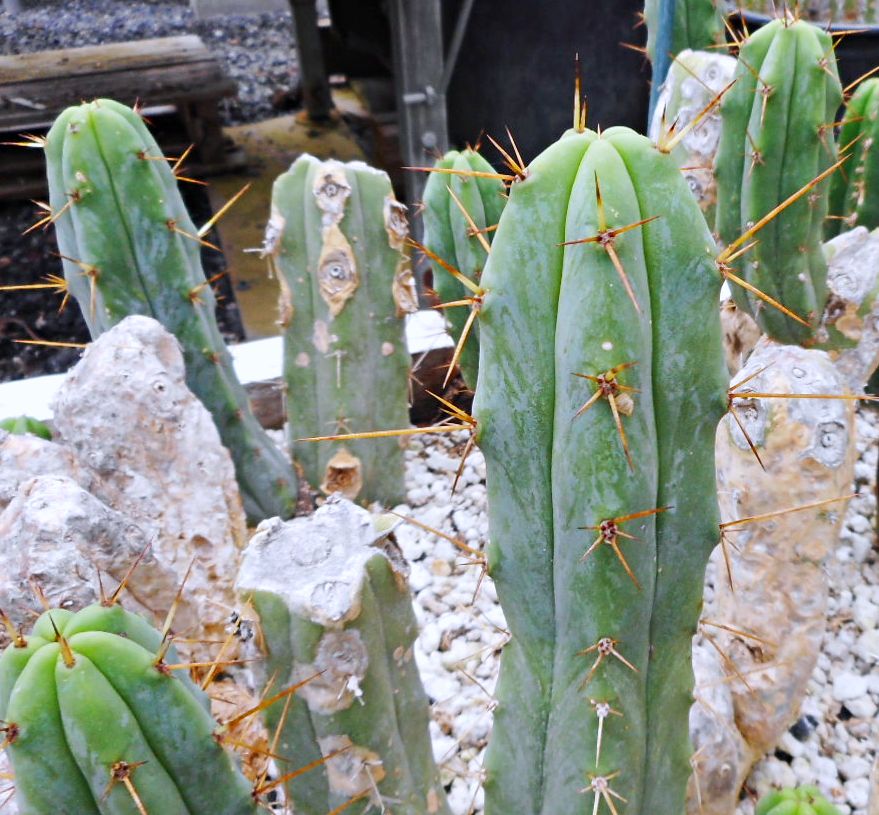
Trichocereus bridgesii Baker5452 “Achuma”
Slender blue-green branches, longish spines, white flowers. Classic heirloom clone collected for the late B. Baker by J. Cruz from a shaman’s garden, Jayuri, Murillo Prov, La Paz, Bolivia. You can’t go wrong with this easy to grow plant, we’ve now cultivated this beauty for nearly 30 years. Z9a
[ 2 ] → 1 ~ 9–10″ cutting $32.50 SOLD
[ 8 ] → 4 ~ 4–5″+ cuttings $22.50 each September SALE! 2 for $40 ♥ New ♥
___
Trichocereus bridgesii ‘Reynolds’ “Achuma”
Spiny, blue heirloom clone collected by the late cactus enthusiast D. Reynolds in the 1960s when he was just 12 years old! He found it growing in front of a motel along El Camino Real, then a small road, in Mountain View, CA. Dave had a massive candelabra of this plant growing at his house when we met him, sadly after his passing his family had the plant cut and taken to the dump. Thankfully Dave gave us cuttings and we offer them in his memory. With our stock damaged last winter, offerings are limited. Z9a
[6 ] → 2 ~ 5–7″ cuttings $22.50 each
[ 4 ] → 1 ~ 10–12″+ cutting $42.50* ♥ New ♥
___
Trichocereus bridgesii ‘Lotusland’ “Achuma” “Melted Wax Cactus”
Upright, green to blue-blushed stems, often grows monstrose with a melted wax look. This is a classic heirloom clone from Lotusland Garden in Santa Barbara, CA, our friend Erik Davis writes: “Lotusland is a gorgeous, diverse, and sometimes fanciful garden, which you still can (and should) visit today. It was crafted by another colorful mystic personality: Madame Ganna Walska, a mediocre Polish opera singer and high-society dame who was married to the hatha yoga pioneer Theos Bernard when she first developed the property, initially intended as a retreat for Tibetan monks.” Get a cutting of this beauty while you can! (Note: the cut your receive may or may not show monstrose growth, but will with time.) Z9a
[ 6 ] → 1 ~ 5–6″+ cutting $29.50 SOLD
1 ~ 3–4″+ cutting $24.50 ♥ New ♥
___
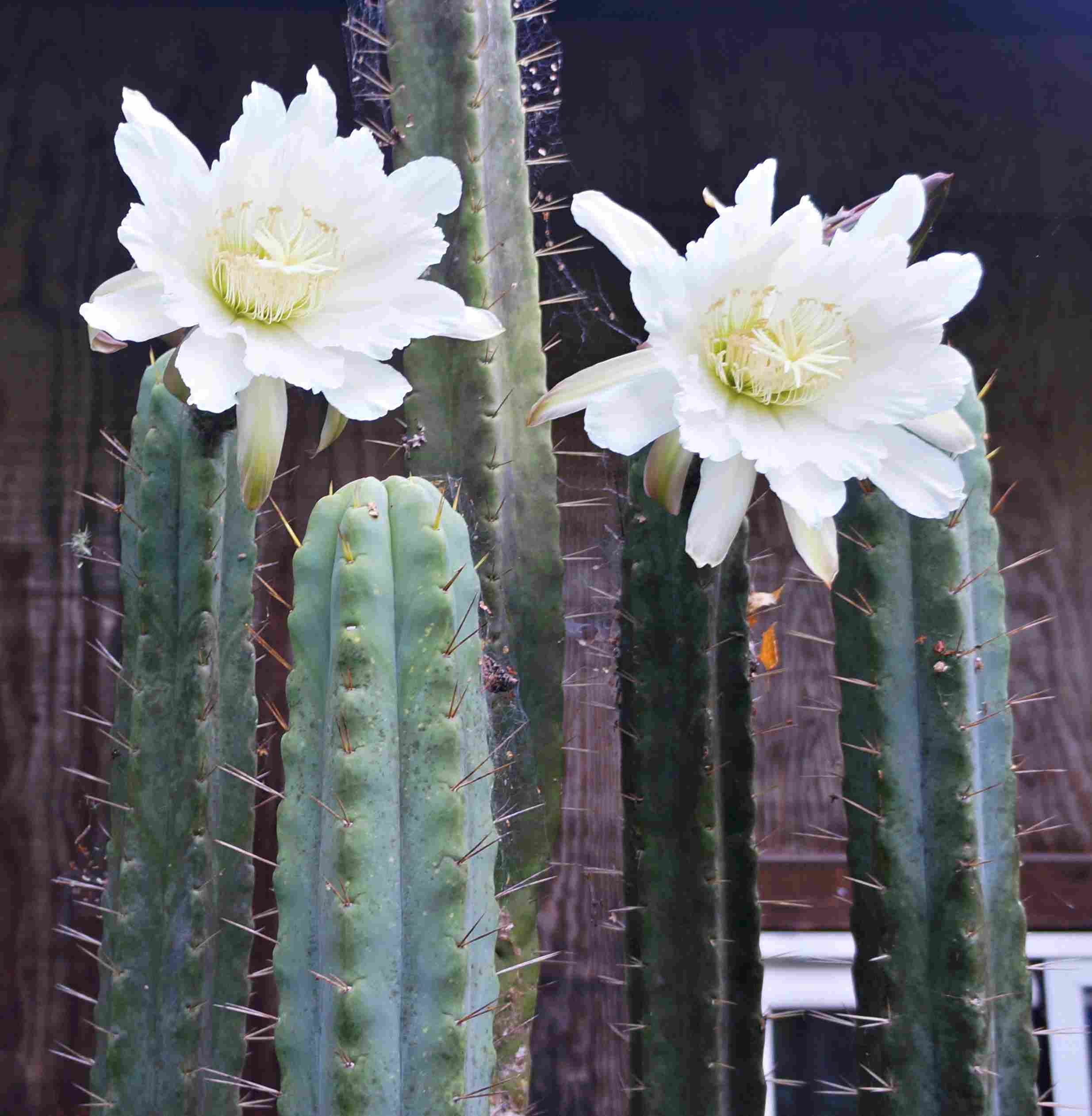
Trichocereus bridgesii SS02 (= Trichocereus sp. SS02) “Achuma”
A favorite for over 20 years! Dense candelabra stands to 16′ tall. Blue-gray/green frosted stems up to 5″ in diameter with 5–7 ribs. Each areole bears 2–4 central spines up to 1.5″ long. The new growth on old stems is often spineless for short sections. White flowers, fat edible fruit. A distinct form, similar to plants seen around the La Paz basin of Bolivia. Several winters of damage to our plants, slow growth the last 2 years and the high demand for this clone means that our retail stock will be limited until at least next summer, and very few cuttings will be available for some time. Z9a
[ 10 ] → 2 ~ 3–4″+ cuttings $24.50 each
[ 10 ] → 1 ~ 5–6″+ cutting $29.50
 ___
___
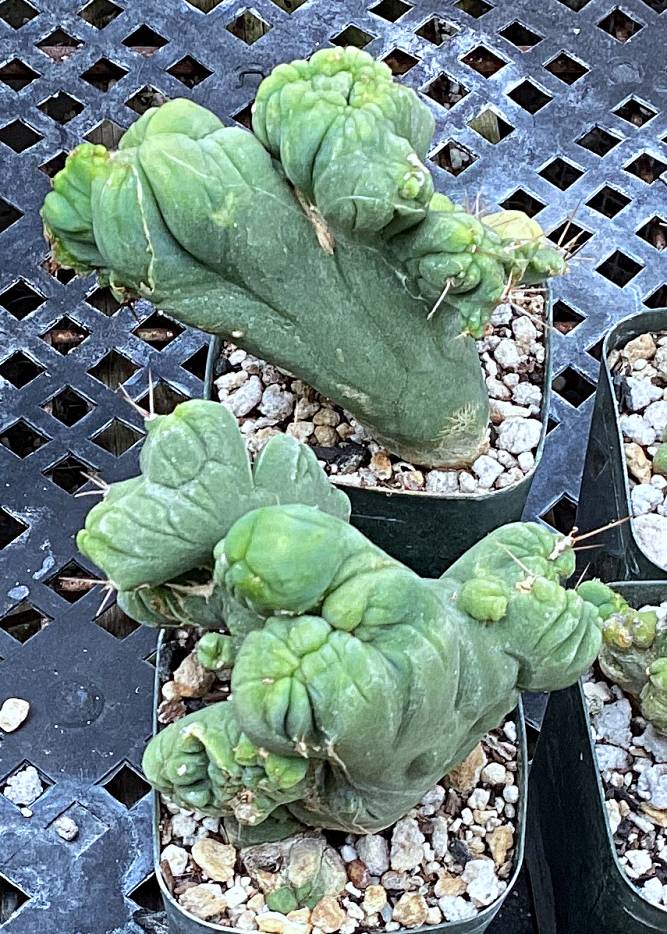
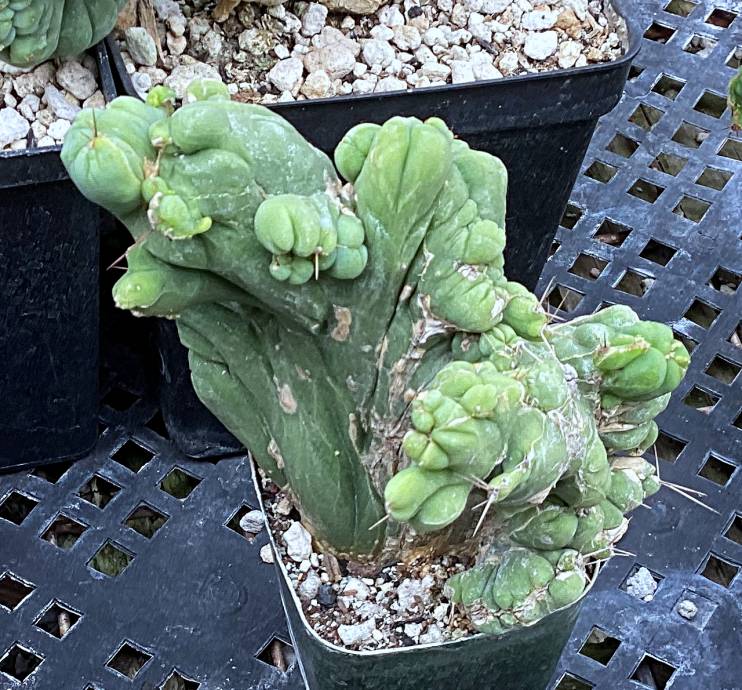
Trichocereus bridgesii f. cristata/monstrosus “Mutant Achuma” ♥ New ♥
Years ago an unusual growth of crested tissue appeared on a specimen of our T. bridgesii f. monstrosus clone B and we began propagating this special sport. One of the oddest crests; mostly spineless blue-green tissue in thin or rounded ridges, sometimes resembling a cresting wave. Demand has always been high and supplies short— damage to our stock in recent years has further limited our offering this special plant. Slow growing, each plant is a unique living sculpture that will continue to develop and wow as a marvelous specimens! We offer a few rooted cuttings here, a bit of natural corking on the sides of some of the plants. Z9a
1 ~ 5″ wide by 4″ tall plant $75 SOLD
[ 3 ] → 2 ~ 3″+ plant $55 each
___
Trichocereus bridgesii f. monstrosus cl. A “Mutant Achuma” “Penis Cactus”
Virtually spineless, smooth blue-green stems with 2–4 indistinct ribs. Will occasionally produce rather impressive yellow spines (graying with age) up to 3″ long. Plants eventually form heavily branching candelabra like stands. Individual stems can grow to be remarkably phallic. Our mother (perhaps “father” is more apropos) plants have suffered from the extreme weather the last couple years, so we’ve had few cuttings to offer—here’s your chance to grow the venerable and perennially popular penis cactus! Z9a
[ 8 ] → 2 ~ 5–7″ cuttings $25.50 each September SALE! 2 for $47
[ 3 ] → 1 ~ 10–12″+ cutting $48.50*
‘Ugly’ Cuts:
These cuttings are weathered and a bit calloused or scarred, survivors of adversity—a little ugly now but will grow into lovely specimens with time & care!
1 ~ 16″+ rooted plant, semi-normal with spines on over 3/4 of the stem $69* SOLD
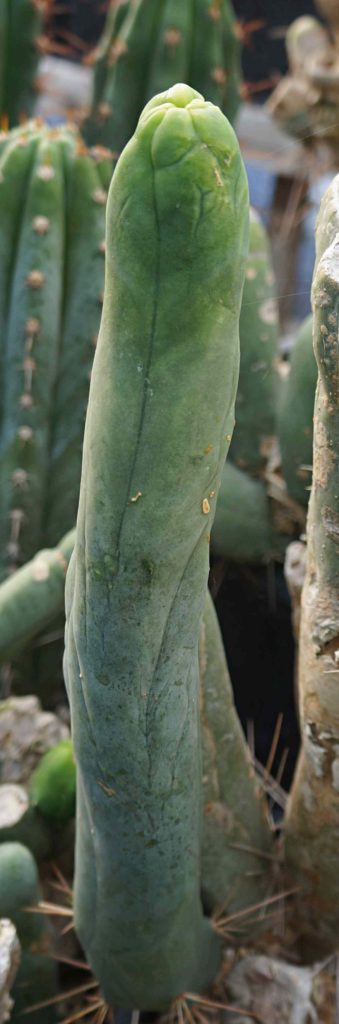 ↑ An example of a regular cutting ↑
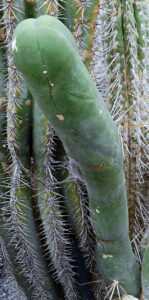 ↑ An example of an “ugly” cutting ↑
___
Trichocereus bridgesii f. monstrosus cl. B “Mutant Achuma”
A unique mutation—clusters of egg-shaped, blue-green stems with 2–5 ribs, initially bearing 3″ yellow to gray spines then becoming smooth and spineless. The stems reach 3–6″ in length then stop growing and begin to offset. Eventually forms dense stands to 6′ tall made up of hundreds of small multi-branched stems. This decidedly different mutant of the Bolivian San Pedro has long been popular among collectors, second only to the phallic Tbm clone A. Roots easily, but relatively slow growing when compared to other clones. Due to damage to our mother plants from extreme weather the last couple years, our offerings of this clone have been sparse; we have a few unrooted cuts available, each made up of 2–3 stem joints. No collection is complete without this bizarre beauty! Z9a
[ 8 ] → 2 ~ 4–5″+ cuttings $25.50 each
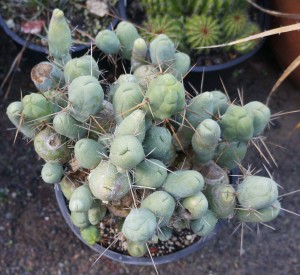 ↑ An example of an older specimen ↑
___
Trichocereus bridgesii f. monstrosus cl. D “Mutant Achuma”
A consistently monstrose clone that we selected from a batch of seed sown decades ago. Frosted blue stems, a bit thicker and less spiny than most bridgesii; only occasionally produces distinct ribs, preferring an amorphous, mildly melted appearance. We began distributing this distinct and desirable oddity just over 5 years ago and until recently have only offered it about once a year via auction. This is your chance to add it to your collection! Z9a
[ 4 ] → 1 ~ 3–4″ cutting $69 ♥ New ♥
___
Trichocereus huanucoensis X Trichocereus sp. ‘Juul’s Giant’
A highly valued, sought after hybrid of these two oversized plants. Thick, robust stems with 4–6 rounded ribs and a few shortish spines. We’ve only offered this cross via auction until now. Only a few chunky seedlings available, get one while you can!
[ 6 ] → 1 ~ 4–6″ plant 4+ years old $38.50 SOLD
___
Trichocereus huanucoensis X Trichocereus pachanoi f. monstrosus/cristata ♥ New ♥
A desirable new intro! The rare and impressive, oversize T. huanucoensis, with tall blue-green stems, 4–6 rotund ribs, long spines, and white flowers; crossed with classic, clone A, “melted wax” to cresting mutant San Pedro. We expect super robust progeny with unique mutations. We offer here “normal” looking, chunky seedlings that may grow mutant or crested with age. First release! Z9a
[ 3 ] → 1 ~ 2–3″+ plant 2-3 years old $42.50
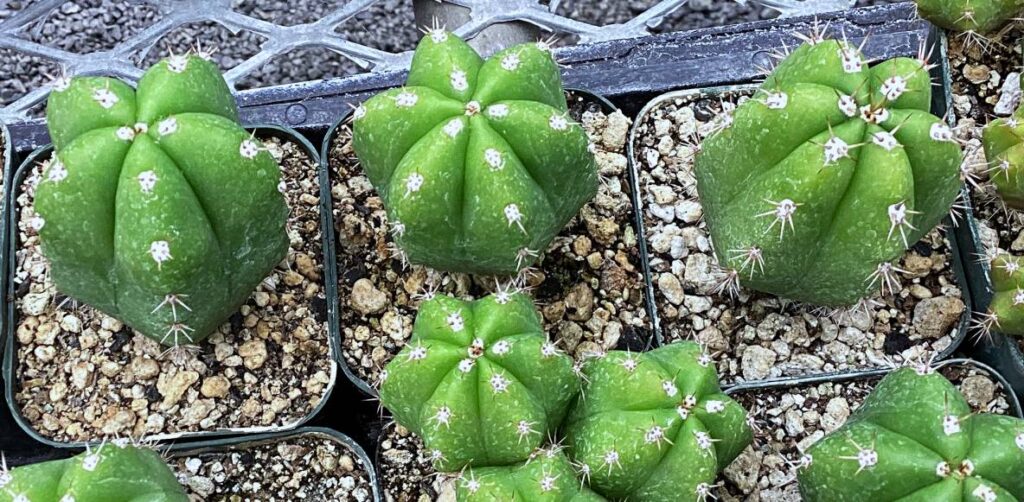 ↑ Specimen plants ↑
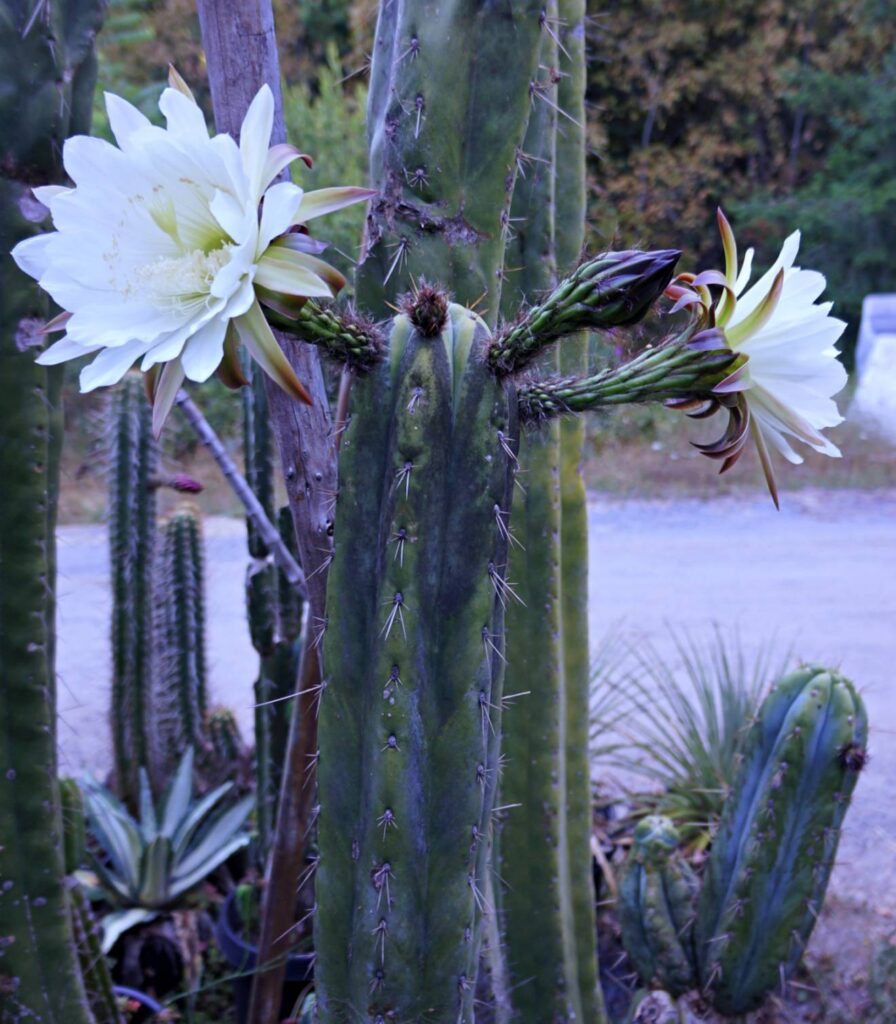 ↑ Father plant: Trichocereus huanucoensis ↑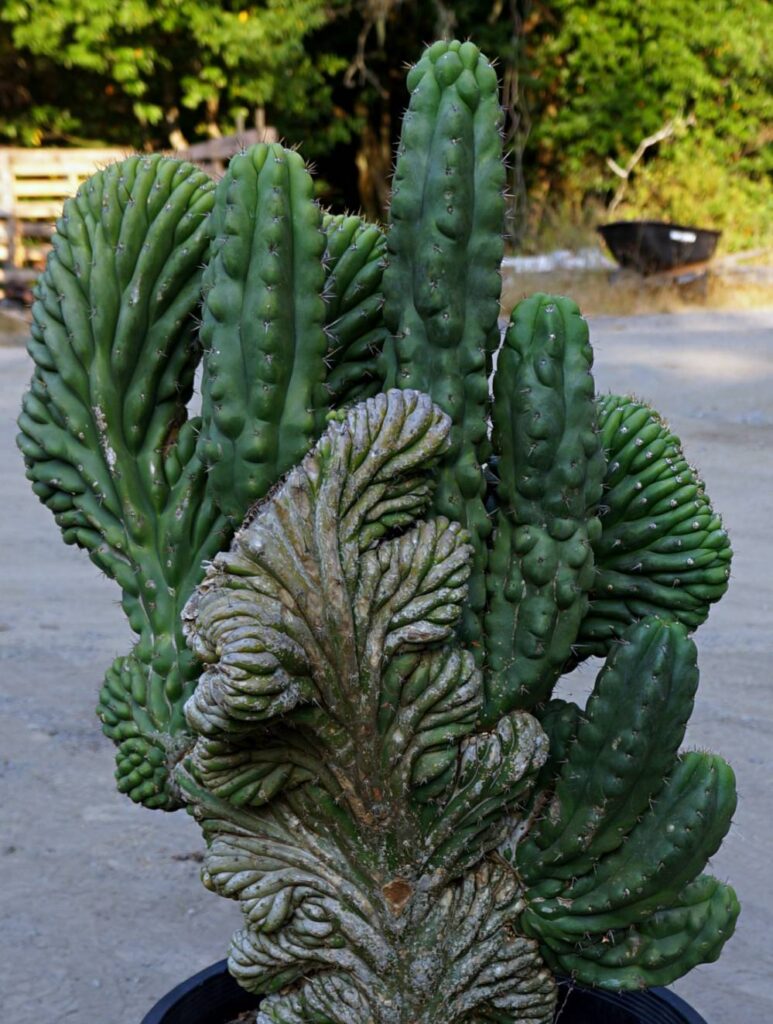
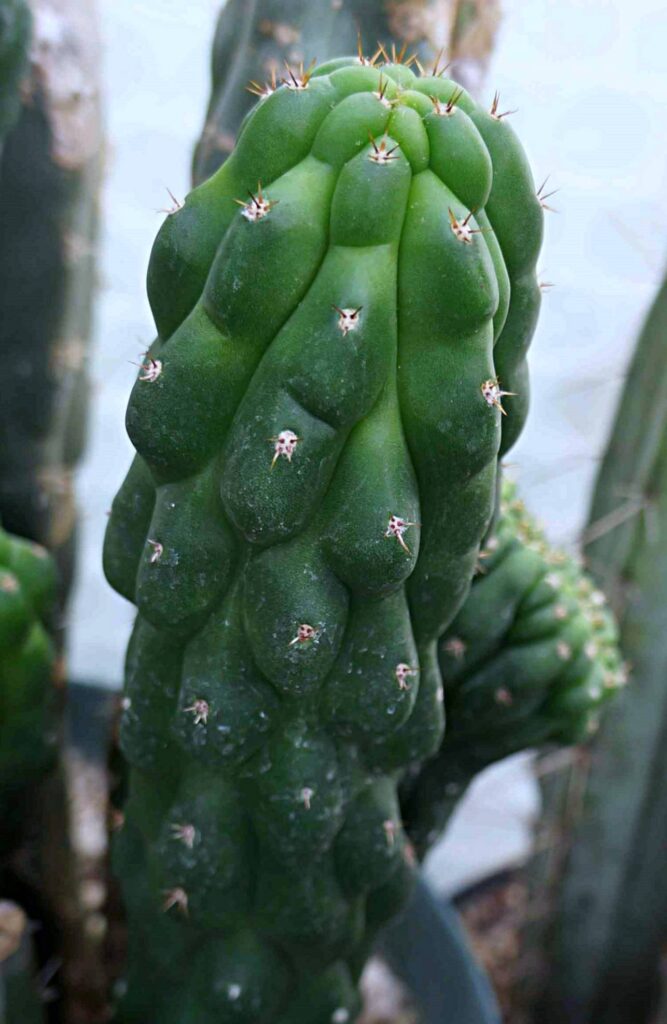 ↑ Mother plant: Trichocereus pachanoi f. monstrosus cl. A ↑
___
Trichocereus huanucoensis X Trichocereus scopulicola/bridgesii SS02 ♥ New ♥
Another first release! The rare and robust T. huanucoensis crossed with a lovely, short spined hybrid of T. scopulicola and bridgesii SS02. Distinctly handsome seedlings with short to longish spination, should grow into even more gorgeous adults. Be the first to grow this! Z9a
[ 4 ] → 1 ~ 4″+ plant 3 years old $45.50 SOLD
2 ~ 2–2.5″+ plants 3 years old $32.50 each
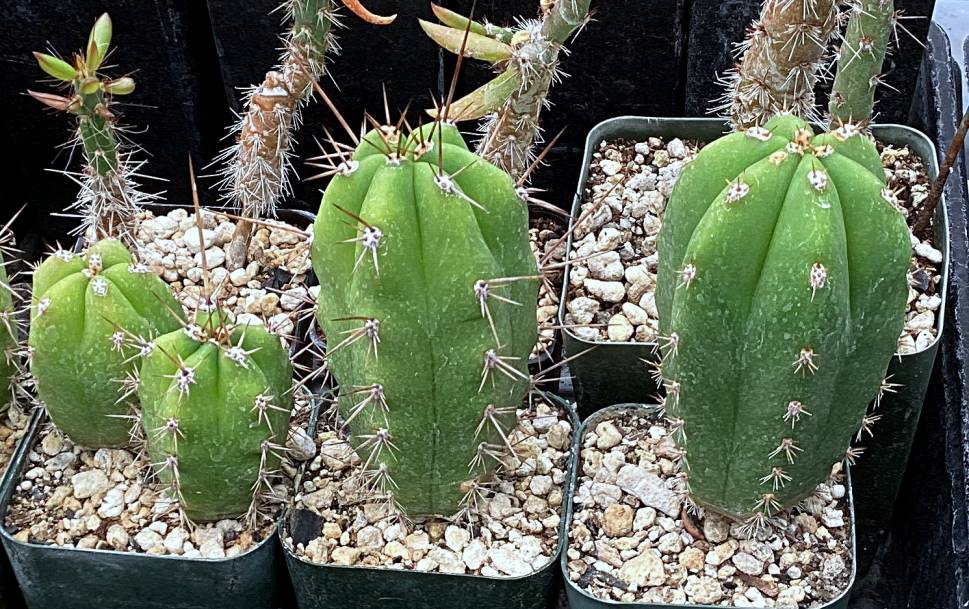 ↑ An example of specimens ↑
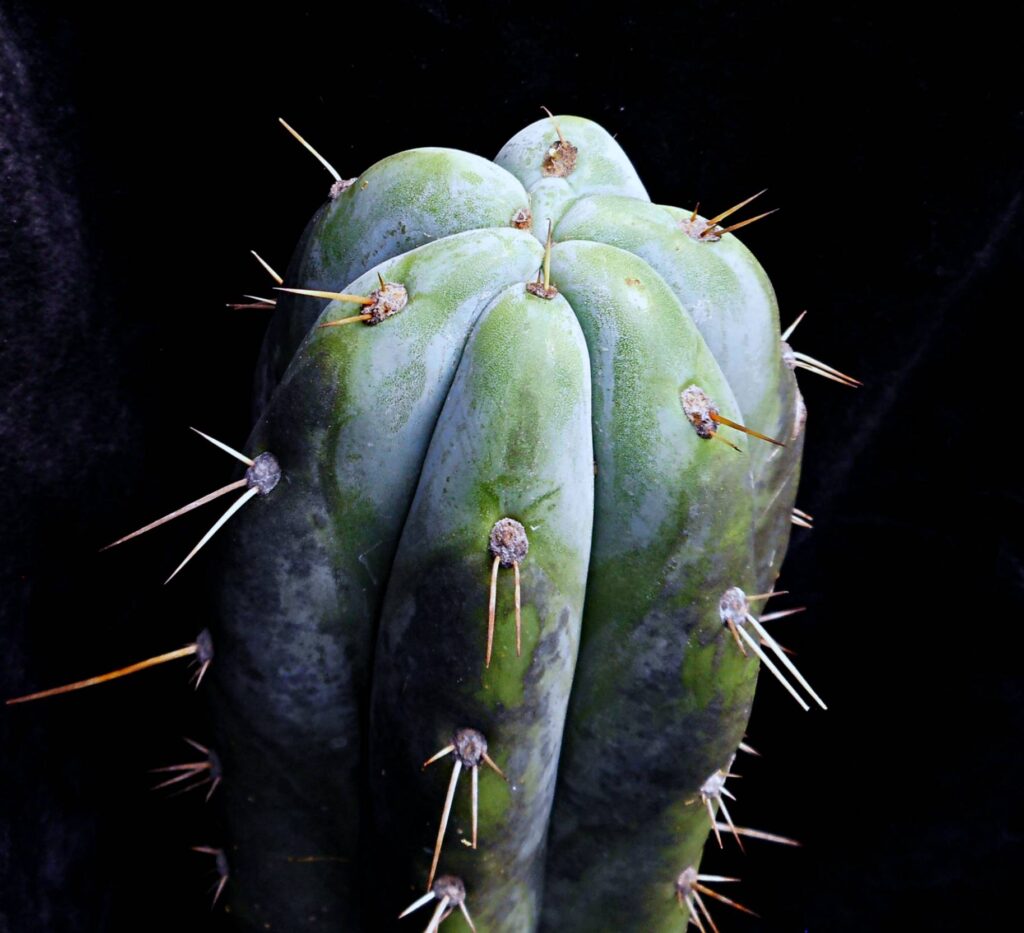 ↑ Father plant: Trichocereus huanucoensis ↑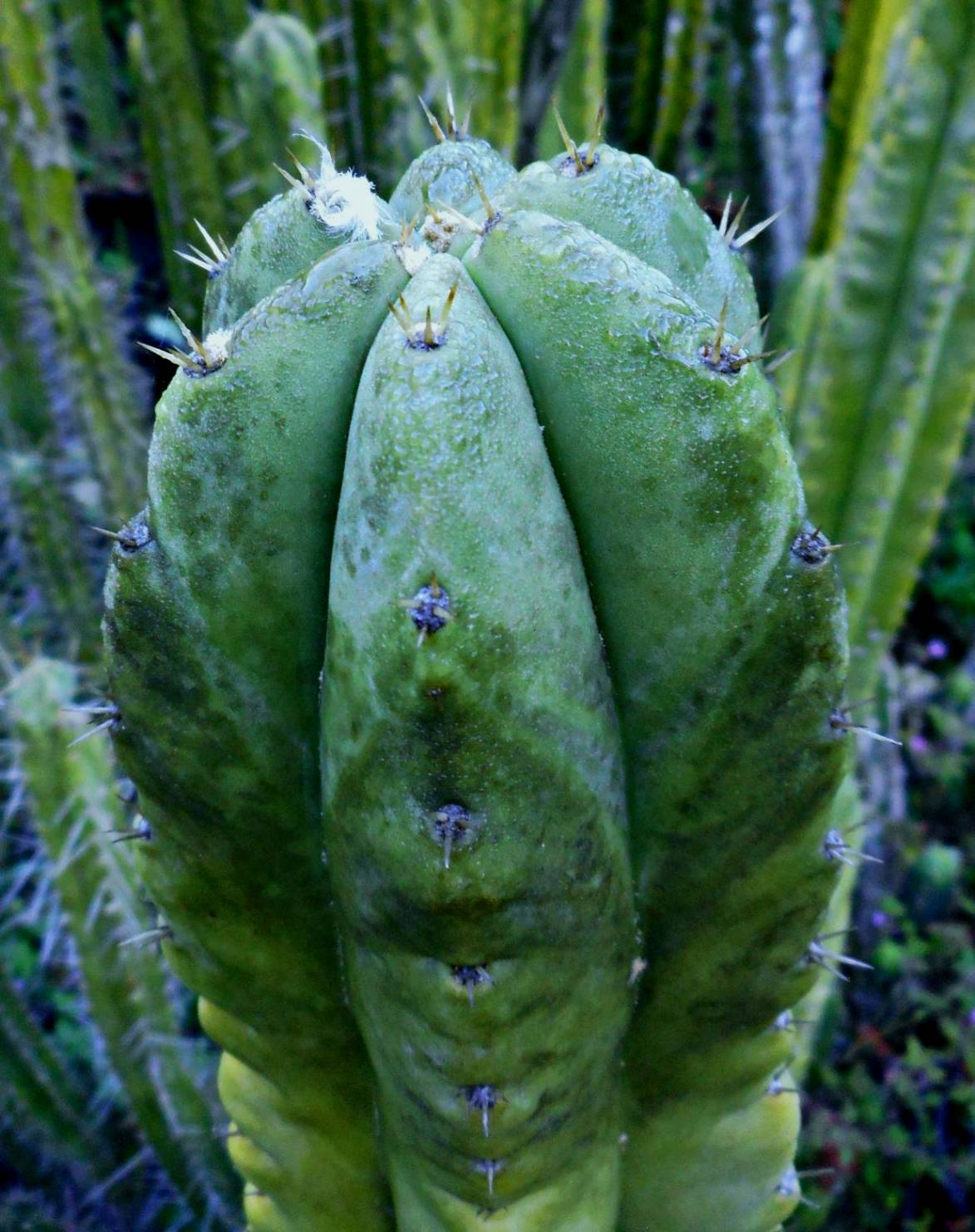
 ↑ Mother plant: Trichocereus scopulicola X bridgesii SS02 ↑
___
Trichocereus huascha v. macranthus (=Helianthocereus or Lobivia huascha v. macranthus)
A real beauty! Many branching, semi-prostrate plant 2–3′ tall. 1.5–3″ diameter stems have 12–18 ribs with close set areoles bearing nine or more thin spines. This is a rare variety that has dark green stems, striking red-purple spines with 2″ curving centrals and large, golden-yellow, diurnal flowers. Native to the arid, rocky slopes and dry forests of Catamarca, Argentina where it forms sprawling clusters of serpentine stems. Blooms abundantly late spring through summer. Z8a–b
[ 4 ] → 2 ~ 4–6″+ cuttings $19.50 each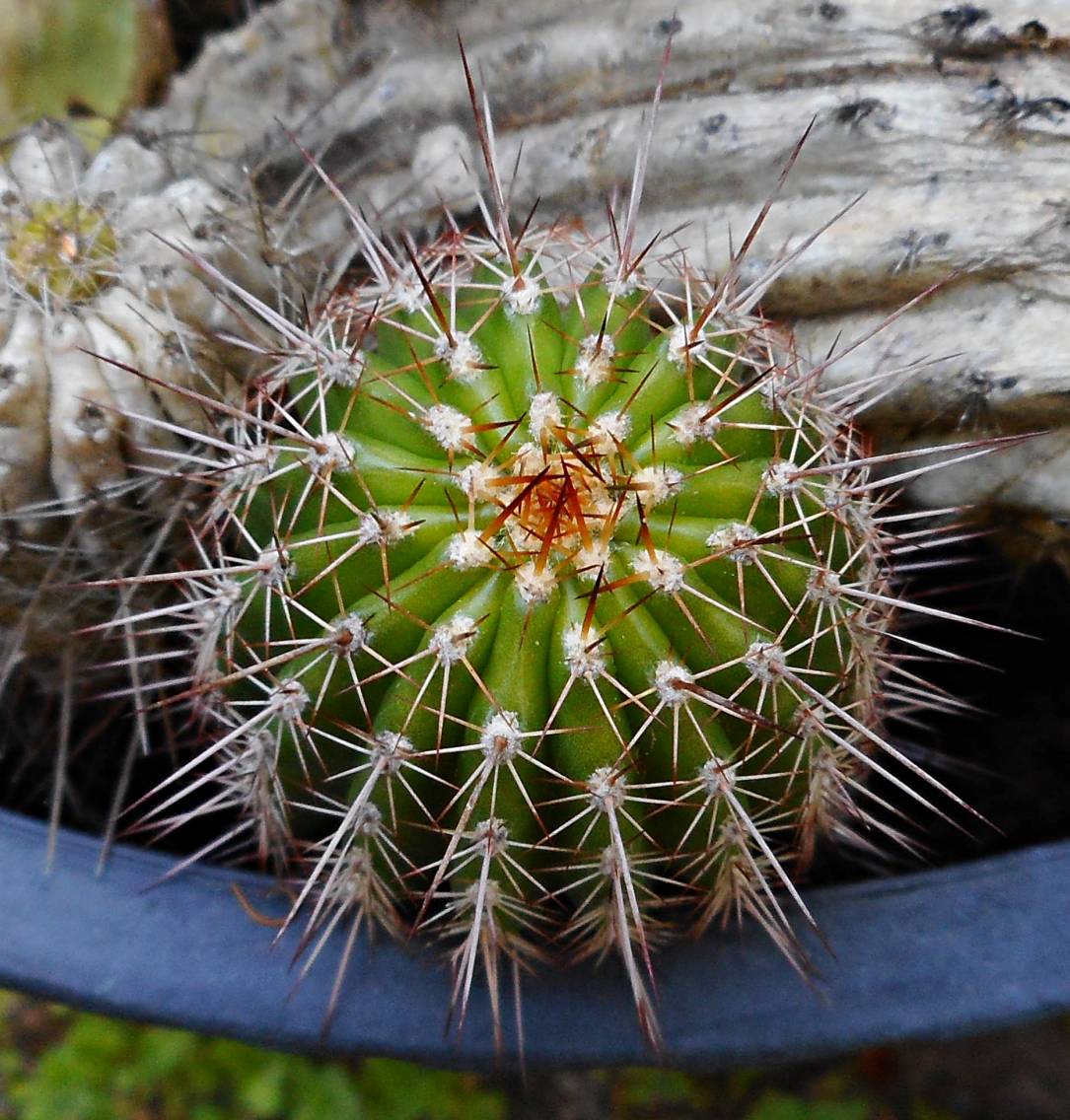
___
Trichocereus sp. ‘Juul’s Giant’ “San Pedro” “Huachuma” ♥ New ♥
We have a few small cuts of this coveted fat pachanoid that has been popular in the California Bay Area for decades. Large rounded stems to 5″+ diameter, smallish spines, white flowers, edible fruit. Our studies in Peru suggest this is closer to the true “wild” pachanoi than the common horticultural clone. Rarely offered these days… Z9a
[ 4 ] → 2 ~ 5–6″ cuttings $36.50 each SOLD
1 ~ 18″ fat cutting $99.50** SOLD
___
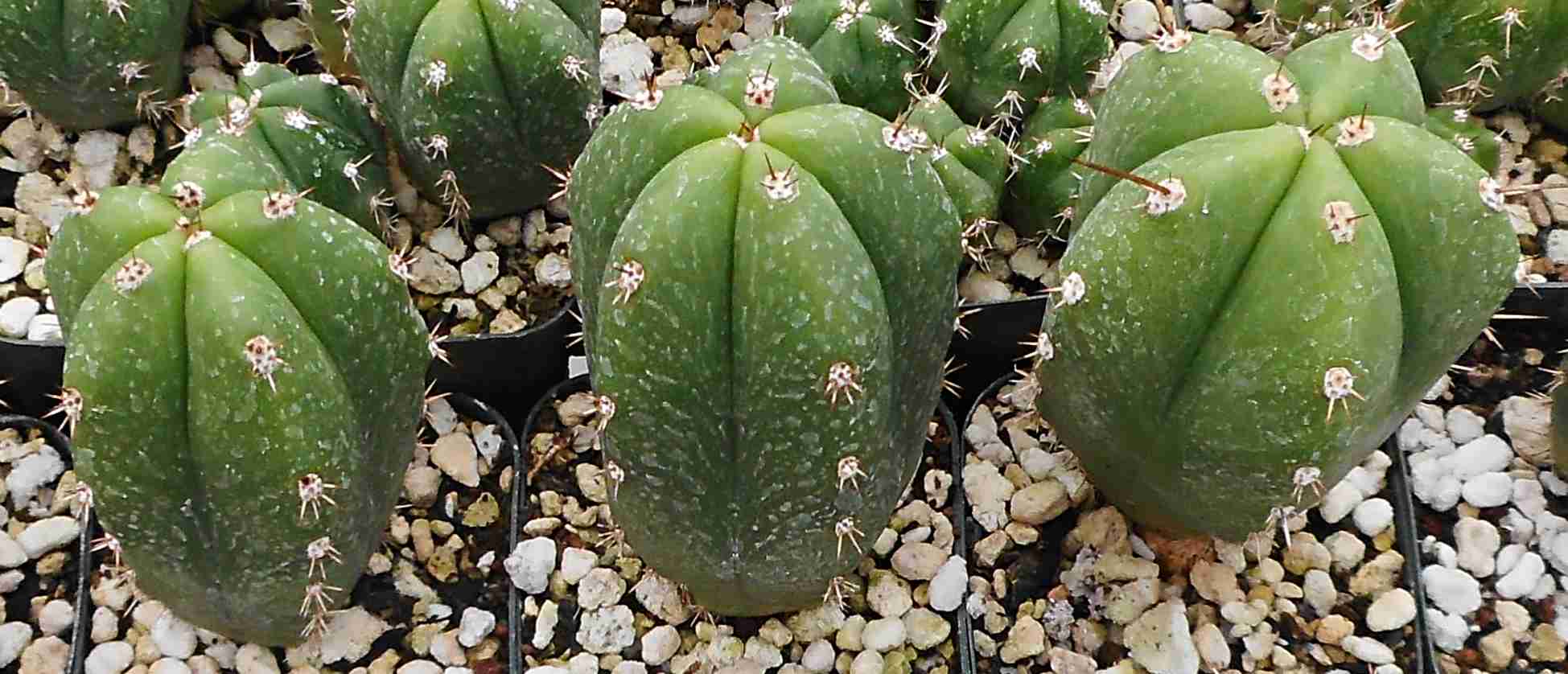
Trichocereus sp. ‘Juul’s Giant’ X Echinopsis eyreisii
First offering of this intergeneric hybrid. An upright chunky stem bearing 8 thick ribs with glossy skin, closely spaced, fuzzy areoles with 5–7 short spines 1/4–1/3″ long. The mother, ‘Juul’s Giant’, is a much desired, obese, blue stemmed pachanoid with large white blossoms; the Echinopsis eyreisii father is a globular, clustering species with short, stout spines and slender tubed flowers with white petals that blush mauve. We expect this superb hybrid to mature into a singular beauty. This specimen is a little weathered and hardy after surviving a full season outside. Offered via our last auction, but the winner defaulted and so we offer this lovely here. Z9a
1 ~ 11″+ plant 4–5 years old 77* SOLD
___
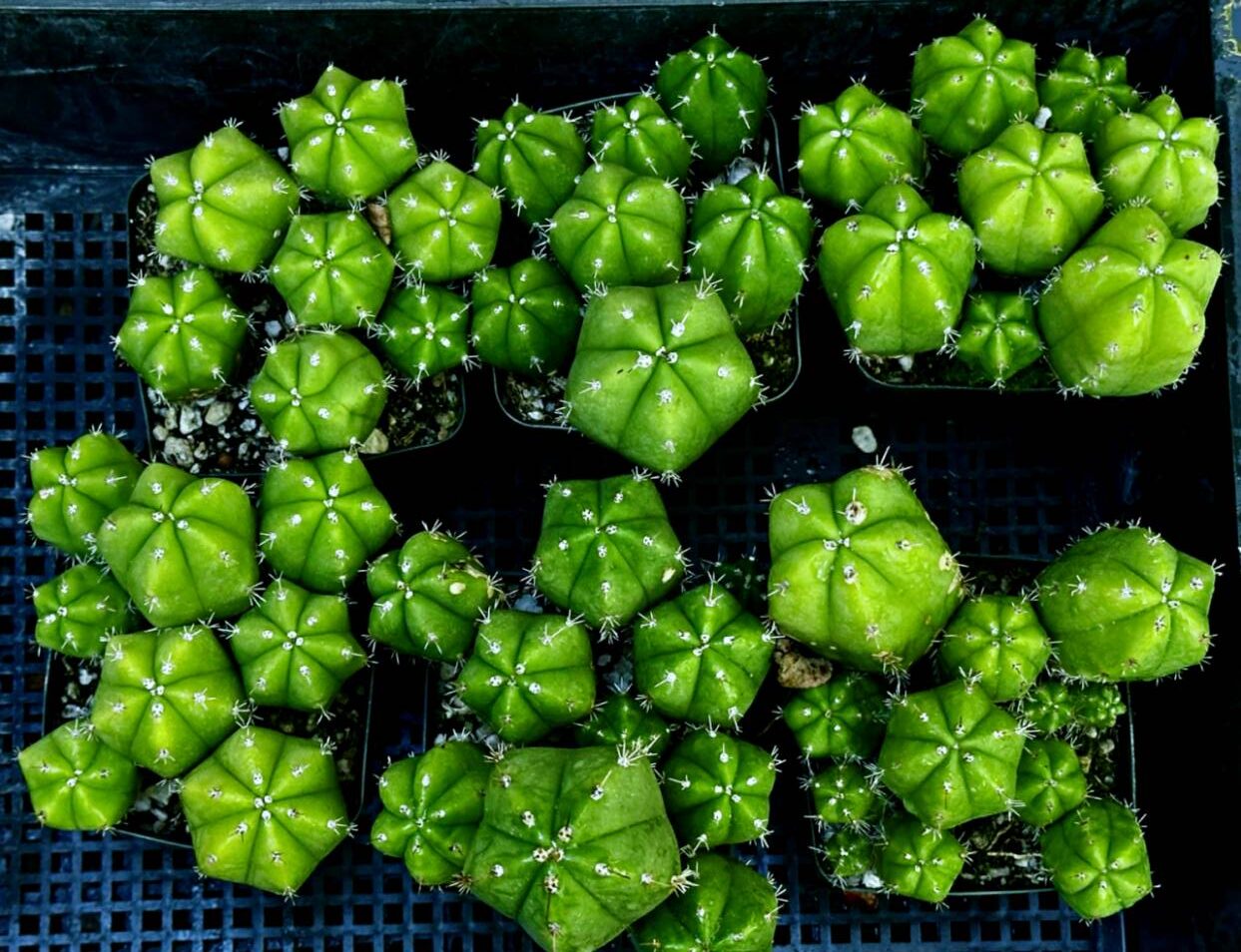
Trichocereus sp. ‘Juul’s Giant’ X Trichocereus huanucoensis
A very appealing new hybrid of these coveted, robust species. 4–6+ chunky, rotund ribs and short to sparse spines, 1/8-1″ long so far. Promises to mature magnificently into upright, gorgeous, exceedingly fat plants! This is the first offering of this exceptional chunky hybrid. Z9a
[ 6 ] → 1 ~ 5–6″ plant 4+ years old $39.50 SOLD
[ 12 ] → 4 ~ 2.5–4″+ plants 4 years old $28.50 each September SALE! $25 each; or 2 for $44
___
Trichocereus sp. ‘Juul’s Giant’ X Trichocereus terscheckii/‘huarazensis’ #2
Another unusual new release! The coveted pachanoid ‘Juul’s Giant’ (fat rounded stems, smallish spines, large white flowers) impregnated by a hybrid of a T. terscheckii (on the spiny pasacana-end) and T. ‘huarazensis’ (a pachanoi from central Peru), which has thick stems to 8″ diameter, numerous long yellow spines, fuzzy areoles and funnel-shaped cream colored blossoms. The children are currently fat, well armored seedlings which are sure to be extraordinary as they mature. This is our first ever offering of the awesome hybrid! Z8b/9a?
[ 6 ] → 2 ~ 2.5–4″ plants 2-3 years old $38.50 each September SALE! $36 each; or 2 for $66
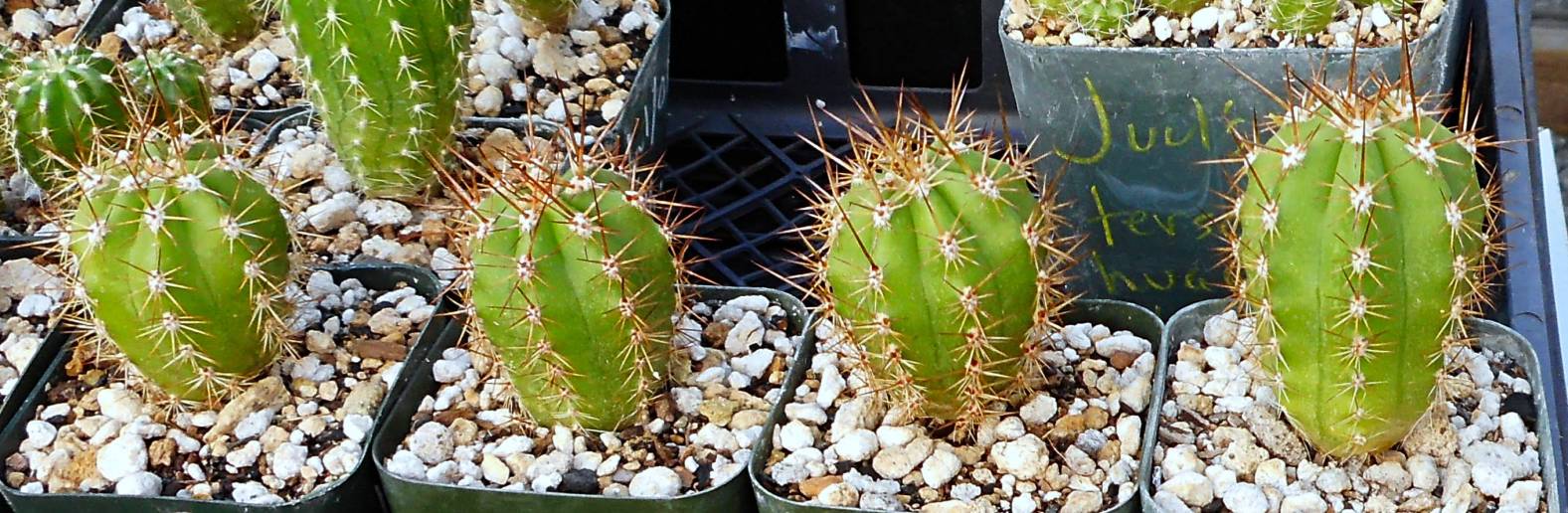 ↑ Hybrid specimens ↑
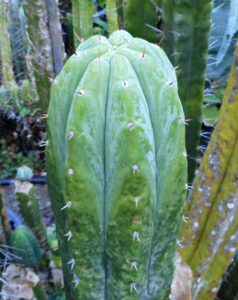 ↑ Mother plant: Trichocereus sp. ‘Juul’s Giant’ ↑
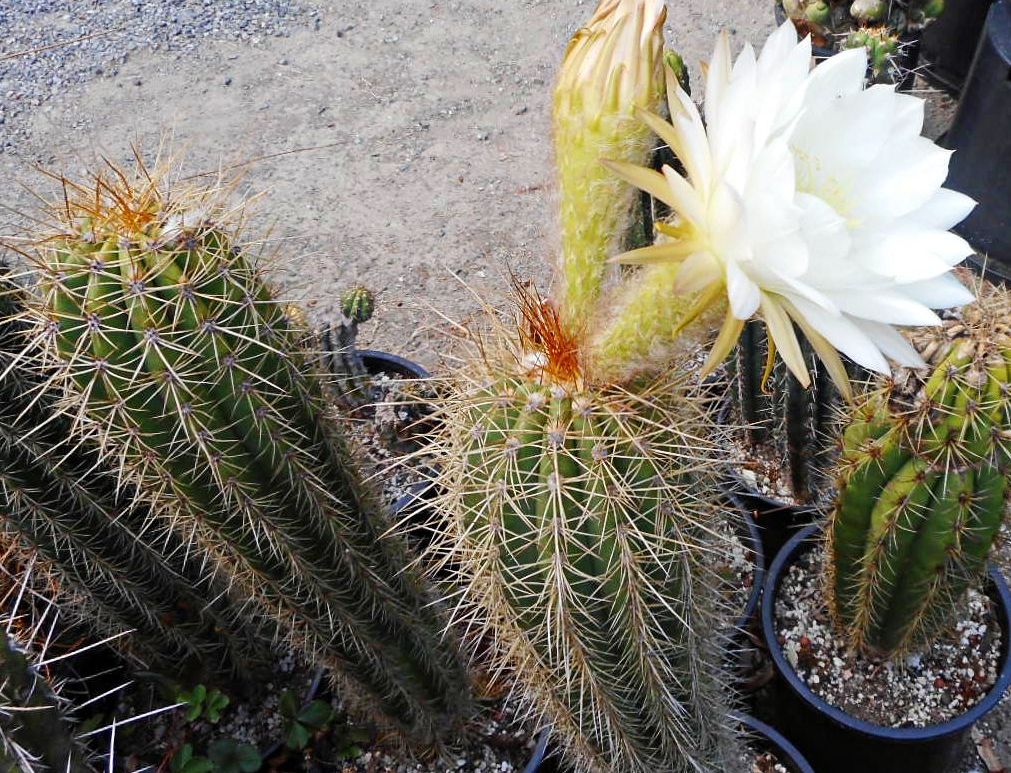 ↑ Father plant: Trichocereus terscheckii/‘huarazensis’ #2 ↑
___
Trichocereus sp. ‘Juul’s Giant’/SS01 X Trichocereus tulhuayacensis KK337
First release of this delightful new hybrid outside auction. The mother, Juul’s Giant X SS01, is an upright, round stemmed, short spined hybrid with large white flowers; the father was the incomparable, spiny, magenta flowered tulhuayacensis. So far the progeny favor their mother’s traits with rounded ribs and short spines that have darker hues like their father’s. We anticipate extra hardiness and unique colored flowers once mature. Be the first to grow this beauty! Z8b/9a
[ 4 ] → 1 ~ 4.5–5.5″ plant 3 years old $58.50 SOLD
[ 5 ] → 2 ~ 2.5–3.5″ plants 3 years old $39.50 each September SALE! 2 for $69
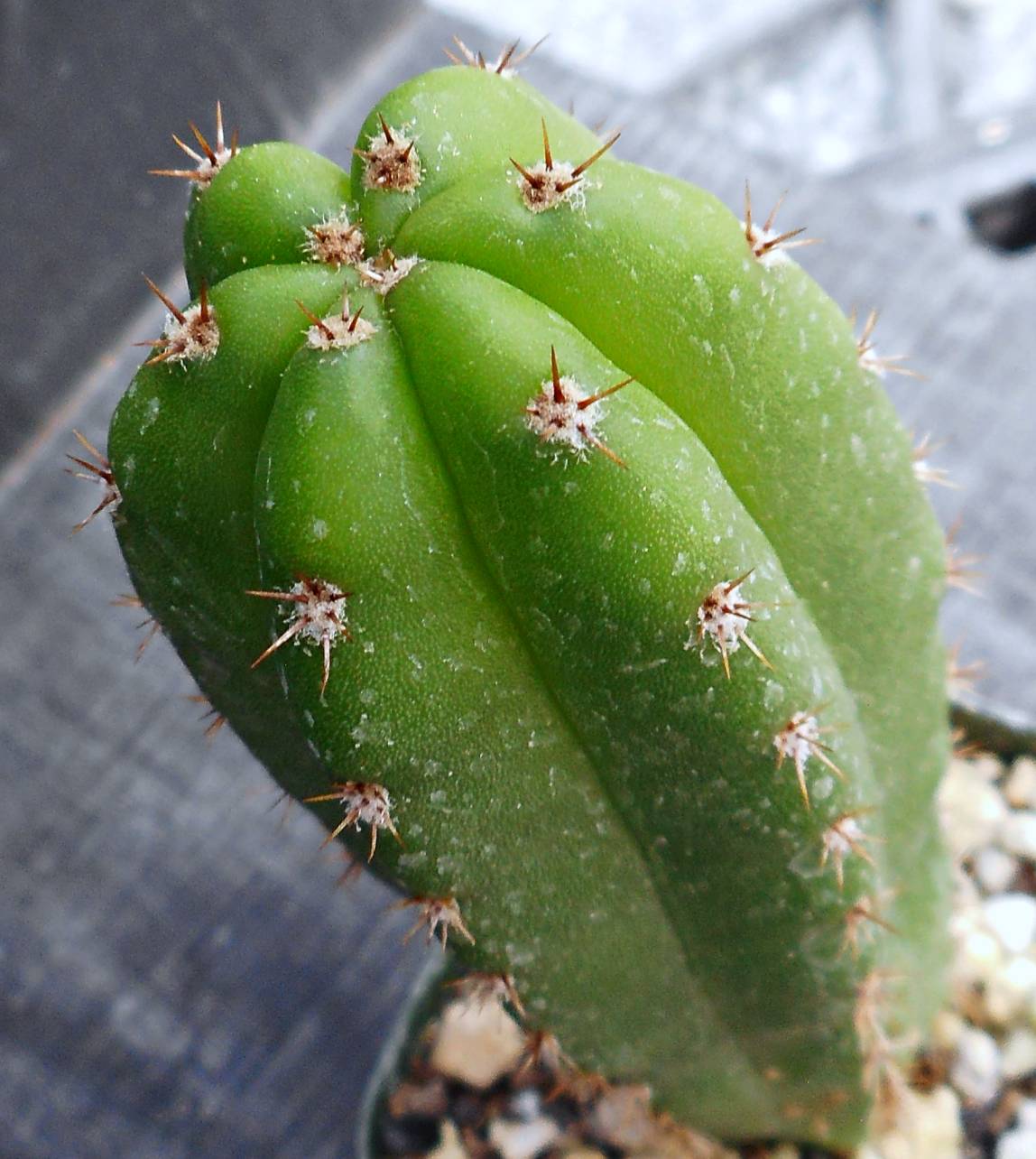
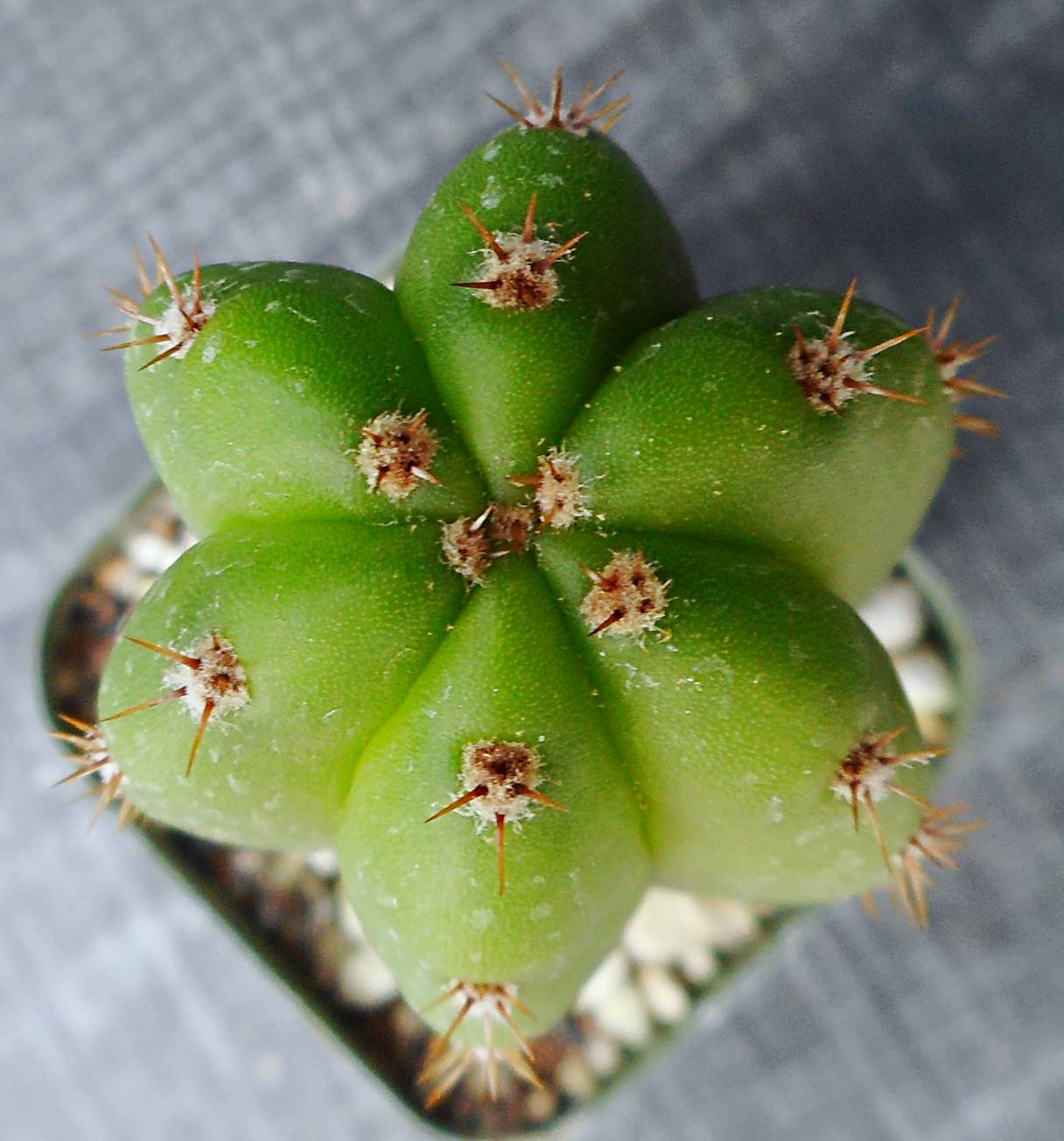 ↑ Seedling examples of Trichocereus sp. ‘Juul’s Giant’/SS01 X T. tulhuayacensis KK337 ↑
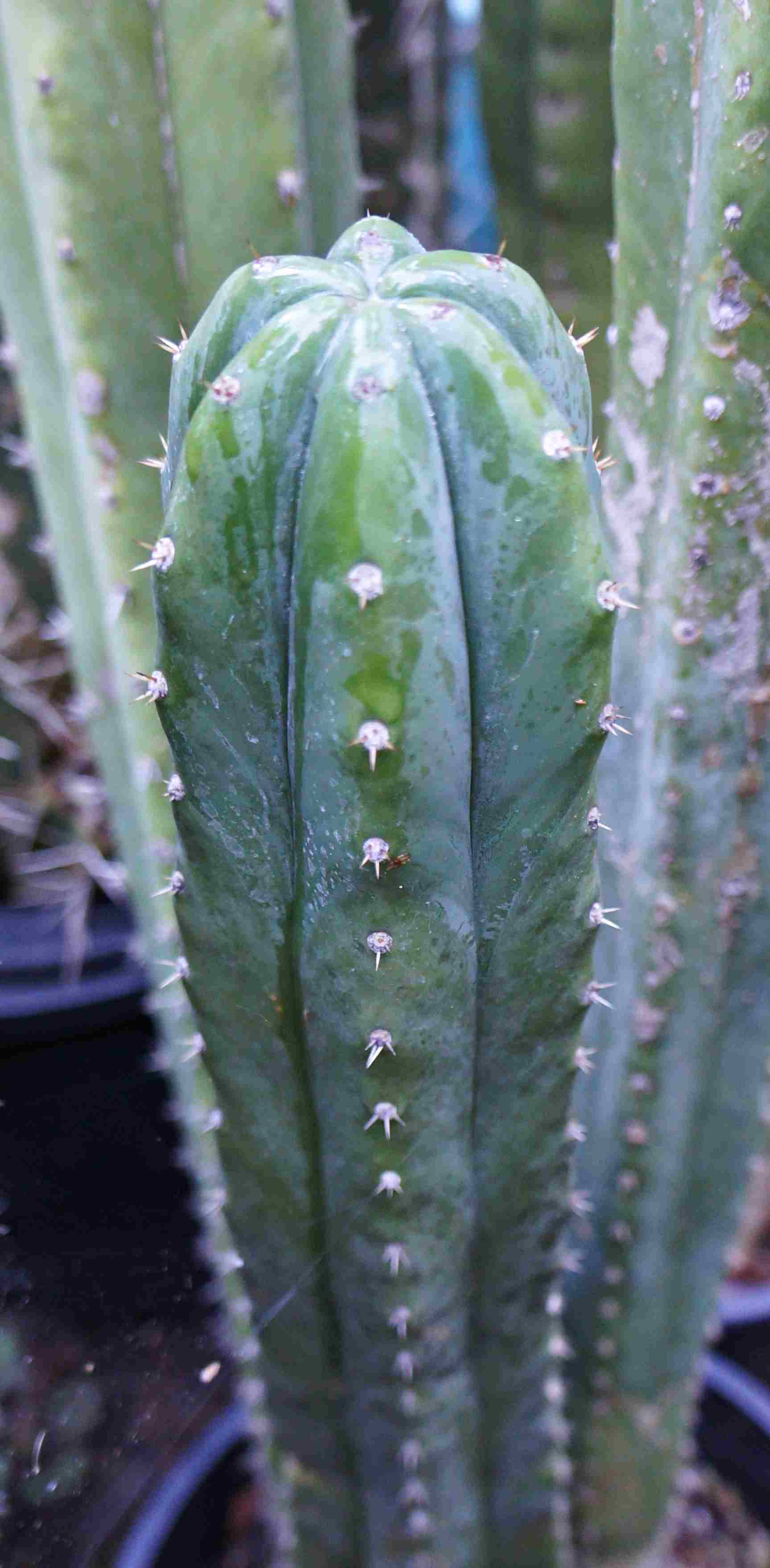 ↑ Mother: Trichocereus sp. ‘Juul’s Giant’/SS01 ↑
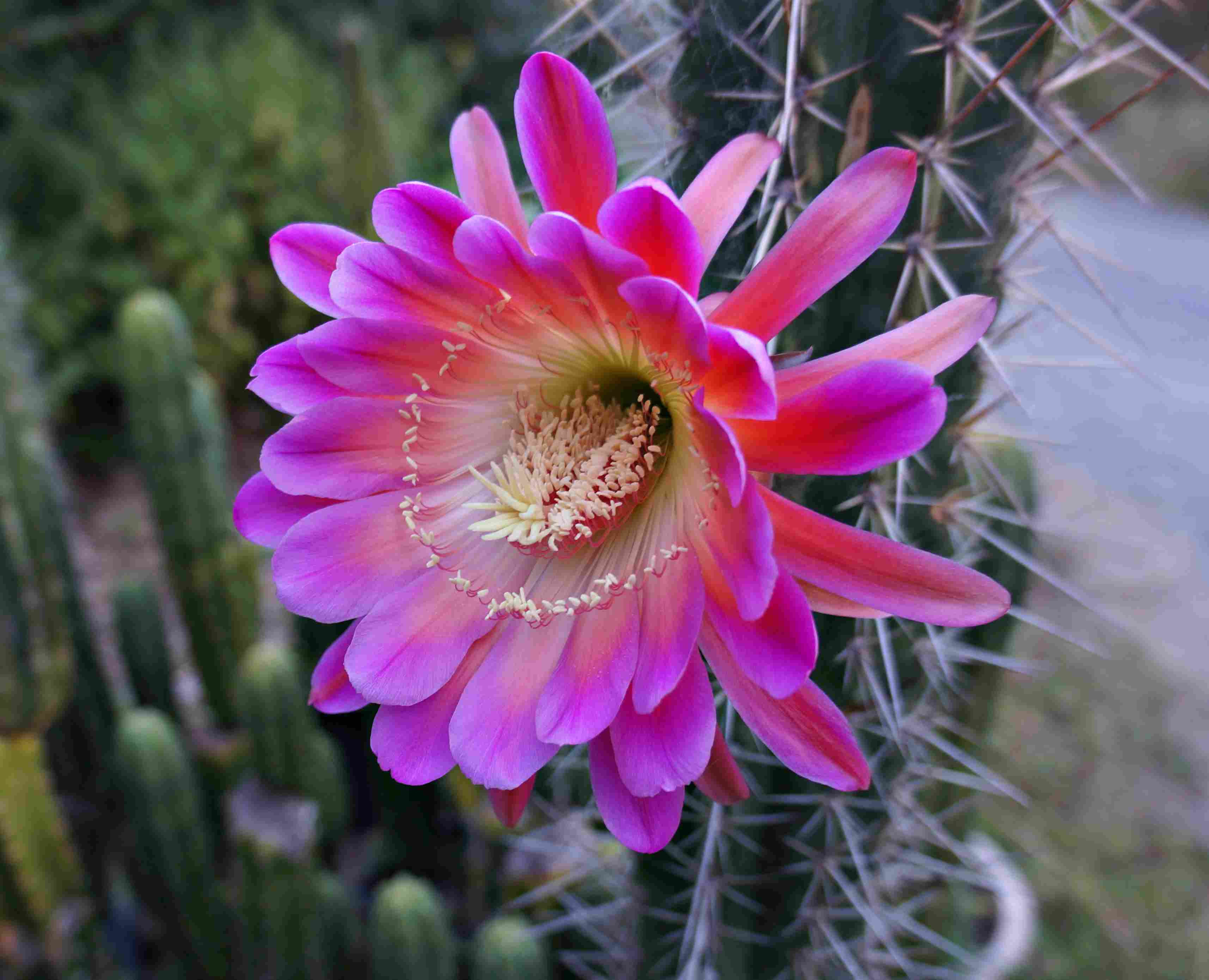 ↑ Father: Trichocereus tulhuayacensis KK337 ↑
___
Trichocereus pachanoi ‘Blosser’ cl. A “San Pedro” “Huachuma” “Jaguar”
Highly esteemed and valued, only offered a few times. Upright, rounded, glaucus blue/green stems with rounded ribs and small spines. Lovely clone collected by ethnobotanist Bret Blosser and the late Rob Montgomery from the outskirts of Quito city, Ecuador in the 90s. Shows affinity with Peruvian clones like ‘Ogunbodode’ but is distinct with rounder ribs, larger areoles and darker new spines. Like the ‘Lima’ clone, plants grown in full sun tend to have no to very small spines, while plants grown in greenhouse conditions have consistently larger ones. This is your only chance at this one outside of auction for some time. Z9a
[ 4 ] → 1 ~ 5–6″+ cutting $155 SOLD
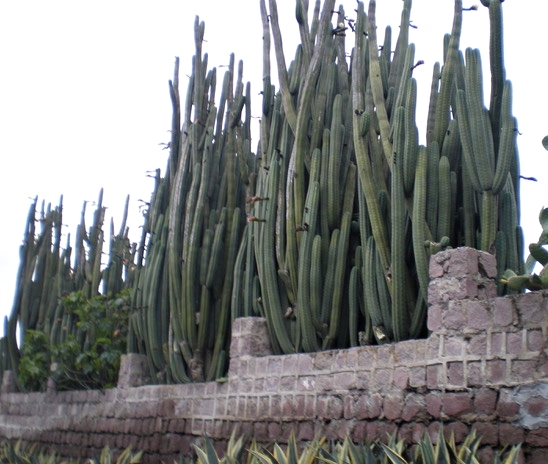 ↑ Mother plants near Quito, Ecuador ↑
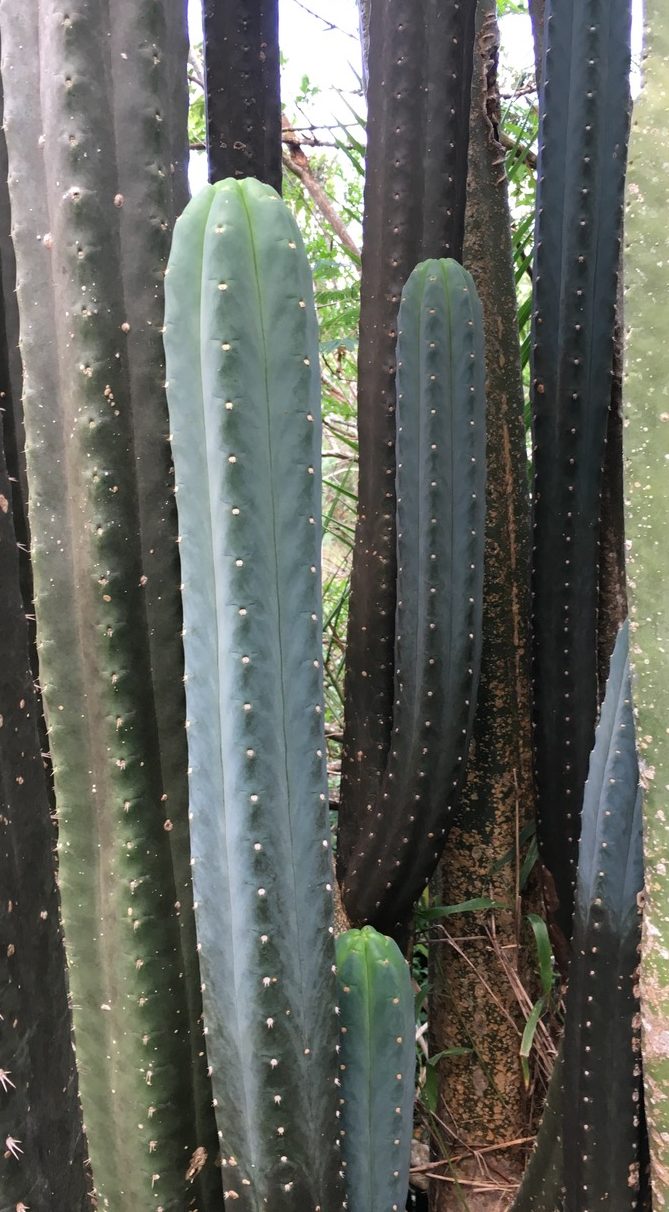 ↑ Mother plant in Hawaii ↑
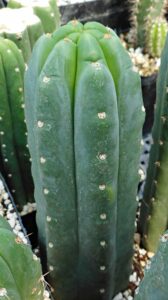 ↑ An example of a specimen ↑
___
Trichocereus pachanoi ‘Blosser’ cl. B “San Pedro” “Huachuma” “Jaguar”
Upright, rounded, glaucus blue/green stems with sculpted, sometimes tuberculate, ribs and smallish spines to 1/2″+. Originally collected by ethnobotanist Bret Blosser from within the city of Quito, Ecuador. Shows some affinity with Peruvian clones like ‘Ogunbodode’ but is distinct. Only offered a handful of times via auction, highly esteemed and valued by collectors. We have a few extra cuts propagated to offer here, your only chance at this one outside of auction for the foreseeable future. Z9a
[ 4 ] → 1 ~ 3–4″+ cutting $100 SOLD
[ 4 ] → 1 ~ 5–6″+ cutting $155
[ 2 ] → 1 ~ 8″+ cutting $196* ♥ New ♥
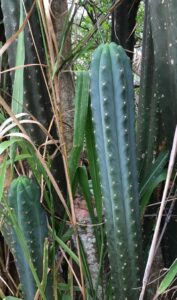 ↑ Mother plant in Hawaii ↑
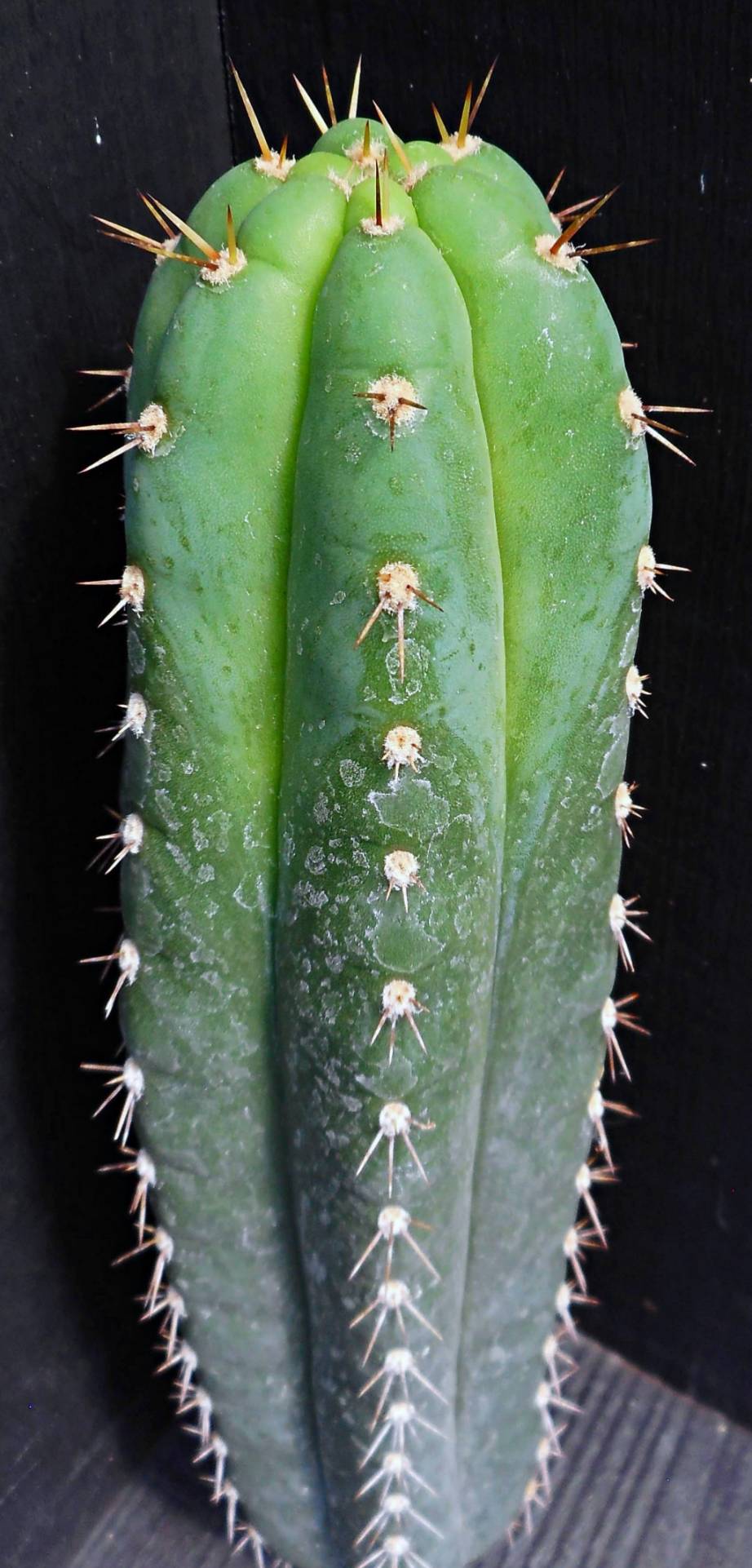 ↑ An example of a specimen cut ↑
___
Trichocereus pachanoi ‘Huancabamba’ “Huachuma” “San Pedro”
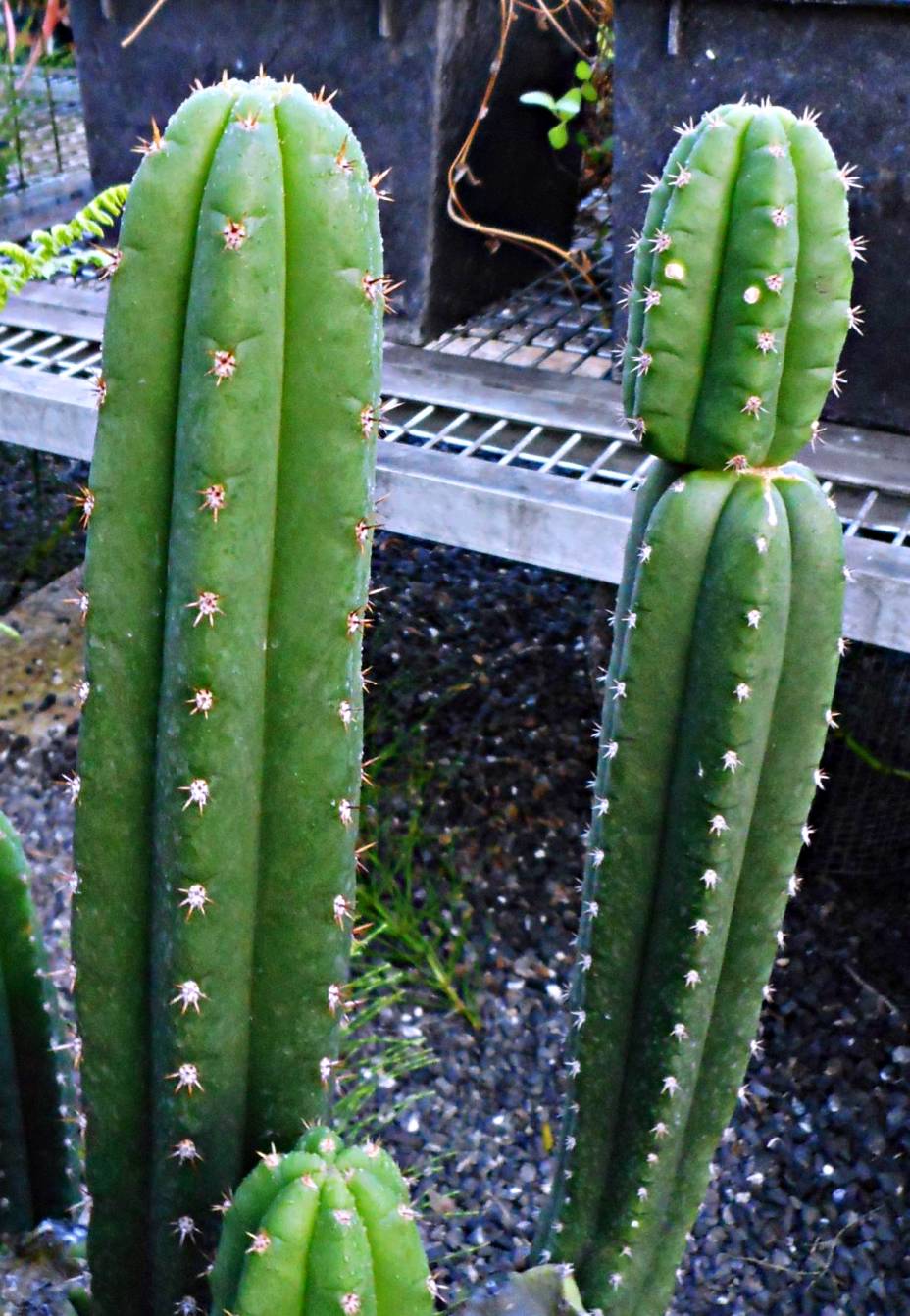
Typical “wild” T. pachanoi, upright rounded green stems that blush blue, smallish spines, white flowers and edible fruit. Seed originally from the mountains of Huancabamba, Piura, northern Peru, a sacred pilgrimage region long famous for its huachumeros (shamans). Widely cultivated in the area and likely represents part of the natural distribution of the species. A classic ‘clone’ we’ve grown for decades (cuttings are in fact from 3 seed grown plants we can’t differentiate—these 3 separate clones got mixed up when the original plants all toppled over during a storm years ago, breaking rather fantastically into dozens of pieces that became our propagative stock). A “must have” standard for collectors. Z9a
[ 6 ] → 2 ~ 12–13″+ cuttings $49.50* each September SALE! $44.50* each, or 2 for $77*
[ 8 ] → 4 ~ 5–7″+ cuttings $26.50 each September SALE! $22.50 each; or 2 for $40; or 4 for $69
___
Trichocereus pachanoi Hutchison 1597 “San Pedro” “Huachuma”
Thick upright stems, medium spines, large flowers. Old Hutchison collection from the shamanic pilgrimage region of Huancabamba, Piura, Peru, 8400′. Completely distinct from our ‘Huancabamba’ clone. A choice heirloom, very rarely offered. Z9a
[ 3 ] → 1 ~ 7–8″ cutting $64.50 SOLD
___
Trichocereus pachanoi Hutchison 6604 “San Pedro” “Huachuma” ♥ New ♥
An old Paul Hutchison accession from Ecuador that has never been distributed beyond botanical gardens. Upright stems with rounded ribs, green to glaucus-blue skin and short spines. Large white flowers, edible fruit. We only recently began offering (via auction) this very attractive and desirable clone. This is one of the only times we’ve offered this outside of auction. Obtain one while you can! Z9a
[ 2 ] → 1 ~ 6″ cutting $177
[ 2 ] → 1 ~ 8–9″ cutting $228
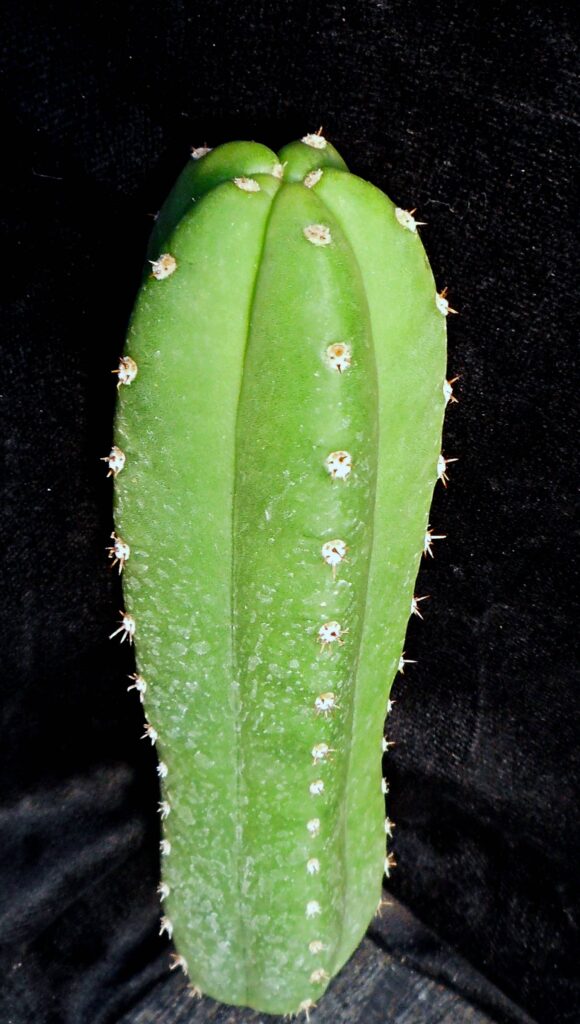 ↑ An example of a cutting ↑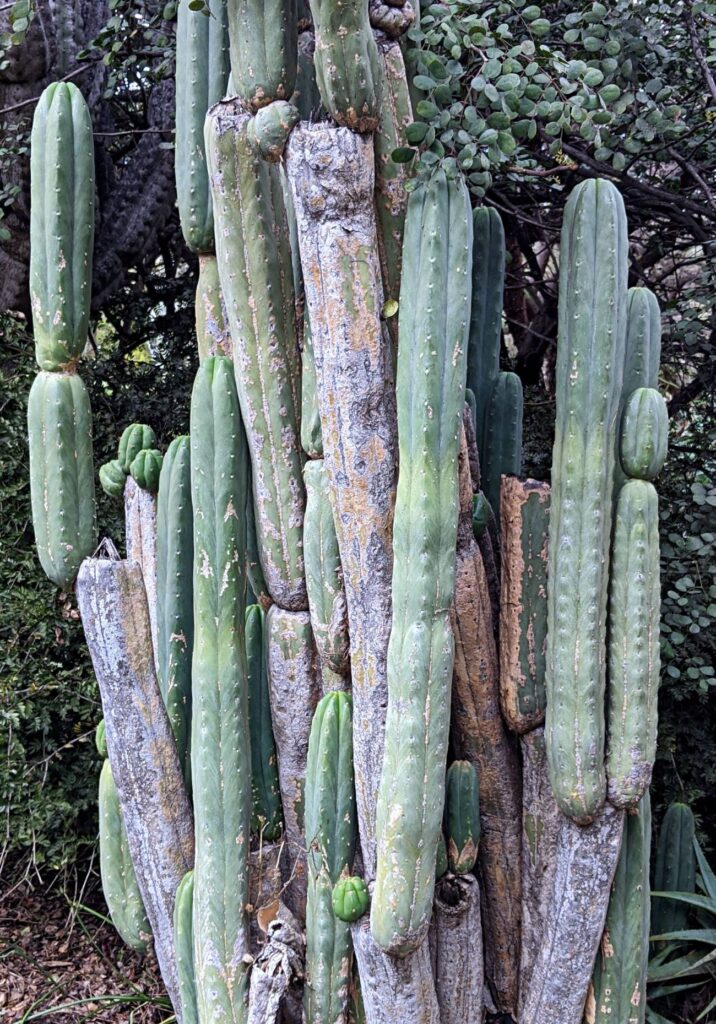
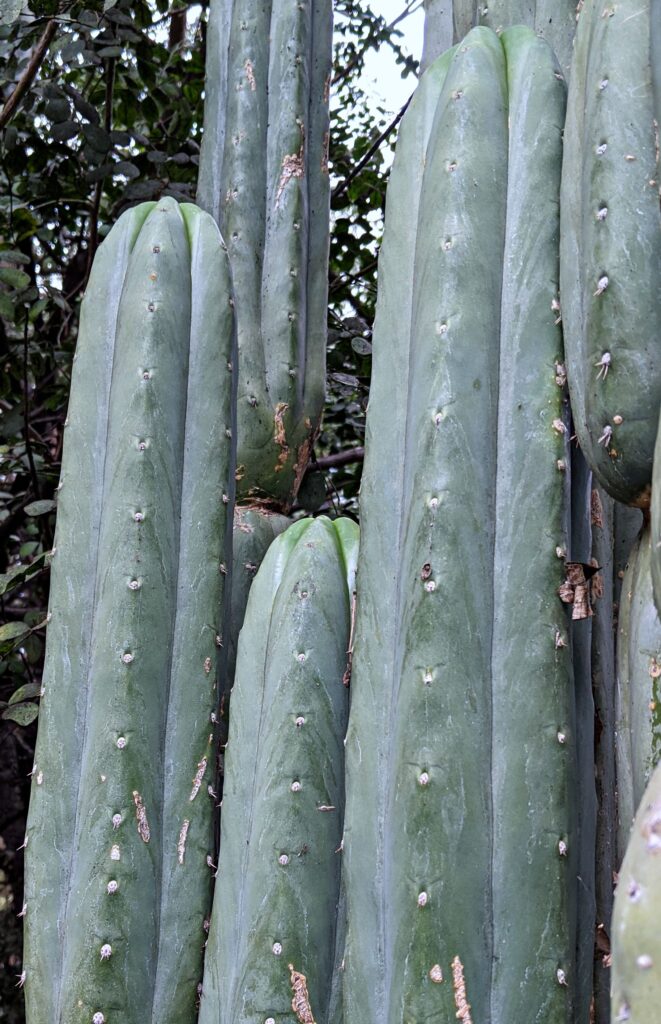
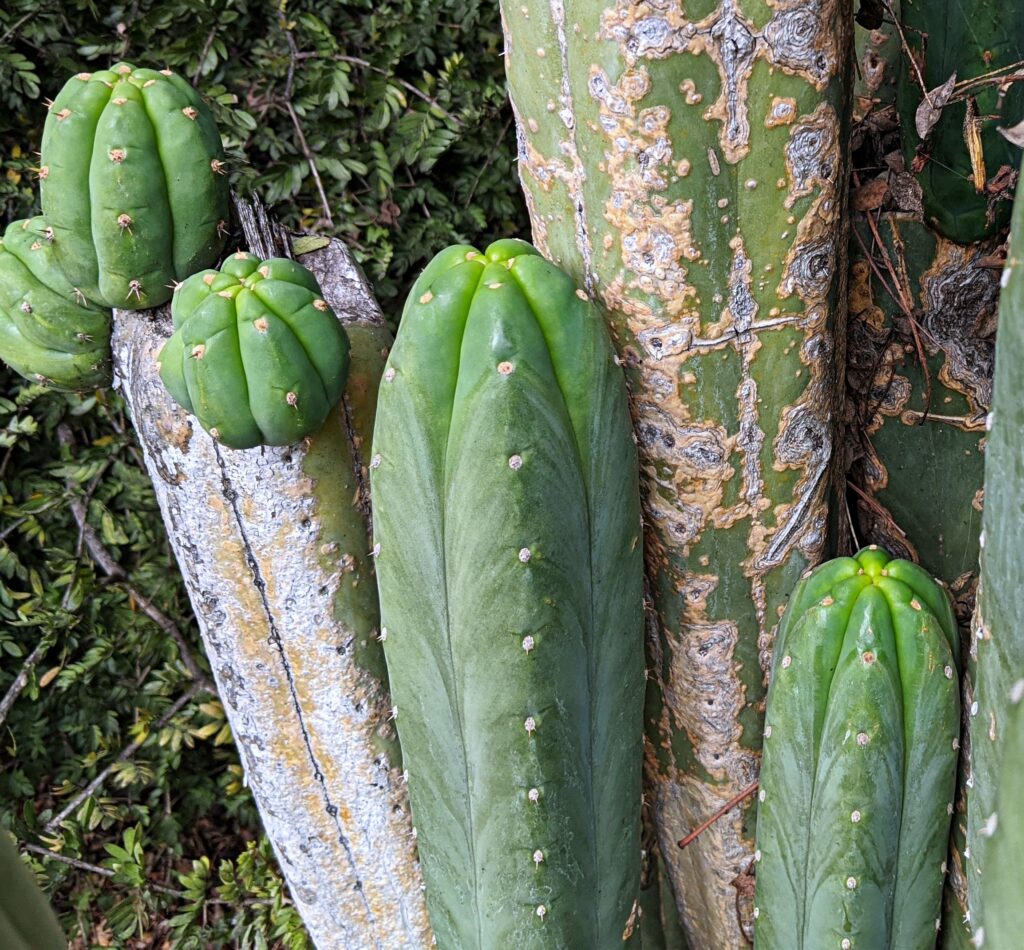 ↑ Mother plant ↑
Trichocereus pachanoi Kimnach et al. 2876D “San Pedro” “Huachuma”
A “wild” San Pedro with distinct, fat rounded ribs with dark green to blue-frosted skin and 1/4–1″+ spines, large white flowers and sweet edible fruit. This accession was originally collected by the famous plantsman Myron Kimnach and friend’s in the 1980s, along the Cajamarca to Namora road, Cajamarca Dept., north Peru—a region known for its diverse San Pedro and lineage of ceremonial use dating back millennia. This heirloom San Pedro clone is now considered a classic, a real desirable beauty! Z9a
[ 6 ] → 2 ~ 10–12″+ cuttings $42.50* SOLD
[ 4 ] → 1 ~ 18–19″+ cutting $66** SOLD
[ 4 ] → 2 ~ 5–7″+ cuttings $24.50 each
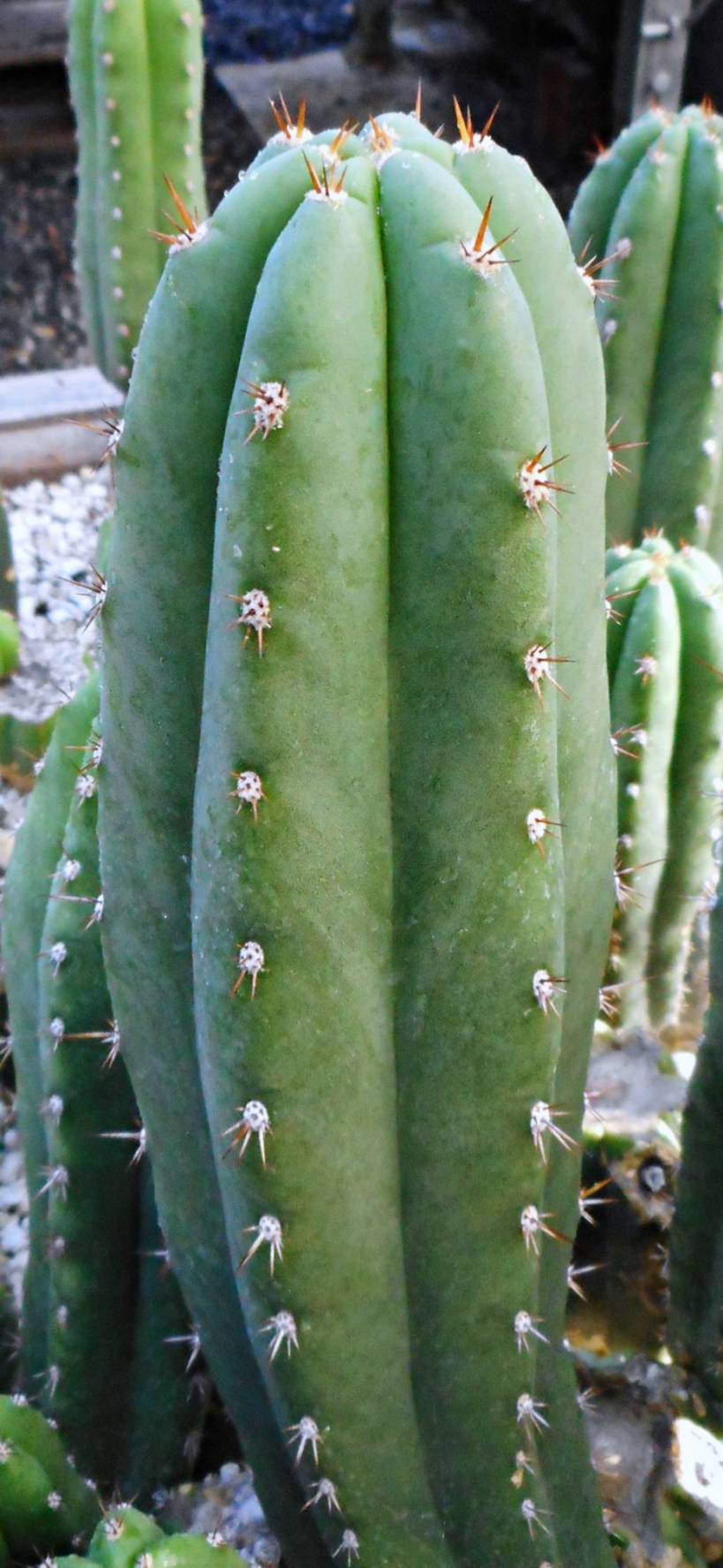
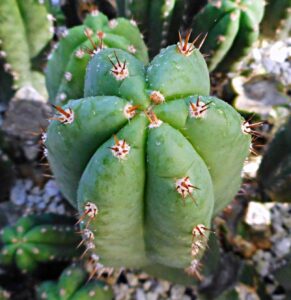 ↑ Specimen plants ↑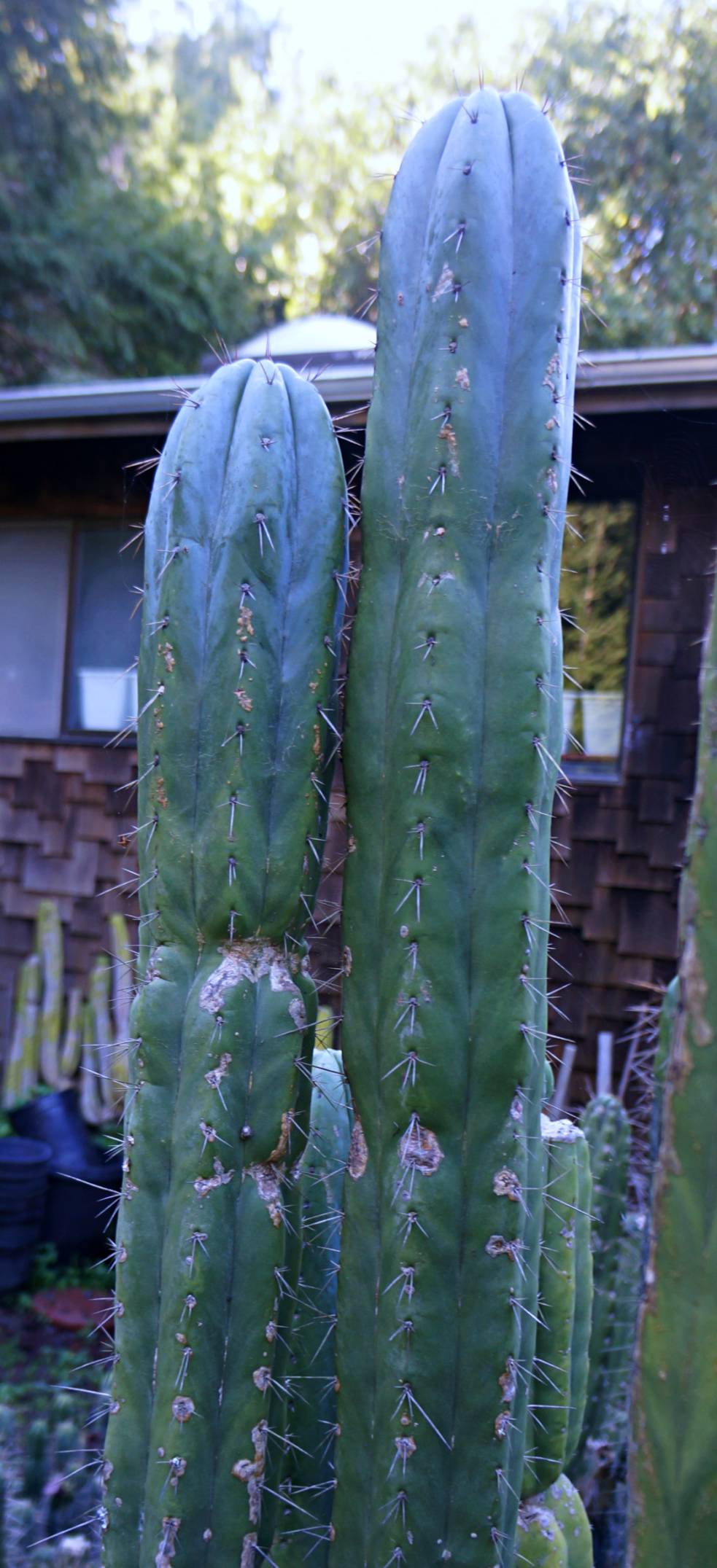
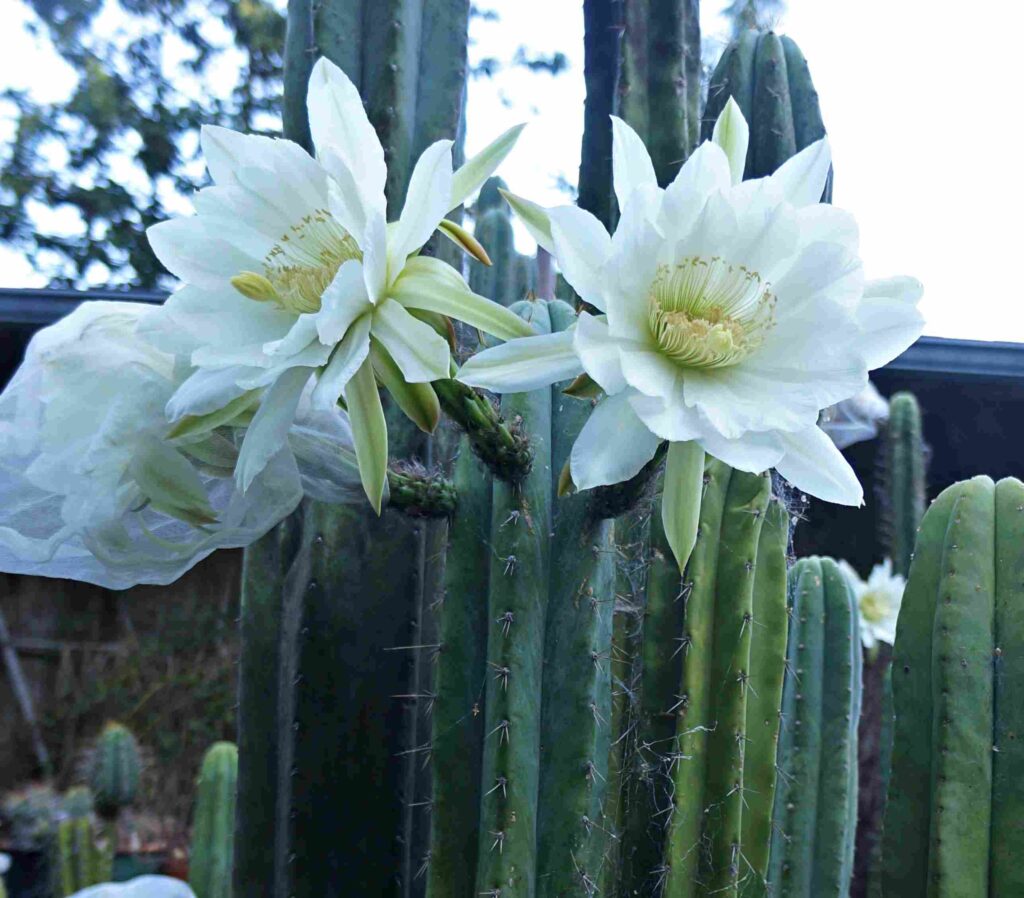 ↑ T. pachanoi Kimnach 2876D in bloom ↑
___
Trichocereus pachanoi ‘Lima’ “San Pedro” “Huachuma”
Upright blue-green stems to 15’+. Rounded smooth ribs. Plants grown in full sun have relatively small spines, interestingly the plants we grow in the filtered light of our greenhouse have larger spines: 1/4–1/2″. White flowers, sweet fruit. This is one of the clones planted as an ornamental throughout the sprawling metropolis of Lima, Peru. Similar to ‘Ogunbodode’s Matucana’ for us when grown in sun, when grown in light shade the plant consistently produces slightly larger spines—the exact opposite of many other clones. Surely one of the more attractive San Pedros. In high demand and now mostly limited to our plant auctions, we currently have some extra cuts, get one while you can. Z9a
1 ~ 24″ cutting $130** SOLD / 1 ~ 19″ cutting $99.50** SOLD
[6 ] → 1 ~ 9–11″+ cutting $56.50* September SALE! $50*
[4 ] → 2 ~ 5–7″+ cuttings $42.50 each September SALE! 2 for $77
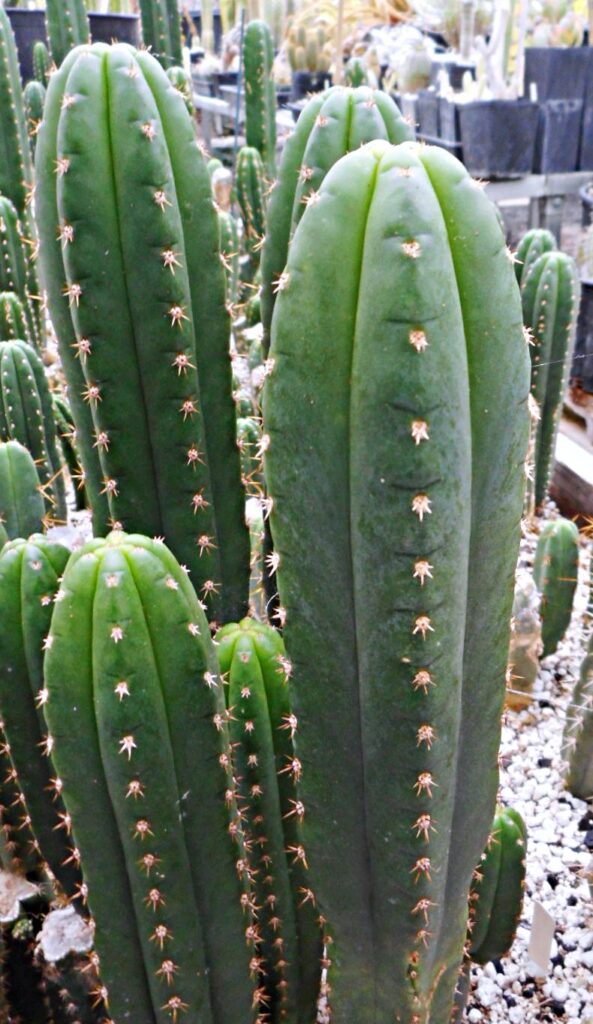 ↑ An example of cuttings ↑
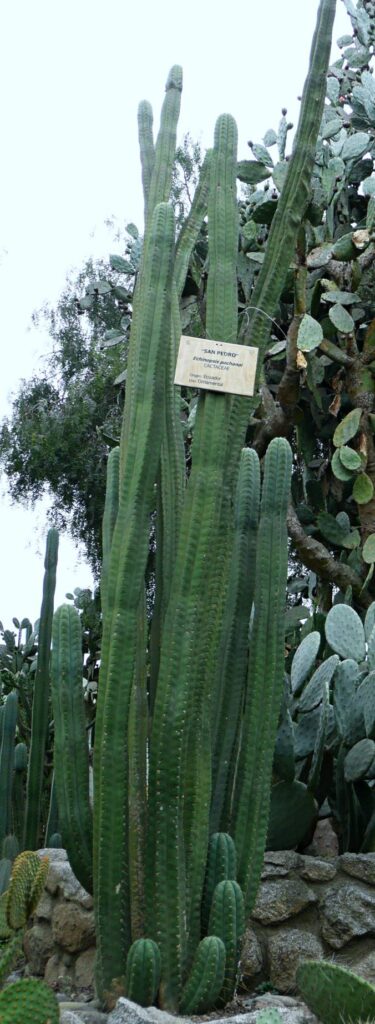 ↑ The common T. pachanoi (growing at the Herbarium) planted around Lima City, Peru ↑
___
Trichocereus pachanoi ‘Ogunbodede’s Matucana’ “San Pedro” “Huachuma”
Possibly the most coveted Sand Pedro. Upright rounded stems with small spines. Originally imported by K. Trout, reportedly from Matucana, Lima, Peru where we have observed a few T. pachanoi planted around the town. This is the clone that stood out in Ogunbodede’s study. Only available in very limited quantity each year. The demand has been absurd and we’ve only had enough to offer through our email auctions the past couple years. We currently have a few cuttings available.
[ 8]→ 1 ~ 5–6″ cutting $125
[ 6 ] → 1 ~ 8–9″+ cutting $155
[ 2 ] → 1 ~ 11–12″+ cutting $195* SOLD
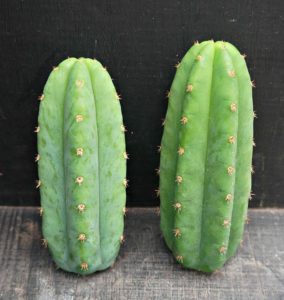 ↑ Examples of 5-6″ cuts ↑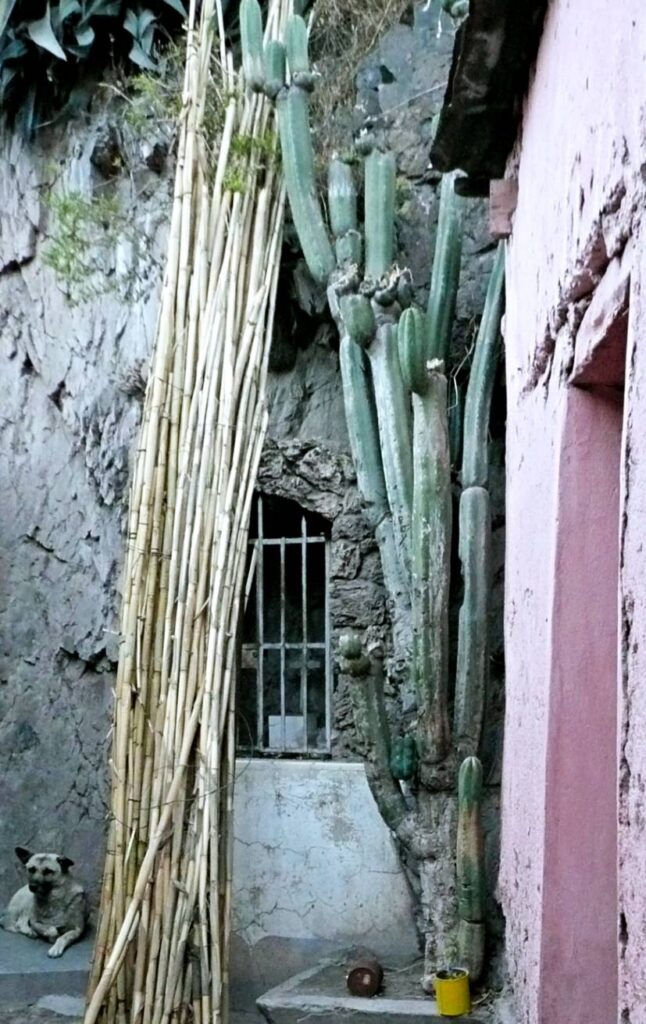
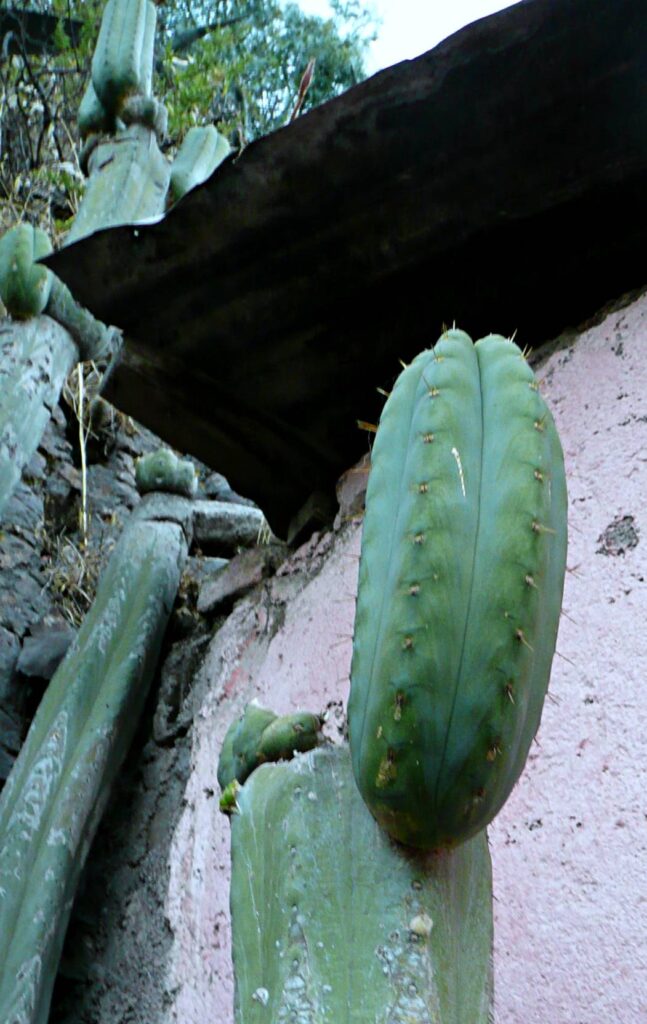
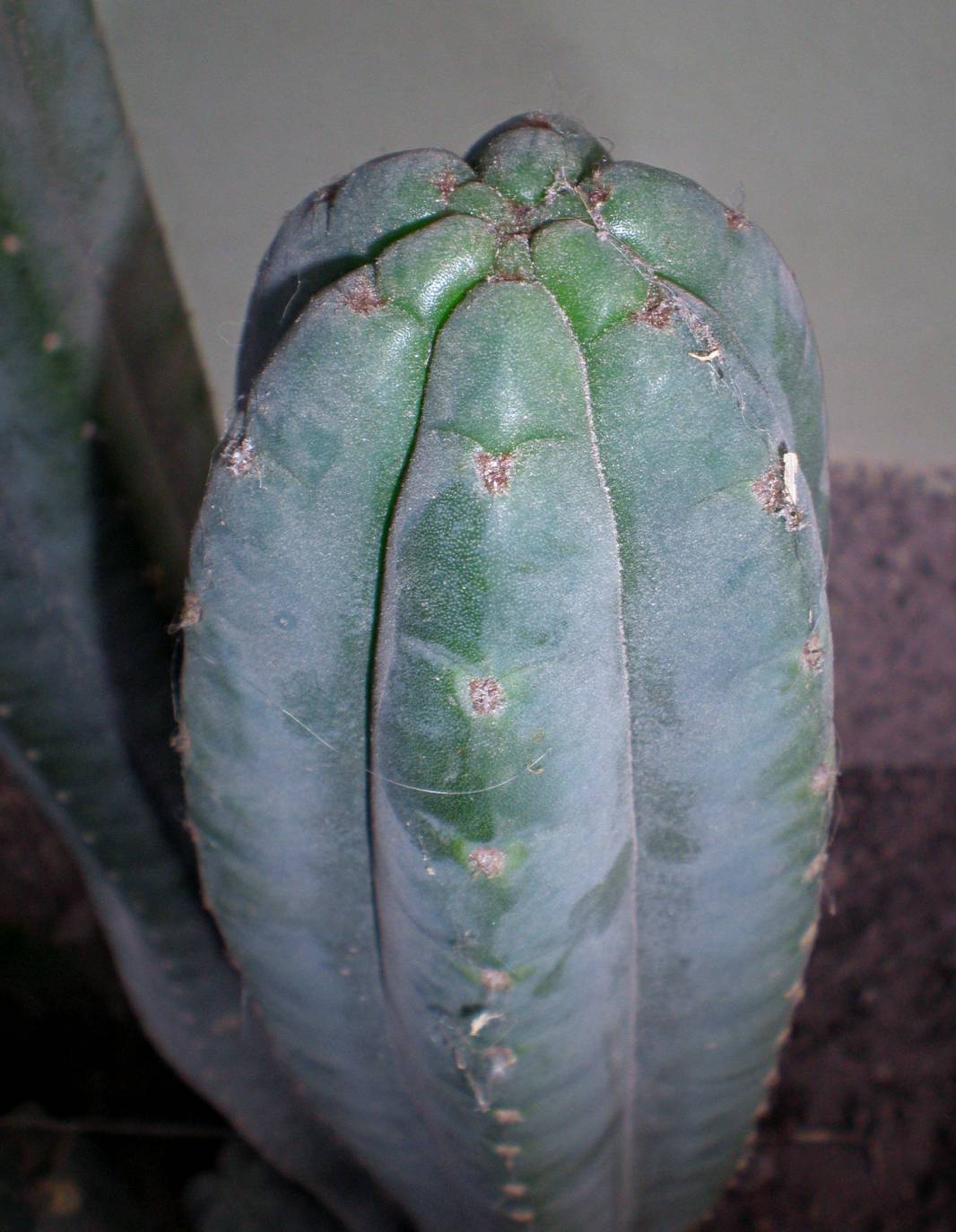 ↑ T. pachanoi growing in the town of Matucana, Peru… Ogunbodode’s? ↑
___
Trichocereus pachanoi OST90641 “San Pedro” “Huachuma” ♥ New ♥
Wild San Pedro from a Carlos Ostaloza collection, Ancash Dept., Peru, 8200′. Green to blue stems, some quite fat up to 6″ diameter. What sets this accession apart is its highly variable morphology—modest to rotund stems grow side by side, bearing medium to long spines, 1/4″–2.5″+. Large white blossoms, edible fruit. Distinct from T. santaensis and the Chavin plants we’ve observed in Ancash Dept. This handsome, robust clone remains scarce in captivity, this is our first and only offering of it in a few years. Z9a
[ 4 ] → 1 ~ 8–10″+ cutting $90* September SALE! $79*
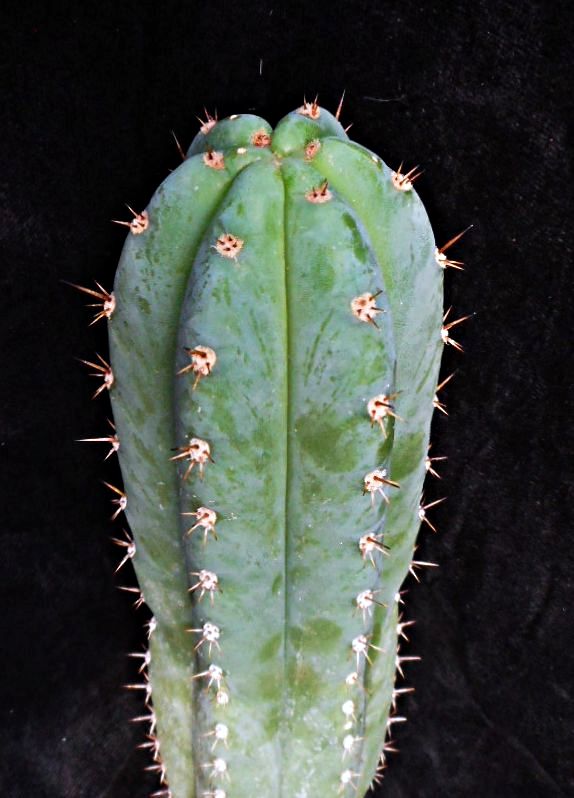 ↑ An example of a cutting ↑
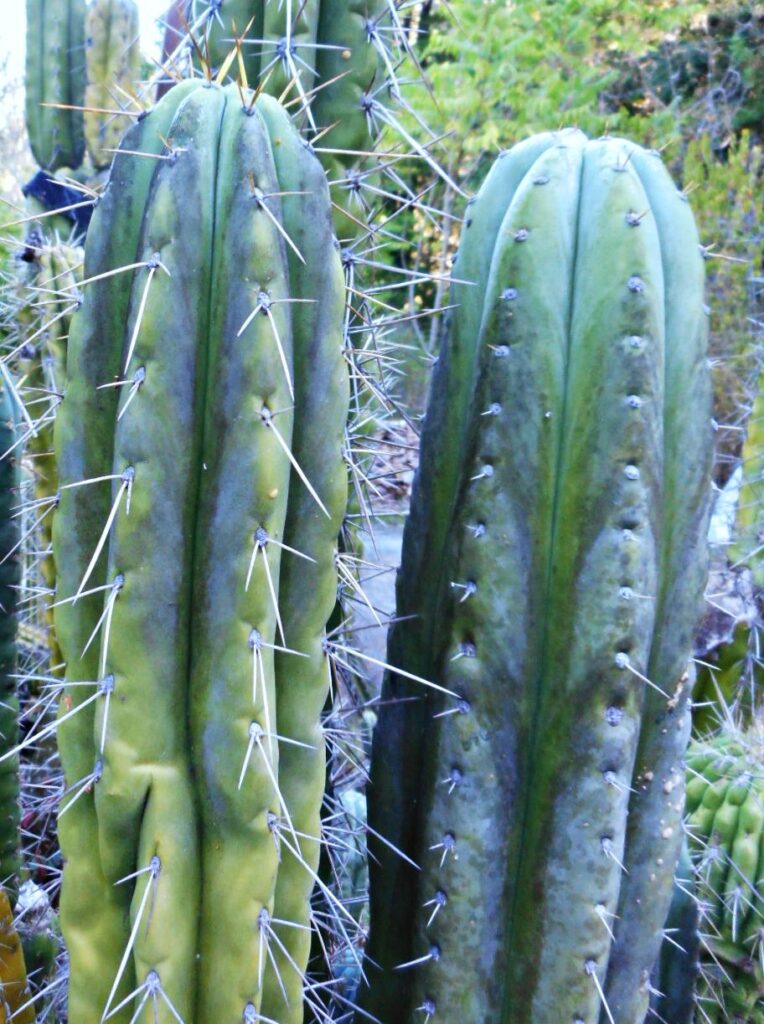 ↑ The variable morphology of our parent plant ↑
___
Trichocereus pachanoi TB17A “San Pedro” “Huachuma”
A newer “wild” Sand Pedro clone. Upright, green to glaucus columns—smooth, handsome stems with distinct notches above the areoles. Tends to grow a little spinier in our greenhouse than outside—spines to 1/4″, amber fading to white-gray. Large white flowers followed by edible fruit. Collected by master plantsman Tom Baldwin at Miralindo, near Quito, Ecuador. We introduced this clone to cultivation a couple years ago and it has only been offered a few times. This is your one chance outside of auction to obtain a cutting of this desirable Huachuma. Z9a
[ 4 ] → 1 ~ 5–6″ cutting $160 September SALE! $144
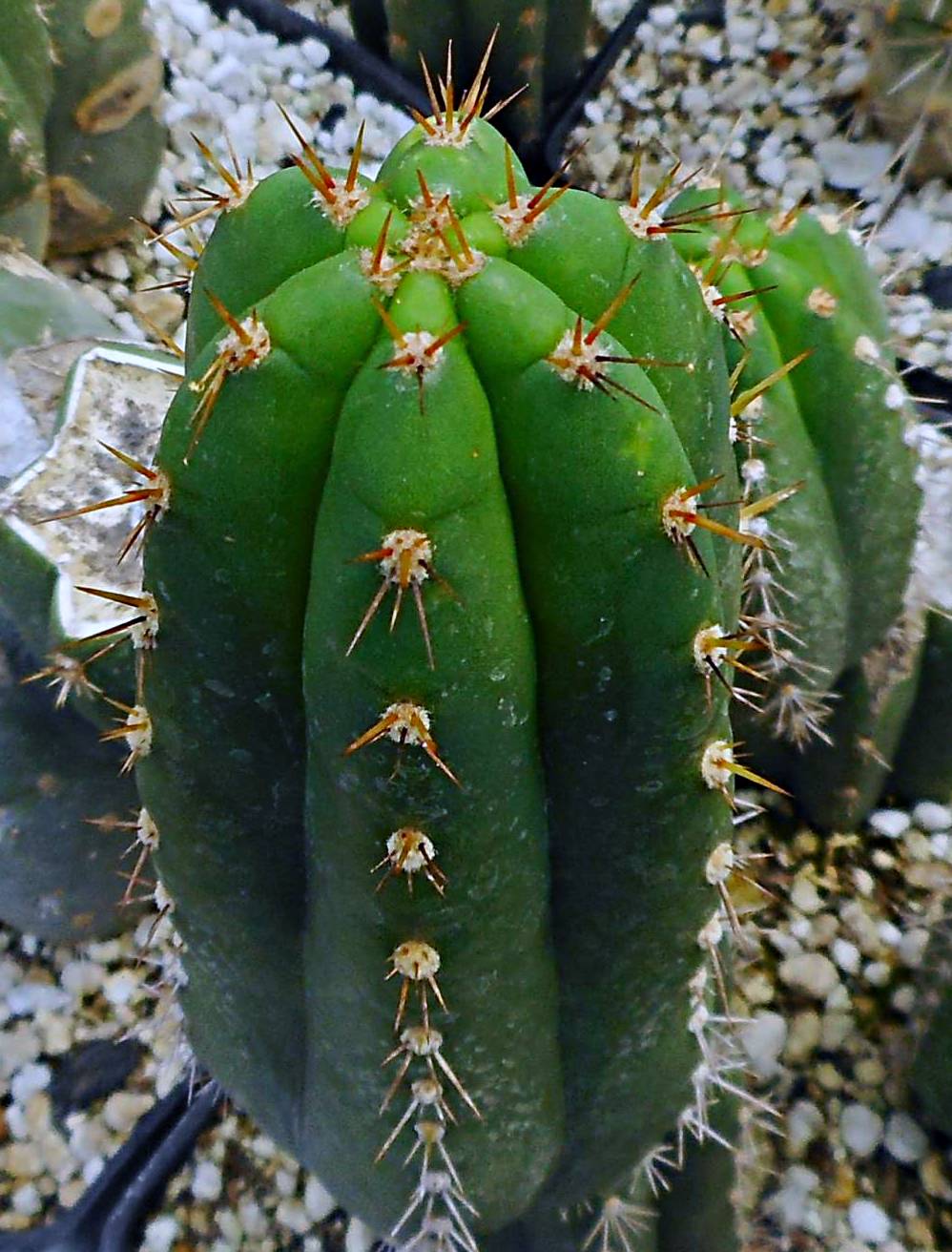 ↑ An example of a specimen ↑
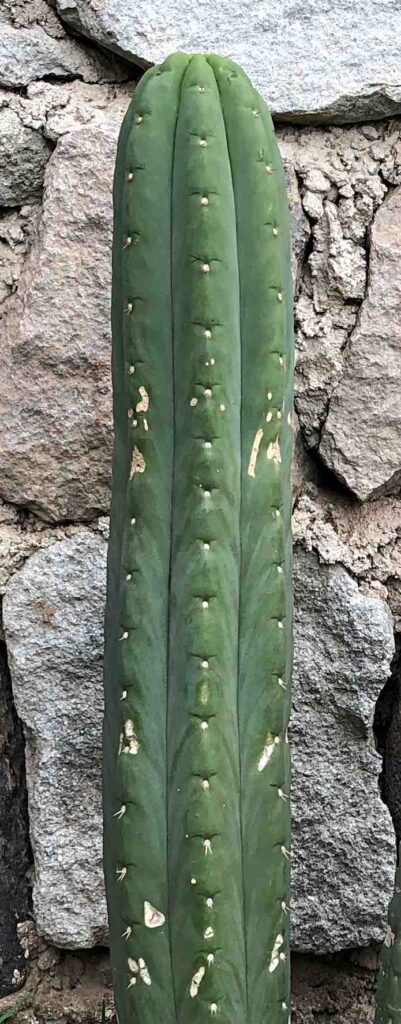 ↑ Mother plant showing off the distinct, handsome form; Miralindo, Quito, Ecuador ↑
___
Trichocereus pachanoi TB17B “San Pedro” “Huachuma”
Another newer Sand Pedro clone. Lovely, green to bluish upright columns with spines up to 3/4″+. Collected by plantsman extraordinare Tom Baldwin from a stand growing at a museum in Quito, Ecuador. We introduced this lovely clone into cultivation a couple years ago and have only offered it a few times before via auction where it has gone for hundreds. We have a few cuts for you here—the only chance to obtain this clone this year. Z9a
[ 5 ] → 2 ~ 5–6″+ cutting $150 September SALE! $128 each
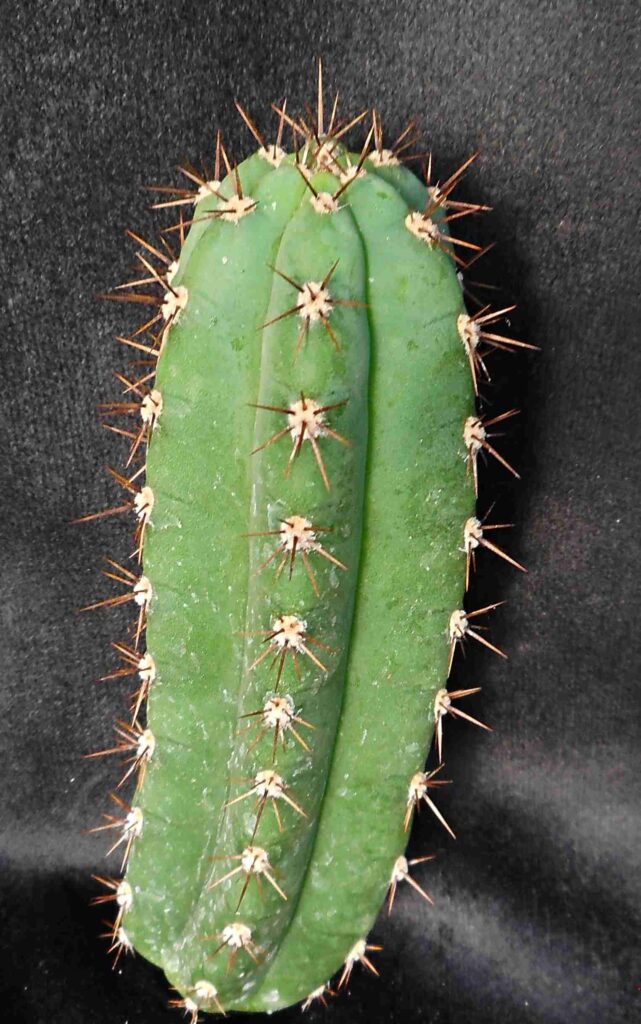 ↑ An example of a cutting ↑
___
Trichocereus pachanoi f. cristata cl. A “Mutant San Pedro” “Huachuma”
A marvelous mutant clone of the beloved San Pedro cactus. Forms thick fans of fabulous cristate growth and eventually large, convoluted mounds that resemble a monstrous brain. Occasionally reverts to normal growth or monstrose columns that have the look of molten wax. Each specimen is a living sculpture. Our stock was damaged a few years back and we’ve barely offered this beautiful mutant since then. Unique rooted cuttings, the last for some time. Has a bit of weathering on the older part of the plant from growing exposed outside, but should be extra hardy and is poised to show its full bizarre beauty as it matures in the coming seasons. Z9a
1 ~ 7″+ tall, 9″ wide plant [with two 1.5-2″ tall ‘normal’ pups] $66* SOLD / 1 ~ 9″+ monstrose plant with a 2.5″ crest at tip $38.50* SOLD
___
Trichocereus pachanoi f. monstrosus X T. peruvianus/ ‘Juul’s Giant’ hybrid f. monstrosus “Mutant San Pedro Hybrid” ♥ New ♥
First ever offering! Many have requested this cross over the years and we finally produced a bit of seed a few years ago—a hybrid of these two “classic” marvelous mutants, living sculptures which both vary from molten monstrose columns to thick fans of fabulous cristate growth to “normal” upright columns. Right now, about 1/5 of the seedlings show mutant/cristate growth and more will certainly do so as they age. The selections we offer here are currently non-monstrose seedlings, yet may grow mutant or crested with maturity. Be among the very first to grow these to find out! Z9a
[ 6 ] → 2 ~ 3–4″+ plants 3 years old $48.50 each
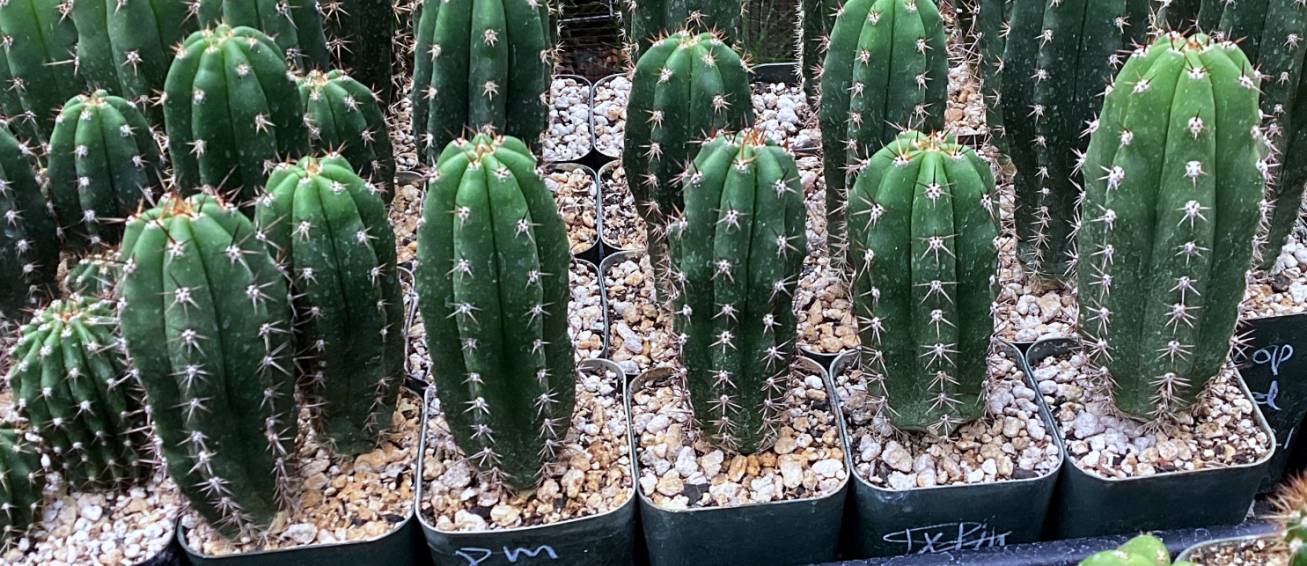 ↑ An example the specimens ↑
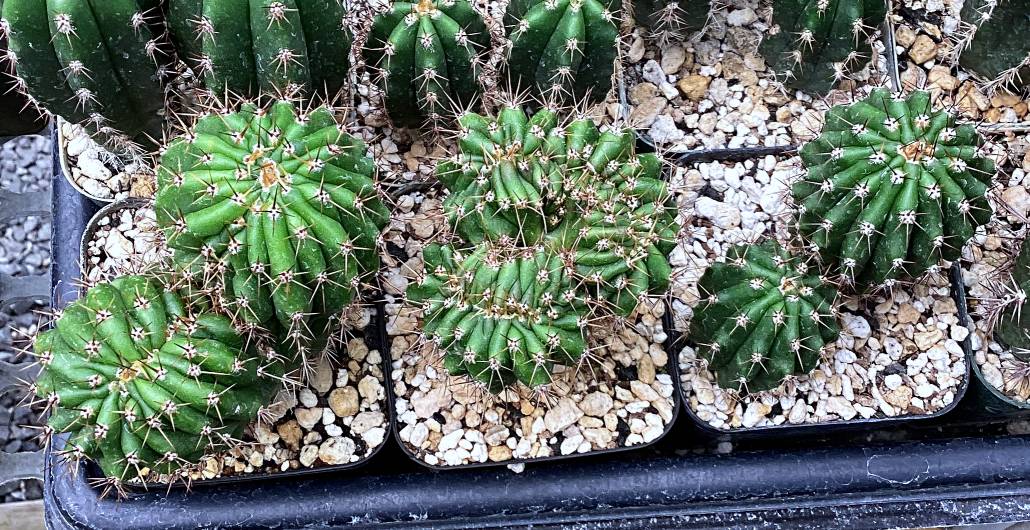 ↑ An example mutant seedlings, not for sale ↑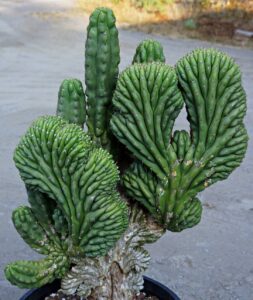
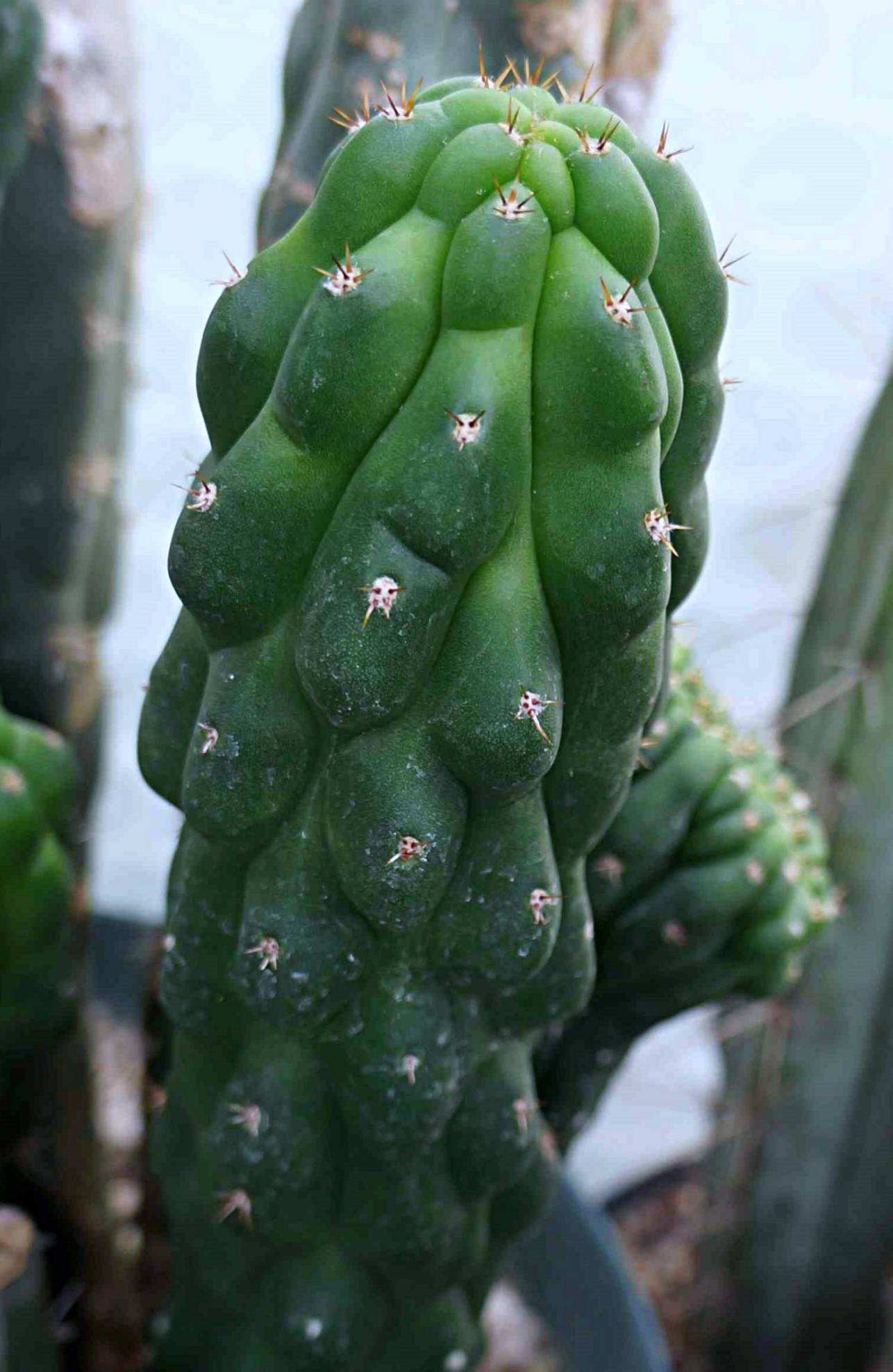 ↑ Examples of the mother ↑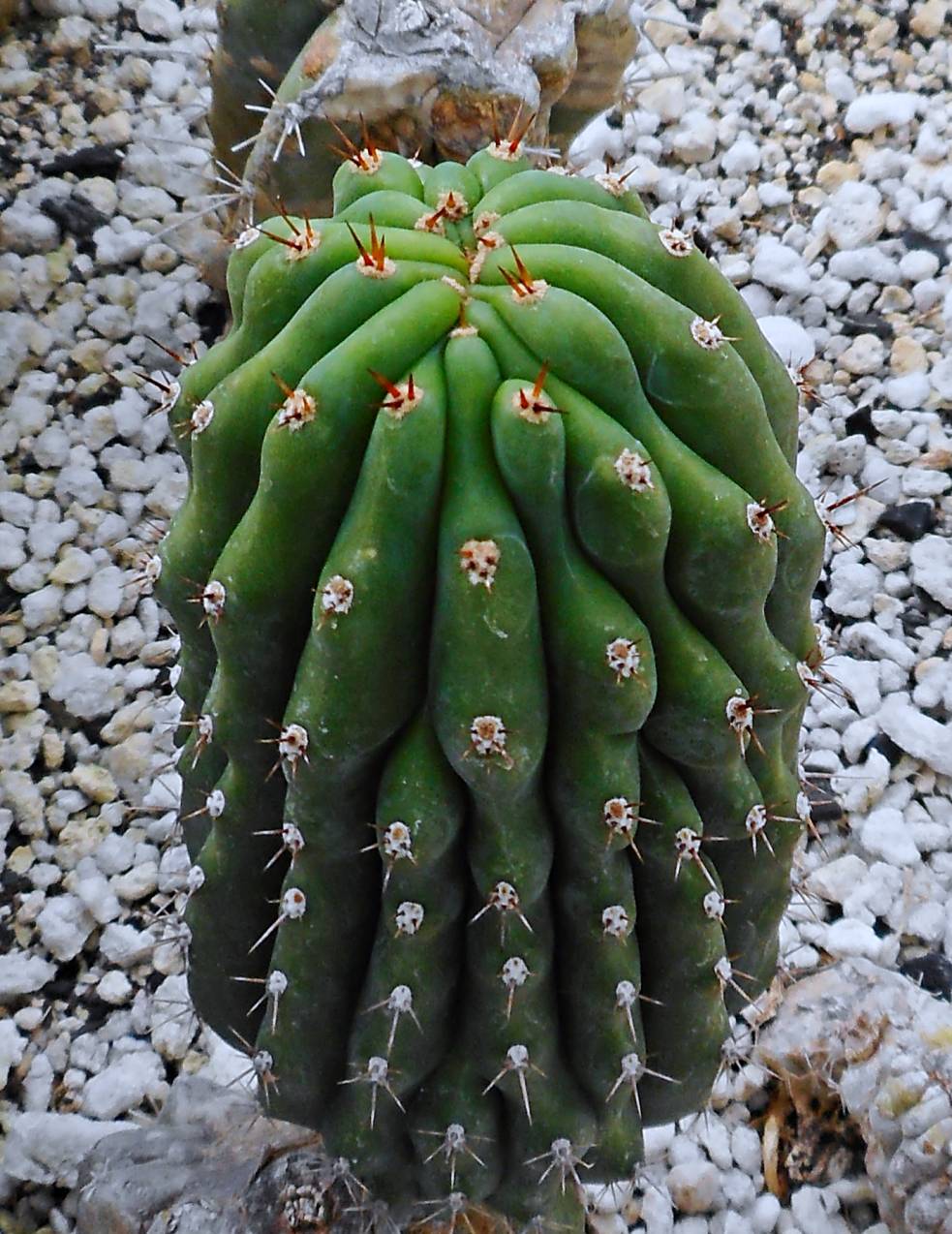
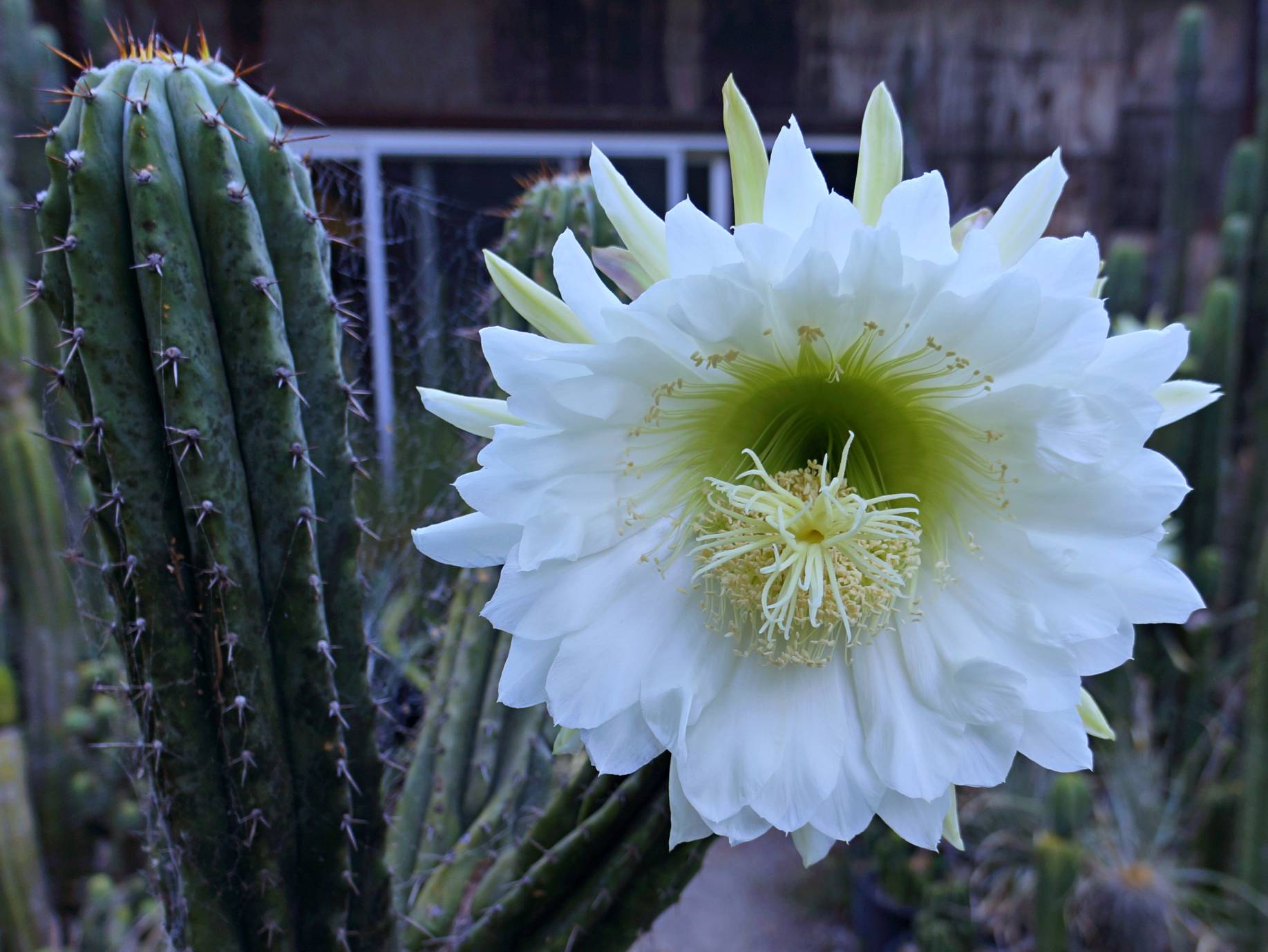 ↑ Examples of the father ↑
___
Trichocereus aff. pachanoi BK10508.1 “San Pedro”
A lovely and highly desirable clone with upright columns to 10’+, small spines, large white flowers, edible fruit. Common clone around Cochabamba City, central Bolivia. Looks distinct from the T. pachanoi of Peru/Ecuador, though local botanists refer to it as T. pachanoi. Possibly brought to the region during the Incan colonization of the area in the 1400s. Our collection from the base of Cerro San Pedro, about 1 mile from the Martin Cardenas Botanical Garden, near 8,500′. Growing with Puya mirabilis, Cleistocactus buchtienii, and Carica quercifolia. Also shows affinity with some riomizquensis clones. With the small spines and green to blue-gray-green stems it’s a “must have” for San Pedro collectors; it is among the very nicest pachanoids we’ve grown. Rare in captivity, we usually only have a handful of small cuts to offer each year — get a larger cutting while they’re available! Z9a [For additional info and photos, see our list of BK Trichocereus accessions]
[ 4 ] → 1 ~ 8″+ cutting $42.50 SOLD
[ 3 ] → 2 ~ 26–28″+ cuttings $130** each September SALE! $112** each; or 2 for $199**
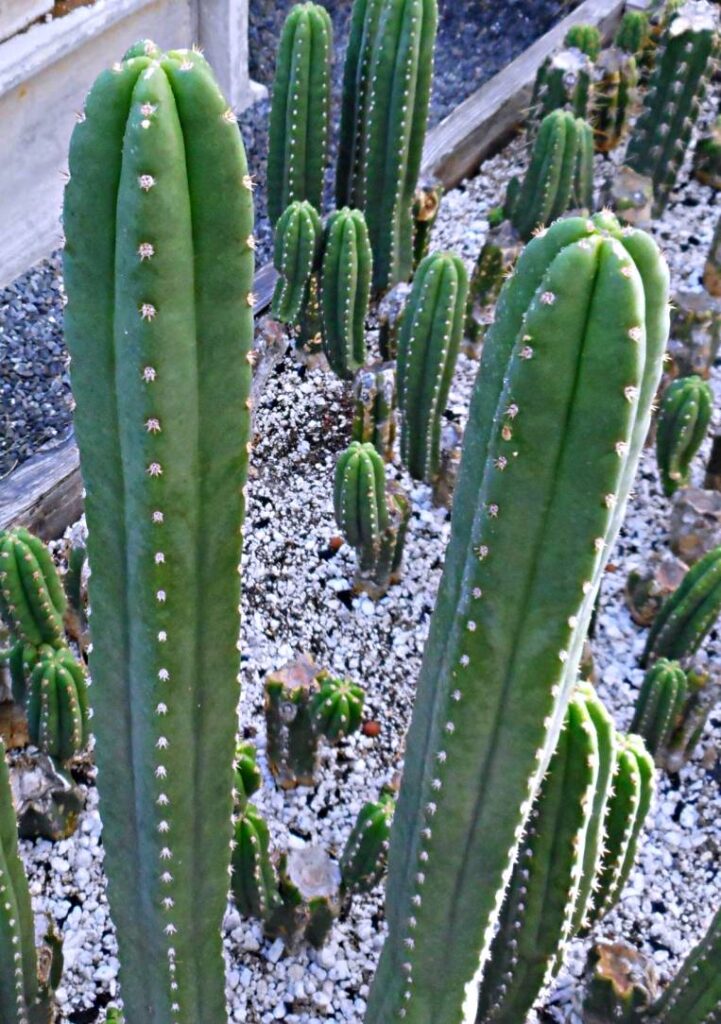 ↑ An example of cuttings ↑
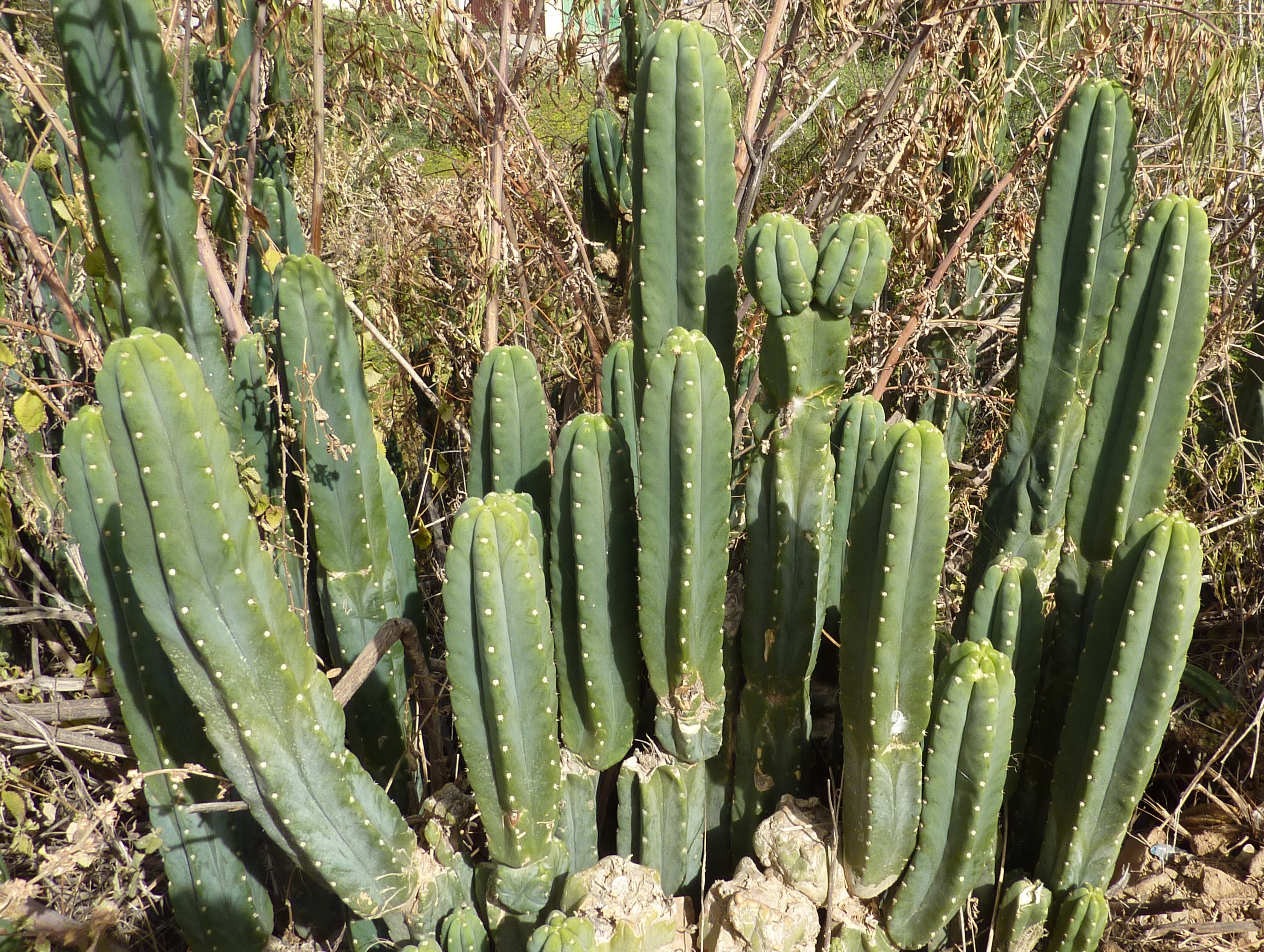 ↑ Trichocereus aff. pachanoi BK10508.1 in habitat, Cochabamba, Bolivia ↑
___
Trichocereus aff. pachanoi BK10512.11 “K’ulala” “San Pedro”
One of our favorite plants. Upright columns to 10′, dark green glossy stems 4–6″ diameter. Distinctive large white areoles, small spines to 1/4″. T. pachanoi like, but distinct from other clones we’ve seen. Planted at a home near Cuchucunata, Cochabamba, Bolivia, 8,250′. The owners called it “k’ulala”. We only offer a few cuts each year. Z9a [For additional info and photos, see our list of BK Trichocereus accessions]
[ 4 ] → 2 ~ 5-6″ cuttings $39.50 each SOLD / 1 ~ 20″+ cutting $90** SOLD
[ 4 ] → 2 ~ 7–8″+ cuttings $45.50 each September SALE! 2 for $82
[ 4 ] → 1 ~ 11–14″+ cutting $62.50* September SALE! $56*
 ↑ An example of a cutting ↑
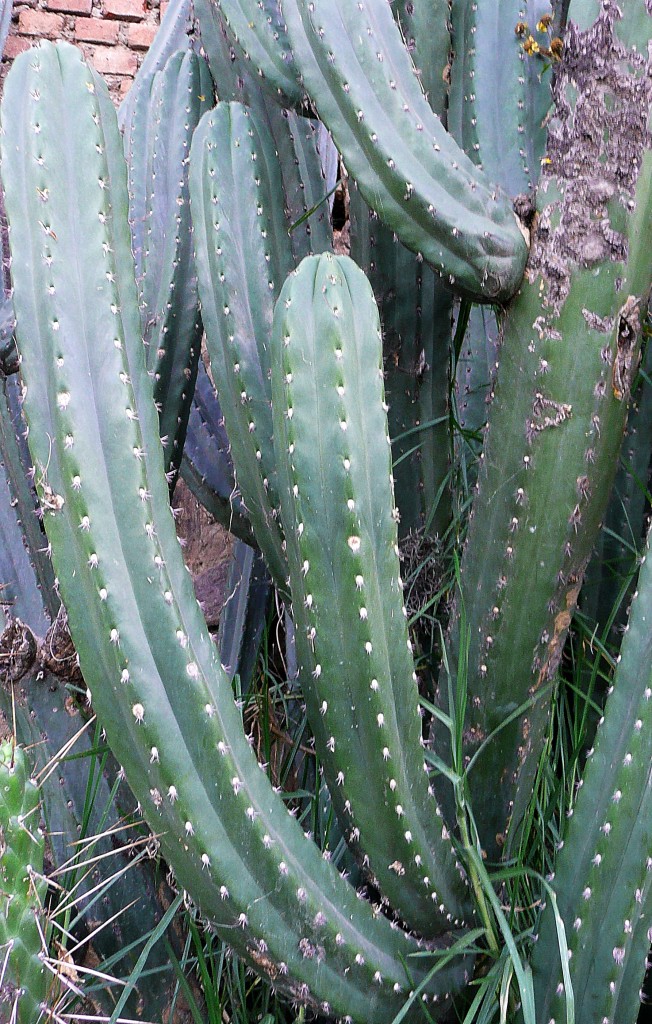 ↑ BK10512.11 in habitat, Cochabamba, Bolivia ↑
___
Trichocereus aff. pachanoi Hutchison et al 6212 “San Pedro” “Huachuma”
Upright stems to 8’+ tall and 6″ in diameter. 5–9 fat, rounded ribs and miniature spines. Sweet night blooming white flowers. A really gorgeous San Pedro that is most likely simply a distinct clone of wild T. pachanoi or santaensis. Originally collected above 8,000′ by P. Hutchison and J.K. Wright & R.M. Straw in the Canyon Rio Maranon above Chagual, just below Aricapampa, Huamachuco Prov., La Libertad Dept., Peru. For several decades this has been among our favorites! Z9a
[ 6 ] → 2 ~ 8-9″+ cuttings $34.50 each SOLD
[ 8 ] → 4 ~ 5-6″ cuttings $26.50 each September SALE! $24 each; or 2 for $44
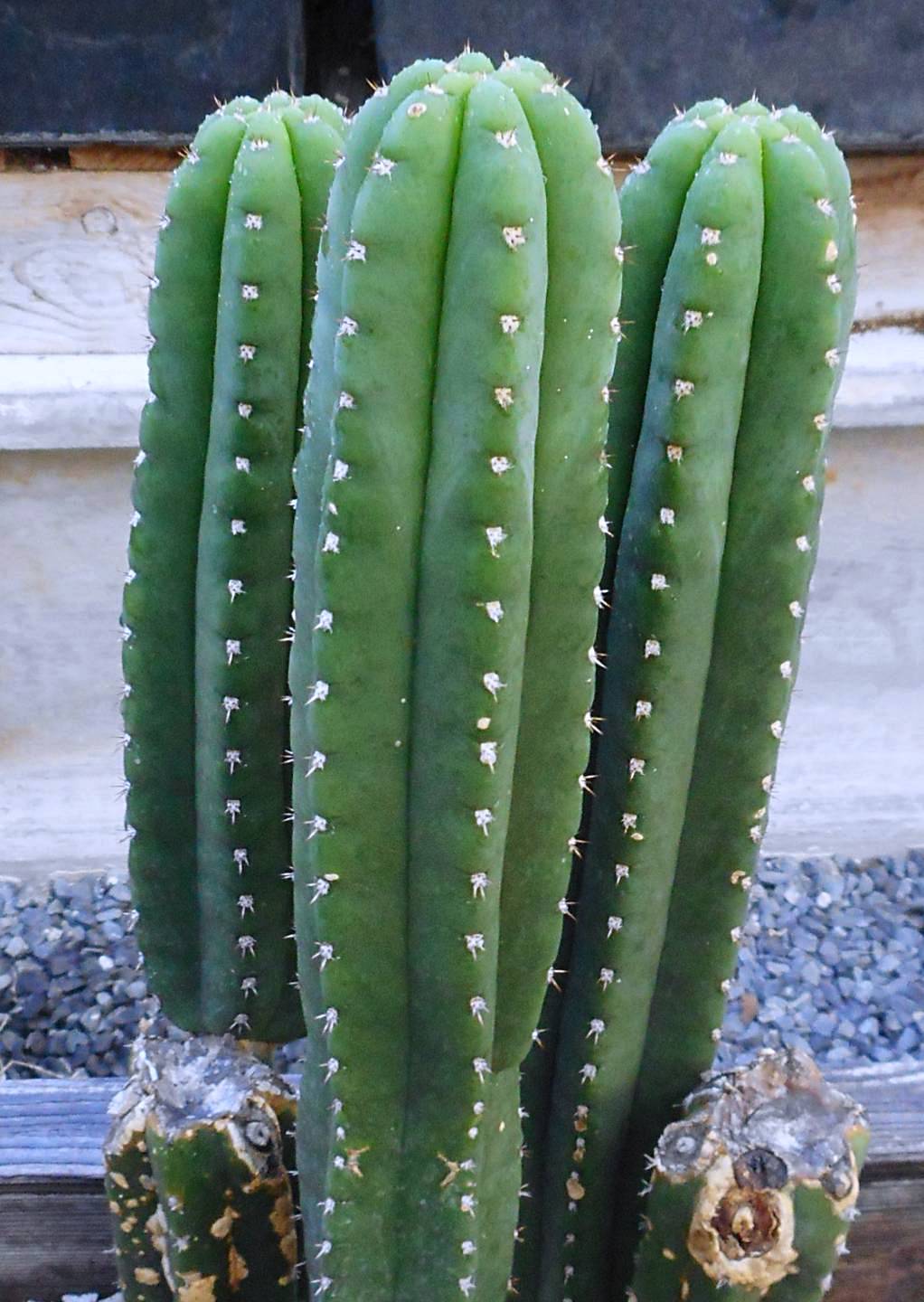
___
Trichocereus pachanoi X Trichocereus sp. ‘Juul’s Giant’ – f. variegata “Variegated San Pedro”
A beautiful heirloom selection from our late 90s hybrids, variegated with mottled shades of pale to dark yellow and light to dark green, blushing blue. The progeny of this hybrid range from the short spined you’d expect to plants with 1″+ long spines. One of the short spined seedlings came up variegated in 1998 and as the plant matured the yellow/green variegation would ebb and flow. A few years ago we finally began propagating the variegated branches. Only offered a handful of times before, take home a living part of history! These cuttings currently has visible variegation on half the ribs; more variegation will show up as they grow. The first time available outside of auctions. Z9a
[ 2 ] → 1 ~ 6” cutting $95 SOLD
“Normal” Cutting:
These are “normal”, non-variegated cuts from this clone. While we can make no promises as to when, in our experience these will eventually revert to variegated growth again at some point.
1 ~ 12″+ non-variegated cut $77* SOLD
[ 2 ] → 1 ~ 6–8″ non-variegated cut $45
 ↑ An example of variegated growth ↑
___
Trichocereus pachanoi X Trichocereus pasacana ‘Dawsons’
Very cool new hybrid of San Pedro with the giant T. pasacana— so far the seedlings show a wonderful diversity of unique spination and form; from long to shortish spined and some even appear to be leaning towards monstrose-ness. We’re very excited to see how these mature. Truly, a “must have” hybrid for any devoted collector. You can let us know if you prefer longer or shorter spined plants from what’s available. Z8/9?
[ 12 ] → 2 ~ 2.5–3.5″ plants 4 years old $24.50 each 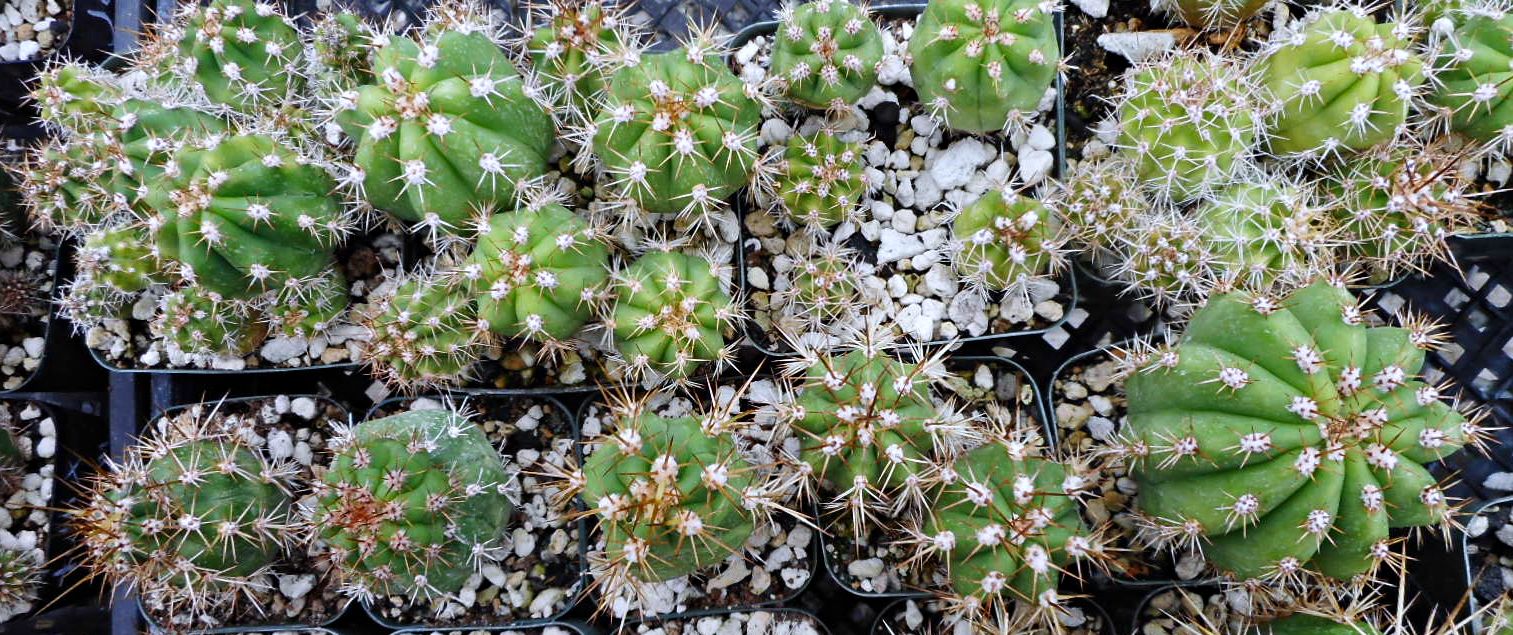
___
Trichocereus pachanoi f. monstrosus X Trichocereus scopulicola/bridgesii SS02 ♥ New ♥
First introduction of this lovely new hybrid! A melted wax to cresting mutant San Pedro crossed with a beautiful scopulicola X SS02 hybrid. So far, these are gorgeous seedlings with a handsome form to their ribs and variable spines, from 1/4″ to 3/4″ long. Right now, about 15% of the progeny show mutant growth and more are likely to do so as they age. The plants we offer here are currently non-monstrose seedlings, yet may grow mutant with maturity. Be the first to grow this beauty and find out! Z9a
[ 4] → 1 ~ 2.5–3.5″+ plant 2–3 years old $45.50 SOLD
___
Trichocereus peruvianus ‘GF’ “Huachuma Macho”
Fat, blue-green clone grown in California for decades, tends to be a bit more upright and less densely spined than some clones. Somewhat similar to the plants from Huarochiri Prov., Peru, such as ‘Los Gentiles’, BK09612.4, etc. A handsome, well rooted specimen, 3–4″ diameter from growing in a lightly shaded location, hardy and a little weathered, yet still blue after being outside for several seasons. May be our only offering of this robust clone this year. Z9a
1 ~ 34″+ rooted plant $185** SOLD
___
Trichocereus peruvianus X Trichocereus sp. ‘Juul’s Giant’ hybrid f. monstrosus
In 1996 we sowed 1000+ seed of this great hybrid. One seedling grew to be a real jewel, with fat blue-green mutant stems with 8–16 ribs and occasionally thick fans of cristate growth. The blossoms on this clone are extra large and also mutant, with many extra sepals and petals! Z9a
[ 4 ] → 2 ~ 2–3″ cuttings $24.50 each SOLD
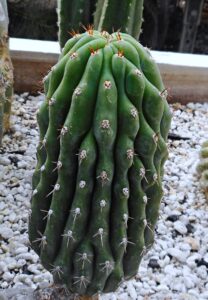 ↑ An example of a 6″ specimen ↑
___
Trichocereus peruvianus X Trichocereus sp. ‘Juul’s Giant’ hybrid f. cristata
Same clone as above, these are cuttings of beautiful thick fans of blue-green cristate growth with 1/2″ spines. Will eventually produce monstrose growth as well as large, mutant blossoms. Z9a
[ 5 ] → 1 ~ 2–3″ cutting $26.50
↑ An example of a larger specimen ↑
___
Trichocereus riomizquensis FR856 “Achuma”
Upright glossy green stems with 5–9 ribs and short spines. White nocturnal flowers, edible fruit. A very rare pachanoid similar to T. bridgesii and to a lesser degree T. scopulicolus. Seed originally collected by Friedrich Ritter in the late 1950s from plants growing on steep rocky walls; Chujllas, Campero, Cochabamba, Bolivia. From our research in this region in 2010 this specific population appears to now be extinct. A beloved heirloom clone of this variable and poorly understood species. Z9a
[ 6 ] → 2 ~ 5–7″+ cuttings $22.50 each
1 ~ 12″+ cuttings $42.50* ♥ New ♥
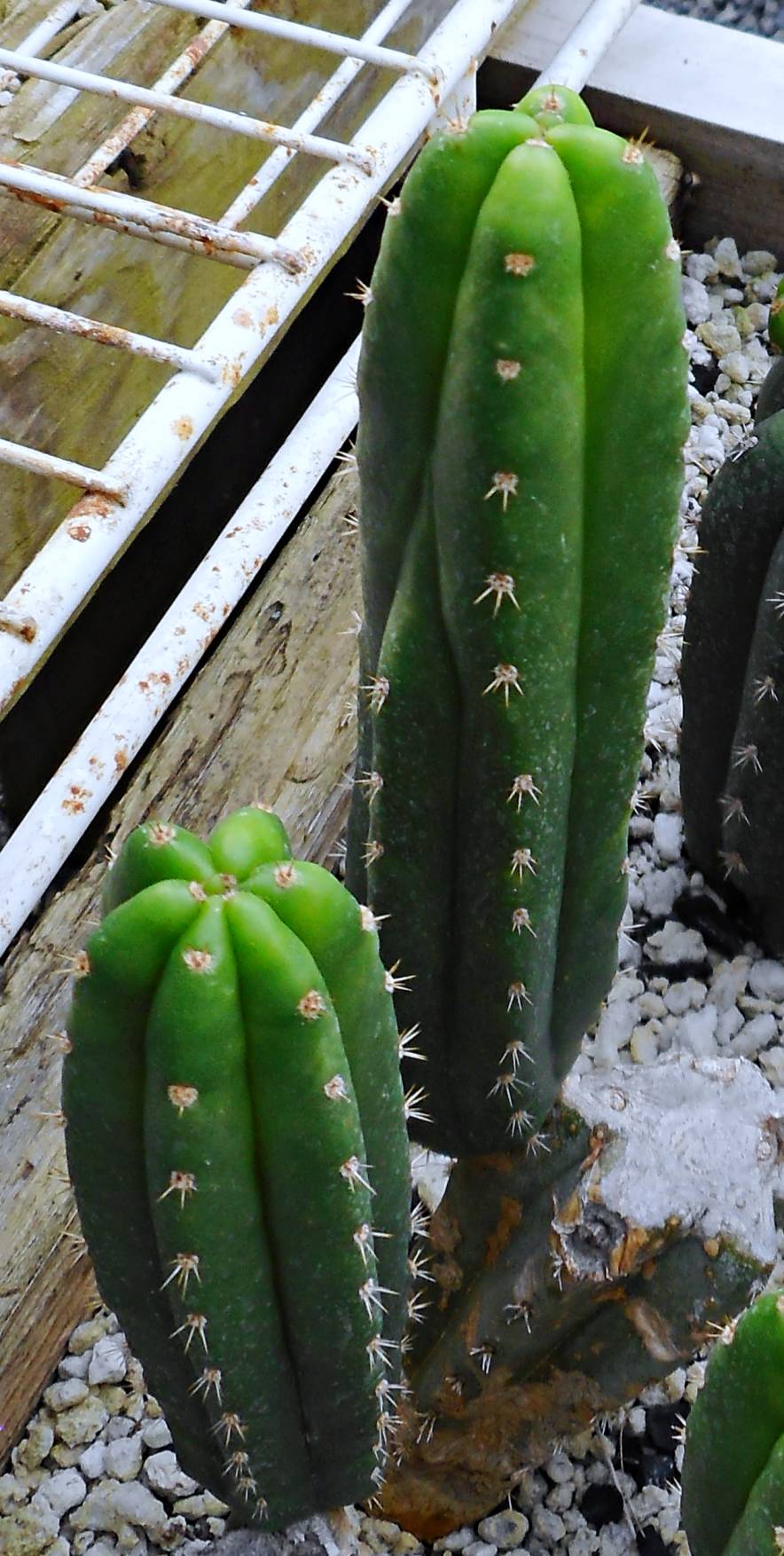 ___
___
Trichocereus santaensis BK09511.7 “Huachuma” “San Pedro”
This beautiful plant has become legendary and highly coveted by collectors. Green to blue-green epidermis, small spines less than 1/8″ to 1/4″ long. Stems to 10′ tall. Originally growing with Schinus molle, Baccharis sp., Cylindropuntia sp., and Bidens sp., just above the floodplains on the west side of the Santa River, at the base of the Cordillera Negra, to the north of Puente Choquechaca, Ancash, Perú, 7250′. Our field bioassay suggests great promise. Our stock took damage the last few winters and we’ve not been able to propagate enough to keep up with demand—so now it is typically only available once or twice a year via auction. Get a cutting while you can! Z9a [For additional info and photos, see our list of BK Trichocereus accessions]
[ 4 ] → 1 ~ 5–6″+ cutting $160 SOLD
[ 2 ] → 1 ~ 4″+ cutting $120 ♥ New ♥
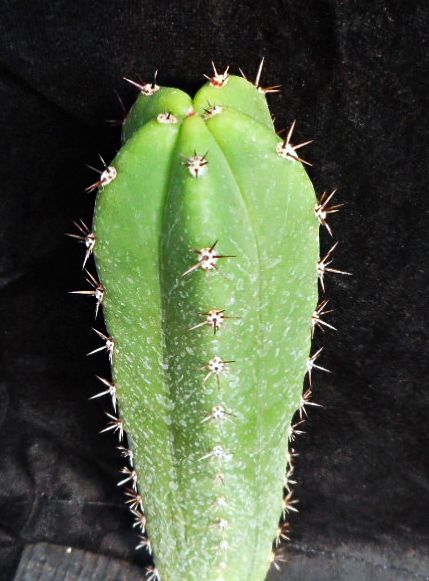 ↑ An example of a specimen cutting ↑
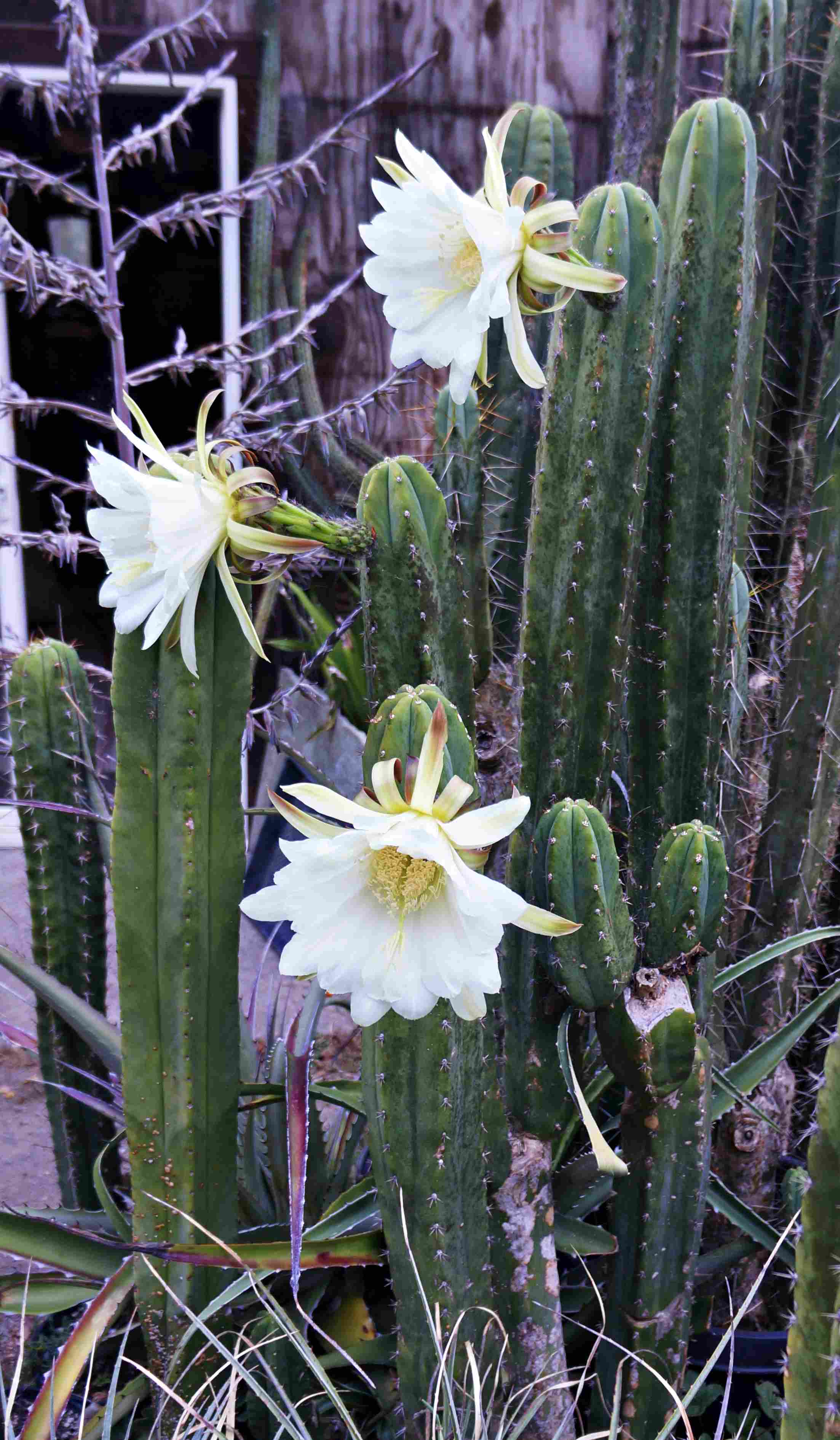 ___
___
Trichocereus santaensis BK09511.7 X T. peruvianus/ ‘Juul’s Giant’ hybrid f. monstrosus ♥ New ♥
Our first offering of a completely new hybrid of the coveted T. santaensis with our mutant peruvianus X Juul’s hybrid that is admired for its fat blue stems and crests and mutant flowers with extra petals. So far, about a small percent show monstrose or crested growth. We offer chunky seedlings that currently display normal growth, though may become mutant with maturity. Be the first to grow these! Z9a.
[ 6 ] → 2 ~ 2.5–3.5″+ plants 2–3 years old $48.50 each September SALE! 2 for $79
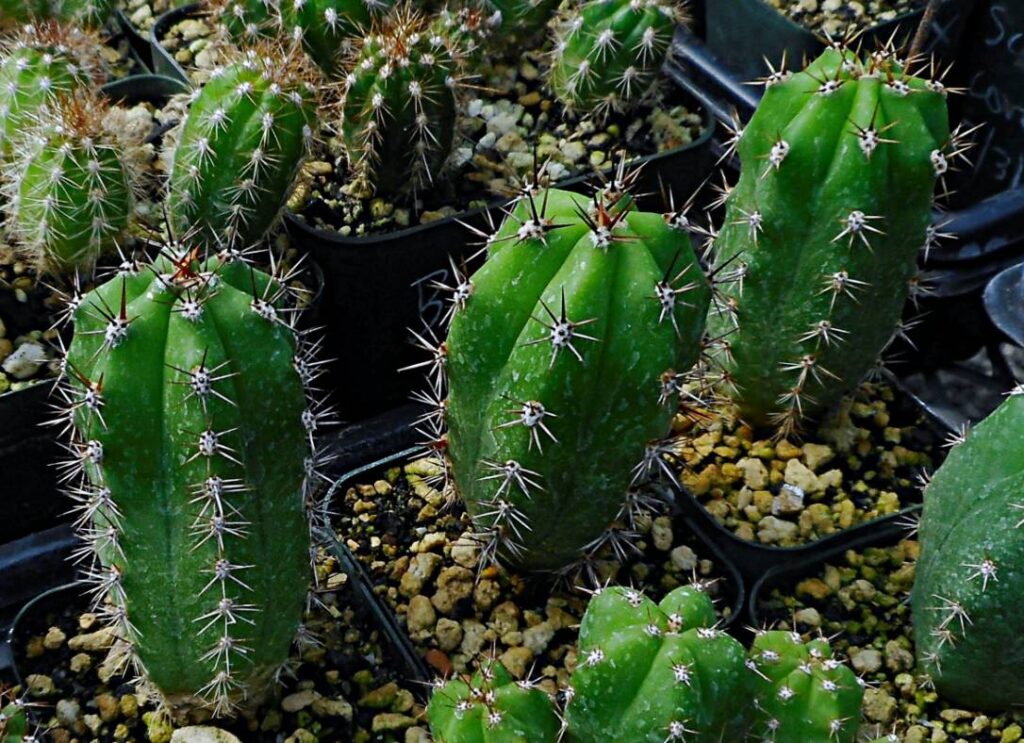 ↑ Specimen seedlings ↑
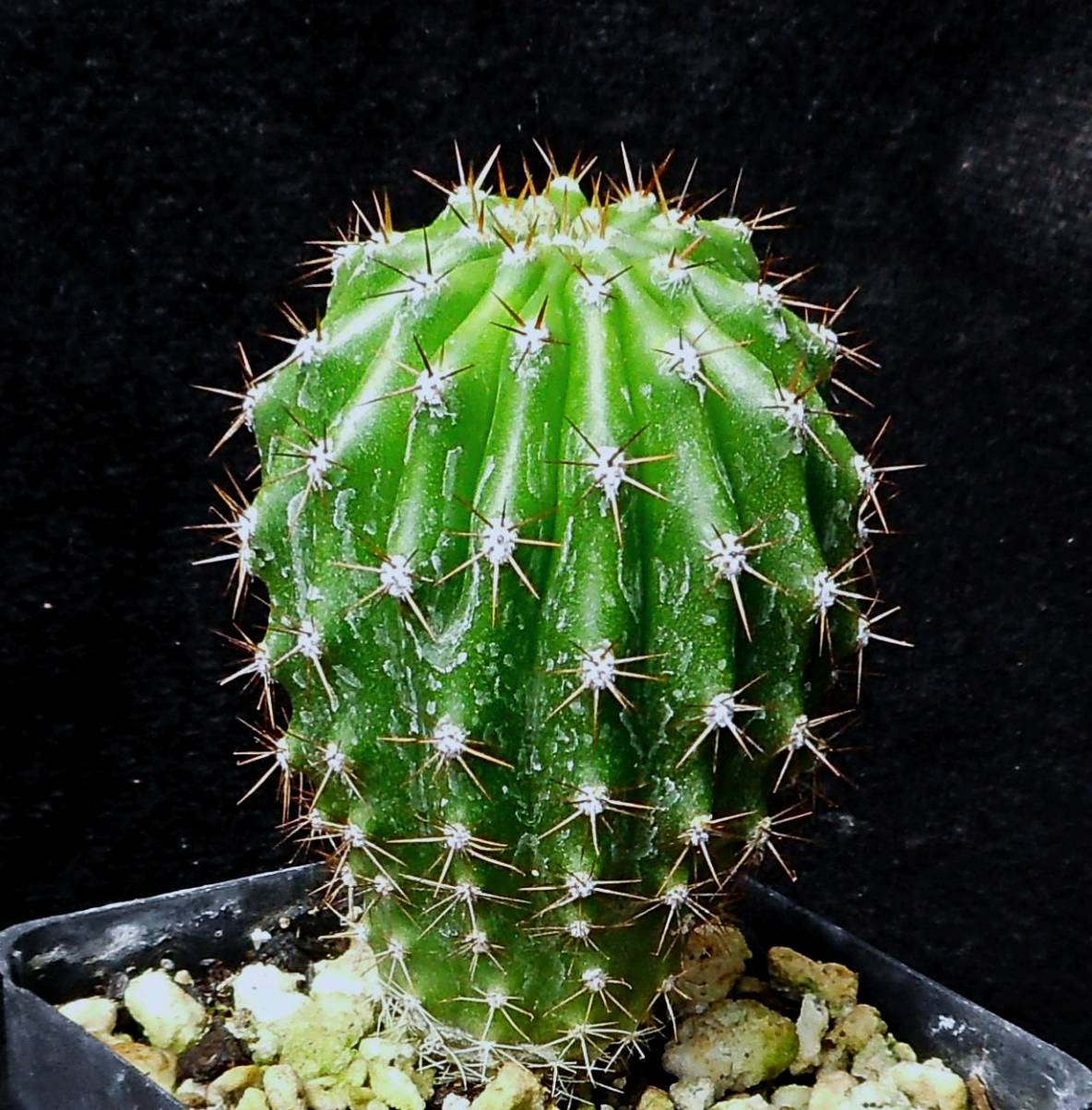 ↑ A monstrose seedling—see our auction-fundraiser ↑
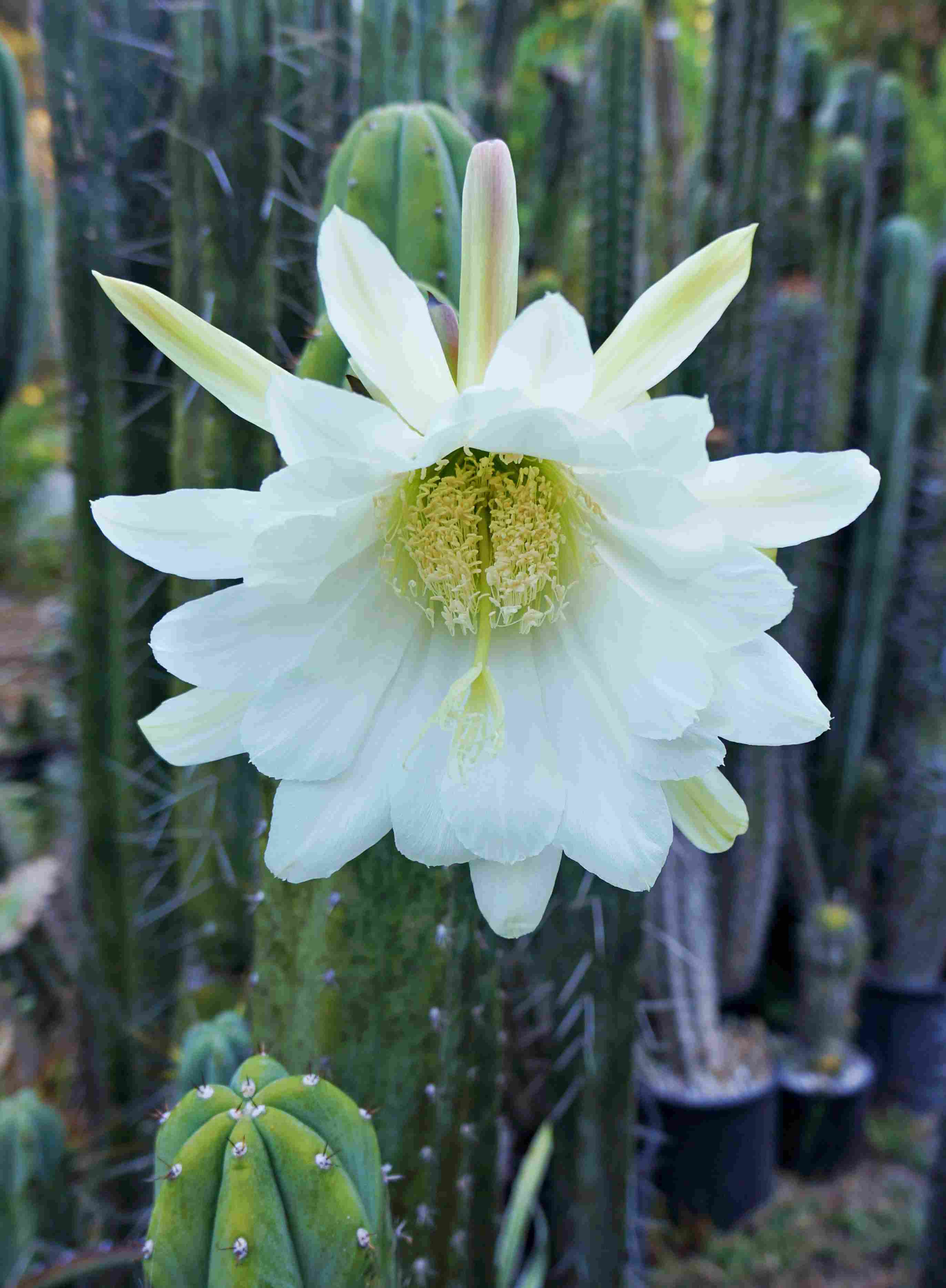 ↑ Mother plant ↑
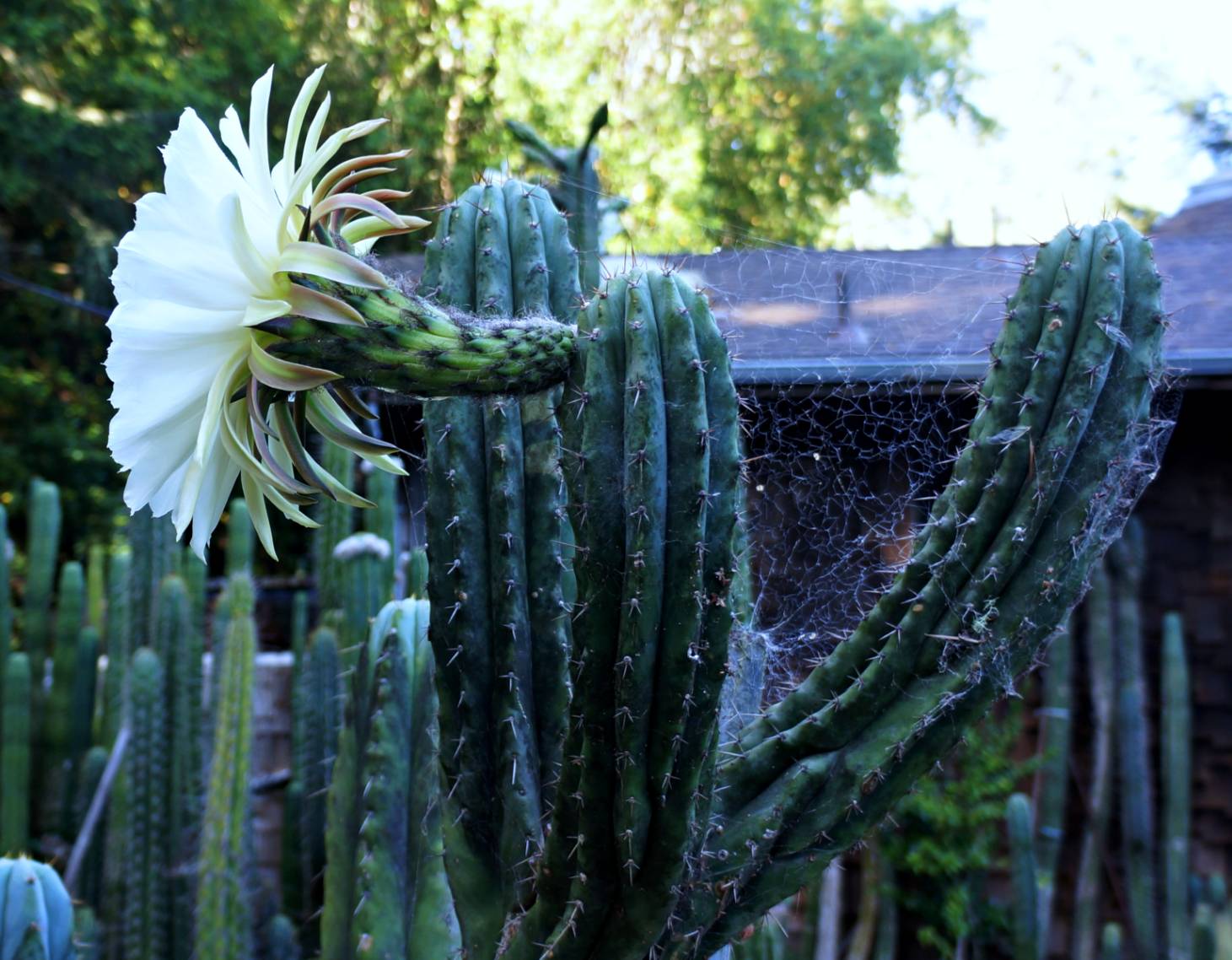 ↑ Father plant ↑
___
Trichocereus SS01/Juul’s Giant X Trichocereus sp. BK09509.2
SS01 X Juul’s Giant is an old hybrid of ours, in this case an upright, short spined clone which was crossed with our fabled accession BK09509.2 from near the ancient temple of Chavin de Huantar in Peru. A superb cross! Z9a
[ 6 ] → 2 ~ 3–5″+ plants 4+ years old $22.50 each September SALE! 2 for $39
___
Trichocereus scopulicola ♥ New ♥
Much sought after rare pachanoid. Upright stands to 15′ tall. Chunky, dark green stems with (4)5–8 ribs and tiny spines. White night blooming flowers, edible fruit. A rare species endemic to the rocky dry forests of Tarija, Bolivia. One of our favorites. Offerings of this exceptional species have been sparse due to several consecutive years of winter damage to our mother plants—get cuttings while you can! Z9a
[ 3 ] → 1 ~ 4–5″+ cutting $44.50
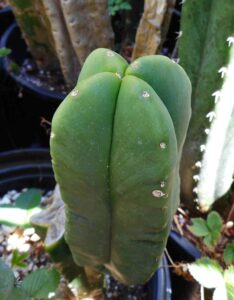 ↑ An example of a 4 ribbed specimen ↑
___
Trichocereus scopulicola f. variegata – aurea
A highly valued variegated clone we selected from a batch of seedlings years ago. Tiny spined, deep green stems with light green and yellow striations to nearly all yellow stems. This is the aurea form of the clone—very pale to golden yellow stems. May eventually revert to develop green chevrons or striations. Previously we have only offered this exceptional clone a few times via auction—where it has gone for up to $100 per inch! For the very first time ever, we have a few cuts to offer here at much more accessible pricing—get one of these golden beauties while you can! Z9b Note: the cuttings we offer will root, but the stem does not currently have enough chlorophyll to remain healthy on its own, therefore it is necessary for whomever calls a lovely cutting to their home to graft it asap onto a robust rootstock for long term survival.
[ 3 ] → 1 ~ 5–6″ cutting $145 ♥ New ♥ September SALE!$133
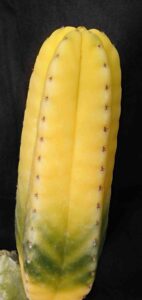 ↑ An example of an T. scopulicola f. aurea with variegation on the bottom ↑
___
Trichocereus scopulicola X Trichocereus peruvianus ‘GF’ ♥ New ♥
Our first offering this desirable hybrid! The coveted T. scopulicola pollinated by the robust, blue-skinned heirloom T. peruvianus ‘GF’. Don’t miss out on these attractive bluish seedlings which are certain to mature into gorgeous specimens! Z9a
[ 5 ] → 1 ~ 4–6″ plant 3 years old $49.50
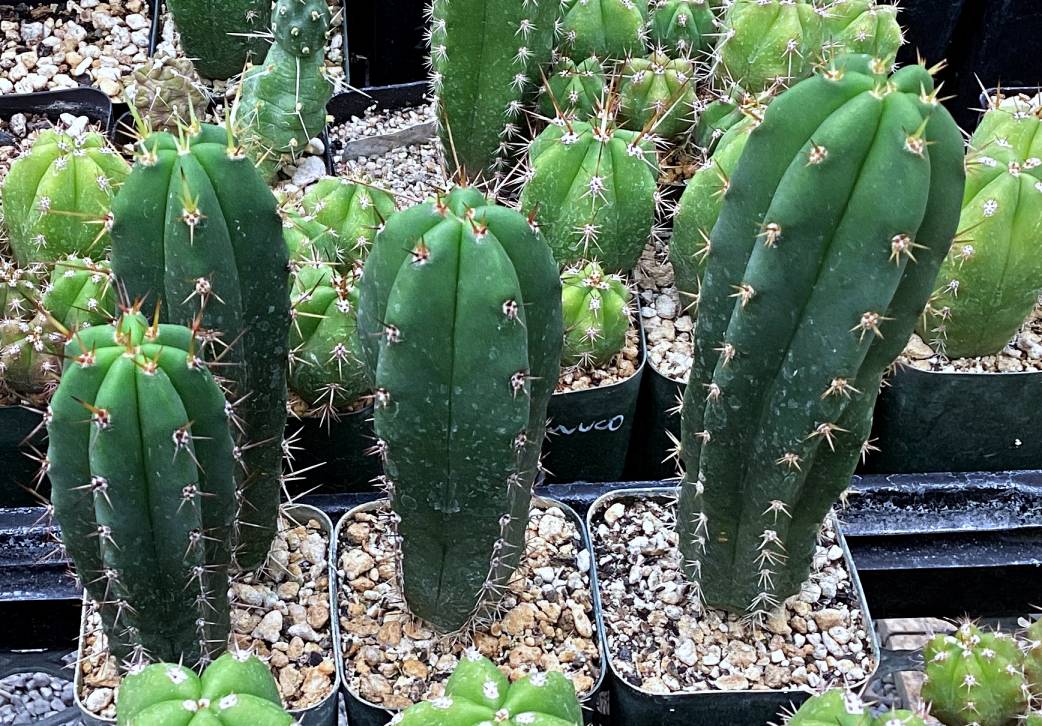 ↑ Examples of seedling specimens ↑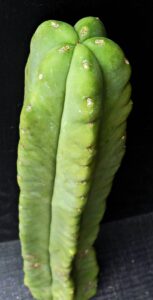
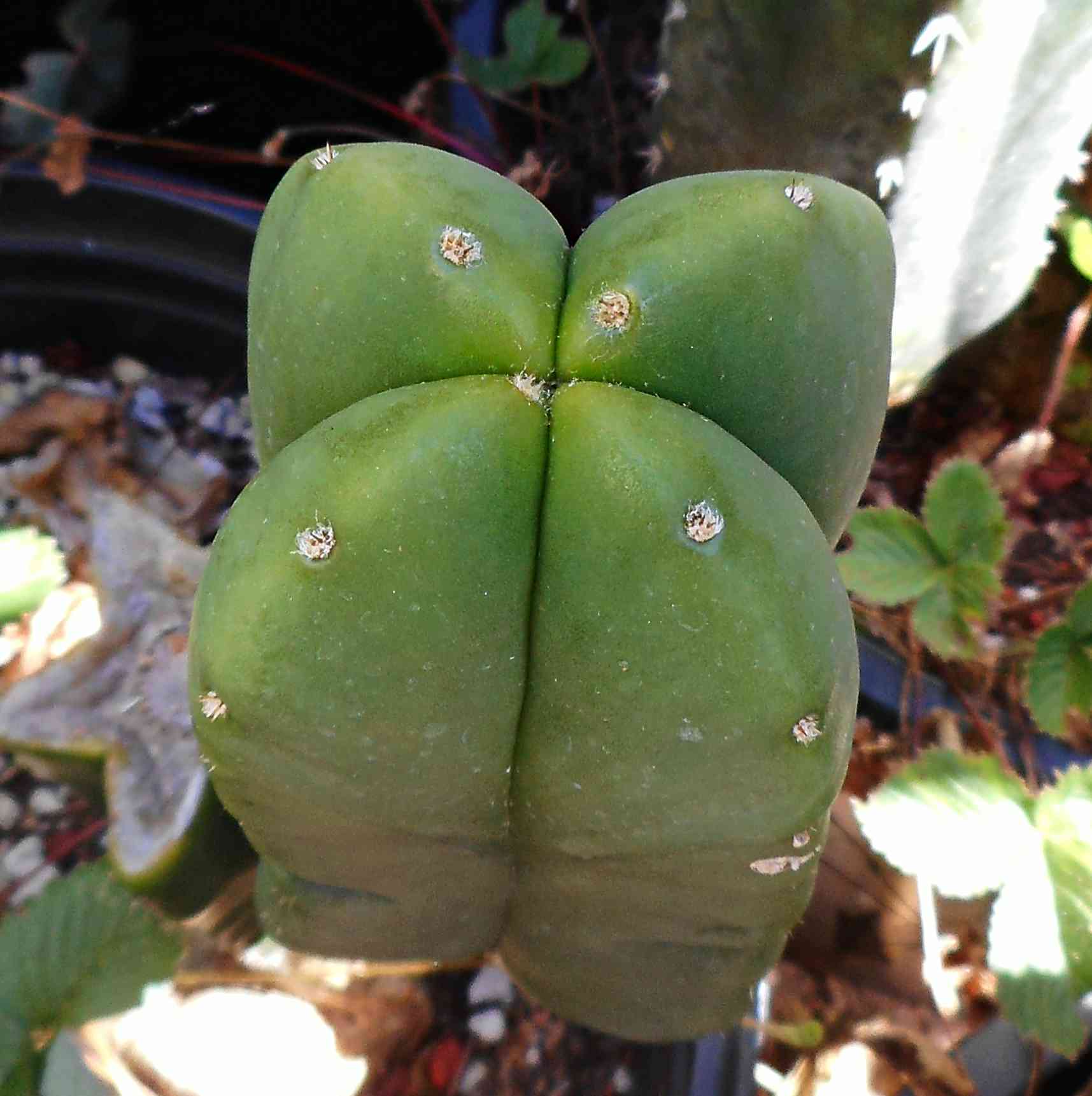 ↑ Mother plant example ↑
 ↑ Father plant example ↑
___
Trichocereus sp. BK08601.1 “Hawakolla”
Gorgeous arborescent species to to 15’+ tall. Regular branching up high on the thick dark green stems, 6″+ diameter. Strongly notched areoles. Numerous golden to grey spines, up to 2″. White flowers. From a huge patch, occurring almost down to the water, north side Isla del Sol, Lake Titicaca, Bolivia, 12,500’+; growing alongside Puya sp., Siphocampylus sp., Baccharis incarum, Ambrosia arborescens, Cheilanthes sp., Lobivia sp., Pernettya prostrata, and Polylepis incarum trees on the way to the most important pukyo in Andean cosmology: the sacred progenitor spring from which the first ancestors emerged… Looks to be planted, we also saw specimens at the square in Copacabana. Signs of regular harvesting. The Aymara curandero, Lucio Ticona, says it can be used “like achuma”, but is “different” in effect. Locals report a slice of stem is placed on the outside of the cheek for toothache. Possibly a new species or subspecies. The plants definitely show some affinity with T. cuzcoensis, yet the spination, ribs, girth and overall habit is very distinct. The plant also looks similar to the cultivated ‘Kimura’s Spiny Giant’ in the US. Coveted by collectors since we first introduced it to the US, we only offer this mysterious beauty occasionally. Z8b? [For additional info and photos, see our list of BK Trichocereus accessions]
[ 6] → 1 ~ 5–6″+ cuttings $69.50 SOLD
2 ~ 8–9″+ cuttings $99.50* September SALE! $88* each
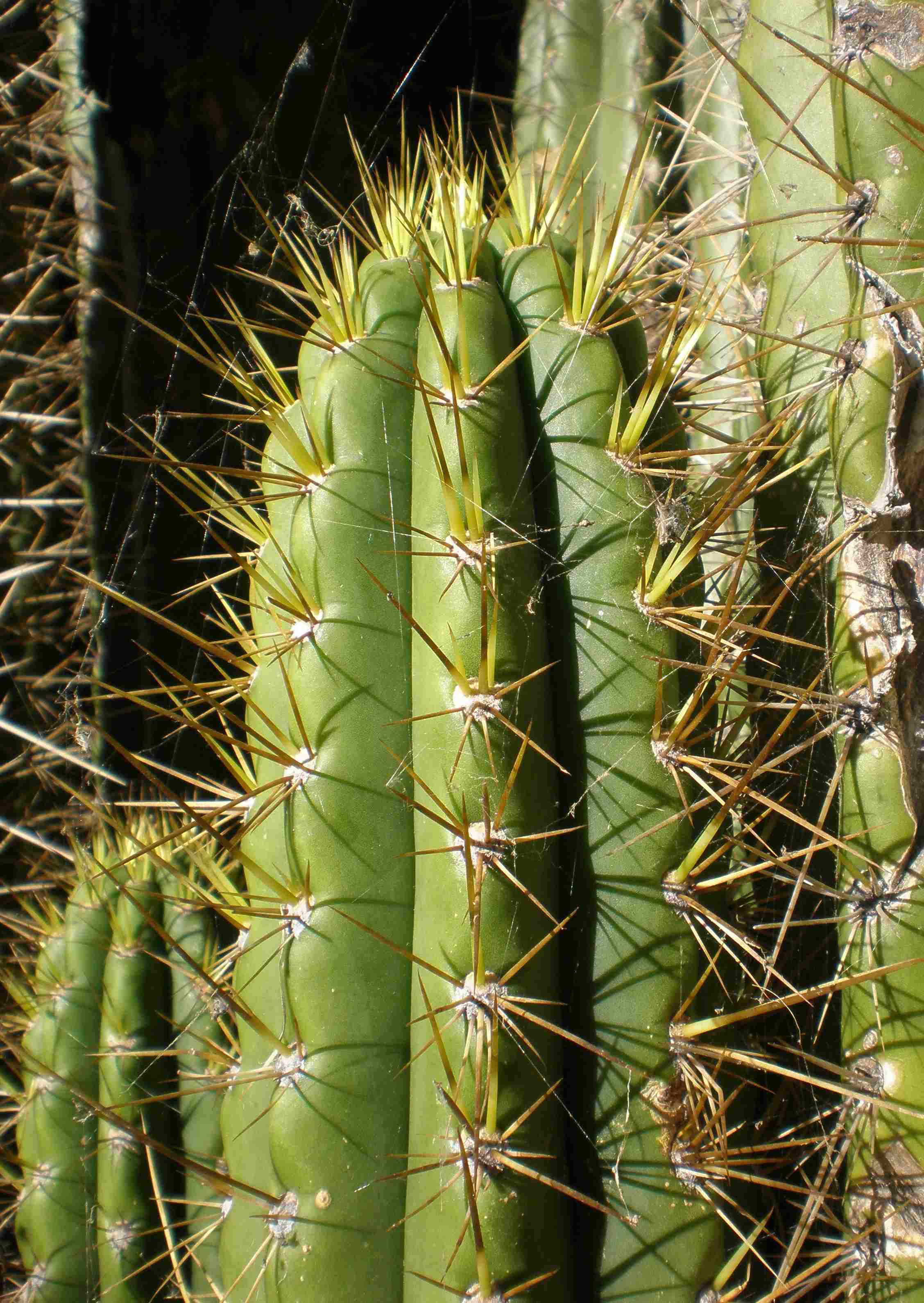
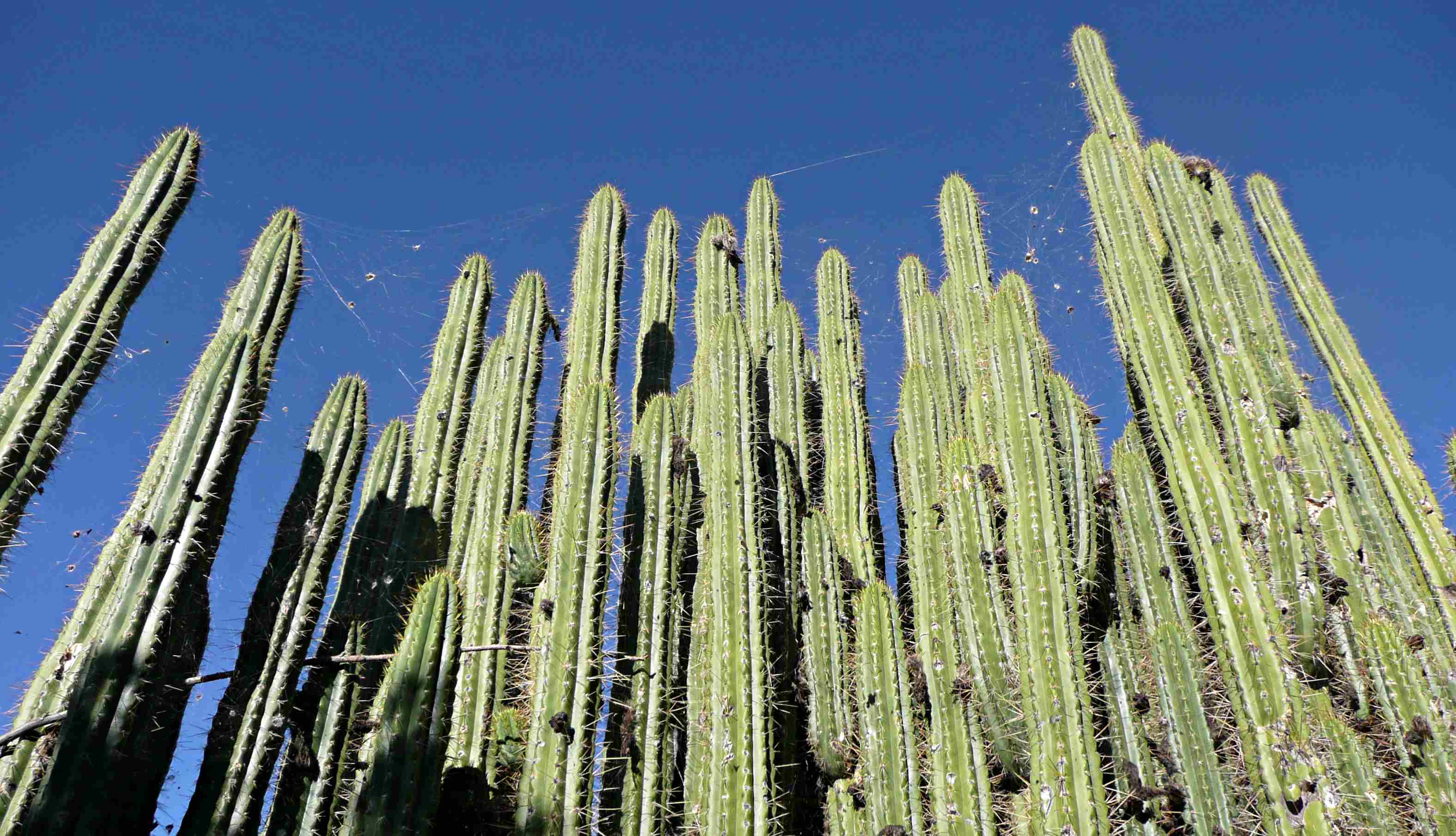
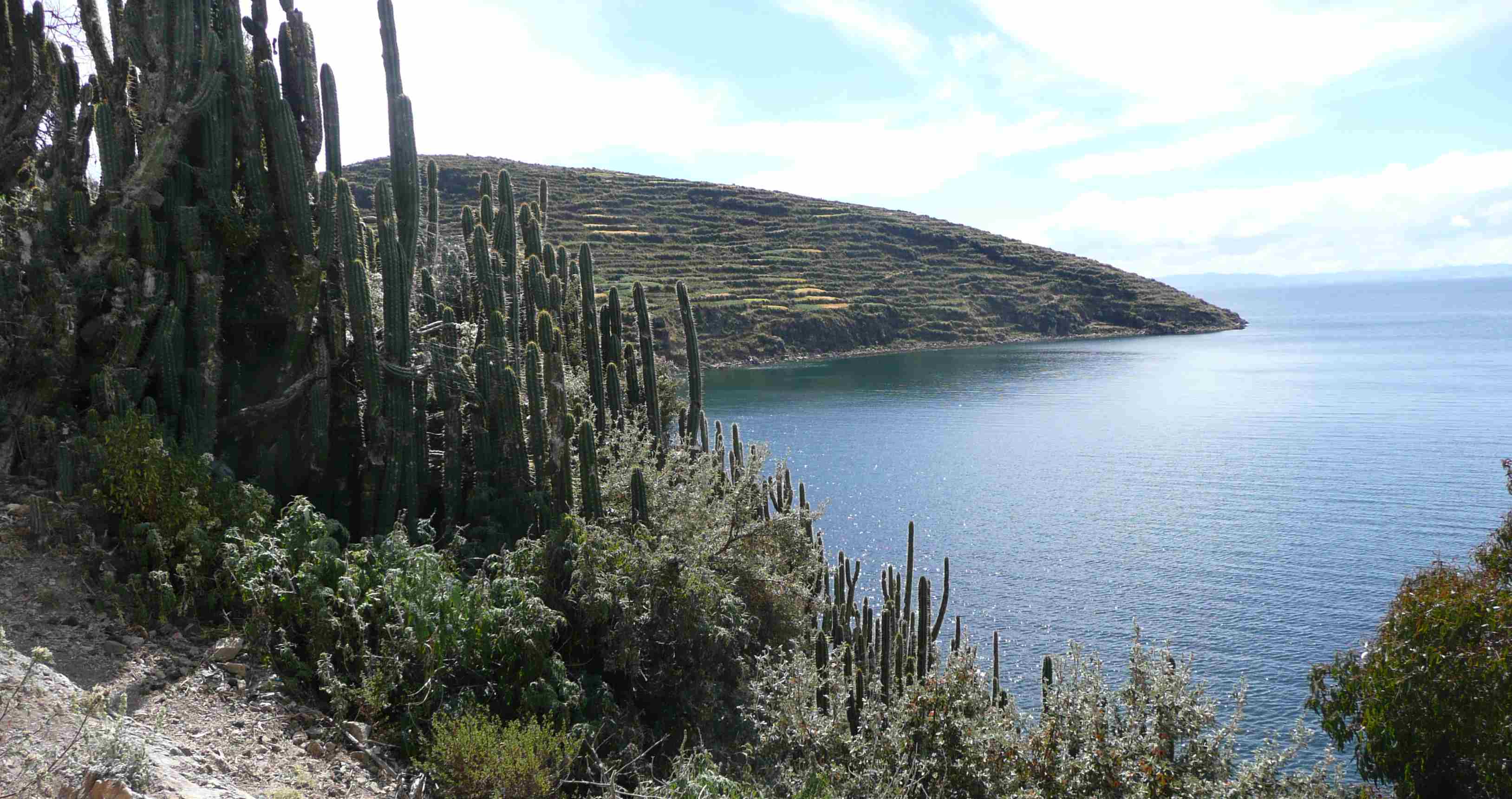 ↑ Plants in habitat, Isla del Sol, Bolivia ↑
___
Trichocereus sp. BK09508.2 “San Pedro de Chavín”
One of our legendary Chavín accessions! The mother was a large stand to over 12′ tall, individual stems to 3.5–4″ diameter with dark green epidermis. 5–7+ radial spines 0.5–1″ long, the downward facing ones up to 1.5″; one central spine 1.5–2.5″+ long. New spines yellow to red-brown in color. The Trichocereus in this region show a lot of morphological diversity; overall they appear intermediate to T. pachanoi/santaensis and cuzcoensis. Many of the stems of this impressive stand were covered in a couple different Tillandsia species, the larger of which were a striking burgundy color, and a small, epiphytic orchid. Growing with a diversity of companion plants, including Dodonaea viscosa, Kageneckia lanceolata, Satureja elliptica, Alonsoa sp., Berberis sp., Valeriana sp., Browellia multiflora, Tagetes sp., Bomarea rosea, Puya sp., Peperomia galioides, Anredera sp., and nearby—Borzicactus fieldianus, Peperomia aff. naviculaefolia, Sedum aff. reniforme, and Matucana sp. Occuring at 11,050′, at the edge of what looks like ruins or perhaps an old chacra wall; above Tres Cruces, on the western mountain just above the ancient ruins of Chavín, to the north side of the Wachesca River; eastern slopes of the Cordillera Blanca, Ancash Dept., central Peru. The 3000 year old temple complex of Chavín de Huántar is where the oldest depiction of a succulent plant (and possibly of its propagation) occurs—an anthropomorphic being carrying what is thought to be a rooted Trichocereus cutting. Interestingly, in cultivating this clone in northern California, the spines have remained shorter, often no more than 0.75–1.25″. We first released this clone into cultivation in 2016 and have only distributed around a dozen cuttings since then. A rare chance to obtain this beauty! Z9a [For additional info and photos, see our list of BK Trichocereus accessions]
[ 2 ] → 1 ~ 7–9″ cutting $155* SOLD
[ 4 ] → 1 ~ 3–4″+ rooted tip $88 SOLD
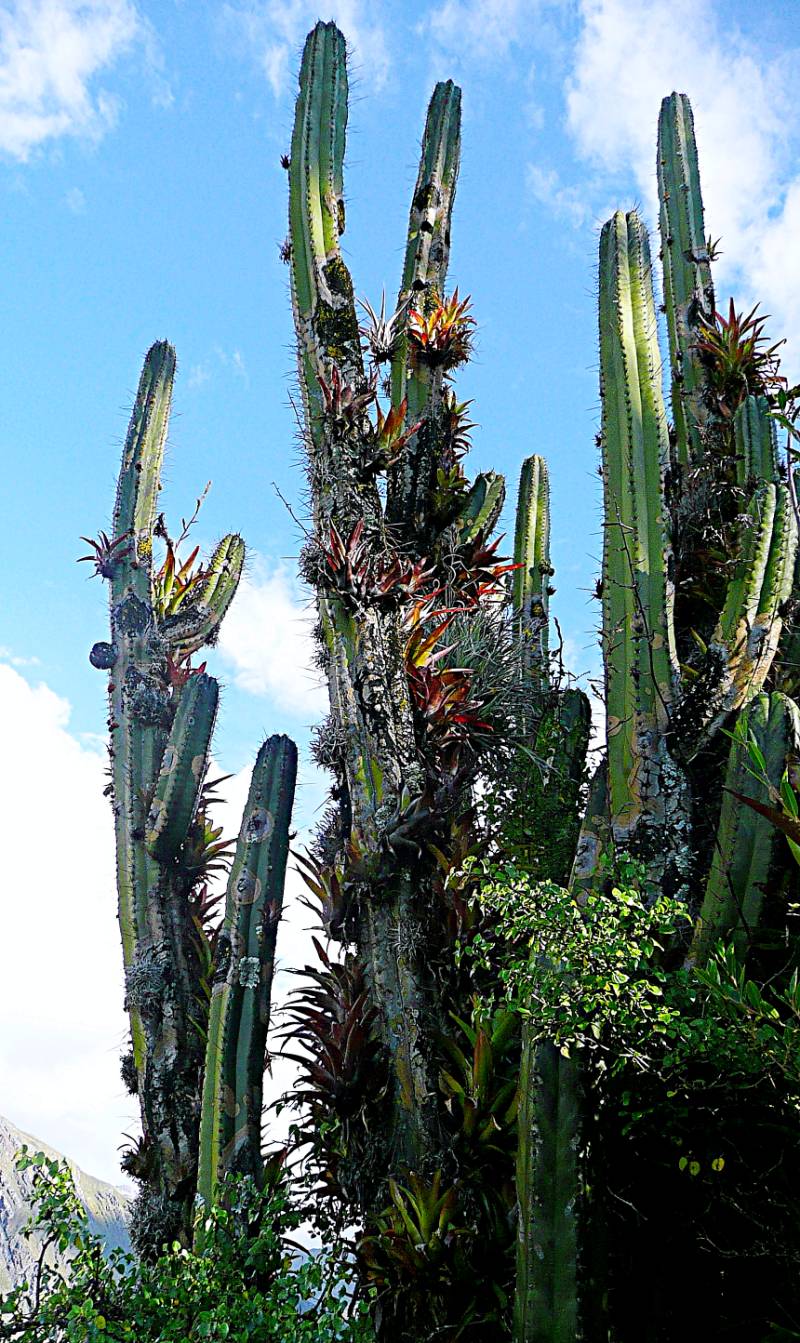
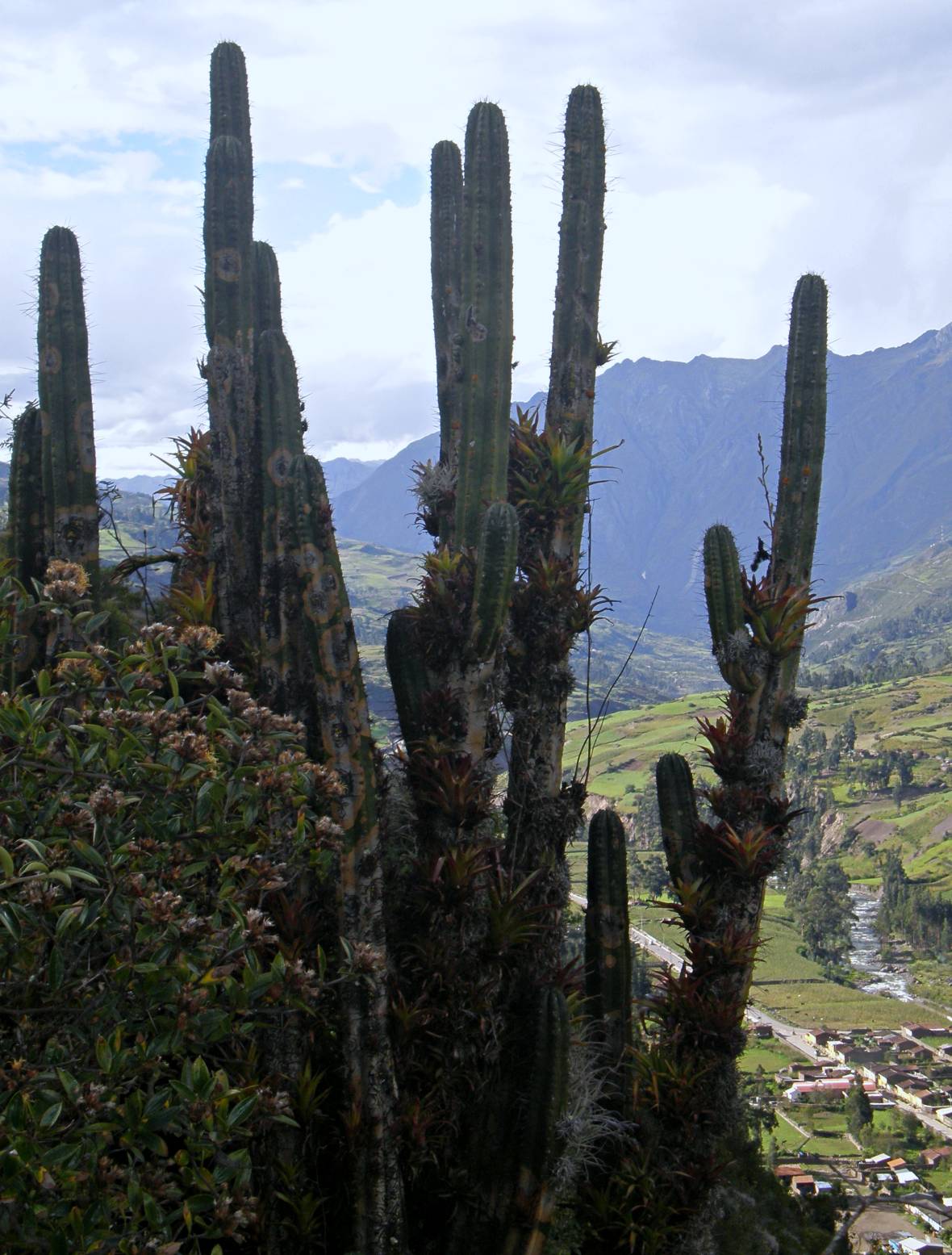 ↑ Mother plant in habitat above Chavín, Ancash Dept., Peru ↑
___
Trichocereus sp. BK09509.1 “San Pedro de Chavín”
Another of our coveted Chavín accessions. The mother was a candelabra stand to about 9′ tall, relatively slender, dark green, blue-blushed branches to about 3″ diameter. 5–7 central spines, the downward facing ones up to 1″ long, 1 central spine 1–2″. Sweet scented, white trumpet flowers. Interestingly, the gross morphology of this specific plant reminded us somewhat of Trichocereus bridgesii, causing us to wonder at the morphological diversity among the Trichocereus at Chavín. Growing on a collapsed rock wall with Agave cordillerensis, next to a field of fava beans and Eucalyptus trees, near the 3000 year old temple complex of Chavín de Huántar, Ancash, Peru, 10,500′. We only offer cuttings of this handsome plant about once every 1–2 years. Z9a [For additional info and photos, see our list of BK Trichocereus accessions]
[ 3 ] → 1 ~ 5–6″+ cutting $90 SOLD
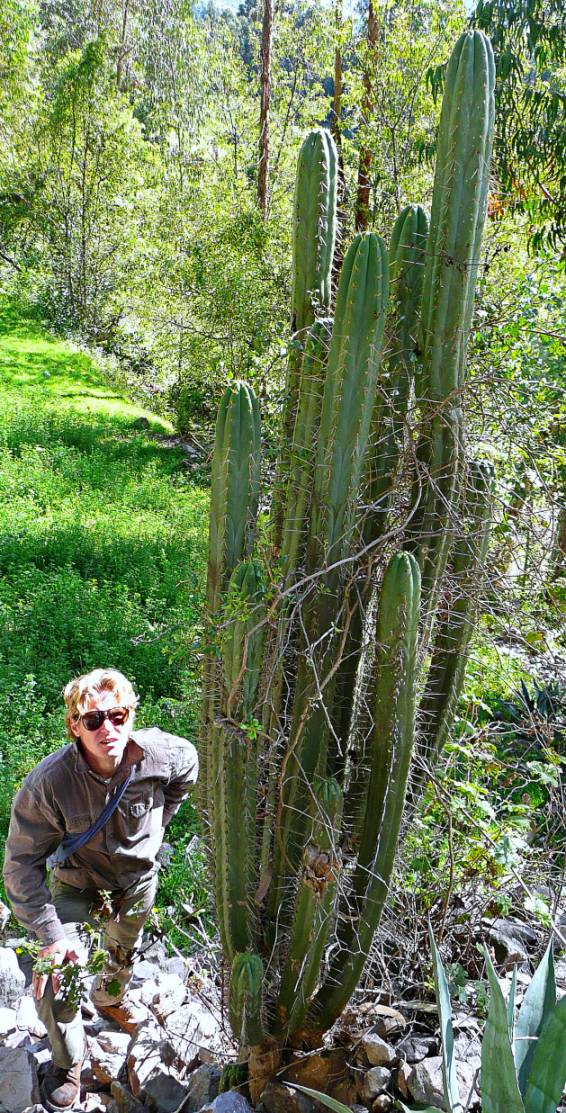
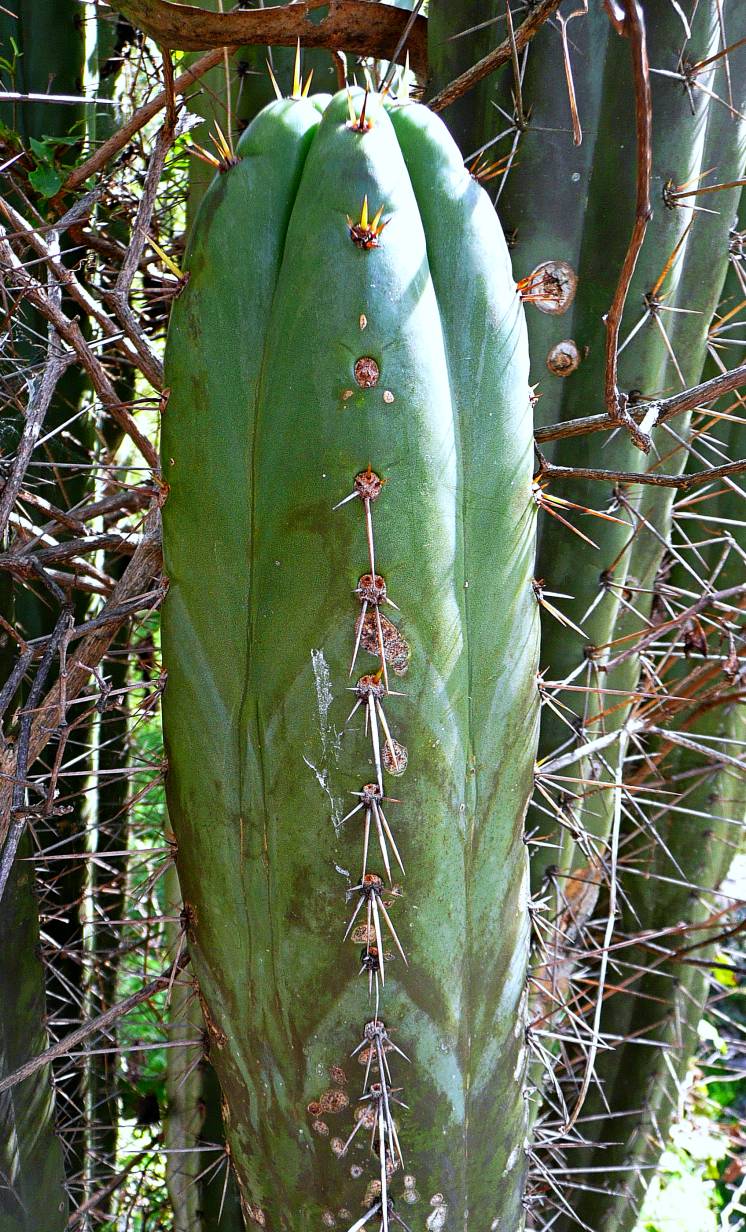 ↑ Mother plant in habitat near Chavín, Ancash Dept., Peru ↑
___
Trichocereus sp. nova? BK151013.5
Upright dark green stems to 7’+ tall and 3–4.5″+ diameter. 9–11 ribs, white felty areoles and 1/4 to 1/3″ spines, yellowish aging white. Large, sweetly scented, funnelform white flowers, edible fruit. Looks similar to some of the Trichocereus – Echinopsis hybrids. A unique plant that we discovered in 2015 growing on exposed, steep rocky embankments in Yungas cloudforest, Calilegua, Jujuy, Argentina, near 4500′. Growing among shrubs with Puya sp., Peperomia aff. galioides BK151013.4, and a Begonia species; on the edge of Anadenanthera colubrina forest. Does not fit any description we could find and is likely a new species. This is a very rare offering of seedlings of this distinct beauty outside of auction! Z9a/b? [For additional info and photos, see our list of BK Trichocereus accessions]
[ 6 ] → 2 ~ 2–3″+ plants 2–3 years old $45.50 each September SALE! $42 each; or 2 for $75
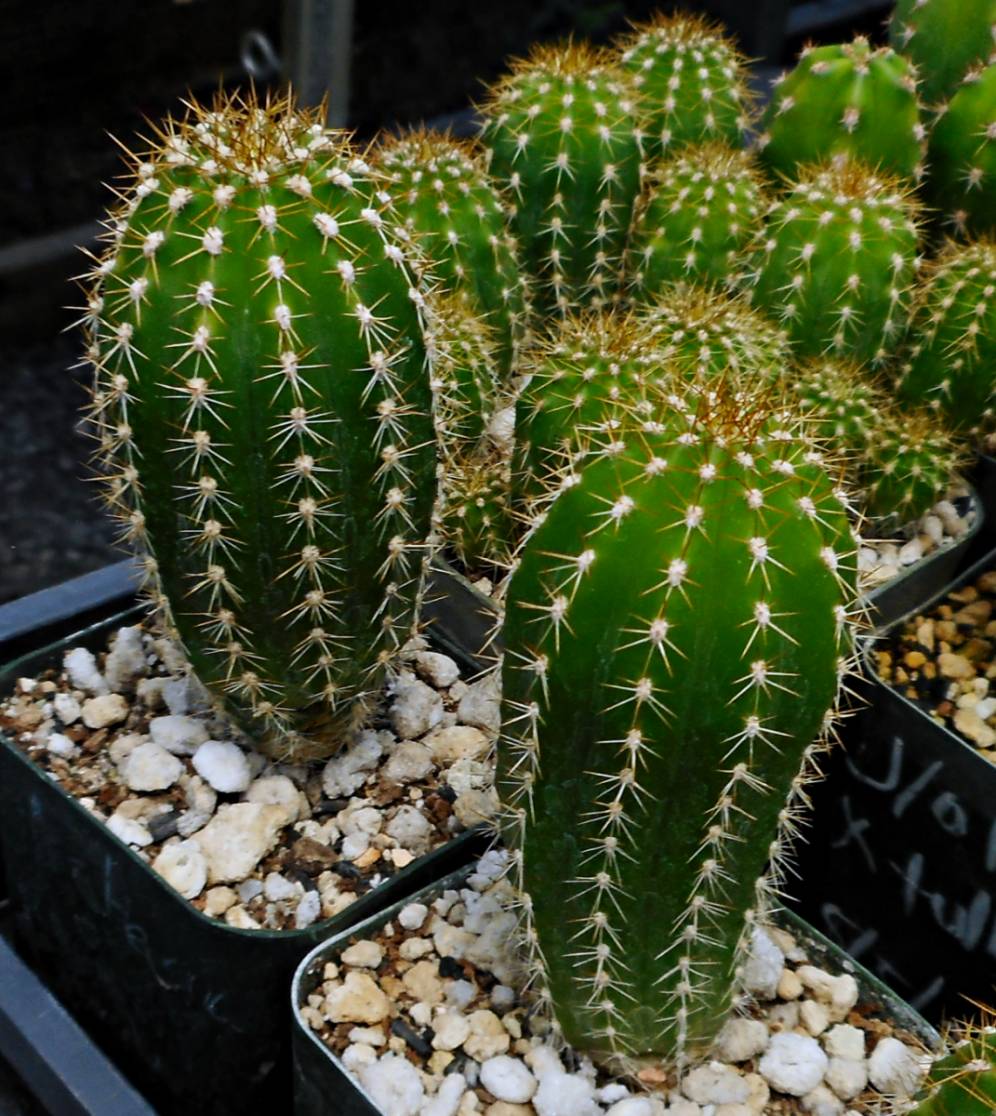 ↑ Seedling specimens ↑
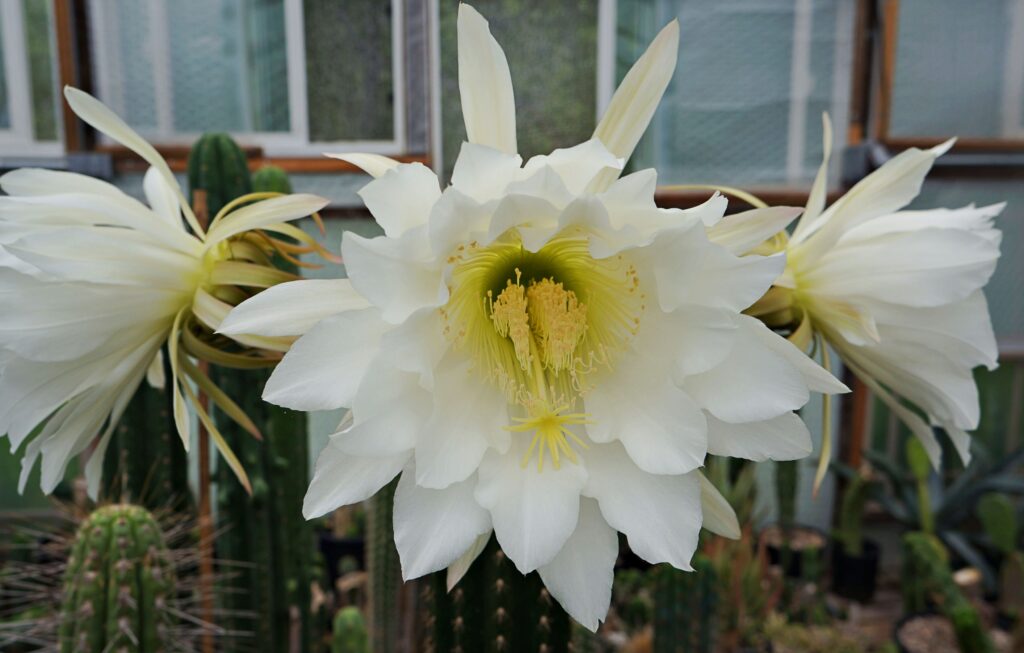
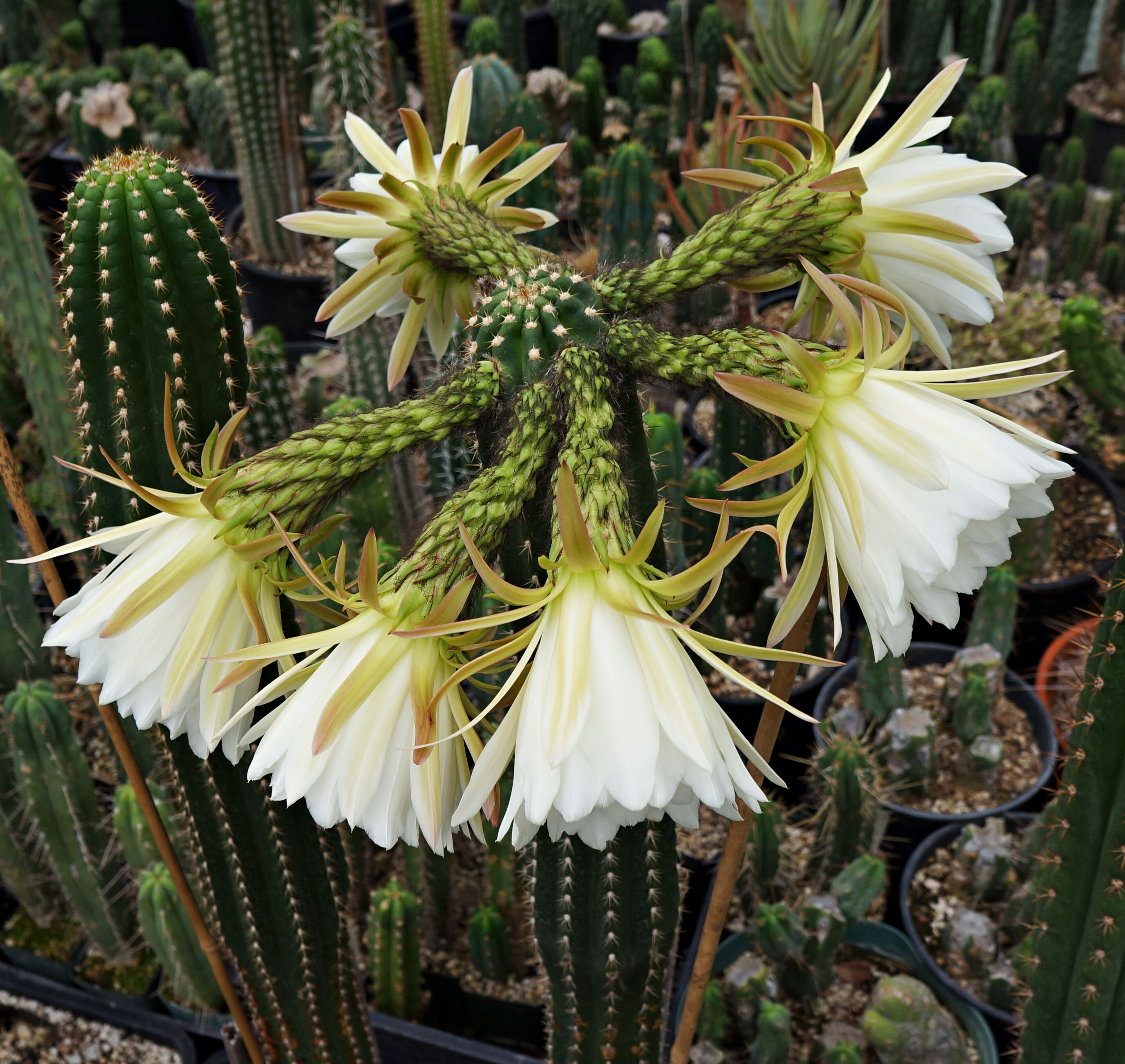 ↑ Mother plants in captivity ↑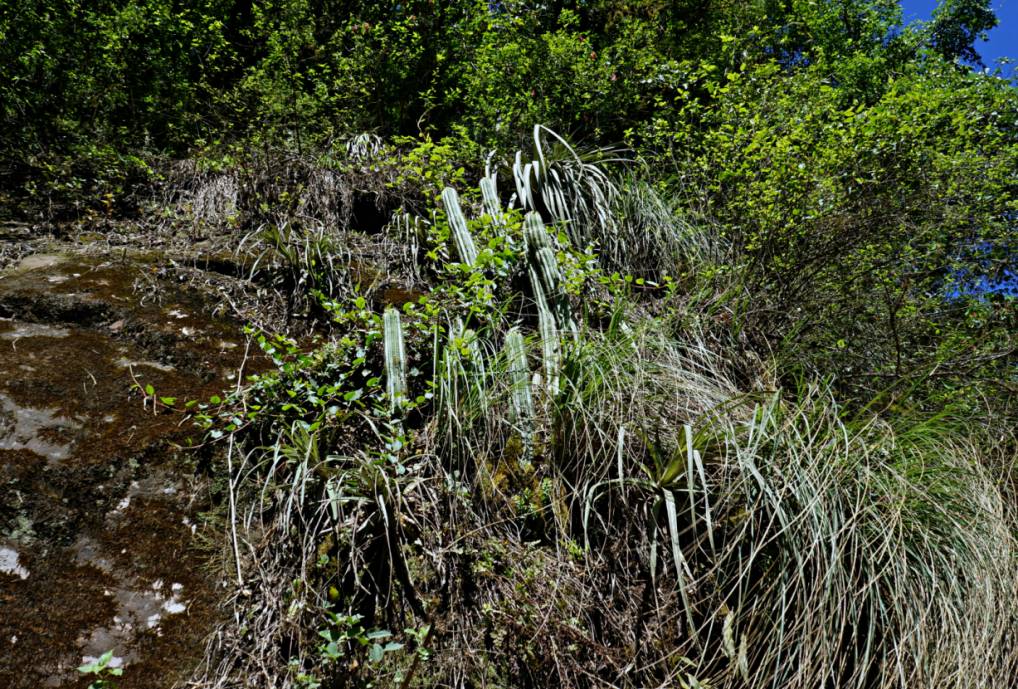
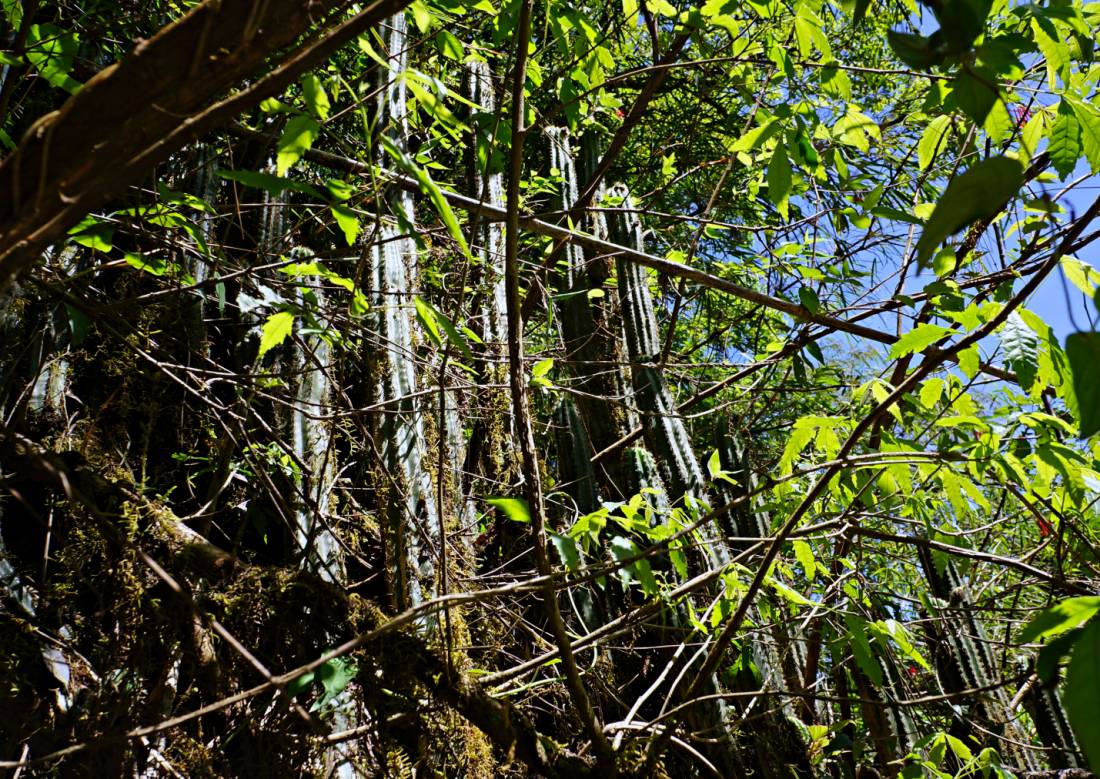 ↑ Plant in habitat, Yungas jungle/cloudforest, Calilegua, Jujuy, Argentina ↑
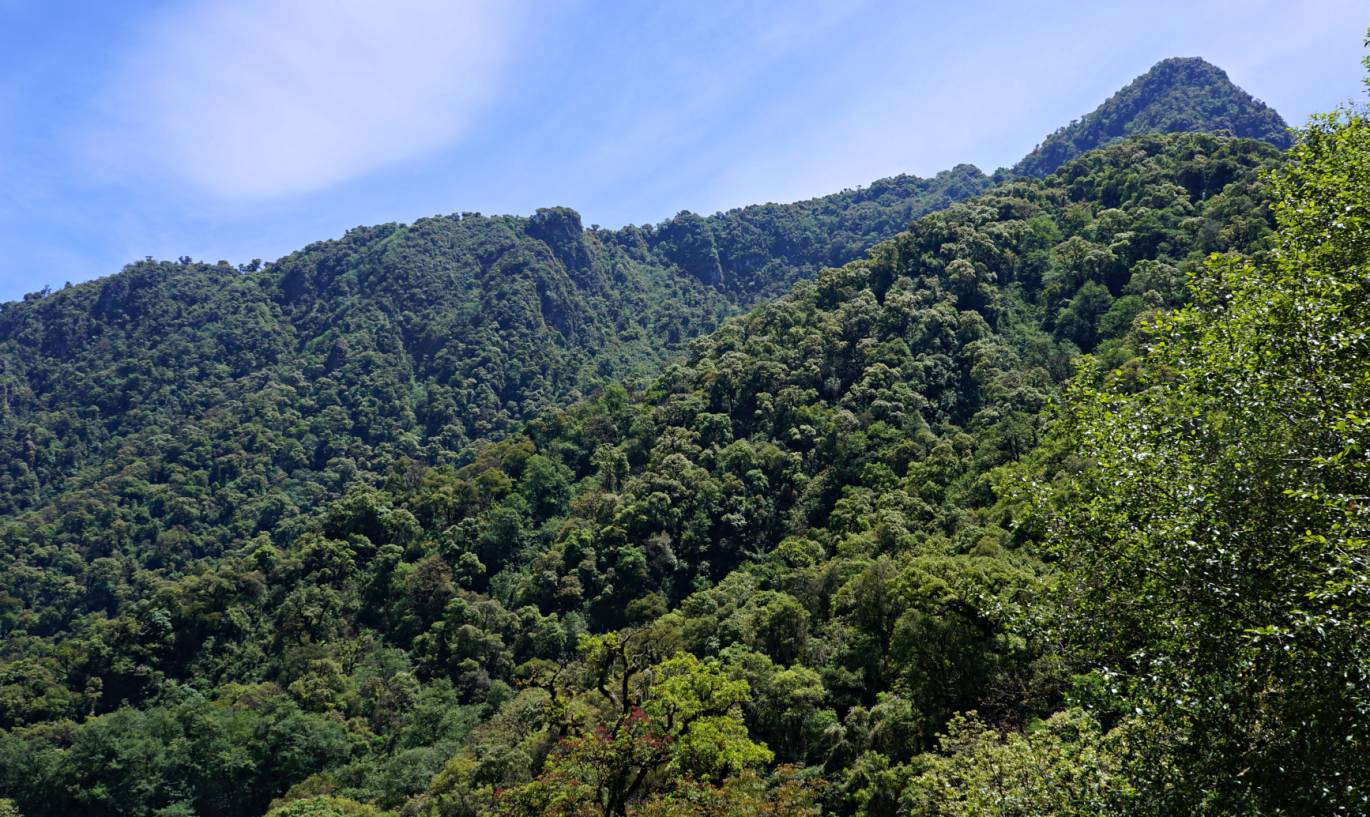 ↑ Trichocereus sp. nova? BK151013.5 habitat, Calilegua, Jujuy, Argentina ↑
___
Trichocereus sp. ‘Tammy’
Robust, upright stems to 3–6″ diameter, green to blue frosted in partial shade. 1/4–1″+ spines. White flowers, sweet fruit. Salvaged from an old stand in Tammy’s yard near Oakland, CA. An attractive plant that looks like an extra fat “wild” T. pachanoi as seen in Ecuador and northern Peru, but without clear providence we’ll leave it as ‘sp’. A few large cuttings. Z9a
[ 3 ] → 1 ~ 20–24″+ cutting $79** SOLD
[ 4 ] → 2 ~ 6–8″+ cuttings $27.50 each
[ 4 ] → 2 ~ 11–13″+ cuttings $44.50* each ♥ New ♥
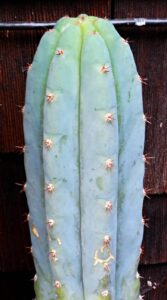 ↑ An example of the blue frosting ‘Tammy’ develops when grown in a shadier spot ↑
___
Trichocereus sp. Torres & Torres
Dark green upright stems to 12’+ in height and 6″+ in diameter. Small, stout, amber colored spines. Odd, smallish white flowers. Unusual plant similar to T. pachanoi and some forms of T. macrogonus. Collected and favored by archaeologist Manuel Torres & his wife Donna in the arid northern part of central Chile, near 9400′. We’ve offered this lovely heirloom clone for over 25 years now. Z9a
[ 5 ] → 1 ~ 7–8″ cutting $25.50
[ 2 ] → 1 ~ 14″+ cutting $42.50* September SALE! $39.50* ♥ New ♥
1 ~ 18″+ rooted cutting $54** ♥ New ♥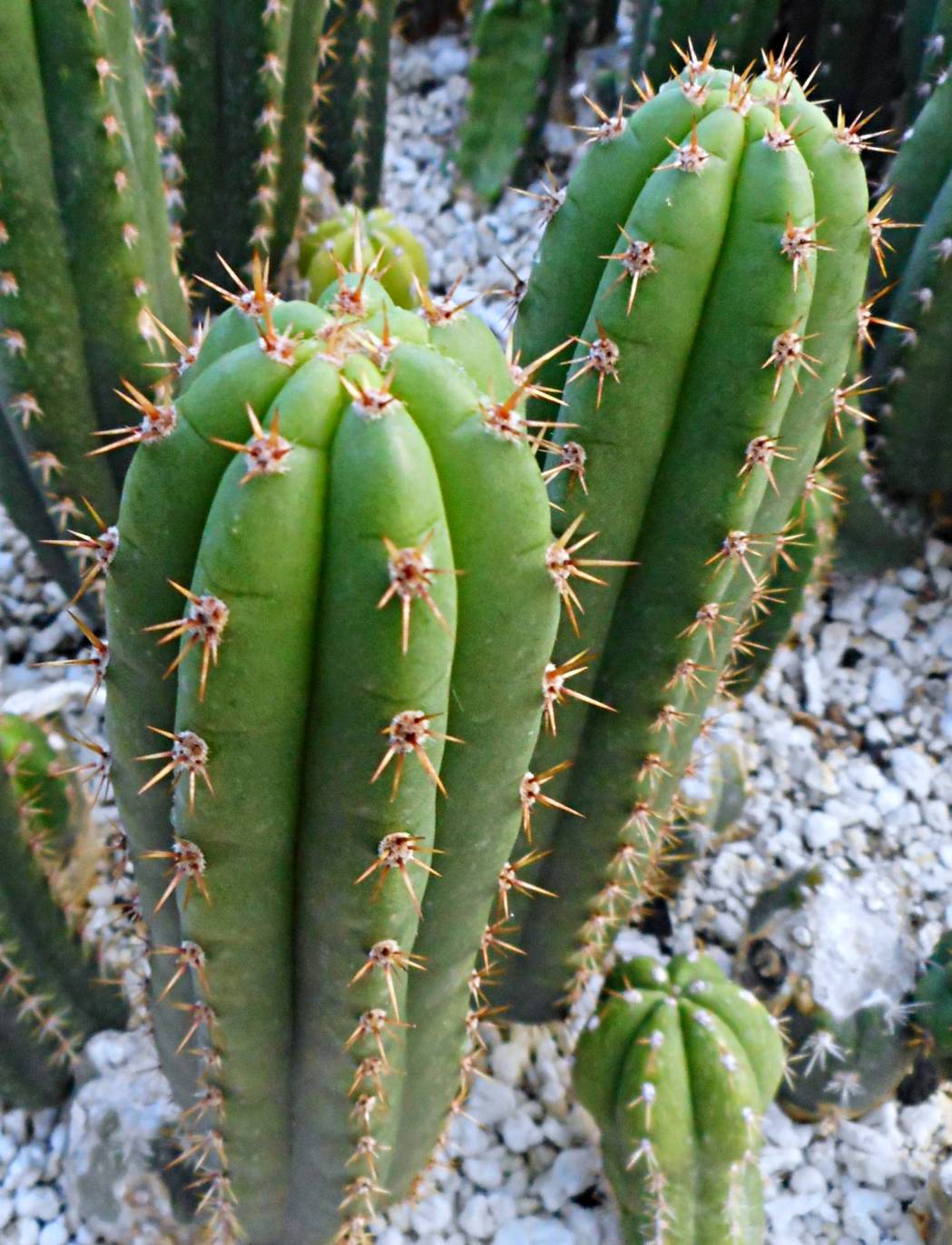
___
Trichocereus tulhuayacensis KK337 X T. peruvianus/ ‘Juul’s Giant’ hybrid f. monstrosus
A thrilling new hybrid. The spiny magenta flowered tulhuayacensis impregnated by the large blue-green peruvianus/Juul’s mutant. The monstrose/cristate genes, colored flowers, and exceptional spines should combine in unexpected and novel ways. Attractive seedlings (with their mother’s black to red or gold new spines) that show ‘normal‘ growth so far, but may mature into mutation. We have a few more up to an offerable size, get ’em while you can! Z8b/9a?
[ 15 ] → 6 ~ 3–5″+ plants 4+ years old $38.50 each September SALE! $35 each; or 2 for $60; or 4 for $88
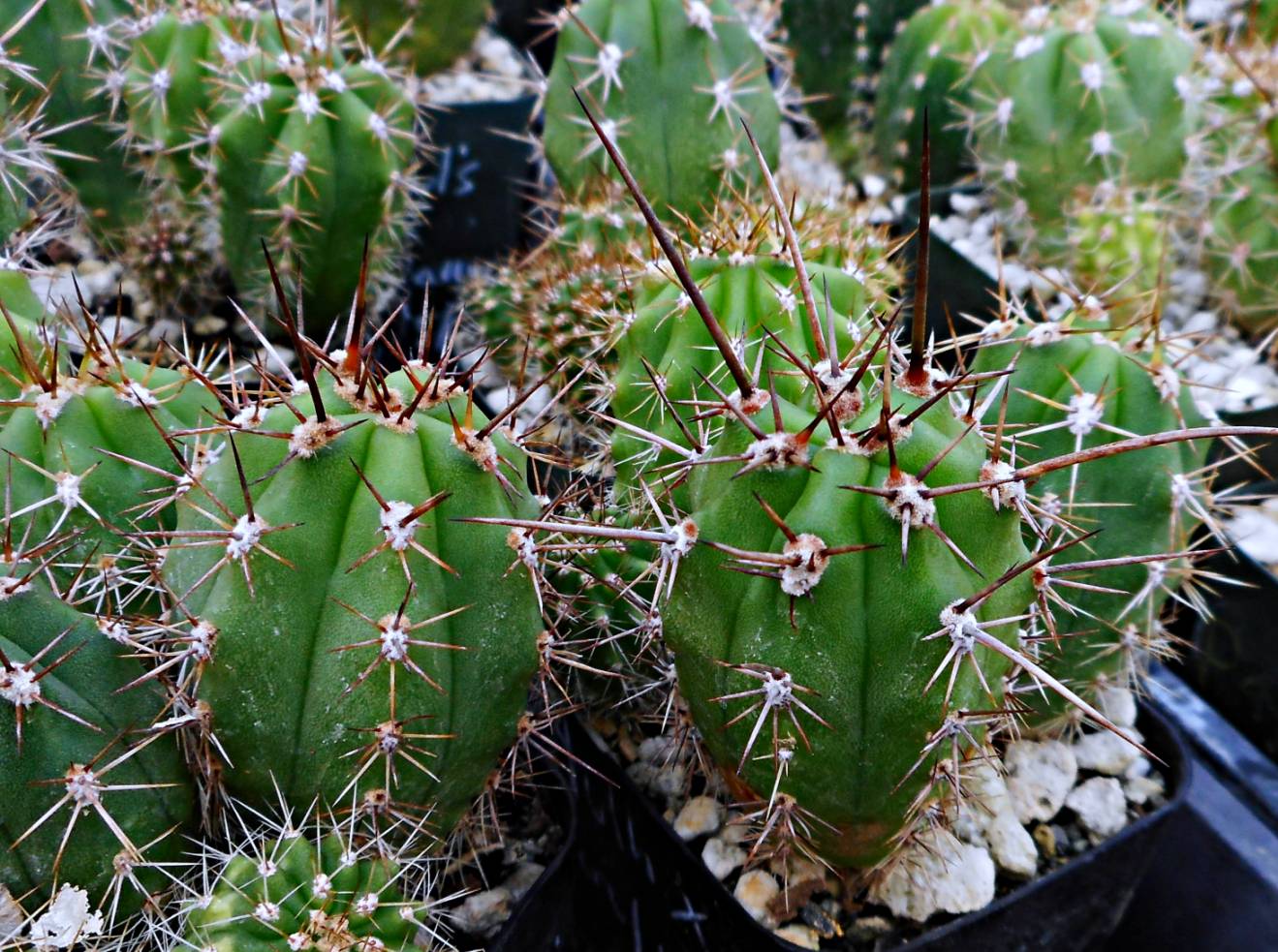
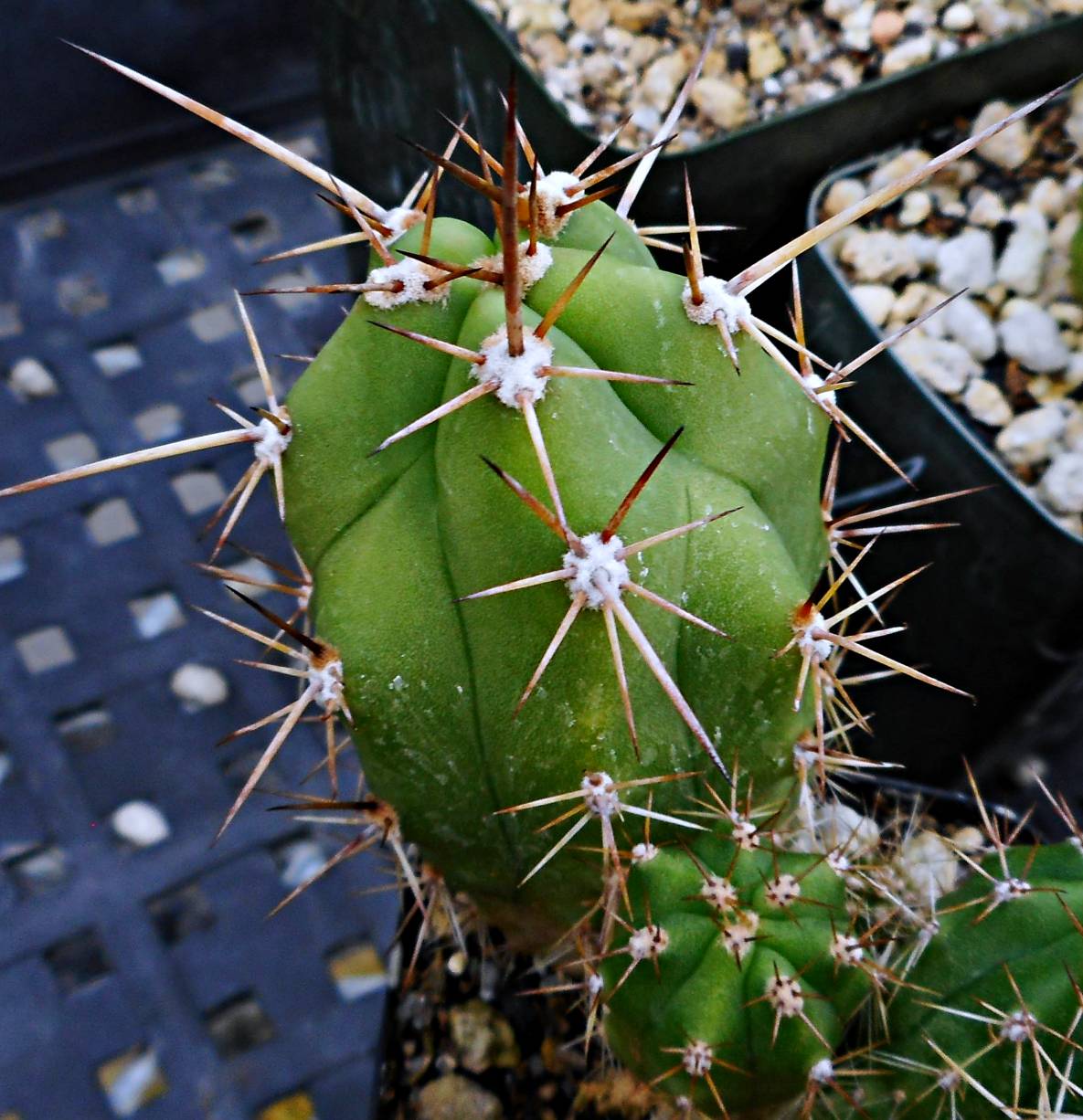
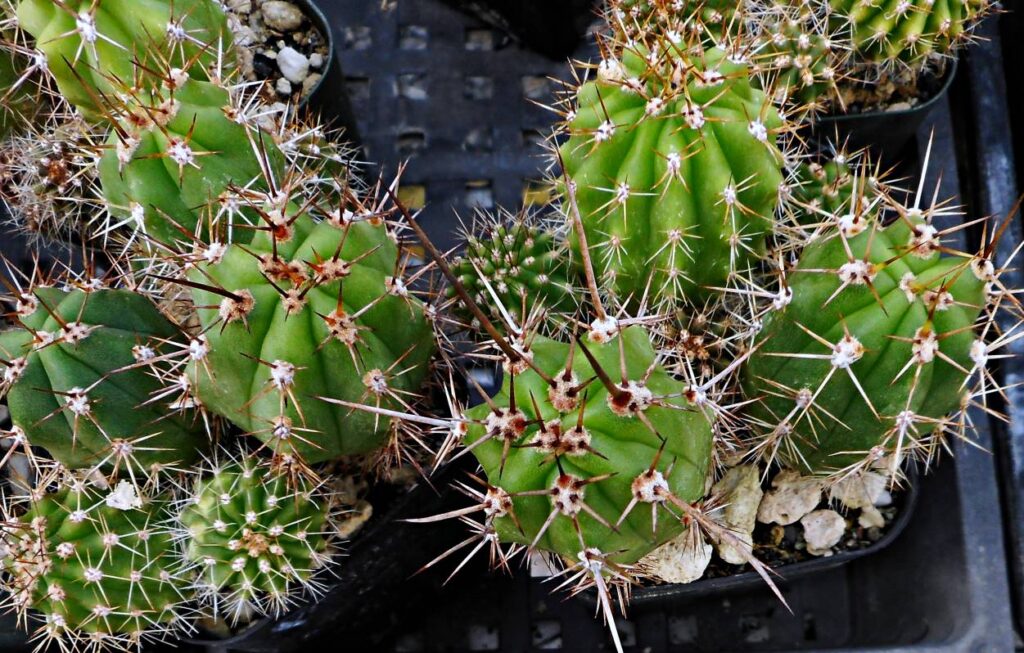 ↑ Examples of seedling variation, normal and monstrose ↑
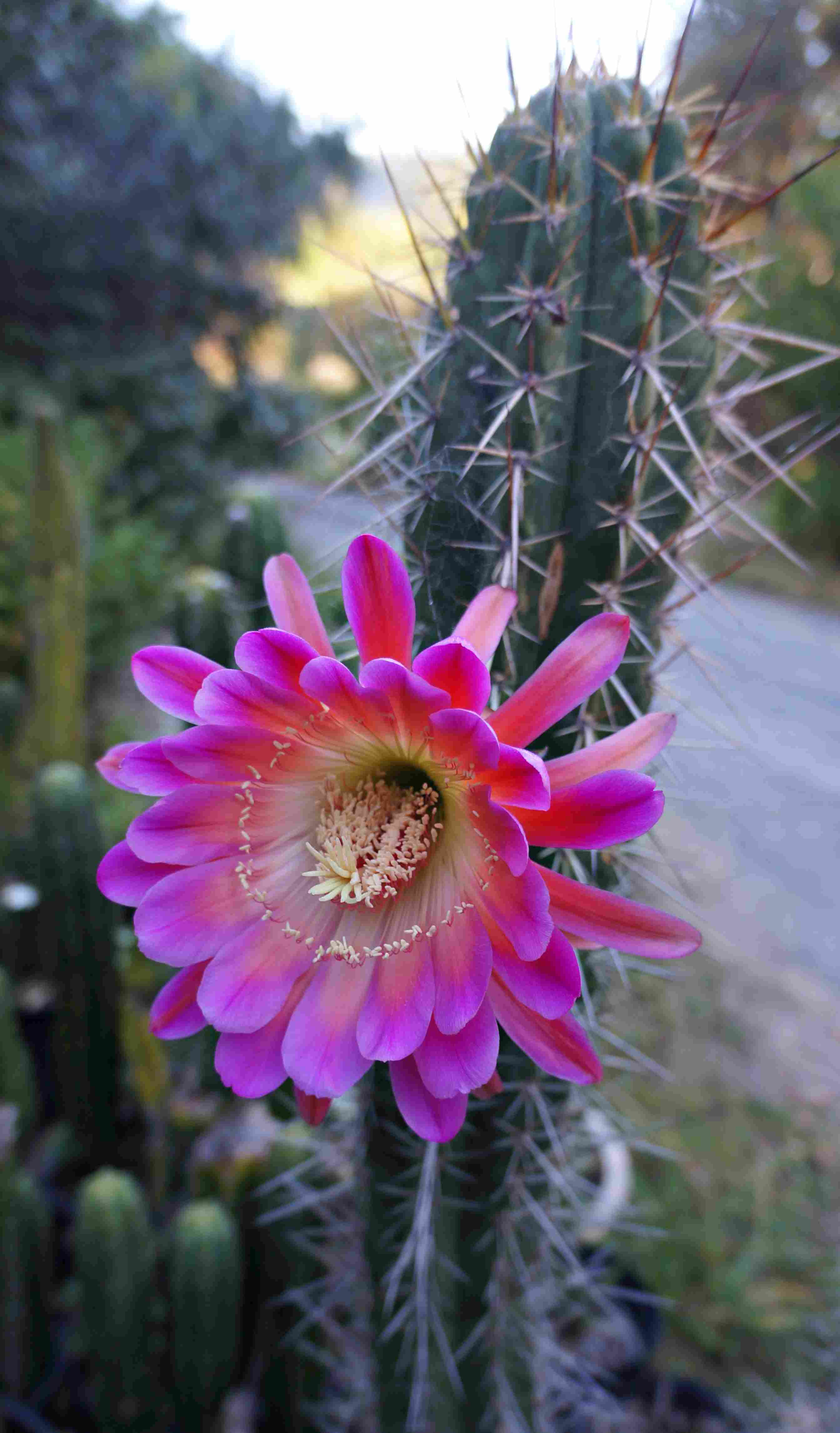
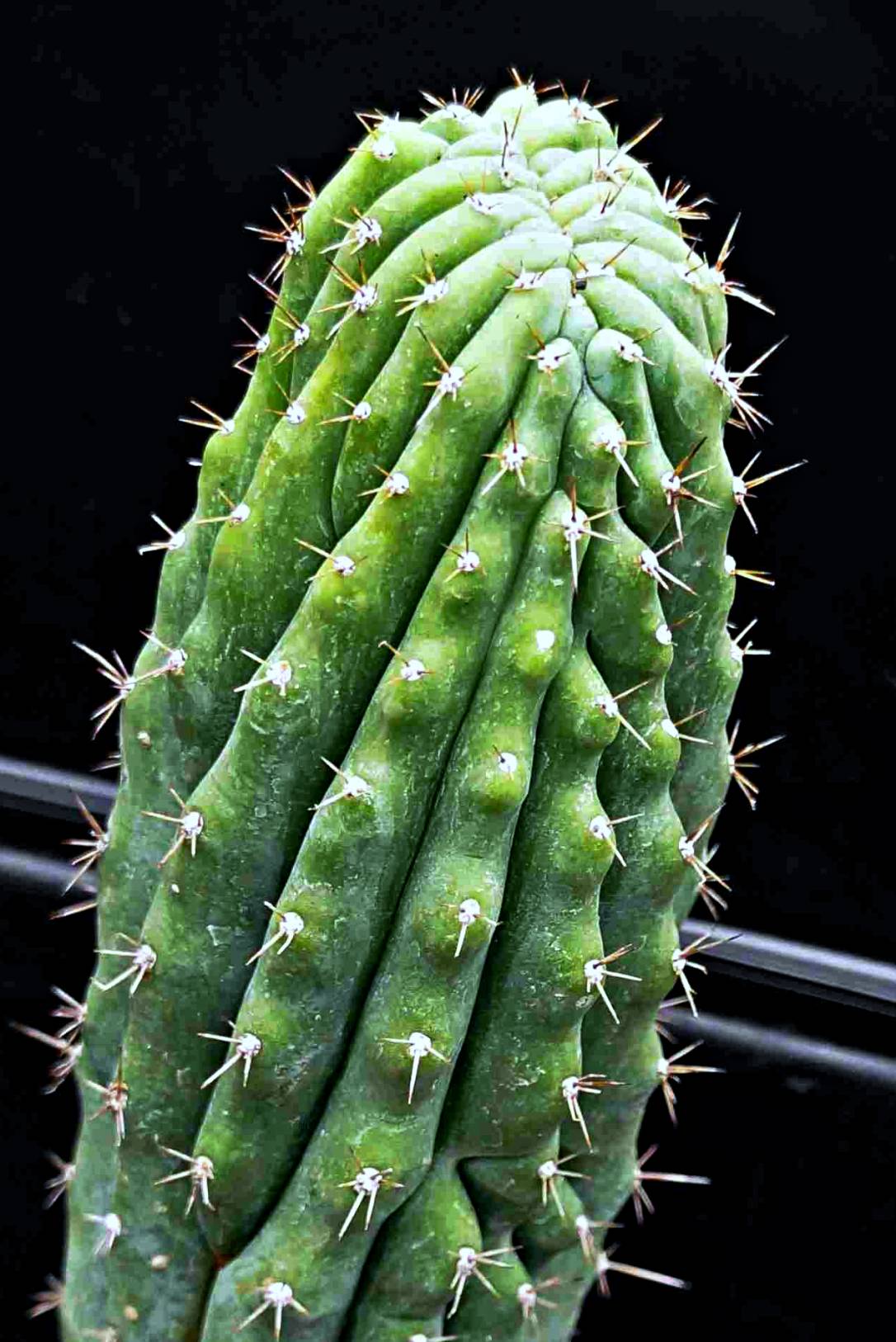
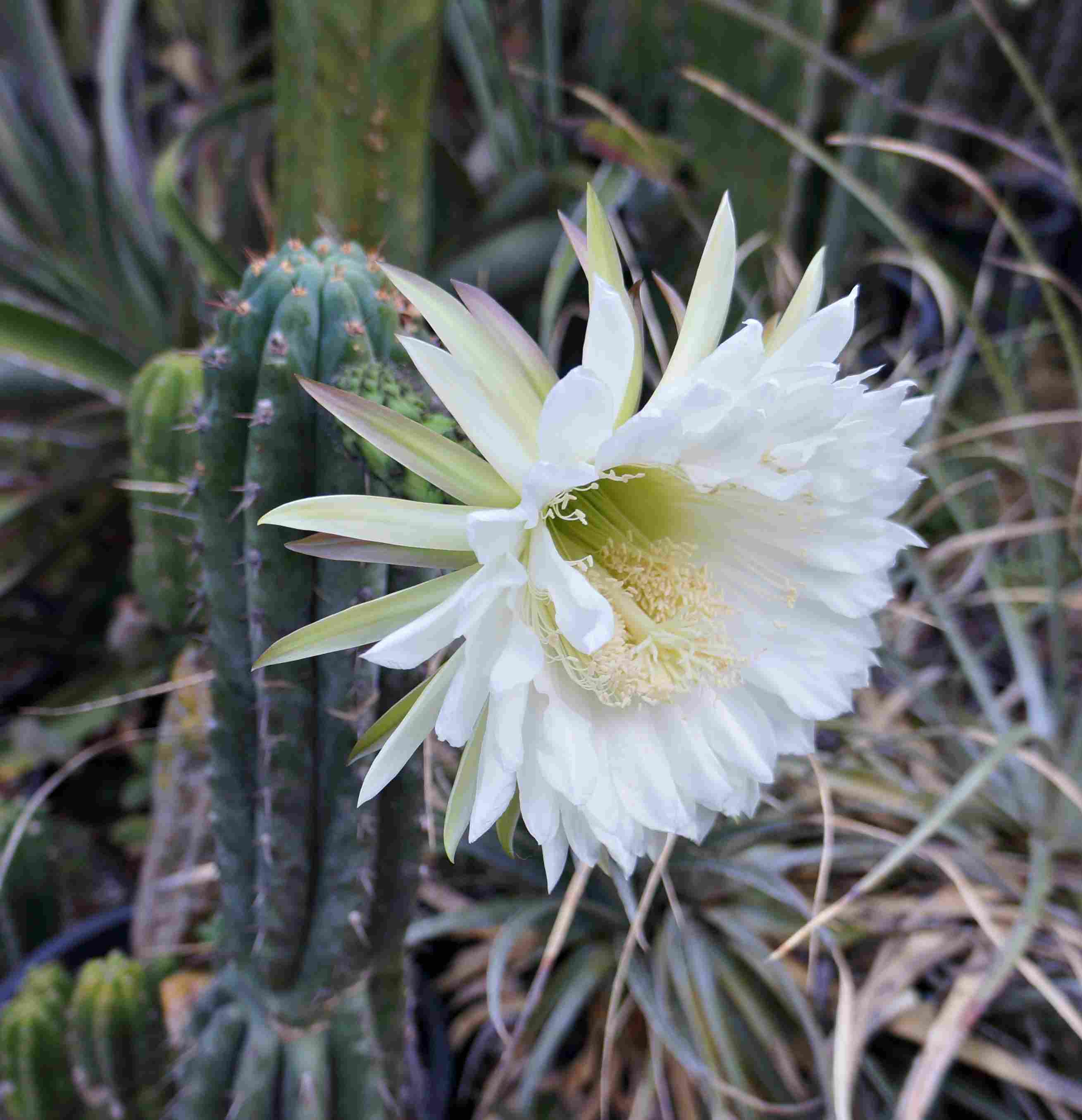 ↑ Parent plants ↑
___
Trichocereus tulhuayacensis KK337 X T. peruvianus/‘Juul’s Giant’ hybrid f. monstrosus – ‘Mutant Seedling’
Here’s a chance at choice monstrose seedlings of this exciting new hybrid—available for the first time outside auction! The spiny magenta flowered tulhuayacensis impregnated by our large blue-green peruvianus/Juul’s mutant that produces huge white flowers with extra petals. The monstrose/cristate genes, colored & mutant flowers, and exceptional spines will combine in unexpected and novel ways—some of the progeny, such as these many ribbed selections, are already showing very unique mutant traits and we can’t wait to see how magnificently they mature! We’re envisioning thick brain-coral growth with stout, red to black spines and unfurling fans of huge purplish blossoms! Whatever maturation brings, these are certain to become one-of-a-kind living sculptures. Z8b/9a
[ 8 ] → 2 ~ 3–4″+ plants, 4+ years old $75 each September SALE! $69 each; or 2 for $124
[ 6 ] → 2 ~ 2–2.5″+ plants, 3–4 years old $60 each September SALE! $52 each; or 2 for $89
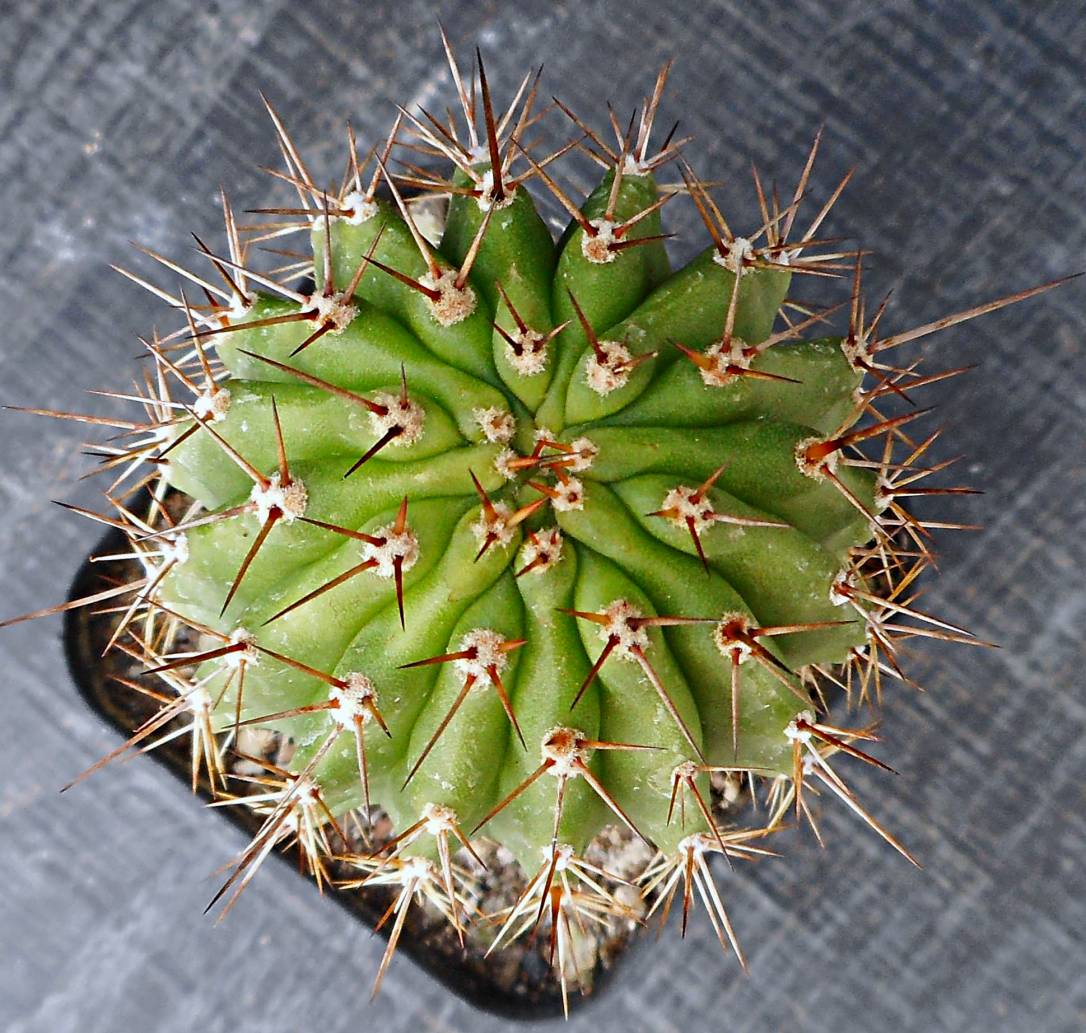
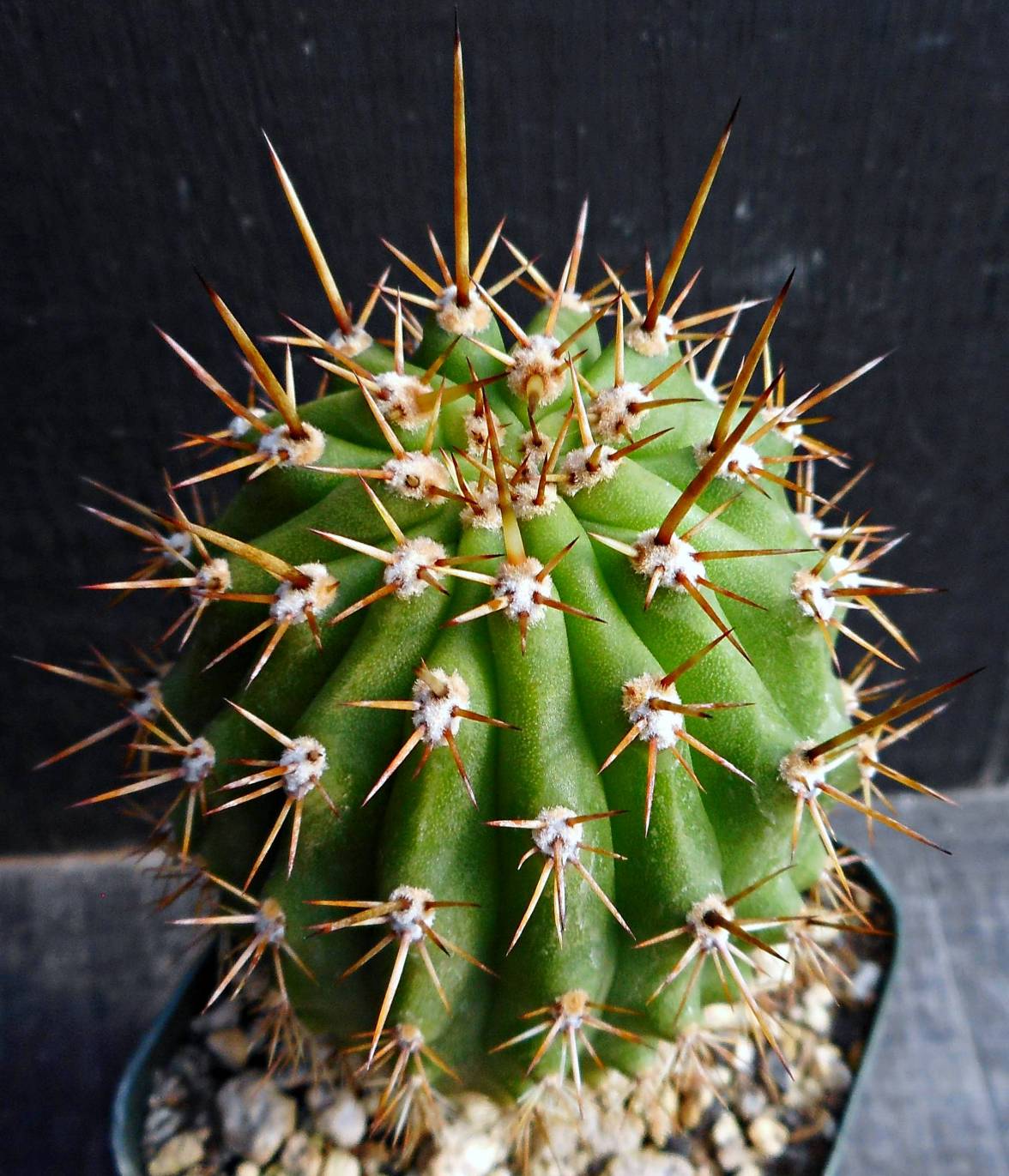 ↑ Examples of Mutant Seedlings ↑
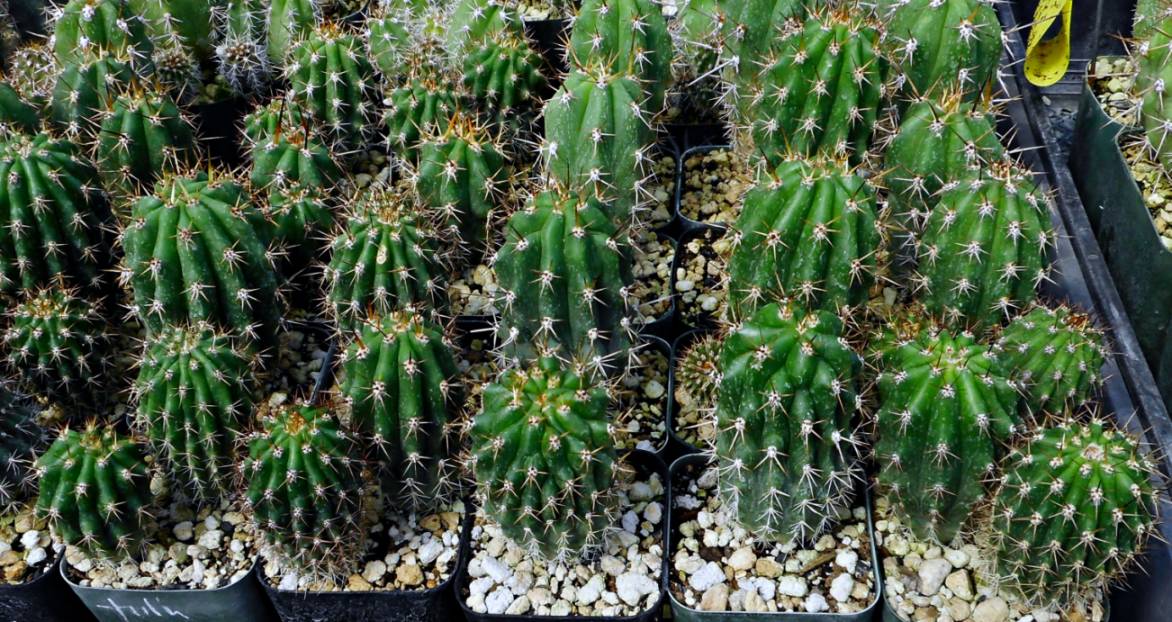 ↑ More examples of Mutant Seedlings of this super hybrid ↑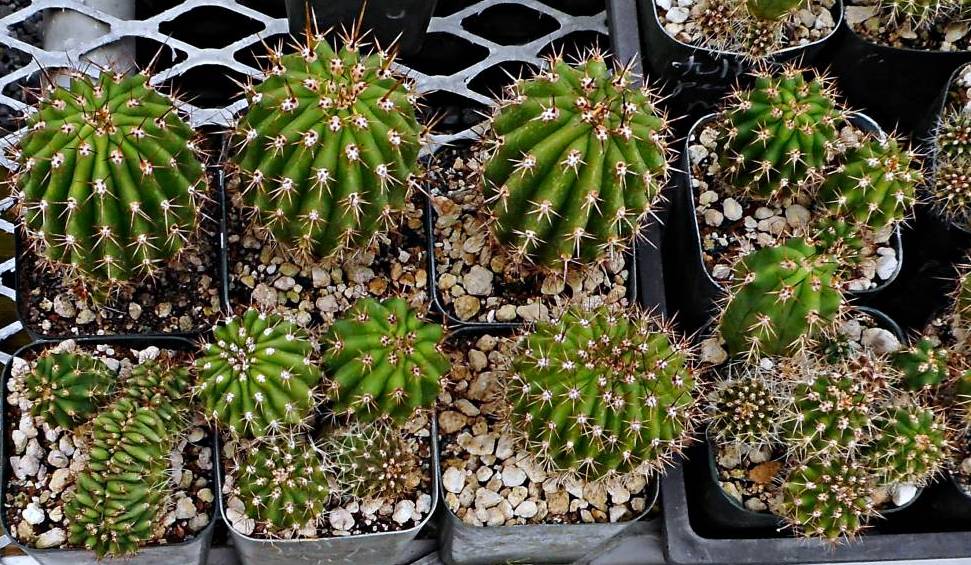
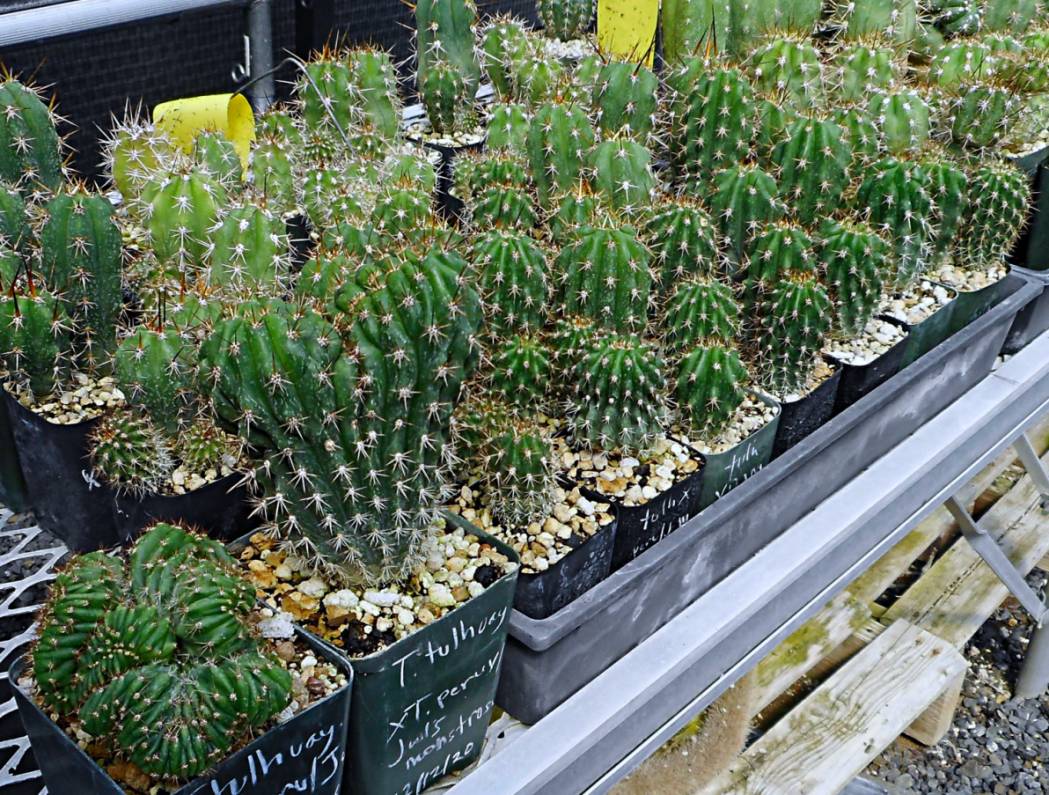 ↑ Further examples of monstrose seedling diversity ↑
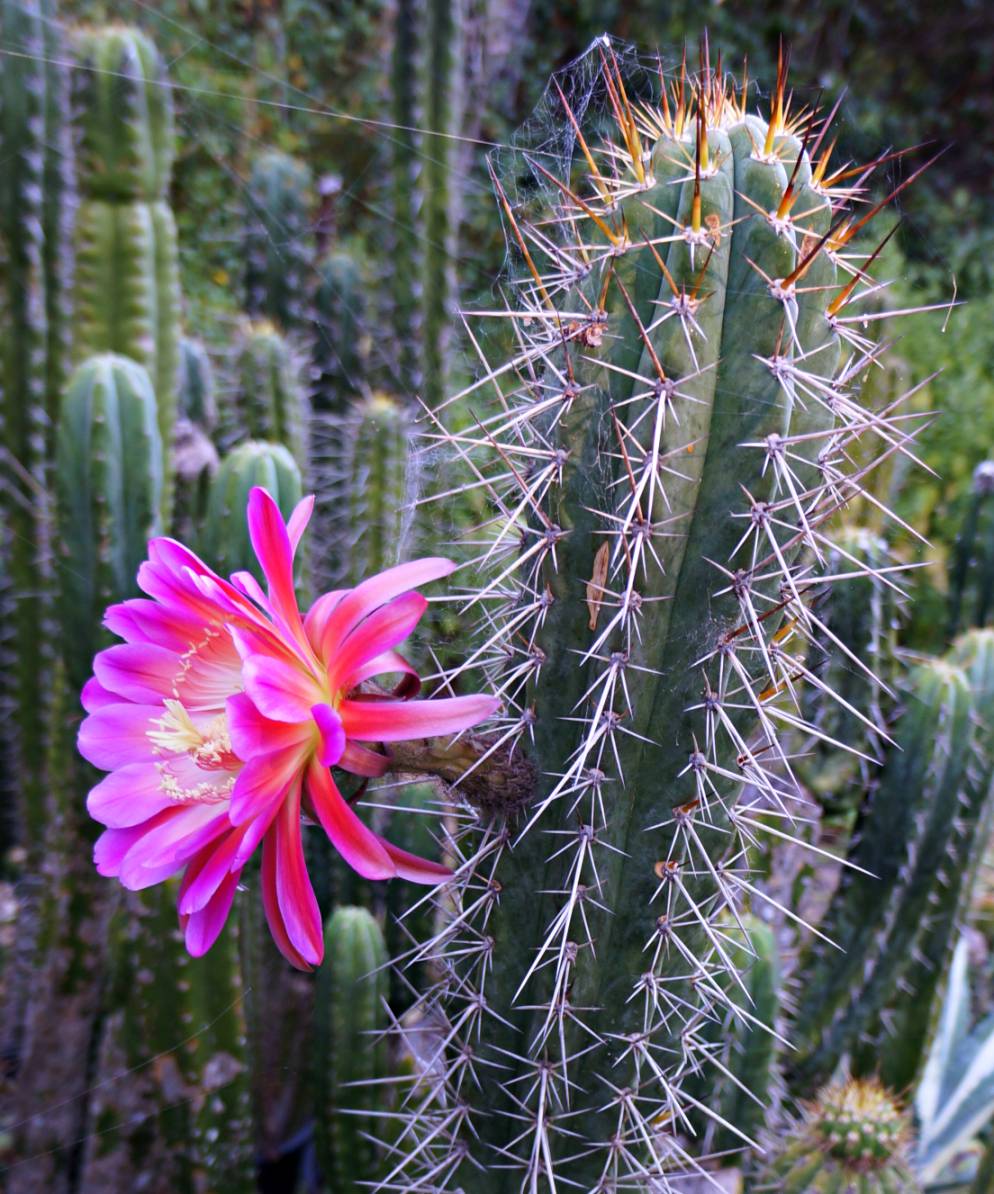 ↑ Parent plants ↑
___
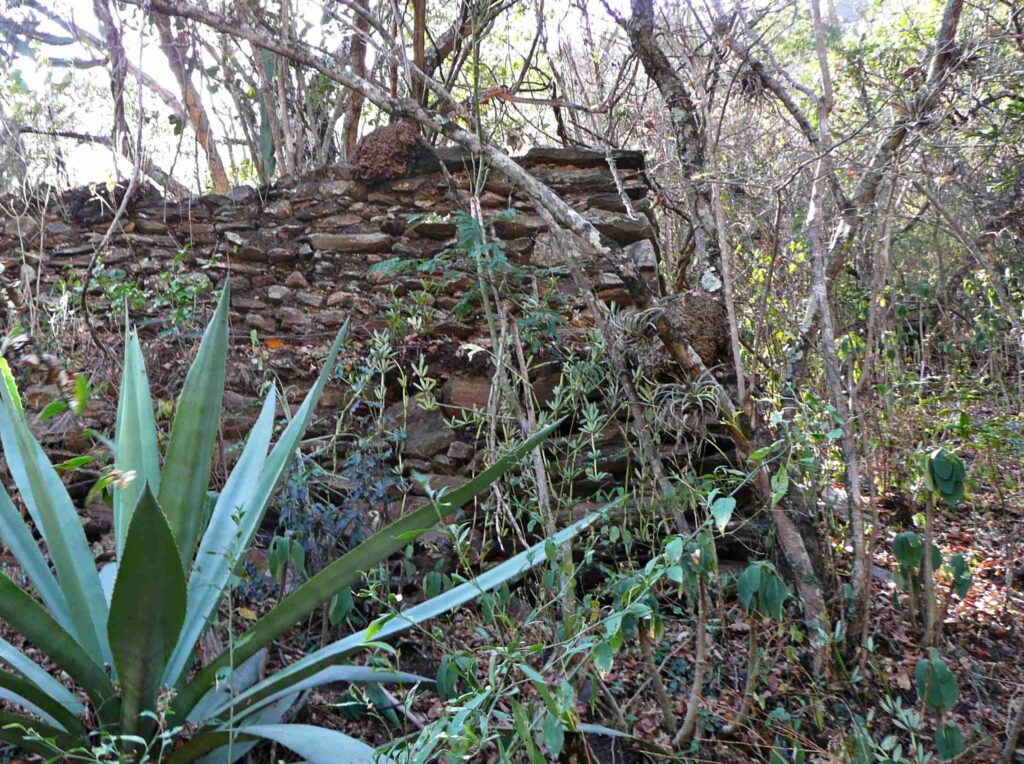 Furcraea and Peperomia spp. growing in Anadenathera understory among ancient ruins,
Pasto Grande, Yungas, Bolivia
Other Succulents & Xerophytes
___
Abromeitiella lotteae
Bromeliaceae. Little 1–2″ rosettes of small triangular leaves, green with silver-gray flecking. Eventually forms large, dense mounds to several feet across and made up of hundreds of heads. Small wine-red tubular flowers with green tips. This rare reddish flowered species from southern Bolivia is exceedingly scarce in cultivation. The recent popular trend in genetic studies is to lump Abromeitiella into the genus Deuterocohnia, but there is plenty of valid reason to keep this unique genus intact. Very easy to grow, a good columnar cactus companion. A few multiheaded clusters, long underpotted. Z9b?
[ 3 ] → 1 ~ 4–5″+ diameter plant 10 years old $38.50 SOLD
___
Agave cordillerensis NL52409a “Llacay Blanco”
Agavaceae. Clustering rosettes to 6’+. Leaves gray-blue with darker banding and toothed margins. Flower stalks to 20′ with curved or sometimes looped branches, yellow flowers. For decades botanists dismissed this Andean agave as introduced A. americana—until Guillermo Pino redescribed it as its own distinct Andean species based on its different leaves, stoloniferous propensity, radically different flower stalks and fruit form. A beautiful, hardy and versatile species used for its leaf fibers. Widely planted as impenetrable hedgerows to fence in livestock, demarcate fields and act as a living firebreak. Unknown in cultivation outside the Andes. N. Logan collection; Luribay, Bolivia, 8,000′. A key Trichocereus companion, a must have for collectors! Protect young plants from heavy, direct frost. Underpotted seedlings pining for fresh soil. Z8b/9a
[ 10 ] → 2 ~ 2″+ plants 2-3 years old $15.50 each
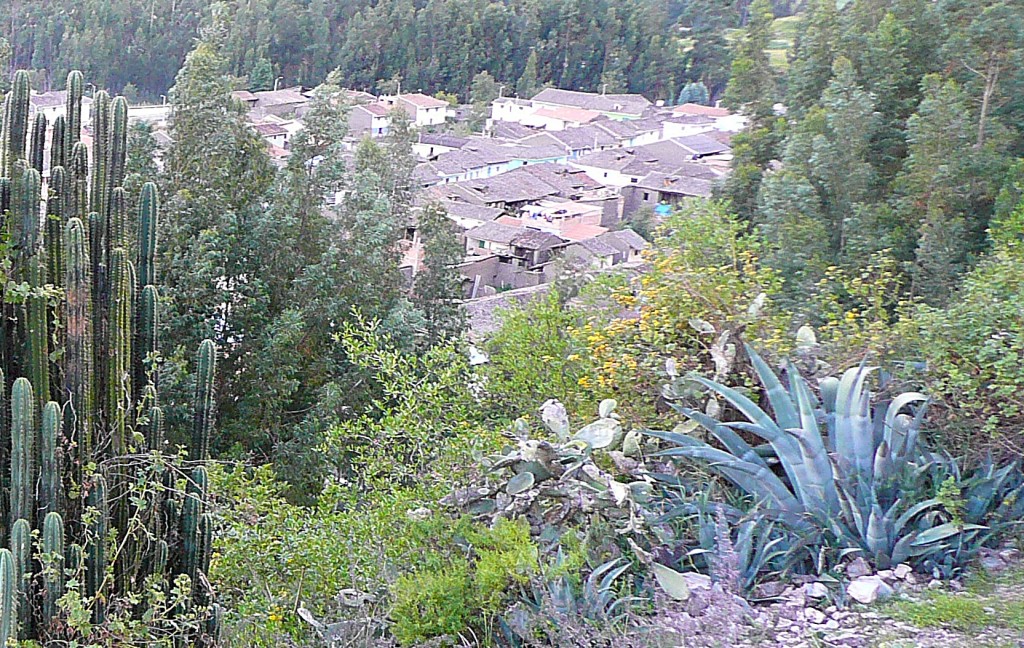 ↑ Growing with Trichocereus sp. BK09508.7, Chavín de Huántar, Ancash, Peru ↑
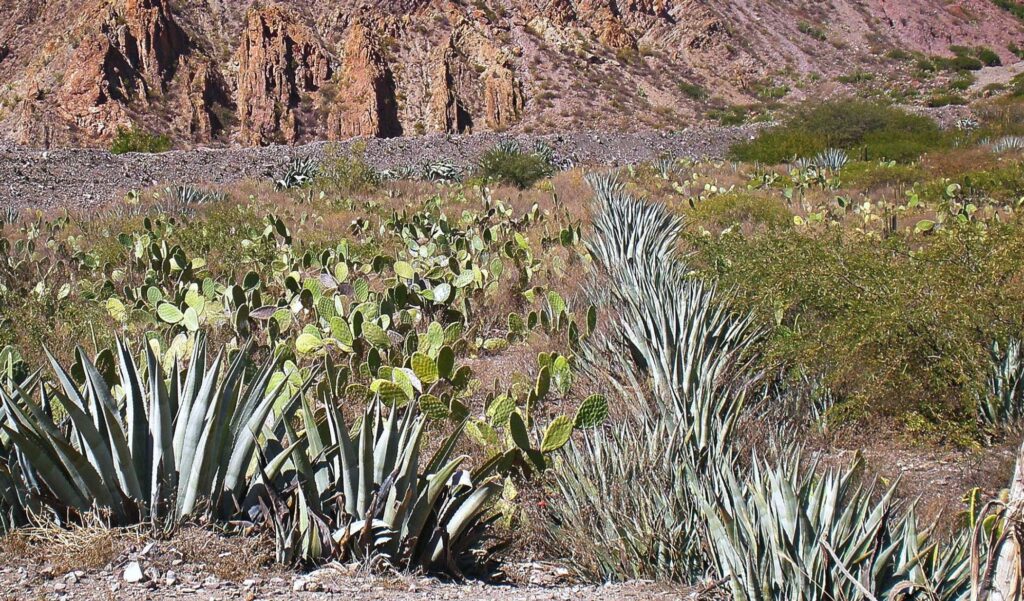 ↑ A. cordillerensis NL52409a — planted hedgerows, Luribay, Bolivia ↑
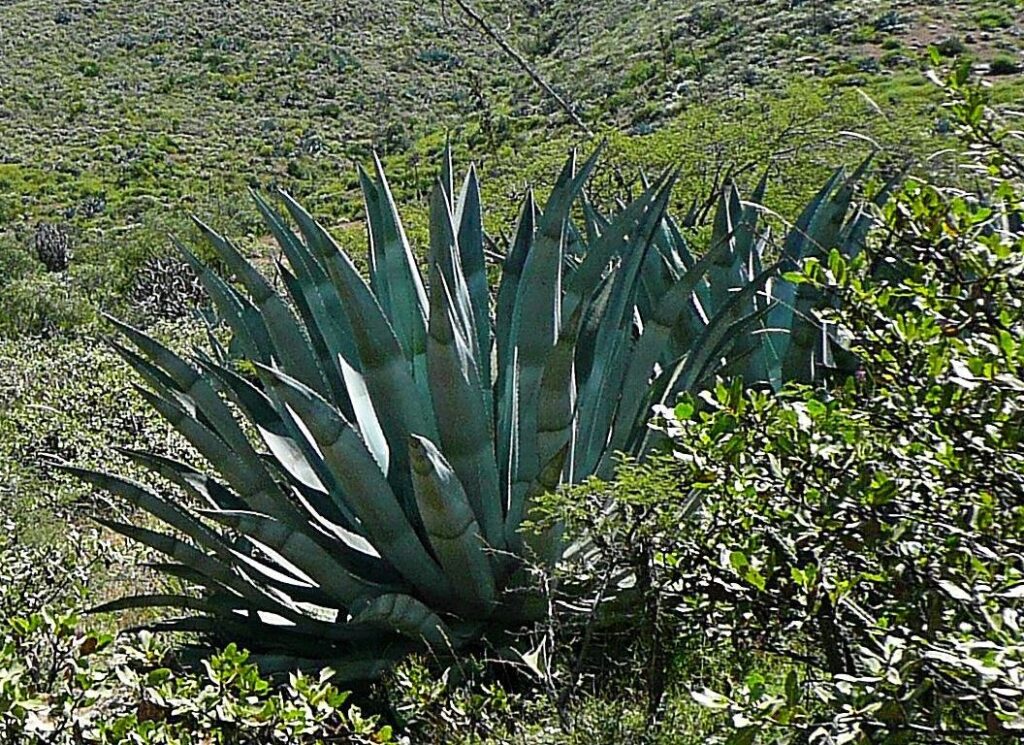 ↑ Specimens in the Cordillera Negra, Ancash, Peru ↑
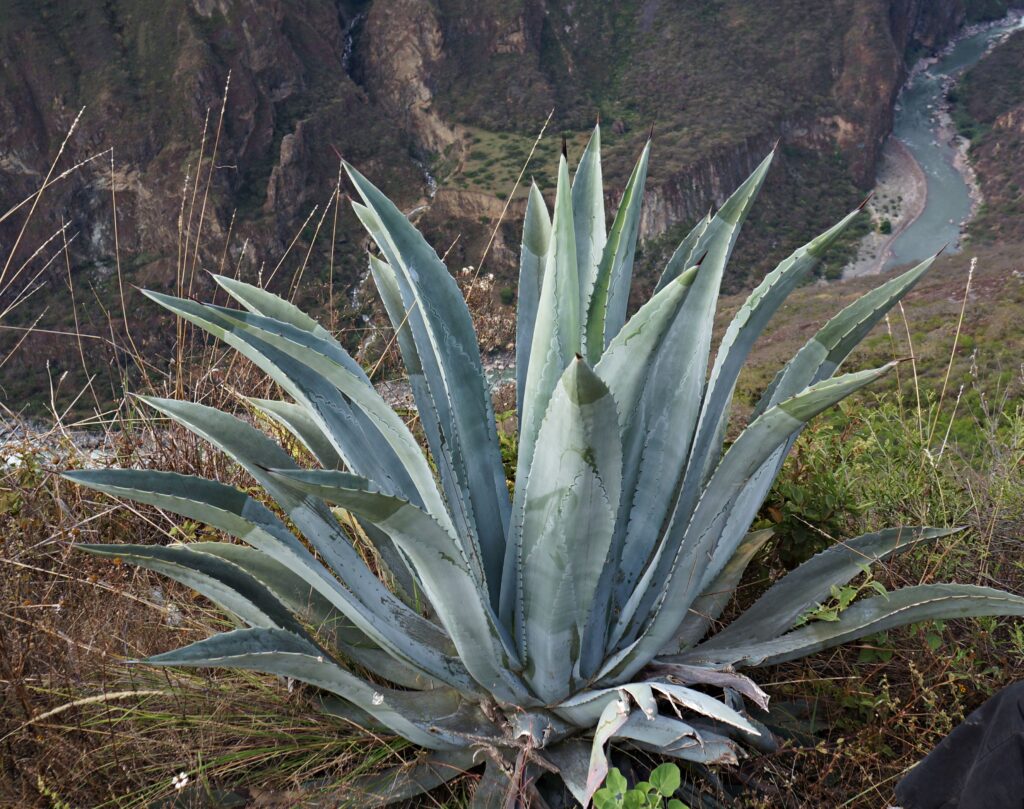 ↑ Apurimac, Cusco Dept., Peru ↑
___
Agave difformis “Xixi”
An attractive and unusual smaller species that is rarely seen. Freely clustering rosettes to 2′ with slender polymorphic yellow green leaves, varying from straight to hypnotically wavy, toothed to unarmed, sometimes with a silver central stripe and rust-colored striations. Flower stalk to 10′ bearing yellowish to pink flowers. Native to the limestone soils of the Sierra Madre Oriental, 5–6,000′, Mexico. Seed collected from El Tephe, Hidalgo. The macerated fiber was reportedly used as soap. We have a few lovely older specimens, long underpotted and ready for your attention! Z8b?
[ 6 ] → 2 ~ 15–20″+ plants 14 years old $45.50** each September SALE! $39.50**each or 2 for $69**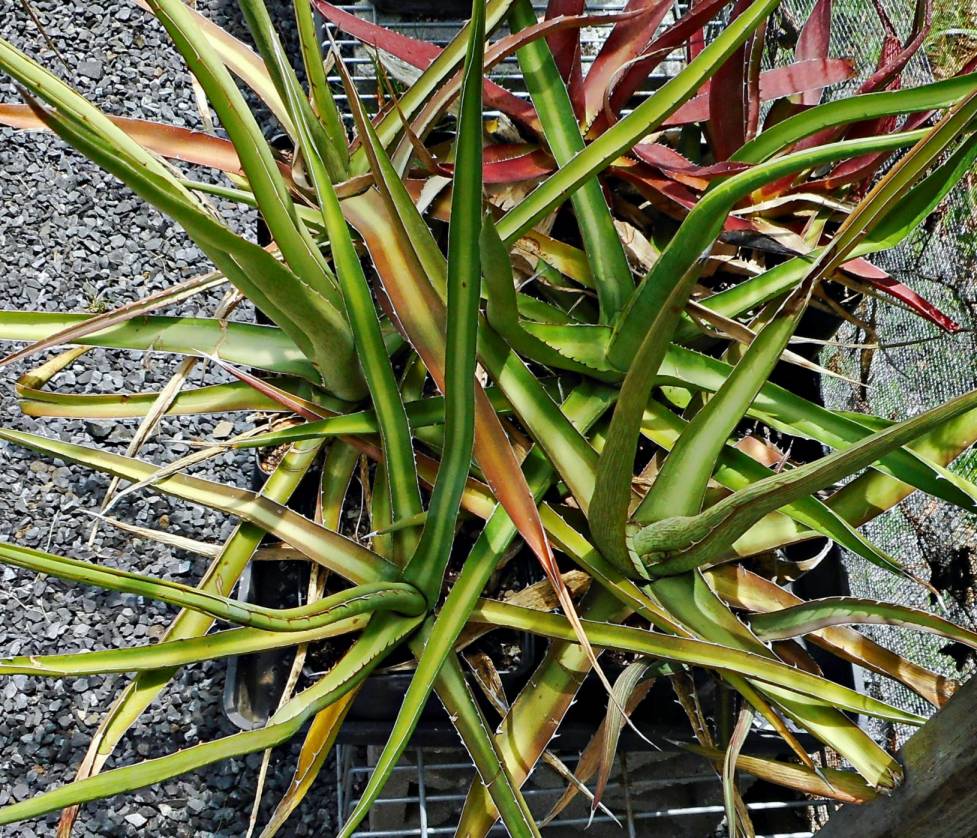
___
Aloe haemanthifolia (=Kumara haemanthifolia) ♥ New ♥
Liliaceae or Asphodelaceae. One of the rarest, unique and bizarre looking Aloe. 6–12” tall stemless clusters of thick, tongue-like green leaves with red margins, arranged like the pages of an open book. Scarlet-orange flowers. Looks like a dwarf, compact Aloe plicatilis. Endemic to rocky cliffs of the high mountains of the Fynbos, South Africa, between 4300–5300’. Considered critically rare. Said to be impossible to grow, but we’ve found them to be quite easy as long as you remember this is not a desert species but a plant from a cool, high rainfall alpine ecosystem. Provide a soil with excellent drainage, regular water, bright light and avoid prolonged hot temperatures. Seed needs cool temperatures to sprout and can take up to a year to germinate. First offering of seedlings! Z7/8a?
[ 6 ] → 1 ~ 1.5–2″+ plant 2 years old $45.50 SOLD
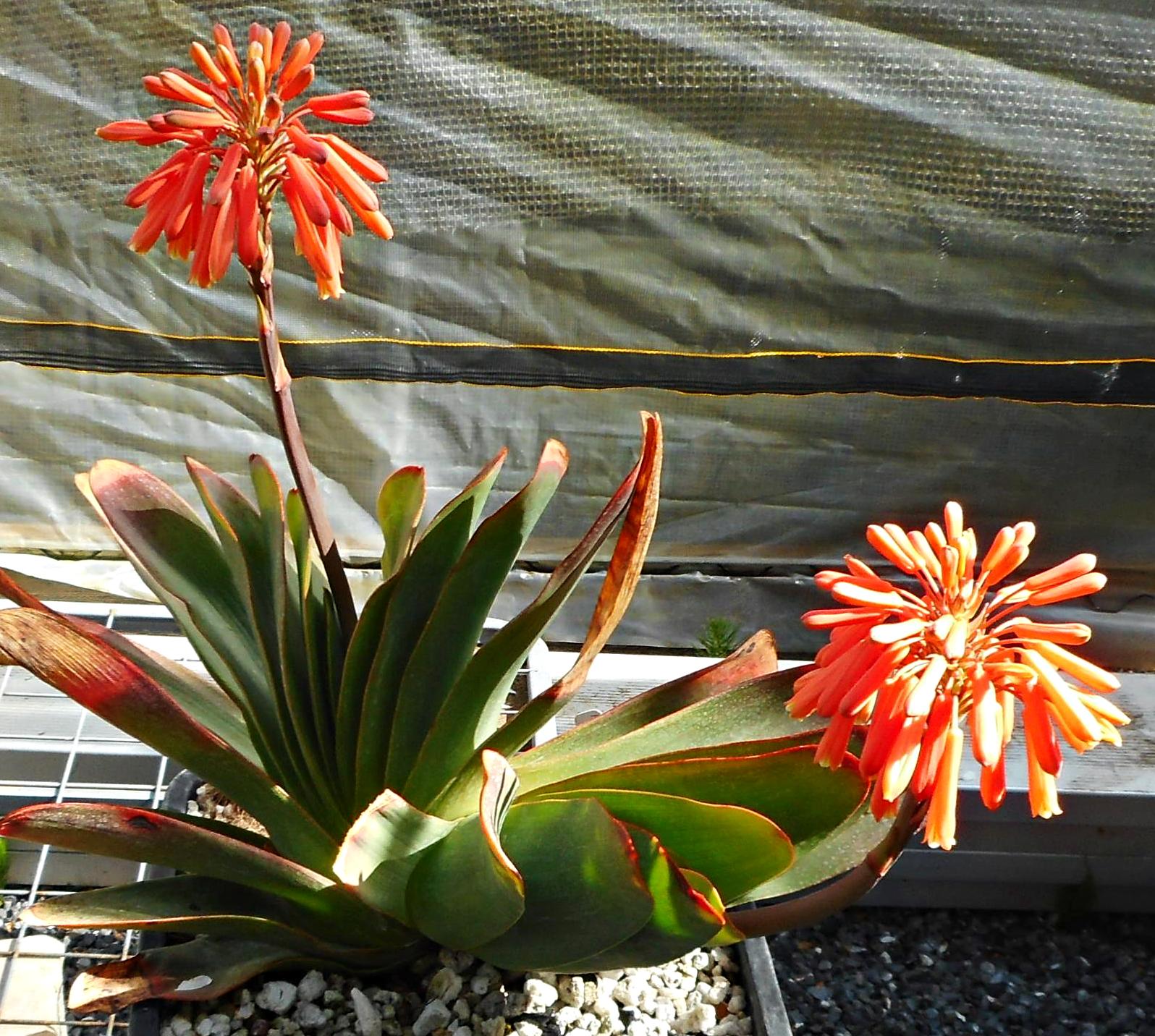
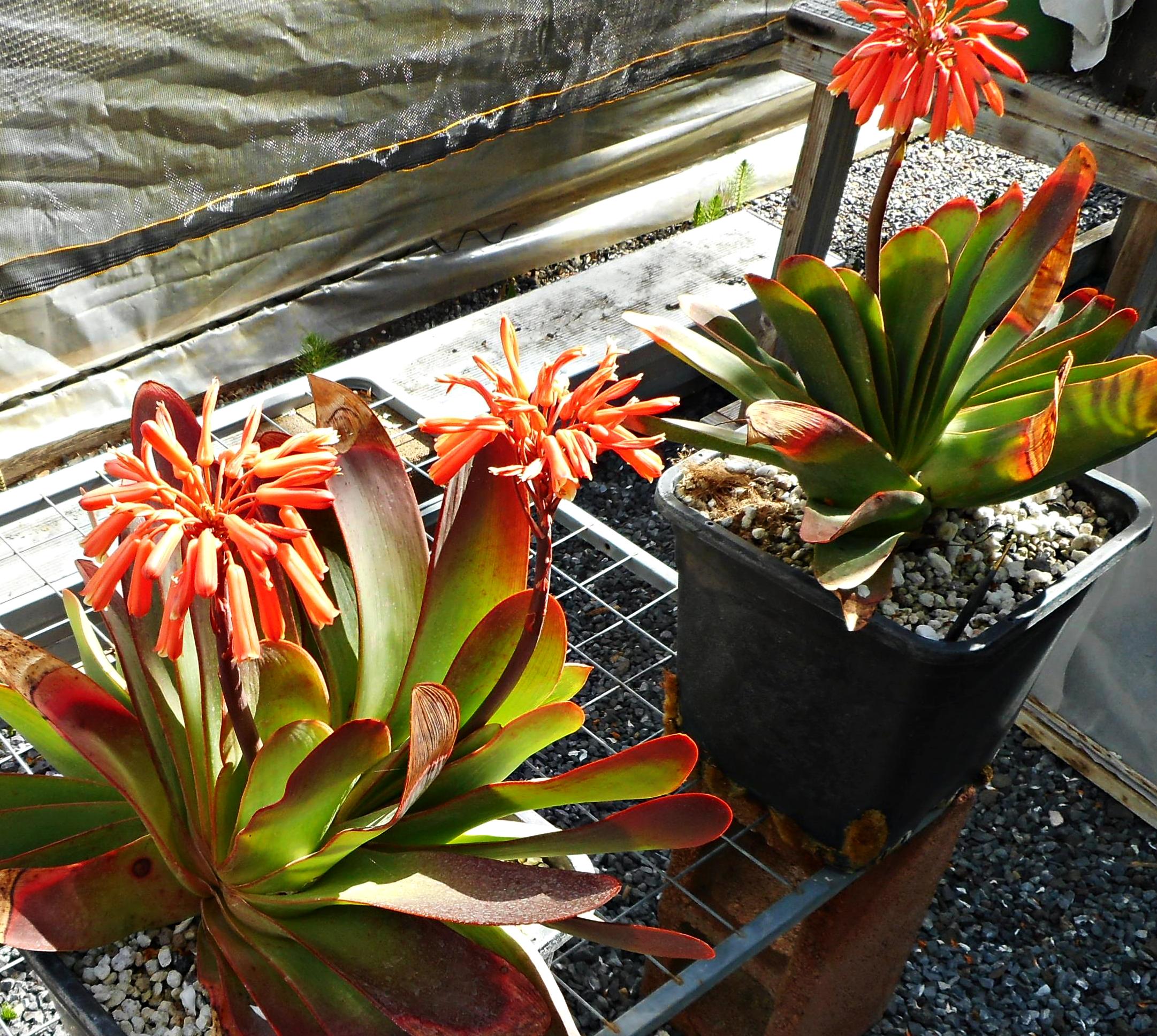 ↑ Mother plants ↑
___
Aloe marlothii “Mokgopha”
Forms a small tree up to 20′ tall. Rosettes of green to reddish leaves with impressive red thorns and horizontal racemes of showy amber yellow flowers. In addition to this Aloe being a source of the unrivaled laxative Cape aloes, and a common medicine for stomach troubles, the dried and powdered leaves are popular among natives as an admixture to psychoactive snuffs. Drought hardy and simple to care for, mature plants tolerates mild frost. Makes a bold landscape plant or potted specimen. A few plants from wild seed, long underpotted and ready for your care. Z9a–b
[ 6 ] → 2 ~ 4–6″ plants 4+ years old $14.50 each
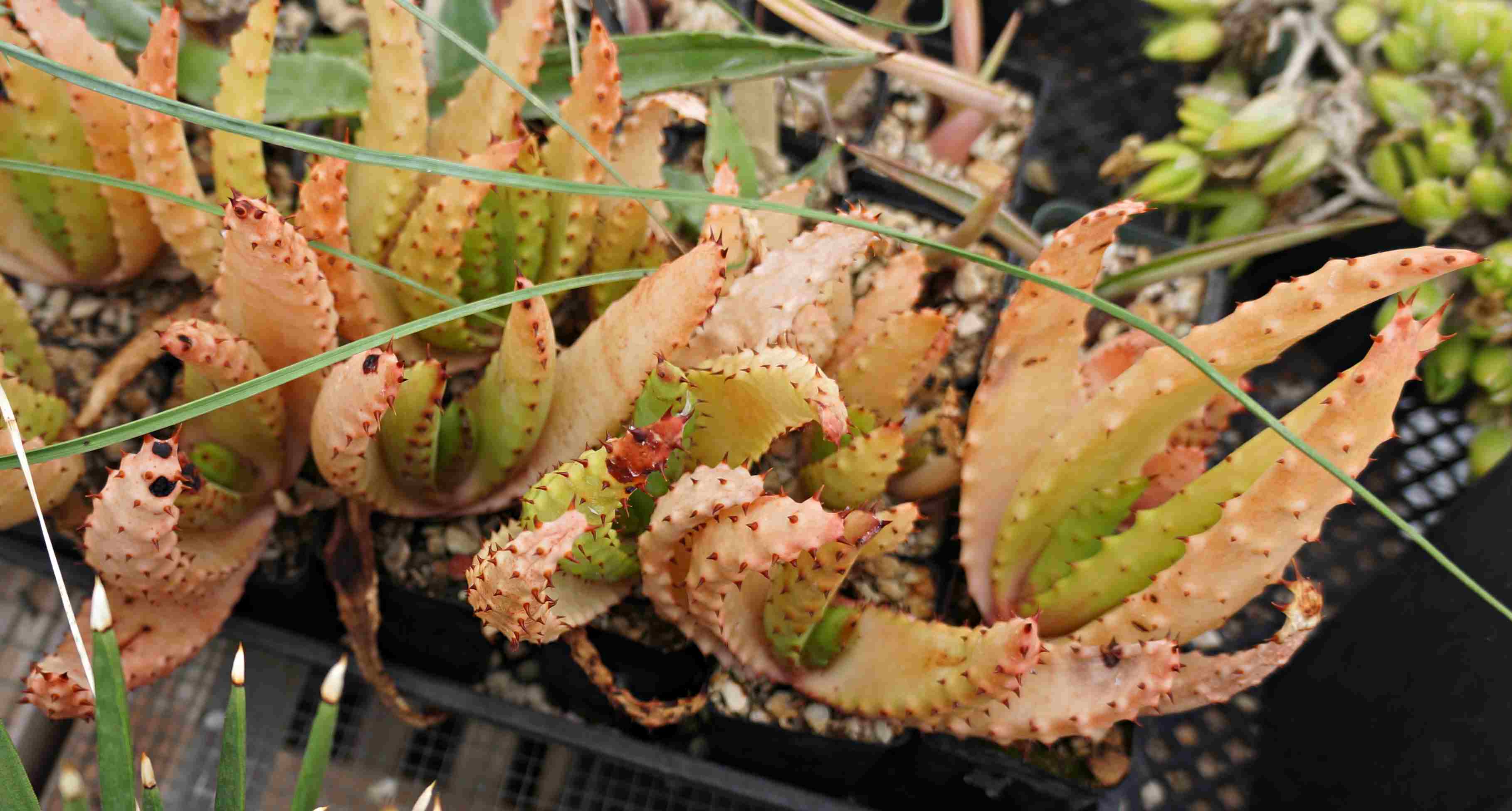
___
Babiana pygmaea “Geelbobbejaantjie”
Iridaceae. Perennial bulb/corm with pleated lanceolate annual leaves to 3″ high. Large creamy yellow flowers with purplish centers. Endemic to the south west Cape, South Africa. Critically endangered, over 80% of the plants restricted habitat has been lost to modern agriculture. The bulbs are most likely edible like other Babiana. An easy to care for winter grower, well drained mineral soil, dry summer rest. Z8a
[ 3 ] → 2 ~ Plants/bulbs 4+ years old $24.50 each 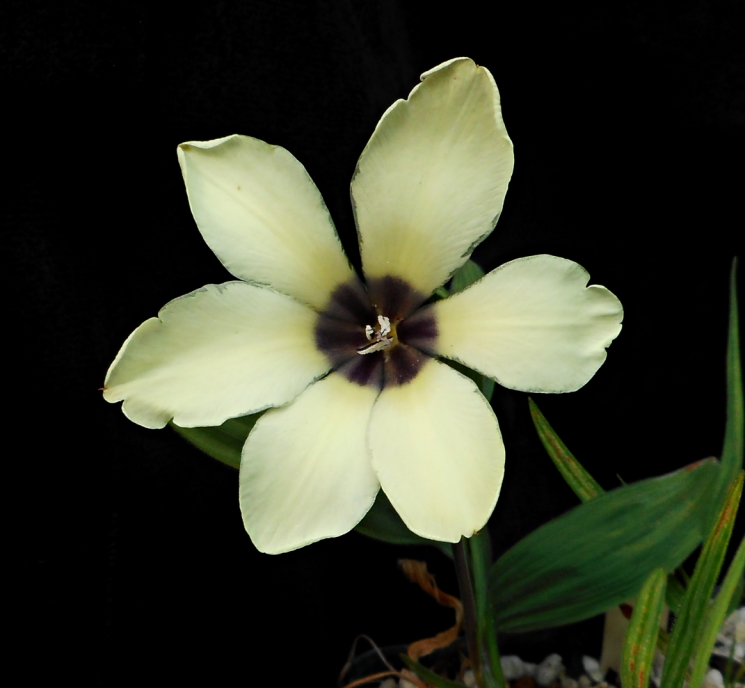
___
About Burseraceae: Genus Boswellia, Bursera, Commiphora
Xerophytic, drought deciduous small shrubs to large trees, many of which are caudiciform and have thick succulent trunks and stems. Limbs contain resin ducts filled with aromatic triterpenes and ethereal oils. When punctured the ducts ooze sap, which when dried is known as Frankincense (Boswellia), Copal (Bursera) and Myrrh (Commiphora) and has an extensive history of religious and medicinal usage. The wood of a South American Bursera is sacred, known as Palo Santo. Boswellia and Commiphora are African and Indian genera while Bursera is primarily a Mexican genus with several species ranging into northern South America, and extreme southern United States. In cultivation they adapt well to bonsai culture, are easily trained and grown into striking specimens. In larger pots they respond to the extra root room, growing to become a large bush. They prefer bright light, a rich well drained soil mix with plenty of mineral grit (40–75% pumice or perlite) to accommodate their often tuberous roots, regular watering and feeding during warm weather, and a dry winter rest. Protect from frost. Very easy and rewarding plants to grow, wonderful to have around, especially for their magical presence and the spicy balsam scents they give off when handled. We propagate many rare species, inquire or see our periodic auctions.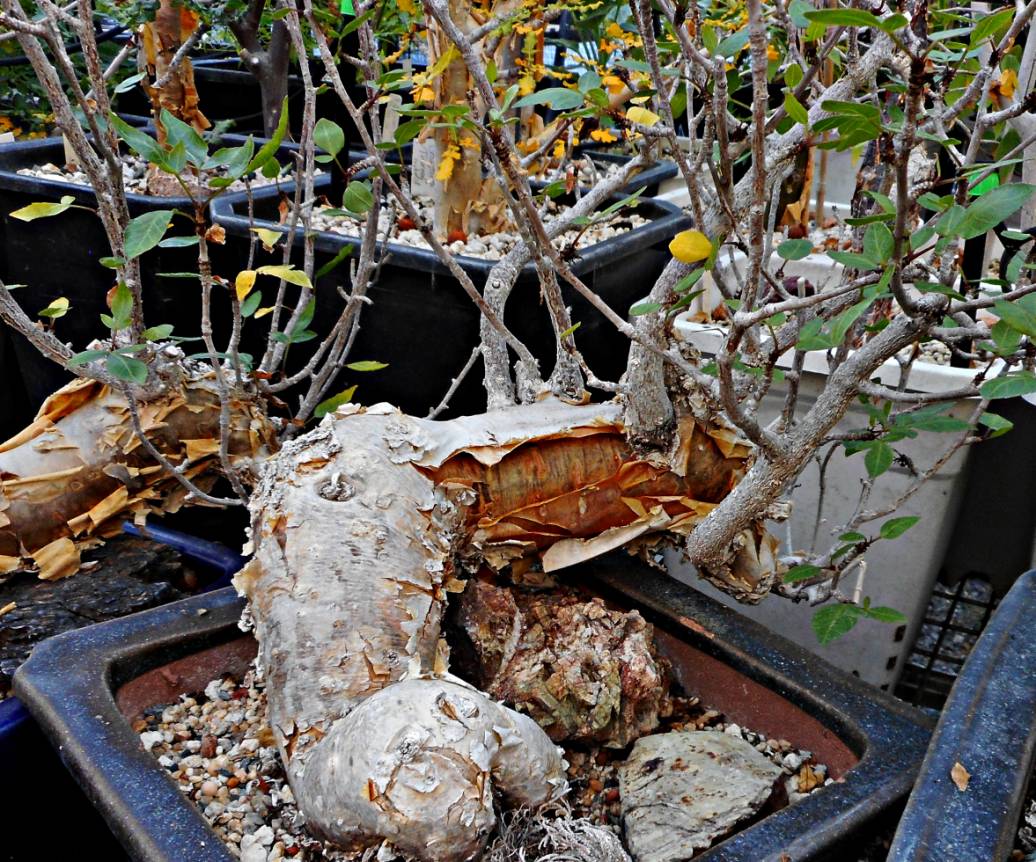 ___
___
Boswellia carteri “ Frankincense”
Burseraceae. Small pachycaul tree to 25′ with pinnately compound leaves and racemes of small white pink flowers. Golden peeling bark on thick trunks. B. carteri is basically a geographical form of the taxonomically recognized B. sacra. Dried sap from the tree is an ancient incense widely revered since the dawn of civilization, often in combination with myrrh. In antiquity, the resin was worth more than gold! Used medicinally as a cure all with strong anti-inflammatory, antiseptic, antibacterial and antifungal properties. Quite rare in cultivation, but relatively simple to grow. It prefers consistent warmth, a deep pot and soil with at least 50% pumice stone for its swollen edible roots. Our treelets are grown from seed that came to us from a friend at Fullerton University and was open pollinated; while the progeny mostly looks to be ‘true’, there may be a chance that B. nana, B. elongata and B. hildebrandtii are possible fathers of some of the seedlings—varied genetics won’t become obvious until the plants are a bit larger. Boswellia seed has notoriously low germination, so seedlings such as these are rarely available and we seldom offer them outside of auction. Z10a/b
[ 10 ] → 2 ~ 3–5″+ treelets 2–3 years old $86.50 each
 ↑ An example of a treelet specimen in full leaf ↑
___
Boswellia nana “Dwarf Frankincense” ♥ New ♥
Prostrate caudiciform subshrub to only 1–2′ tall. Simple dark green leaves with wavy margins, densely arranged along the stems and drought deciduous. New growth is red to bronze. Small pink flowers. Endemic to limestone cliffs, Socotra. Rich in aromatic balsamy oils. This amazing little species is the ultimate xerophytic bonsai and a real joy to behold. Needs bright light, well draining soil, heat and some humidity to thrive, along with a dry winter rest. Does fine in a sunny window with just a little extra care. Rarely available outside our auctions, we currently have a few charming seedlings on offer here. Winter dormant. Every succulent collection should include this regal dwarf frankincense! Z10a/b
[ 8 ] → 2 ~ 1–2″+ treelets 2+ years old $69.50 each
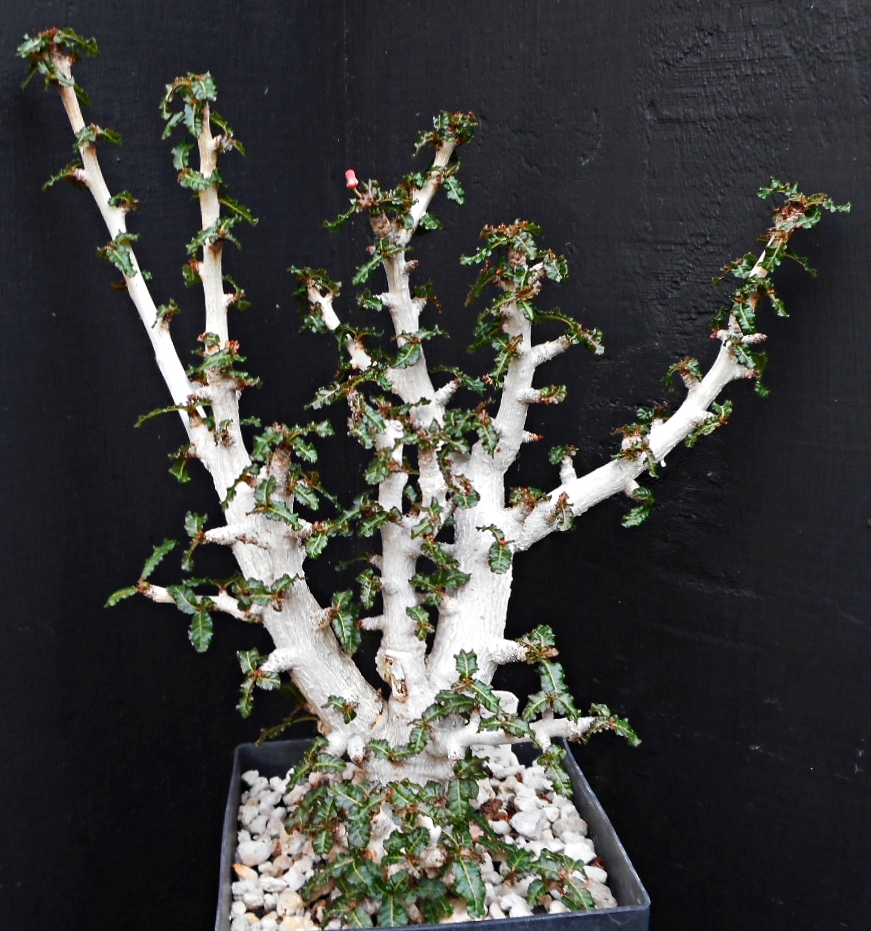 ↑ Boswellia nana, mature mother plant ↑
 ↑ Boswellia nana, mature mother plant details ↑
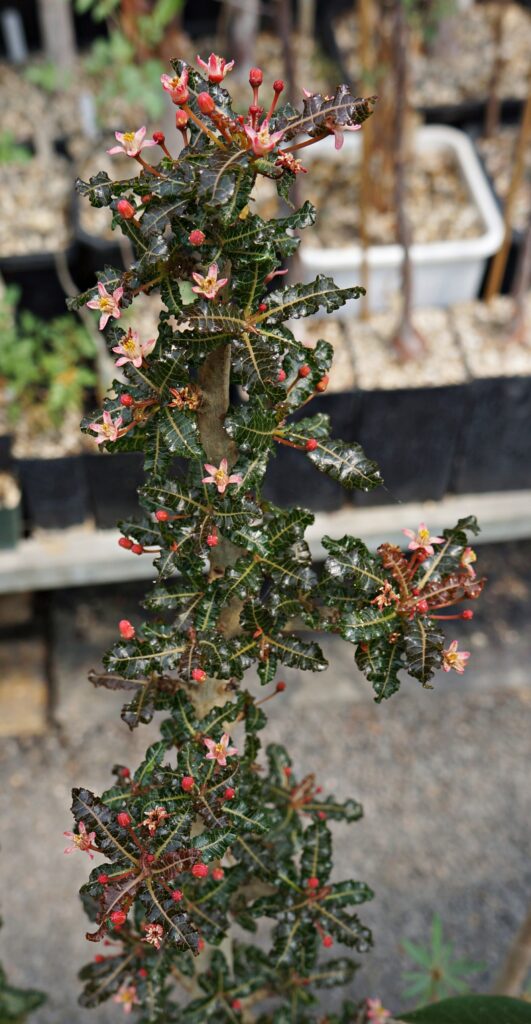 ↑ Boswellia nana mother plant in bloom ↑
___
Boswellia neglecta “Neglected Frankincense”
Burseraceae. Small pachycaul tree to 10-20′. Fat ‘elephant-leg’ trunks with gray bark. Beautiful, slender pinnate leaves, drought deciduous. Rich in aromatic medicinal oils. Native to the dry forests of eastern Africa. Rare in cultivation, but relatively easy to grow if given warmth, strong light and a dry winter rest. With its squat, caudex-like trunk and many branches, this is an ideal Frankincense for bonsai and one of the easier to care for. Most Boswellia seed have low germination rates, so seedlings such as these are scarce. Z10a/b
[ 4 ] → 1 ~ 5-6″+ treelet 2–3 years old $64.50 SOLD
[ 5 ] → 1 ~ 3–4″+ treelet 2–3 years old $54.50 SOLD
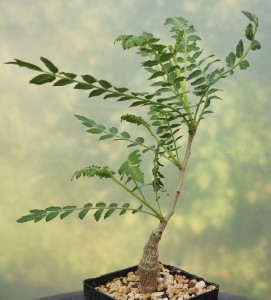 ↑ An example of a treelet ↑
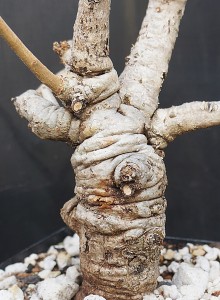 Trunk of mature specimen
___
Boswellia sacra “Frankincense”
Small tree to 25′ with pinnately compound, drought deciduous leaves and racemes of small white pink flowers. Swollen trunks with golden peeling bark. Usually found growing in extremely rocky areas where it sometimes develops a bizarre disc like swelling at the base of the trunk. Native to north eastern Africa and the Arabian peninsula. Dried sap from the tree is an ancient incense widely revered since the dawn of civilization, often in combination with myrrh. At one time worth more than its weight in gold! It has a powerfully rich fragrance. Used medicinally as a cure all, it has very strong anti-inflammatory, antiseptic, antibacterial and antifungal properties. Very rare in cultivation, but fairly easy to grow. It prefers warmth, a deep pot and soil with at least 50% pumice stone for its thickened edible roots. Grow like Bursera. Most Boswellia seed have low germination rates, so seedlings such as these are rarely available — a couple lovely little treelets, some already starting to branch. Z10a
[ 4 ] → 1 ~ 5-6″ treelet 2–3 years old $85 SOLD [ 4 ] → 1 ~ 3–4″+ treelet 2–3 years old $69.50 SOLD
___
Bursera fagaroides “Copal”
Burseraceae. A really wonderful plant. Shrub or small tree to 20′. Thick swollen trunks and limbs with smooth golden bark that exfoliates in thin papery sheets. Pinnate leaves, tiny flowers followed by purple green berries. Widespread throughout the Sonoran and Chihuahuan deserts of Mexico. The sap is the most common source of Copal, highly aromatic with a sweet citrus like scent. Dormant much of the year, leafing out only with the onset of hot weather. They defoliate in autumn with an attractive display as the leaves change to yellow, orange and red. A few nice seedlings forming swollen trunks. Easy to grow and highly rewarding. [See the October Plant Auction for a choice older specimen]. Z10a
[ 3 ] → 1 ~ 12-15″+ treelet 3+ years old $28.50 SOLD
[ 6 ] → 2 ~ 8—10″+ treelets 2-3 years old $22.50 each
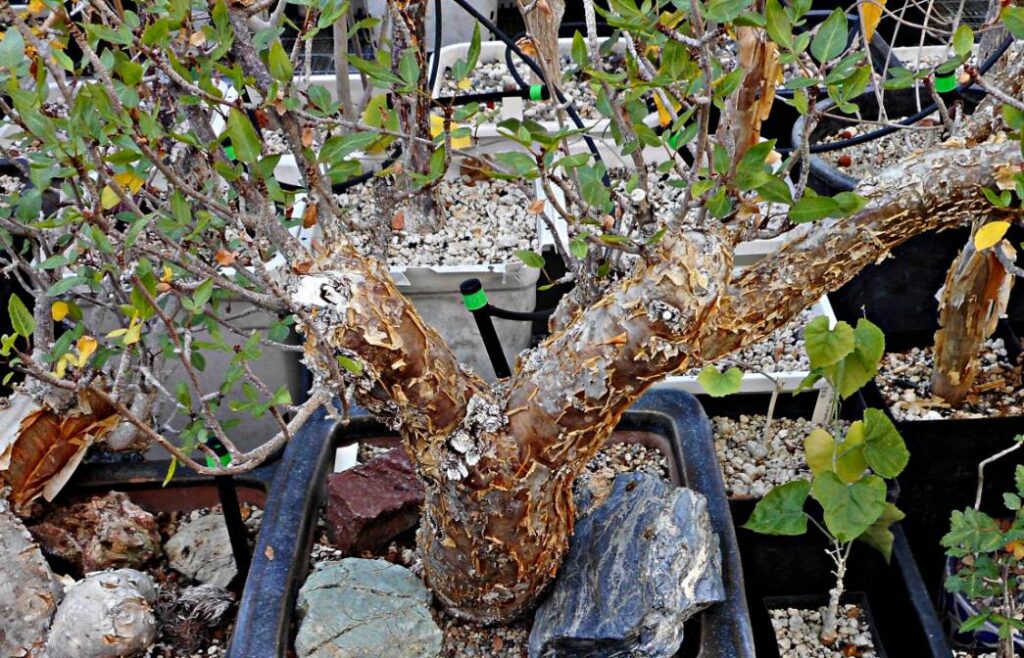 ↑ The oldest Bursera fagaroides in our collection, demonstrating the beauty of form & bark ↑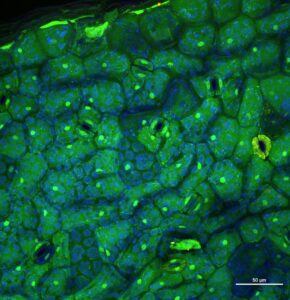
Bursera fagaroides scanned at St. Lawrence University’s Microscopy & Imagery Center, from Microcosms: A Homage to Sacred Plants of the Americas (https://www.microcosmssacredplants.org/), used with the permission of Jill Pflugheber & Steven F. White, © 2023.
___
Bursera microphylla “Copal Oro” “Torote Blanco” “Xoop”
Shrub or low branched tree with thick contorted trunks and tuberous, caudex-like roots. Young branches are red-brown, bark of older limbs turns whitish yellow to bronze gold, peeling in papery flakes. Thin pinnate leaves. Intoxicatingly aromatic sap, known to squirt from the branches when handled during hot weather. Grows in isolated areas of southeast California, southwest Arizona, western Sonora and most of Baja. US populations are considered at risk. The Seri knew the tree to have a powerful spirit, it featured prominently in religious practices. During vision quests they would fast for 4 days often drinking only tea made from the branches. Leaves, twigs and fruits have many medicinal purposes, twig tea being a particularly effective disinfectant. Source of gold Copal incense. The inner bark was made into a face paint, said to bleach a person’s skin white with continued use. A great natural bonsai, easy to grow. Mature plants tolerate mild frost. Z9b
[ 10 ] → 2 ~ 5–6″+ treelets 2+ years old $27.50 SOLD
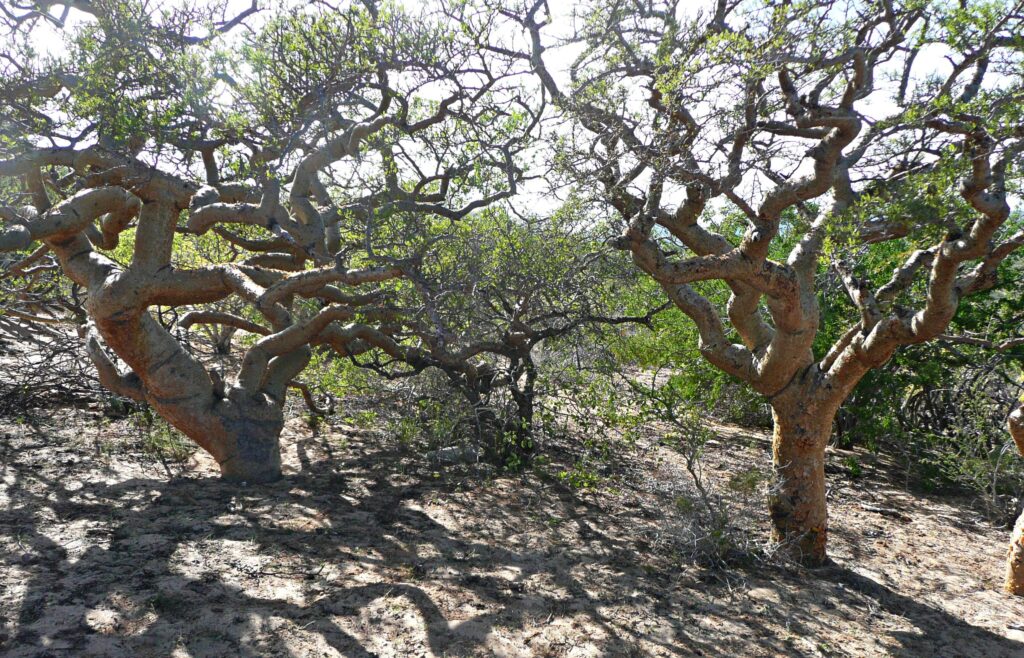
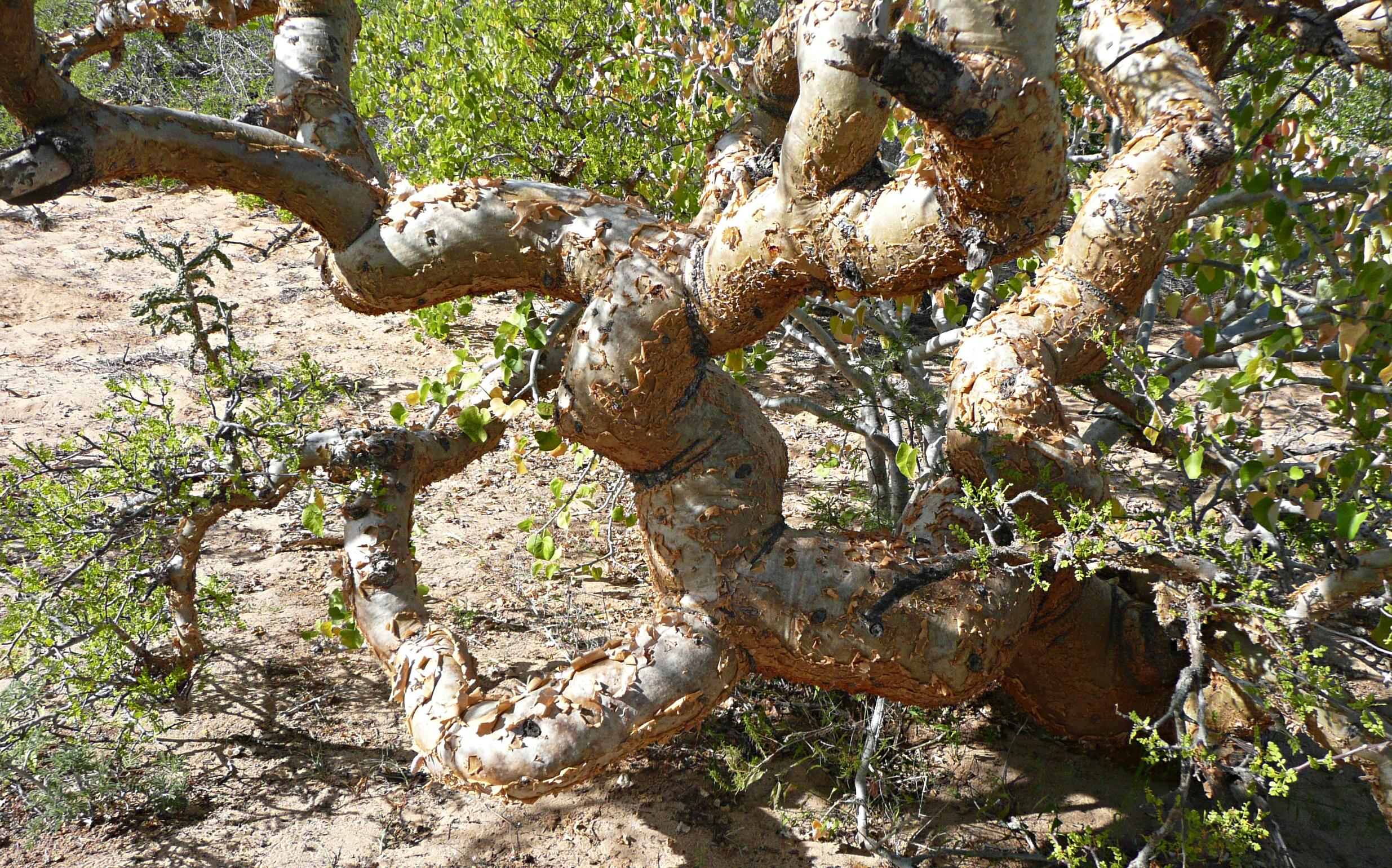 ↑ Plants in habitat, Baja Sur ↑
___
Bursera odorata “Torote Blanco” “Copal”
One of the smaller Copal species, usually a dwarf tree under 10′. Swollen caudiciform trunk with golden peeling bark. Drought deciduous pinnate leaves, small yellow flowers. Mountain to coastal dry forest, Baja and mainland Mexico. The sap is very aromatic with a sweet-balsam odor. Easy to grow, succulent soil. The perfect species for bonsai. Z10a
[ 8 ] → 2 ~ 5–8″+ treelets 2+ years old $25.50 each
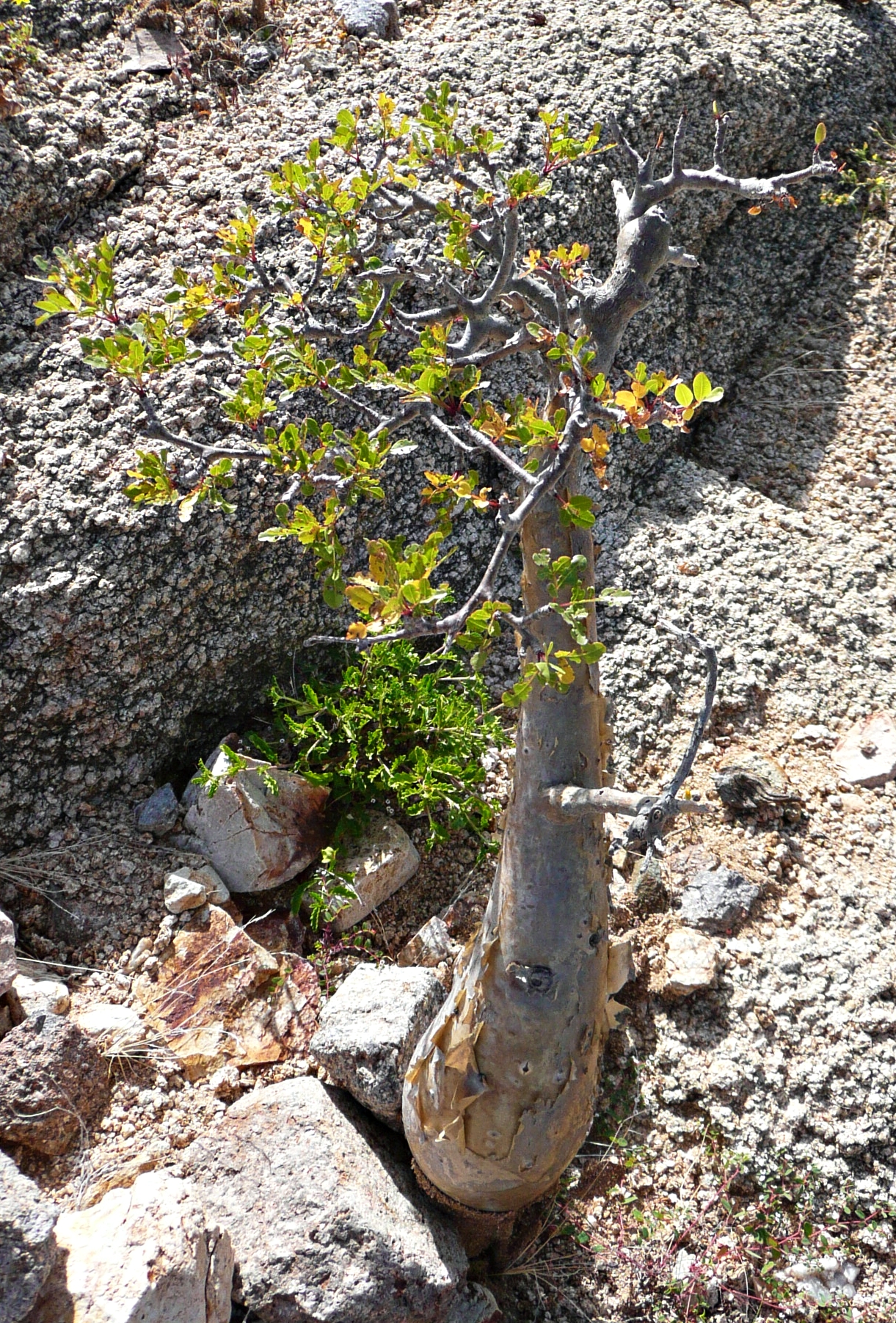 ↑ Bursera odorata in habitat, Baja Sur ↑
___
Bursera vazquezyanesii BLM1605 “Copal” “Papelillo” “Cuajiote”
Small pachycaul tree to 15’+. Swollen trunks and thick branches with platinum to orange-gold bark that peels in thin sheets to reveal a smooth, greenish under-bark. Elegant imparipinnate leaves, green to blue-green, with slender lanceolate leaflets, reddish petioles and leaf veins; new growth is striking bronze to purple and red color. Small reddish flowers. Aromatic sap, medicinal like other Copal. A very rare species from a restricted dry forest region of southwestern Jalisco, Mexico. Makes for an easy and gorgeous natural bonsai if kept underpotted. We only offer clones of this stunner once every 5 or 6 years—get one while you can! Z10a
[ 2 ] → 1 ~ 9–10″ branching treelet $66.50 SOLD 1 ~ 24″+ branched tree $140* SOLD
___
Dermobotrys saundersii
Scrophulariaceae. For your succulent collection—an unbelievably cool and showy plant with edible fruit! Epiphytic, multi-branched, pachycaul shrublet to 2’+. Semi-succulent, drought deciduous leaves. A profusion of 2″+ pendant tubular red flowers with yellow interiors adorn the branch ends. 1.5″+ ovate shaped edible green fruit with delicious fruity figgy pulp. Endangered species from the dry coastal forests of South Africa and Madagascar. This unique species does well for us grown in 50% pumice in partial shade and treated like a succulent. Z9b/10a
[ 3 ] → 1 ~ 7–8″ plant 2–3 years old $25.50 SOLD
[ 4 ] → 1 ~ 4–6″ plant 2+ years old $19.50 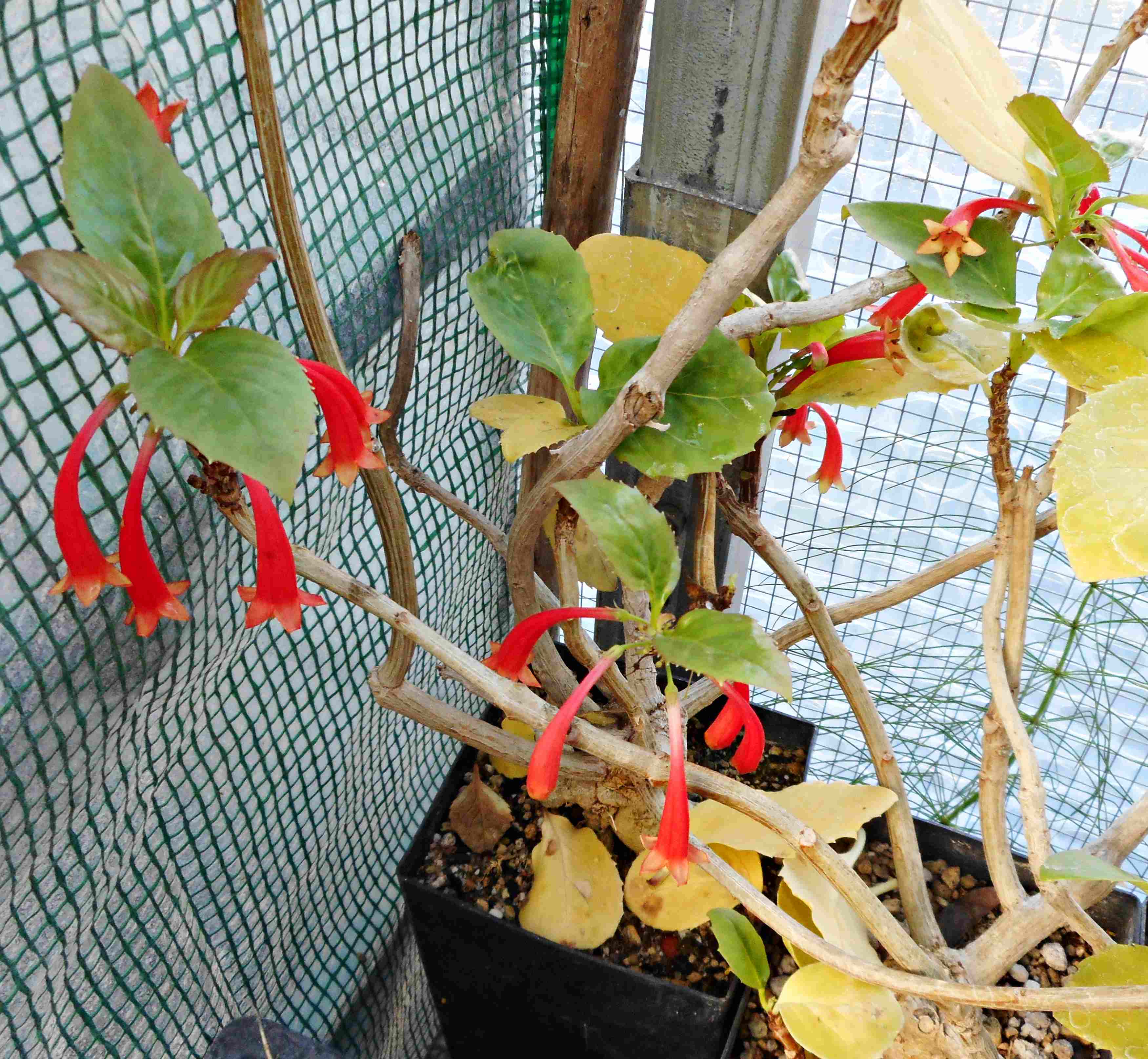
___
Deuterocohnia longipetala
Bromeliaceae. Puya-like multiheaded mounds to 2–4′ made up of rosettes of recurved, toothed, silver leaves. Erect branched inflorescence with tubular yellow flowers. Seed from the dry valleys of northern Peru where it occurs up to 5000′. A beautiful pineapple relative and good Trichocereus companion. Sun and drought hardy. Z9b
[ 8 ] → 2 ~ 3–4″+ plants 5+ years old $16.50 each 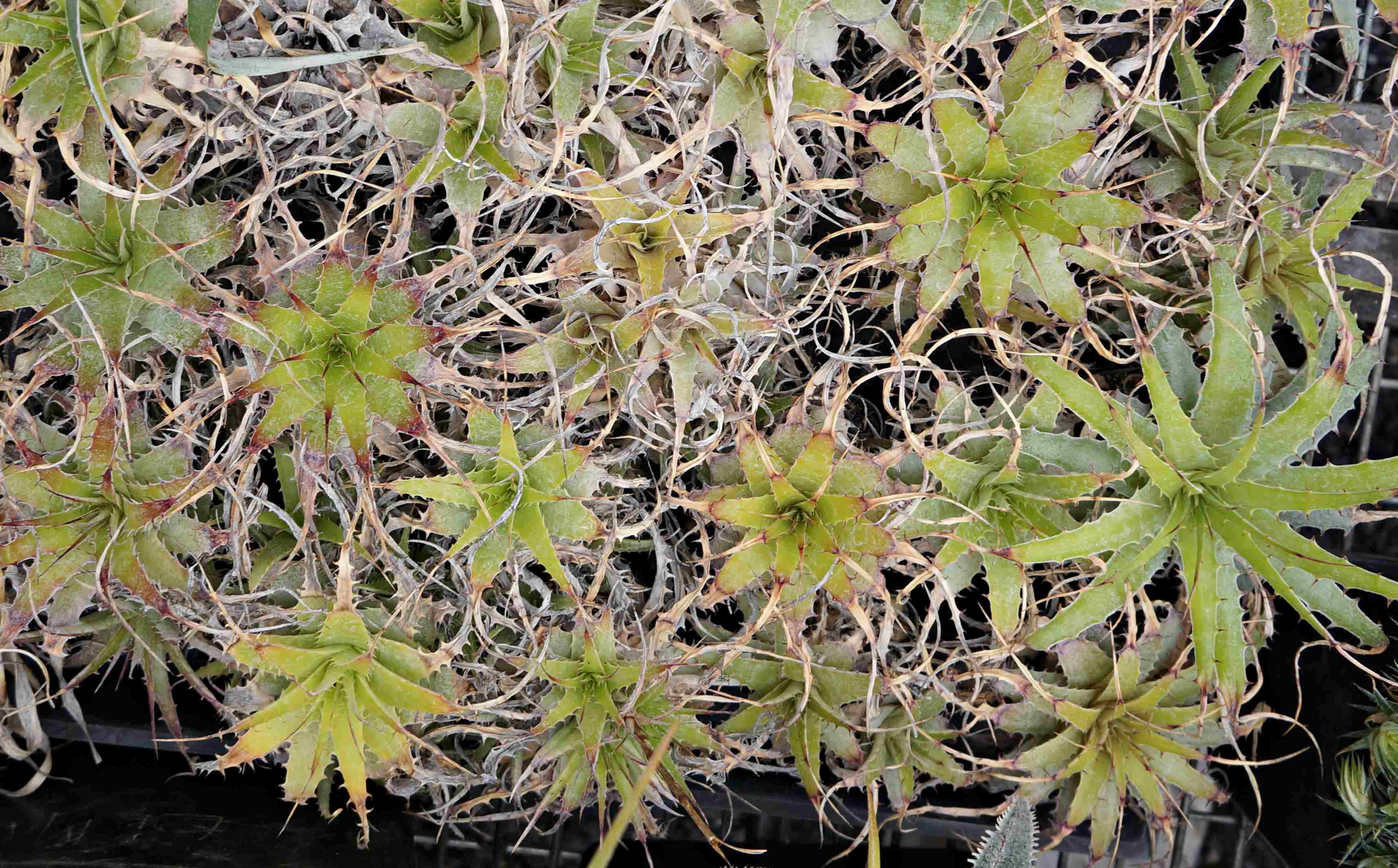
___
Dioscorea sylvatica
Dioscoreaceae. A South African yam species that forms an attractive smooth woody caudex, sometimes branched or lobed. Annual, thin twining vines and lovely heart shaped leaves. Decoctions of the caudex are used for chest conditions, as a blood purifier and ritual emetic. Used topically for rashes and swelling. A significant source of diosgenin that was once used for synthesizing birth control pills. This plant responds well to cultivation and makes an easy and unusual houseplant. Regular succulent care and dry winter rest. Z9a
[ 3 ] → 1 ~ Plant with 1.5–2″+ caudex, 4 years old $18.50
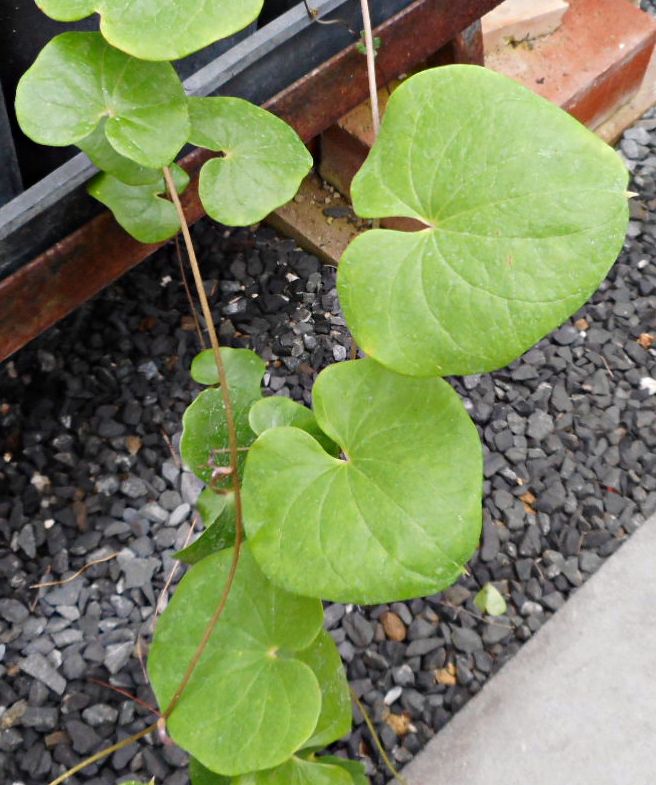
___
Echeveria ballsii
Crassulaceae. Short stemmed, clustering rosettes of slender dark green leaves with red-purple margins and speckles. Peach-red flowers with yellow interior. This rare species from the cloudforests of Columbia was thought to be extinct in the wild until recently rediscovered. This clone collected by Robert Wellens, Masquera, Cundimarcana, Columbia. Easy to grow, Echeveria are natural Trichocereus companions. Z9a?
[ 3 ] → 1 ~ 2–3″ plant $16.50
___
_________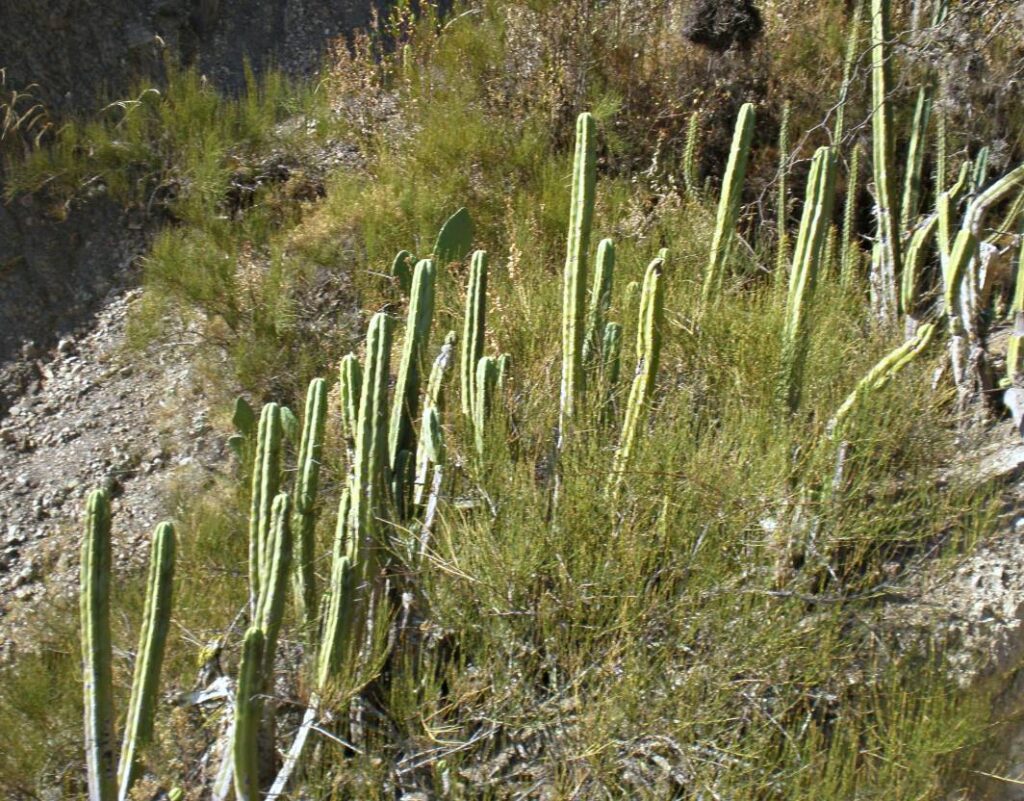 ↑ Ephedra americana growing with Trichocereus bridgesii, Huajchilla, Bolivia ↑
About the genus Ephedra
We became enamored with these primordial plants nearly two decades ago, at some point we were cultivating over 25 species—one of the larger collections we know of. Ephedra is a genus of some 40 or 50 species that belong to the family Ephedraceae, part of the curious order Gnetale (along with Gnetum and the utterly weird Welwitschia). Bizarre ancient plants, “living fossils” with nearly leafless, photosynthetic, jointed stems; from tiny, rock hugging miniatures to large 8’+ shrubs. Small “flowers” (actually just pollen bearing cones) and papery or fleshy berry-like seed cones. Long considered primitive gymnosperms, a link between flowering plants and conifers, but current genetic and fossil studies have brought up a number of unresolved questions, deepening the mystery around this once widespread order of plants. It may be that the Gnetale have long kept their own company and are not closely related to either gymnosperms or angiosperms. Ephedra in their more current incarnation have been here for a long time, at least 120 million years according to current studies. They are now native to arid, sub-tropical, and mountainous regions across southern North America, western South America, Eurasia, and northern Africa. Part of the longevity of Ephedra comes from them being plant extremophiles—they occur in some of the most extreme, inhospitable terrestrial regions—they currently grow in the hottest place on earth: California’s Death Valley, the driest: Chile’s Atacama Desert, they survive the deep freezes of Siberia and the solar exposure and cold of the high mountains, growing at higher elevations than most other plants in the Andes and Himalayas.
These interesting plants have been highly valued by many cultures as food and for their medicinal and stimulant properties. The seeds and “fruits” were eaten wherever the plants occurred, in Mongolia the “fruits” and seed of E. sinica are an important food, being rich in protein, fatty acids, vitamins and minerals. Stem tea of many species is an excellent source of minerals, especially calcium. Many of the Old World species contain ephedrine alkaloids, powerful antihistamines and psychoactive CNS stimulants. The presence of these alkaloids in significant amounts in the American species is in some doubt but they do contain beneficial antioxidant proanthocyanidens, cyclopropyl amino acids and kynurenates known to be antimicrobial and stimulate neuroactivity, which may account for the psychoactivity of the New World species, rather than ephedrine alkaloids. Several of the species from southwestern USA have the distinction of once being a plant ally to the Mormons and the plants are still referred to a “Mormon Tea”, though this relationship is disappearing. Here in California, the Chumash used E. viridis and other species to inspire “sacred dreams”. Ephedrine rich Ma Huang (primarily E. sinica, but also E. intermedia, E. equisetina, E. minuta, and E. minima/monosperma) has been widely used in Chinese medicine for 5,000 years to safely treat fever, nasal congestion, and asthma. Because of misuse of purified ephedrine in diet and stimulant/aphrodisiac products, the FDA has severely restricted products containing ephedrine. This has unfortunately lead to scarcity of the whole herb, which, unlike using the isolated ephedrine, rarely gives rise to side-effects. Fortunately it is still acceptable to grow the plants and benefit from their properties from the safety of your garden. Ephedra has even been suggested as a source of the ancient primordial drug-plant Soma. The discovery of Ephedra pollen at a burial site in Iraq has led to speculation that medicinal use of this species by man dates back at least 60,000 years!
We’ve had many opportunities to admire some of the poorly defined (both taxonomically and chemically) Andean species in Peru and Bolivia. Ephedra americana is common in the inter-Andean valleys, between about 8,000–12,500′, growing on steep slopes, rocky areas, and dry-forests to the edge of cloud-forests. These plants are often found growing with Trichocereus cacti and make excellent companion plants in cultivation. There seems to be broad variety of form, from upright bushy plants to more scraggly, almost decumbent ones. The sweet red “berries” vary from small to nearly grape size, and are always a welcome snack when encountered. Between about 12,000–16,000’+ occurs the diminutive E. rupestris, usually found growing on rocky outcrops; in the lower elevation of its range it may reach 1–2′ tall, but higher up it becomes an adorable miniature to no more than 1/2″ high, creeping through the cracks of rocks. In the Cordillera Negra of Peru there is a dense clumping form of this species (possibly even a distinct species) that develops into low, dense mounds to several feet across. Both Andean species are highly regarded in ethnomedicine for the kidneys and liver, as a blood cleanser and urinary tonic, digestive aid, antiseptic, for bruises and fractures, fever and arthritis. There are several additional species that occur in Chile and Argentina. Anecdotal reports suggest that E. breana from the Atacama Desert may be rich in ephedrine alkaloids or some other neuroactive secondary compounds, but to our knowledge no analysis has been done.
Ephedra are easy to grow, usually very cold hardy, sun and drought tolerant. Unlike true succulents, they cannot survive long periods without water if confined to a small pot, they are most drought hardy when planted in the earth so they can send their long roots down deep. Most are also tolerant of fairly high rainfall as long as they have a gritty well draining soil. Any succulent-type soil mix (of 25–50% pumice/perlite) will do; they tolerate nutrient poor soil but grow best when periodically fed with a balanced fertilizer. Ephedra are excellent landscape plants for a surprising diversity of environments, they are especially useful in arid and cold regions, and should be further explored as necessary additions to any edible/medicinal garden. The low growing Ephedra make hardy groundcovers, the smaller species make interesting rock garden subjects and are well adaptable to container culture. Ephedra are natural companion plants to many cacti, you may try cultivating the smaller species around the base of your columnar cacti.
We encourage you to try growing any Ephedra species—rekindle a relationship with one of humanity’s archaic plant allies. These venerable, ancient kin whisper to us of another age when life ran riot on a grand and gargantuan scale. These are plants that likely provided nourishment and medicine to our earliest mammalian ancestors as they scurried beneath the lumbering feet of dinosaurs. There is still much to learn about, and from, our planet’s ancient lifeforms!
We currently grow several dozen Ephedra species, we hope to make more of these available downstream. Inquire for additional species.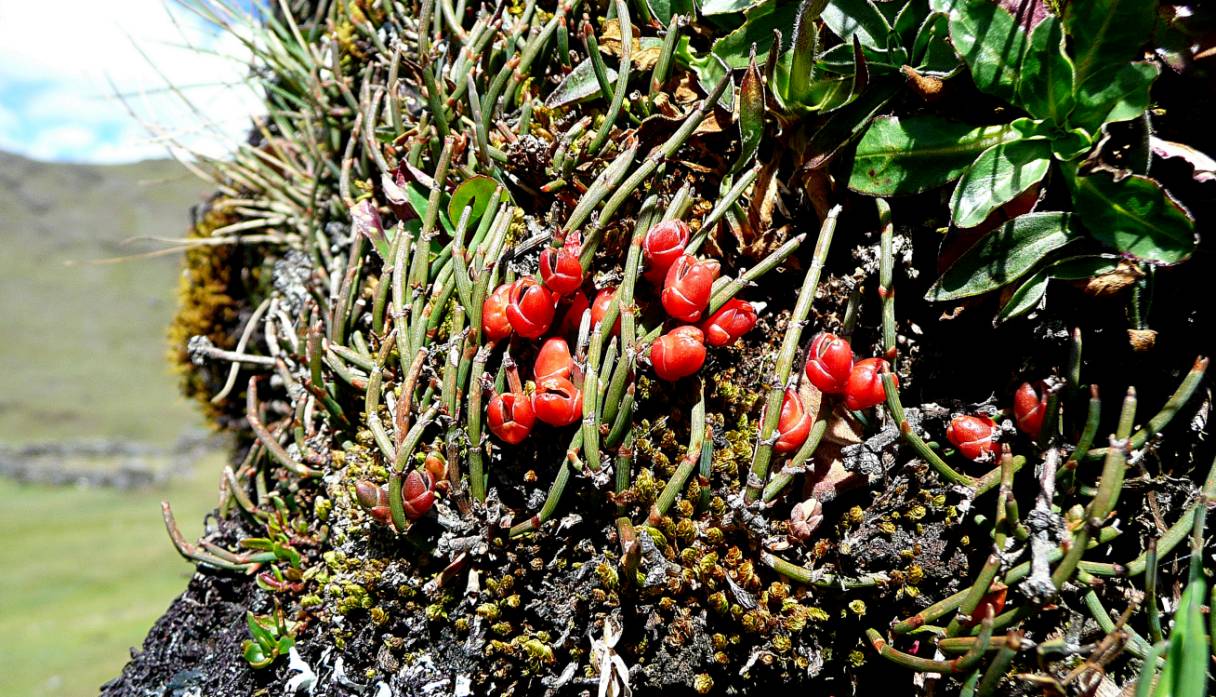 ↑ Ephedra rupestris growing near 13,500′, below Ipsay Pass, Cusco Dept., Peru ↑
___
Ephedra americana BK09509.11 “Pinku pinku” ♥ New ♥
Upright leafless stems to 3–4’+. Sweet edible red fruit, these plants had some of the largest and by far the highest density of fruit of any of this species we’ve seen. An important medicinal used for kidney and liver, as a blood cleanser and urinary tonic, digestive aid, antiseptic, for bruises and fractures, and for fever and arthritis. Growing with a lovely stand of Trichocereus santaensis, west side of the Santa River, near Olleros and the ancient road that connects the Callejon de Huaylas with Chavin. Ancash, Dept., Peru, 11,000′. A great drought hardy choice for the edible landscape and companion plant for your Trichocereus. Z8?
1 ~ 12″+ plant 3+ years old $44.50* SOLD
___
Ephedra campylopoda
Large and bushy species, 4–6’+ tall. Highly ornamental, the stems are an attractive blue-gray, turning mauve to orange-pink when drought or sun stressed. Big red fruits, quite prolific, and meaty seeds. Our plants are grown from wild seed, collected on the volcanic Methana Peninsula, Peloponnese, southern Greece. Once known as “food of Saturn”. Medicinal, but does not contain ephedrine. The abundant edible fruit and seeds make it an interesting choice for the edible landscape. Drought hardy. Z8b or below.
[ 6 ] → 1 ~ 4–6″+ plant 2+ years old $16.50 SOLD
___
Ephedra chilensis “Pingo-pingo”
Ephedraceae. Upright jointed shrub 1–3’+. Greenish flowers, white edible berries with a honey flavor. Native to the high mountains of central Chile. A traditional urinary tonic and aphrodisiac. Contains antioxidant proanthocyanidens. Easy to grow, makes a great landscape specimen, sun and drought hardy once established. It’s been some years since we’ve offered this desirable species. Z7a
1 ~ 12″+ plant 5+ years old $36.50 SOLD
___
Ephedra fedtschenkoae ‘Ladakh’ ♥ New ♥
A delightful miniature rhizomatic plant that forms tufts of blue-green stems 2–4″ high, eventually producing mats or small cushions. Shiny, reddish fruit. Among the tiniest Ephedra species. The plant takes on lovely orange and purplish hues during weather extremes. Seed collected by Pavelka from plants occurring in the dry stony slopes of the Ladakh Range, India, near 11,500′. One of the poorly understood and ephedrine-rich Asian alpine species. Readily adaptable to low elevations, if slow growing. Best cultivated in a gritty, mineral soil in a pot, trough or rock garden border. This superb dwarf plant could make a good groundcover companion to cacti. Rooted divisions. First offering outside auction. Z5?
[ 3 ] → 2 ~ 2″+ plants $33.5o each SOLD
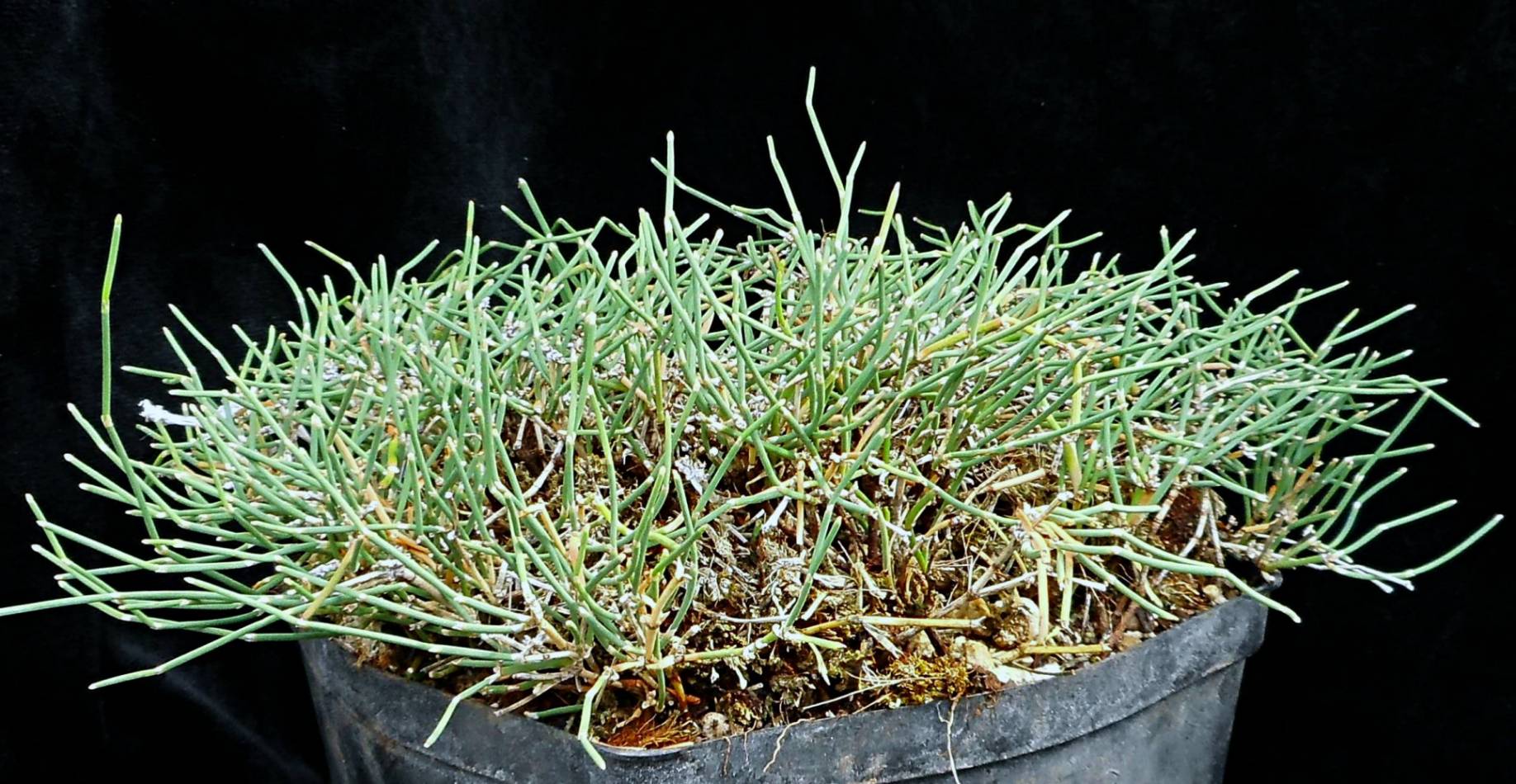 ↑ Mother plant ↑
___
Ephedra monosperma ‘Shen Shan’ “Dan Zi Ma Huang”
A mat-forming dwarf plant with jointed, leafless stems to 3–5″+ high. Yellowish flowers and carmine edible berries. A Holubec seed collection from the high mountains of Shen Shan, Sechuan, China, 13,000′. E. monosperma is sometimes considered a synonym for E. minima, but with diverse plants occurring in remote terrain over a vast range, the taxonomy is not so clear. Rich in stimulating ephedrine alkaloids and used in Oriental medicine for thousands of years. Relatively easy to grow, prefers gritty, well draining soil and bright light, but dislikes baking summer sun. Perfect for the rock garden or as a hardy groundcover. Consider planting it around the base of your cacti. Our first offering of this fantastic creeping plant in nearly 15 years. Rooted divisions. Z4/5?
[ 5 ] → 1 ~ 3–4″+ plant $24.50 SOLD
___
Ephedra aff. pulvinaris JJH0709113
A wondrous miniature species—a creeping plant that produces tiny tufts of bluish stems to 1–4″ high, eventually forming low cushions to 12″+ wide. Yellowish “flowers” and small orange-red fruit borne en masse. Halda says it is the tiniest Ephedra of them all. Stems turn an attractive reddish & yellow during winter for us. Seed of this extreme rarity was collected by Josef Halda in the remote alpine moraines of East Pamir, Kirghizia, Tadjikistan, at an altitude of 15,500′. Said to be rich in ephedrine alkaloids. Slow growing but adaptable to low elevation. Best grown in a gritty, mineral soil in a pot, trough or rock garden border. This awesome tiny plant makes a good cactus companion. Rooted divisions. Z4/5?
[ 8 ] → 1 ~ 2″+ plant $38.50 SOLD
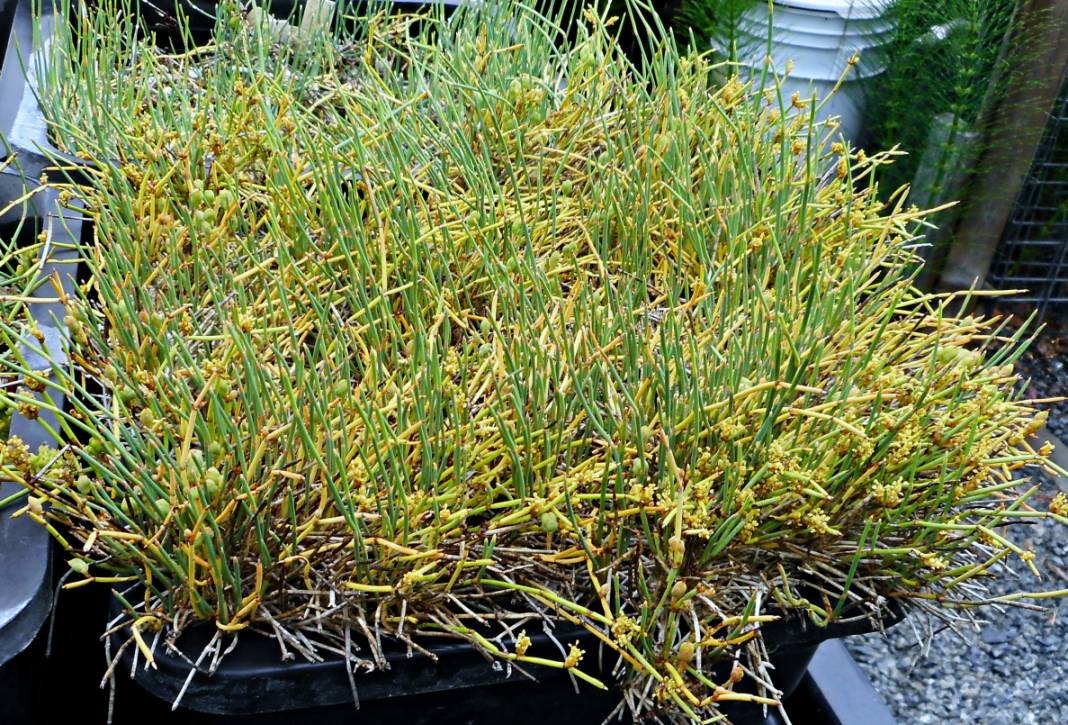
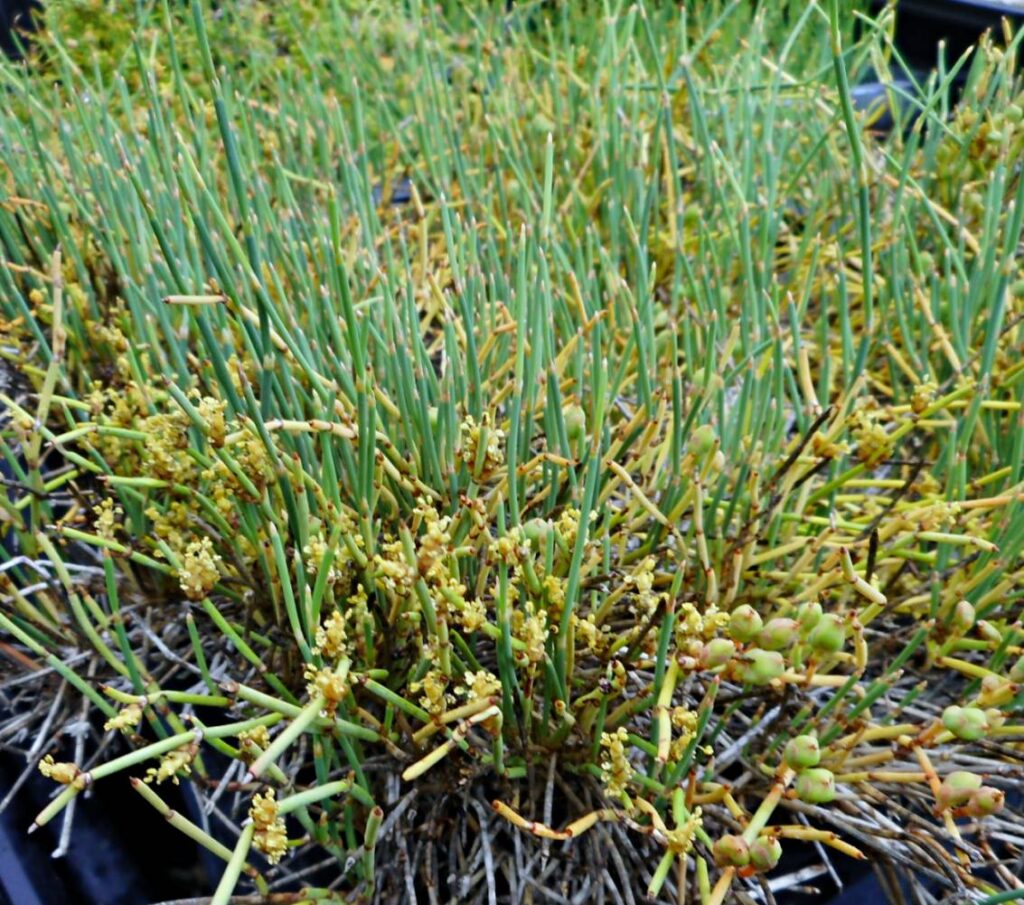 ↑ Mother plant ↑
___
Ephedra sinica “Ma Huang” “Zhegergen”
Small, leafless shrub to 18″ tall. Red fleshy edible fruit. This primitive gymnosperm is native to dry, rocky mountain slopes of China and Mongolia, up to 5,000′. The fruits are an important food in Mongolia, being super rich in protein, fatty acids, vitamins and minerals. Also known as “Cao Ma Huang”, the herb has been widely used in Chinese medicine for 5,000 years to treat fever, nasal congestion, and asthma. Contains significant amounts of ephedrine alkaloids, powerful antihistamines and psychoactive CNS stimulants.. Because of misuse of purified ephedrine in diet and stimulant/aphrodisiac products, the FDA has severely restricted products containing ephedrine. This has unfortunately lead to scarcity of the whole herb, which, unlike using isolated ephedrine, rarely gives rise to side-effects. Fortunately it is still acceptable to grow the plant and benefit from its medicinal properties from the safety of your garden. Easy to grow, sun, cold, and drought tolerant. Z5b
See our current Plant Auction-Fundraiser for an older specimen plant. 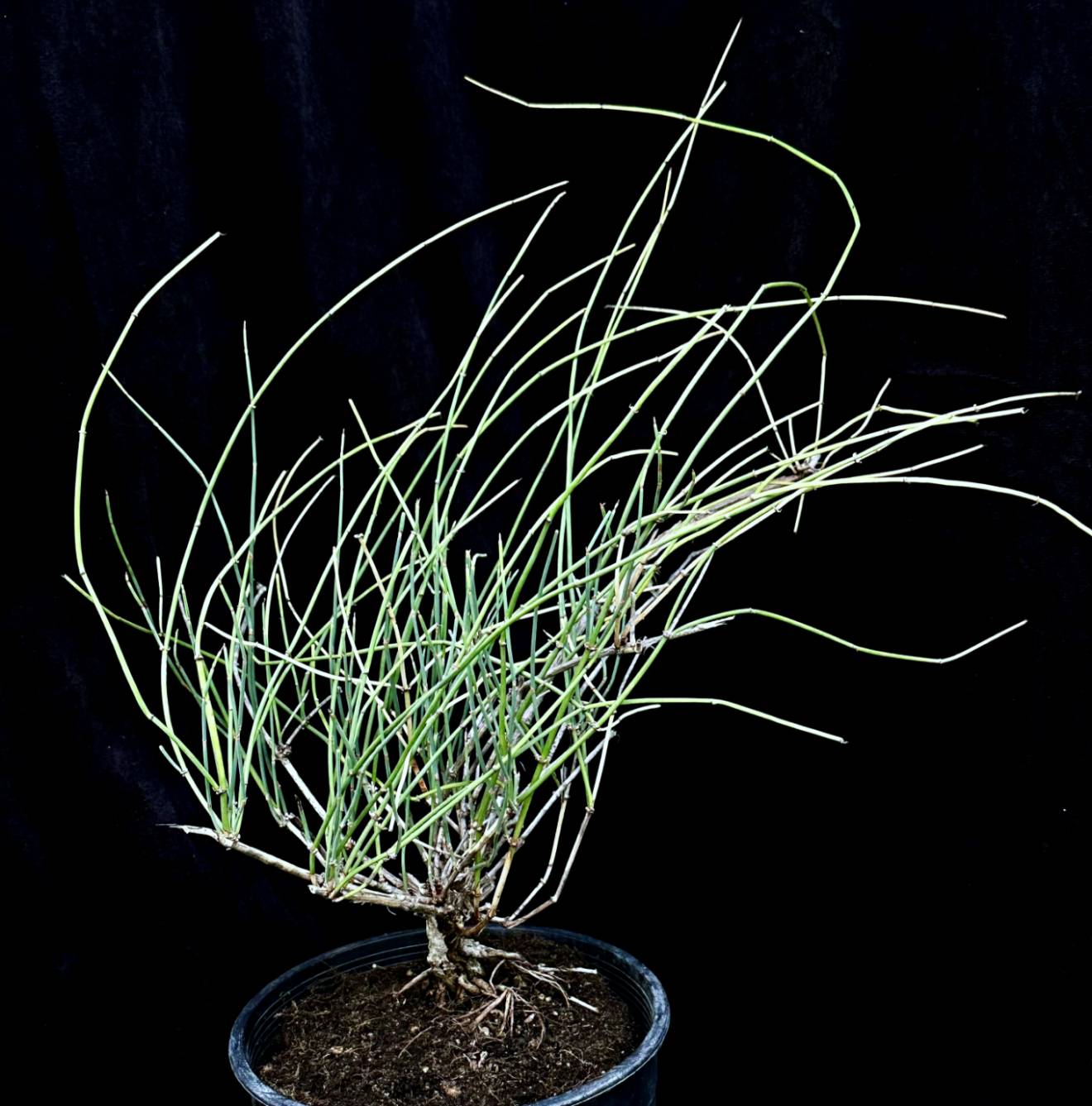
___
Erythrina flabelliformis ‘Skeleton Canyon’ “Chilicote” Colorin”
Fabaceae. Pachycaul tree 10–30’+. Beautiful, smooth grey bark with striations of white and green. Deciduous trifoliate leaves and spined stems. Many flowered racemes of brilliant bright red flowers in the Spring. Red to orange or yellow seeds. Restricted areas of southern Arizona, new Mexico and remnant dry forest throughout northern Mexico and Baja. Seed from Skeleton Canyon, Hidalgo Co., NM. The seeds are often used in jewelry, though they are quite toxic. Small amounts are used medicinally. There is speculation that the seeds may have once been used as a psychoactive additive to maize beers by the Chiricahua Apache. Makes a great bonsai to grow alongside your Bursera and other caudiciform succulents. Z9b/10a
[ 6 ] → 2 ~ 6″+ plants 3+ years old $18.50 each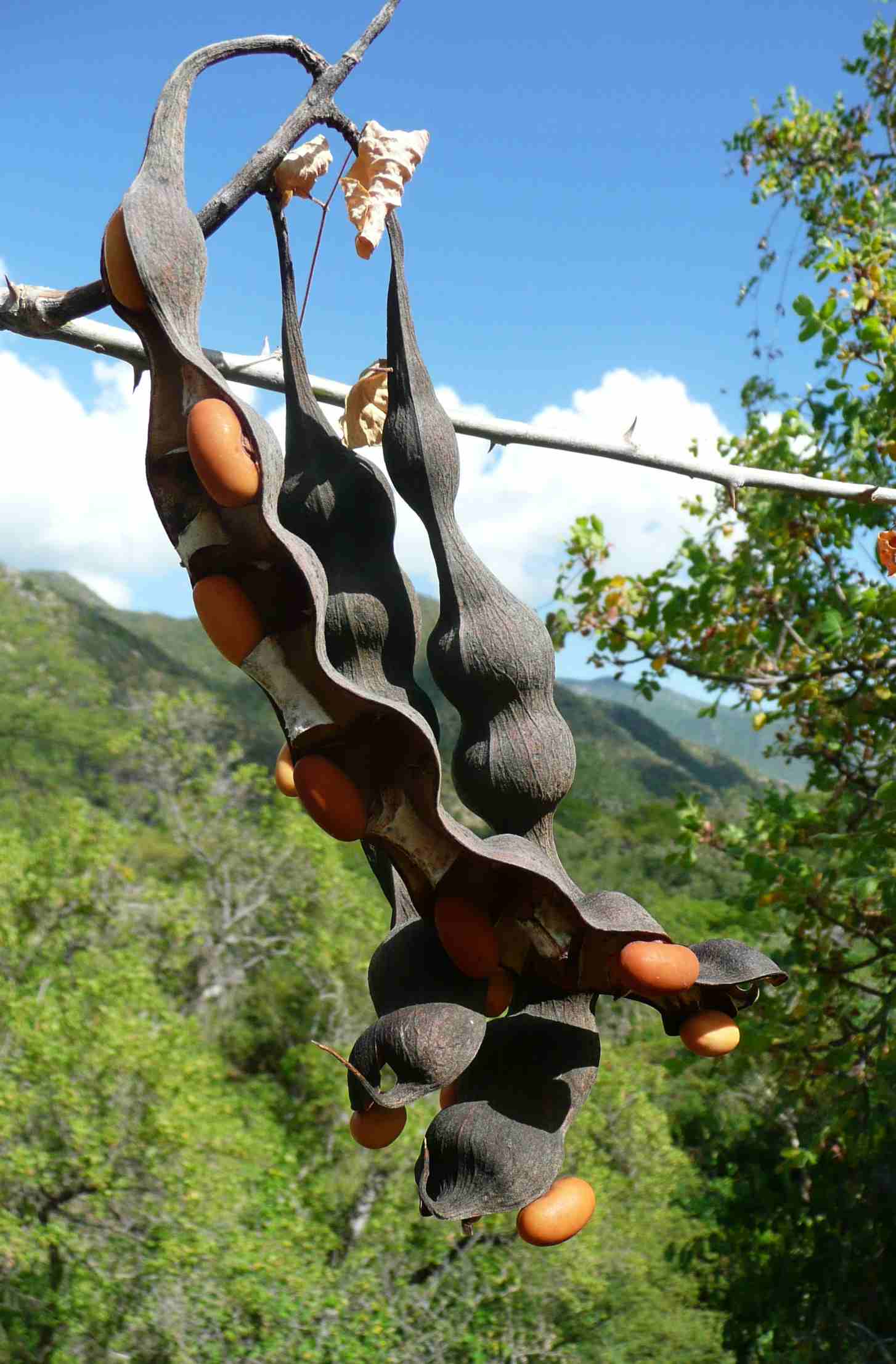
___
Fockea edulis “Bergkambroo”
Asclepiadaceae. Develops a large warty caudex/tuber up to a foot in diameter and several feet long. A mass of twining stems arise from the top of the caudex. Small unusual star like flowers. This oddity has a long history as an important food and water source for the tribal people of South Africa and has contributed over the ages to human survival in the Kalahari desert. The caudex is eaten fresh, baked like sweet potato and made into a chunky jam. Easily grown and a favorite among caudiciphiles. Tolerant of mild frost if well mulched. Nice specimens that have been underpotted for years, encouraging unique root/caudex form. Z9b
[ 4 ] → 1 ~ Plant with 5-6″+ tall, 1″+ diameter caudex, 7+ years old $36.50 SOLD
[ 8 ] → 4 ~ Plants with 0.75–1.5″+ caudex, 3+ years old $22.50 each
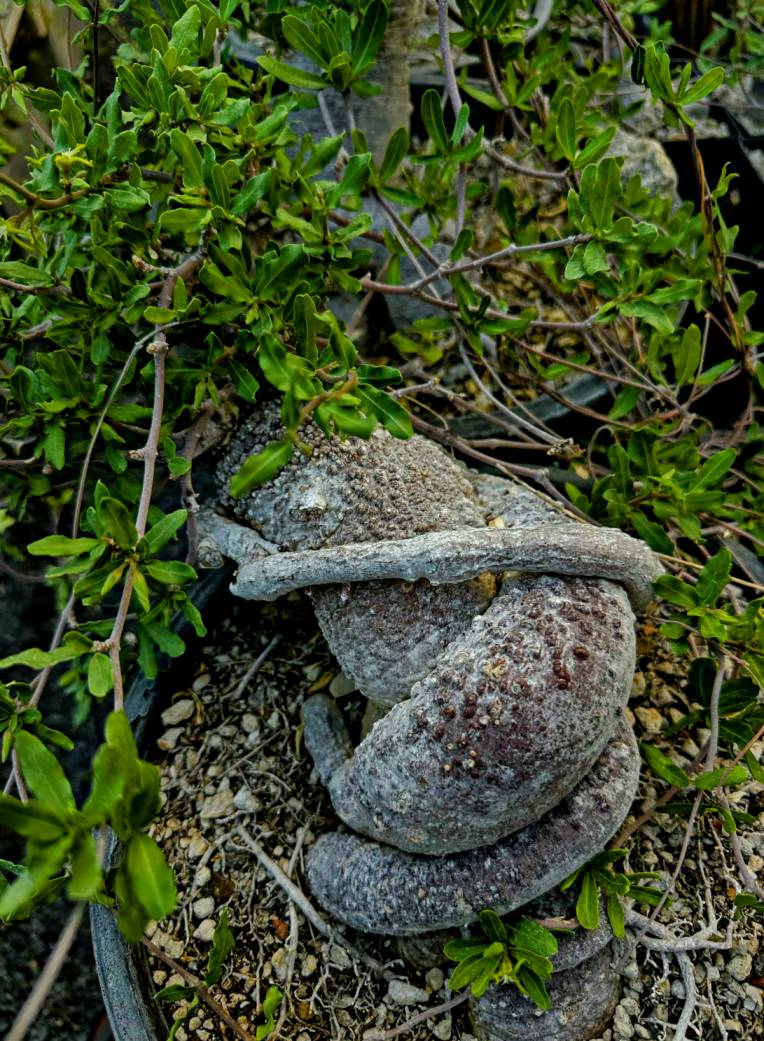 ↑ An old specimen example ↑
___
Geissorhiza corrugata
Iridaceae. Dwarf bulb with very cute, blue-green, spirally curled slender leaves to 2″+. Lovely, bright yellow crocus-like flowers. Shale slopes, Roggeveld Center, South Africa. Super easy to grow and adaptable to the California seasons—a winter grower, give it gritty soil and dry summer rest and bright sun for maximum leaf curliness! Z8a
[ 12 ] → 6 ~ Plants/bulbs 4+ years old $14.50 each September SALE! 3 for $33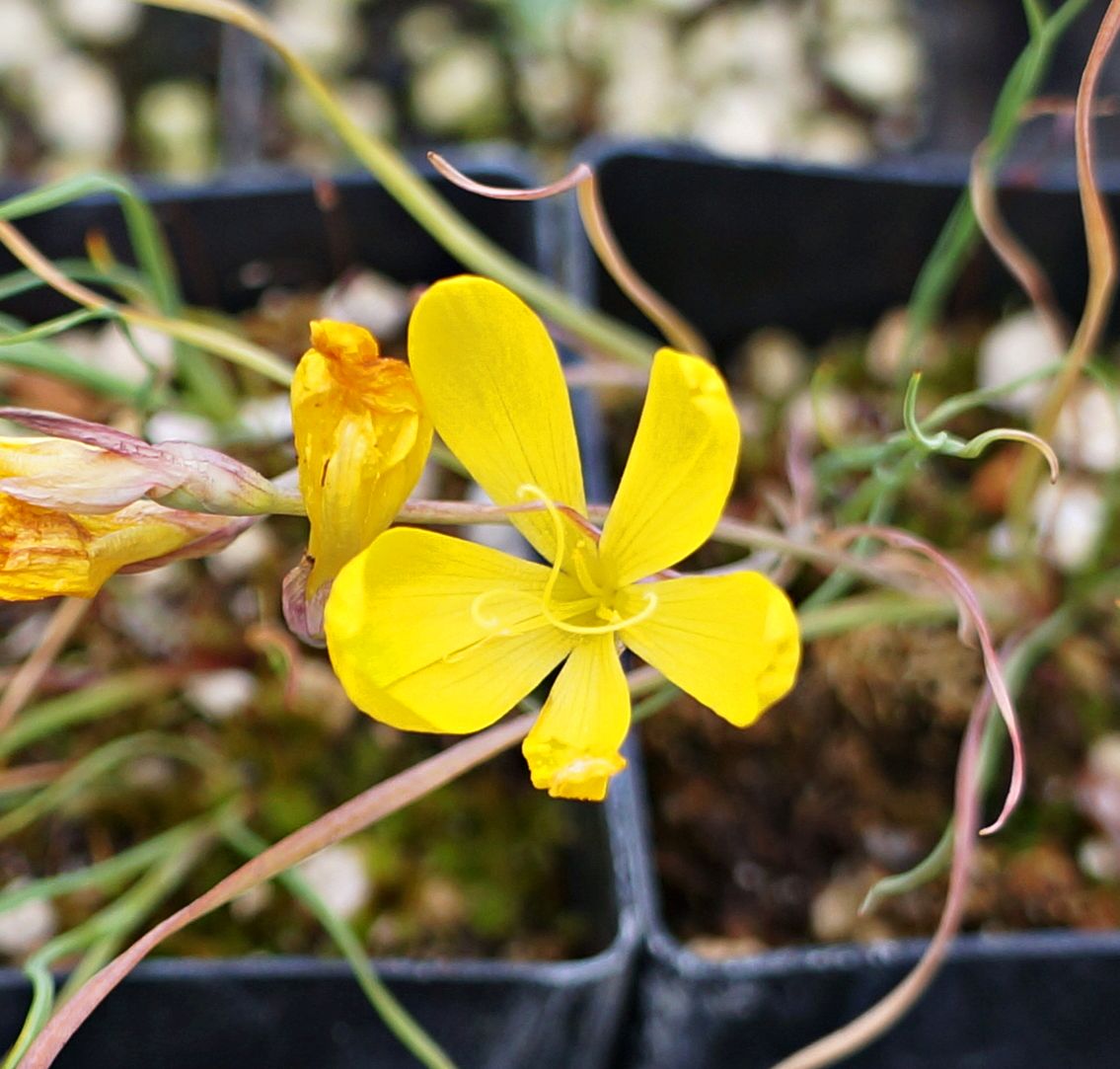
___
Hechtia montana BK101105.4 “Mescalito”
Bromeliaceae. A pineapple-relative that forms attractive, dark green clustering rosettes to 1–2′ with recurved, slender toothed leaves with silvery undersides. Leaves turn reddish with heavy sun exposure or prolonged drought. Upright flower stalks to 4′ with hundreds of small white flowers. Our seed accession from robust populations that formed large colonies of dozens of heads on the steep granite cliffsides near 3,300′, Dionisio Canyon, Cape Mountains, Baja California Sur, Mexico. A perfect companion plant to grow with dry forest associates such as Bursera microphylla & odorata, Pachycereus pringlei, Ficus brandegeei & palmeri, etc. Easy to grow, tolerant of drought and neglect, in fact these plants have been underpotted for over a decade now with little complaint other than the outer leaves drying. Ready for transplanting and the attention they deserve! Z9a/b?
[ 3 ] → 2 ~ 3–4″+ plants 12+ years old $24.50 each
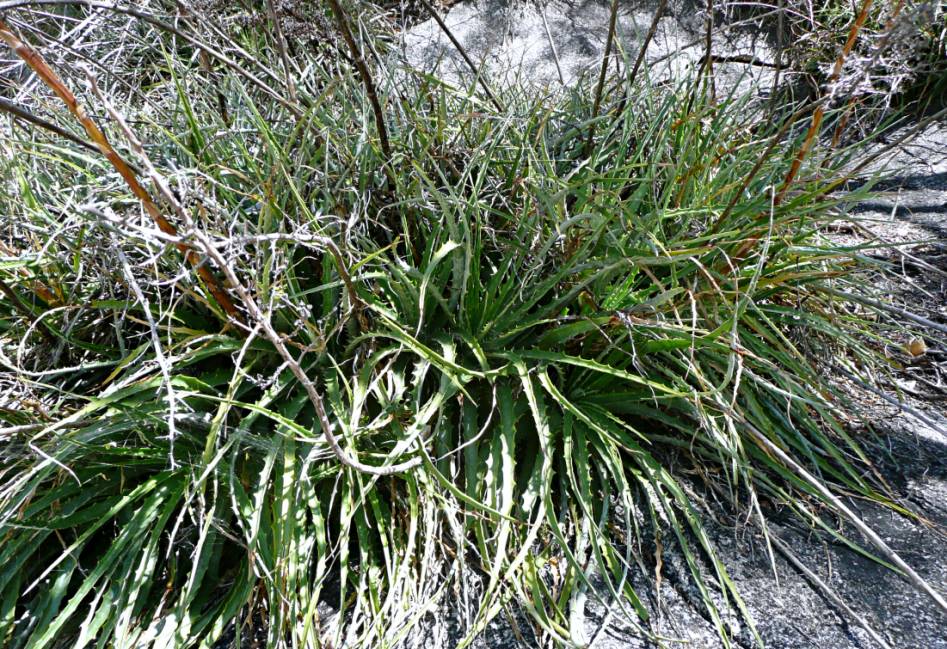
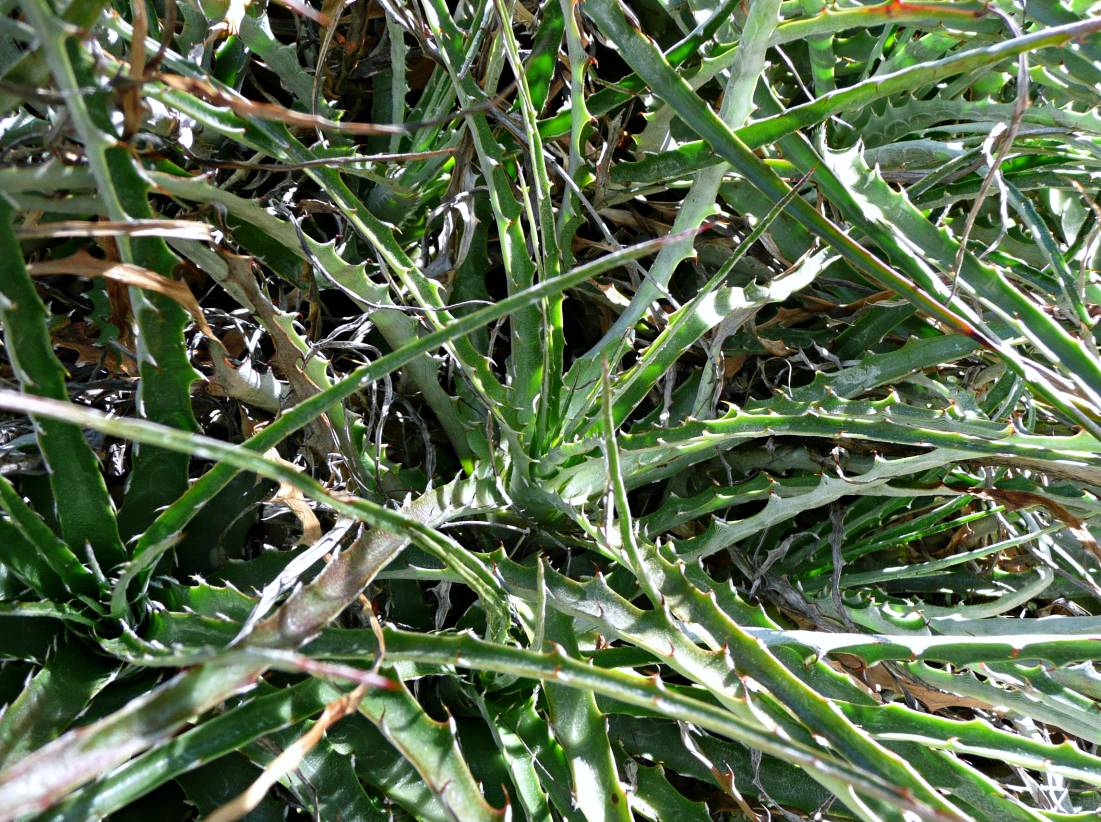
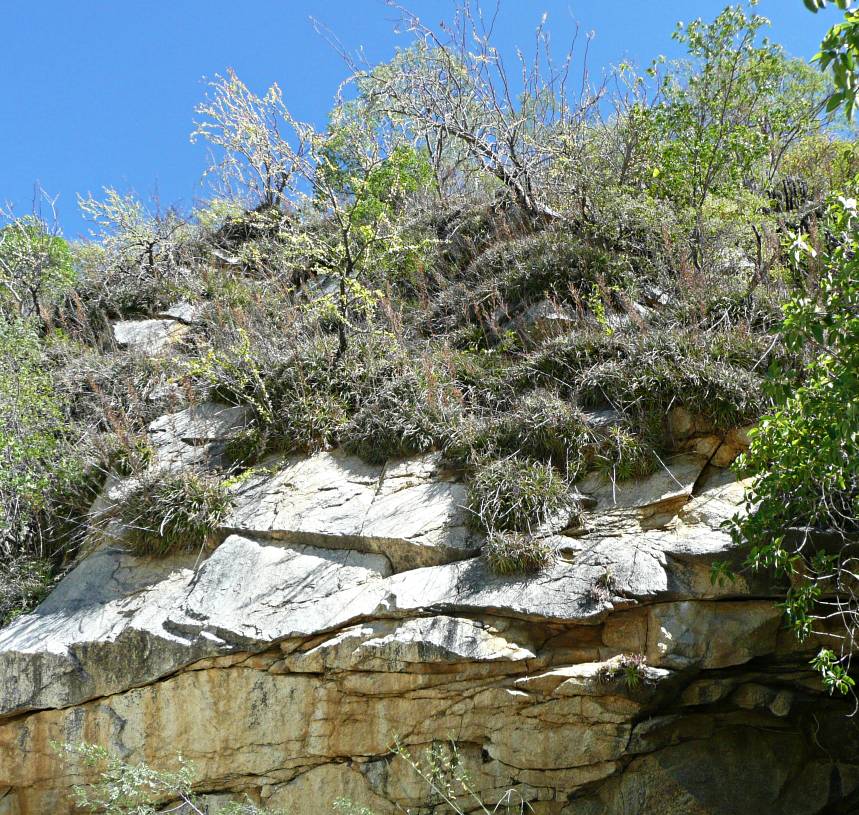
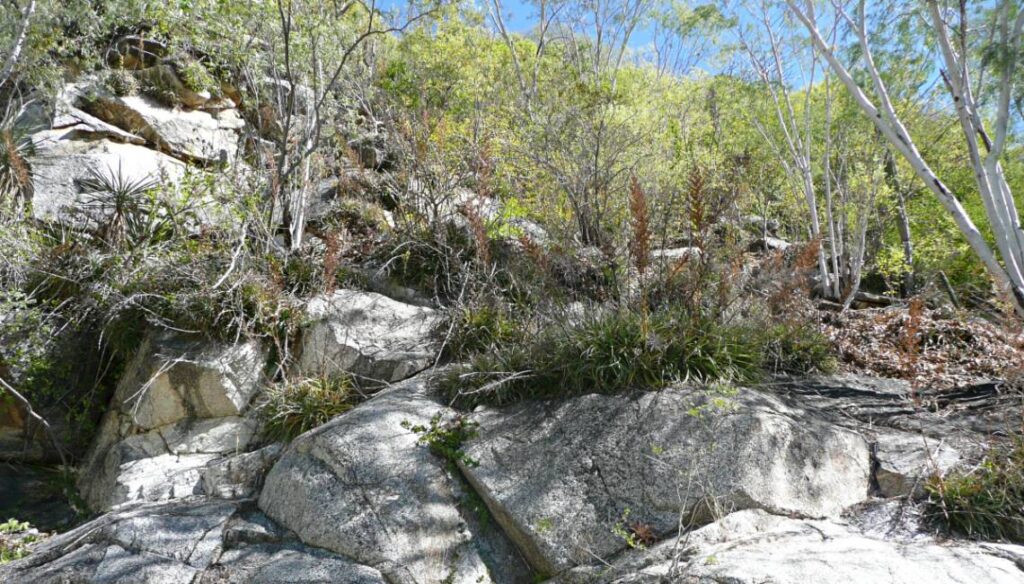 ↑ Hechtia montana in habitat, Dionisio Canyon, Cape Mountains, Baja California Sur ↑
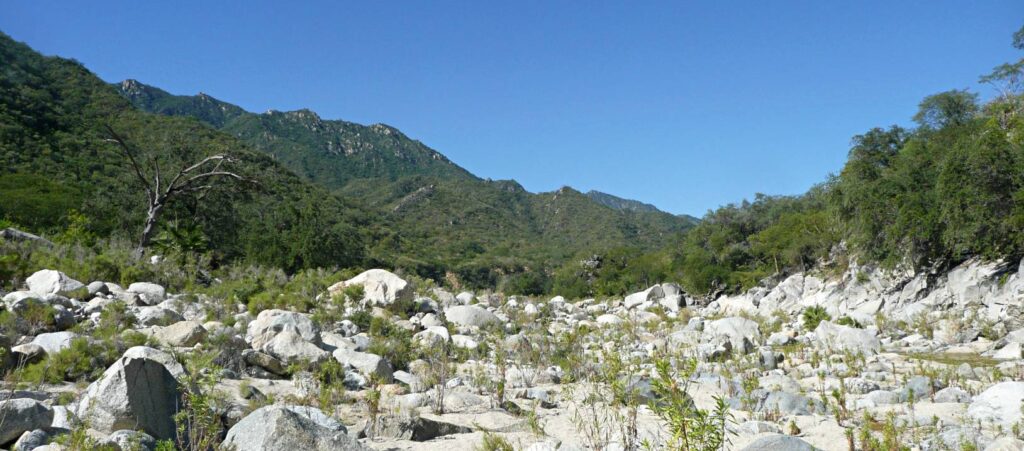 ↑ Dionisio Canyon, Cape Mountains, Baja California Sur ↑
___
Hechtia perotensis?
Forms a colony of compact 12″+ rosettes. The beautiful, slender silver leaves are rigid, erect or recurved and thorned along the margins. If the identification is correct, it should have a flower stalk to 5′ with greenish yellow blossoms. A recently described species, practically unknown in cultivation. Native to the dry rocky slopes of Puebla and Veracruz, Mexico up to 8000′. We’ve yet to test its possible cold hardiness. Long underpotted plants ready for some attention. Great companion for other dry forest species and even Trichocereus. Z9a?
[ 4 ] → 2 ~ 3–4″+ plants 5+ years old $17.50 each September SALE! $15 each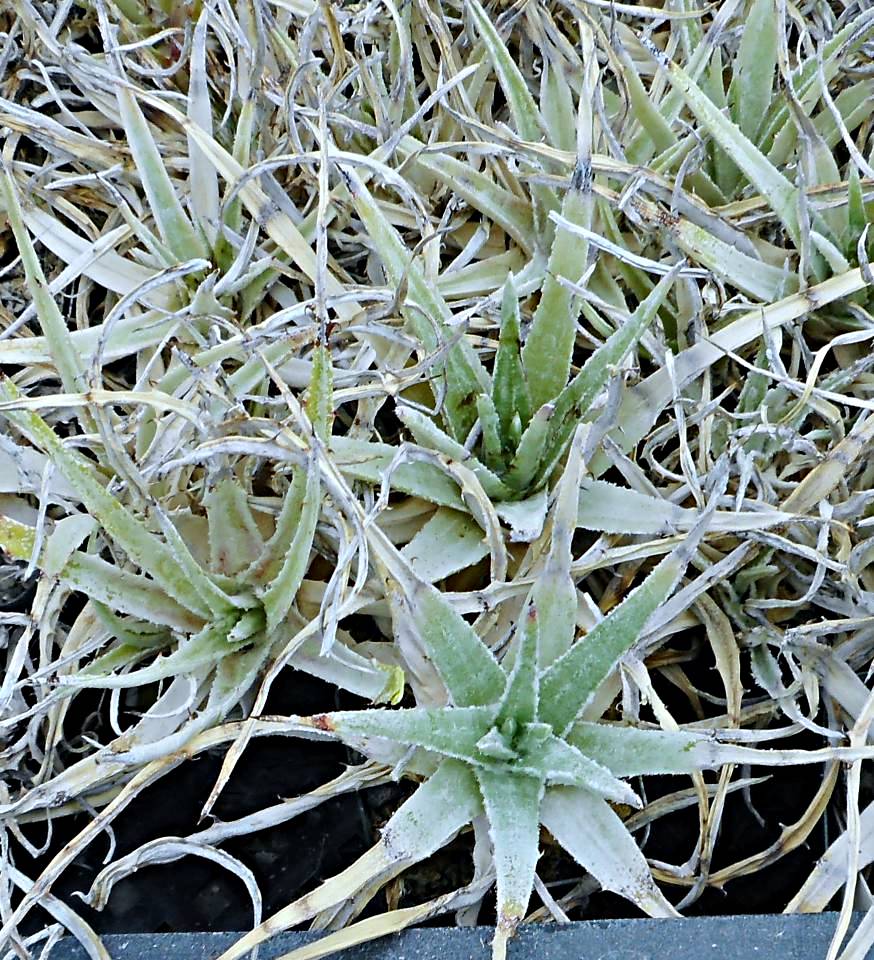
___
Hechtia sp. ‘Rio Zapotitlan’
Lovely terrestrial pineapple-relative. Rosettes of highly attractive, long, recurved, deep green leaves with silver flecking; takes on red and purple coloration in strong light. Large, curved, reddish marginal spines. Seed from Puebla, Mexico. An attractive unidentified plant–possibly a new species. Good companion for columnar cacti. Z9b/10a?
[ 6 ] → 2 ~ 3–4″+ plants 5+ years old $16.50 each 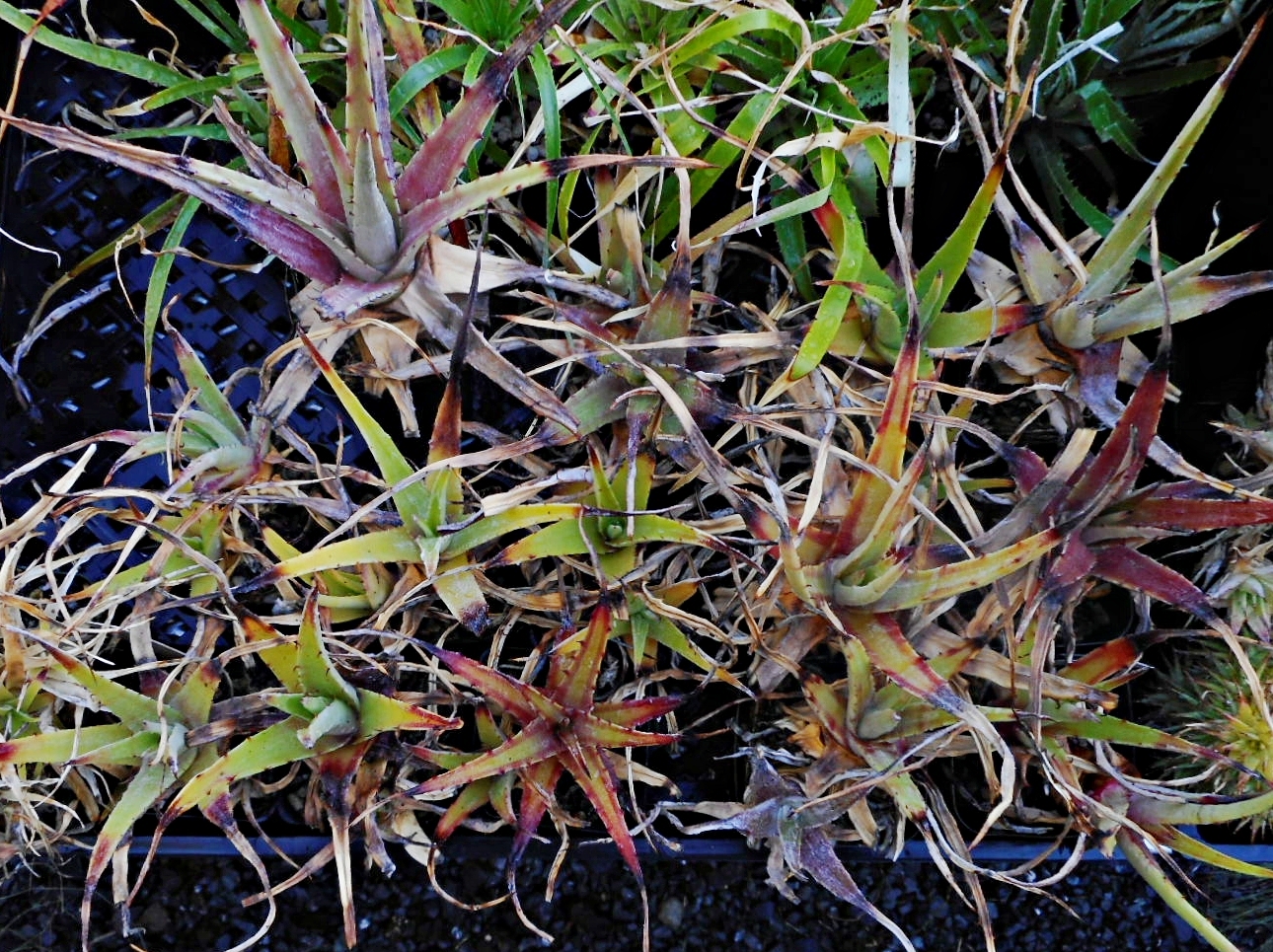
___
Ipomoea pubescens BK08518.9
Convolvulaceae. Perennial caudiciform roots, annual vine to 6’+. Furry trilobed leaves. Shiny, deep blue morning glory blossoms. Our collection, Pisac, Cusco, Peru, near 10,000′. Sparsely distributed from Mexico to Argentina. This is the first introduction of genetics from the Andes into cultivation. Should be hardy if well mulched. The last plants we have to offer of this wonderful species. Z9a?
[ 4 ] → 1 ~ Plant with 2″+ caudex, 5 years old $24.50 SOLD
___
Jacaratia corumbensis “Cipoy”
Caricaceae. An awesome papaya relative—an edible pachycaul shrub to small tree, 3–10’+ tall, with a bloated caudex base to 12″+ diameter that tapers to a slender trunk. The branches develop odd swollen nodes where they connect to the main stem. Forms huge tuberous roots up to several feet thick, reported as weighing up to 500+ pounds! Drought deciduous, digitately compound leaves. Small, dioecious, green/white flowers; edible, miniature papaya-like fruit to 1–3″, turning yellow to orange-pink with red stripes when ripe. Known from the dry forests of northern Argentina, south-east Bolivia, south-west Brazil, and Paraguay. The fruit is cooked as a vegetable, green or ripe. The tuberous roots are reportedly edible raw. Treat similar to Burseraceae in cultivation—a deep pot, succulent soil mix, and a dry winter rest. Easily bonsaid, as the plant matures it can be lifted and the large bulging roots partially exposed for their esthetic allure. Very drought hardy, protect from frost. Unsexed seedlings already forming fat little caudexes. Z10a
[ 8 ] → 2 ~ 5–7″+ plants 2-3 years old $26.50 each September SALE! 2 for $45
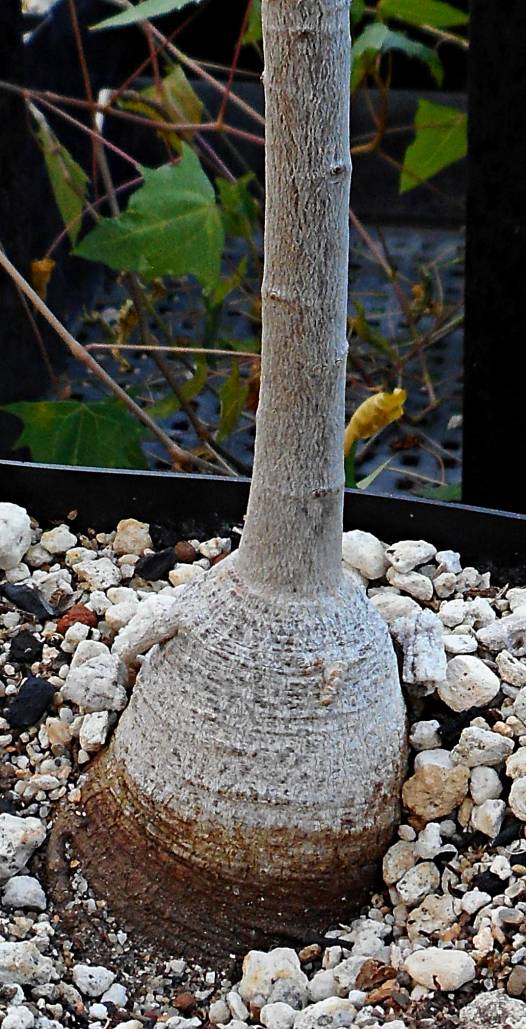 ↑ Caudex base of older specimen ↑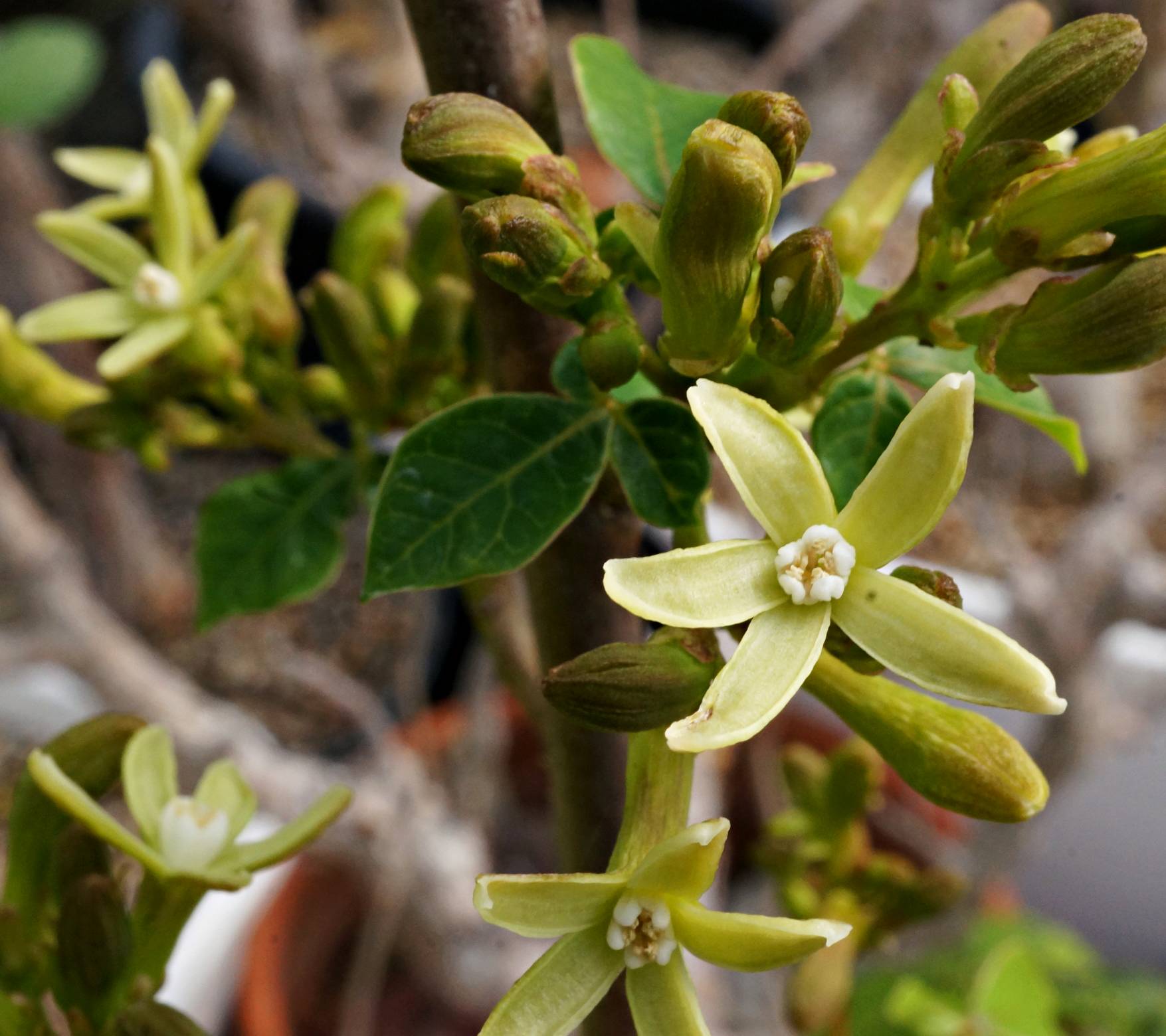
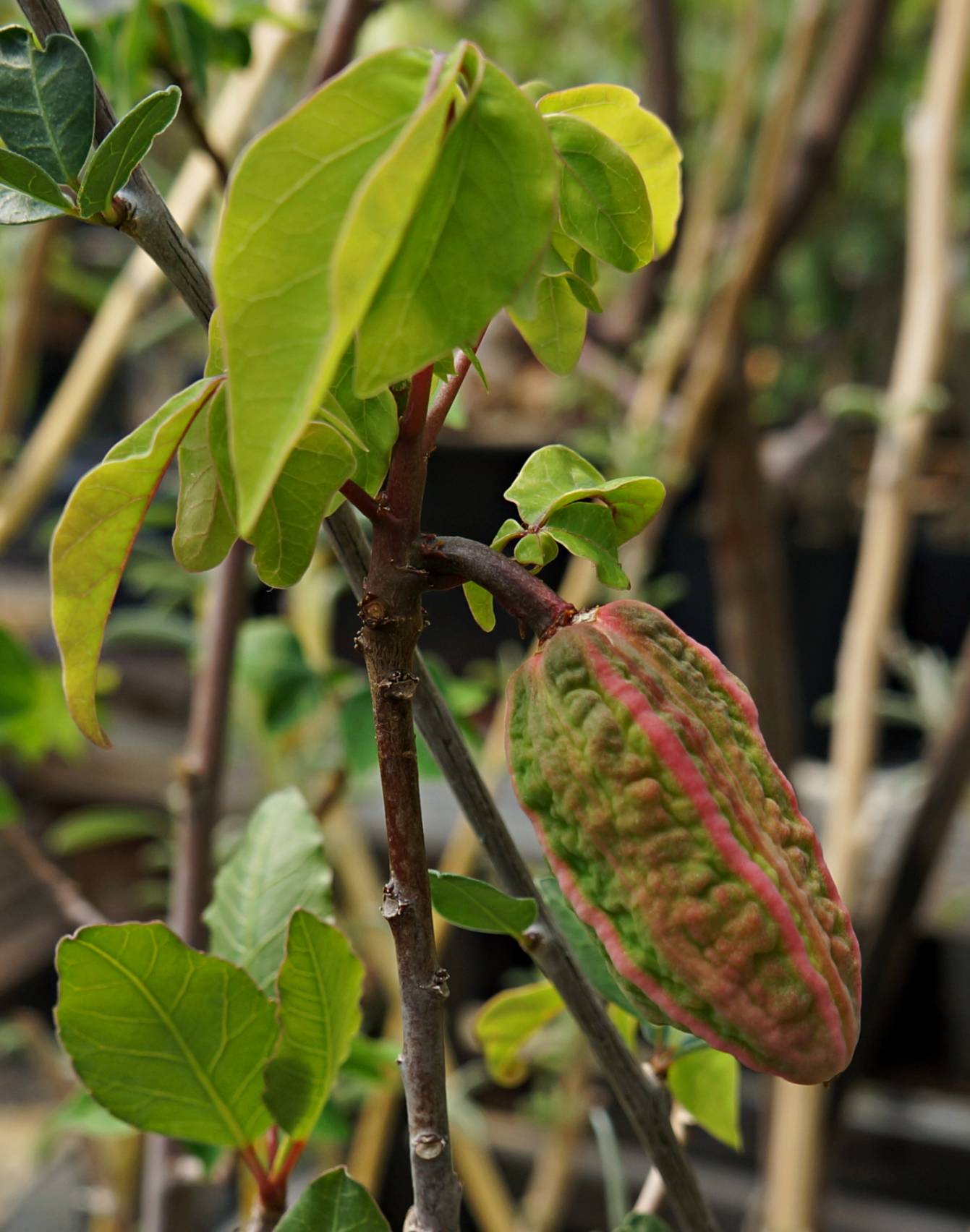
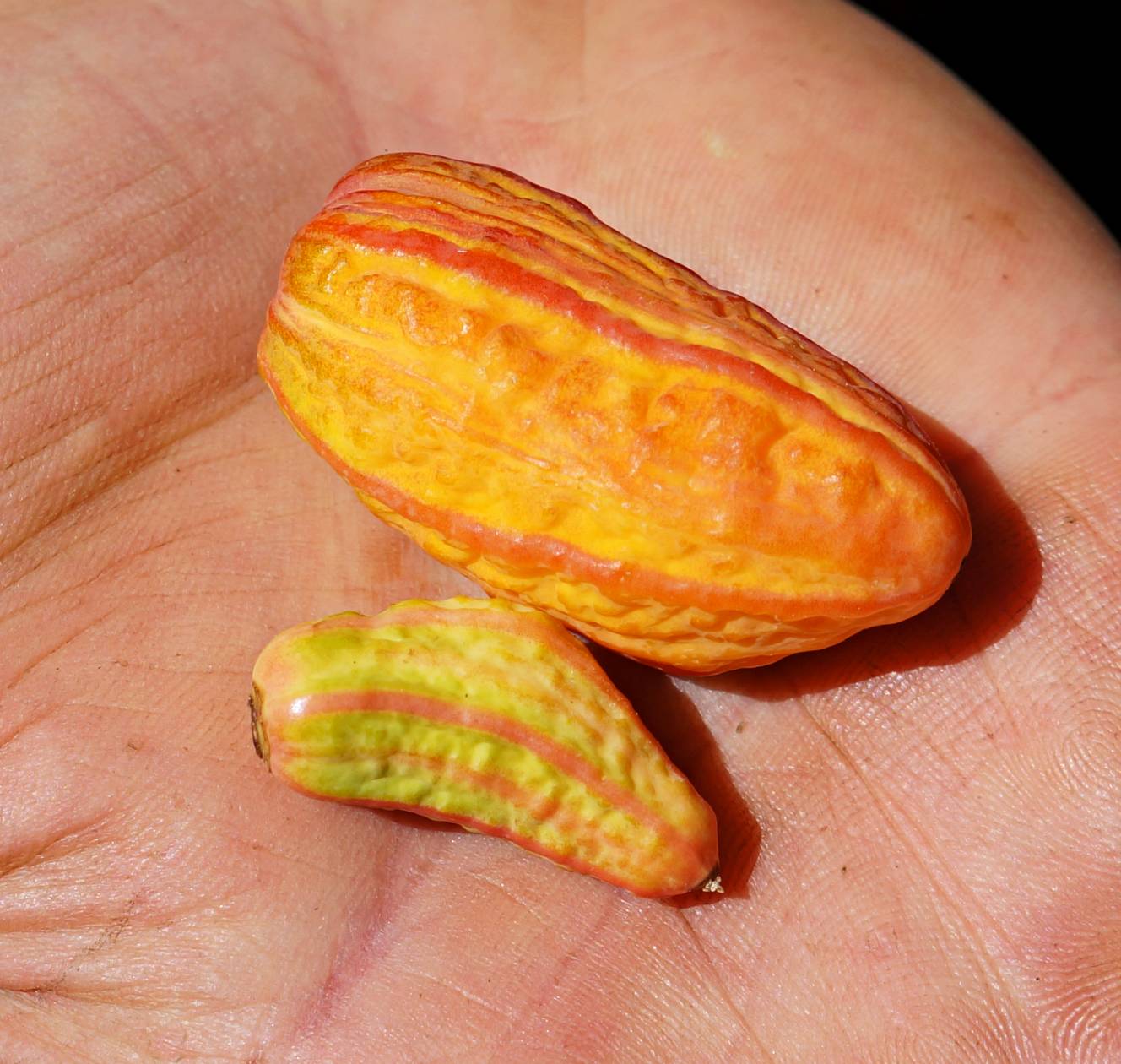 ↑ Jacaratia flowers & fruit — mini-papaya! ↑
___
Lachenalia kliprandensis Back in Stock!
Hyacinthaceae. A perennial geophytic bulb which annually produces 2 flattened ovate leaves with brown-purple or dark green pustules on the surface. Flower spikes to 6″ clothed in lovely white and magenta flowers. This South African species is endemic to estern Namaqualand, known from only a few locales where it grows in red sand. Easy and rewarding—succulent care; a winter grower that needs a dry summer rest. Z8a
[ 6 ] → 2 ~ Plants/bulb 2-3 years old $16.50 each 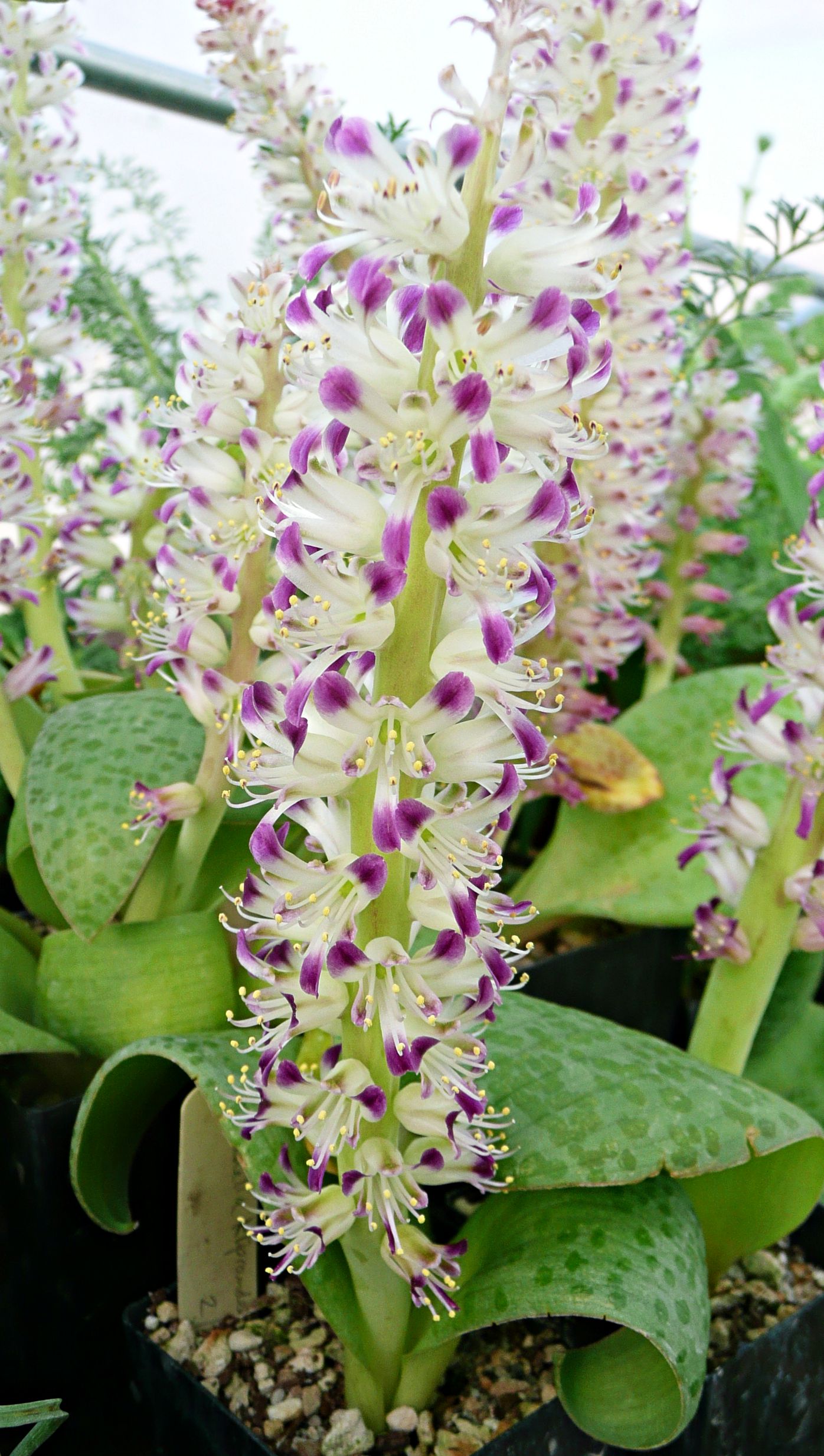
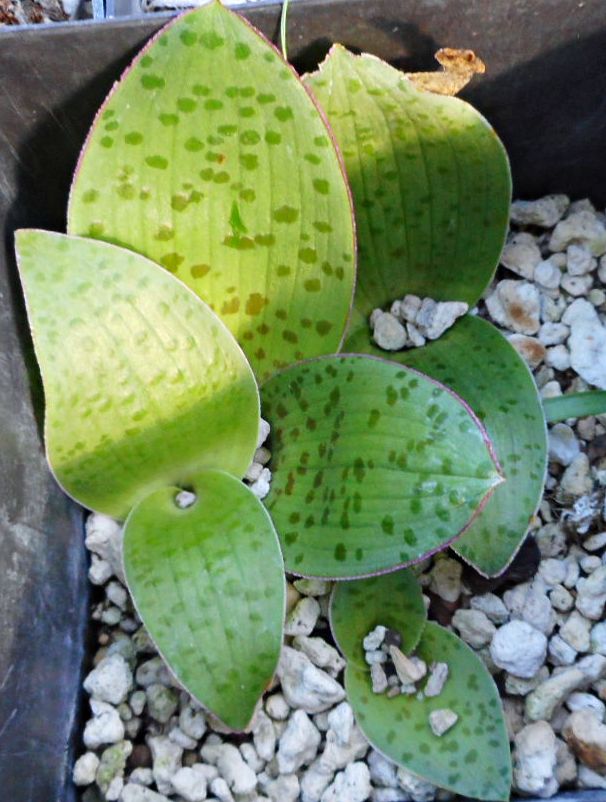
___
Mestokloma tuberosum “Vybossie”
Aizoaceae. Small pachycaul shrub to 1–3′ whose huge thickened roots have red-gold to copper-bronze peeling bark. Densely branched stems clothed in little succulent leaves. Small copper-orange flowers borne in mass. South Africa. A famine food for livestock. Highly desired by collectors, the roots can be lifted and the plants naturally bonsaid to produce gorgeous specimens. Easy and rewarding to grow, cultivate like other succulents. Surprisingly hardy—tolerant of drought, heavy rain and significant frost. Another potential companion for your columnar cacti. We offer a few long underpotted plants here, be the first to check on their root development! Z8a/b
[ 4 ] → 2 ~ 6–8″+ plants 5+ years old $26.50 each
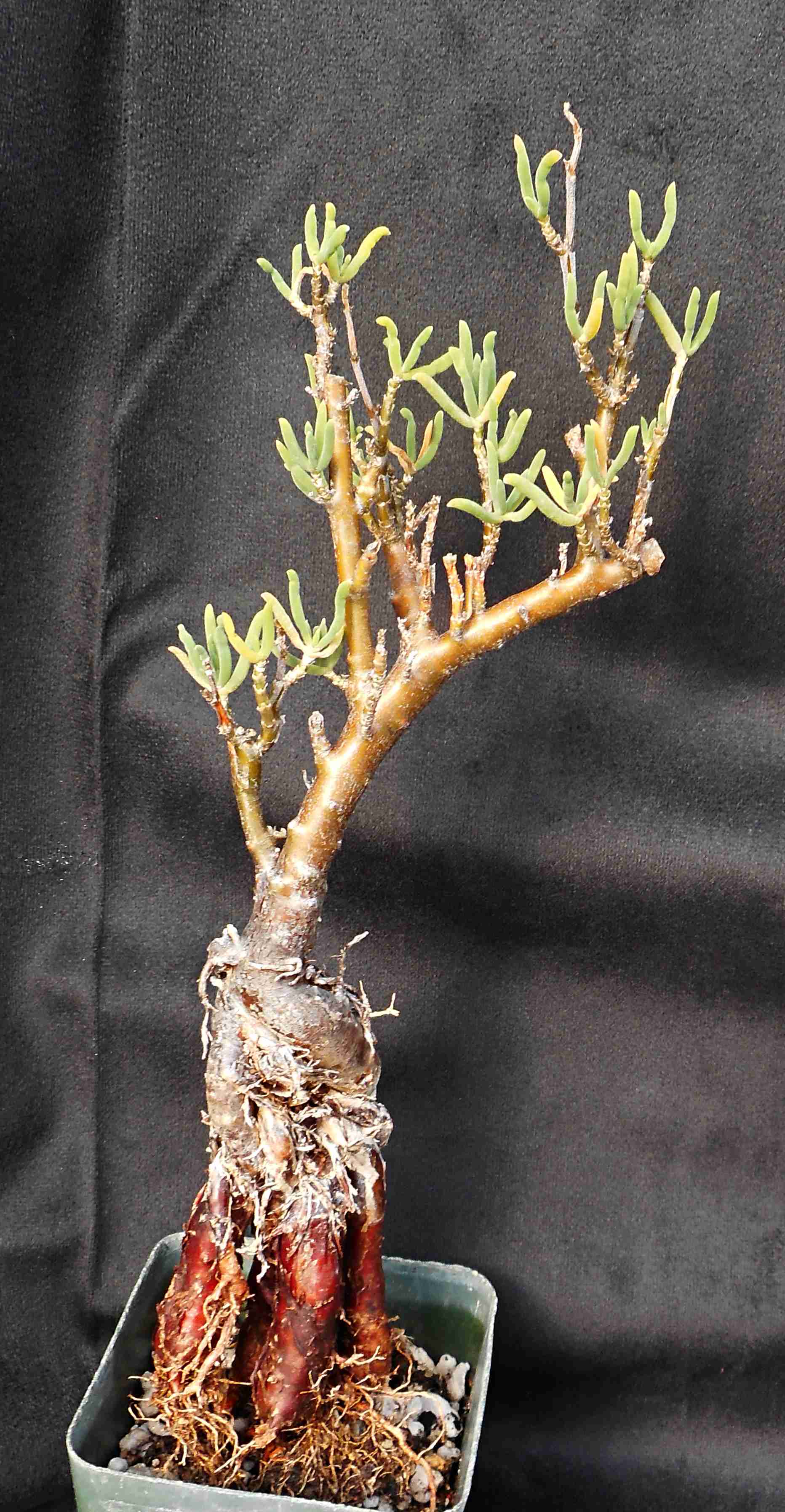
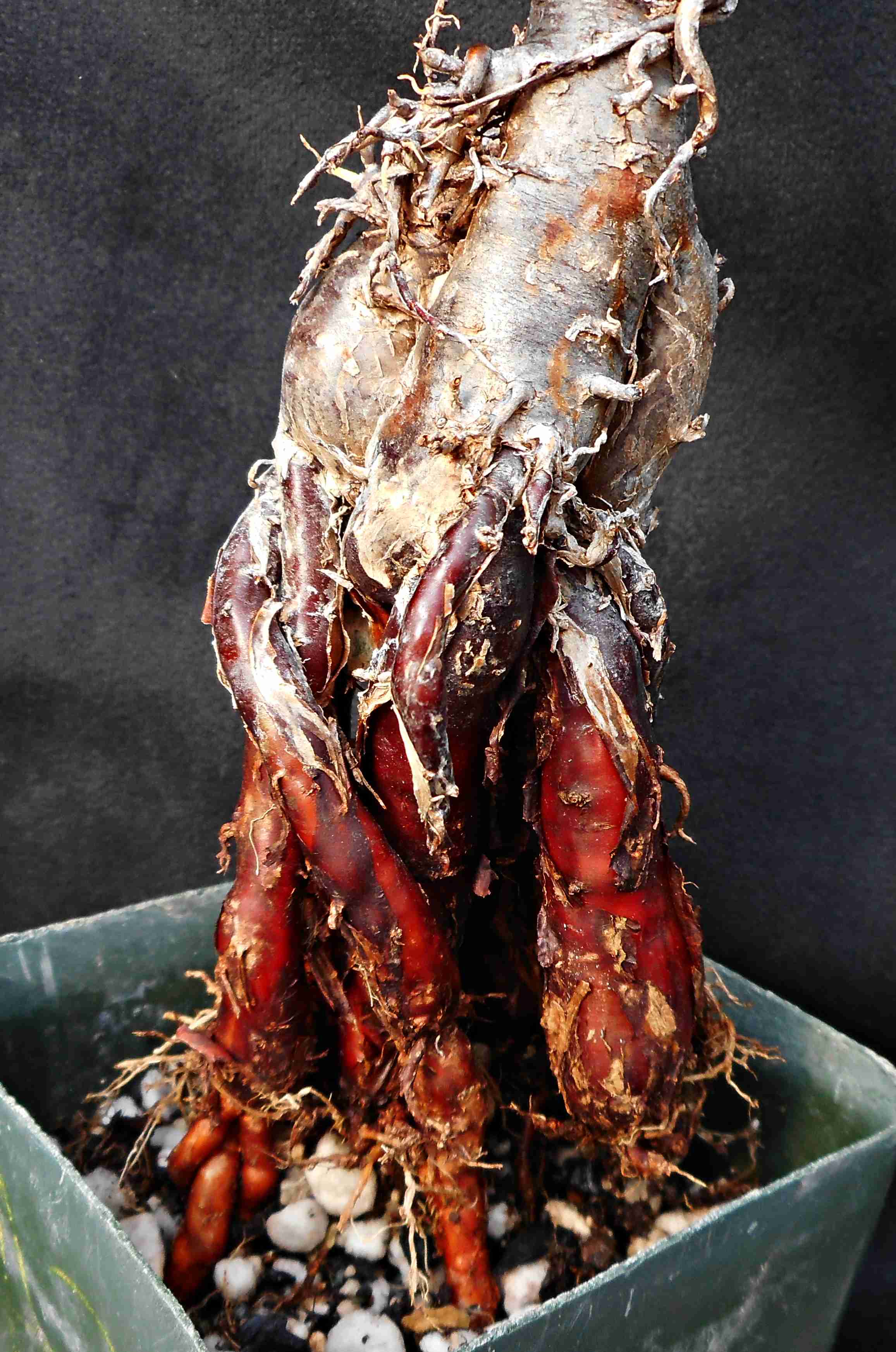 ↑ An example of a specimen with its roots lifted ↑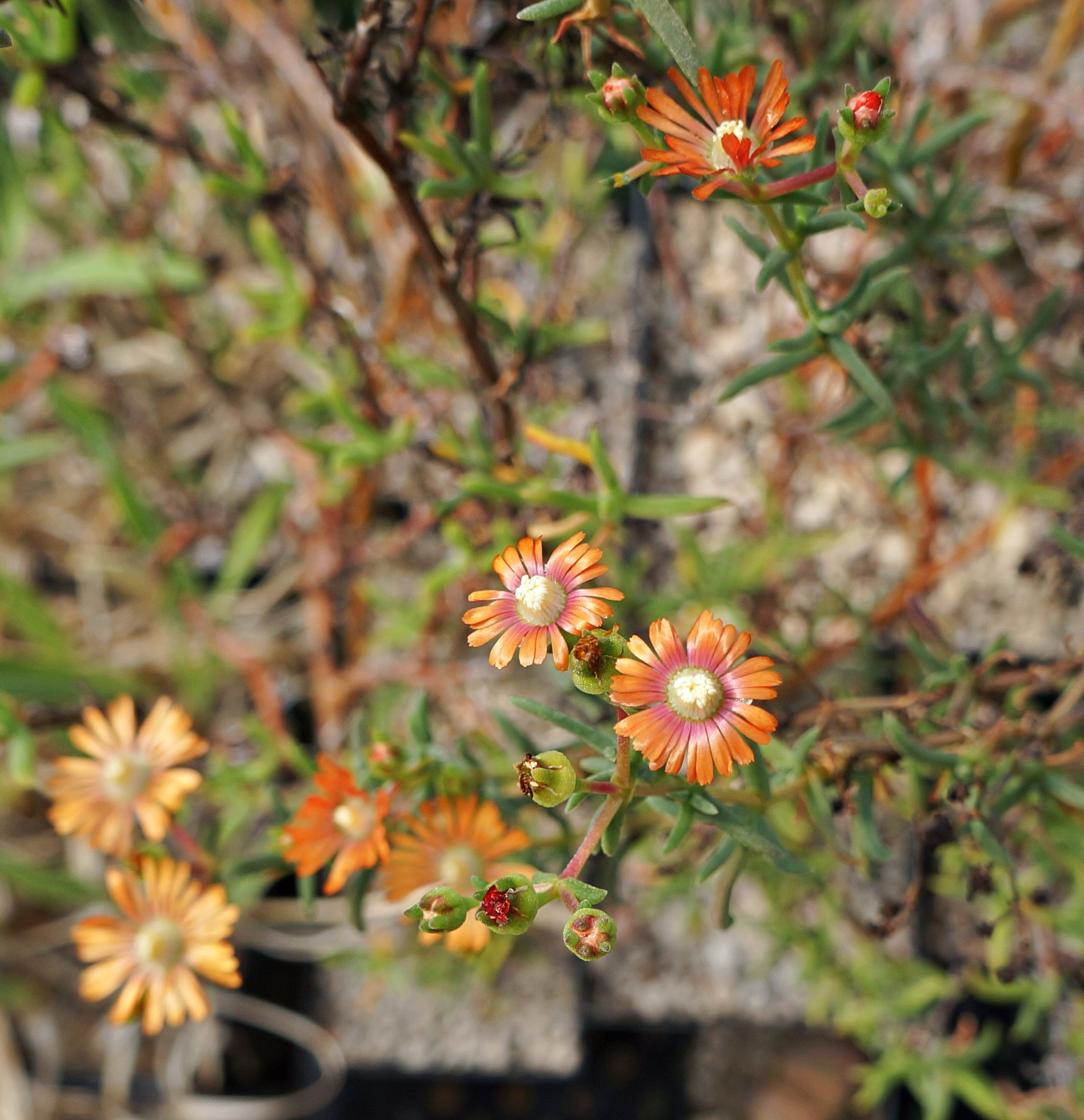
___
Nolina durangensis “Durango Bear Grass”
Agavaceae. Very rare Yucca relative with a thickened caudex-like base and several trunks topped with long, slender stiff leaves. Inflorescence with cream colored flowers. Upper elevation Sierra Madre, Durango, Mexico. This unique and wonderful species makes bold, drought and cold hardy specimen for the landscape. Z8a
[ 6 ] → 2 ~ 24″+ plants 10+ years old $45.50** each September SALE! $39** each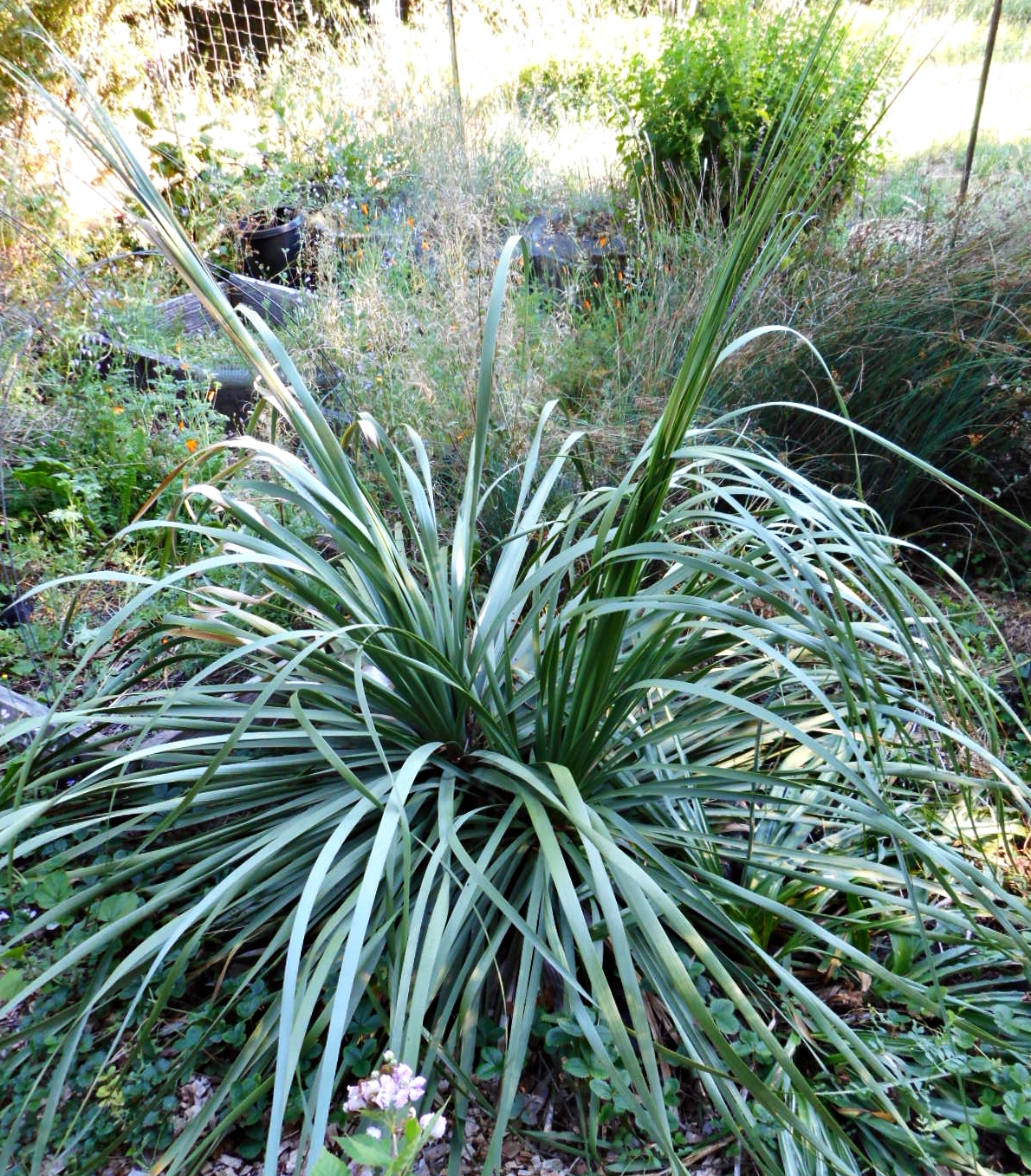
___
Nolina hibernica “Bear Grass Tree”
Robust arborescent species 6–20′ tall. Rounded terminal rosette of stiff bright green leaves tipped with twisted rugged fibers. Inflorescence 4–8′ high with white flowers. Native to the high mountain pine forests of Nuevo Leon and Tamaulipas, Mexico, 8,000–10,500’+. This fantastic cold hardy plant is rare in captivity and will make and excellent landscape specimen with age. Underpotted for years, these plants are small for their age and will quickly grow when given fresh soil. Z8a
[ 10 ] → 4 ~ Plants 7+ years old $16.50 each September SALE! 2 for $27
___
Ochagavia elegans “Ajo Dulcie”
Bromeliaceae. Handsome rosettes of green to silvery pointed leaves to about 12″ long. Compact clusters of dark pink flowers in the center of the rosette followed by sweet edible fruit that looks like a garlic bulb, hence the local name “ajo dulcie”. This endangered pineapple relative is endemic solely to Robinson Crusoe Island, Chile, where it forms large, dense colonies on rocks and sheer cliff faces. An awesome rarity that will make a unique edible ornamental for the adventurous grower. Simple to grow, regular succulent care; drought and sun tolerant, does well in warm and/or cool conditions, large plants handle mild frost. We sold out of this desiderated beauty several years ago, this is your chance at a large cutting. Roots easily. Z9b/10a
[ 2 ] → 1 ~ 14–16″+ rooted plant with 12–14″+ diameter rosette $96* SOLD
[ 4 ] → 1 ~ 12–15″+ cutting with 12–14″+ diameter rosette $86 ♥ New ♥
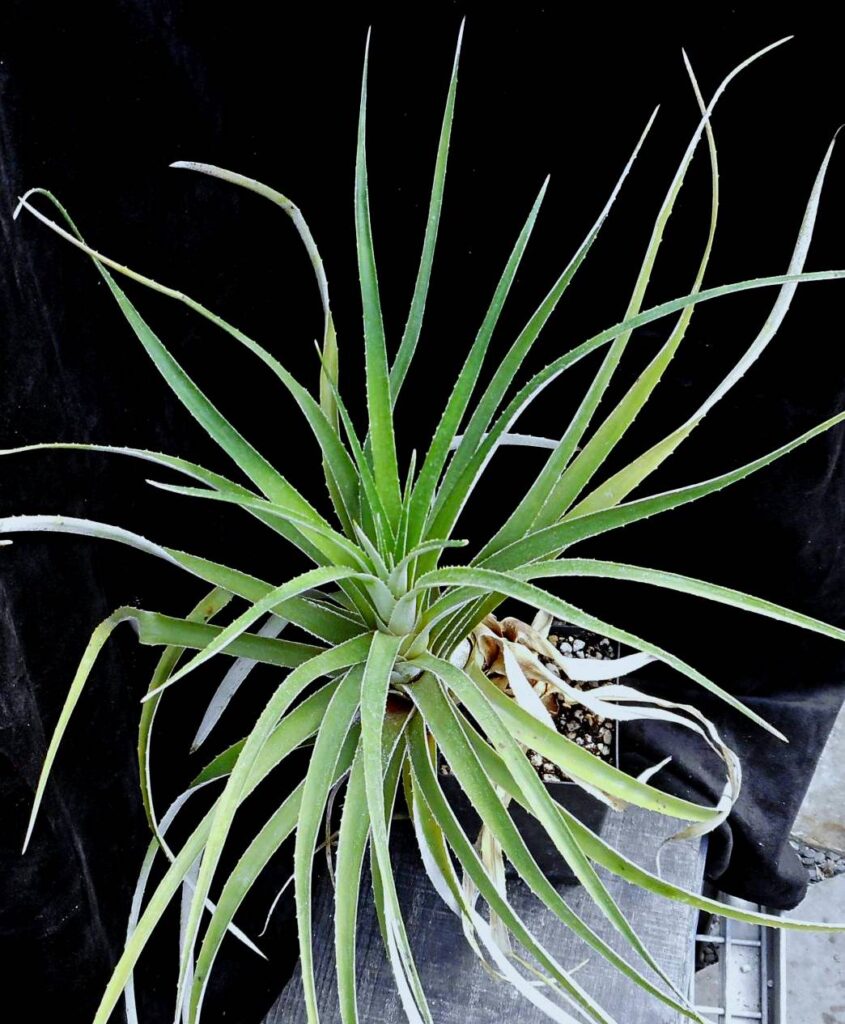 ↑ Specimen example ↑
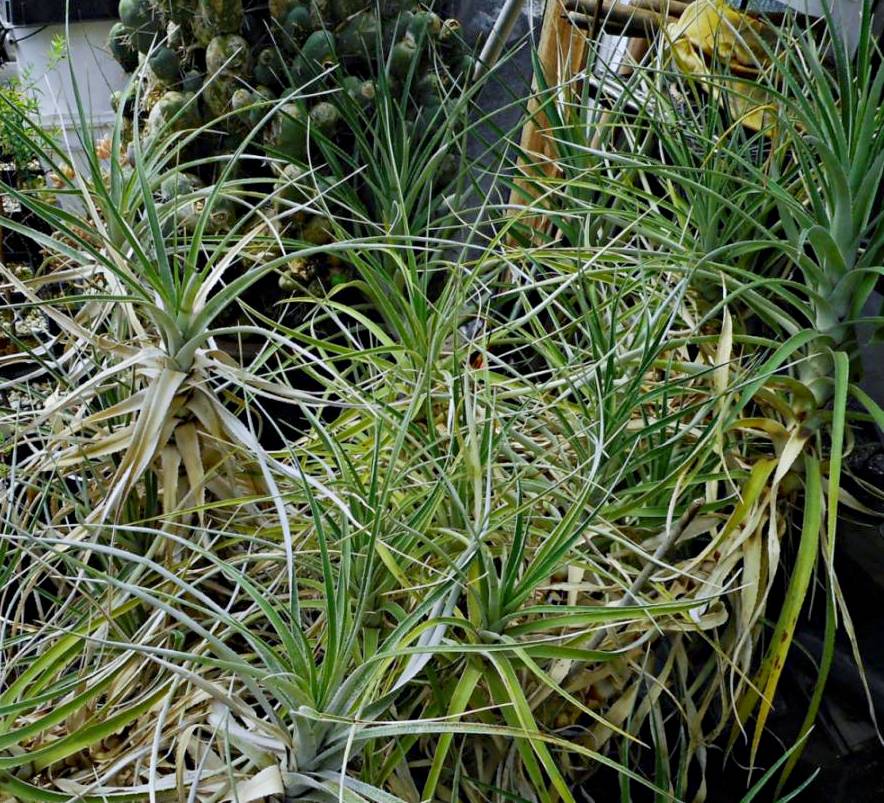 ↑ Mother plants ↑
___
Operculicarya decaryi “Madagascar Elephant Tree”
Anacardiaceae. Dioecious pachycaul-caudiciform tree to 20′ with a warty swollen trunk and zi-zag branches. Lovely pinnate leaves with tiny shiny leaflets that turn purple-red in sun or cold. Drought deciduous. Tiny reddish flowers. Toliara, Madagascar. A gorgeous species ideal for bonsai, the roots can be lifted for added aesthetics. Easy to grow, succulent culture, bright light, well draining soil. Mature plants can survive mild frost. Z9b
1 ~ 18″ tall treelet, with an 18″+ canopy spread; 1/2–3/4″ thick by 5″+ tall trunk, and 2.5″+ of caudiciform roots, $58.50* SOLD
[ 3 ] → 1 ~ 8–12″+ plant, 4-5 years old $29.50 each
___
Oxalis sp. BK14514.9 — see the Andean Ethnobotanicals section
___
About the genus Peperomia
Piperaceae. Huge tropical and subtropical genus of well over 1000 species, most occur in Central and South America. Close kin to such notables as common black-pepper and kava-kava. Typically small plants, many of which are succulent, with a shocking and joyous diversity of morphological expression. With a few exceptions, the resplendent beauty of these plants is in their exceptional gem-like leaf forms rather than their slender flower spikes. Peperomia are vital to Andean ethnomedicine and ceremony. Their wondrous aromas and flavors when crushed or chewed, etheriel combinations of balsam, lemon, mint and safrole, are a revelation. Used traditionally for wound healing, digestive health, as painkillers, psychoactive tranquilizers, condiments, to freshen breath, to make chicha and to ceremonially “cleanse and flower subtle energies”. Their complex essential oils and other compounds have passed the approval of those high priests of modern culture: the white lab coated scientist, and shown significant antibiotic, antiparasitic and wound healing actions in controlled laboratory studies. Other than a few Peperomia popular as common houseplants, most species and their beneficial nature are unknown outside their native habitats. Thanks to the encouragement of police colonel/plastic-surgeon/linguist/ethnobotanist and Peperomia expert, Guillermo Pino, we have become inspired by these marvelous plants. We are propagating a diversity of rare species which will be available for distribution in the future. All are very easy and quick to root from cuttings. Peperomia are natural companion plants to Trichocereus cacti. Inquire for additional species.
___
Peperomia congona ‘GP’ “Congona”
Relatively large species, upright stems 12–24″+ tall with whorls of succulent leaves. Known only as a cultivar, it has never been found in the wild. Primarily grown in home gardens and esteemed for its medicinal properties from Columbia to Argentina. The Spanish Missionary Bernabe Cobo mentioned the value of the plant in the 1600s. In 1778 Hipolito Ruiz recorded it was cultivated throughout Lima, Peru for its fragrance. The whole plant is used topically for wound healing. Crushed or chewed it has a mildly sweet cinnamon-citrus scent and flavor. Leaves are chewed daily to freshen breath and keep teeth healthy. Leaf infusion is used as a sedative and painkiller. The Kallawaya, famous traveling herbalists of Bolivia, recommend it for stomach complaints and press the juice from a leaf heated with a match for earache and eye troubles. Curanderos of northern Peru make use of the plant for heart conditions, anxiety and shamanically to “ease emotional pain and forget bad relationships.” The Chachapoyas people regularly enjoy a tea of the plant yet caution that drinking too much “might just cause you to lose your memory…” In Loja, Ecuador it is used to flavor a horchata drink. The Spanish introduced it to the Canary Islands at some point, it is currently cultivated there and known as “canelo”, being used as a spice and condiment. Since the 1950s it was considered a synonym of P. inaequalifolia, a mistake that has only recently been corrected. The 2 species are distinct and now recognized as such. Despite being a domesticate with a long history of use, this plant has not been well studied. Easily grown in a sunny window. A preferred clone of this mysterious ancient cultivar, G. Pino’s collection from the medicinal plant markets of Peru. Z9b
[ 8 ] → 2 ~ 6–8″+ cuttings $25.50 each 
___
Peperomia cymbifolia Hutchison et al. 5076 “Tonga”
Green to pinkish stems 3–5″+ tall, whorls of flattened pale green leaves with a bright green, convex, windowed upper surface. Young plants form attractive rosettes. 12″ branched inflorescence with greenish flower spikes. Hutchison & Wright type collection of this rare species from Chilete, San Pablo, Cajamarca Dept., Peru, 6865′. Used for wound healing. We’ve only offered this handsome species on a couple occasions yet it deserves to be more widely grown. Unrooted cuts. Z10a
[ 3 ] → 1 ~ 2–3″ cutting $24.50 SOLD
___
Peperomia dolabriformis v. grandis GP1492
This is the rare, large variety of species with thick stems growing to 18–24″+ tall, the yellowish flower panicles reaching another 18″+ high. The dull green succulent leaves are petioled, longer with prominent lateral nerves compared to other varieties. Pino seed collection near 6000’, Amazonas Dept, northern Peru. This awesome, handsome species is easy to grow—very drought hardy but dislikes cold. Z10a
[ 4 ] → 1 ~ 4–5″ cutting $19.50
___
Peperomia galioides BK09423.2 “Congona Macho”
Sprawling clusters of upright green succulent stems 10–15″ tall. Whorls of emerald succulent leaves, yellow flower spikes. Growing on steep slopes with Trichocereus peruvianus, Echeveria chiclensis v. backbergii and Carica candicans, below Huariquina, Lima Dept., Peru, 7,600′. Said to be the most important medicinal Peperomia by Pino, used for “everything”- an effective painkiller, compress for wound healing, calming sedative, even for hair loss! The plant contains quinones, sesquiterpenes and over 70 other compounds in the essential oil including limonene, eugenol, safrole, etc. Extracts have shown to be effective against staph infection and the deadly chagas and leishmaniasis parasites. Has a delicious balsam with a hint of lemon aroma when crushed. We love to chew this plant! Easy to grow, the perfect Trichocereus companion plant. Z9b
[ 6 ] → 1 ~ 3–5″ cutting $22.50
___
Peperomia aff. galioides BK151013.4 ♥ New ♥
Small clustering succulent to 8″+ high. Whorls of olive to dark green leaves. Yellowish flower spikes. Very pleasant balsam-citrus scent/flavor when crushed. The compact growth habit and darker coloration make this distinct from any other galioides we’ve seen across the Andes, very likely a new subspecies or possibly an entirely new species. We also saw this same plant in the higher, cooler cloudforests of Salta, but this accession was the lowest elevation we came across.—growing on exposed, steep rocky embankments covered with moss and lichens, in Yungas high-jungle/cloudforest, Calilegua, Jujuy, Argentina, near 4500′. Growing with ferns, a tuberous Peperomia, Begonia sp., Oxalis sp., Valeriana sp., Puya sp., various leafy shrubs, and an unusual Trichocereus (sp. nova? BK151013.5); on the edge of Anadenanthera colubrina forest. P. galioides is the most important of the medicinal Peperomia, a veritable panacea. We’ve only offered this accession a few times. Unrooted cuts from several seed grown clones. Another ideal companion for your Trichocereus. Z9b/10a
[ 4 ] → 1 ~ 3–4″ cutting $25.50
 ↑ Plant in cultivation showing its most compact form ↑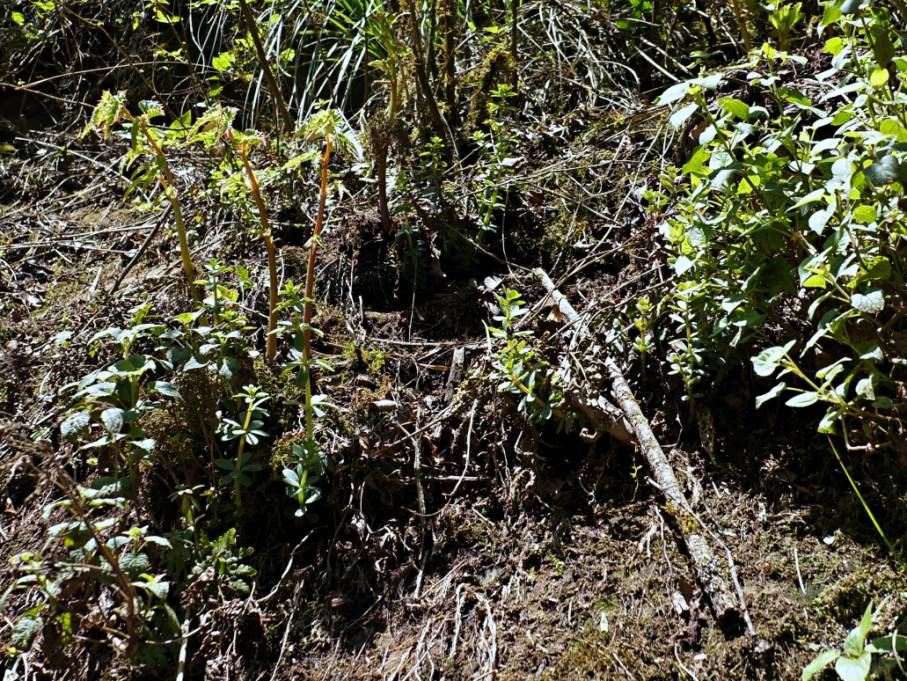
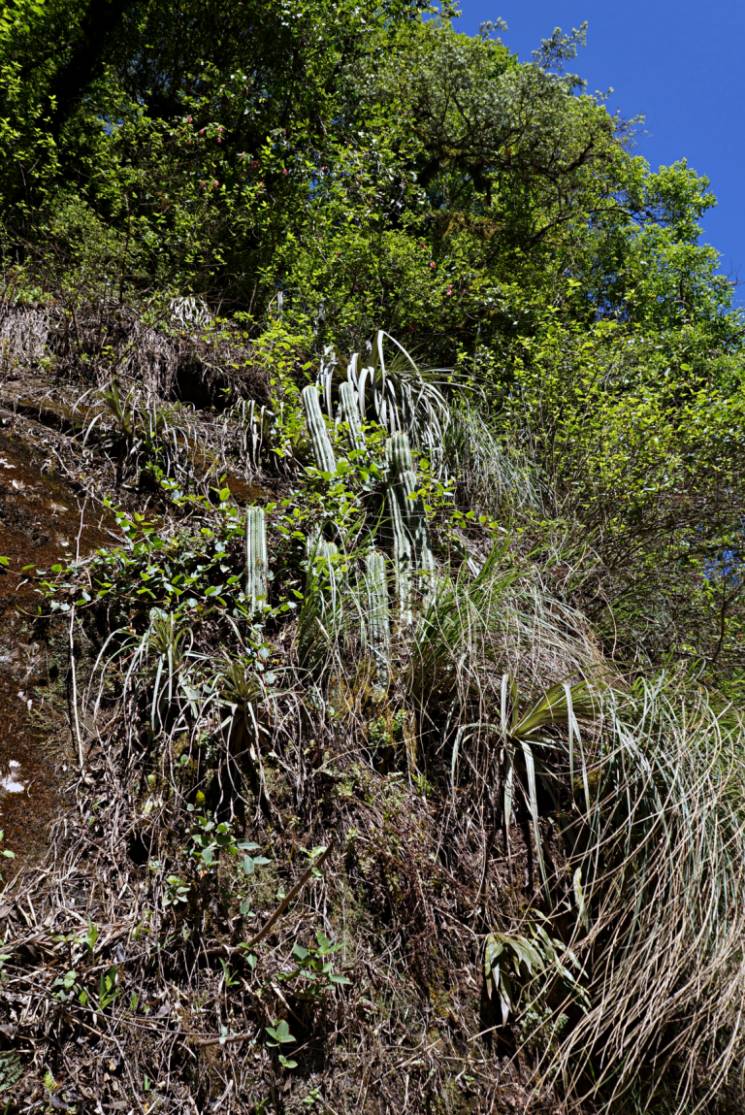 ↑ Plant growing in habitat, Yungas jungle/cloudforest, Calilegua, Jujuy, Argentina ↑
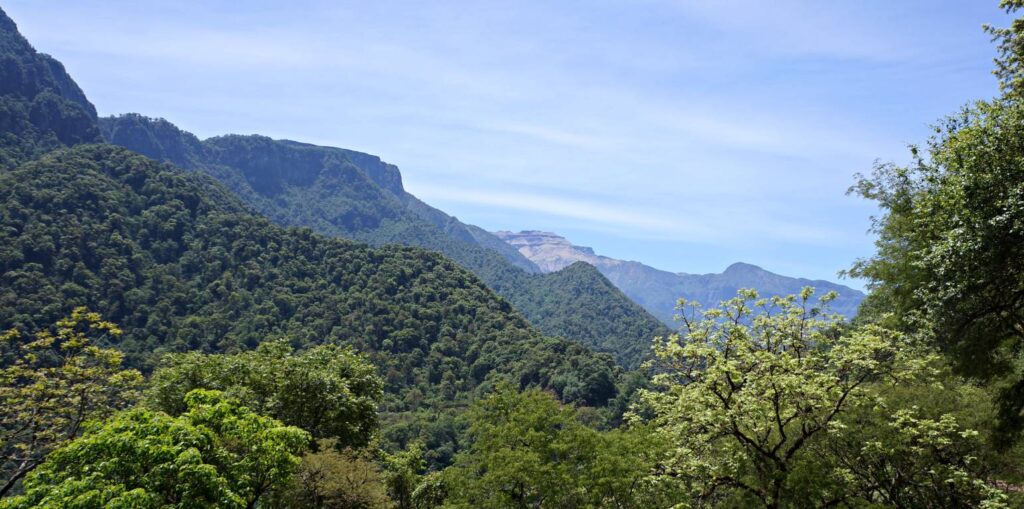 ↑ Habitat—Yungas jungle/cloudforest, Calilegua, Jujuy, Argentina ↑
___
Peperomia hartwegiana BK08521.6 “Jalcacongona” ♥ New ♥
Jewel like succulent with whorled orbicular leaves with a windowed upper surface. Just 2–6″ tall, grows creeping along rocks and cliffs. This seed is from a very attractive population with red leaves and purple/red flower spikes when grown in strong light, from near Ollantaytambo, Cusco Dept., Peru, 9300′. Used for eye/ear infections, a tea for lung and kidneys issues. Curanderos of northern Peru consider the plant protective. Reportedly utilized during mesada ceremonies for ‘floricimiento’—“to cleanse and flower the subtle energies of the body and spirit so that the patients’ dormant potentials can blossom like the nocturnal flowers of the San Pedro cactus”. A rare offering of large unrooted cuttings. Easy to root, another superb Trichocereus companion. Z9b?
[ 6 ] → 4 ~ 7–11″+ cuttings $36.50 each September SALE! $33 each; or 2 for $58
 ___
___
Peperomia inaequalifolia BK09512.5 “Congonita” ♥ New ♥
Small upright plants to just 3–5″+ high, spreading by rhizomes. Reddish stems and whorls of small pointed succulent leaves, lime to yellow green in color. Has an energizing and refreshing balsam-lemon scent when crushed, a personal favorite. Many medicinal uses like P. galioides; in northern Peru it is smoked or added to food for forgetting emotional pain and strengthening the heart. Our accession from remnant high Andean forest in the Cordillera Blanca; growing amongst boulders and Polylepis weberbaueri trees along with Peperomia hartwegiana, Matucana sp. Tillandsia sp., Puya sp., Pernettya prostrata, Gaultheria brachybotrus, and Berberis sp., Ancash Dept., Peru, 13,000′. Will regrow from rhizomes after frost — the more well mulched, the colder the freezes the plant will survive and regenerate from. These are the biggest cuttings we’ve offered of this diminutive beauty. Z9a or below
[ 8 ] → 5 ~ 3—5″+ cuttings $29.50 each September SALE! $26 each; or 2 for $47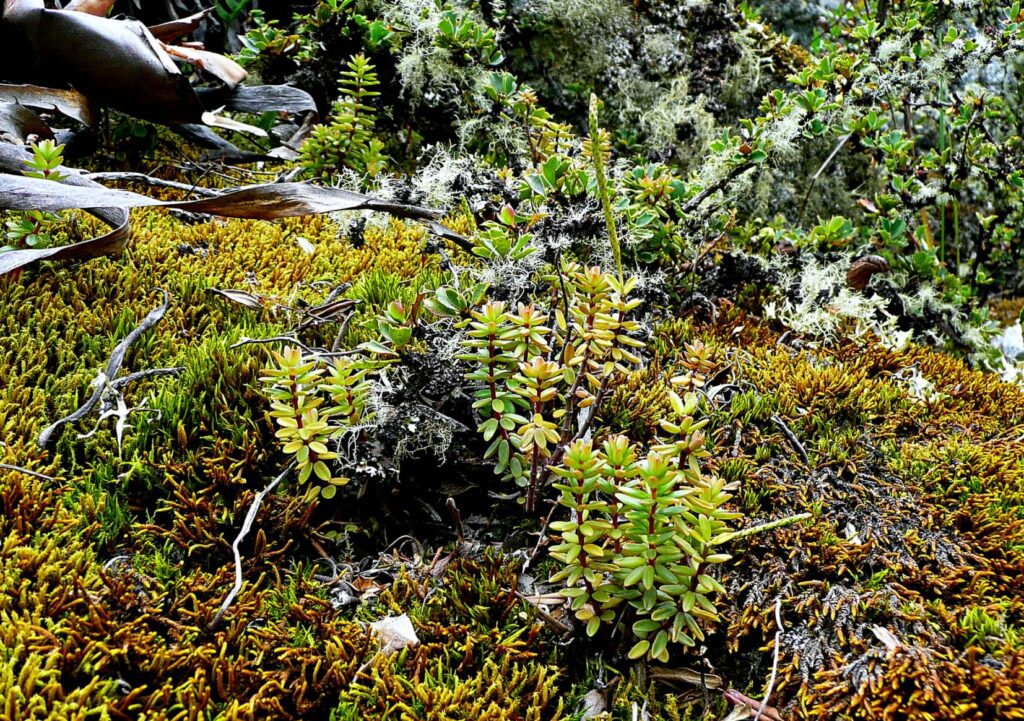
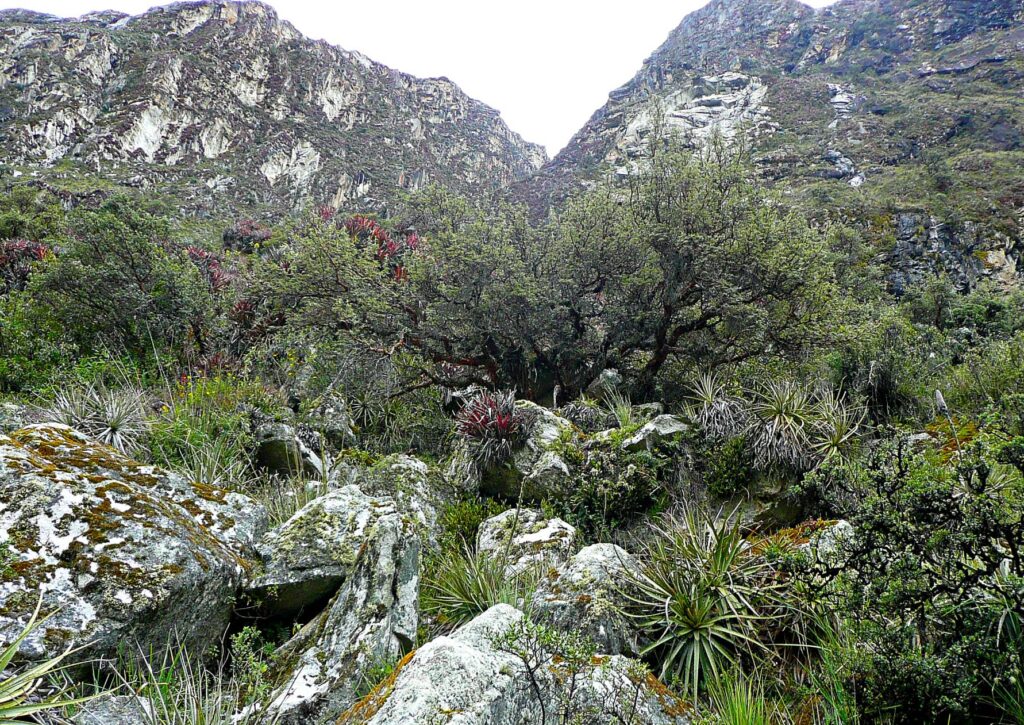 Peperomia inaequalifolia habitat, Polylepis weberbaueri forest, Ancash Dept., Peru
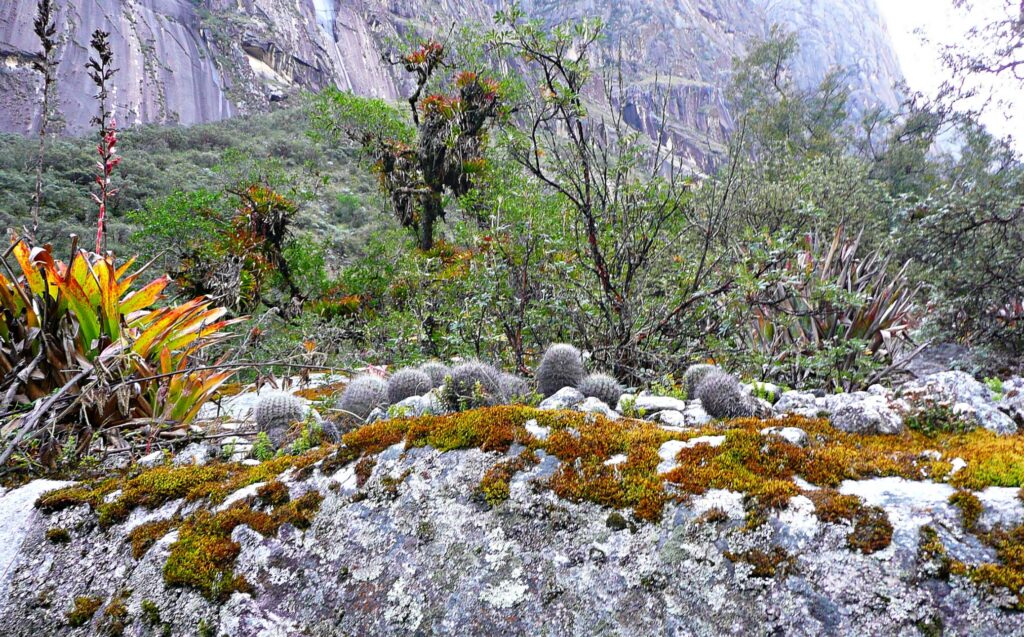 Peperomia inaequalifolia growing with Matucana sp., Ancash Dept., Peru
___
Peperomia nivalis “Empanadilla”
Low growing, jewel-like succulent 2–6″ high, trailing rhizomatic stems 6–24″+ long. Lime green leaves, “like little empanadas”, with a windowed upper surface. Leaves and stems take on reddish to yellow hues in strong light. Green flower spikes. A unique lithophyte that occurs throughout the central Andes. The entire plant has an intense balsamy-mint scent when crushed. Leaf juice is used for eye problems and topically for stomach pains. Regular succulent care; regrows from the rhizomes after frost. Rare in cultivation, a great ally plant to grow at the base of your columnar cactus. Cuttings from varied seed grown clones. Will regrow from rhizomes after frost. Z9a
[ 4 ] → 2 ~ 2–3″ cuttings $18.50 each
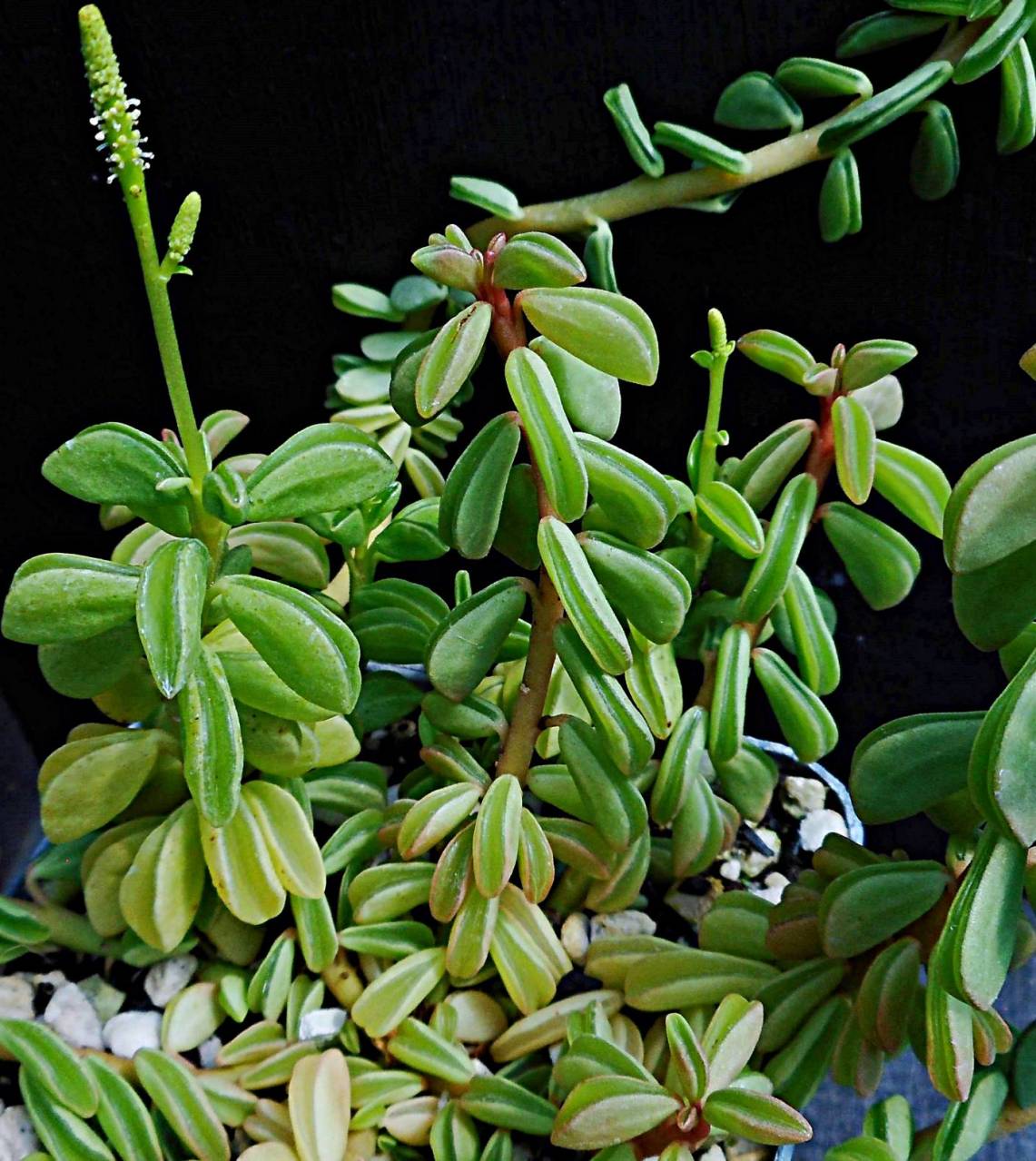
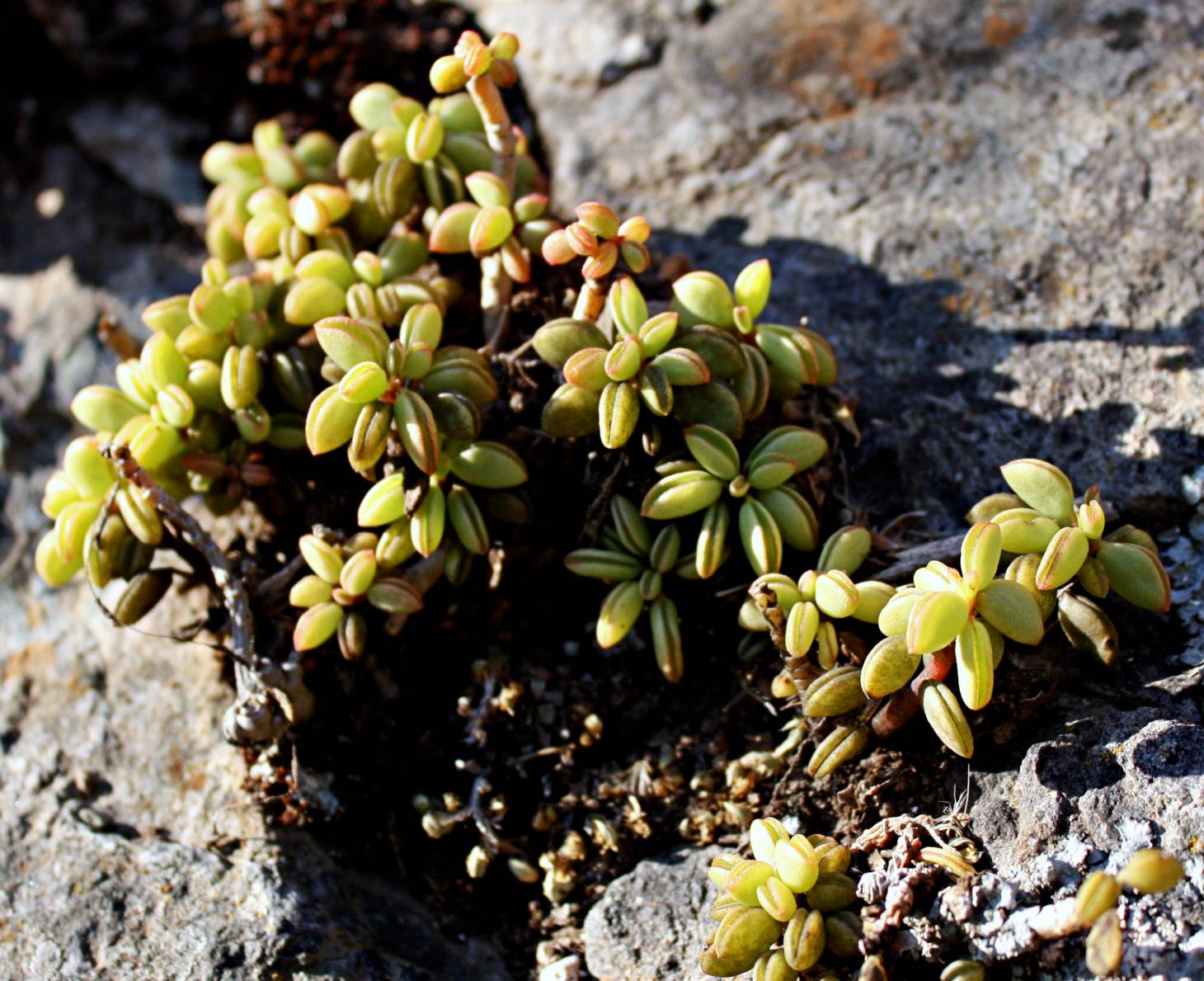 ↑ P. nivalis in cliffside habitat, Ollantaytambo, Cusco Dept., Perú ↑
___
Peperomia hybrid SS20H ♥ New ♥
One of our unique open-pollinated hybrids. Succulent stems with whorls of thick, pale green to pinkish leaves with olive-green, convex windowed upper surfaces. The parentage looks to possibly be P. cymbifolia, P. samainiae, and/or the rare P. mitoensis. The first and only chance at this beauty! Z9/10?
1 ~ 3″ tall by 3″+ wide plant with 10+ heads, 5+ years old $56.50 SOLD
___
Peperomia microphylla BK14513.22
We first introduced this lovely little species to cultivation some years ago and have only offered it a few times since. Small creeping plant which forms clusters of slender stems 1–3″+ tall. Densely packed, tiny, deep green succulent leaves, transparent on the upper surface. Short, yellow-green flower spikes. Seed first collected from plants growing in moss and with epiphytic ferns on the trunk of Cedrela angustifolia trees, cloud forest near Choquequirao, Cusco Dept., Peru, 9500′. The plant has a delightful mint/ balsam flavor and aroma when crushed or eaten. Produces larger leaves in cultivation. Easily grown but dislikes excess sun and heat. Z9b?
[ 8 ] → 2 ~ 2–3″ cuttings $24.50 each September SALE! 2 for $40
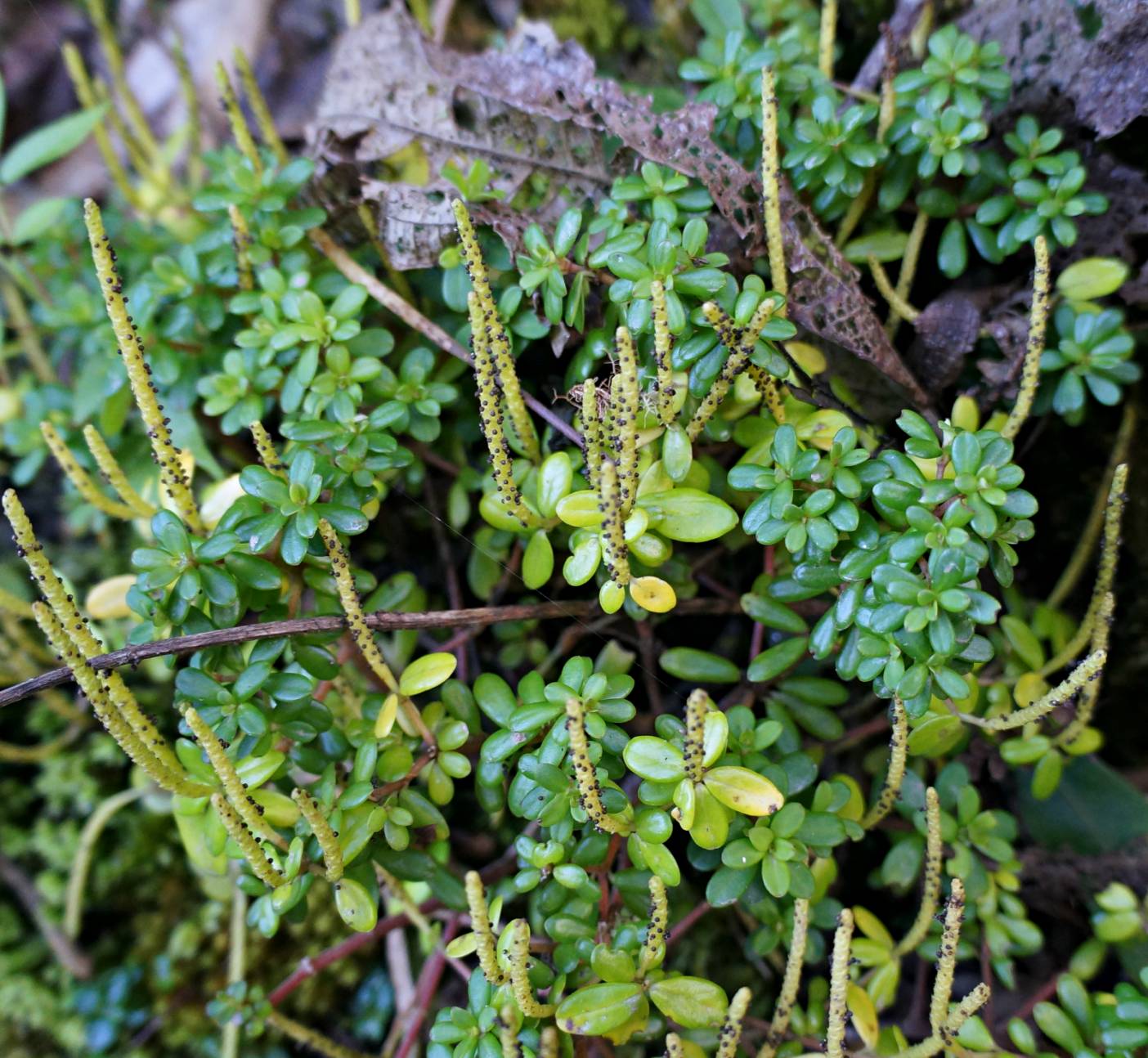
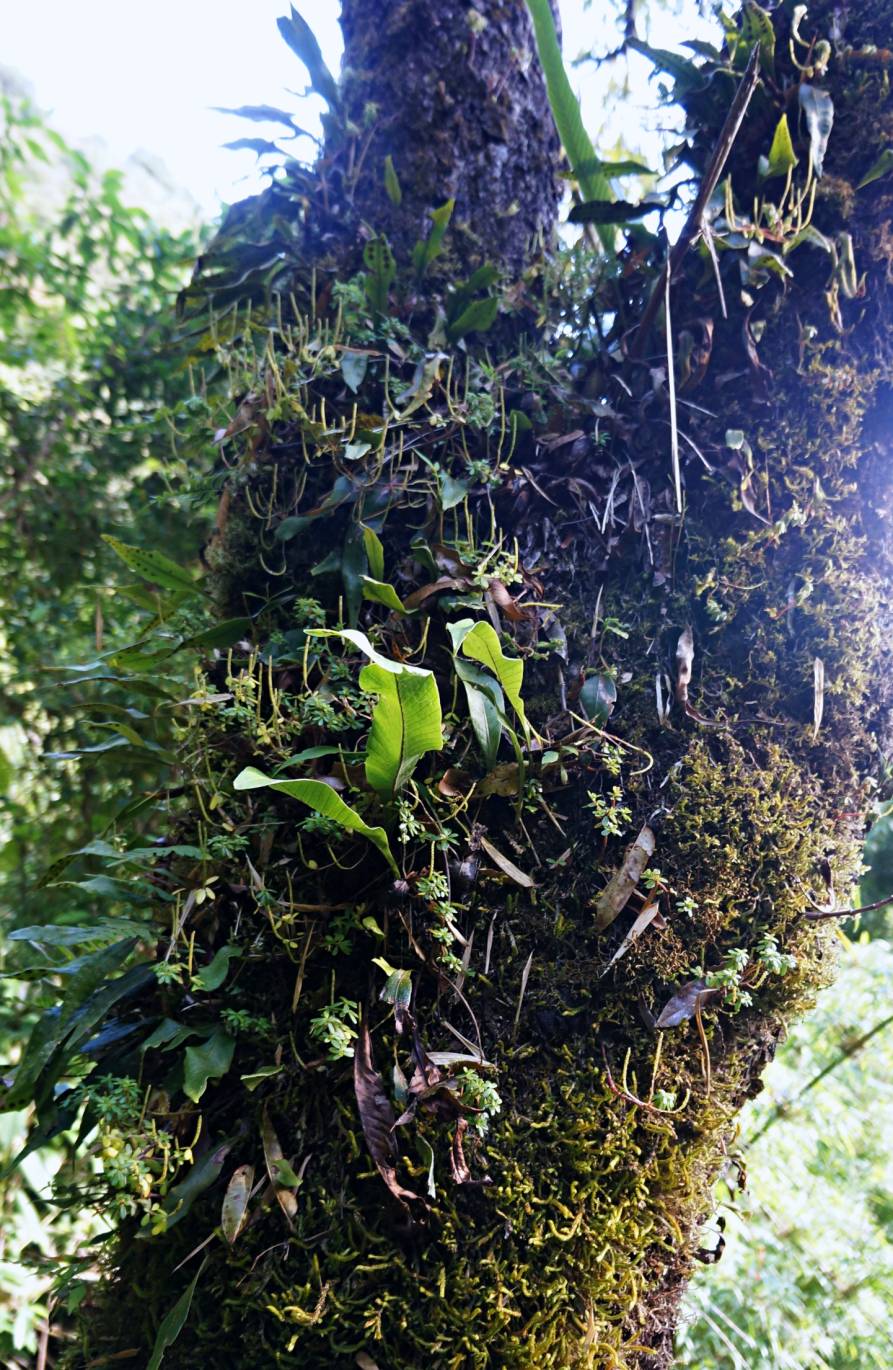 ↑ Peperomia microphylla growing on the trunk of a Cedrela angustifolia tree, near Choquequirao, Cusco Dept., Peru ↑
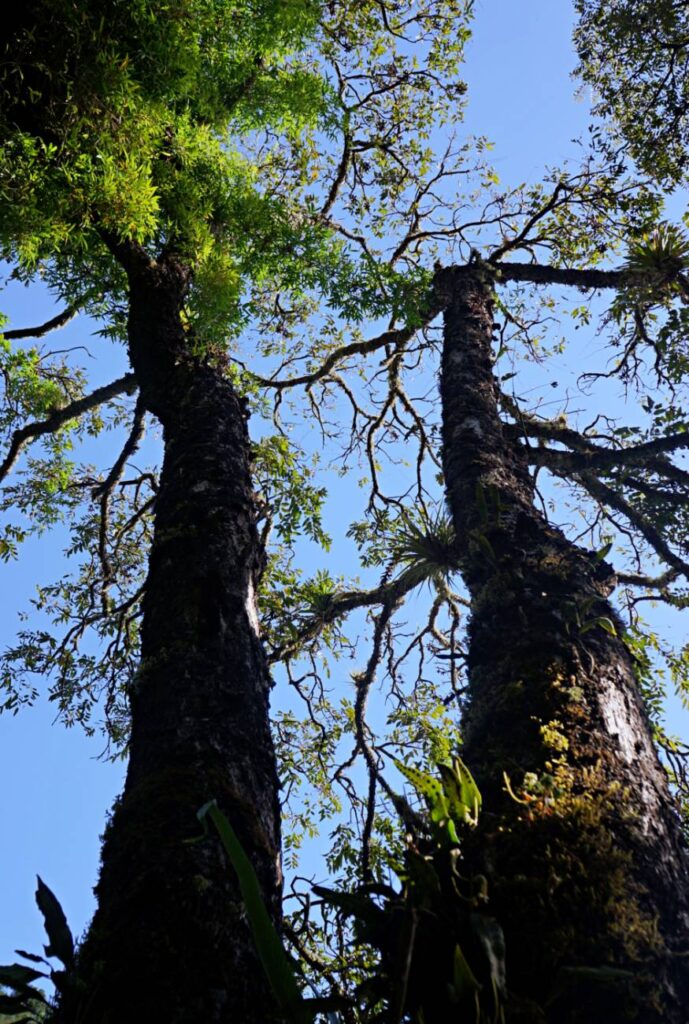 ↑ Cedrela angustifolia—habitat for Peperomia microphylla ↑
___
Pilea serpyllacea BK10425.1 “Kaka uvas uvas”
Urticaceae. 2–6″+ succulent with densely packed miniature round leaves that turn bright red in sunlight. The backs of the leaves are like a clear window. Grows on exposed rocks throughout the highlands of Cusco. Often seen as a nurse or companion plant to young Trichocereus cacti. Surely one of the most unique plants in the nettle family! Used as a tea for urinary and kidney health, the small leaves are eaten by children in the Andes as “tiny grapes” — our daughters even love to snack on them! Seed collected from plants growing on bare rocks, Cusco Dept, Peru, 9,300′. Easy to grow in a sunny window, or as a companion at the base of your columnar cacti, regular succulent care. Beloved by succulent enthusiasts! Z9b
[ 18] → 4 ~ 2–3″+ plants 3 years old $18.50 each September SALE! 2 for $33
[ 12 ] → 2 ~ 5–7″+ multibranched plant 4+ years old $26.50 each September SALE! $23.50 each; or 2 for $42
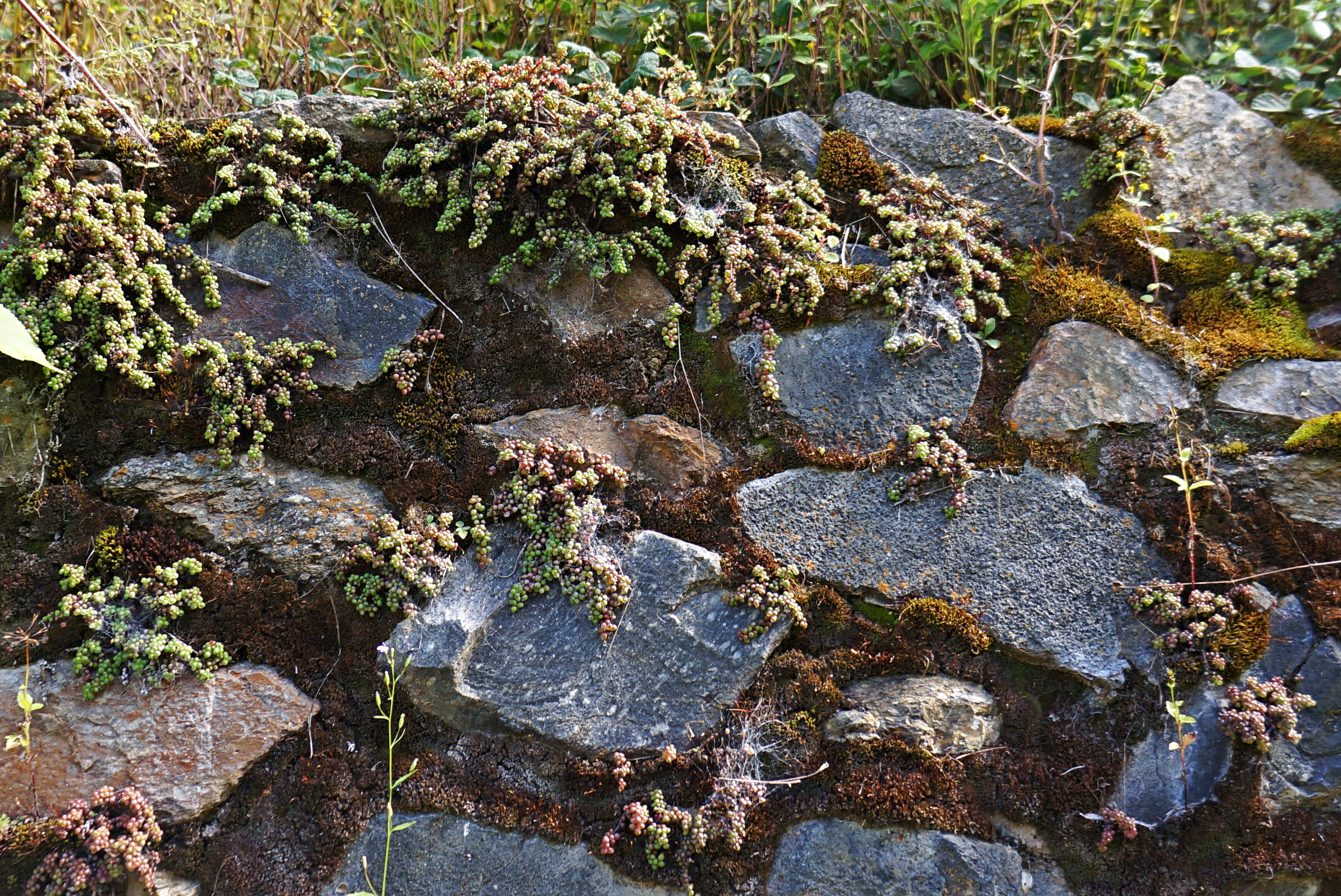 Pilea in habitat, Peru
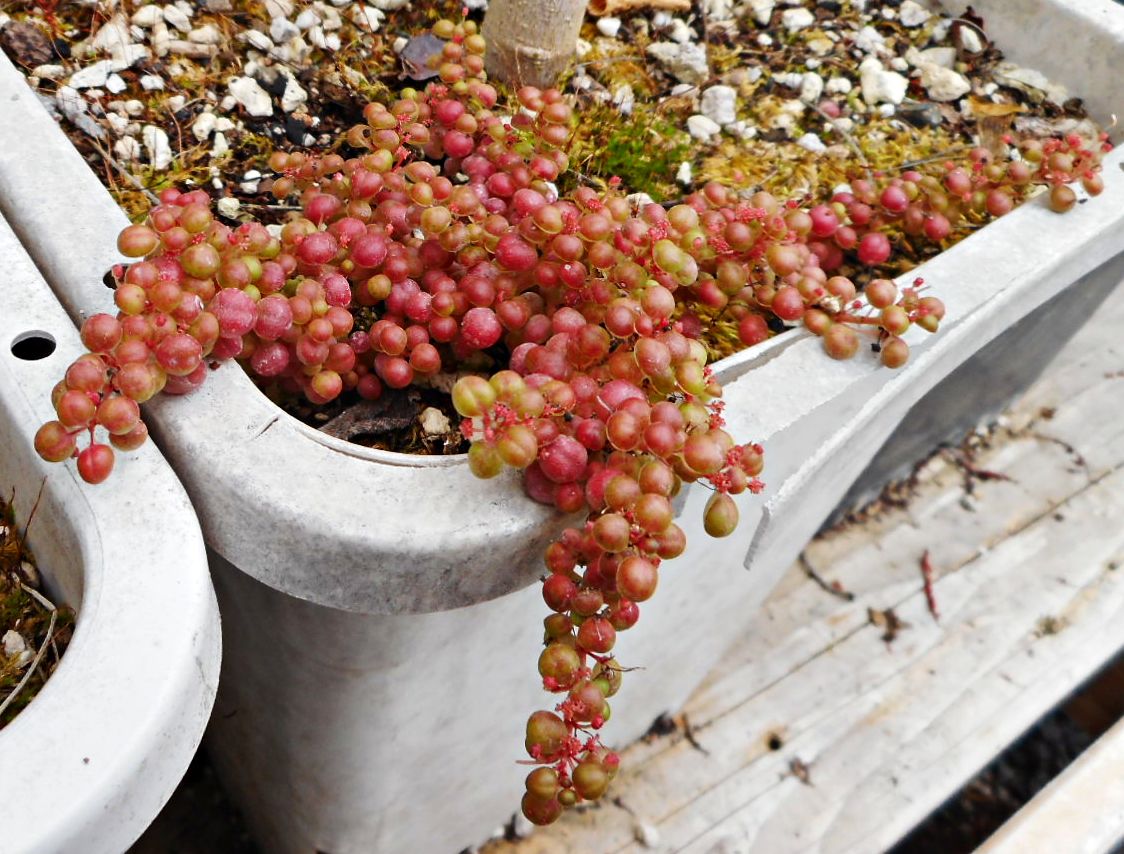 Pilea growing as a pot companion
___
Pilea sp. BK08524.15
Branching plant to about 8″ tall with jointed, deep red succulent stems and stingless, nettle-like green leaves with furrowed veination. Yellow-green flowers. An unusual succulent we found growing with a couple Peperomia species in the shade of an Escallonia tree on a rock wall edging a rural homestead above Lares, Cusco, Peru, near 11,000′. The leaves and stems seem perfectly edible. Very easy to grow, makes a superb houseplant, sun or part shade. Roots quickly from cuttings. Z9b?
[ 4 ] → 1 ~ 3–5″+ cutting $16.50 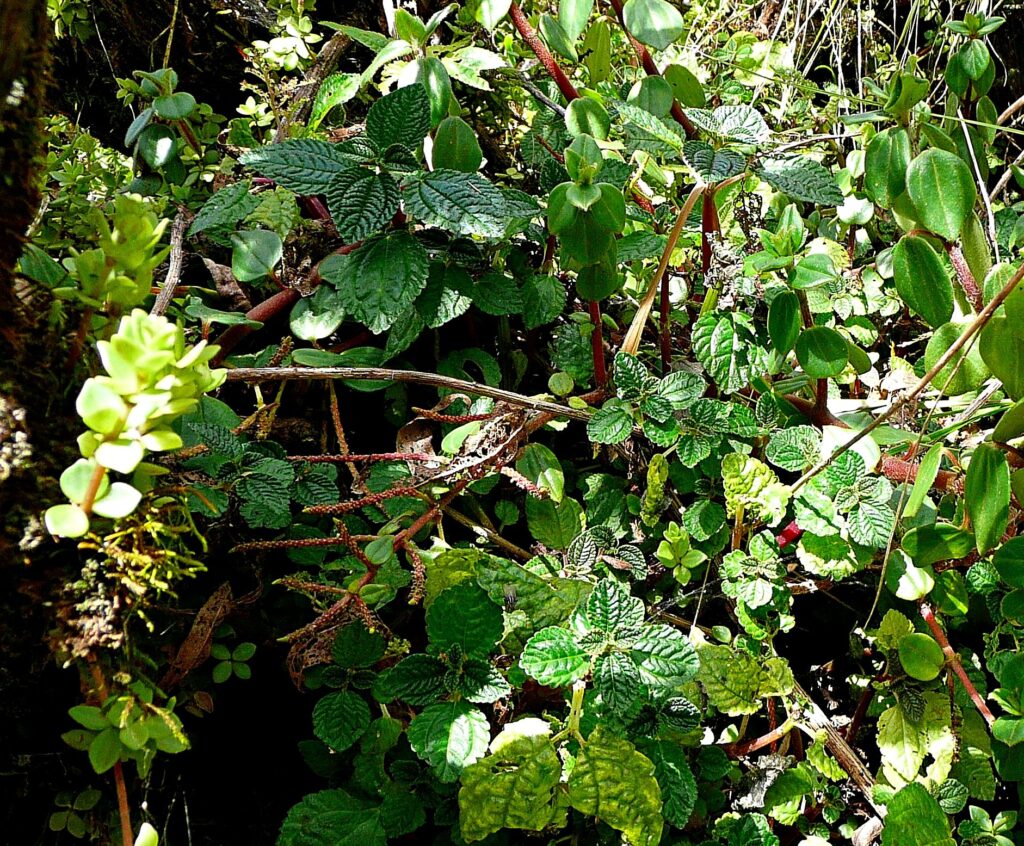
___
About the genus Puya
Bromeliaceae. Xerophytic pineapple relatives from Central and South America with swirled rosettes, often in clustering heads, of silver to green, slender, toothed leaves. The 150+ species vary in size from small plants to tree like giants. The stunning flower stalks often bear blossoms of unusual colors: metallic greens, blues and yellows. Puya are pollinated by hummingbirds and other nectar drinkers, which are drawn en-masse to the blossoms. Spectacled bears (Tremarctos ornatus) are known to particularly relish the heart of the plants; chinchilla (Chinchilla spp.) and vizcacha (Lagidium spp.) are also know to eat Puya and make well fortified burrows within and under masses of thorned Puya heads. Rather than choosing dwarfism as most plants do at high altitudes, Puya erupt to giant sizes, the largest and loftiest species, P. raimondii, reaching nearly 40′ tall at elevations of 15,000′! Forests of this strange sentinel of the heavens were once widespread, but its realm is now reduced by man to small scattered populations in the remote high Andes of Peru and Bolivia. Puya species are used for their leaf fibers, wound healing qualities and magical purposes. Around Cusco, Peru the flowers stalks are burned to make “llipta” for coca chewing. Easy and often fast growing. Great landscape plants, can be grown as a living fence; can also be bonsaid by keeping in smaller pots. Extremely drought hardy, one of the few genera that endure underpotting for a over a decade and resume growth almost immediately when potted up or out. Many species are tolerant of cold and high rainfall and make excellent, natural companion plants to Trichocereus cacti. Inquire for additional species.
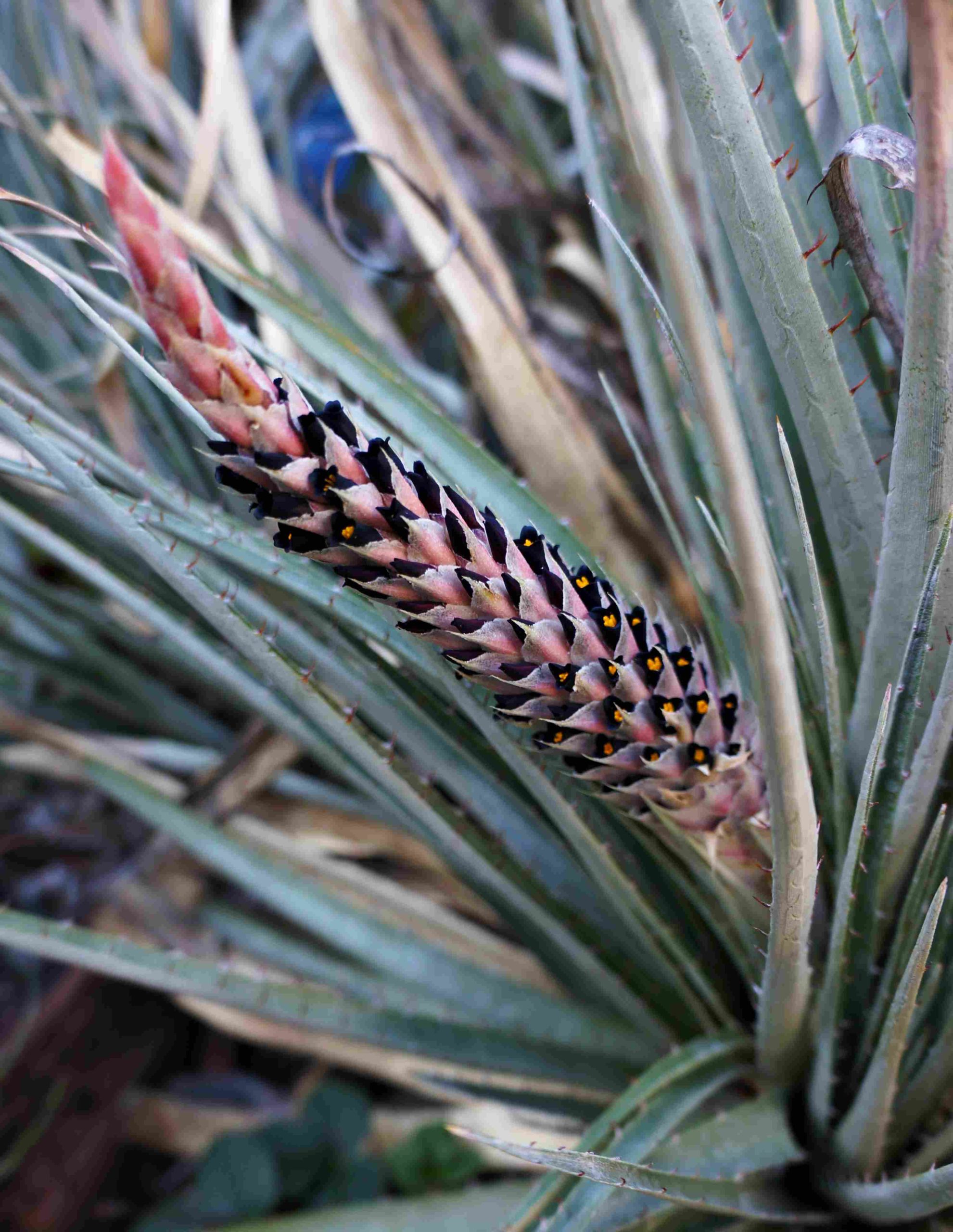 ↑ Puya aff. humilis inflorescence ↑
___
Puya dyckioides “Chaguar”
2–3′ rosettes of thin, arching, lightly serrated leaves. Extremely showy bipinnate inflorescence 2–3’+ long with bright pinkish bracts and metallic aquamarine blossoms. Native to southern Bolivia and northern Argentina, between 4300–11,000’+. One of the more friendly and attractive species. Grows quickly when potted up or out. Z8a/b
[ 9 ] → 1 ~ 3–4″+ plant 3+ years old $14.50
___
Puya harmsii
An awesome species with large clusters of Agave-like rosettes of frosted white leaves. Branched inflorescence to 7’+ with velvety black flowers tinged blue. Found on arid slopes up to 8300′, north western Argentina. Z8b/9a?
[ 4 ] → 2 ~ 3″+ plants 3 years old $15.50 each
___
Puya herzogii BK10511.5
Clusters of 2–3′ rosettes of grey serrated leaves. Large club like inflorescence to 6–8′ tall, flowering bracts covered in a white and gray fuzz, yellow-green flowers with bright orange pollen. The impressive flower stalk makes this one of our favorite species! Growing amongst Puya raimondii, bunch grasses, Mahueniopsis sp. BK10511.6, Oenothera sp. BK10511.4, the miniature Pernettya prostrata BK10511.3 , Berberis sp., Phacelia sp., Cajophora sp., Bacharis sp., etc., near Rodeo, Cochabamba Dept., Bolivia, 13,300′. We have a few extra hardy, “ugly” specimens to offer here at a discount—the outer ends of many of the leaves have dried due to the fact they’ve been in the same small pots for over a decade and exposed to the brunt of winter frosts and summer heat; otherwise hale, these plants will respond quickly to fresh soil and root room by putting out clean, new growth. This species is very happy growing alongside our Trichocereus here in NorCal, makes an excellent landscape specimen that tolerates heavy rain, frost, and baking summer sun. Z7/8?
[ 4 ] → 2 ~ 6–10″+ “ugly” plants 12+ years old $24.50 each
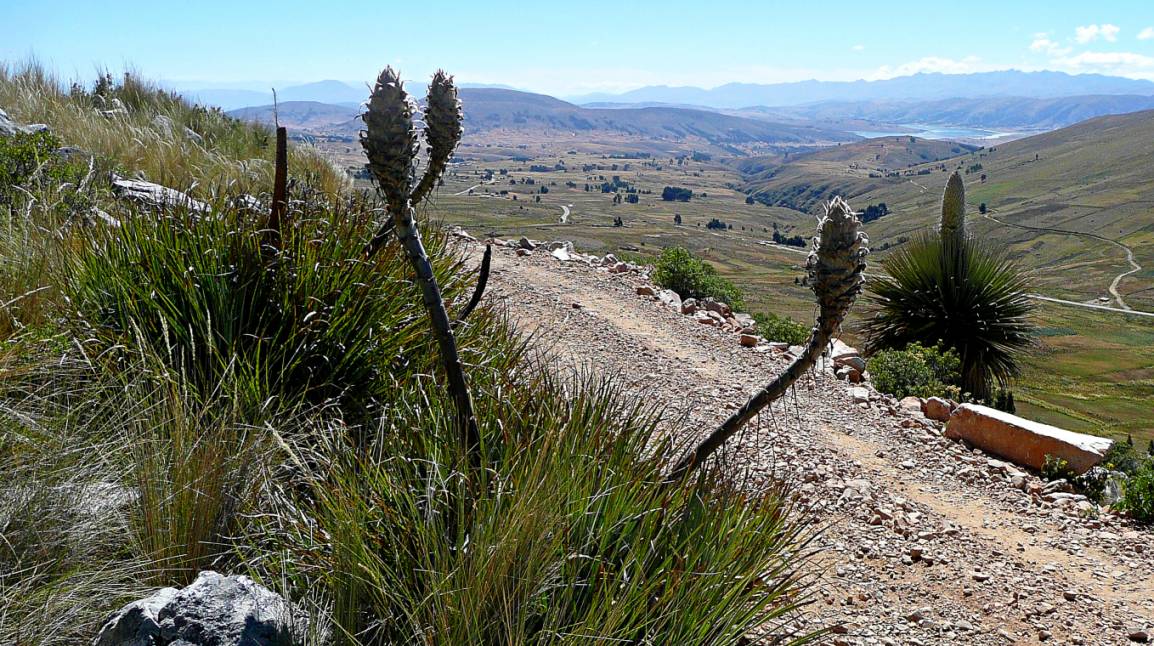
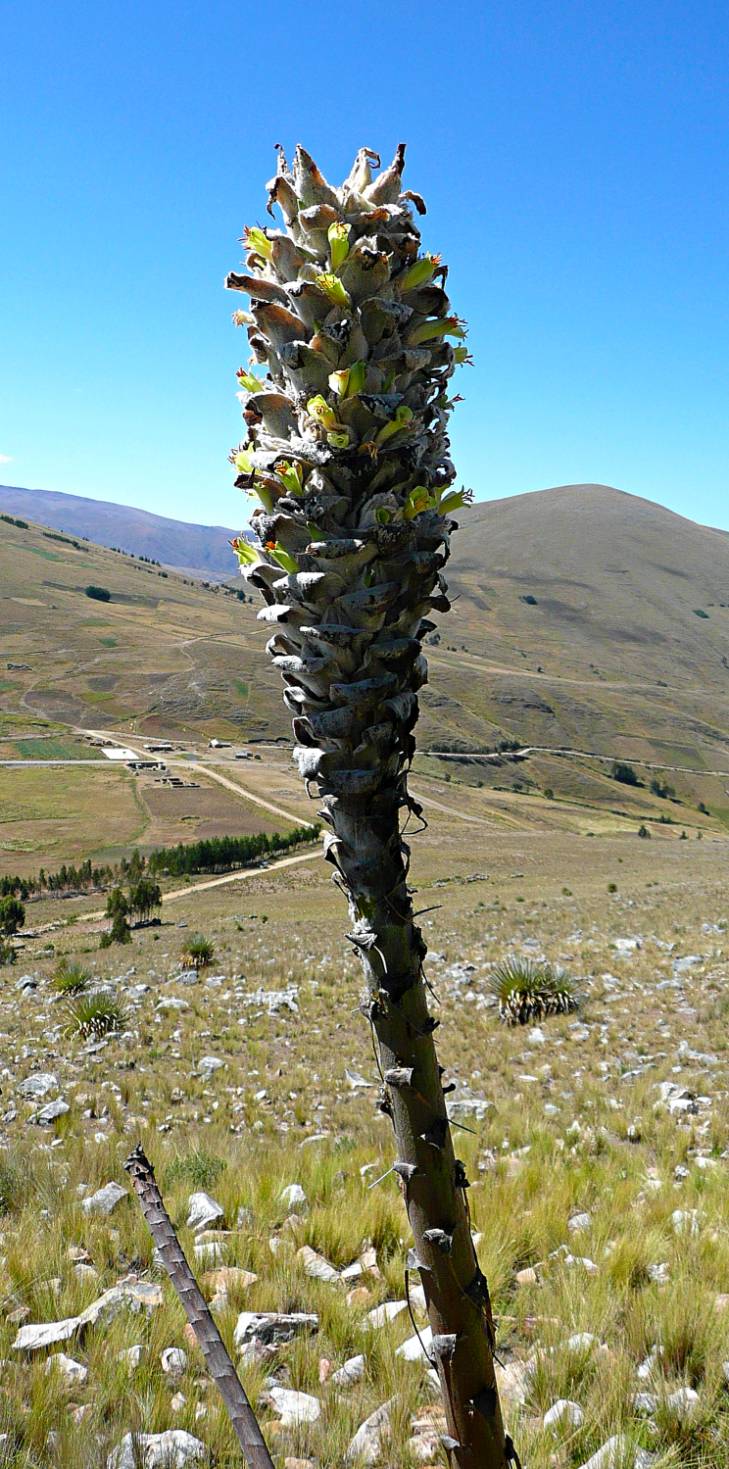
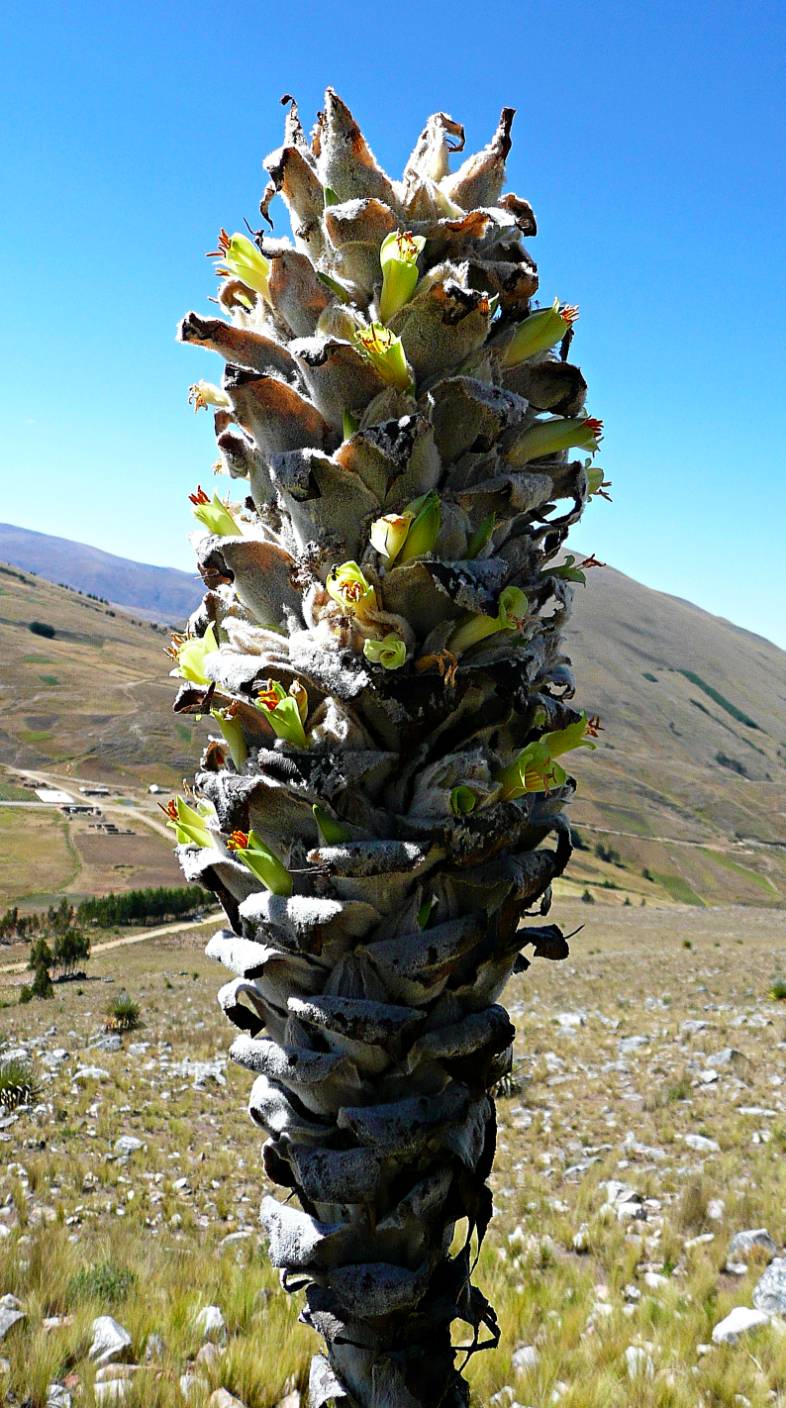 ↑ Puya herzogii BK10511.5 inflorescences, Cochabamba Dept., Bolivia, 13,300′ ↑
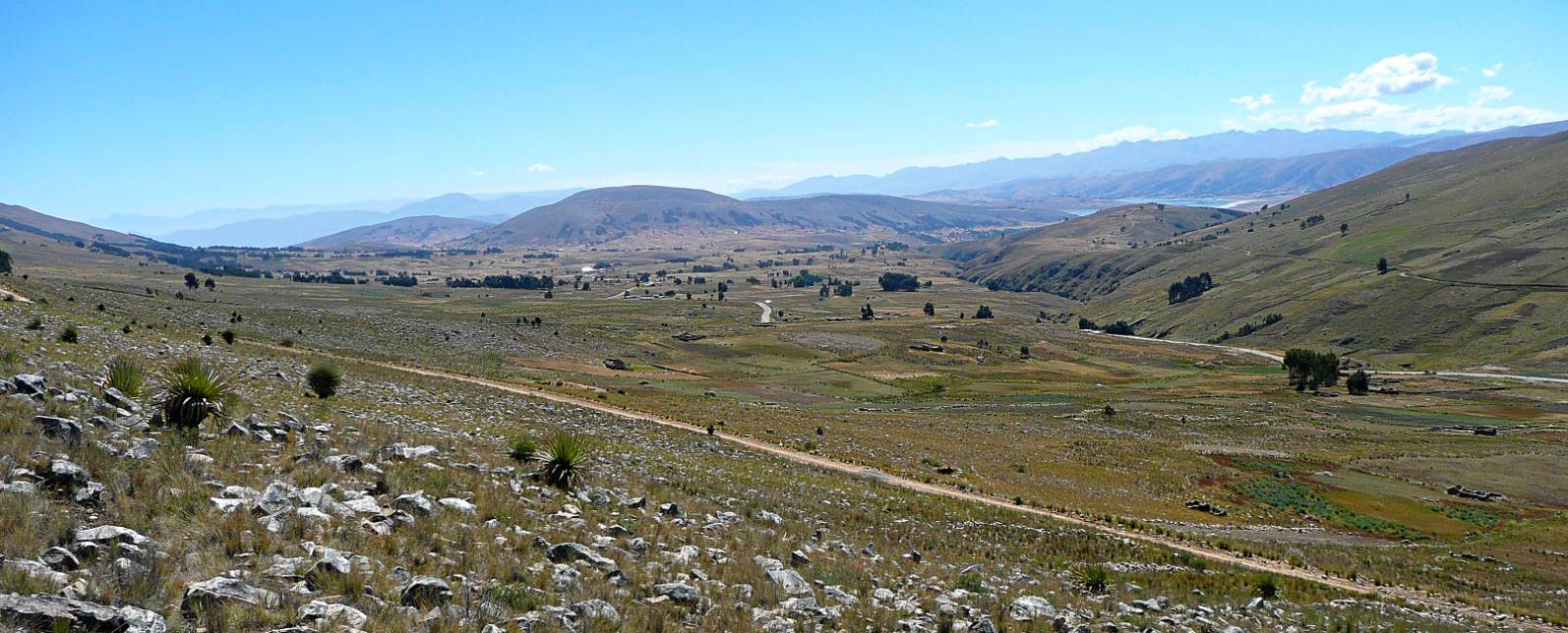 ↑ View from Puya herzogii and P. raimondii habitat, near Rodeo, Cochabamba Dept., Bolivia, 13,300′ ↑
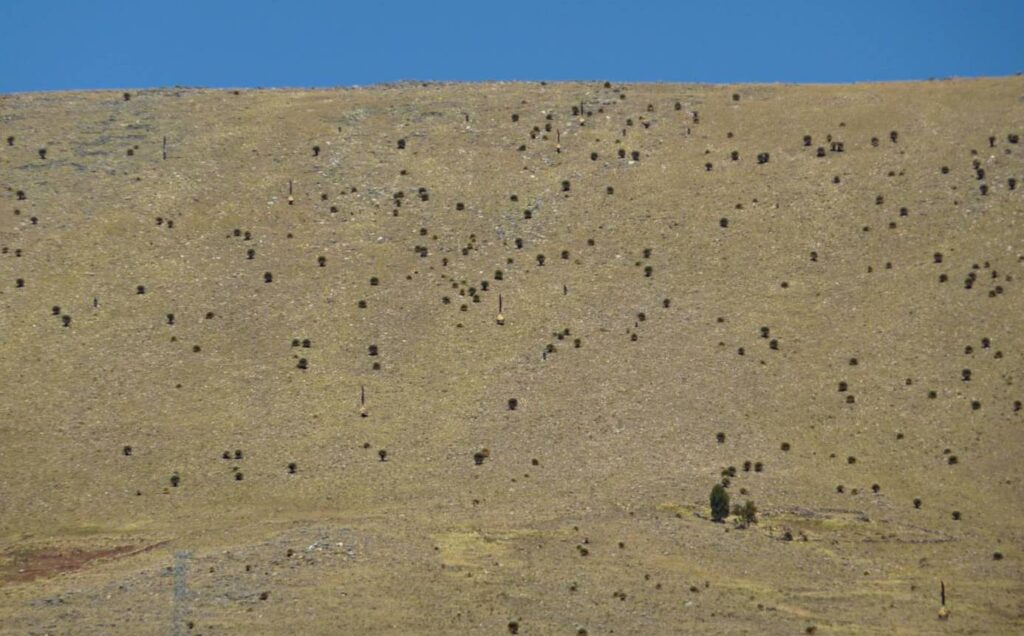 ↑ Puya raimondii & P. herzogii habitat, near Rodeo, Cochabamba, Bolivia, 13,300′ ↑
___
Puya mirabilis BK10506.2
Single rosette of very slender white leaves to 12″+ diameter. Flower stalk to 3′. Should have yellow green iridescent flowers to beguile hummingbirds. Found growing with Trichocereus aff. pachanoi BK10508.1, Cleistocacus buchtienii, and Carica quercifolia at the base of Cerro San Pedro, Cochabamba, Bolivia. Tadeo Haenke wrote in 1795 that Puya was used to treat syphilis here. An easy to grow and rewarding species. Grows quickly when potted up or out. Z9a/b?
[ 4 ] → 1 ~ 2–3″+ plant 4-5 years old $16.50
___
Puya raimondii ‘Ancash’ “Cuncush” “Titanca” “Machukawara”
The giant queen of bromeliads, forms single or occasionally branched trunks with rosettes of slender serrated leaves to 10’+ across. Massive flower stalks like a floral rocket ship with as many as 10,000+ white blooms! Upon flowering these amazing beings have been known to reach nearly 40′ tall. 30 to 80 years to blossom, set seed, then die. Forests of this strange sentinel of the heavens were once widespread, but its realm is now reduced by man to small scattered populations in the remote high Andes of Peru and Bolivia at between 12,000–15,500’+. This seed is from robust populations in the Cordillera Blanca of Ancash, Peru. We have witnessed this spectacular plant in the Cordillera Negra of Peru and Cordillera de Vacas of Bolivia. Standing on the windswept rocky ridges where you can nearly scratch the sky, surrounded by a herd of these imposing vegetal beasts, their leaves clacking and sighing with the wind, the views of a mountain magnificence that stretches countless miles, is a timeless and utterly affecting experience. This plant creates a unique ecosystem around its base where we have observed a high diversity of plant species not seen elsewhere. There are reports that the rare spectacled Andean bear eats the young flower stalks. In some regions the inner pulp of the inflorescence is dried and powdered to use as a flavoring and special “chicha” is made from the roasted and fermented pulp. The dead flower stalk is also burned and the ash made into “llipta” for coca leaf chewing. Sections of the dried inflorescence are used as torches during special festivals and as insulation and construction material. The leaves are utilized with ichu grass as roof thatching, the trunks are made into seats. In the Cordillera Negra we were told that locals have been known to burn the plants because wandering cows sometimes get stuck on the barbed leaves and perish. This exceptional and endangered species has been successfully grown in California, but is still practically unknown in cultivation. Protect from extreme summer heat. Z7?
[ 6 ] → 2 ~ 2–3″ plants 2–3 years old $28.50 each ♥ New ♥
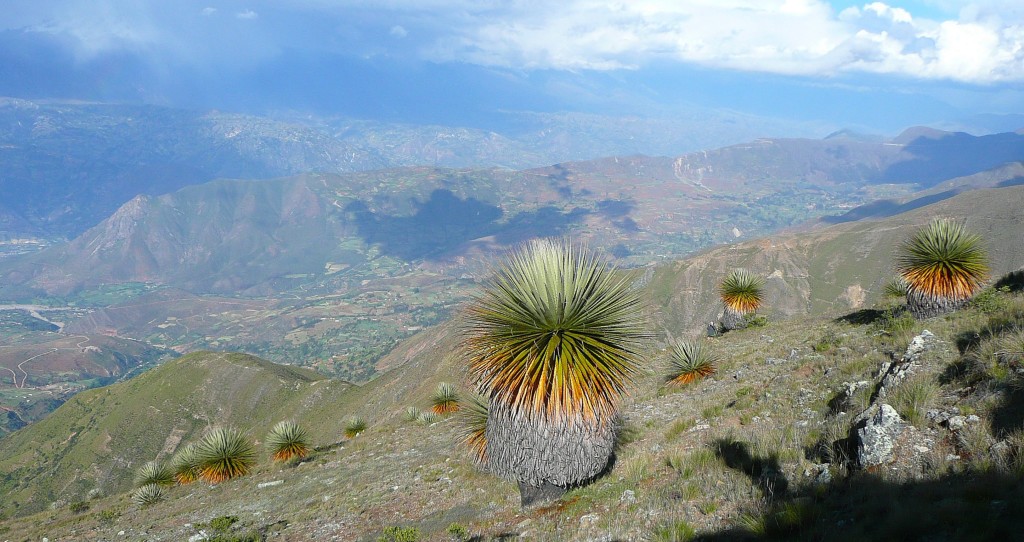 Puya raimondii in the Cordillera Negra, Peru
___
Puya sp. BK10504.2
Seed grown accession; the mother plants had rosettes to 18″ across with serrated, broad silver leaves with a red blush. Clusters of 3–4 heads, 12″ prostrate stems that look like they’ve survived repeated fires. 4’ inflorescence with densely packed seed pods. Flowers unseen. Growing with Trichocereus bridgesii, Ephedra americana, Prosopis sp., Carica quercifolia, Corryocactus melanotrichus, Echinopsis bridgesii, etc., on the slopes above Huajchilla, La Paz, Bolivia, near 11,500′. Attractive plants, long underpotted—ready for fresh soil and rapid growth. Should be cold tolerant. Z8/9?
[ 4 ] → 2 ~ 3–5″+ plants 6+ years old $16.50 each
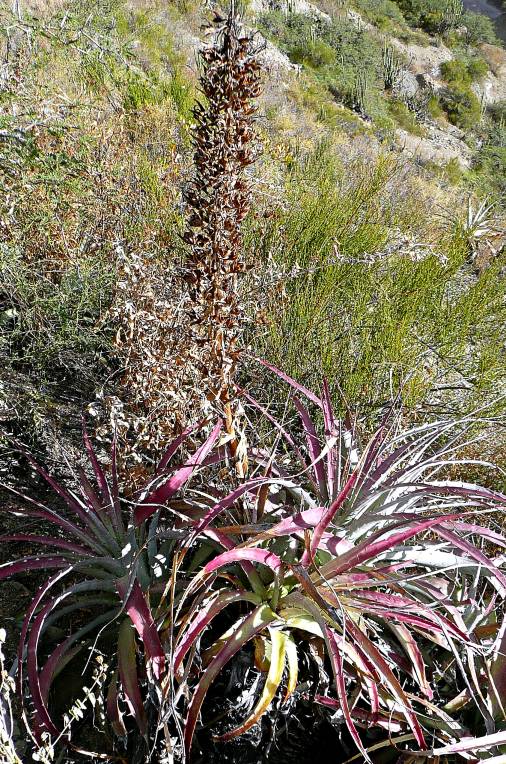
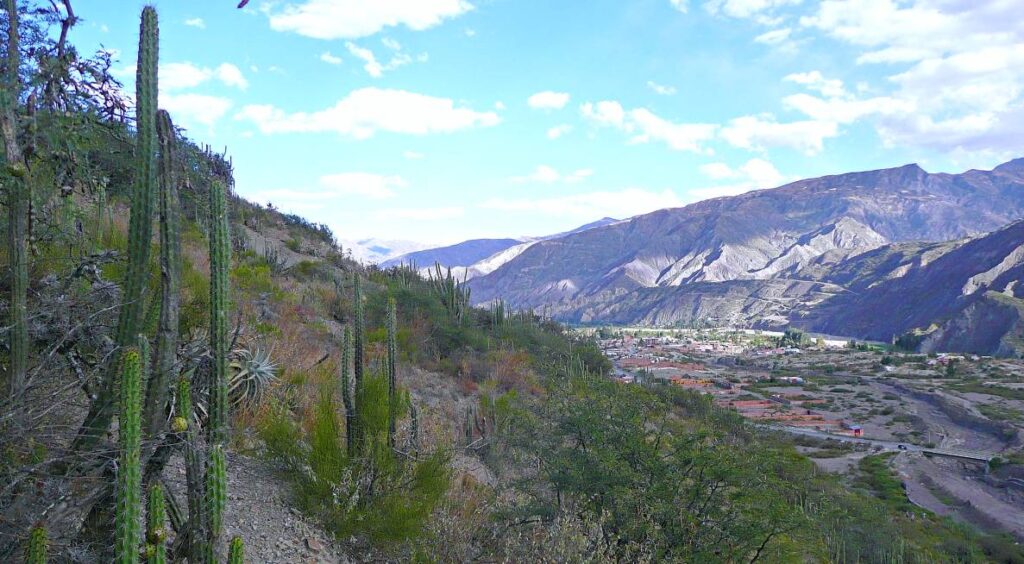 Plants in habitat, Huajchilla, La Paz, Bolivia
___
About the genus Sceletium
Aizoaceae. A small genus of low growing succulent shrubs endemic to the karroid areas of Western, Eastern and Northern Cape Provinces, South Africa. The succulent leaves grow in pairs and eventually die away leaving persistent leaf vein skeletons clothing the lower stems, which protect the plants from adverse environmental conditions. The small flowers vary in color from white to yellow and occasionally pale orange or pink. Sceletium have a variety of uses in ethnomedicine, being rich in mesembrine alkaloids. A fermented and dried preparation of S. tortuosum and other species is known as “Kougoed” and has been used since prehistoric times as a safe and beneficial inebriant. Sceletium is now being utilized as a safe and effective herbal supplement to help treat mild to medium depression and anxiety. Most of the species are practically unknown in cultivation and endangered in habitat. Sceletium is easily grown and roots readily from cuttings. Regular succulent culture. Sceletium can become weedy looking if overwatered and overfed, we prefer to grow them lean. All should be hardy to at least Z9a if kept dry.
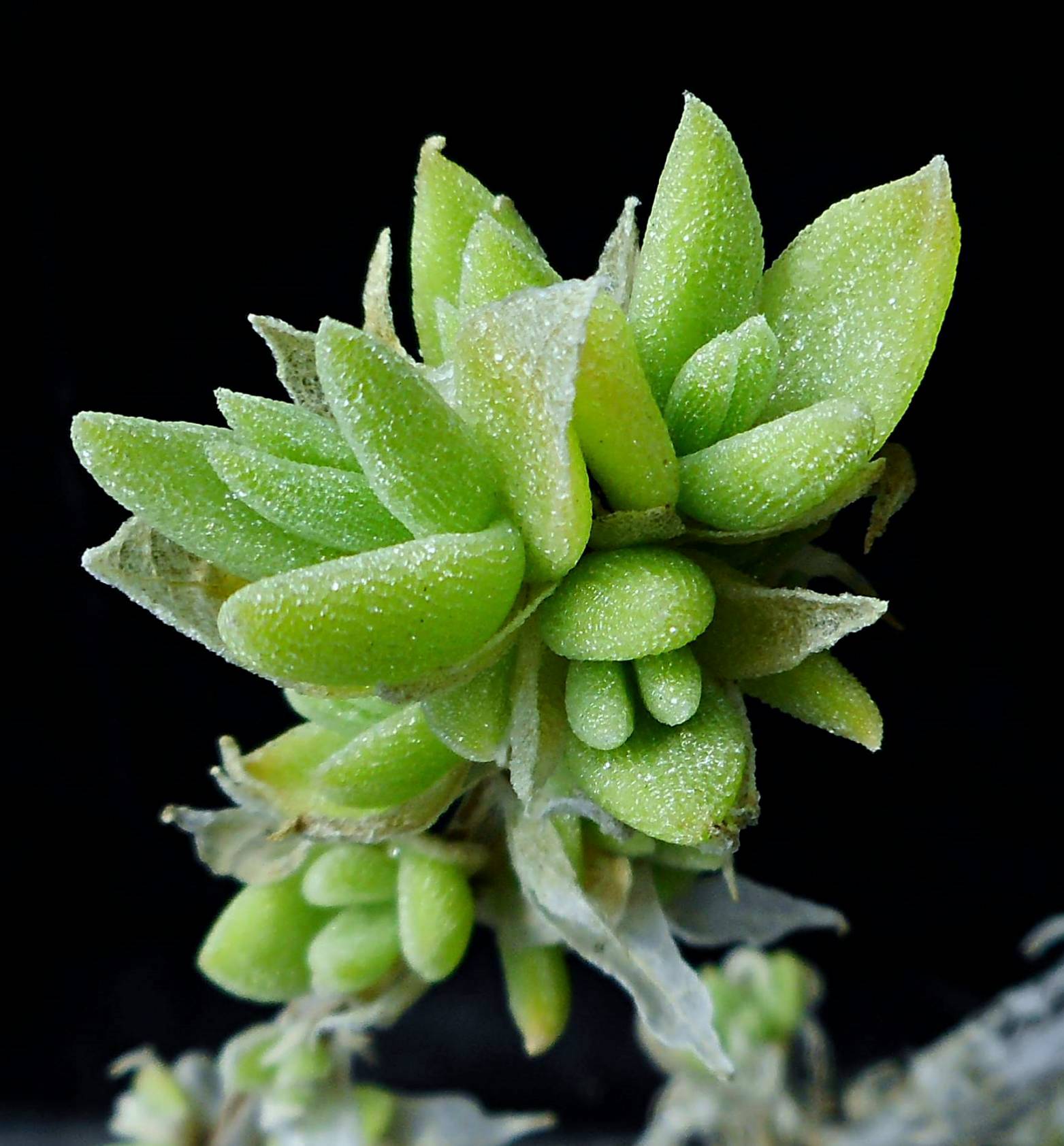 ↑ Sceletium rigidum ↑
___
Sceletium joubertii SB979 “Kanna”
Aizoaceae. A compact groundcover with pale green succulent leaves. Shiny white yellow flowers bloom winter to early summer. A distinct medicinal Kanna species, similar to S. tortuosum, but with a different biochemical makeup. Originally collected by Steve Brack near Bloutering, Little Karoo, South Africa. Regular succulent culture, roots easy from cuttings. Multiple clones available. Hardy to Z9a if kept dry.
[ 6 ] → 2 ~ Unrooted cuttings $16.50 each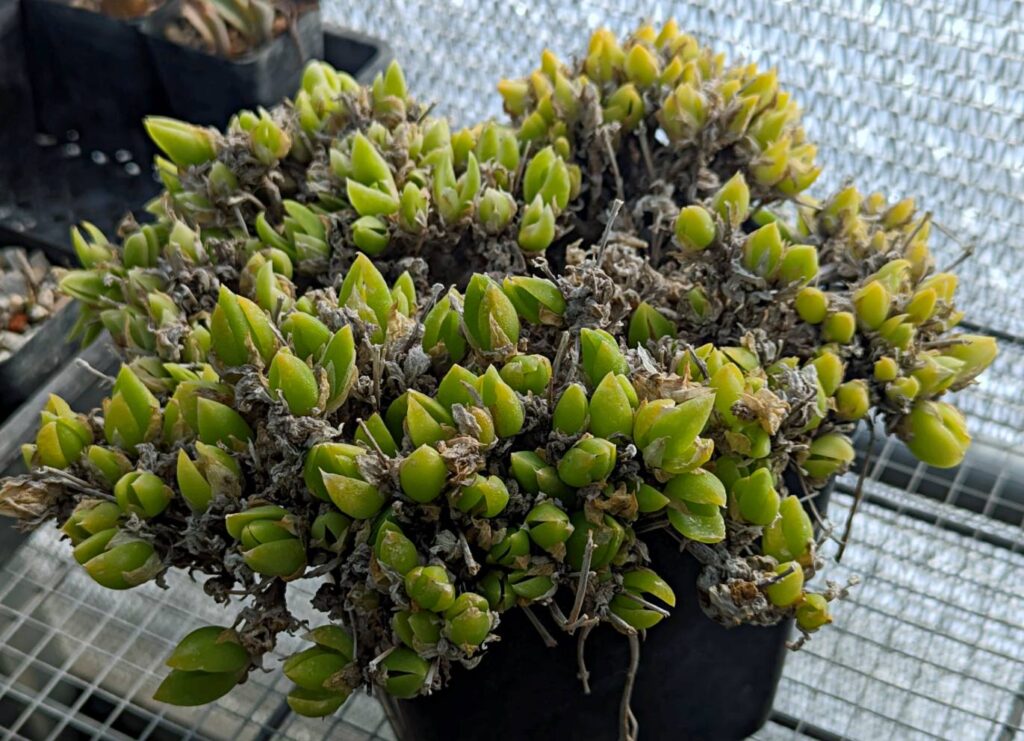
___
Sceletium rigidum “Kougoed” “Kanna”
Aizoaceae. A small upright growing shrub to 14″+ that develops a candelabra of silver-gray stems tipped with numerous rosettes of attractive, lime-green, pointed leaves that turn purplish in full sun. The large water cells on the surface of the succulent leaves gives them a sparkling, gem-like appearance. Iridescent, pure white flowers. The old leaves dry and skeletonize, clothing the lower stems with their ghostly appearance. A distinct “Kanna” species from the arid Swartberg bioregion of South Africa. Reportedly medicinal/psychoactive like other Sceletium. Regular succulent culture, does best for us in a lean, sandy soil; sun and drought hardy. This larger growing species is probably our favorite of the genus, very seldom seen outside of habitat. Cuttings from several clones. Should be hardy to Z9a if kept dry.
[ 5 ] → 2 ~ Unrooted cuttings $24.50 each September SALE $21 each
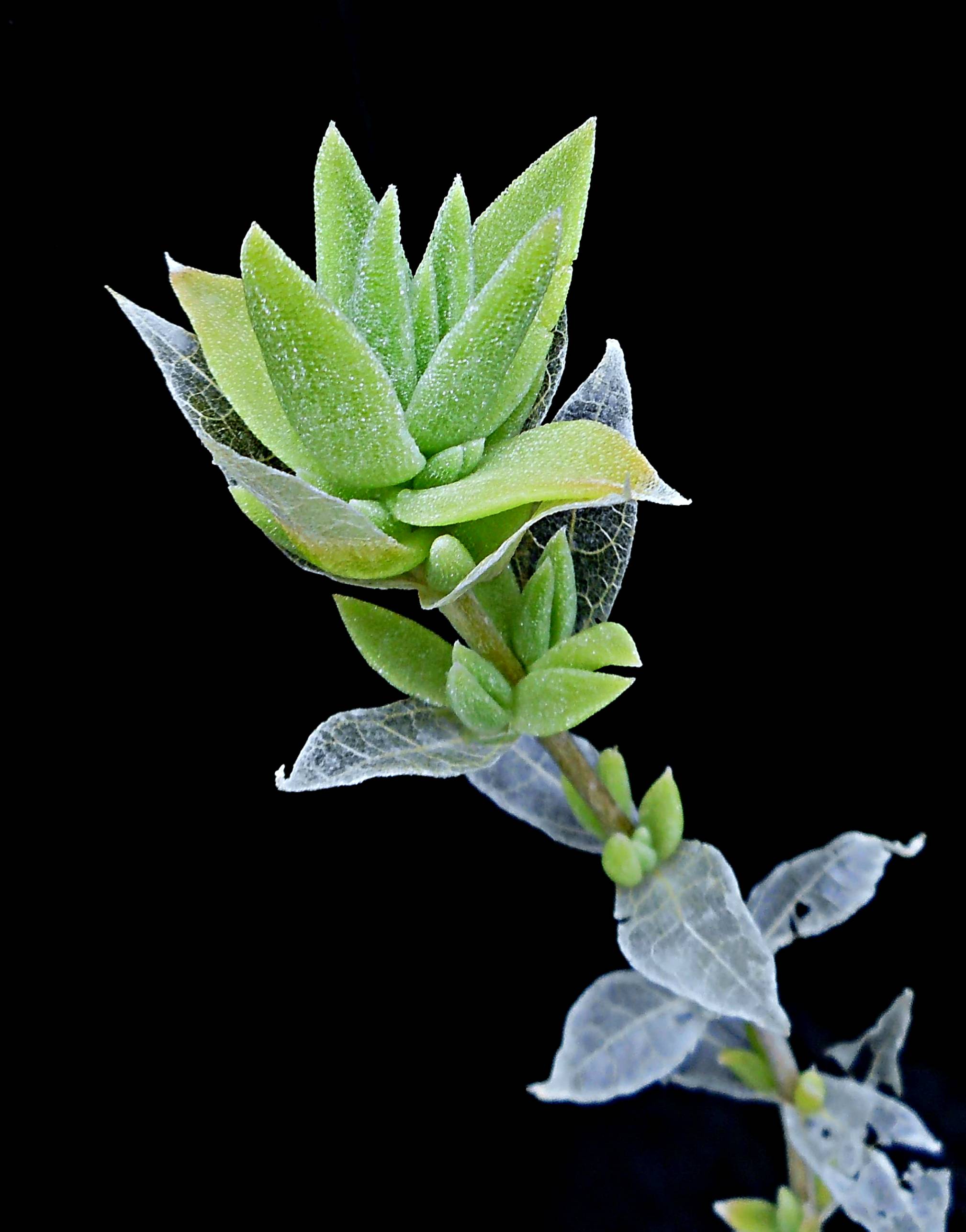
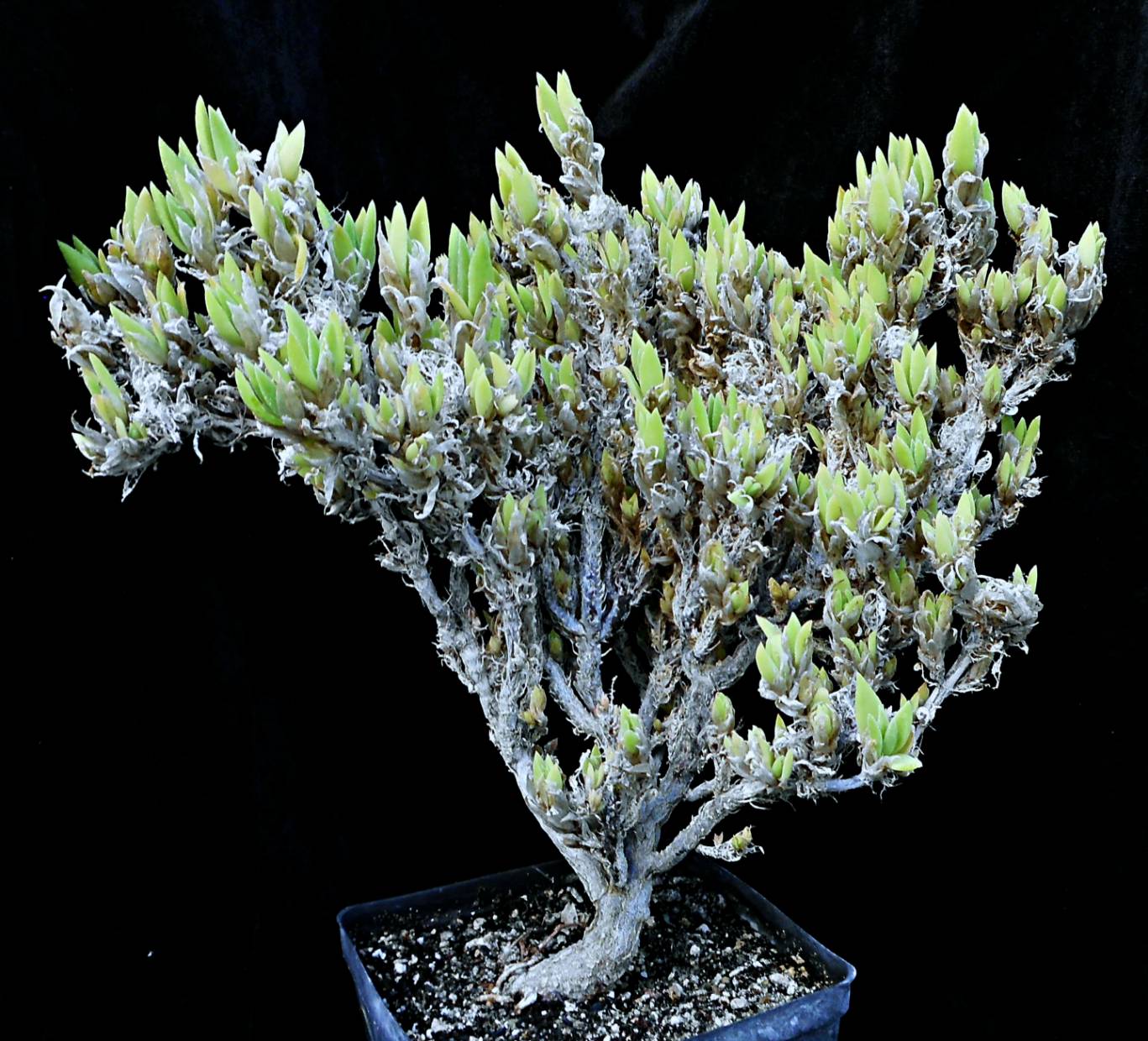
 ___
___
Sceletium tortuosum “Kougoed” “Kanna”
Small sprawling shrub with flat, pale green leaves; shiny white flowers. The succulent leaves grow in pairs and eventually die away leaving persistent leaf vein skeletons clothing the lower stems. The San and Khoi people of South Africa have a long history of using the plant as a hunger and thirst suppressant, analgesic, treatment for colic, and most importantly as a highly esteemed inebriant. The traditional manner of preparation is as follows: The whole plant is crushed between rocks, then placed in a bag and put in the sun to sweat. After a week of “fermenting” the “Kougoed” is removed from the bag and spread out to dry completely. Sceletium is known to contain potentially harmful amounts of oxalic acids which the preparation process is thought to reduce. The prepared dried material is chewed, smoked or occasionally taken as a tea or snuff. The effects are reported as quite pleasant and relaxing, decreasing anxiety, stress and tension. No severe adverse effects have been reported, even from chronic use of the plant. In fact, indigenous healers are known to use “Kougoed” to successfully treat alcoholism. Pharmacological research has shown Sceletium to be highly complex chemically, with as many as 9 alkaloids that are found to fluctuate seasonally. Modern science is looking at the anxiolytic and antidepressant properties of Sceletium alkaloids as well as their potential anti-cancer activity. Sceletium is now being marketed as a highly effective and safe natural supplement to elevate and regulate mood. Plant gatherers have observed that wild populations of S. tortuosum are becoming increasingly scarce, likely due to over collection. Protection through cultivation is encouraged. Regular succulent culture, cuttings root easily. Cuttings from multiple clones. Hardy to Z9a if kept dry.
[ 16 ] → 3 ~ Unrooted cuttings $16.50 each September SALE! 3 for $44
___
Sceletium sp. SB661 “Kougoed” “Kanna”
Low growing species with larger succulent leaves than most, extra large white flowers. A handsome plant that tends to keep compact growth even when given rich soil and moisture. May be a robust form of S. tortuosum. Same medicinal properties as other Sceletium. Grown from seed from Brandrivier, South Africa. Cuttings from several clones. Hardy to Z9a if kept dry.
[ 6 ] → 2 ~ Unrooted cuttings $18.50 each
 ___
___
Sedum aff. reniforme BK09508.3
Crassulaceae. It’s been some years since we’ve offered this diminutive succulent. Sprawling clusters of small columnar stems to 4–6″ with densely packed, chubby, green-gray leaves. Star shaped white flowers with yellow or pink centers. G. Pino thinks this might be a large form of Sedum reniforme, or possibly a new species. Growing on rocks and steep slopes with Peperomia galioides, Peperomia aff. naviculaefolia, Matucana sp., Borzicactus fieldianius, Trichocereus sp. BK09508.2, and others, on the western mountain above the ruins of Chavin de Huantar to the north side of the Wachesca River, Ancash Dept., 10,900′. A delightful natural Trichocereus companion to plant around the base of your cacti! Easily grown, drought hardy and cold tolerant to at least Z9a, possibly lower.
[ 4 ] → 2 ~ 1.5–2″ cuttings $19.50 each
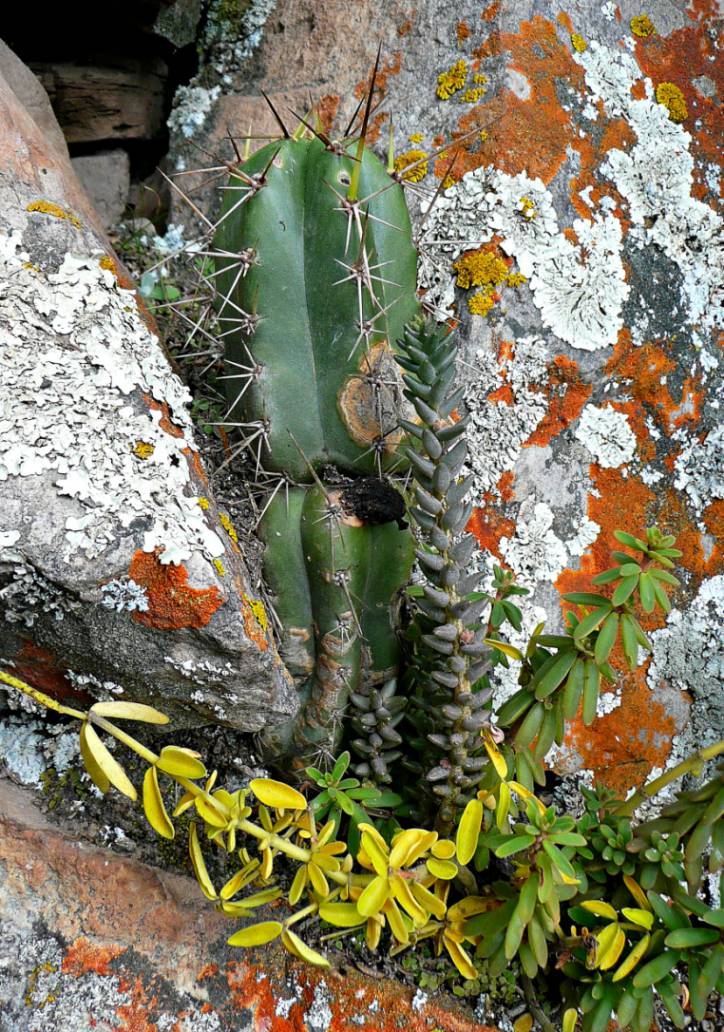
___
Villadia virgata BK14508.4
Crassulaceae. A fantastic Sedum relative that we introduced to cultivation about a decade ago. Upright columnar stems to 6″+. Cylindrical gray-green succulent leaves in dense spiral arrangement. Terminal spike of white flowers followed but rust colored seed pods. Originally thought to be a new species, recent taxonomical work we contributed to shows it to be the southern range of V. virgata. Rock outcrops, Pisac, Cusco Dept. Peru, 10,500′. One in a whole community of plants such as Peperomia galioides & peruviana, Pilea serpyllaceae, Echeveria cuscoensis, Tillandsia spp., Oxalis sp., Cheilanthes, etc., that grow with Trichocereus cuzcoensis and make this a perfect ally to plant with your Trichos. The first we’ve offered this beauty in quite some time. Tolerant of sun and drought, the full range of its cold hardiness is still untested, but survives just fine to Z9a.
[ 4 ] → 2 ~ 2–4″ cuttings $19.50 each
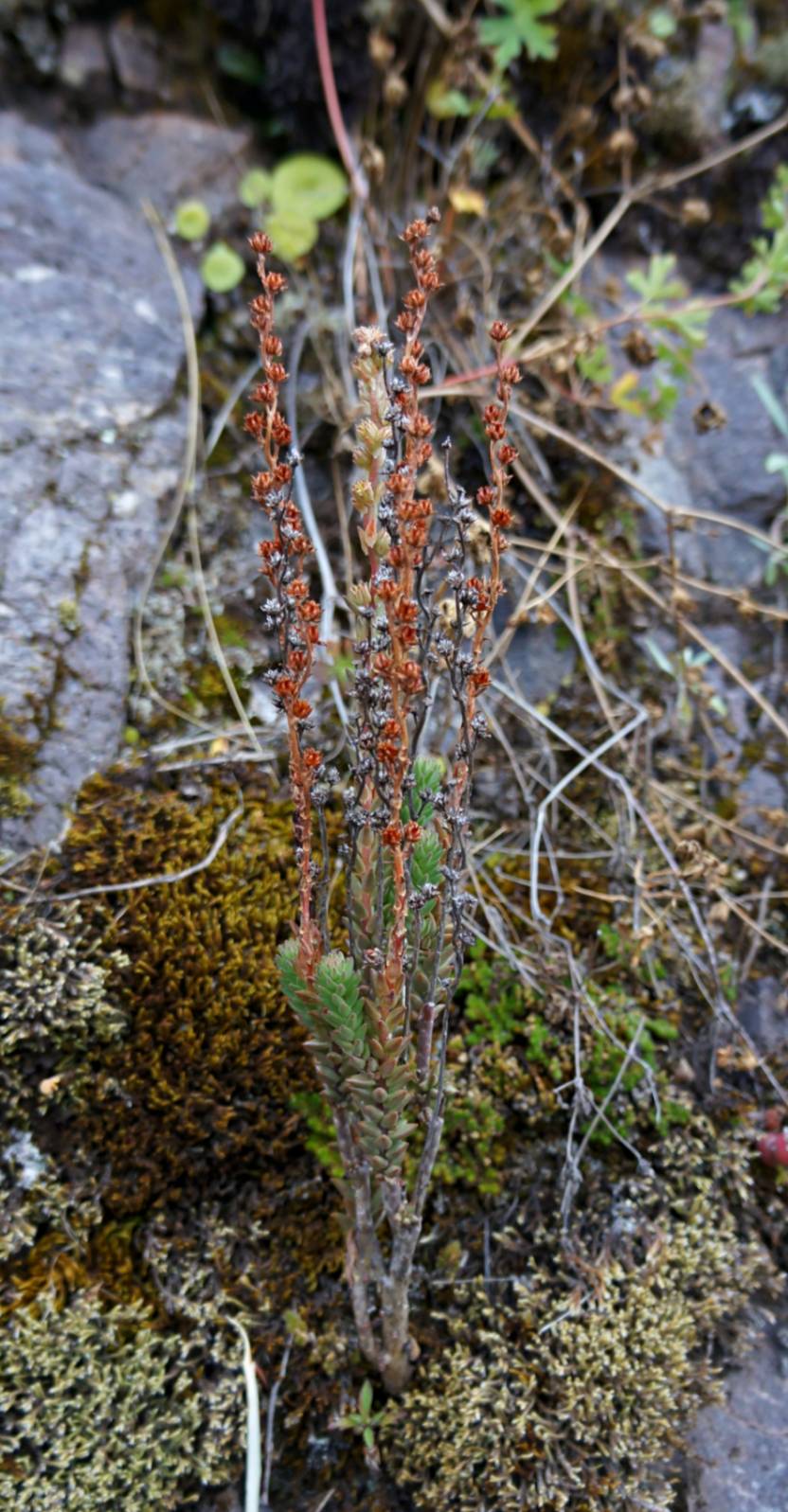
___
Yucca angustissima RMRP2943-JC “Narrow Leaf Dwarf Yucca”
Agavaceae. Dwarf species to 16–30″+ tall. Rounded heads of very slender leaves 1–2′ long with fibrous white margins. 3–4’+ inflorescense with egg shaped cream colored blooms with purplish sepals, pollinated by moths. Southwestern USA. The young fruits were baked and eaten by several tribes. Flowers also have good edibility and the young shoots can be peeled and cooked like asparagus. The Coyotero Apache used the plant for insect and snake bites. The leaf fibers were made into cordage, mats, etc. Leaves were woven into fireplace hoods by the Hopi. The roots make a good soap and were used in marriage ceremonies by the Oraibi. A very drought and cold hardy plant. A few long underpotted specimens available. Z5a
[ 4 ] → 1 ~ Plant 5+ years old $14.50
___
♣
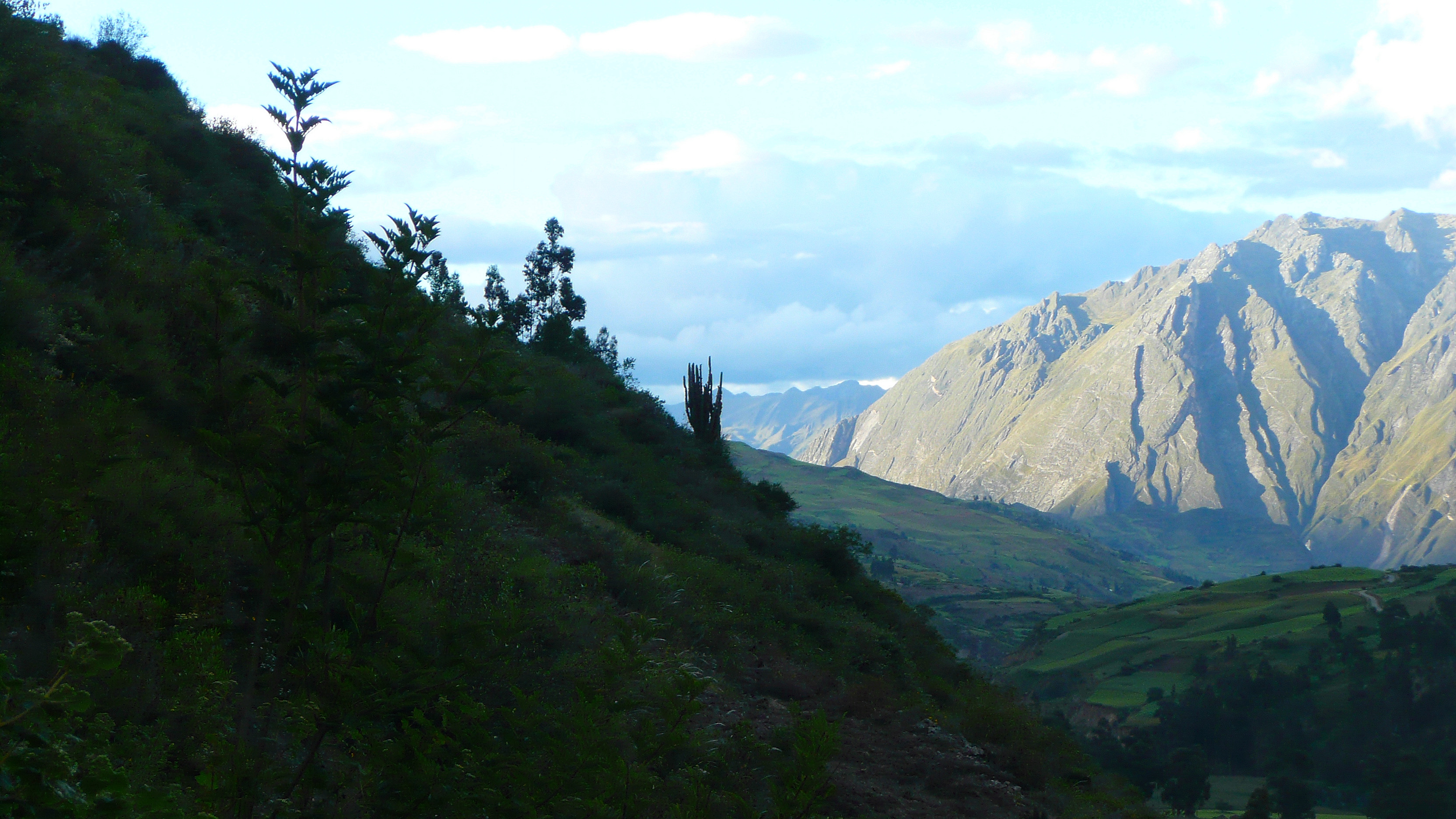 ↑ Above Chavín de Huántar, Ancash Dept., Peru ↑
♣
Andean Ethnobotanicals
See above for Andean Cactaceae and other Succulents & Xerophytes.
See below this section for our offerings of Neotropical Blueberries.
For Andean tuber cultivars and other crops, see our updated Andean Tuber Crop page.
◊
In the mid 1980s, at the impressionable age of 12, I was fortunate to be introduced to the vibrant ecological tapestry of Andean Peru during a family trip. Since 1996, I have returned repeatedly to marvel at the unparalleled floristic diversity and explore the rugged mountains of central and southern Peru, Bolivia and Argentina, studying the ethnobotany, ecology and archaeology of the region, paying tribute to the land and people, and continuing long term studies of the endangered high-Andean forests and Trichocereus distribution. Along the way, we have been fortunate to help ‘discover’ a number of ‘new’ (to science, not to locals) species—with our friend Dr. Guillermo Pino we’ve described several Echeveria [also see Quepo 32] and Sedum species, while pending publication of our other discoveries simply awaits our time or further field work.
The astonishingly diverse terrain, ecosystems, and myriad microclimates of the Andes, along with the ancient relics of some of the most complex, biogenerative agriculture and terraforming ever developed, make it among the utmost species rich plant-regions in the entire world. The biodiversity of some locales rivals the nearby Amazon, yet it is estimated that less than 10% of the Andean forests remain. In fact, the high-elevation Polylepis forests, the Andean people’s sacred ancestral groves from which life once flowed, are now considered one of the most endangered forest ecosystems on the planet. With this always in mind, we’ve made only responsible, conservation minded collections of seed, documenting their ecology and ethnobotany—with the aim to support preservation through education, propagation and distribution. Additionally, we have sourced or been sent seed from fellow researchers and conservationists throughout the Andean region, from Columbia down to southern Chile. Outside certain botanical gardens, we now steward one of the foremost collections of Andean plants in North America. We offer limited quantities of fascinating species each season; all of the BK numbered offerings are grown from our field accession seed or the progeny we’ve established in our gardens. Many are completely new to cultivation, once-in-a-lifetime offerings from remote and forgotten lands, when these are sold out they may never be available again. Purchases will help support future research expeditions, publications, and our continual study of the wondrous diversity of Andean plant life, intertwined with the region’s superlative ethnobotanical wisdom and extraordinary history.
Many of these plants are new introductions to cultivation, we have general recommendations for their care, yet their needs may prove contrary to our suggestions or experience. Please keep track of the accession collection data, your experiences growing them in your area, and let us know! This way you can help contribute to the long term study and conservation of the remarkable plants of these regions.
We have supplied and donated our Andean accessions to many botanical gardens, to see some of the plants firsthand you can visit the UC Berkeley Botanical Gardens (which houses the largest number of our BK field accessions after we donated hundreds of plants in 2019), the Huntington Botanical Gardens, the Seattle Spheres, the New York Botanical Garden, or the Ventura Botanical Gardens, to name just a few.
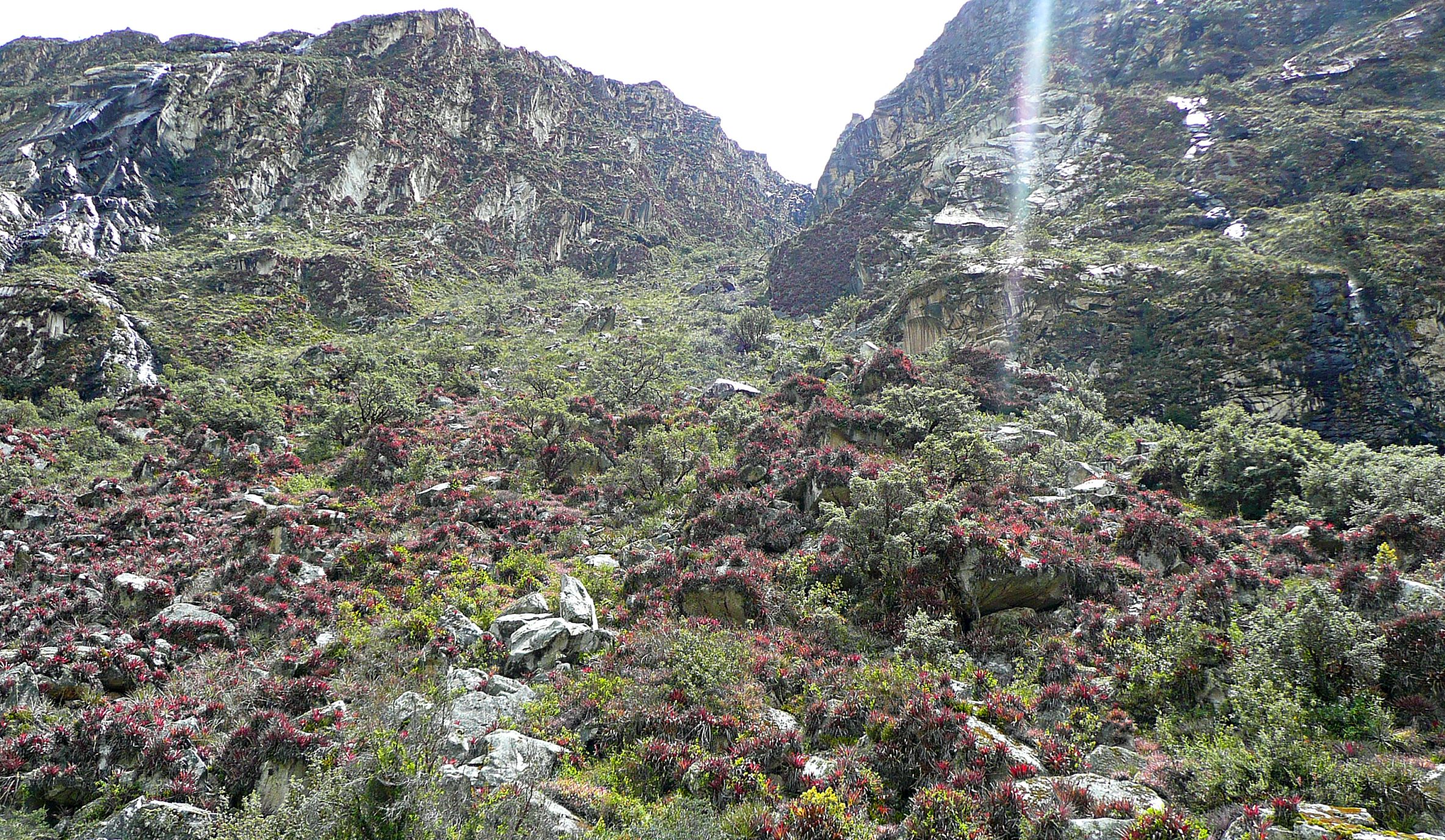 ↑ Bromeliads & Polylepis, Lagunas de Llanganuco, Cordillera Blanca, Ancash Dept., Peru ↑
◊
Amaranthus caudatus “Kiwicha” — see the Other Andean Food Crops on our updated Andean Tuber Crop page.
___
Amomyrtus luma “Luma” “Caochuo”
Myrtaceae. Evergreen shrub/tree from 10′ to 50’+. Ornamental, smooth red-brown bark and ovate leaves. Clusters of scented white flowers adorn the branches. Purple-black edible berries esteemed by the Mapuche for marmalade and chicha. Native to central and southern Chile. Plantations exist in Spain for the extremely hard and durable wood. There is some confusion in the nursery trade between this plant and the more widely grown Luma apiculata. Easy to grow, somewhat drought tolerant once established. Last plant available for some time. Z8a
[ 2 ] → 1 ~ 10″+ plant 3+ years old $19.50 SOLD
___
Aristotelia chilensis “Macqui Berry”
Elaeocarpaceae. Dioecious shrub to 15′ +. Lanceolate leaves, small white flowers, dark purple-black seedy fruits with a taste similar to tart blueberries. A pioneer plant found mostly in cleared forests and lower mountain hillsides of Chile. The edible fruit are used for brewing wine and chicha, the leaves for sore throats, wound healing, intestinal tumors, and as an analgesic. Recent studies show that the berries have a very high antioxidant value and they are now being promoted as a superfood in the US from “pristine Patagonia”. We put the berries in the blender with a little water, strain the seeds and use the deep purple juice. Easy to grow, prefers rich soil. A good food forest plant, fast growing. Part shade to sun. Unsexed, larger plants ready for out planting! Z8a
[ 3 ] → 2 ~ 20-24″+ plants 3+years old $29.50** each SOLD
[ 4 ] → 2 ~ 30–36″+ plants 3-4 years old $38.50** each
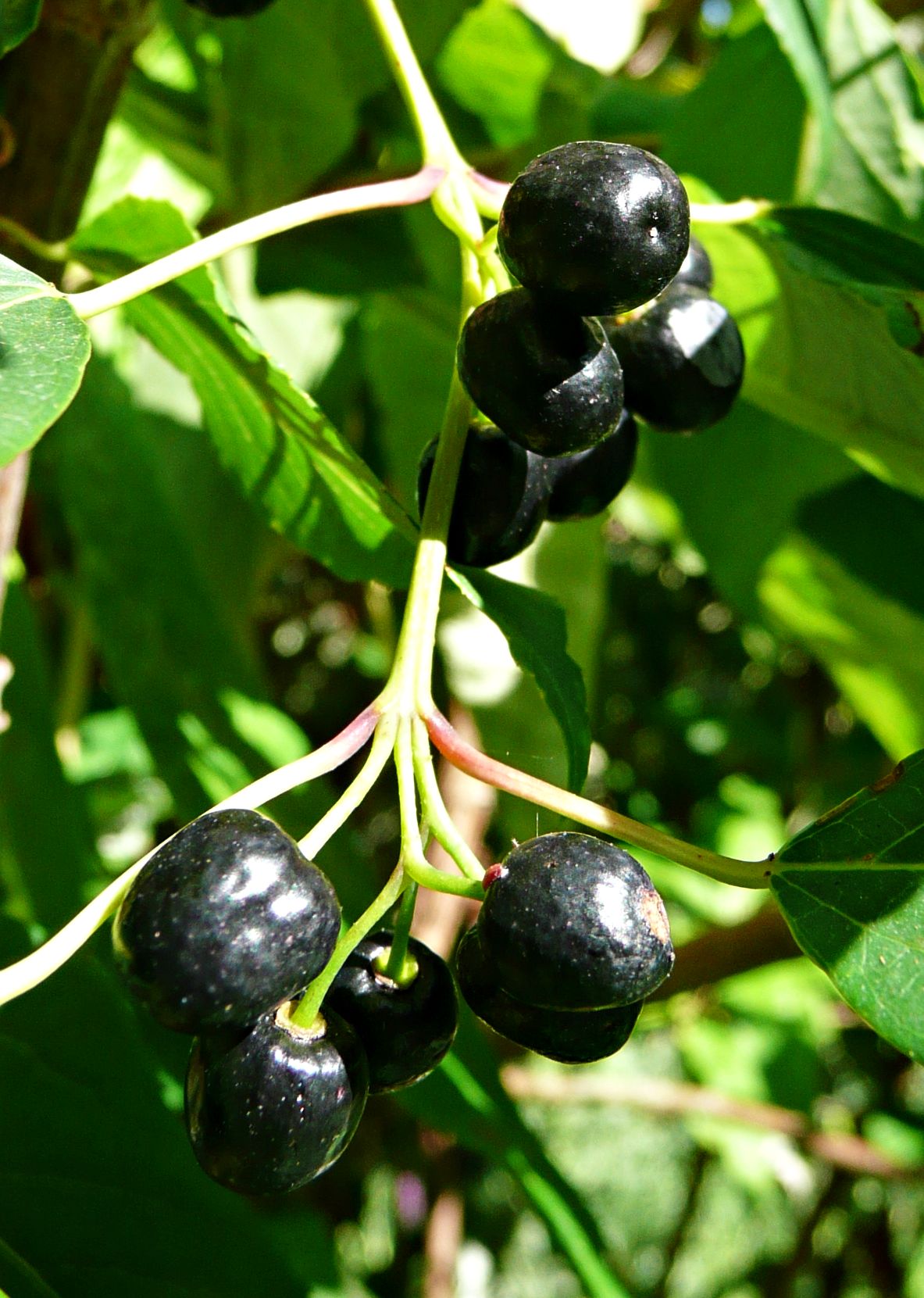
___
Arracacia xanthorrhiza “Arracacha” “Apio” — see our updated Andean Tuber Crop page.
___
Blechnum aff. appendiculatum BK14512.4
Blechnaceae. Attractive small creeping fern. Rosettes of glossy imparipinnate foliage to 6″+ long, new fronds are an alluring rosy-red. Rocky slopes, shrub understory, near Capuliyoc pass, Cusco Dept., Peru, 9600′. May be drought deciduous. Easily grown, an excellent companion species for Trichocereus. Z9?
[ 4 ] → 2 ~ Plants 5+ years old $18.50 each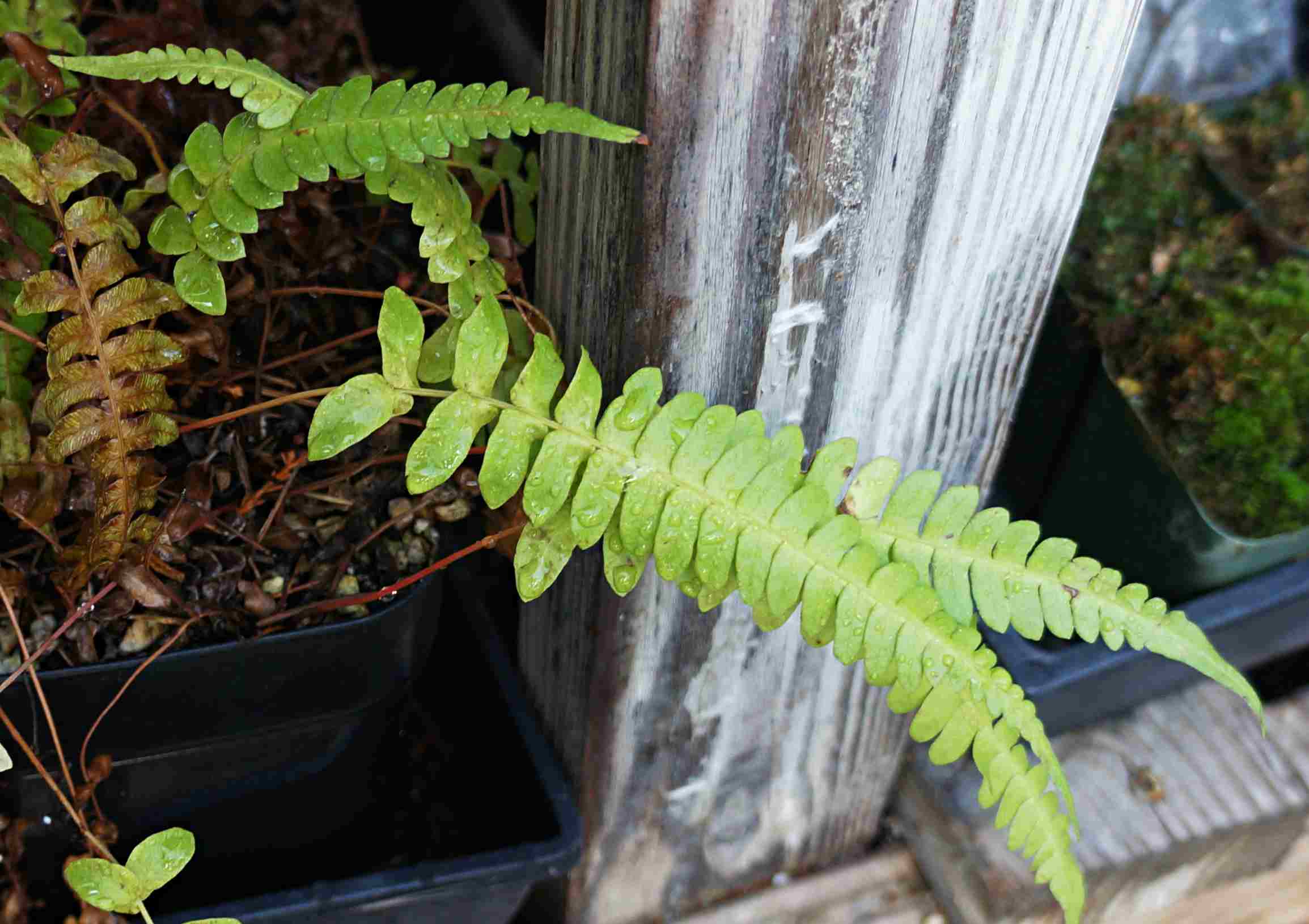
___
Bomarea involucrosa BK14510.7
Alstroemeriaceae or Liliaceae. Wichuraea subgenus, this is a non vining species with erect, bamboo-like annual stems to 6’+. Slender blue-green leaves. Dense terminal clusters of nodding yellow-green tubular flowers to 3″+ long. Egg size seed pods with orange seeds. The large tuber of B. involucrosa is considered noxious by locals and is not eaten, considered medicinal/ornamental. Growing in remnant Incan forest amongst mixed Polylepis incana, P. lanata and P. microphylla trees next to a water shrine that is the lower part of the ancient Incan site of Chakan, Cusco, Peru, 12,000′. Makes a fantastic garden specimen or companion to your Trichocereus; well draining soil, sun to part shade. The stems die back and go dormant winter to mid summer. One of the more drought and cold tolerant species, should be hardy well below Z8a if well mulched.
[6 ] → 1 ~ 3–4 year old plant $34.50 SOLD
___
Bomarea rosea BK09509.4
Twining lily-vine with lanceolate green leaves to 3″, slightly fuzzy undersides. Umbels of 4–10+ trumpet shaped, 3/4″ flowers. Outer tepals lightly pubescent, pale pink to peach, tipped light green to turquoise. Inner tepals longer than outer, green with linear dark spots and a pink central stripe, sometimes outlined in dark brown. Green ovary and turquoise pollen. Attractive red-orange seeds. Growing on Senna shrubs on the hillside north of town of Chavin, Ancash Dept., 10,500′. This is the first time this rare species has been reported from this region. The Andes boasts 80+ species of these fantastic climbing lilies. Known regionally as “sullu-sullu” “orq-orqo” or “paicha-paicha”, some species are used to treat venereal disease, infertility, kidney pain and hemorrhaging. Many produce clusters of round edible tubers, 1″ or larger, and were once cultivated in pre-Columbian times. The young shoots are also eaten. Easily grown, well draining soil, sun to part shade. The vines/stems die back and go dormant winter to early summer. Z8b?
[4 ] → 1 ~ 3–4 year old plant $32.50 SOLD
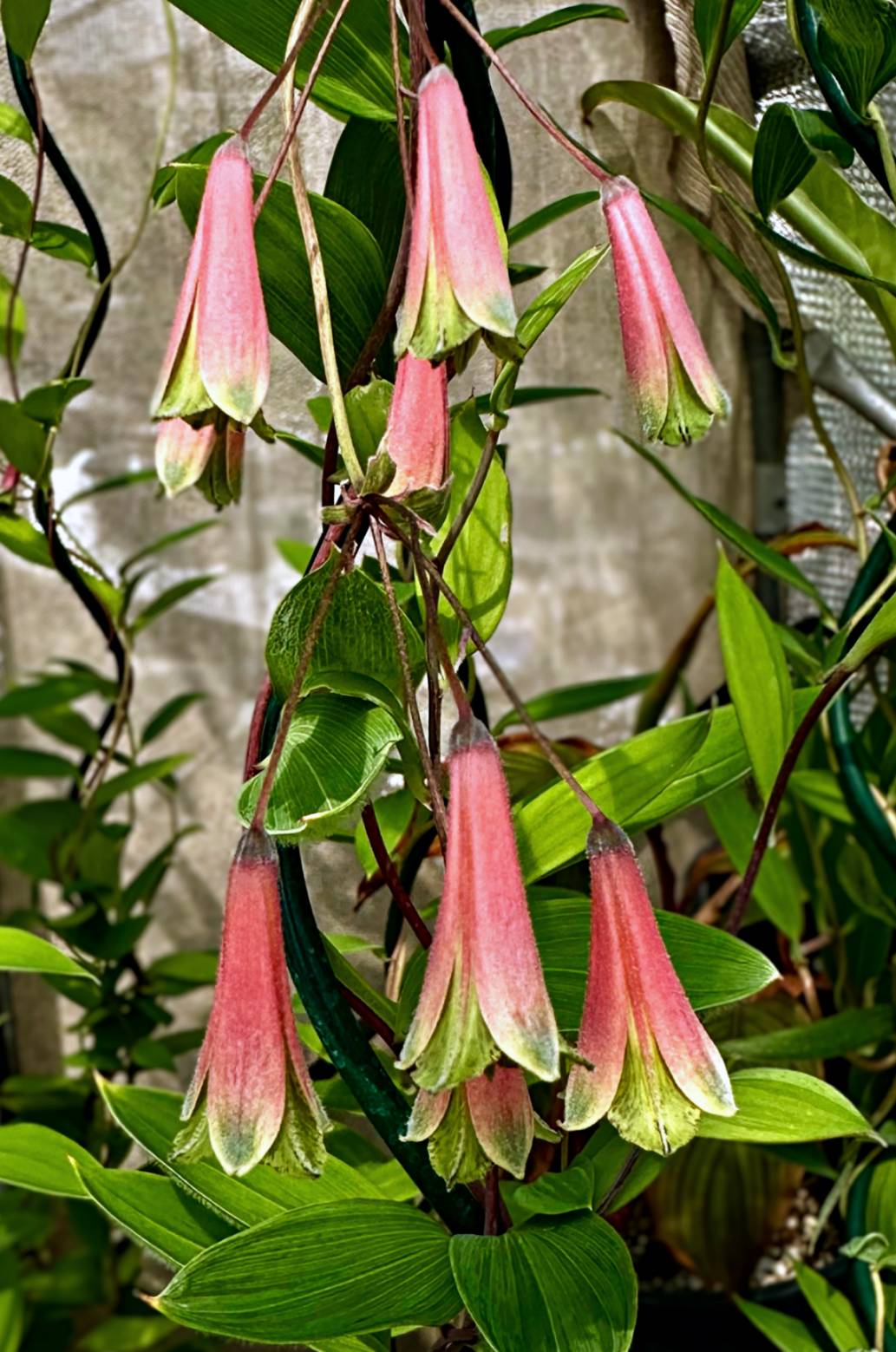 ___
___
Calceolaria luxurians
Scrophulariacae. A low growing perennial that forms large rosettes of dark green rugose leaves. Branched inflorescence to 18″+ with dozens of bright yellow pouch flowers with red dots inside the ‘mouth’ and on the back of the pouch. Holubec collection from plants growing streamside, Aconcagua, Mendoza, Argentina, 11,200′. A highly floriferous ornamental, one of the easiest species to grow in this large and diverse genus of pouch flowers. Makes an excellent addition to any garden and has self sown among our Trichocereus, which seem to appreciate the way the flattened leaves help the soil retain moisture. Z7/8?
[ 10] → 2 ~ 2–4″+ wide plants, 2+ years old $15.50 each September SALE $13 each
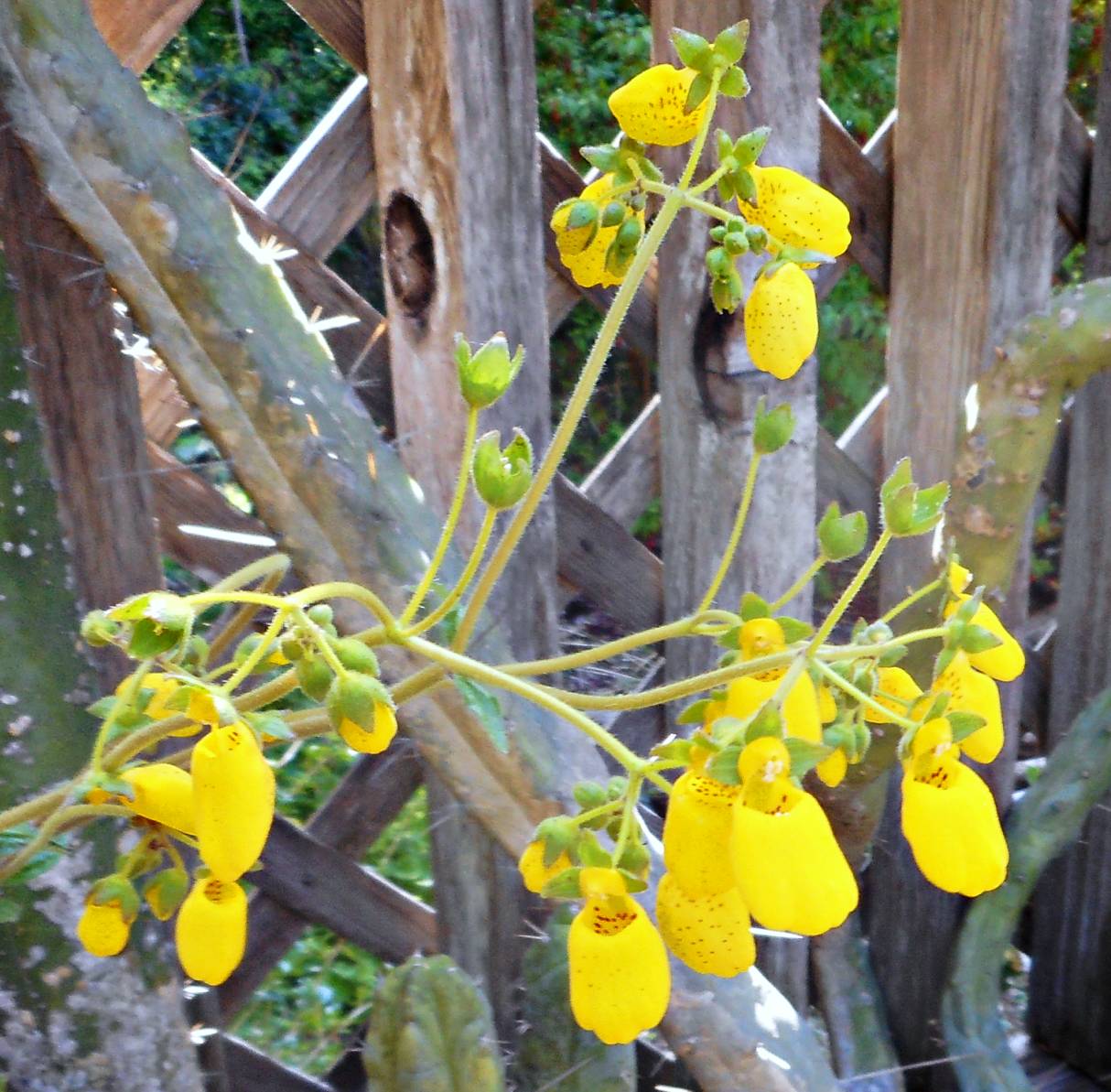
 ↑ Calceolaria luxurians in full bloom ↑
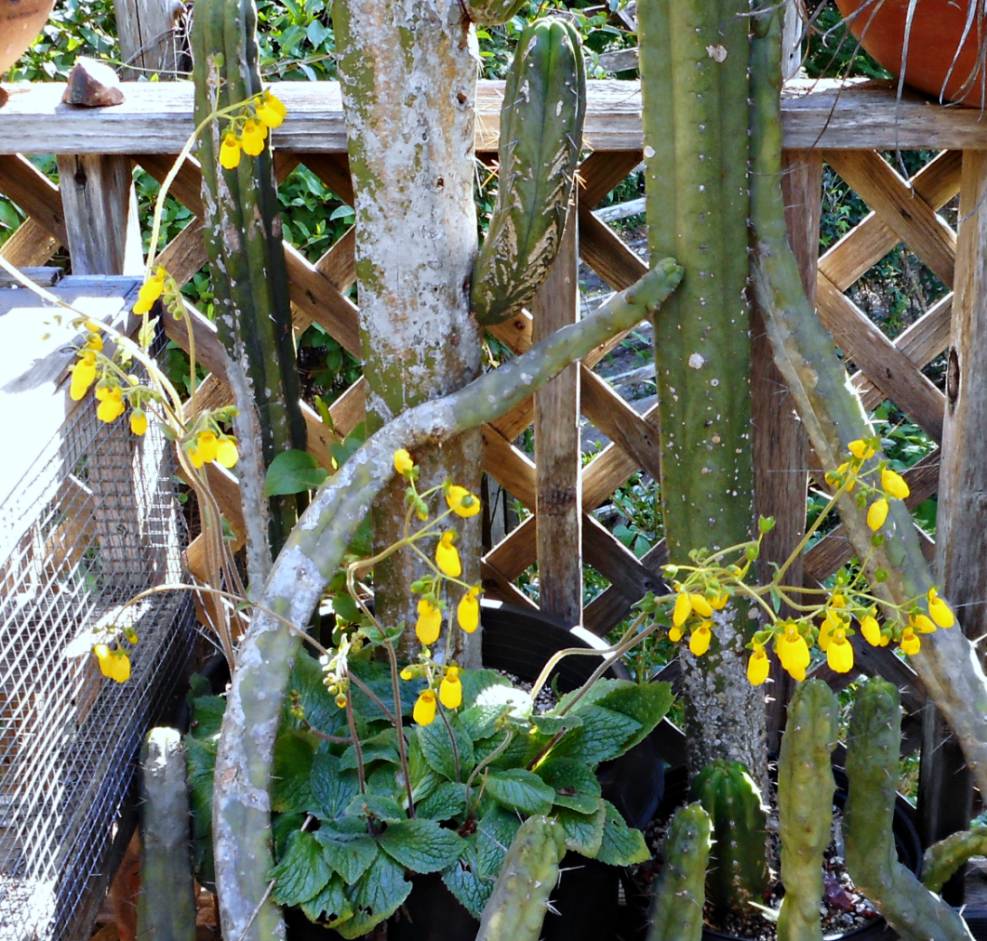 ↑ Calceolaria luxurians growing at the base of Trichocereus bridgesii ↑
___
Canna edulis “Achira” — see our updated Andean Tuber Crop page.
___
Canna sp. SHL020916.01 “Achira Silvestre”
Large dark green leaves arise from thick rhizomes, flowers not yet seen but are likely red to orange. Seed collected by S. Lipe in highland jungle/cloud forest on the Pilcopata to Paucartambo road, Manu, Peru near 6500′. This wild achira should have edible rhizomes and distinct ornamental merit. Only offered once before. Easy to grow. Z9b?
[ 4 ] → 2 ~ 14–18″+ plants, 2-3 years old $24.50* each September SALE! $21* each; or 2 for $37*
___
Cavendishia & Ceratostema species — see Neotropical Blueberries below ↓
___
Chenopodium pallidicaule “Kaniwa” & Chenopodium quinoa “Quinoa” — see the Other Andean Food Crops on our updated Andean Tuber Crop page.
___
Colletia ulicina “Kunko Rojo” “Wayun”
Rhamnaceae. The first time in some years that we’ve been able to offer this plant outside of auction and at discounted prices! Very unusual and amazingly cool beneficial shrub to 10′ tall. Nearly leafless branches covered in many small, multibranched, photosynthetic green spines. Tubular red-pink flowers are borne en masse along the branch ends. Endemic to central Chile. Arguably the most interesting and showy species of this South American genus. Can be planted as a living fence that enriches the soil; root bacteria fix nitrogen and fertilize the earth around the plant. Drought and cold hardy. Seed has very erratic germination and we rarely have a chance to offer more than 1–2 seedlings a year. Has become highly valued by collectors, seedlings have gone for hundreds of dollars in our auctions. This awesome plant is easy to grow and highly rewarding. You’ll want to get one (or a few) before they’re gone! Z8a
[ 8 ] → 1 ~ 13–16″+ plant 4+ years old $77* SOLD
[ 12 ] → 4 ~ 6–10″+ plants 3–4 years old $55 each September SALE! $48 each; or 2 for $84; or 4 for $146
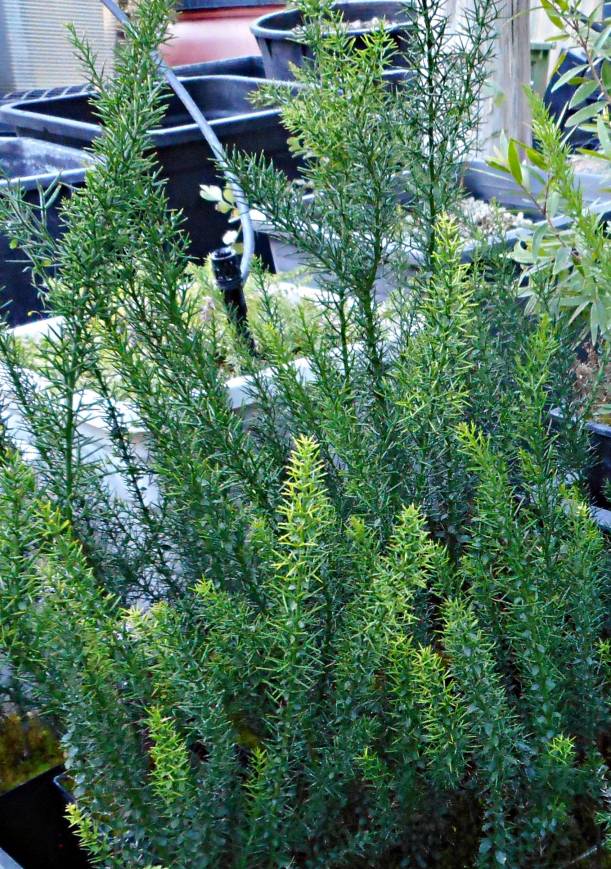 ↑ Young plants ↑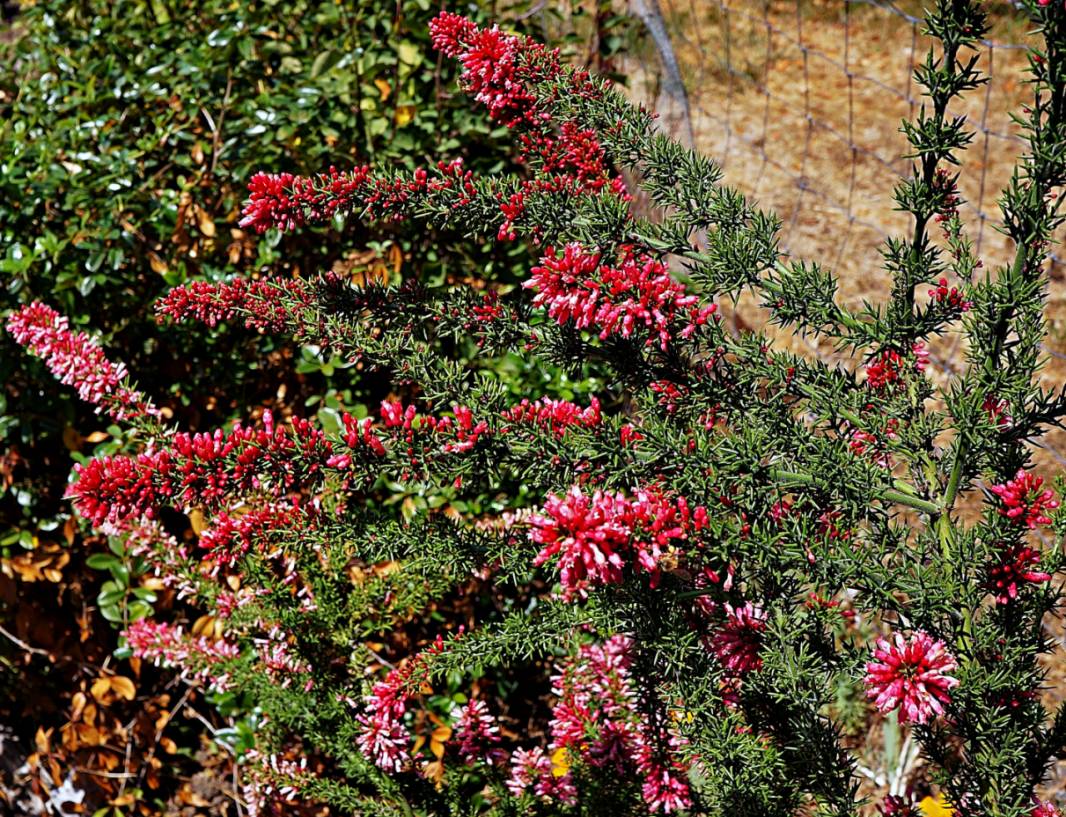
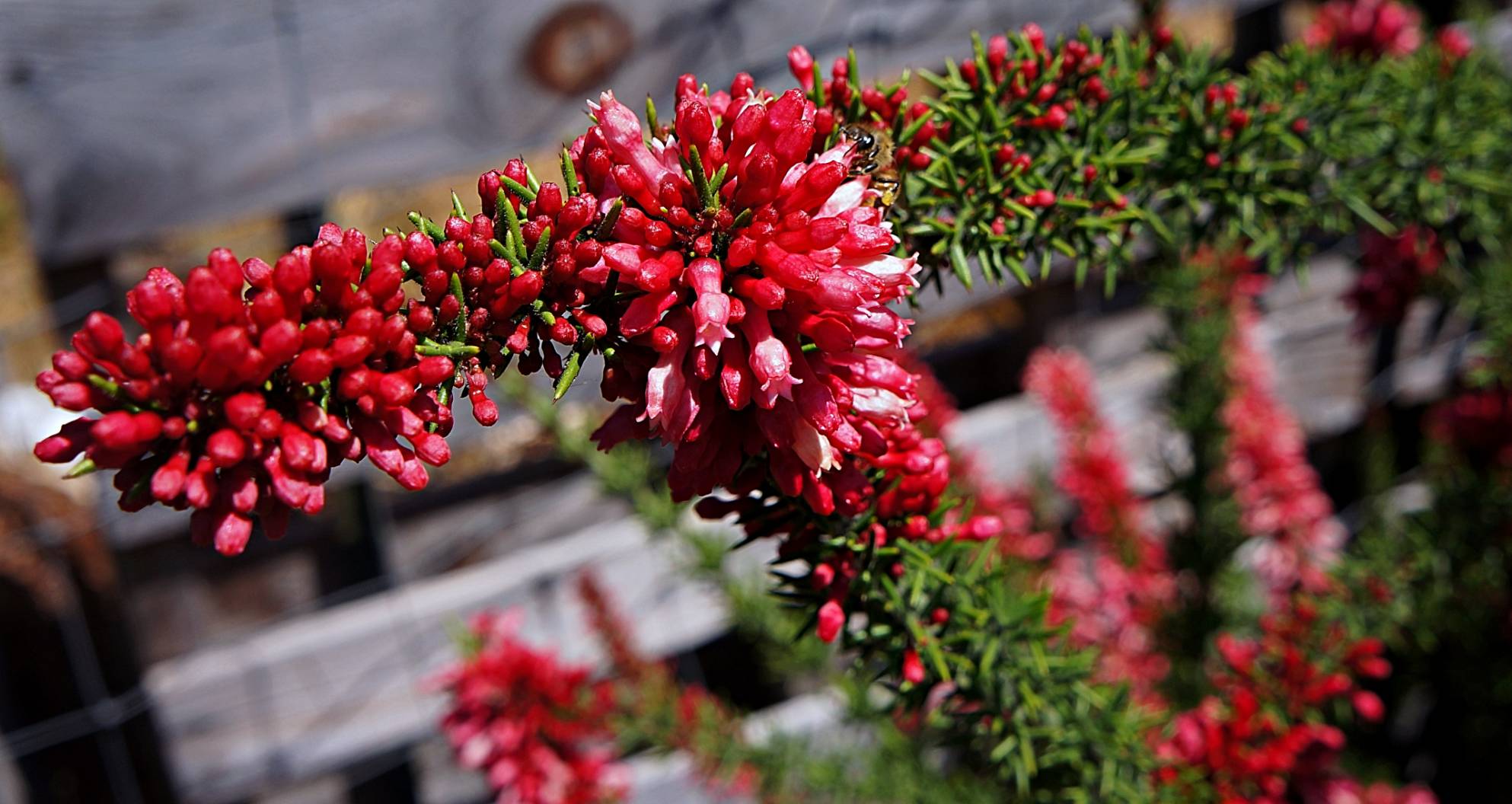
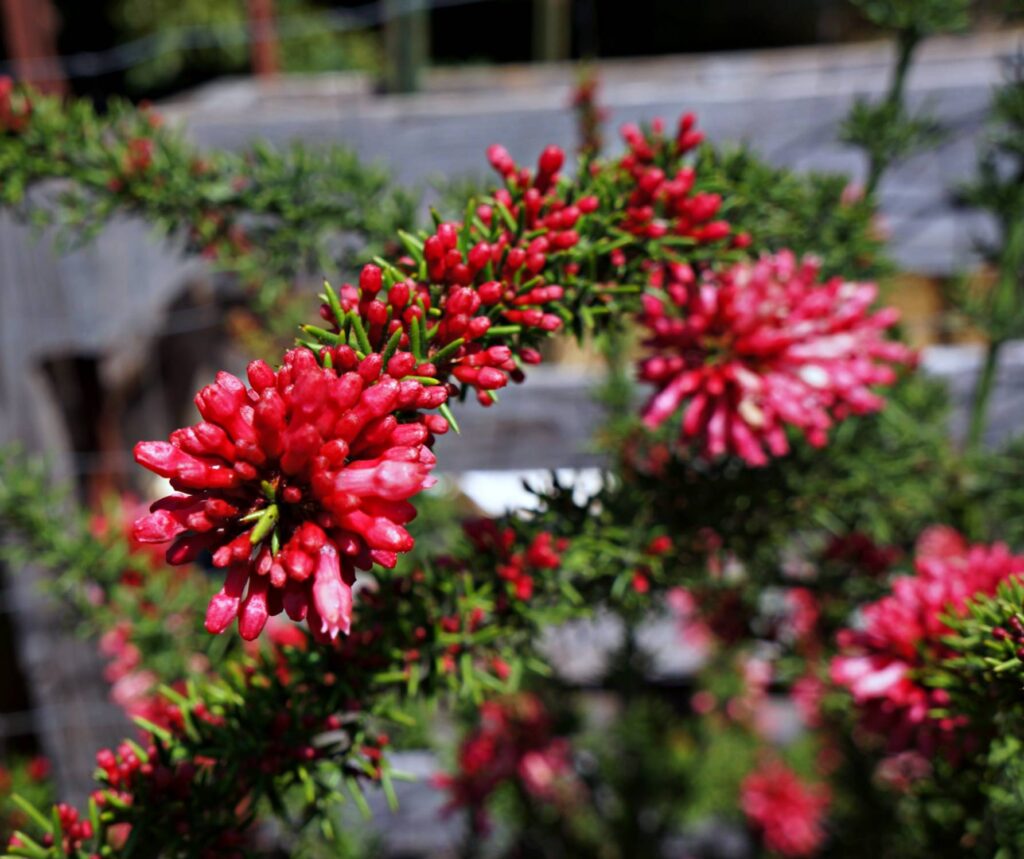 ↑ Colletia ulicina in full splendor ↑
___
Cucurbita ficifolia “Lacayote” — see the Other Andean Food Crops on our updated Andean Tuber Crop page.
___
Cyclanthera species “Caigua” — see the Other Andean Food Crops on our updated Andean Tuber Crop page.
___
Eugenia myrcianthes “Ubajai”
Myrtaceae. Small willow-like tree to 15-25′. Pendulous branches, simple glossy leaves, pubescent when young. White flowers and apricot size edible fruit. The flavor of the fruit is excellent when still pale yellow but becomes insipid upon turning a dark yellow/orange. Develops swollen, tuberous roots — the tree has potential as a bonsaid caudiciform. Native to the Rio Plata region, Brazil. Easy to grow ornamental/edible, mature trees tolerate drought and mild frost. Z9b
[ 4 ] → 2 ~ 14–18″+ treelets 3 years old $19.50* each
___
Eustephia sp. BK03
Amaryllidaceae. Medium size bulb with slender green leaves. Flower stalk to 12″ bearing clusters of pendant tubular flowers; lavender to reddish and tipped yellow to green. From seed we collected along Incan stairs at the ruins Pisac, Cusco Dept., Peru in 1996. Offsets with age, forming nice clusters. In northern Peru the bulb is used for wound healing, arthritis, and to unravel witchcraft. Easy to grow, winter dormant for us. Summer dryness encourages flowering. Excellent to grow with your Trichocereus. We offer packets containing 3 small bulbs from several different clones. Z8b
[ 6 ] → 2 ~ Packets [with 3 small bulbs] $18.50 each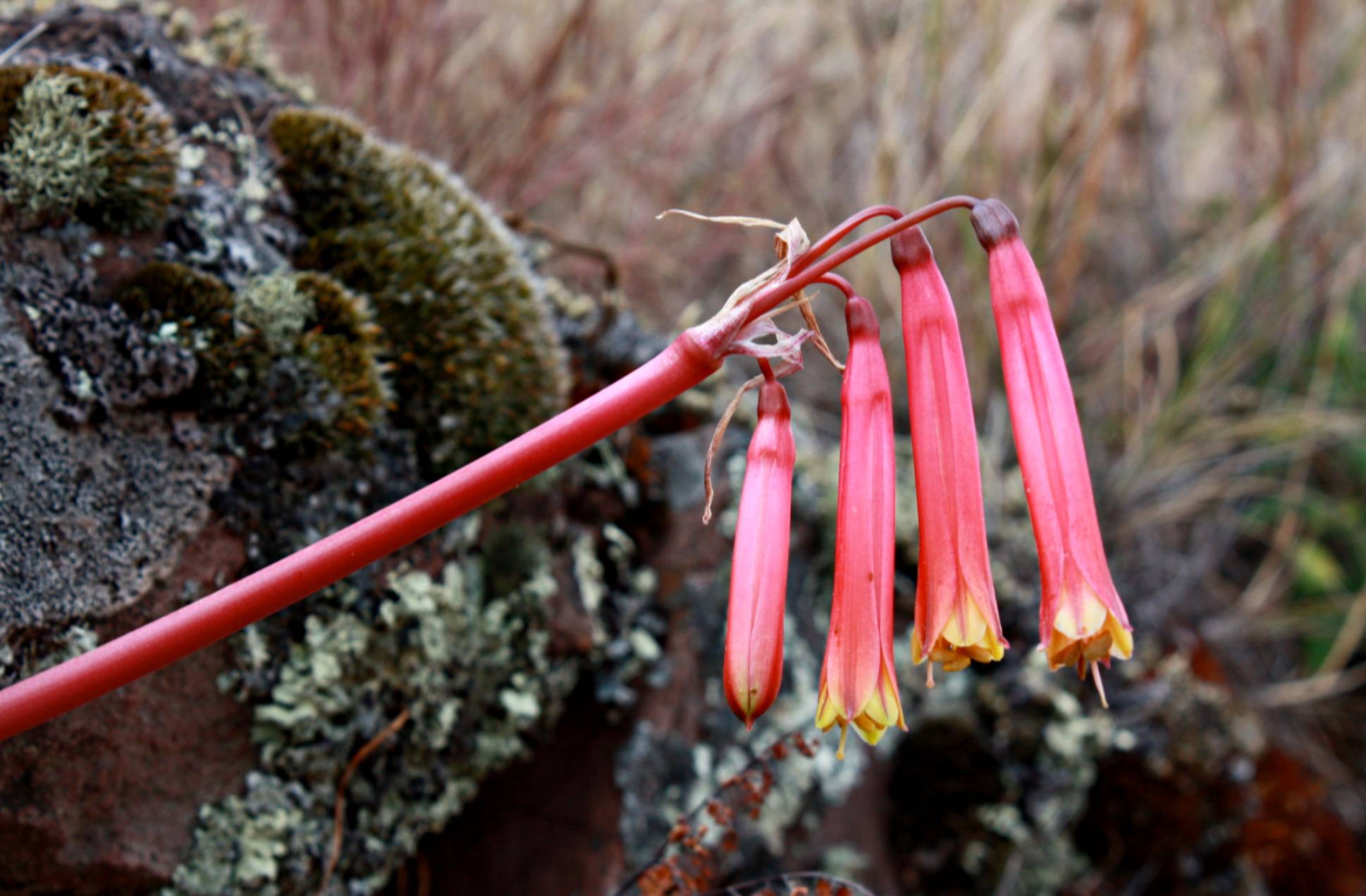
___
Eustephia sp. BK14512.9
Clustering bulb with slender green leaves. Upright flower stalk with terminal clusters of nodding tubular flowers; dark red with green tips. Steep slopes and embankments near Capuliyoc Pass, northern Cusco Dept., Peru, 9800′. In northern Peru Eustephia are used for wound healing, arthritis, and to undo witchcraft. Easy to grow, winter dormant for us. A great companion to grow with your Trichocereus. Give it a dry summer to encourage flowering. First introduction of seed grown bulbs. Z8b?
[ 10 ] → 2 ~ Bulbs 2–3 years old $17.50 each 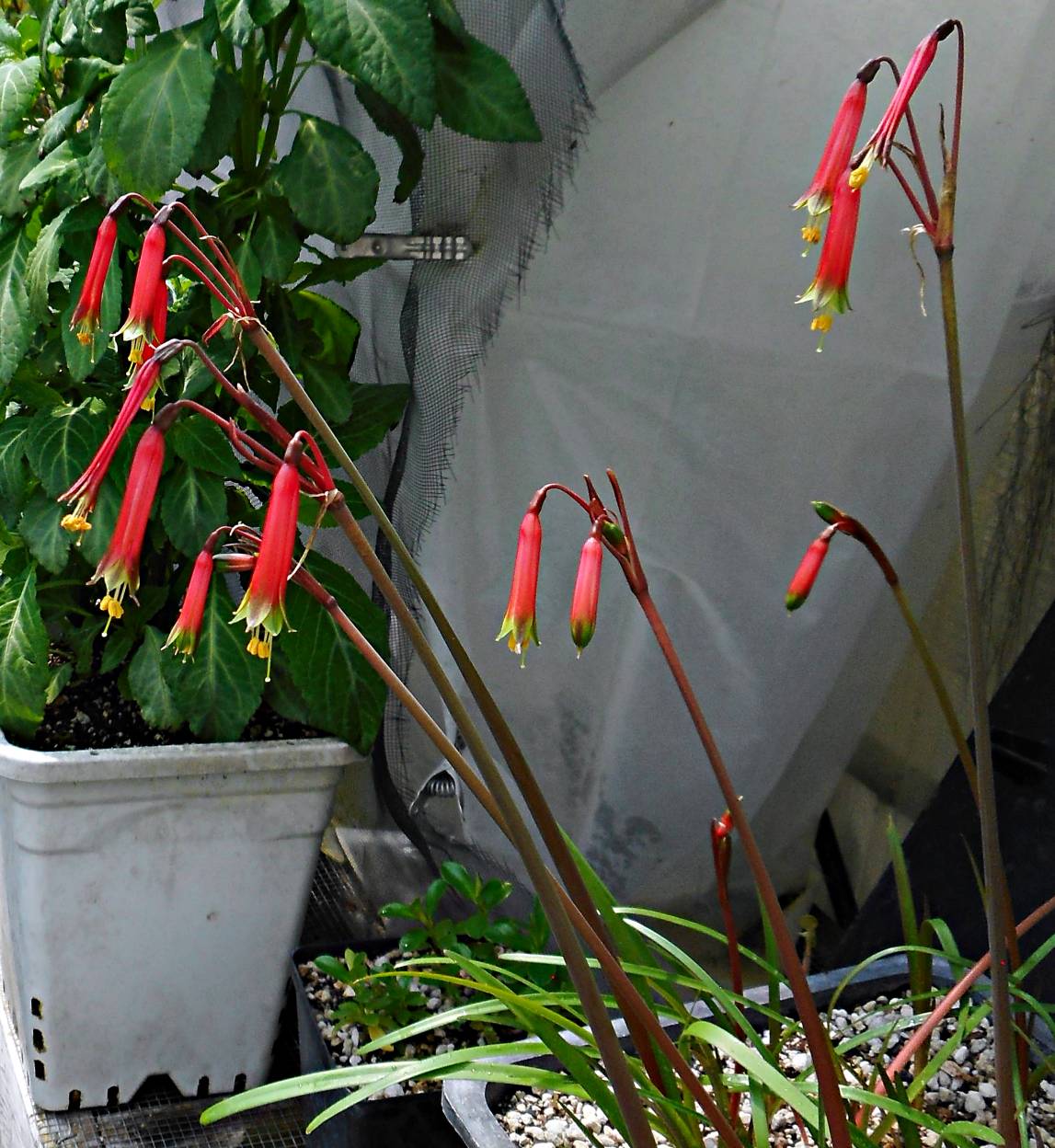
___
Haloragis masatierrana
Haloragaceae. Attractive shrub with shiny, deep green, serrated leaves, often with rusty highlights. Small reddish flowers at branch ends followed by dry berry-like fruit. Endemic to the forests of Robinson Crusoe Island, Juan Fernandez Archipelago, Chile. After a decade+ of seed selection, our plants are now well adapted to northern CA, tolerating winter frost and summer heat far beyond the first few generations we offered. Makes a truly lovely ornamental! Z8b/9a
[ 6 ] → 2 ~ 8–15″+ plants 3 years old $17.50 each September SALE! $15 each; or 2 for $25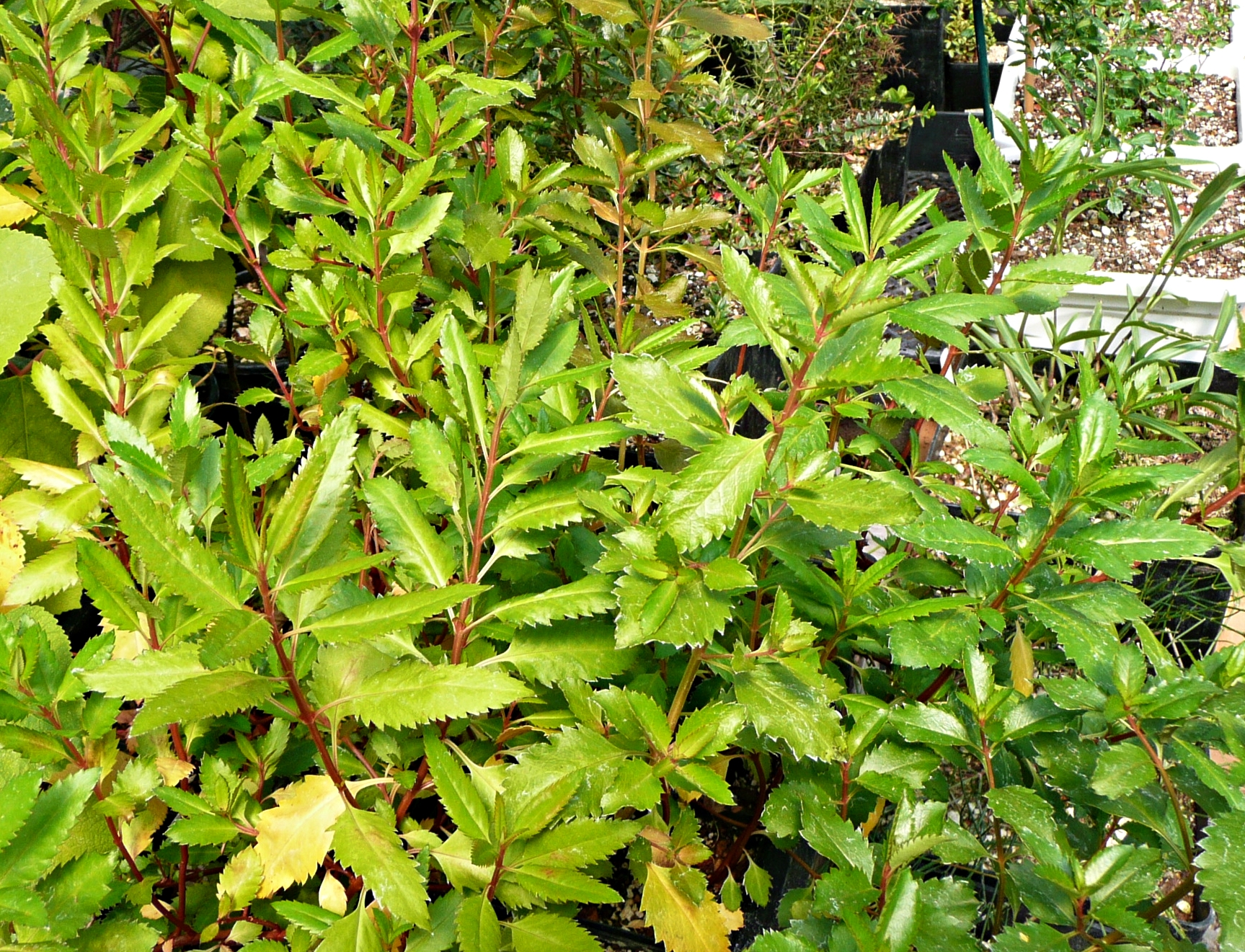
___
Ilex paraguariensis “Yerba Maté” “Ka’a”
Aquifoliaceae. Evergreen tree to 60′. Shiny lanceolate leaves, white flowers and red-black berries. New growth is lovely red-bronze. Cultivated throughout South America. Our plants are grown from heirloom seed collected from old plantations in Paraguay. The caffeine rich leaves are the national drink of Argentina & Paraguay. Over the last several decades, Yerba Maté has become wildly popular in the US as a healthy stimulant and alternative to coffee, it is now the base ingredient in all manner of bottled beverages. Easy to grow, sun to part shade. Responds well to pruning and can easily be dwarfed and maintained as a shrub. Tolerant of some cold once established, but best to protect young plants from frost. Grow your own Yerba Maté! Z8b
[ 5 ] → 1 ~ 5–8″+ plant 2–3 years old $24.50 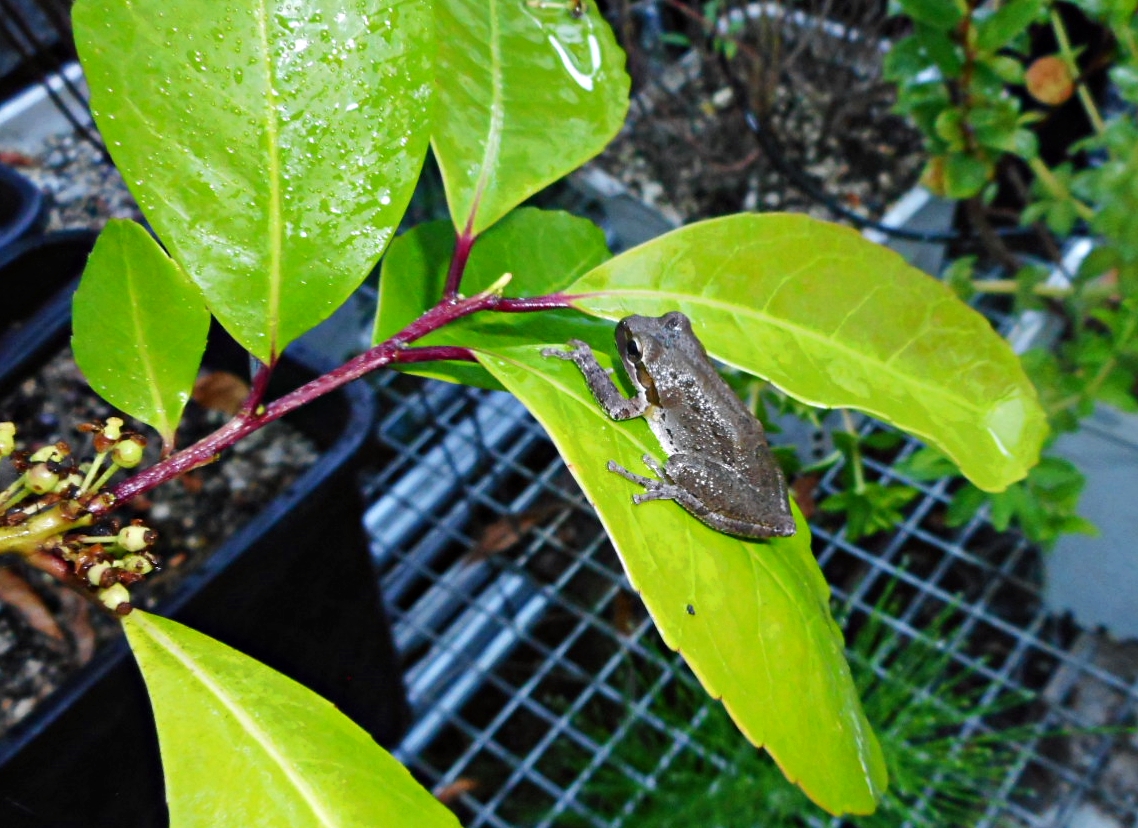
___
Lapageria rosea “Copihue” “Chilean Bell Flower”
Philesiaceae. Climbing evergreen vine to 20’+. Large 3–4” pendant bell flowers, usually a rich rose color, but occasionally other hues to pure white. The national flower of Chile! Cylindrical fruit, sweet and edible. Endemic to the forests of central Chile. The fruit is sometimes brewed into a chicha by the Mapuche. The finest ornamental edible climber there is. Fairly slow growing but easy if given a semi-shady sheltered spot, acid soil, and ample moisture. Our seedlings should show a variety of flower color. Z8a–b
[ 6 ] → 2 ~ Plants 3–4 years old $19.50 each SOLD
[ 5 ] → 2 ~ Plants 2+ years old $15.50 each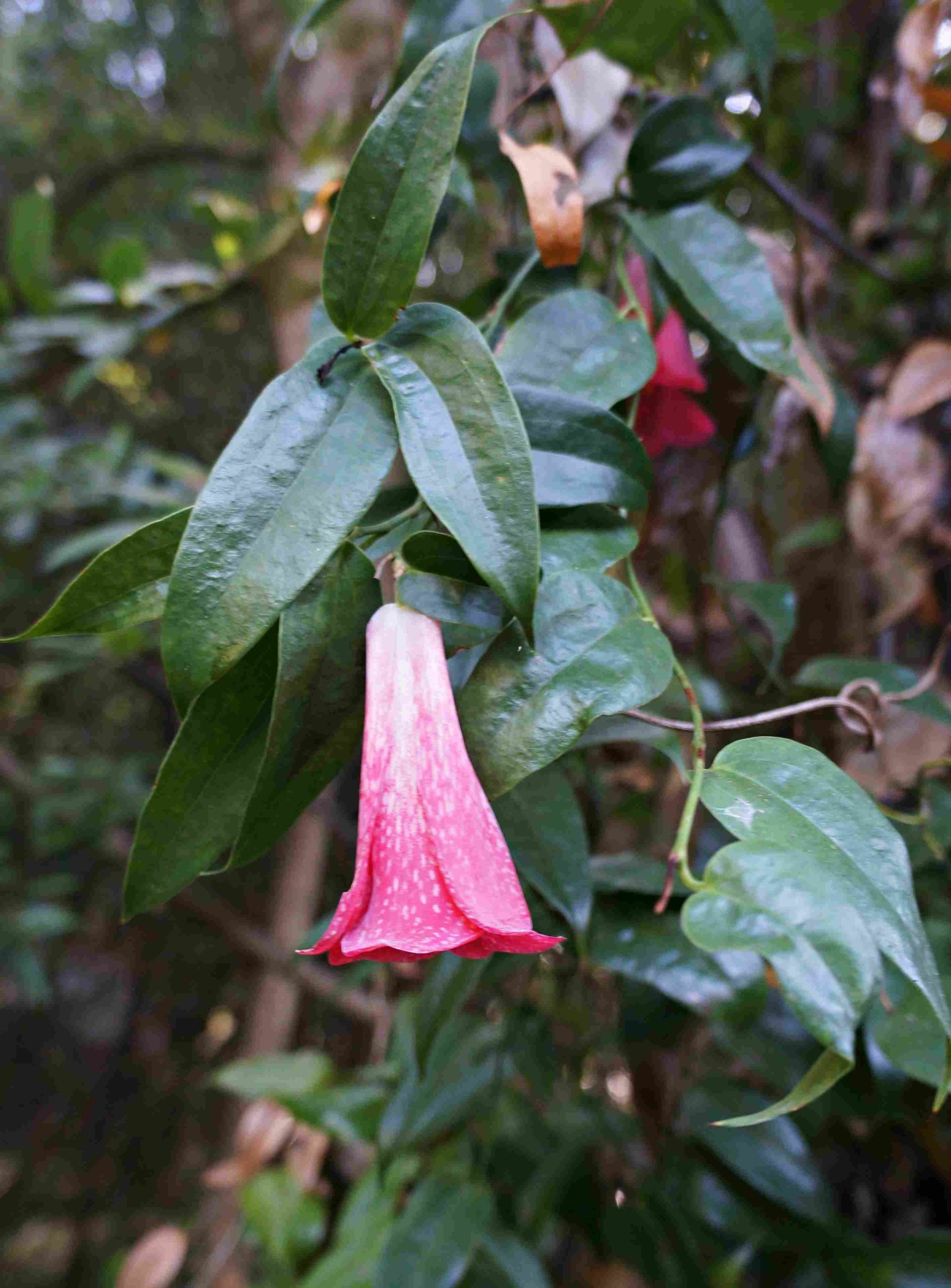
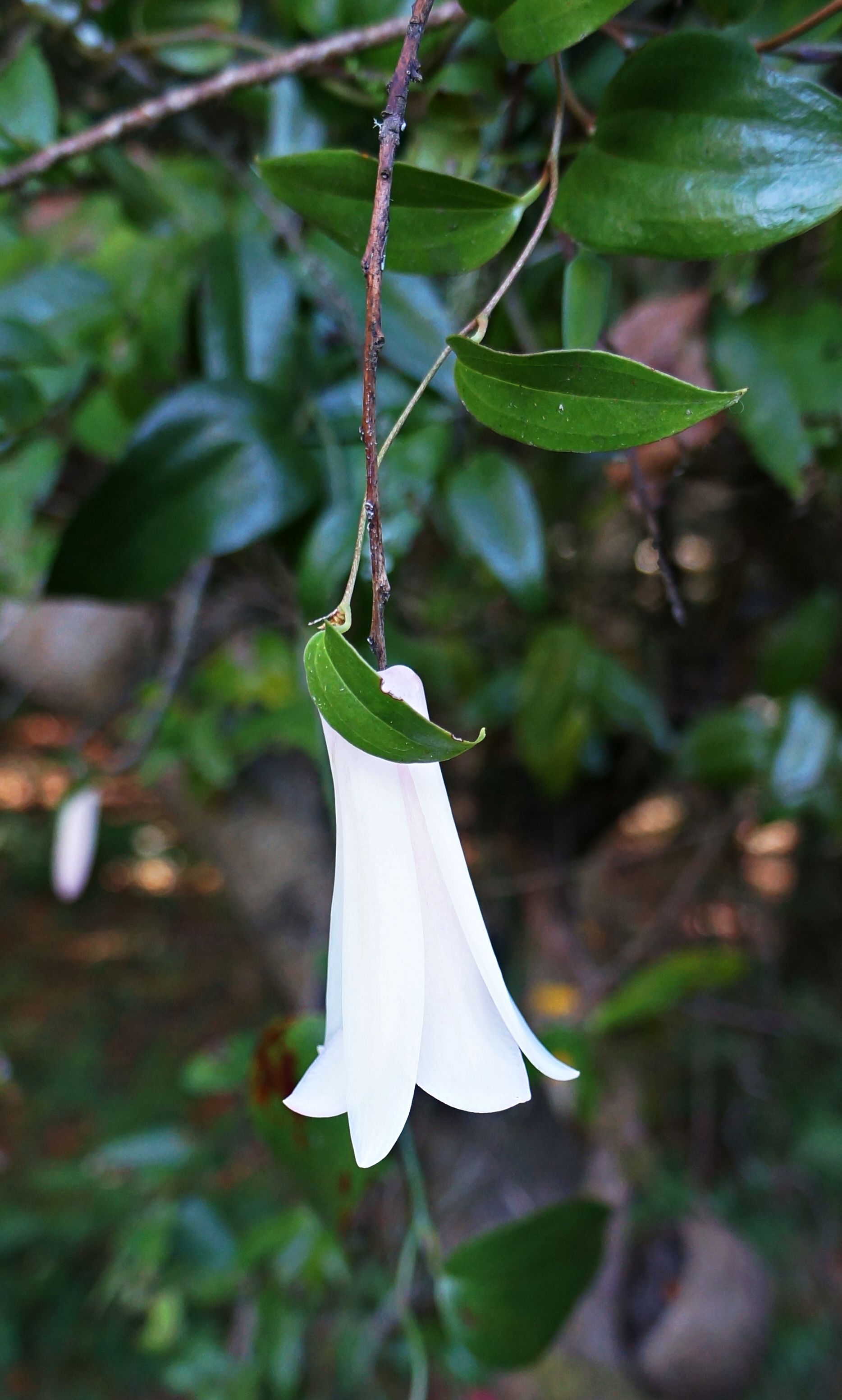
___
Lepidium peruvianum “Maca” — see our updated Andean Tuber Crop page.
___
Lessingianthus asteroflorus BK10509.12 “Orqo yurak yurak”
Asteraceae. Erect plant to 4′ with blue-green simple leaves. The stems, leaves and flower buds are covered in a downy white fur. Clusters of bright purple thistle-like flowers attract butterflies. Seed from near Inkallajta, Cochabamba, Bolivia, 10,000′, where it was growing with Trichocereus totorensis, Puya aff. humilis, Polylepis lanata, Escallonia resinosa, Agalinis sp, etc. A very friendly plant with great horticultural appeal. Used to treat respiratory infections. Regrows from the roots in hard frost. We introduced this gorgeous and cuddly plant to cultivation a decade ago. A lovely contrast to grow alongside spiny Trichocereus. Z8a–b?
[ 7 ] → 2 ~ Plants 3+ years old $22.50 each September SALE! $18 each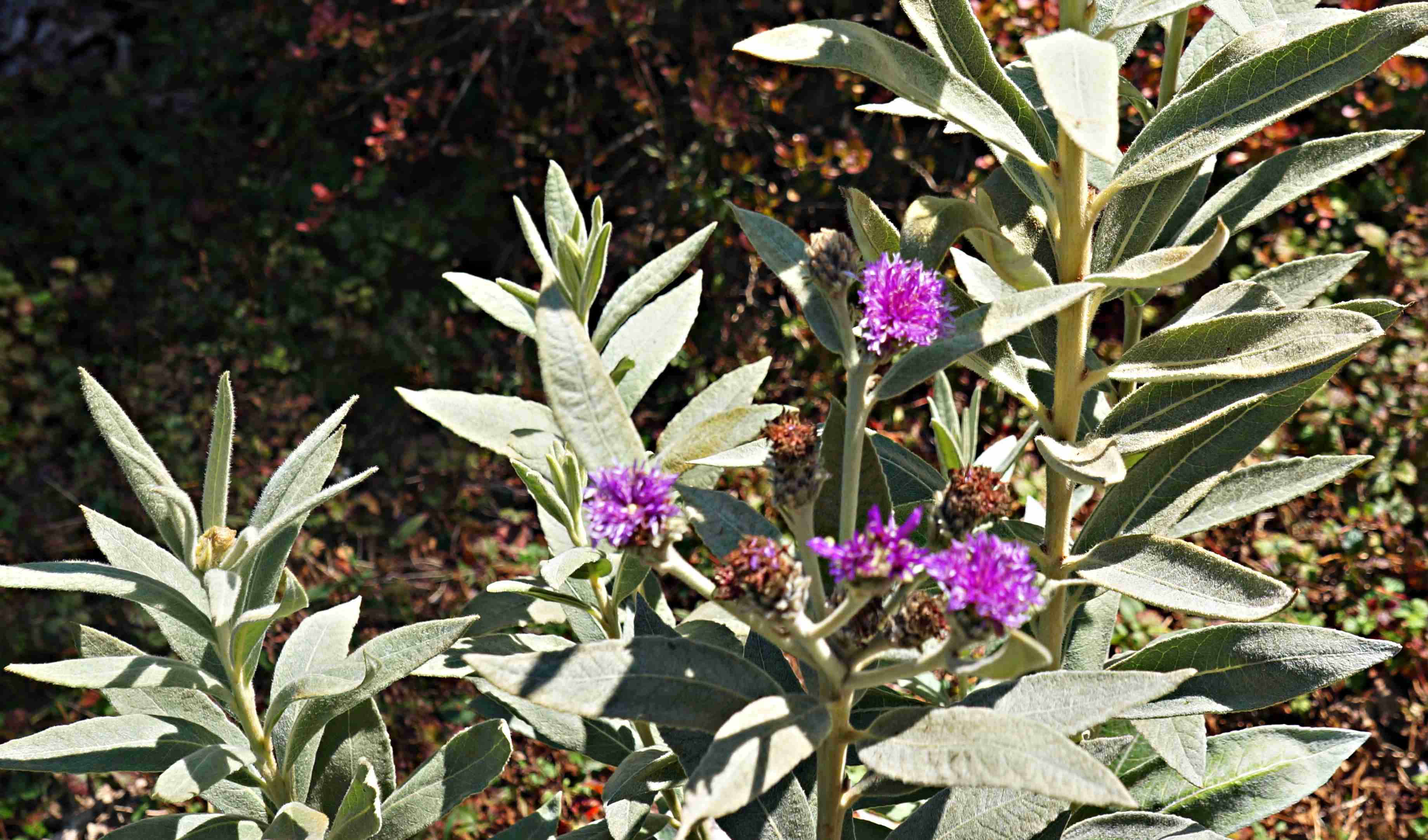
___
Luma apiculata “Arrayan”
Myrtaceae. Highly ornamental evergreen shrub or tree, from 5–30’+. Smooth red and brown mottled bark, dark green leaves and fragrant white flowers. 1/2″ edible black berries, sweet with a slight aromatic after-tone. Native to Chile and southwest Argentina. Extremely generous with blossoms and fruit. The fruit is traditionally eaten fresh and made into a chicha, we find it makes an excellent preserve or cordial. Sun to part shade. Drought tolerant when established, but does best with regular irrigation. Z8a–b
[ 5 ] → 2 ~ 6-10″+ plants 3+ years old $16.50 each
Inquire for large specimens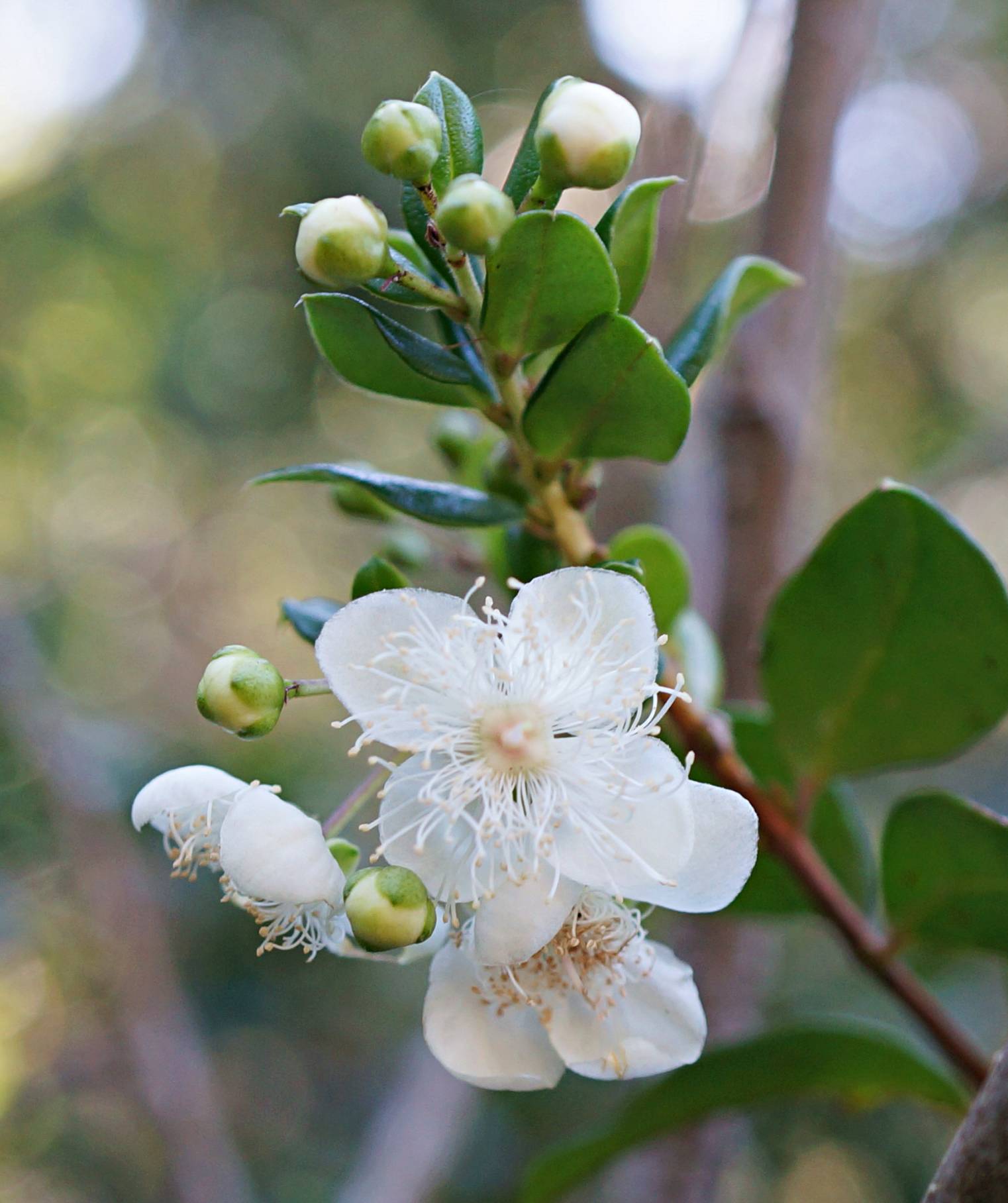
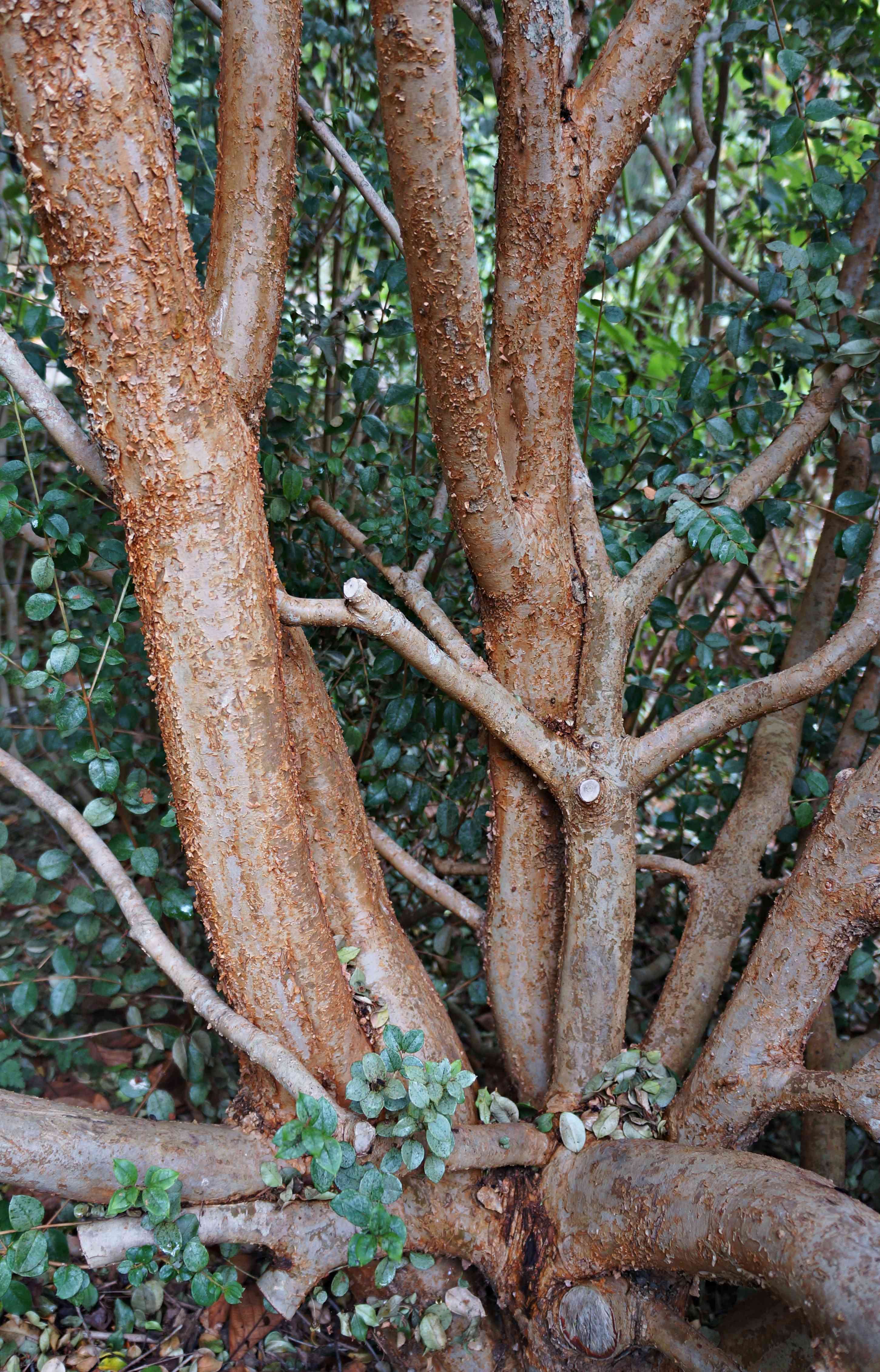
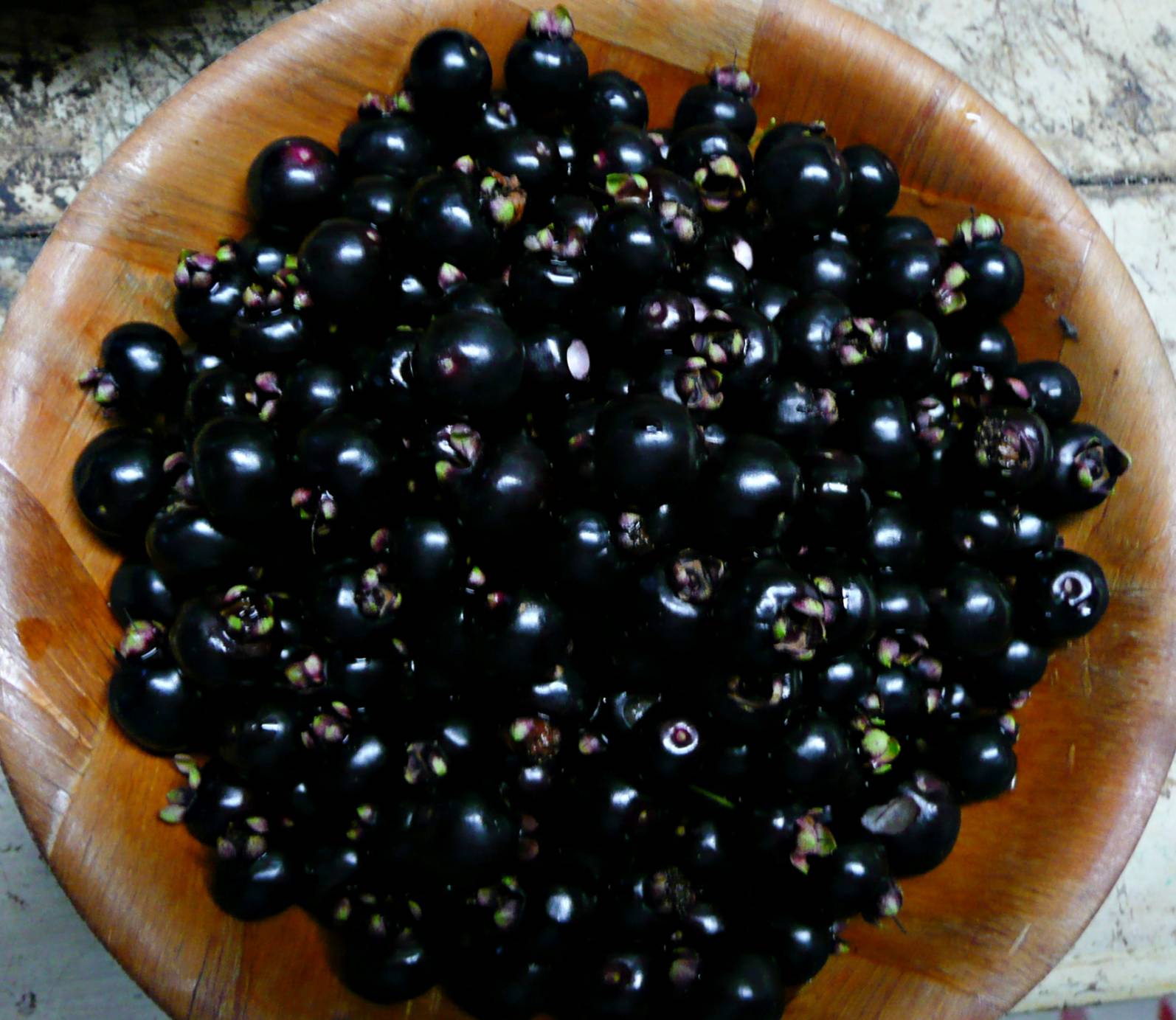
___
Luma chequen “Chequen” “Arrayan Blanco”
Evergreen shrub 6–20’+. Small simple leaves, aromatic if crushed. Scented white flowers and dark purple edible berries. Native to central Chile and adjacent Argentina. The fruit are eaten and fermented into chicha by the Mapuche. A rewarding and easy to grow ornamental edible. Drought tolerant once established. Z8a
[ 6 ] → 2 ~ 6-9″+ plants 3+ years old $19.50 each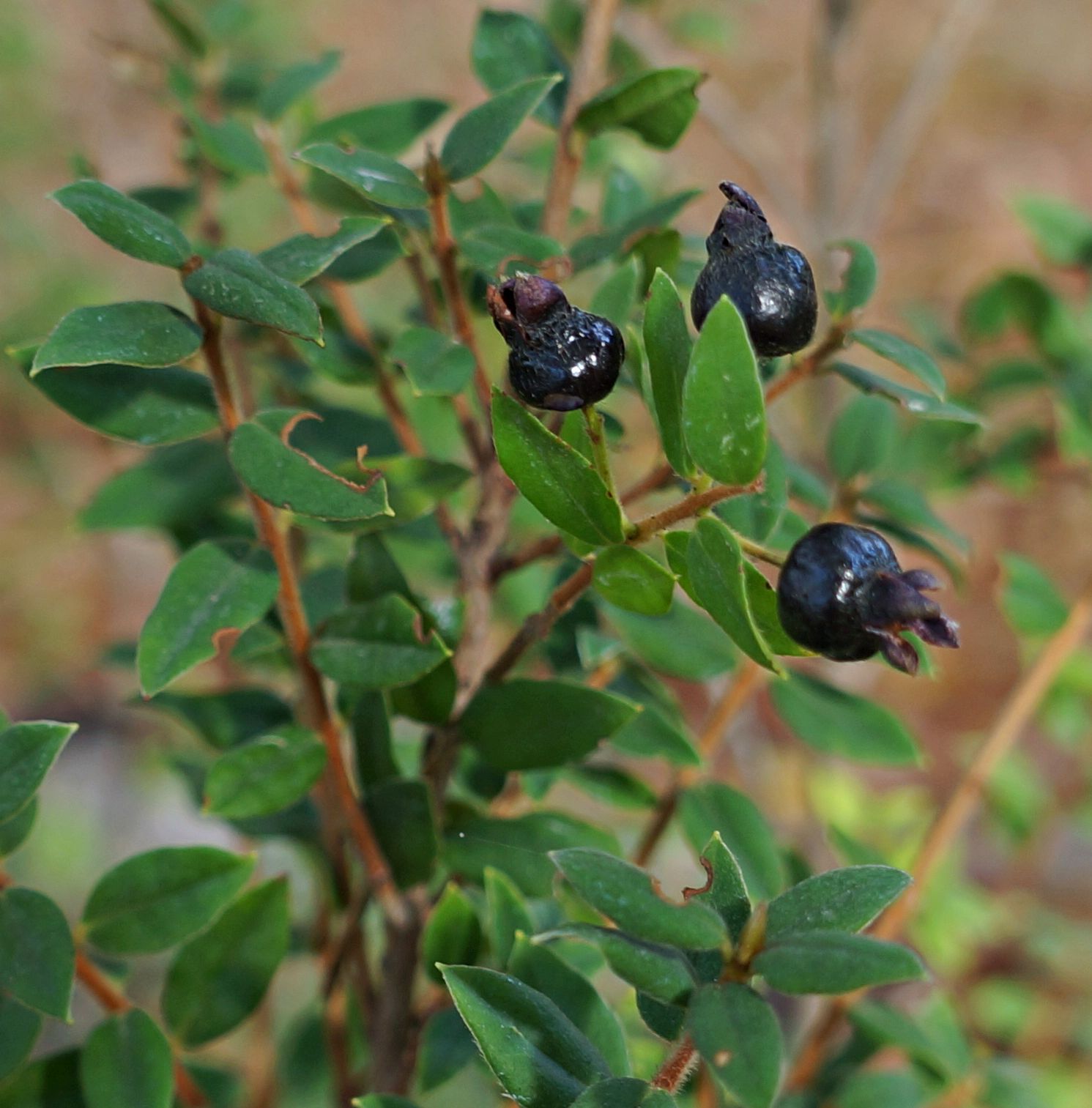
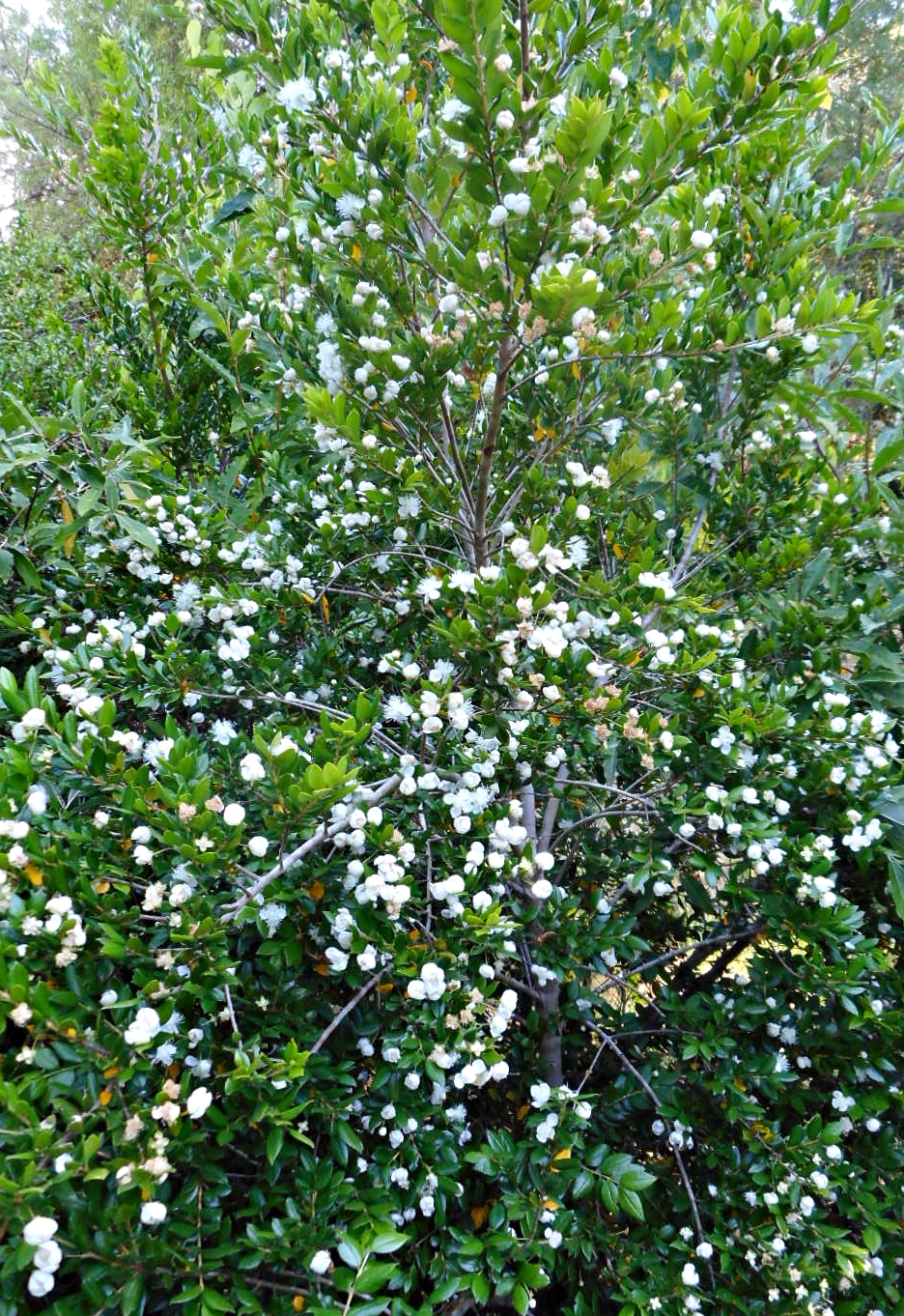
___
Lupinus mutabilis “Tarwi” — see the Other Andean Food Crops on our updated Andean Tuber Crop page.
___
Macleania species — see Neotropical Blueberries below ↓
___
Methysticodendron amesianum “Culebra Borrachero” ♥ New ♥
Solanaceae. Large bush or tree to 8–20′ tall. Dark green linear leaves that can grow quite long, up to 1.5′. Large, hanging, trumpet like white flowers with a split corolla and intoxicating fragrance. This extremely rare plant, endemic to the Sibundoy Valley of Columbia, is thought to be a unique Brugmansia mutation. Used as a medicine and visionary deliriant by the Igano and Kamsa peoples. Likes bright, filtered light, rich, moist soil and regular feedings; protect from frost. The first time in awhile we’ve offered specimens of this bizarre beauty. Z9b/10a
[ 5 ] → 1 ~ 7–12″+ plant $48.50* 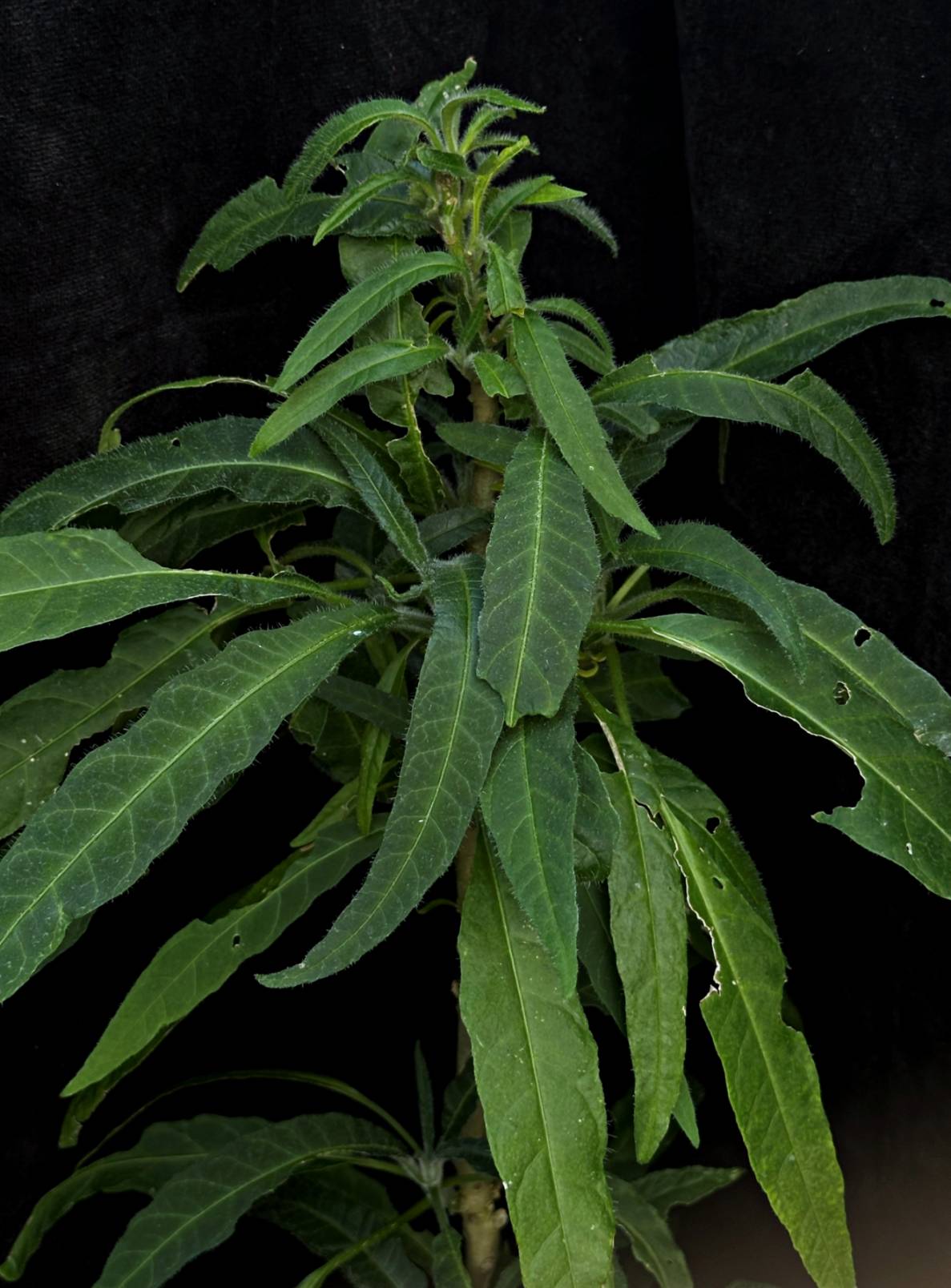
___
Mirabilis expansa “Mauka” — see our updated Andean Tuber Crop page.
___
Myrteola nummularifolia “Groundcover Guava”
Myrtaceae. Ground hugging evergreen subshrub to 6″ high and 2–3′ across. Red stems and small, dark green, rounded leaves, pleasantly scented if crushed (makes great tea!). Little white flowers and abundant, round to oblong berries, rose to pink blushed with a sweet, aromatic flavor similar to Ugni. Plants in cultivation can probably be traced to Hinkley’s introduction from southern Chiloe. A handsome edible groundcover. Z7b?
[ 4 ] → 2 ~ 3–5″+ plant 3+ years old $22.50 each 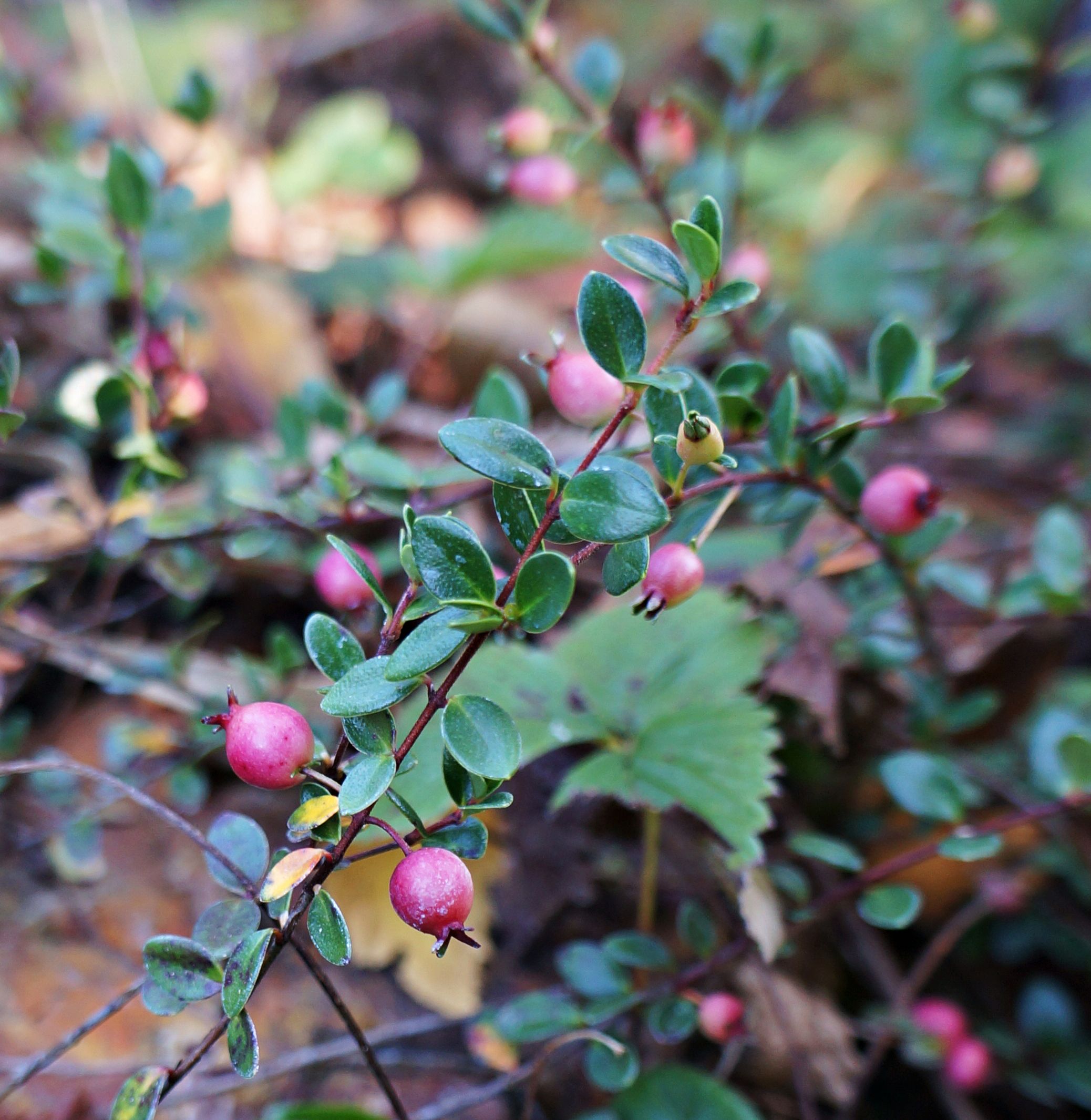
___
Myrteola sp. BK10428.11 ♥ New ♥
Myrtaceae. A highly attractive subshrub to 2′, with showy edible fruit. Small glossy leaves densely arranged along the stems, pleasantly aromatic when crushed. Abundant white flowers, a small spray of stamens, followed by numerous pea-sized, hot-pink fruit that are edible with a delicious aromatic, sweet-tart flavor like Ugni. A favorite among our kids. The original seed accession was from plants we found on the semi-arid shale slopes just above the river near the remote Lares Hotsprings, Cusco Dept., Peru, 11,200′. Growing with Agalinis sp., Vallea stipularis, a robust Lycopodium along with Elaphoglossum and other ferns, Echeveria laresensis, Peperomia hartwegiana and galioides, Oxalis sp., Tillandsia and Puya sp., orchids, bunch grasses, various Asteraceae, etc. Before flowering for us, it had us fooled that it was blueberry kin, an exact Disterigma look alike. Protect from hard frost, especially when young, otherwise easy to grow, if a bit slow; well draining soil, sun or part shade. It’s been over 5 years since we last offered this beautiful edible/ornamental—we nearly lost all of our mother plants and seed stores to weather extremes and we’ve been slowly reestablishing it in our collection, get one while available! This is a truly delightful small shrub, perfect for borders and container gardening.Z9a/b
[ 4 ] → 1 ~ 8–10″+ plant with multiple stems, 3+ years old $66
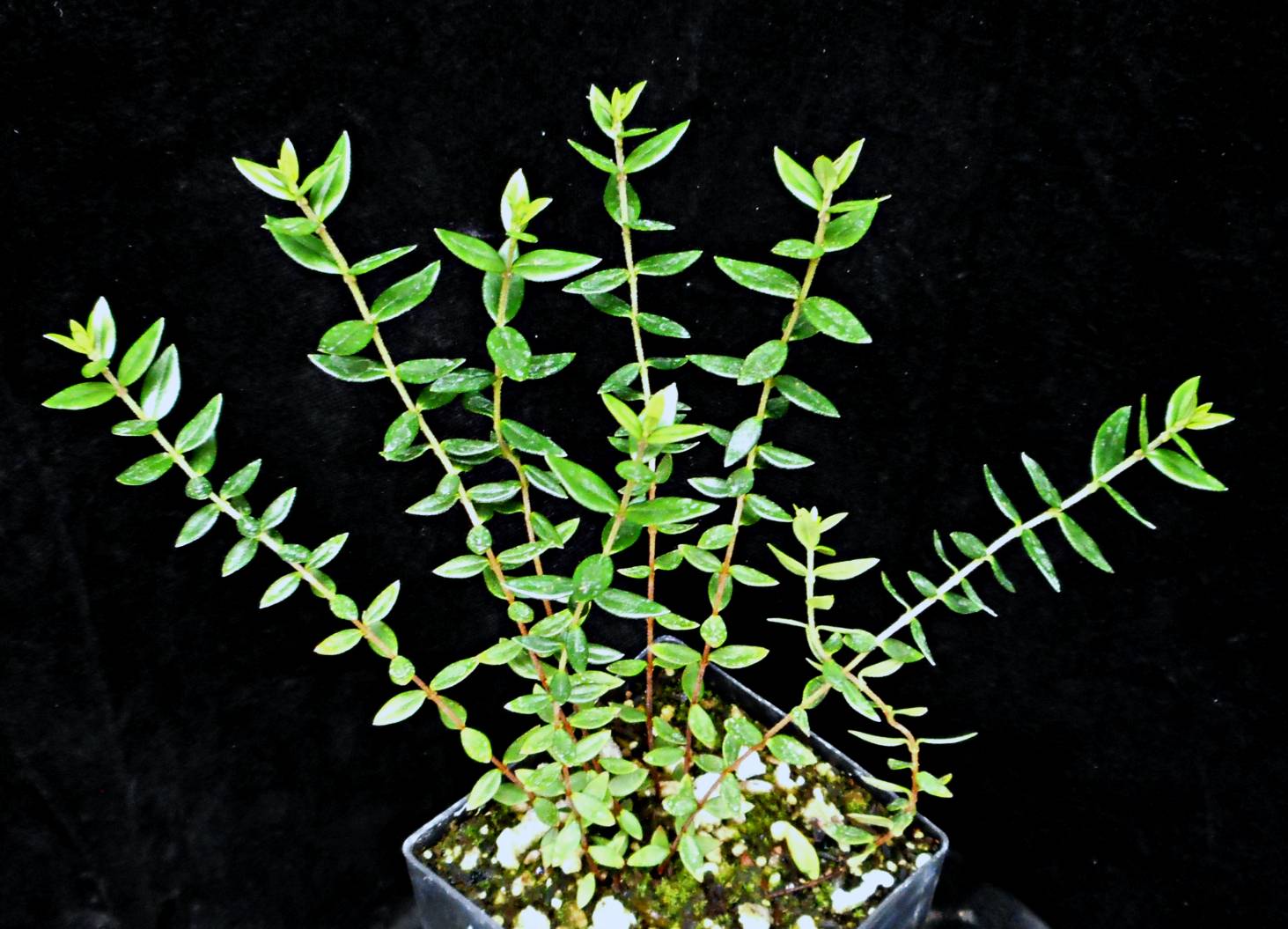 ↑ An example of a specimen ↑
 ↑ Plant in habitat, near Lares Hotsprings, Cusco Dept., Peru ↑
 ↑ Showy, delicious berries ↑
___
Nicotiana benavidesii BK14516.9 “Apurimac Tobacco”
Solanaceae. Bizarre perennial tobacco species to 5’+. Thick, upright to arching stems crowned with bright green heart shaped cordate leaves. Spires of pale yellow-green tubular flowers to 1.5″ long. Young plants can develop a distinct pachycaul stem. We collected the seed from Eriotheca dry forest on steep rocky slopes overlooking the Apurimac, near 7600′, Cusco Dept., Peru. Should tolerate hot, dry conditions well. Exceedingly rare, probably the easiest tobacco to grow alongside cacti & succulents. An ideal Trichocereus companion. Tolerates cold, but not direct frost. Z9b/10a
[ 8 ] → 2 ~ 4–6″+ plants 2 years old $16.50 each SOLD
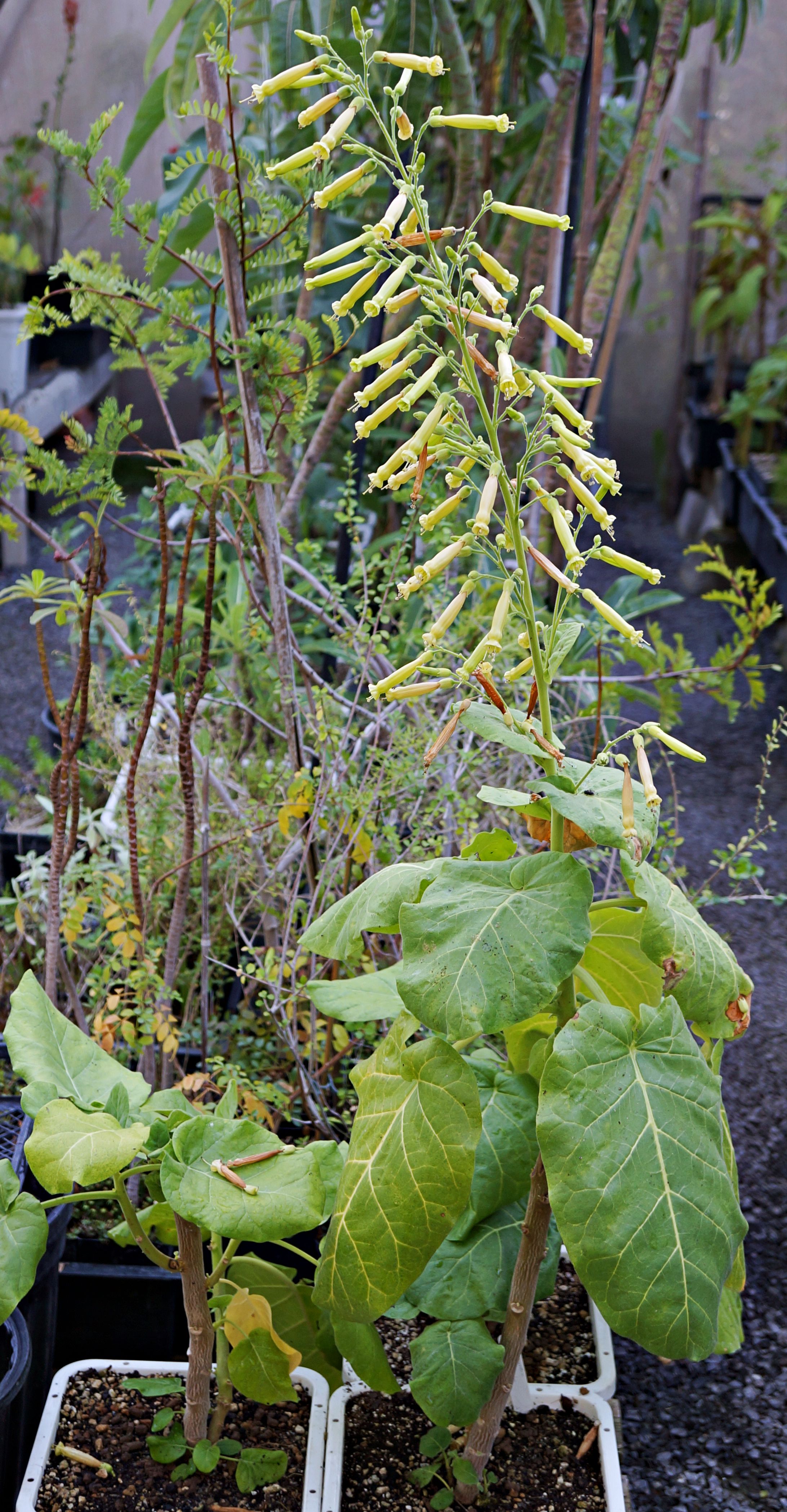 ↑ Mother plant in captivity ↑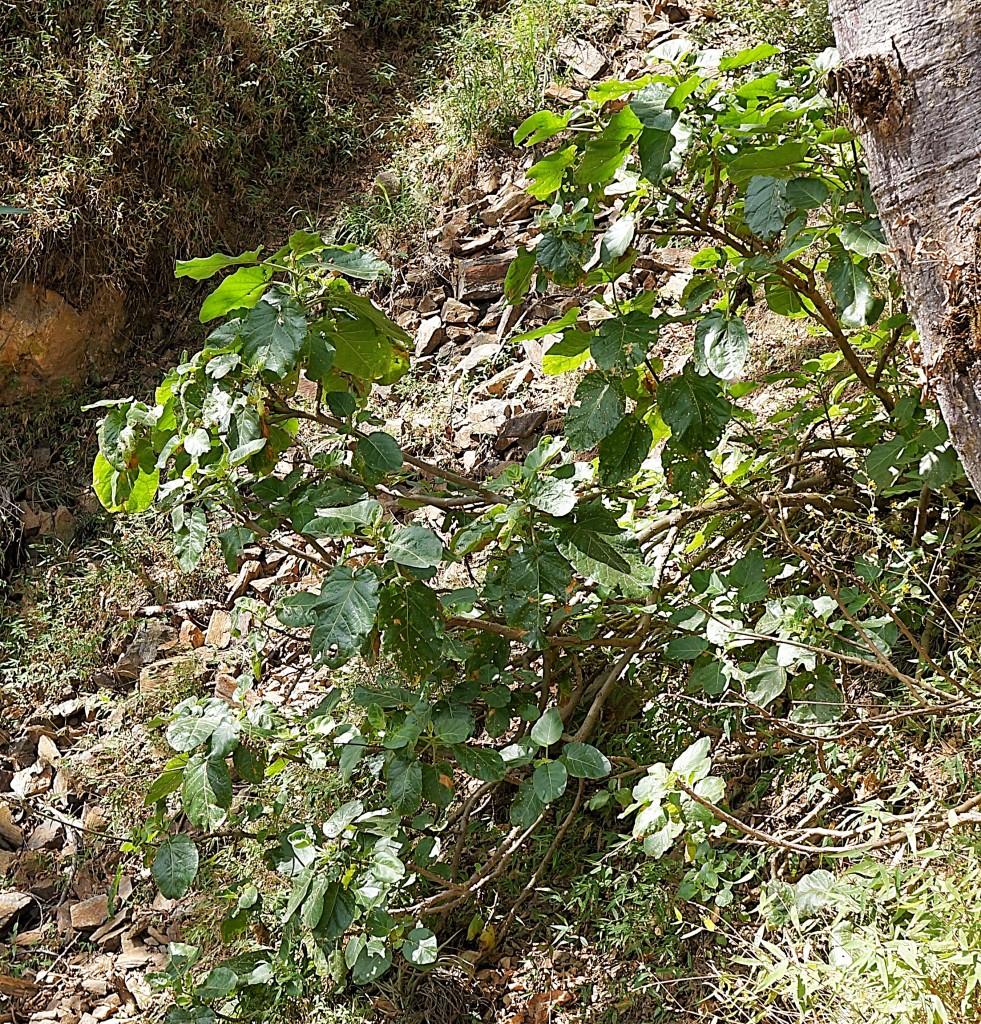
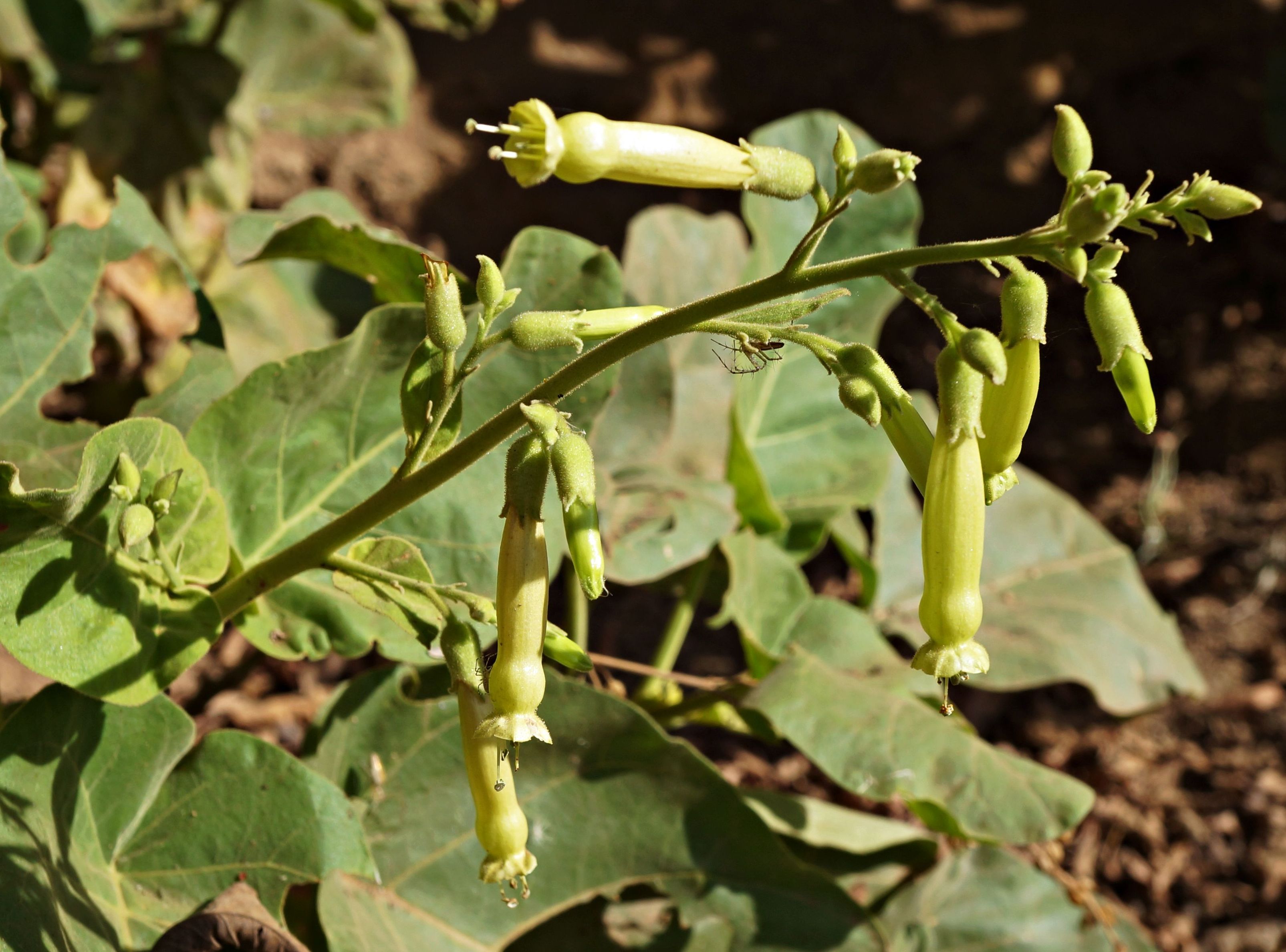 Plants in habitat
___
Oxalis sp. BK14514.9
Oxalidaceae. A superb sub-shrub; colonies of erect, slender, semi-succulent, red stems to 24″+ high. Lightly pubescent, clover like leaves on long petioles. Panicles with dozens of relatively large, bright yellow blossoms with red streaks in the center and undersides, very sweetly scented when conditions are right; can bloom for months on end! Our seed collection from cloudforest understory and edges, Choquequirao, Cusco Dept., Peru, 10,000′. Resembles a more floriferous, tuber-less O. tuberosa. A good candidate for Oca breeding [see Andean Tubers ]. Easy to grow, tolerant of both wet and dry conditions, though definitely thrives in rich, moist soil with good drainage. An understory plant that tolerates sun but does best in filtered light. Regrows from roots after hard frost, especially if well mulched. The first time we’ve offered cuts of this attractive, highly floriferous, fruity-scented species. Unrooted cuttings root with minimal effort. Z9a/b
[ 6 ] → 2 ~ 8–10″ cuttings $24.50 each
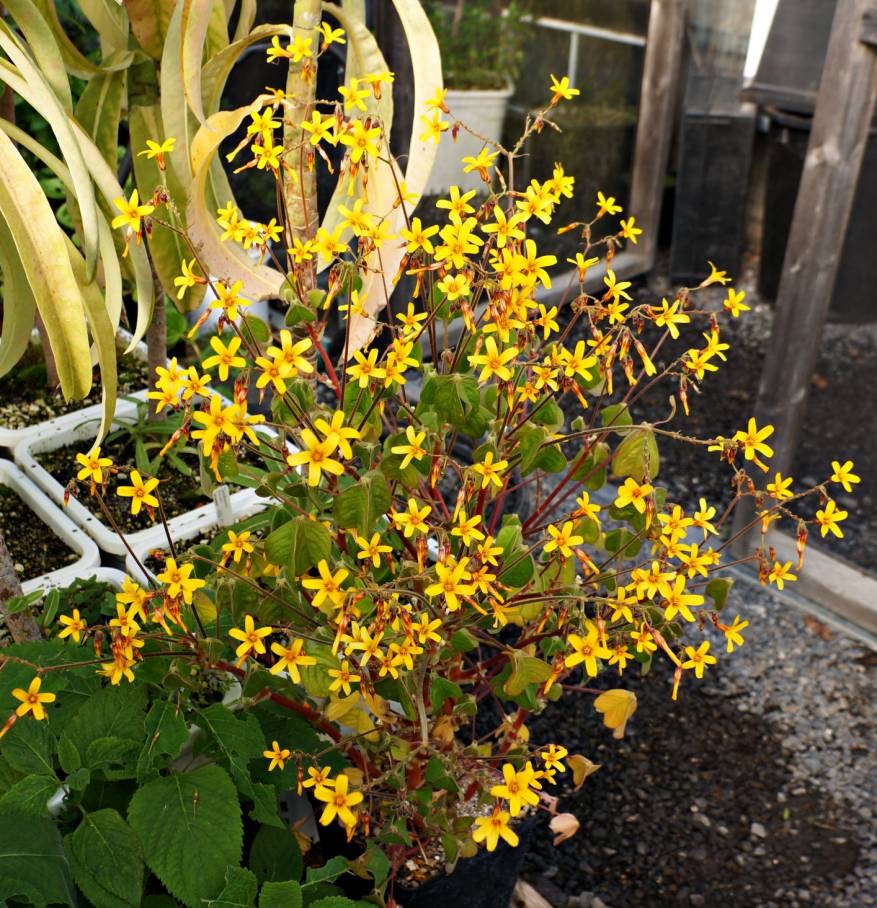
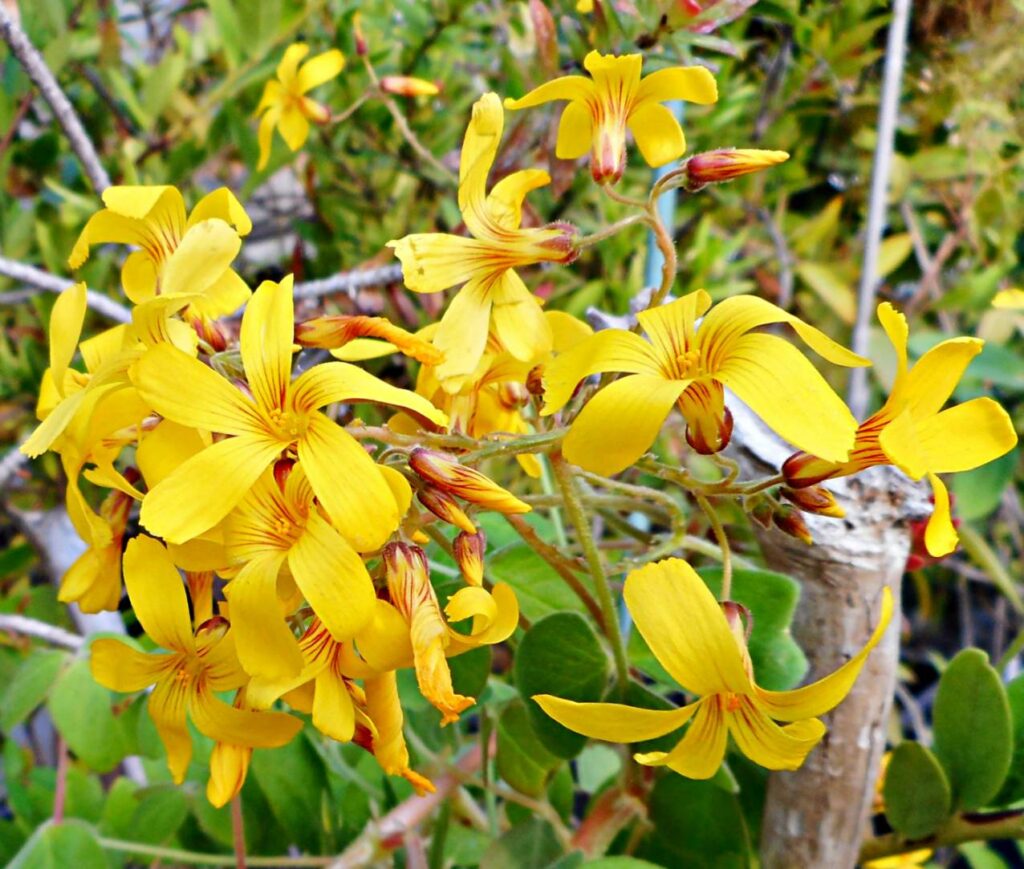 ↑ Oxalis sp. BK14514.9 in bloom ↑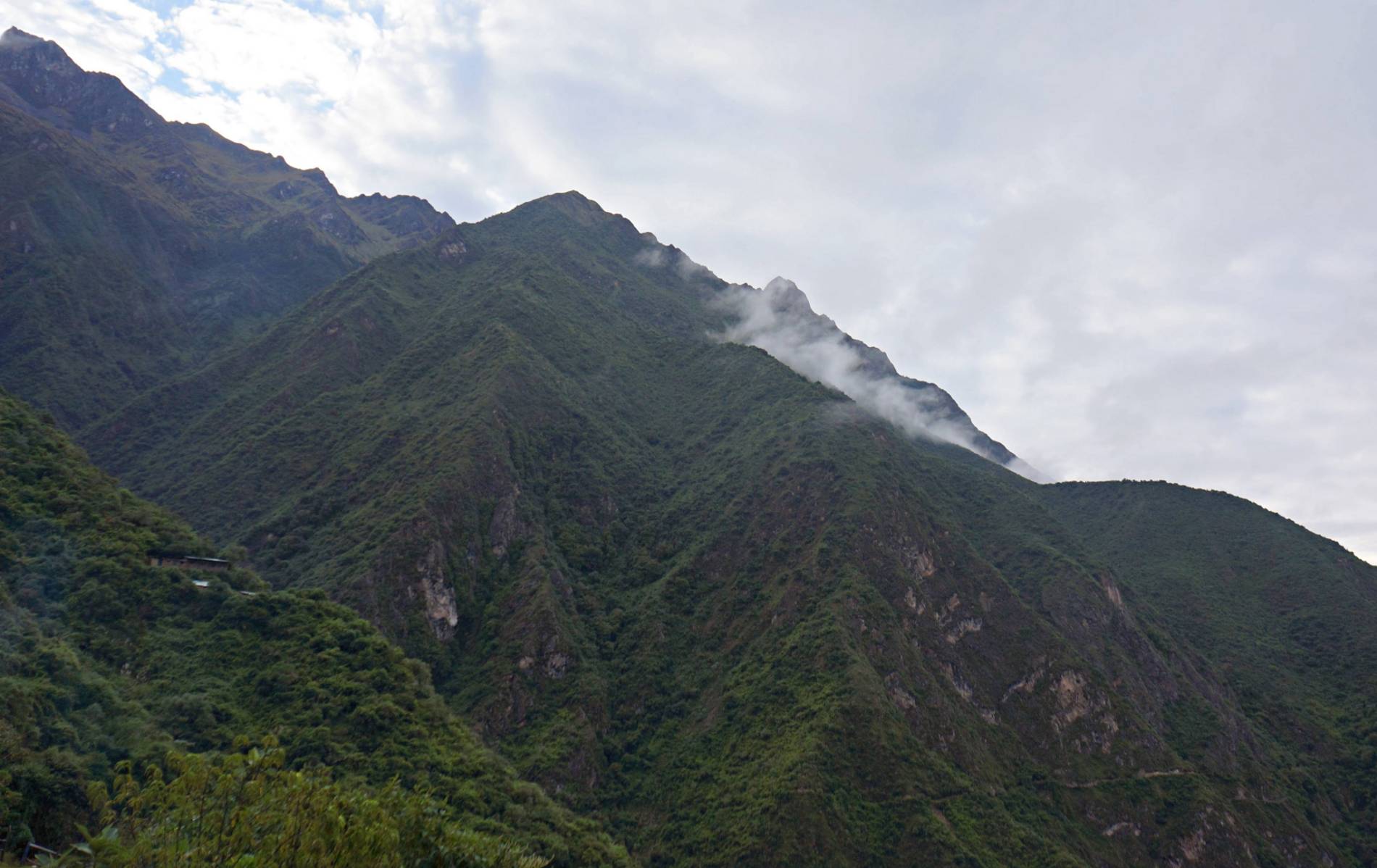
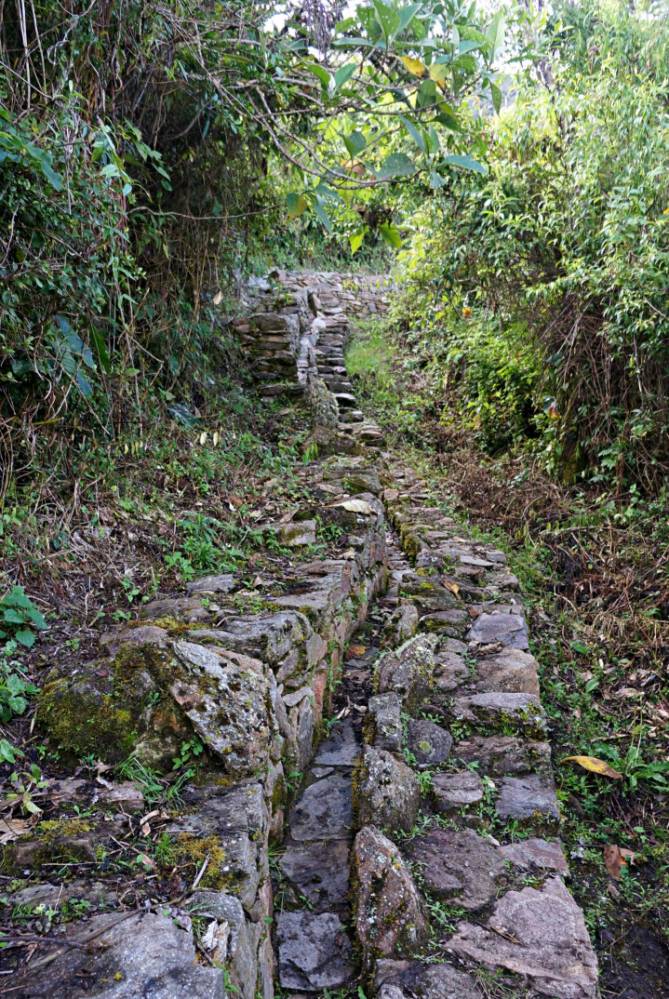 ↑ Oxalis sp. BK14514.9 cloudforest habitat, Choquequirao, Peru ↑
___
Oxalis tuberosa “Oca” — see our updated Andean Tuber Crop page.
___
Physalis peruviana “Aguaymanto” — see the Other Andean Food Crops on our updated Andean Tuber Crop page.
___
Pernettya species — see Neotropical Blueberries below ↓
___
Philesia magellanica “Coicopihue” ♥ New ♥
Philesiaceae. Gorgeous, slow growing evergreen subshrub with rhizomatous erect stems to 2’+ high. Can become a hesitant climber to 6′ or more when rough barked or mossy trees are present. Coriaceous, stiff, slender simple leaves, dark green with white undersides. Pendant deep rose bell flowers to 2.5″ favored by hummingbirds. Round yellow-green fruit with a thin layer of edible sweet pulp around the numerous seed. Refined shrubby cousin of the Chilean bell flower, Lapageria which it can be hybridized with. Forms thickets in the cool humid Magellanic sub-polar forests of southern Chile. The stems were used for making brooms. Plants in bright light are more compact and shrubby, part shade produces leggier growth and vining when something to climb on is present. Hardy and easy enough to grow—very well draining moist acidic soil, does well for us in a mixture of orchid bark, pumice/perlite, and a little sphagnum or peat. Nice in hanging baskets. Rooted cutting of clone A, a specimen with about a dozen stems. First time we’ve offered this elegant little species in years, get yours before they sell out! Z8a/b?
[ 4 ] → 1 ~ 2–3″ plant $49.50
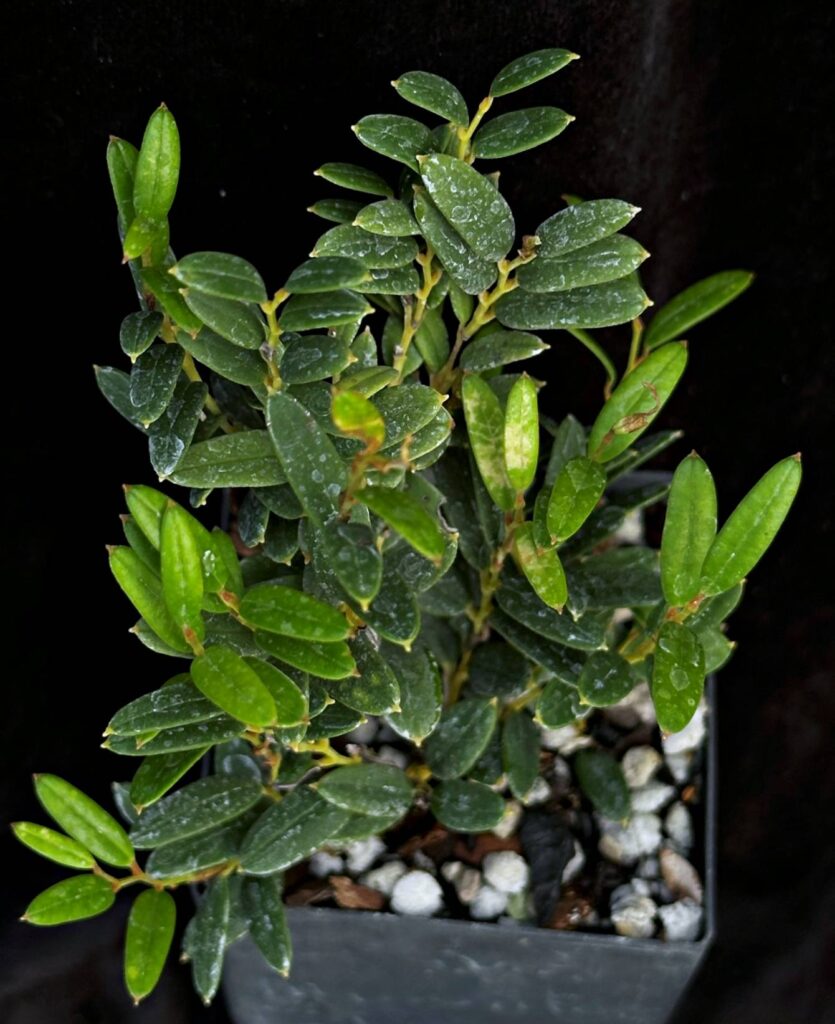 ↑ An example of a larger plant ↑
___
Podocarpus parlatorei “Pino de monte” “Andean Pine”
Podocarpaceae. A beautiful evergreen tree 20–40′, greyish bark and flattened green needles. Very durable wood. Podocarpus forests use to cover vast portions of the Andes up to 13,000′, but other than a reserve in Ecuador and central Peru, these forests are no more. Needless to say, propagation is vital. During our travels we’ve found it mindboggling that Mexican pine is being planted all over the Andes while this superior and amazing native species is slipping away. Makes an excellent and easy to care for landscape tree. Rooted cuttings. Z7/8?
[ 2 ] → 1 ~ 10-14″ treelet $24.50 SOLD
1 ~ 6″ treelet $17.50
___
Polylepis incarum BK08601.4 “Kewiña”
Rosaceae. Small gnarled tree to 10–20′ tall. Grayish-green furry leaflets. Beautiful flaking bronze-red bark. These trees have a very distinct presence. A very rare species endemic to the Lake Titicaca region of Bolivia. Seed collected from old trees growing on sandstone hills, north side of Isla del Sol, 12,500′. One of the most sacred trees of the Andes. Rooted cuts from clone A which has grown well for us in northern California. We only offer this about once a year. Z7 or 8?
[ 4 ] → 1 ~ 5-7″+ treelet $38.50 SOLD
[I’ve contributed a short article about Polylepis to the Microcosms project – https://www.microcosmssacredplants.org/plant/polylepis-spp/ ]
___
Polylepis tomentella ssp. incanoides BK10509.20 “Kewiña”
Truly beautiful trees of unrealized horticultural merit. Upright multi-branching trees 15–30’+. Contorted trunks, dark-red peeling bark, deep green leaves, dangling clusters of yellow-green flowers. This beautiful subspecies is endemic to central and southern Bolivia, favoring a slightly warmer/dryer climate than other species. Seed collected between Monte Puncu and Totora, Cochabamba, Bolivia, 9,500′. Growing with Berberis, Baccharis, bunchgrasses, Trichocereus totorensis and Cleistocactus buchtienii. Restricted to arroyos primarily due to agricultural activity and overgrazing. Though there were a good number of large trees and bird diversity was quite high, these forests felt in transition, the mark of man and his beasts heavy. Polylepis are a keystone species of the high Andean forests which are the most endangered forest ecosystem in the world. An Andean genus of 26 species, Polylepis forests once covered over 20% of the Andes up to 17,000’+. These forests were slowly cleared over millennia, massacred over the last 500 years and are now reduced to almost nothing. Polylepis are amongst the most enchanting trees we have ever encountered, their contorted trunks and peeling bark, not to mention their rebellious nature; this is a tree that actually dares to grow above the treeline. Extremely hard wood excellent for construction and firewood, used medicinally for lung issues, bark chewed for oral health. Source of beige, pale pink and green dyes. Polylepis were sacred during Incan times and associated with the ancestors, forests were venerated and protected. Propagation and reforestation is essential for sustainable development in the Andes. A biogenerative species, Polylepis forests are known to harbor the highest biodiversity of any ecosystem in the high Andes. These trees are readily adaptable to lowland cultivation, we’ve grown them successfully in northern California for nearly 15 years, several trees from this seed accession are even thriving in downtown Seattle, Washington. It has been a few years since we’ve offered this gorgeous species. Conservation through propagation is vital. Z7 or 8?
[ 5 ] → 1 ~ 5-7″+ treelet 1+ year old $44.50 SOLD
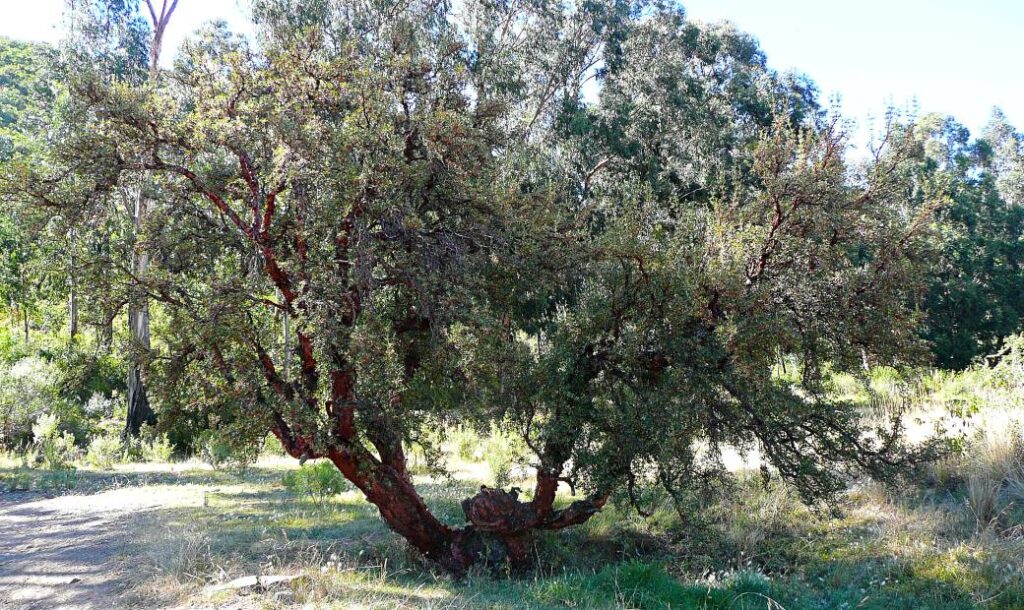 ↑ Polylepis tomentella ssp. incanoides trees in habitat, Cochabamba, Bolivia, 9,500′ ↑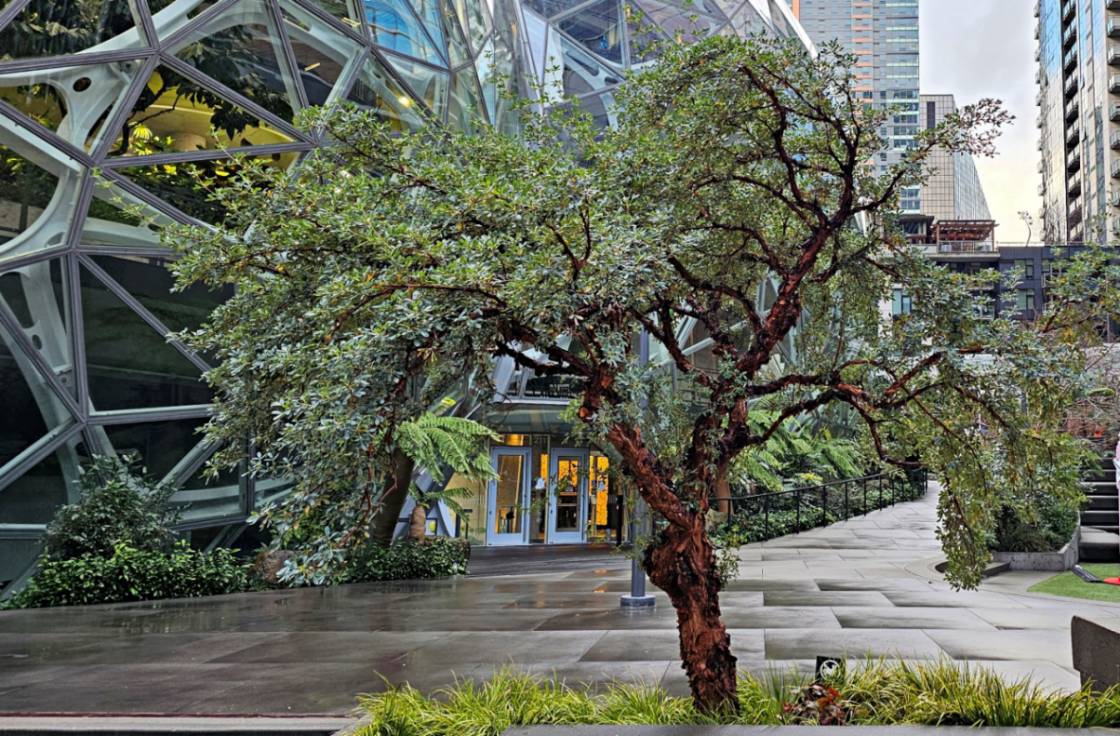
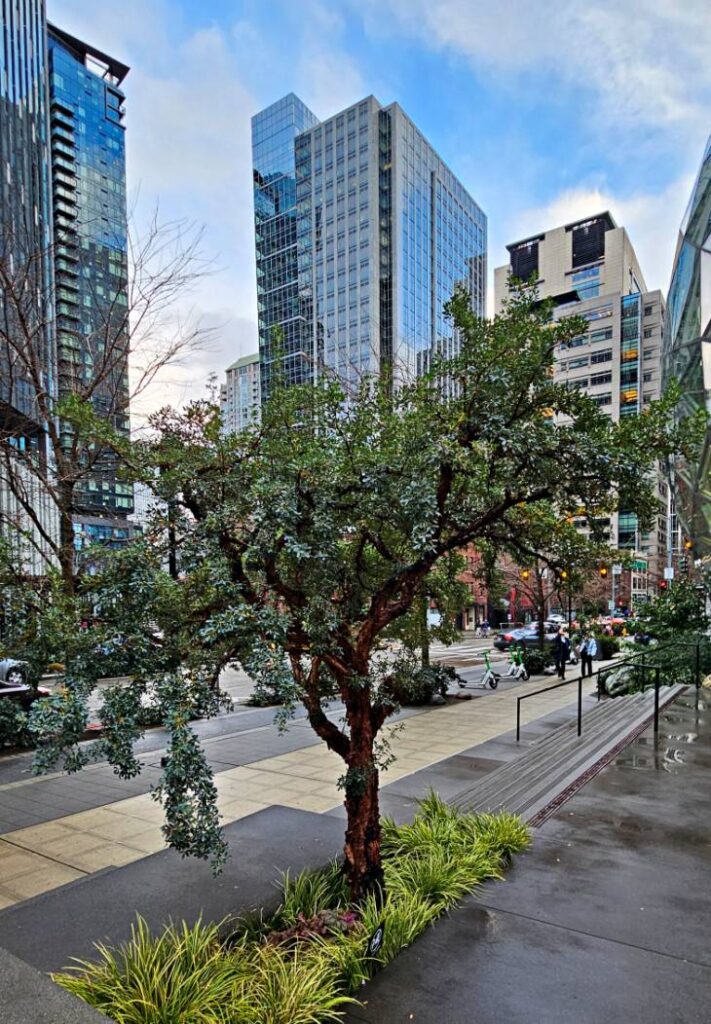 ↑ Polylepis tomentella ssp. incanoides BK10509.20 at the Amazon Spheres, downtown Seattle, WA ↑
___
Psidium sp. ‘Araçá Amarelo’ “Bubblegum Cream Guava” ♥ New ♥
Myrtaceae. A rare wild guava, shrub to small tree. Simple leaves, new growth an attractive coppery color. Edible, small yellow fruit that are quite tasty, said to be similar to Mexican cream guava with a hint of bubblegum! Seed from Brazil. Easy to grow, perfect for containers; reported to be self-fertile and produce fruit in less than 3 years. Full hardiness still undetermined. Z9?
[ 6 ] → 2 ~ 12″+ plants 2+ years old $22.50 each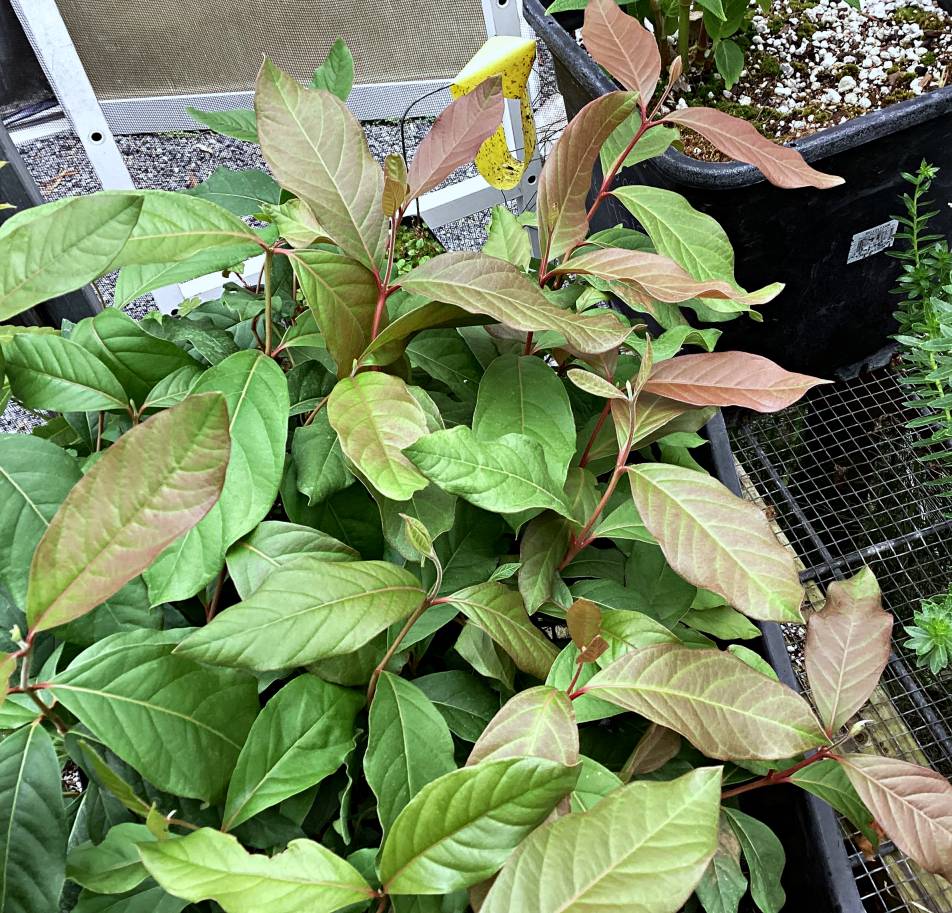
___
Rhaphithamnus spinosus
Verbenaceae. Unusual and alluring shrub 5 to 10’+. Young branches are spiny and new shoots often resemble a Pereskia cactus. Boasts a generous profusion of tubular lavender flowers followed by glossy purple-blue fruits — reportedly edible, but unlikely to become anyone’s favorite with an odd flavor similar to Trametes mushrooms! The foliage turns an inciting purple during winter. This beautiful Chilean species makes a unique addition to any garden or landscape. Part shade to sun, hardy once established. Seed can be slow to sprout, up to 12+ months, so we only have seedlings available sporadically—get them while you can! Z7b
[ 3 ] → 1 ~ 8-10″+ plant 2–3 years old $29.50 SOLD
[ 4 ] → 2 ~ 5–6″+ plants 2 years old $24.50 each ♥ New ♥
 ___
___
Rubus sp. TB17B.3 “Andean Blackberry” “Moro” ♥ New ♥
Rosaceae. A lovely bramble with arching, lightly thorned branches. Trifoliate leaves with slender lanceolate leaflets. Impressive panicles of magenta flowers followed by large, tasty blackberry fruit borne in huge clusters. One of the many obscure Andean blackberries that merit cultivation for their delicious fruit. T. Baldwin seed collection Bellavista, Ecuador. Z8/9?
[ 3 ] → 1 ~ Plant 4+ years old $26.50 SOLD
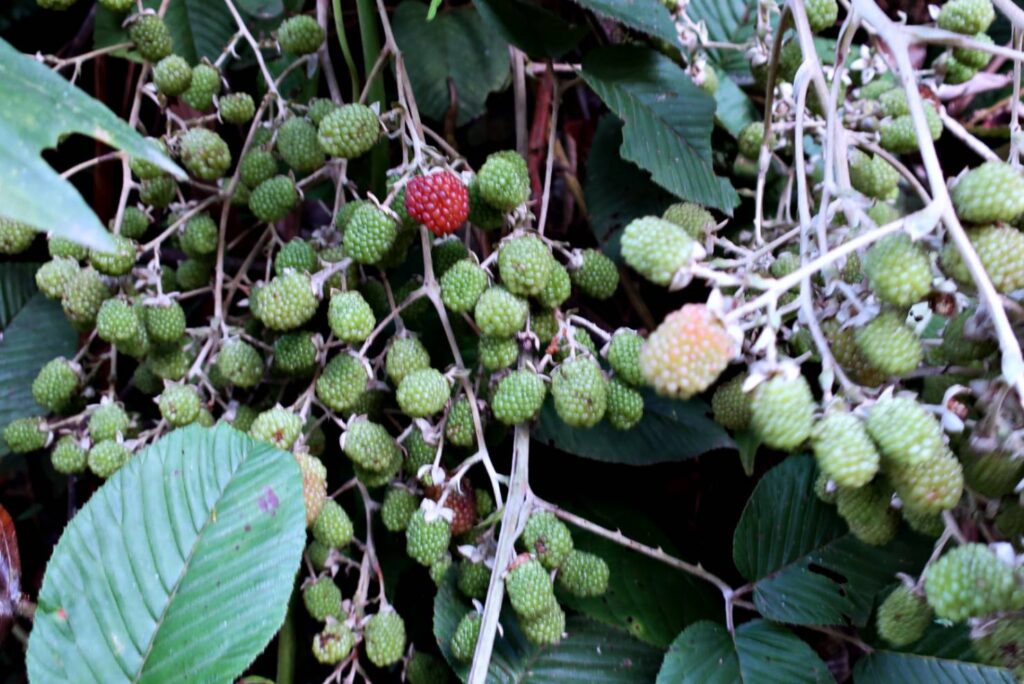 ↑ Rubus sp. TB17B.3 with unripe fruit, Bellavista, Ecuador ↑
Rubus sp. TB17Q.1 “Andean Blackberry” “Moro” ♥ New ♥
Another graceful wild bramble worth cultivating for its big, juicy blackberry fruit produced in abundance. Sparsely thorned bramble with trifoliate leaves, large clusters of magenta flowers and fruit. T. Baldwin seed, circa 12,500′, near the Quilotoa Crater, Ecuador. Selected hybrid cultivars of Andean Rubus are also farmed in this region. Z8?
[ 4 ] → 2 ~ Plants 4+ years old $27.50 each SOLD
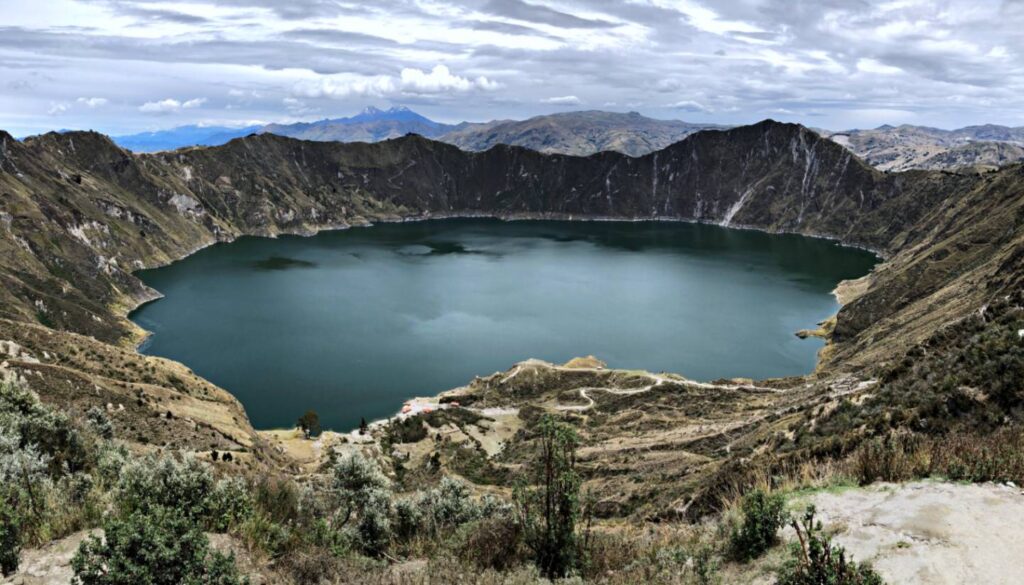 ↑ Quilotoa Crater, Ecuador ↑
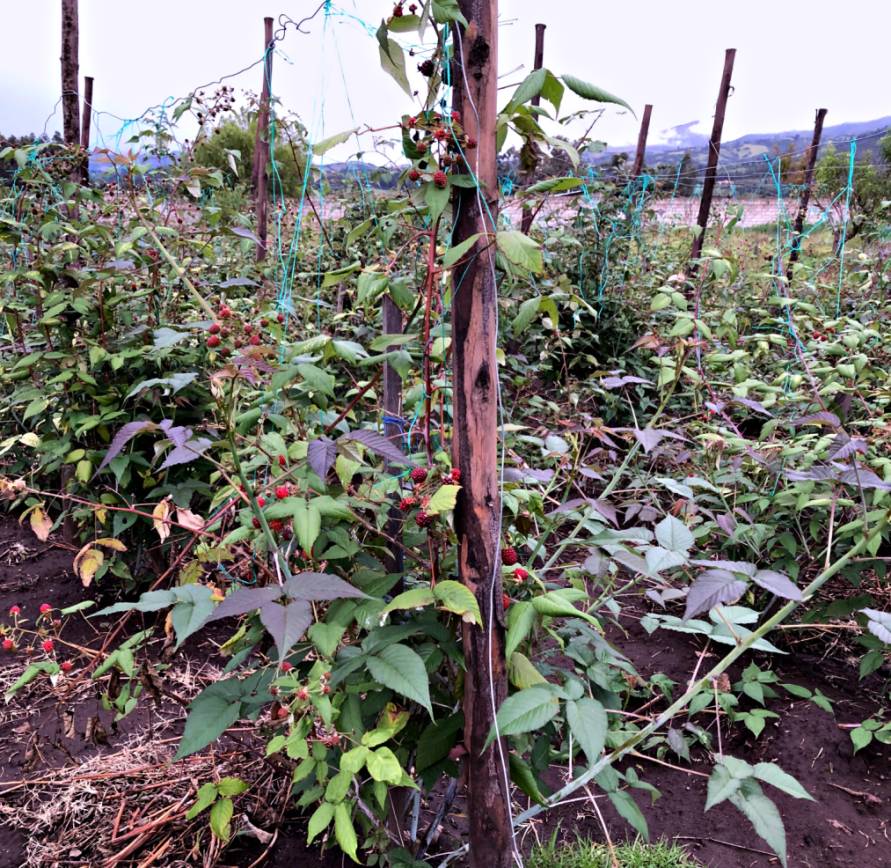 ↑ Andean Rubus hybrid cultivars farmed near Quilotoa, Ecuador ↑
___
Sambucus peruviana BK151011.8 cl. A “Sauco” “Guindo” “Andean Elderberry” ♥ New ♥
Caprifoliaceae. It’s been several years since we’ve offered this outstanding, highly beneficial plant. Fast growing tree to 15–30′ with distinct gnarled trunk and large compound leaves. Self fertile umbels of white flowers. Esteemed for its huge clusters of deep purple-black, antioxidant rich, sweet berries, which are the largest fruit of any elderberry species. Seed from the biggest specimen we’ve ever come across, an awesome 30’+ tree with multiple trunks covered in a shaggy epiphytic fern; cloud forest of Juglans, Alnus, Podocarpus, etc, San Lorenzo, Salta, Argentina, 6000′. Widely planted since pre-Columbian times, thought to be used in Incan agroforestry. The fruit are popular made into marmalade and other sweets throughout the Andes. The leaves are said to repel insects and the light, rot resistant wood is made into tools and flutes. An infusion of the flowers is used to expel phlegm and fever. Dried leaf powder is rubbed into the skin to reduce rheumatic inflammation. This amazingly versatile small tree is a superb addition to any edible/medicinal garden. Tolerant of wet subtropical climates as well as cold. Sun to part shade, prefers some moisture, but tolerant of adverse conditions. During a week long wildfire evacuation in 2019, we lost most of our seedlings (and many other irreplaceable plants), only 3 survived their pots completely drying out and were slow to fully recover until recently. We offer here a rooted cuttings of the most vigorous of the survivors, clone A. Last year, a similar size selection auctioned for over $100. Z8a
[ 5 ] → 1 ~ 5–8″+ treelet $66
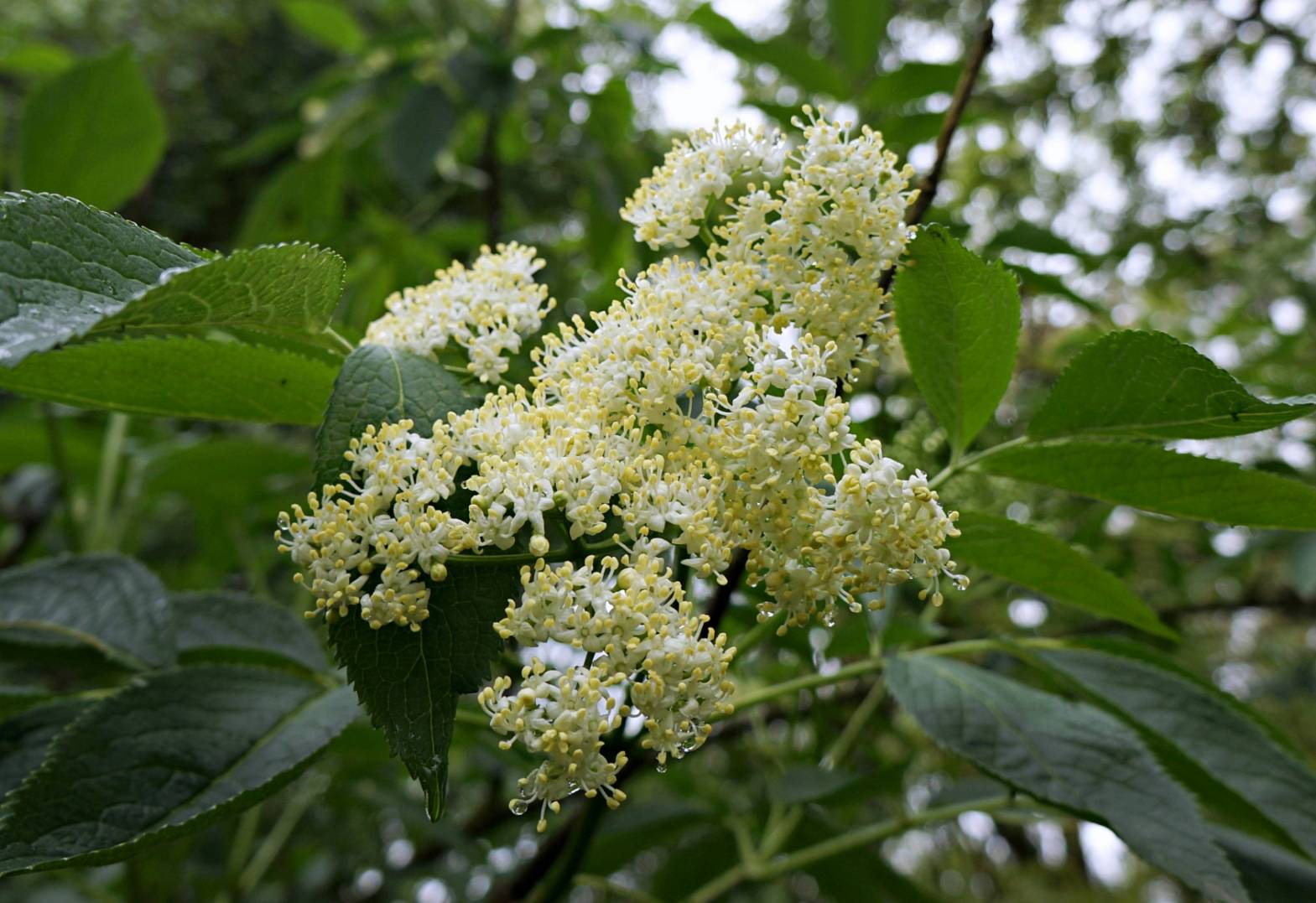
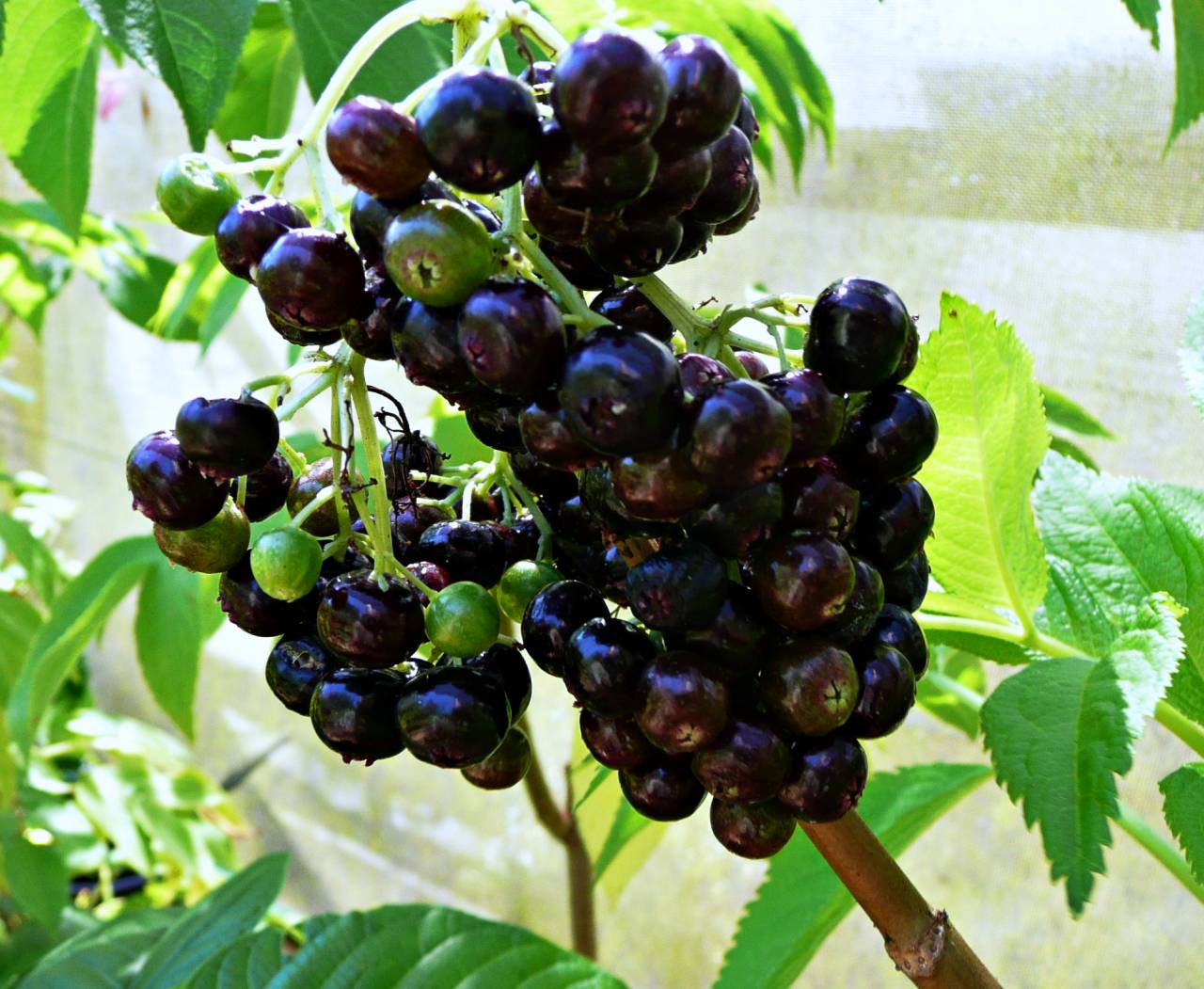 ↑ Sambucus peruviana flowers and fruit ↑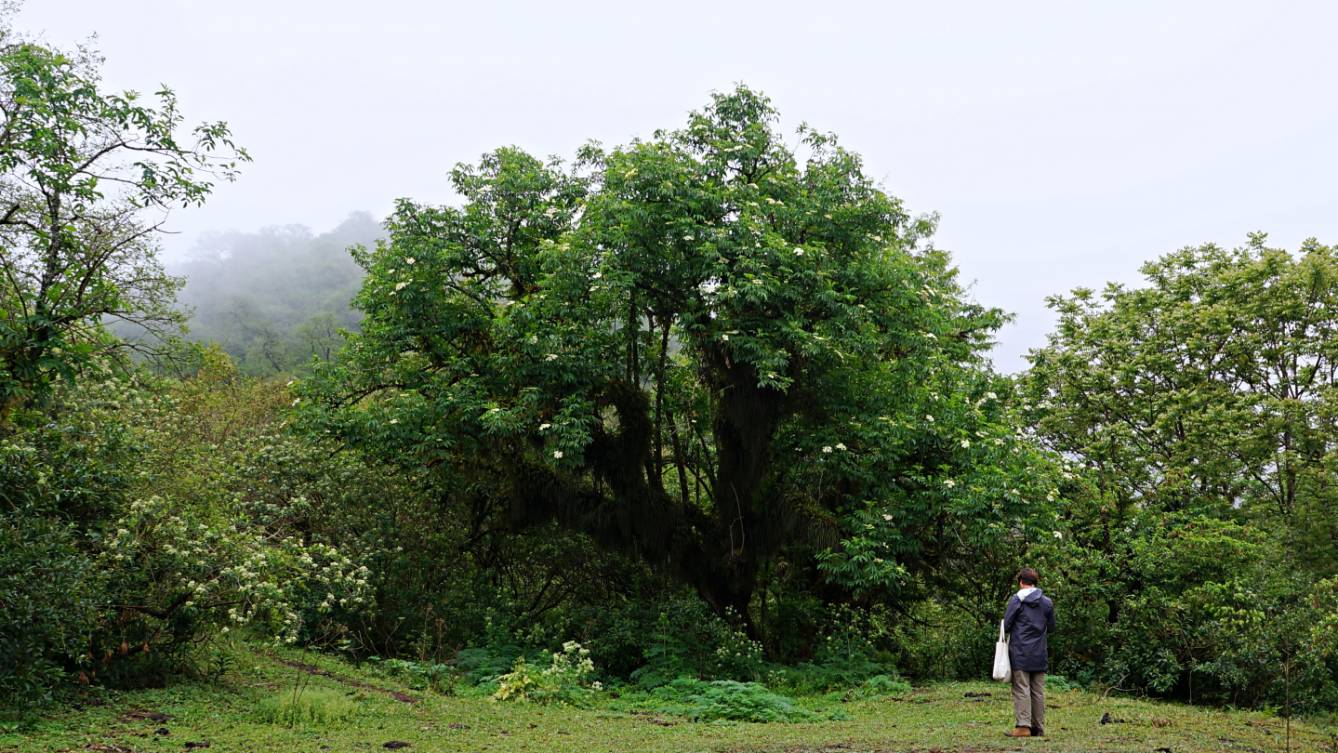
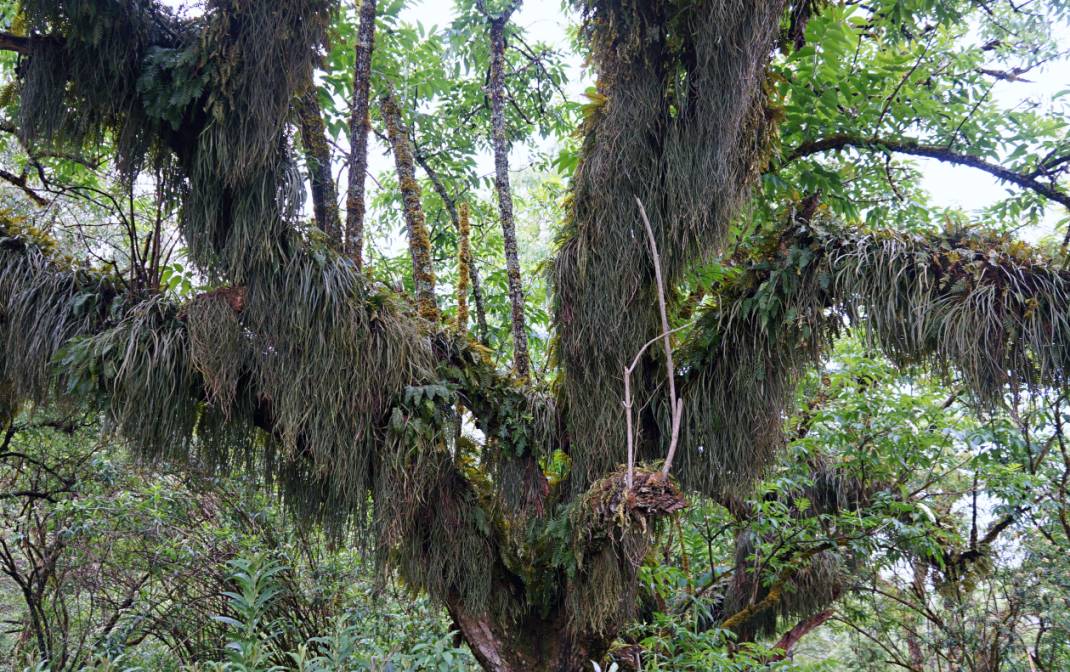 ↑ Ancient, fern covered mother tree of Sambucus peruviana BK151011.8, Salta, Argentina ↑
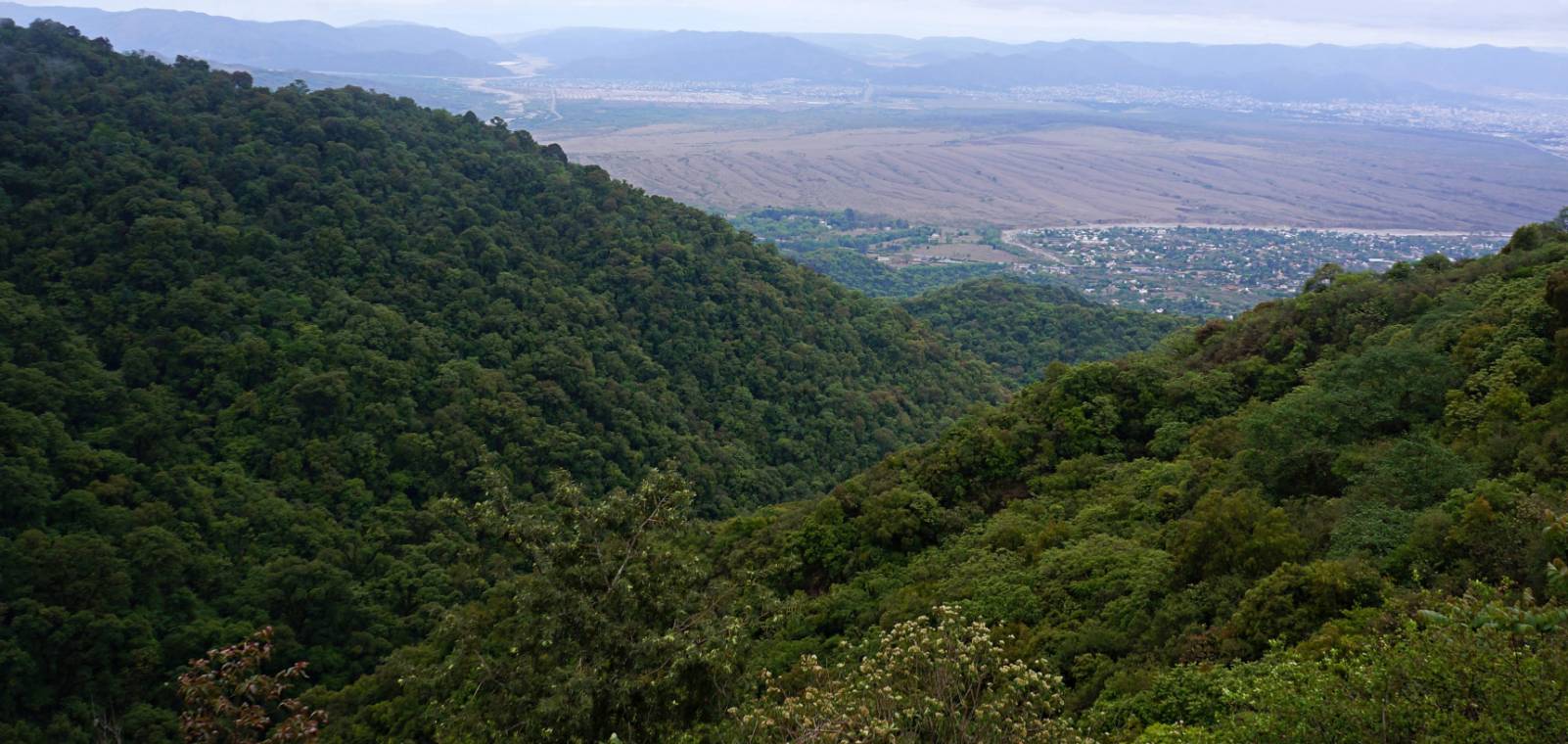 ↑ Sambucus peruviana BK151011.8 cloudforest habitat, San Lorenzo, Salta, Argentina ↑
___
Smallanthus sonchifolius “Yacon” — see our updated Andean Tuber Crop page.
___
Stenomesson pearcei BK14513.19 “Chiwanway”
Amaryllidaceae. Large clumping bulb with wide fleshy leaves. 12″+ stalks with showy clusters of large, pale yellow flowers with inflated tubular corollas. Cloudforest near Sunchupata, northern Cusco Dept., Peru, 9700′. Sun to part shade and well draining soil, similar to succulent care. Give it a couple months dry to induce flowering. First introduction of bulbs from several seed grown clones. Another great Tricho-companion. Z8?
[ 6 ] → 1 ~ Plant/bulb $19.50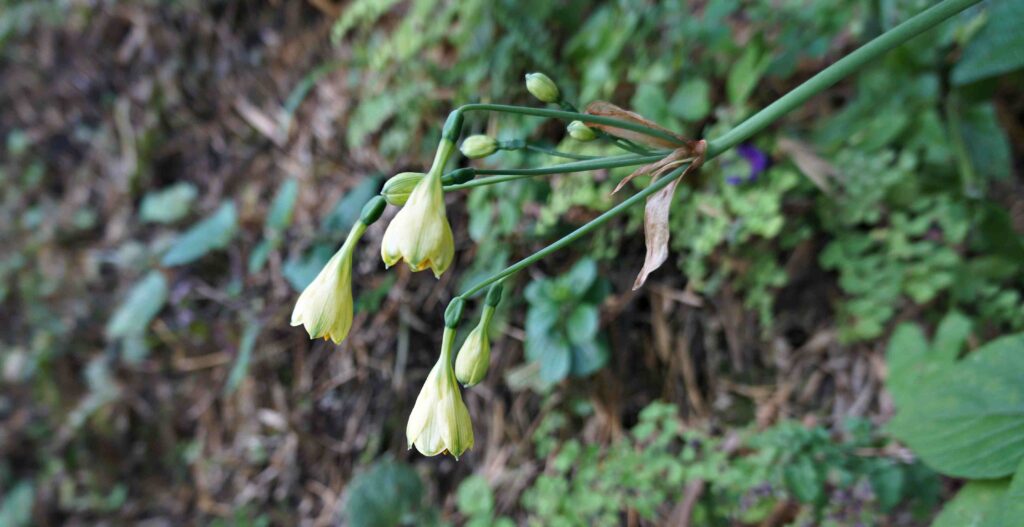
___
Tagetes multiflora “Huacatay” — see the Other Andean Food Crops on our updated Andean Tuber Crop page.
___
Thevetia peruviana
Apocynaceae. Evergreen tropical shrub with slender leaves and showy fragrant yellow flowers. The entire plant contains highly toxic cardiac glycosides. Sometimes utilized as a teacher plant in Amazonian ‘dietas’, not through ingestion but by simply being in the plants’ presence. The large seed are used in jewelry making. Seed oil has been used as an insecticide and fungicide. Our plants grown from seed from Amazonian Peru. Handle thoughtfully. Tolerant of high temperatures and some drought. Z10a?
[ 5 ] → 2 ~ 10-12″ plants 3 years old $16.50 each SOLD
___
Tropaeolum tuberosum “Mashua” “Añu” — see our updated Andean Tuber Crop page.
___
Ugni molinae “Unu” “Murtillo” “Chilean Guava”
Myrtaceae. Ornamental evergreen shrub to 6′. Cup-shaped fragrant white-pink flowers and 1/3″ rose-purple edible berries. Southern Chile. The fruit has a particularly delicious flavor, being aromatic and sweet. The leaves are rich in antioxidants, the Mapuche make a analgesic tea from them and brew chicha from the fruit. The roasted seeds are a coffee substitute. Ugni candollei is used to induce dreaming. Commercially cultivated in Chile for the fruits, it was popular in 1800s England, Queen Victoria’s favorite fruit! Does excellent here in northern California. Dislikes alkaline soil, but is very easy to grow. Sun to half shade, drought tolerant when established. Can be trimmed as a hedge. Deserves wide cultivation. Seedlings long underpotted and ready for your garden! Z8a
[ 6 ] → 1 ~ 4–7″+ plant 4+ years old $15.50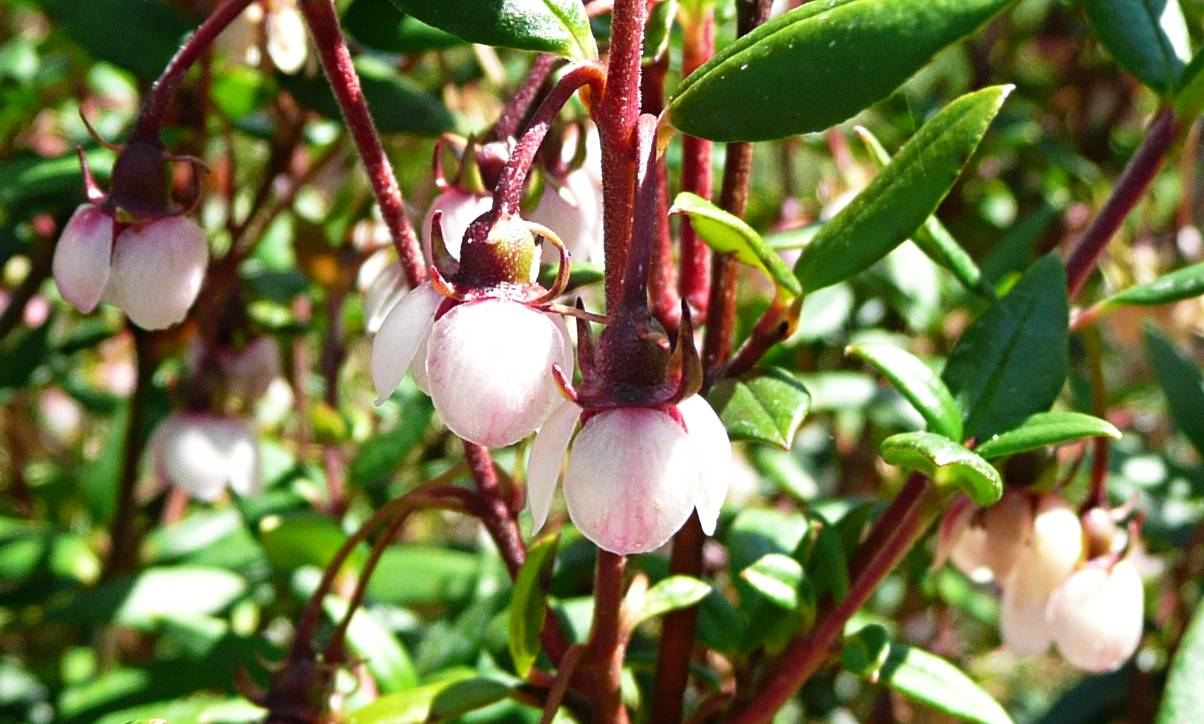
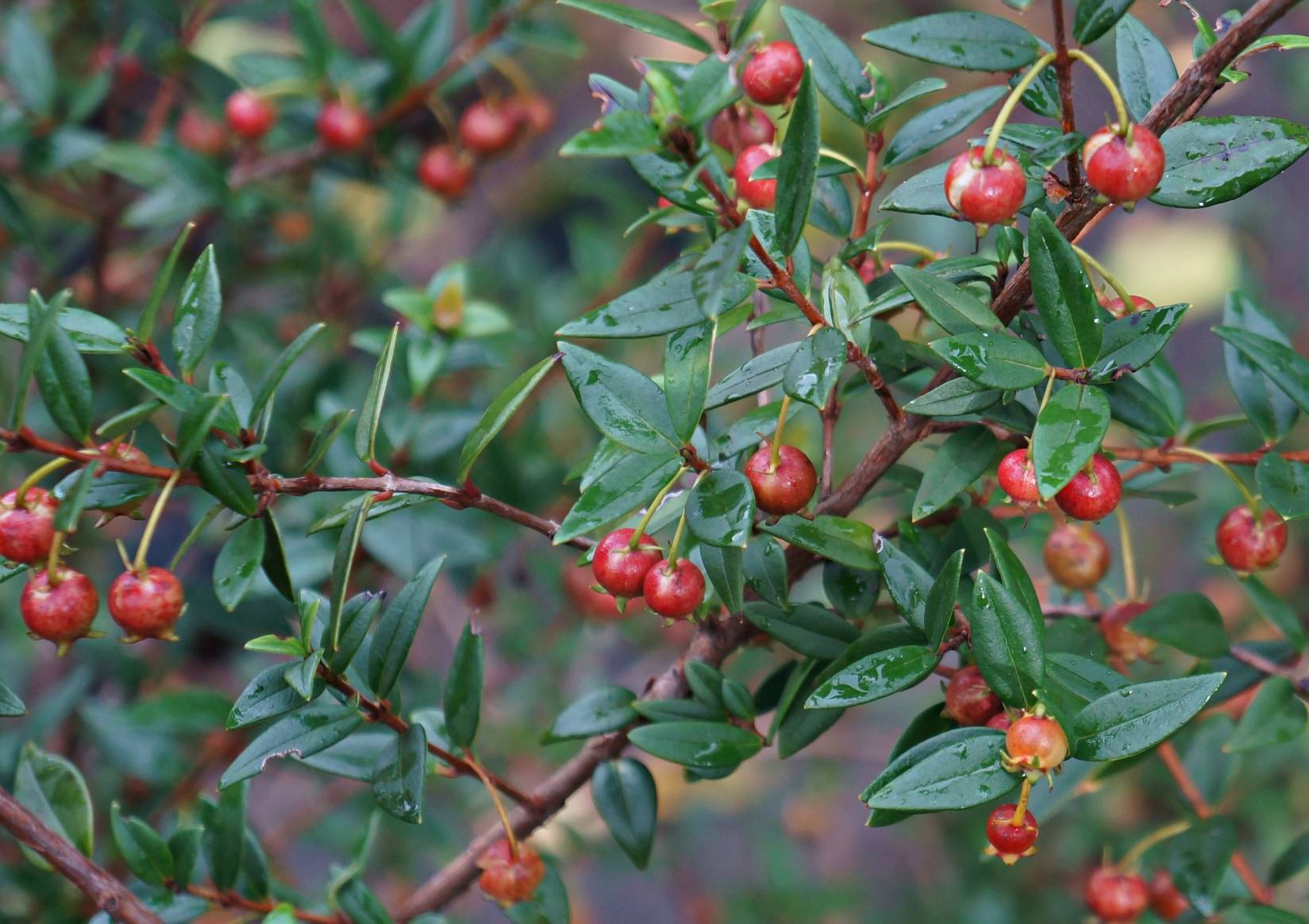
___
Ugni molinae ‘Flambeau’
A rather exuberantly variegated clone with leaves streaked green, cream, lime and pink. New growth is an unabashedly flamboyant rosy-pink. Slower growing, but has the same delicious berries as the standard form. Gets a top rating for ornamental edible. Z8a/b
[ 6 ] → 2 ~ 5–8″+ plants $18.50 each 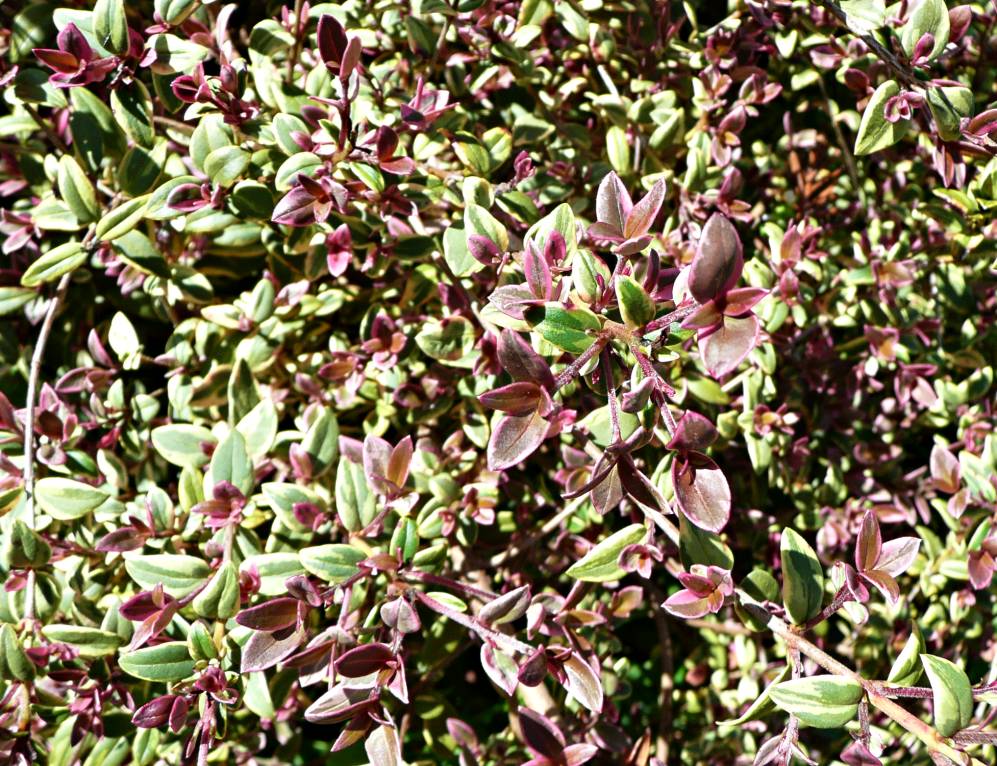
___
Ullucus tuberosus “Ulluco” “Papa Lisa” — see our updated Andean Tuber Crop page.
___
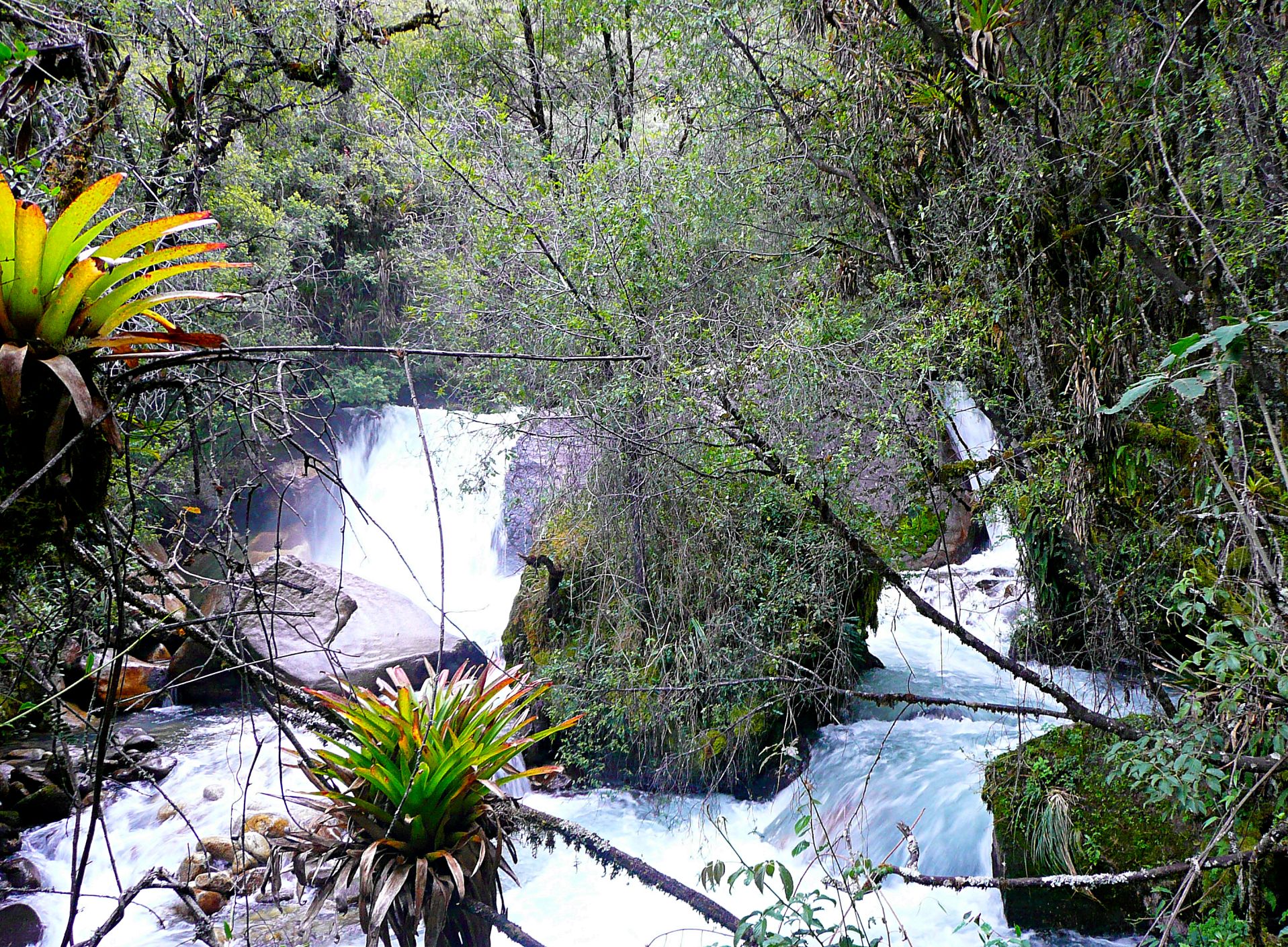 ↑ Polylepis weberbaueri forest, Lagunas de Llanganuco, Cordillera Blanca, Ancash, Peru ↑
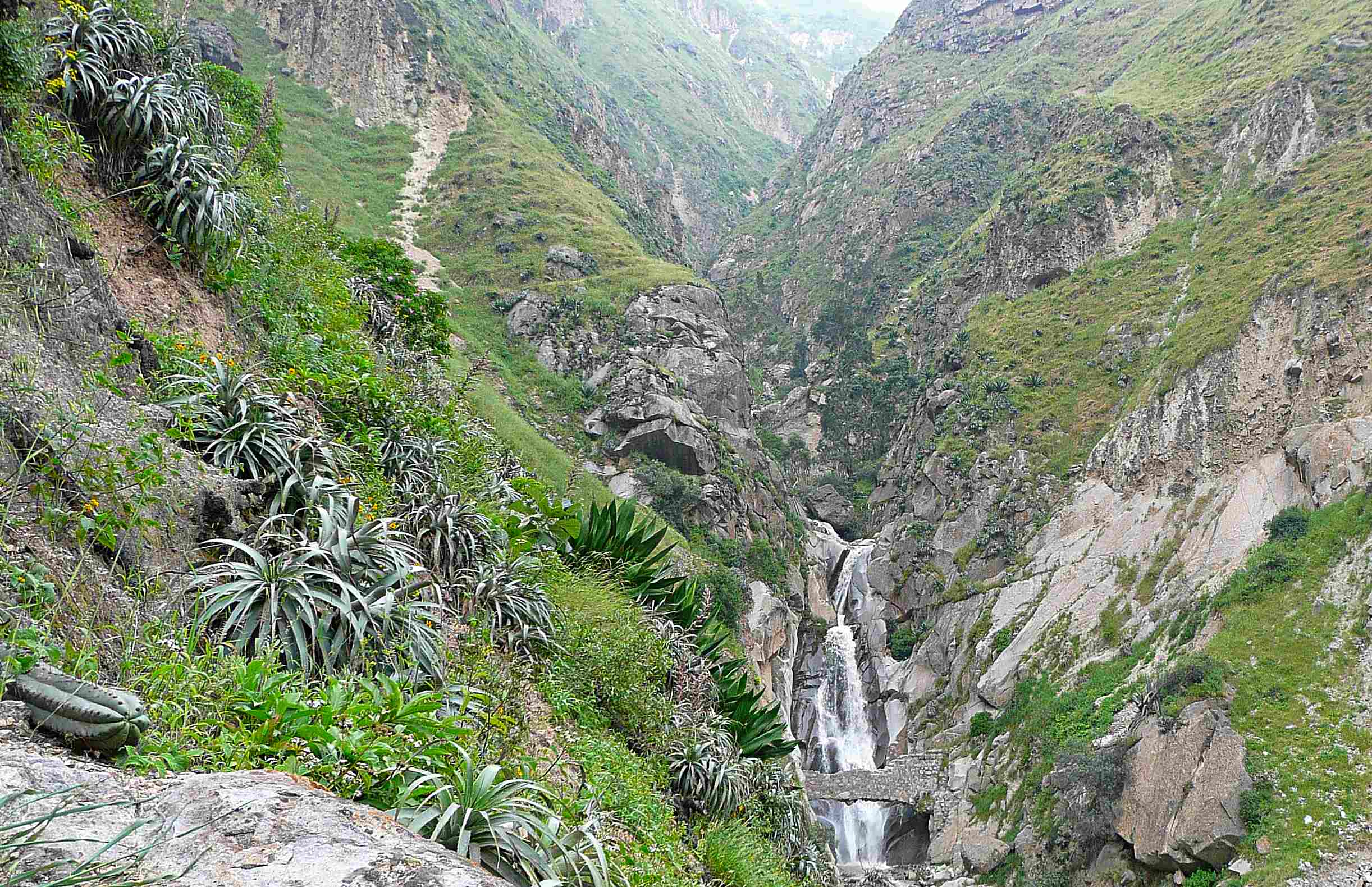 ↑ Just south of Huariquiña, Huarochirí Prov., Lima Dept., Peru ↑
___
♣
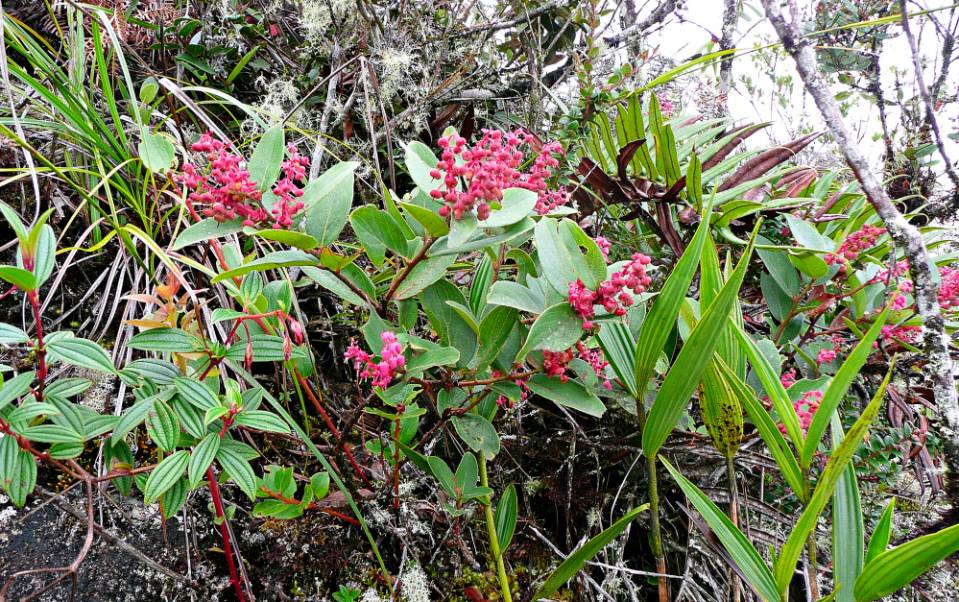 ↑ Gaultheria sp., Cusco Dept., Peru ↑
Neotropical Blueberries
Ericaceae. Within the moist jungles and where the dry-forests edge to lush, among the cloud-drenched montane forests and in the cool, high alpine paramo of the Andes and Central America, the blueberry family finds the perfect ecological ingredients for flamboyant evolutionary expression in an exceptional diversity of genera. These sundry ecosystems are home to all manner of blueberry kin: from tiny creeping miniatures to small trees, evergreen terrestrial shrubs to liana-like plants and strange epiphytes—some developing elephantine caudiciform lignotubers, or vibrant inflorescences bursting with huge clusters of nectar-dripping blossoms, antioxidant-rich juicy berries in a spectrum of colors, or wintergreen scented foliage in remarkably varied shapes; all with scandalously vivid new growth of carnal pinks to reds to copper or bronze! Often key components of their habitats, these genera have co-evolved with myriad hummingbirds and other pollinators; the berries nourish all manner of fauna, from birds to spectacled bears. Neotropical blueberries have long provided food, medicine, and beauteous ornament to people—in the Andes, aphrodisiacs and love charms are fashioned from the more sensual species with their bawdy blossoms and salaciously smooth to pleasurably pubescent leaves, while the alluring berries of others are known to induce an inebriation and delirium if eaten in excess. The majority of the neotropical Ericaceae are new to cultivation, yet surprisingly easy to grow: they thrive with a well draining acidic soil, regular moisture, and low phosphorous fertilizer; most flower and fruit best in bright, filtered light, though many will tolerate heavier shade and some are fine in full sun. We grow most of ours in a mixture of orchid bark, perlite or pumice, and sphagnum moss or peat. The epiphytic species do well in hanging baskets, many that form a caudex are even tolerant of periodic dryness and adaptable for succulent collectors. In our experience, nearly all root easily from cuttings—plant cuts in a pot of perlite or sphagnum with a plastic bag over it for humidity, keep moist and warm to root in 3–8 weeks; cuttings of the caudiciform species will form lignotubers in 6–18 months. The cold hardiness of many species is not well tested, in general we keep all but those from the highest elevations away from direct frost, though we suspect others will tolerate it. With the unusual number of rare endemics, conservation and propagation is critical. Our experiments with hybridizing within the varied genera has produced some lovely new plants, look for our offerings of these in the future. We remain enchanted by these phenomenal plants that have held sway over our heart for decades and are delighted to offer a burgeoning number of species so others can experience the sublime joy of growing these wondrous blueberry kin!
Inquire for additional species.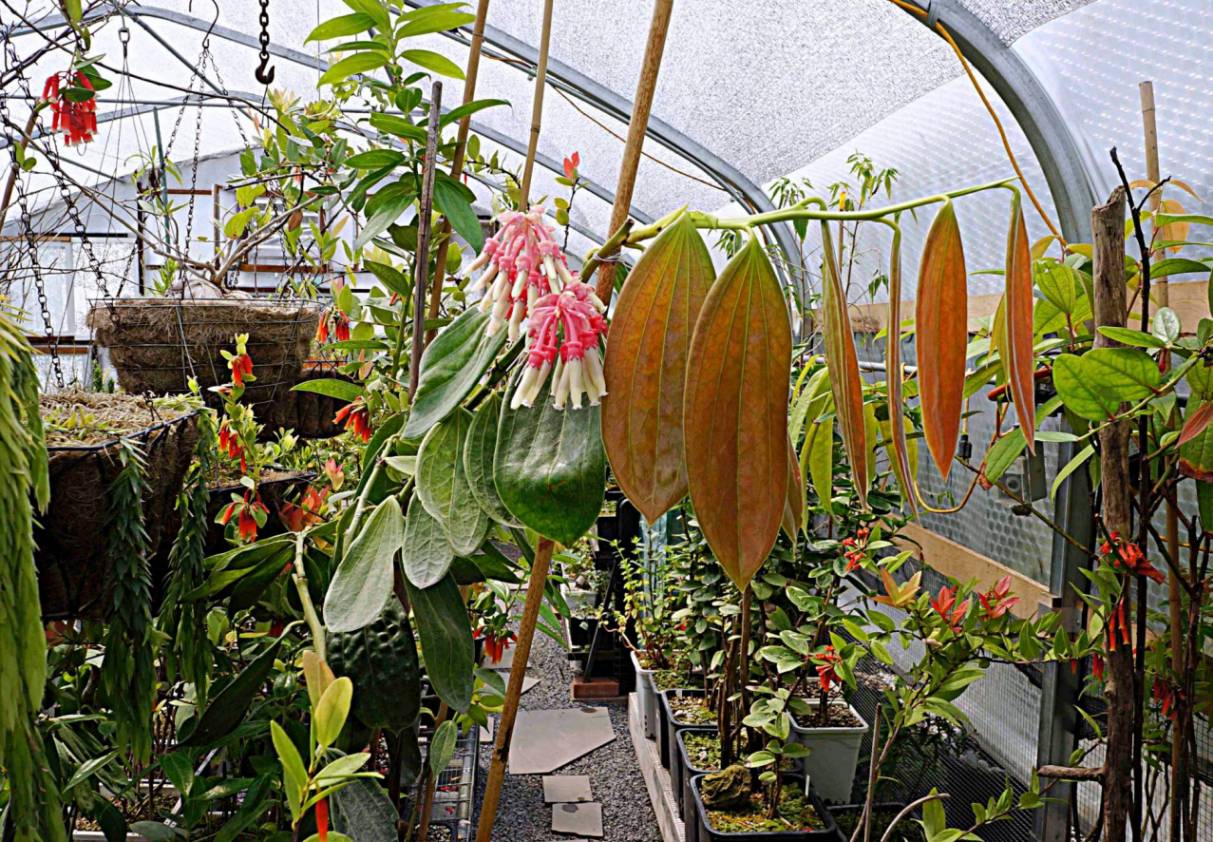 ___
___
Anthopterus schultzeae HBG90758
Ericaceae. Semi-epiphytic shrub with branches 3–10′ long. Narrow, densely arranged, elliptic leaves. New growth is reddish-bronze. Racemose inflorescence with 5–12+ small, lantern-like flowers, pale yellow-green with a pink blush, aging to red. Burgundy to black edible berries similar to a bilberry. A superb blueberry relative from the moist forests of Ecuador and north Peru between 2600–7500′. Grow like a blueberry—moist, well draining acidic soil. Roots easy from cuttings when kept keep humid and moist. Z9b?
[ 5 ] → 2 ~ 5–7″ unrooted cuttings $24.50 each 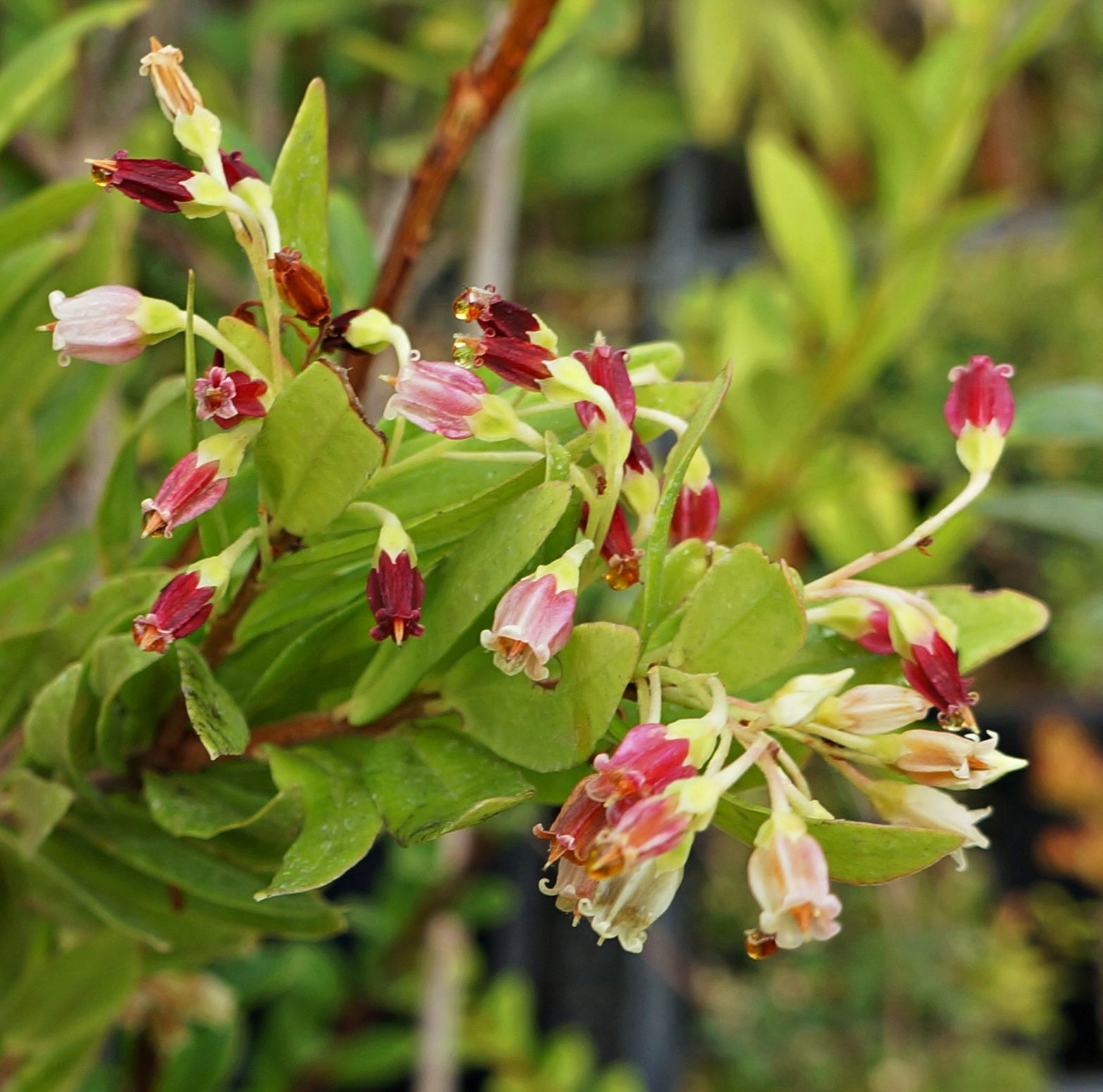
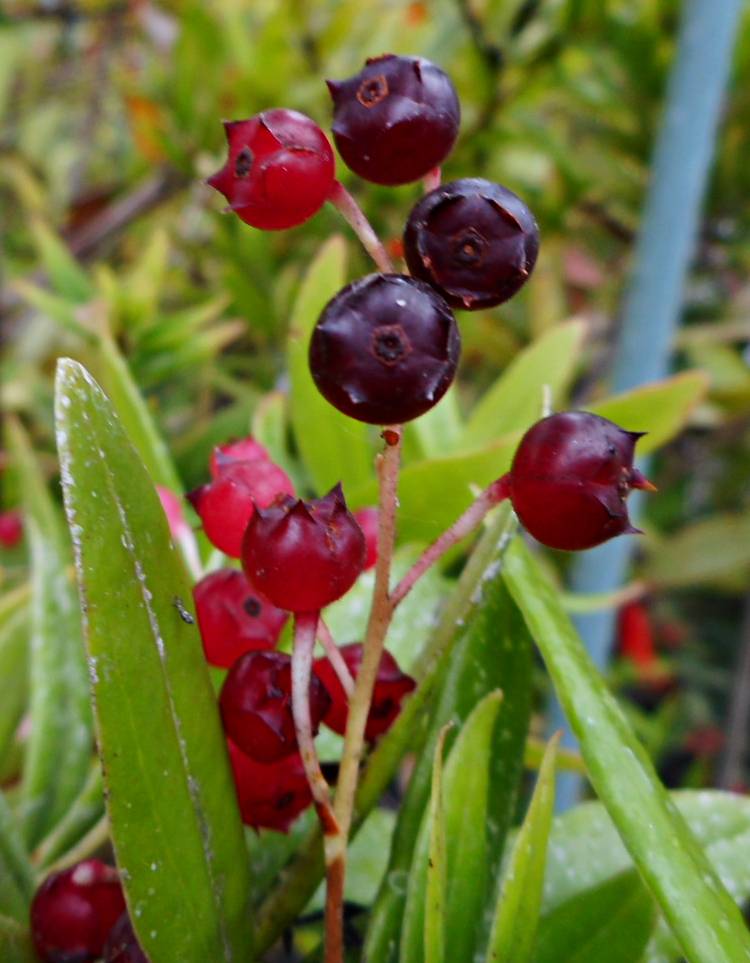
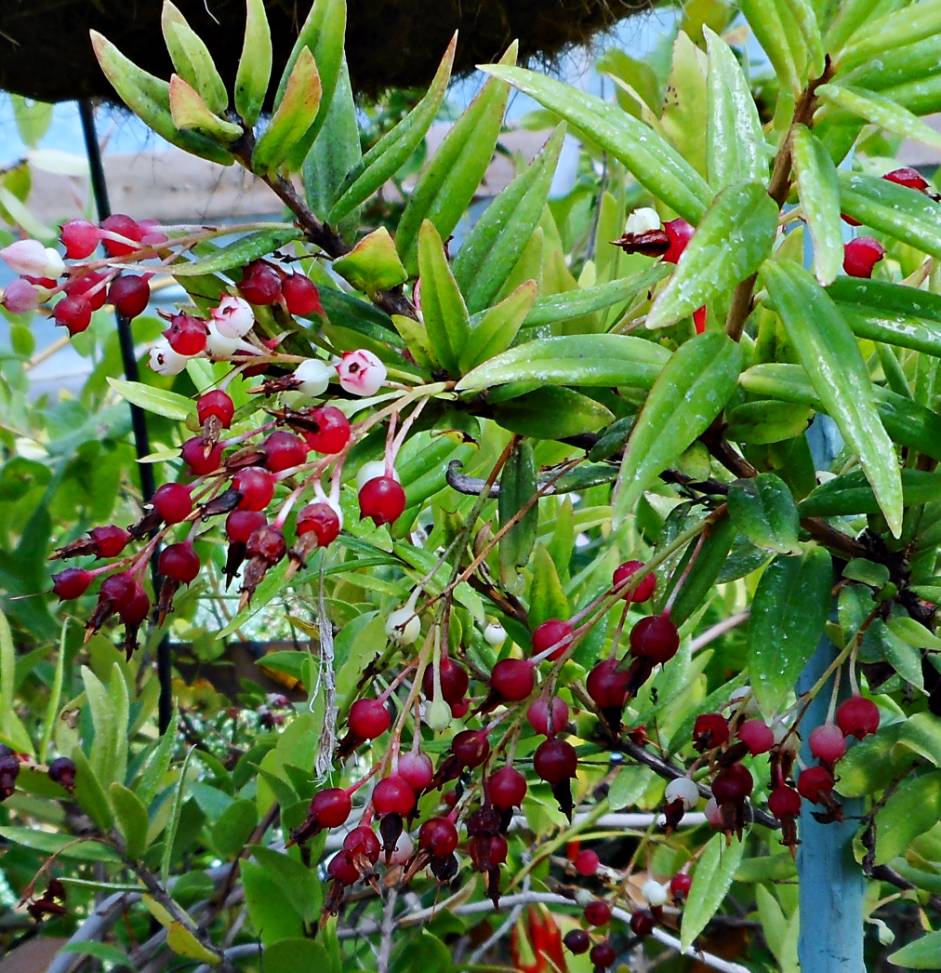
___
Cavendishia adenophora “Quereme Rosa”
Ericaceae. Evergreen shrub to 6’+. Thick, smooth and glossy, oblong or obovate leaves to 6″. New growth is pink-red to bronze. Large terminal clusters of up to 25 tubular flowers, pink with dark rose stripes surrounded by pink bracts with rose frills along their margins—unbelievably showy and unabashedly erotic! Large, purple-black, edible berries. Cordillera Occidental cloud forest of Choco and Valle Depts., Columbia, between 2200–6500’+. Considered by many as the most gorgeous Cavendishia species, local legends tell of the alluring power of its beauty. Endangered due to overharvest for “love magic” and for sale in local flower markets. Easy to grow, prefers filtered light and moist, well draining acidic soil. We offer larger cuttings of 3 clones, ready for rooting in perlite or moss. Z9b?
Clone A: [ 6 ]→ 2 ~ 7-10″+ unrooted cuttings $48.50 each
Clone C: [ 4 ]→ 1 ~ 7-10″+ unrooted cutting $48.50 SOLD
Clone NN: [ 6 ]→ 2 ~ 7-10″+ unrooted cuttings $48.50 each
August Bulk Sale! 2 unrooted cuttings of any of the above available clones for $69; or 4 for $125
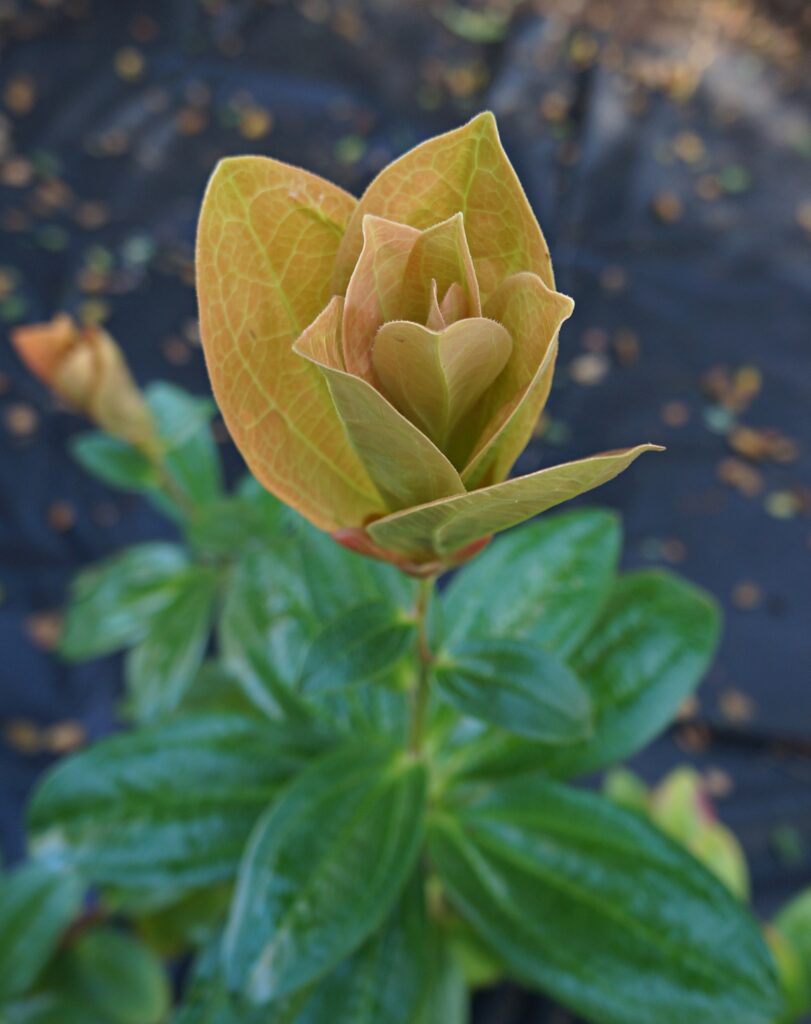
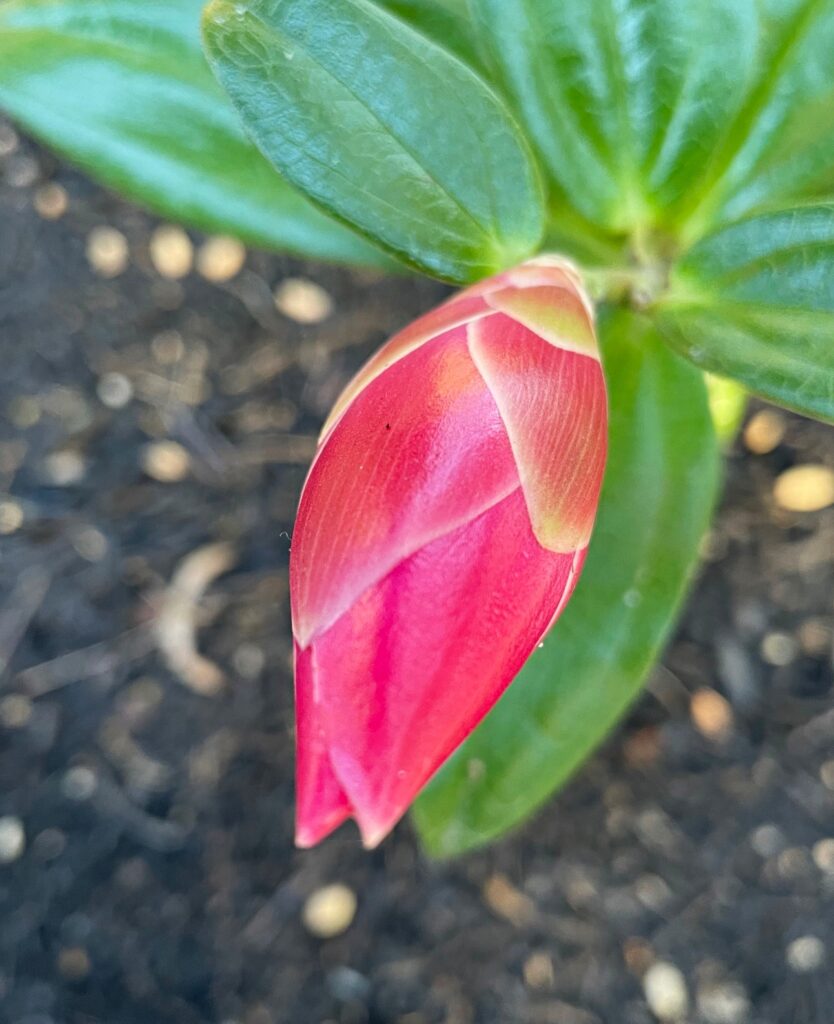
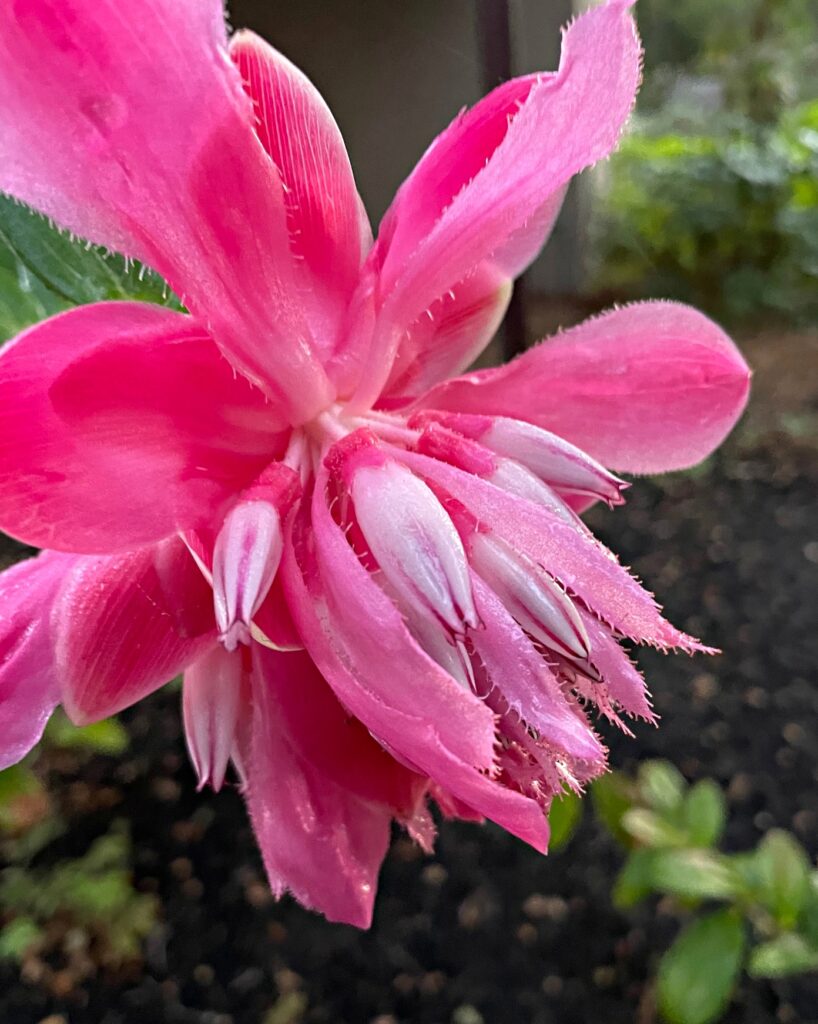
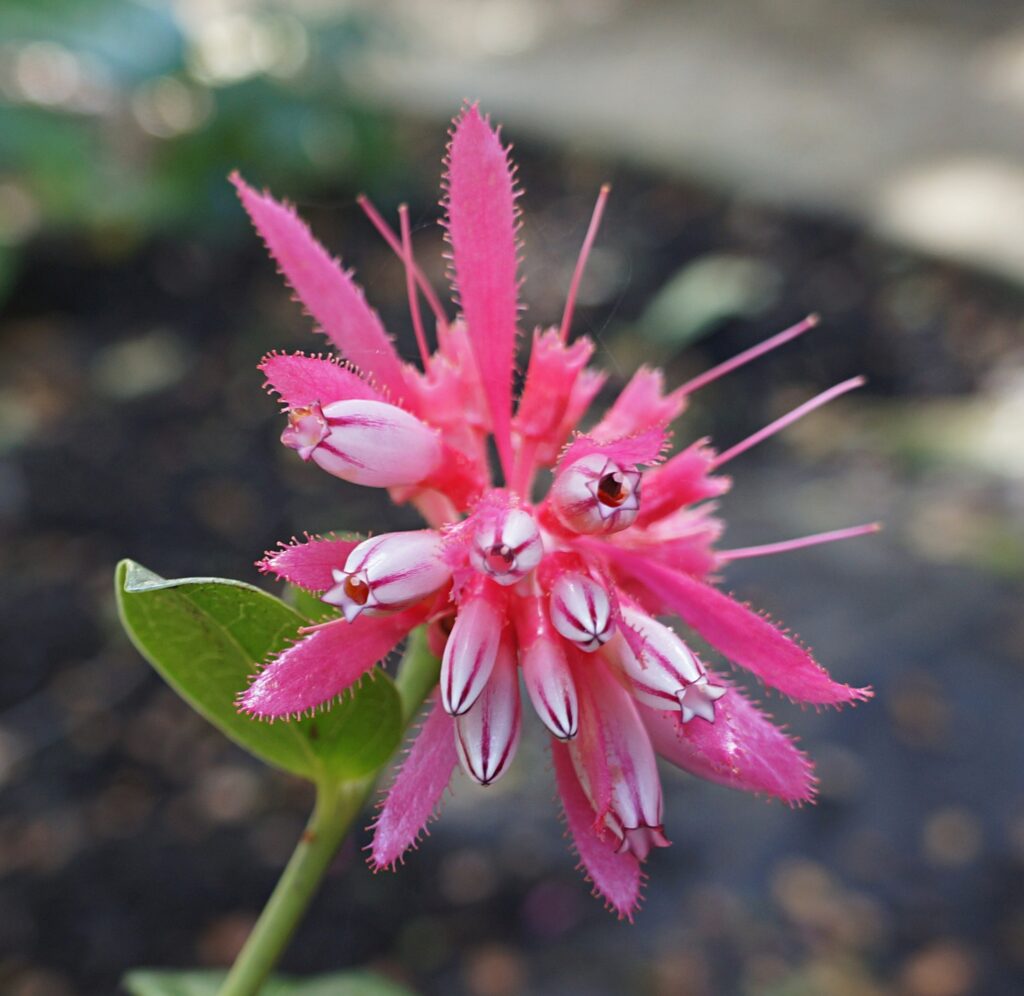
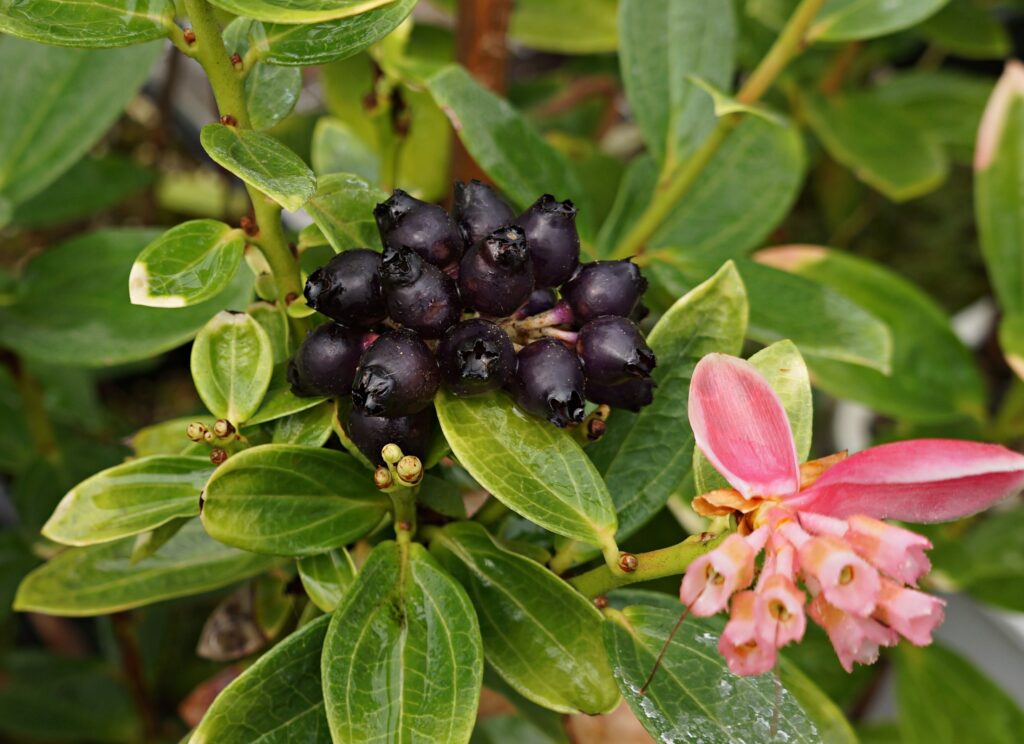
___
Cavendishia axillaris X ??
Open pollinated neotropical blueberry seedlings, we don’t know if the seed was true or pollinated by any one of our other Cavendishia species. C. axillaris is a shrub to 2–4′ with deeply veined, dark green suborbicular leaves densely arranged along the stems. Unique inflorescences at the leaf axils—clusters of rose-pink bracts and numerous small, bottle shaped, white-pink to yellow-white flowers. Rounded, edible, indigo blue berries. A terrestrial to epiphytic denizen of the cloud forests of Costa Rica to northern Columbia up to 9000′. First offering of seed grown plants. Z9b?
[ 10 ] → 2 ~ 5–8″+ plants 3-4 years old $42.50 each SOLD
[ 6 ] → 2 ~ 11–15″+ multi-stemmed plants 4+ years old $52.50* each September SALE! $48* each
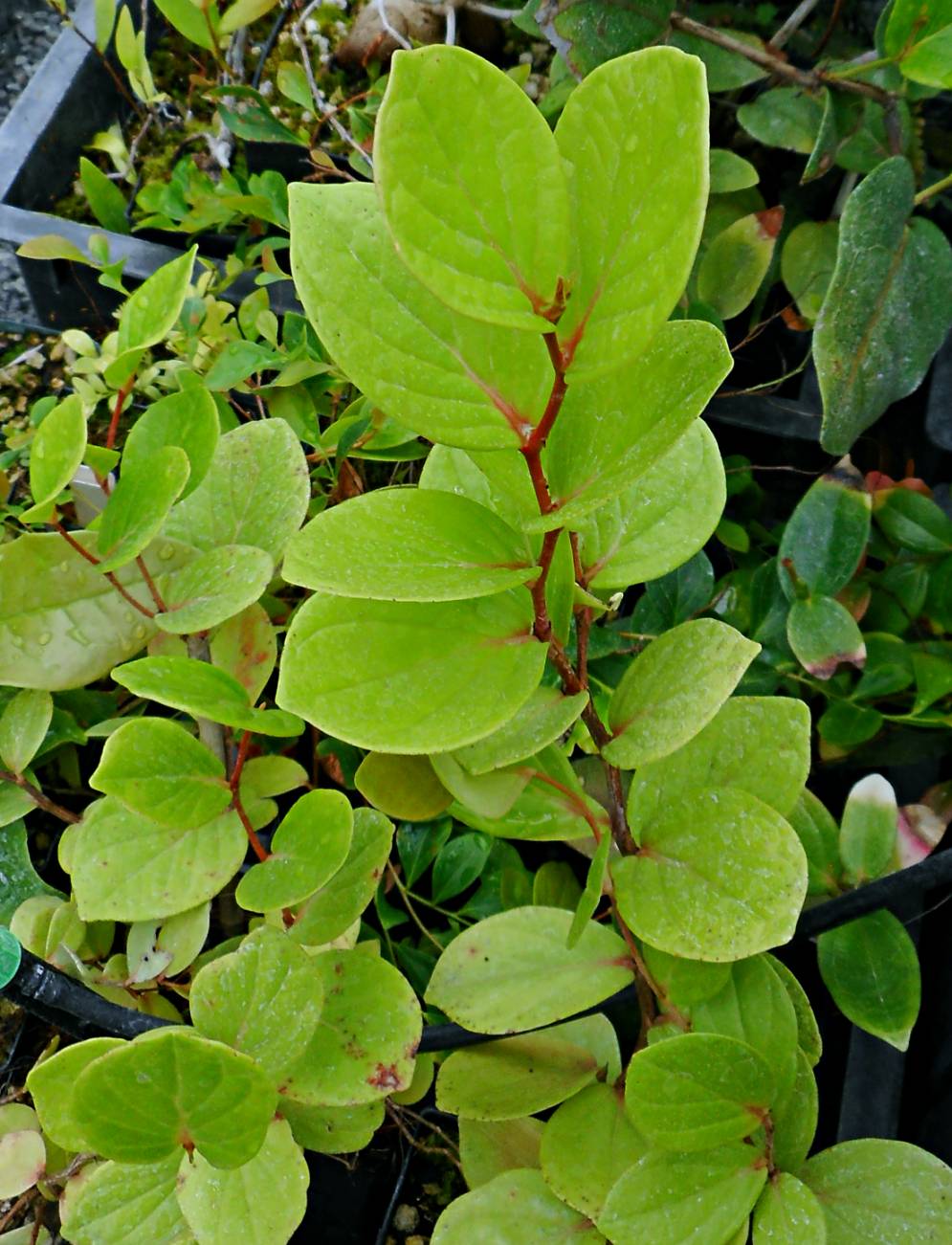 ↑ Example of specimen plants ↑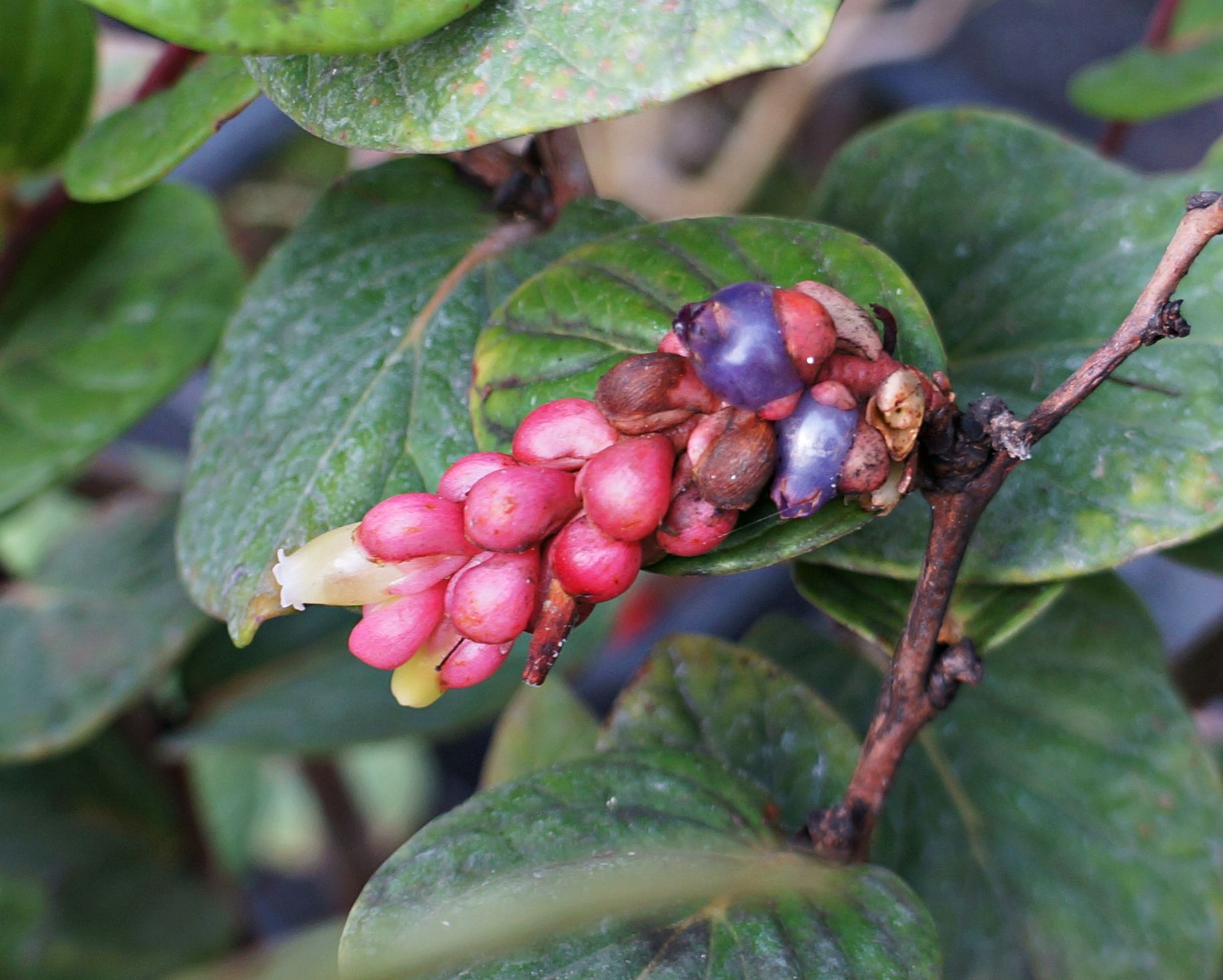
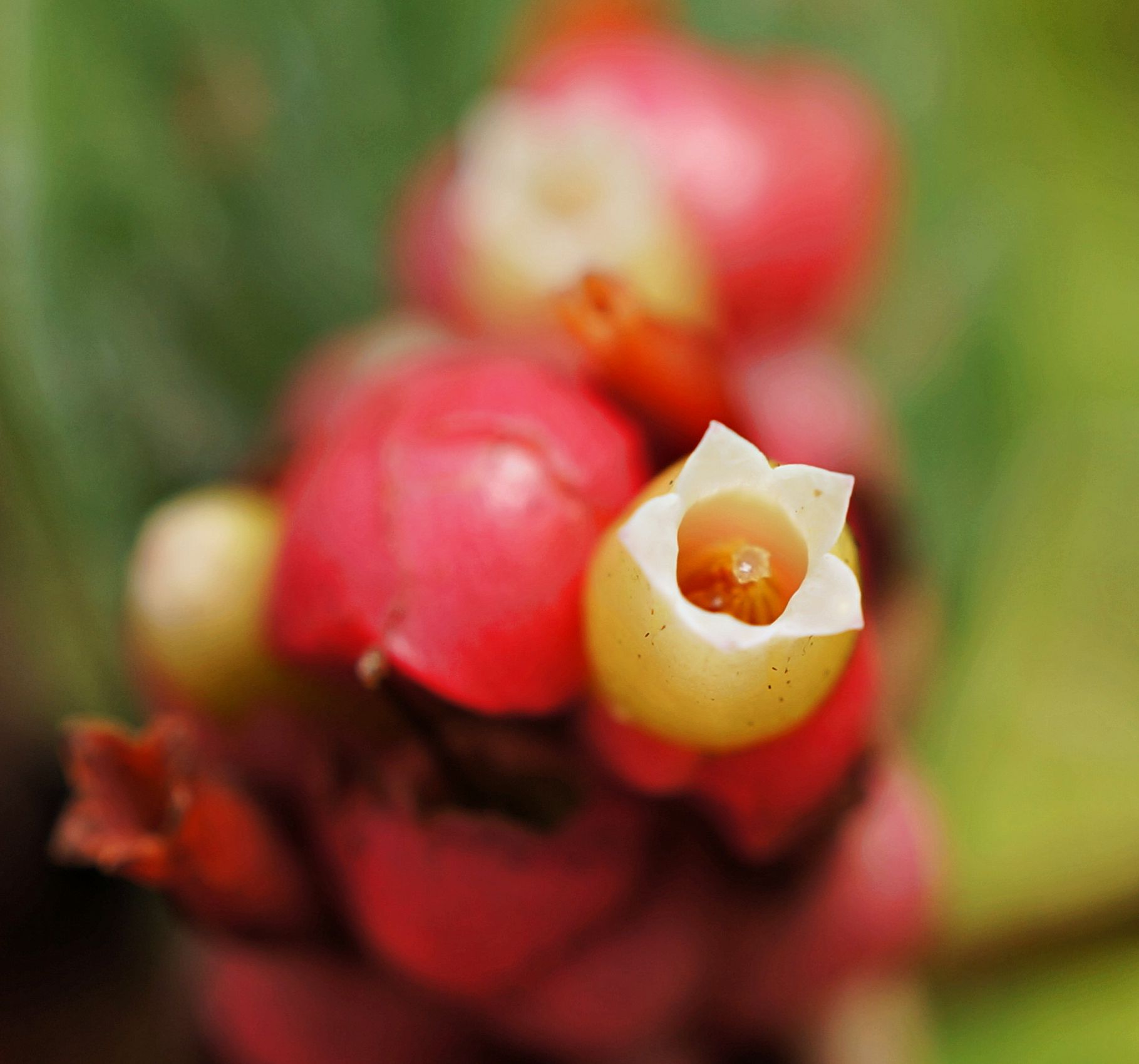
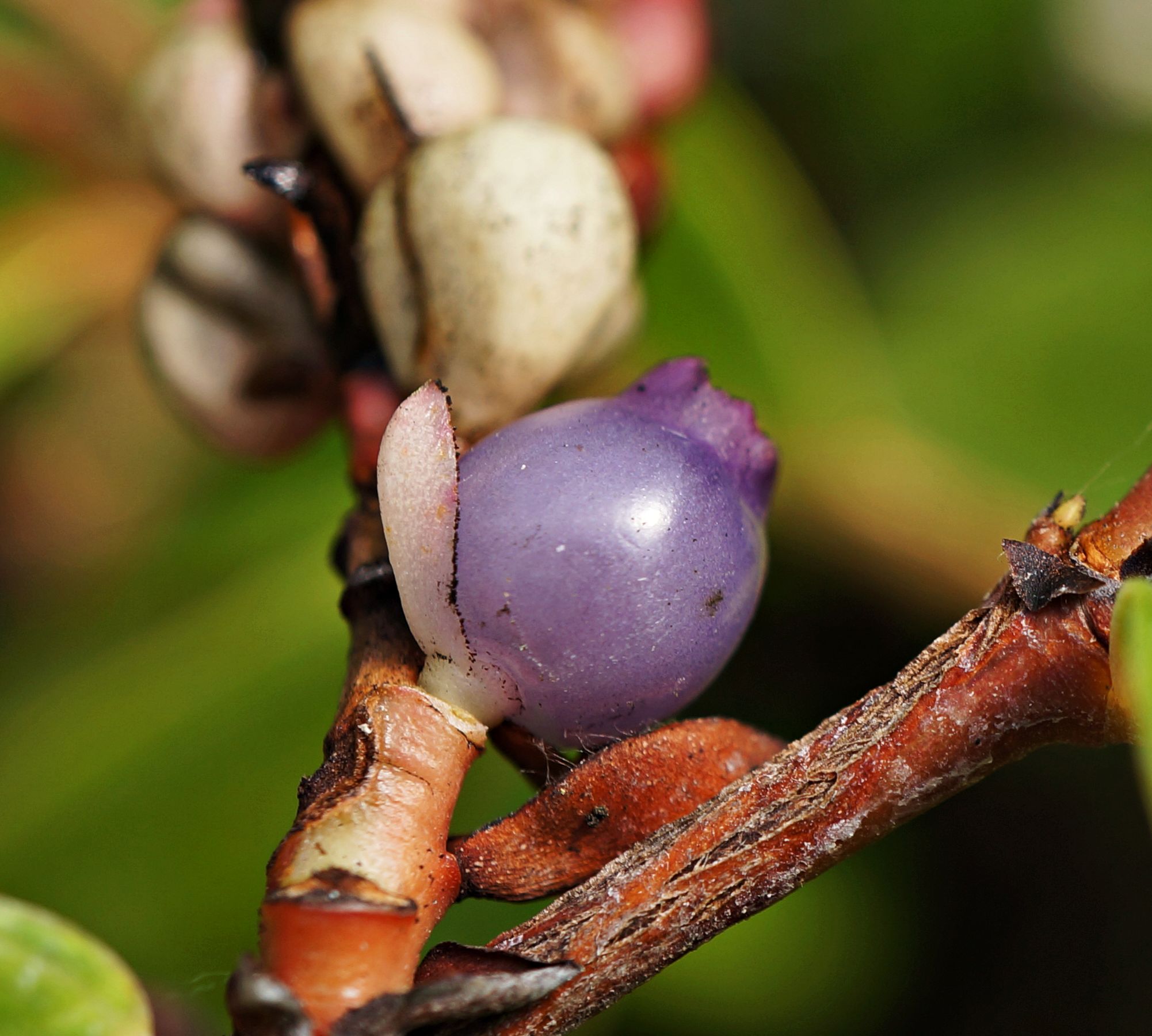
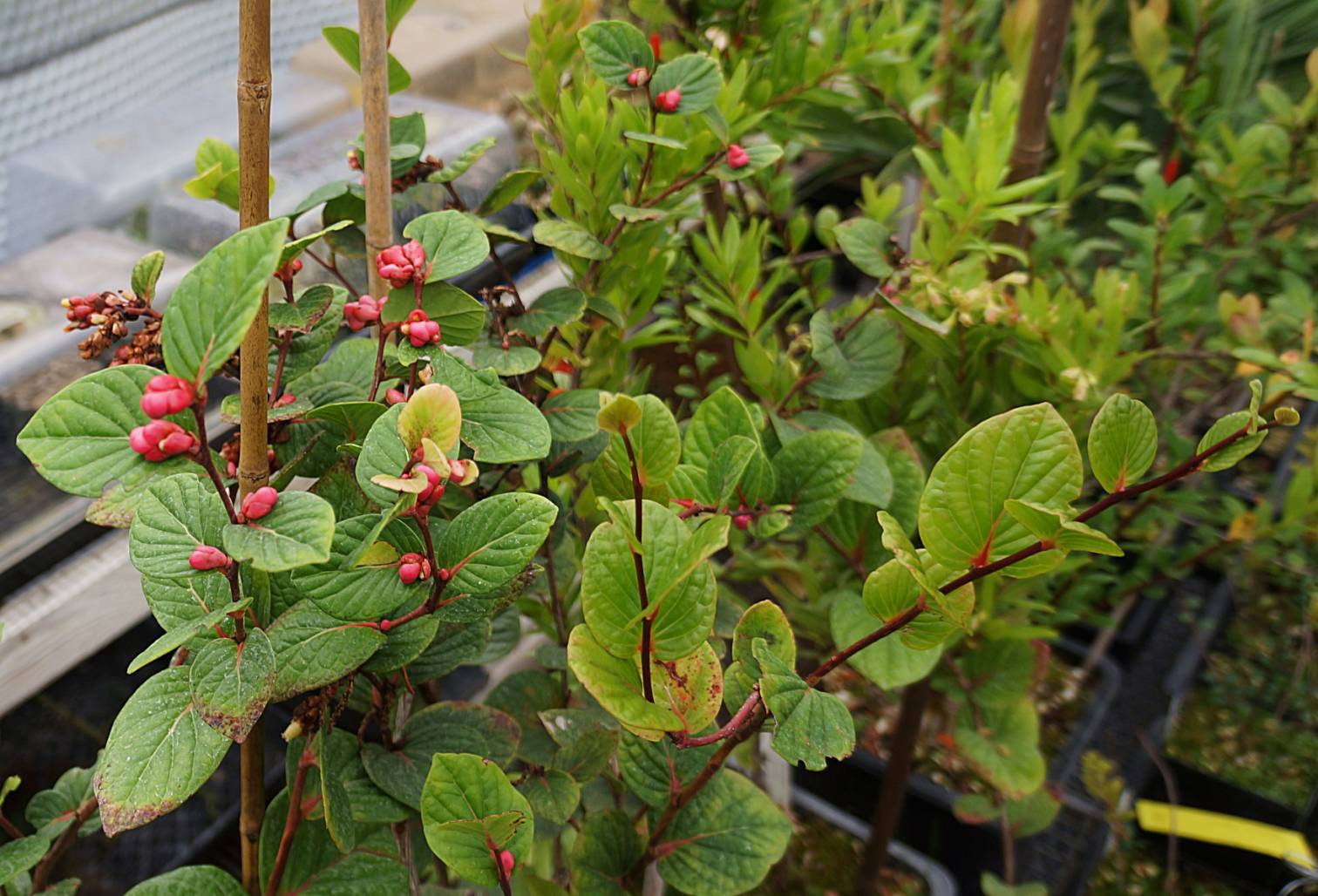 ↑ Mother Cavendishia axillaris inflorescence & fruit ↑
___
Cavendishia capitulata HBG92102 ♥ New ♥
Multibranched shrublet 1–3’+ high with a thickened stem base to 6″ diameter. Small obovate leaves, new growth bronze. Flower clusters with reddish bracts and 3–6 tubular purplish flowers with white tips. Round berries. Often occurs as an epiphyte, wet tropical forests and cloudforests of Costa Rica, Panama and Columbia up to 9000′. One of the most endearing and diminutive Cavendishia, no less lovely for its size. Unrooted cuttings. Z9b?
[ 4 ] → 2 ~ 7–10″+ unrooted cuttings $38.50 each
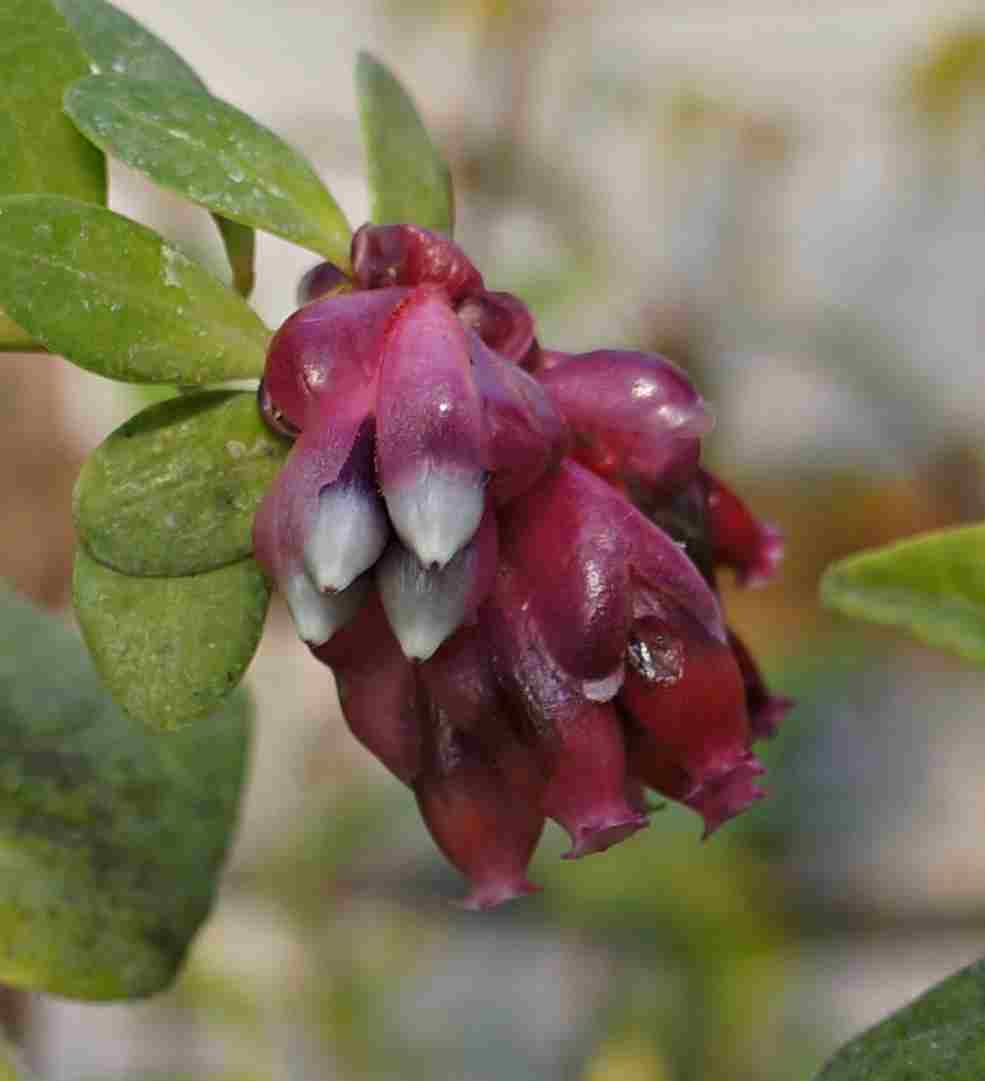 ↑ Cavendishia capitulata inflorescence ↑
___
Cavendishia crassifolia HBG92103 “Shash”
Upright evergreen shrub to 6–12’+. Large waxy leaves. Inflorescence of up to 20+ tubular flowers, rose-red with pale tips, emerging from pinkish bracts. Edible purplish berries. Basically a rare and distinct Central American form of C. bracteata. Easily grown, only offered a few times before. Z9a/b
[ 4 ] → 1 ~ 5–7″ unrooted cutting $33.50 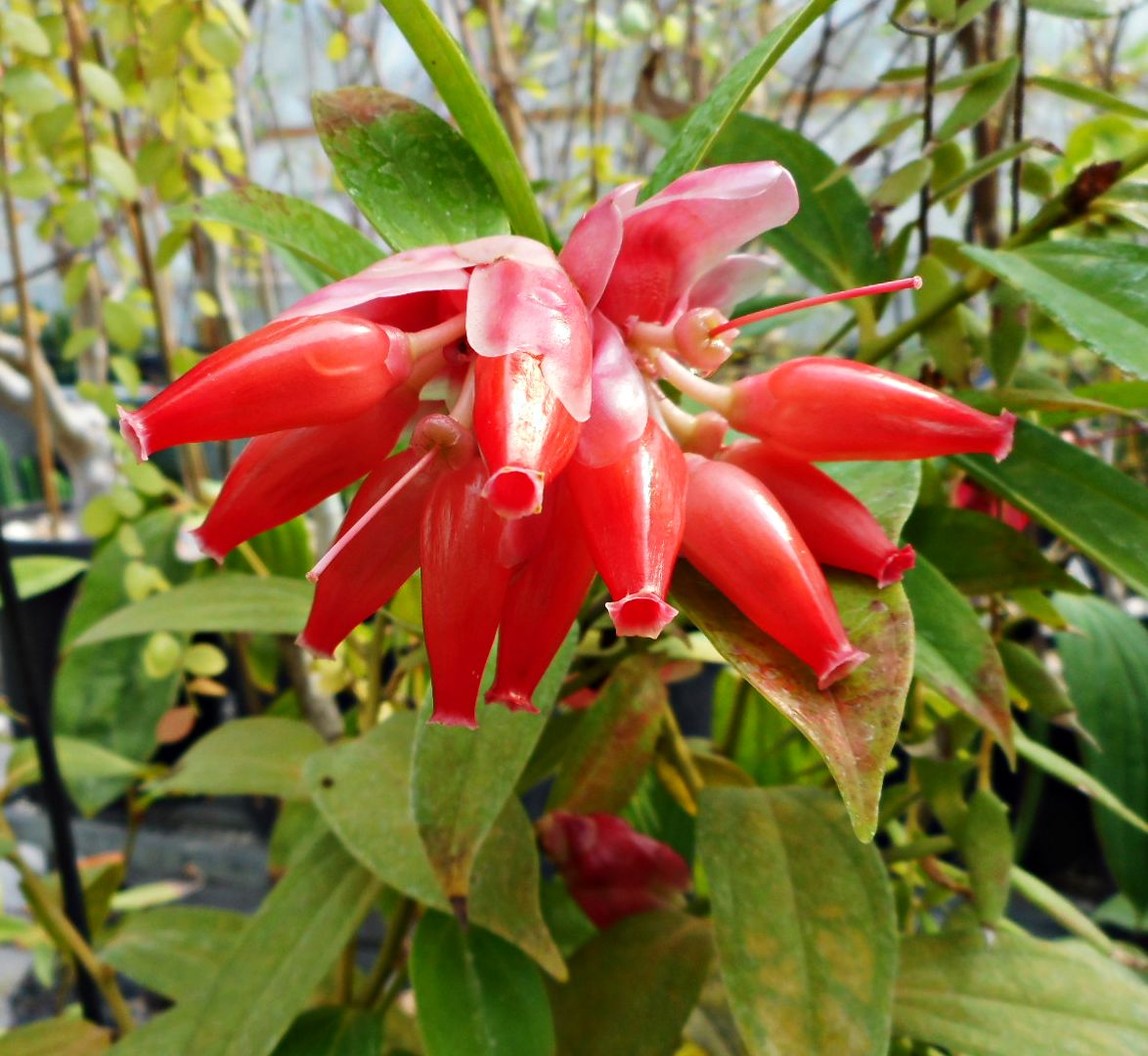
___
Cavendishia lebroniae
Shrubby species to 10′. Lanceolate leaves. Paniculate inflorescence with up to 150 violet flowers! Endangered lower elevation species from Ecuador. More heat tolerant than some but dislikes cold, does best when temperatures stay above 50° F. We’ve only offered this beauty a handful of times via auction. Z10a/b
[ 5 ] → 1 ~ 4–6″ unrooted cutting $39.50 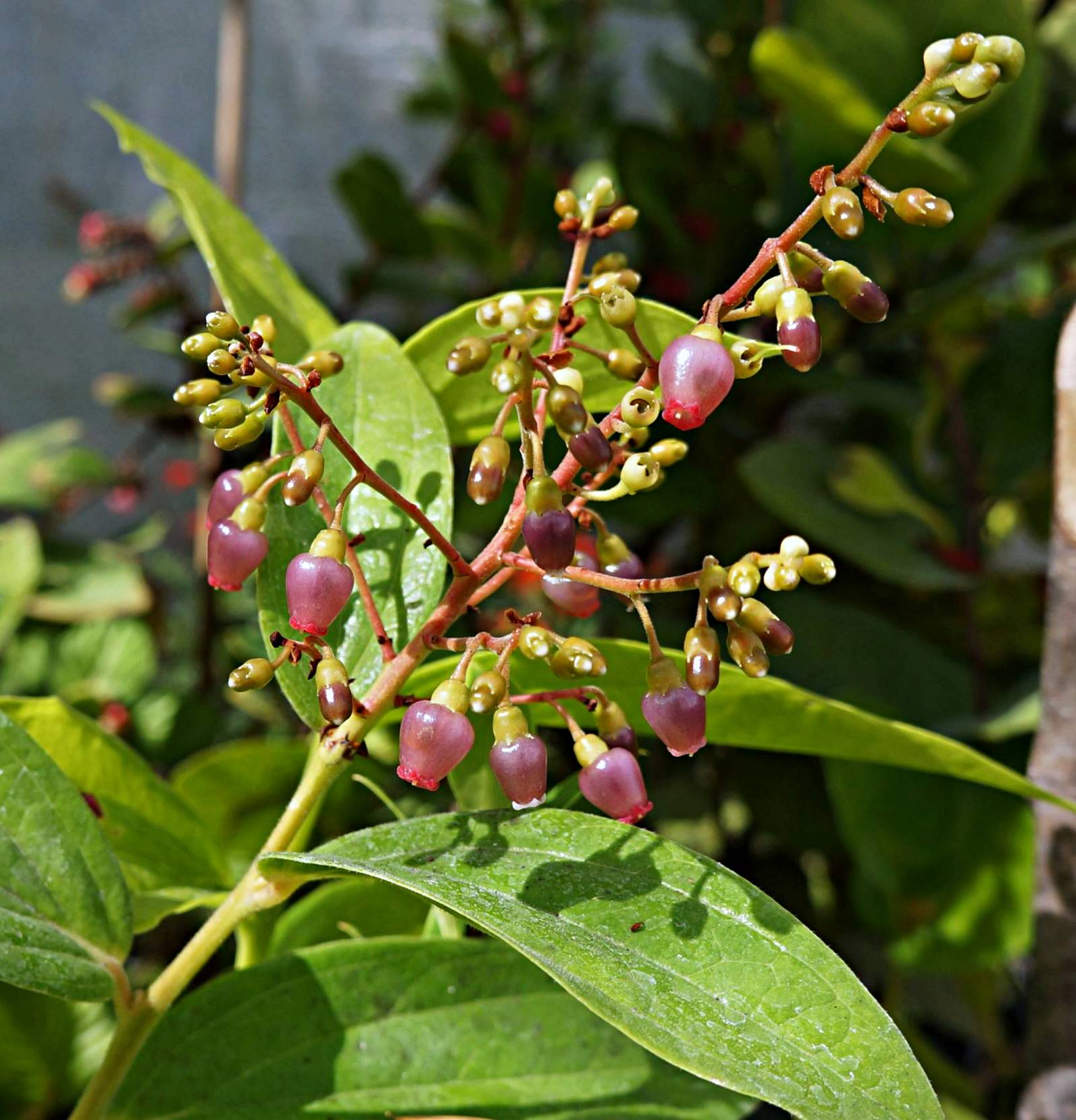
___
Cavendishia melastomoides
Evergreen shrub 4–10′ tall, usually epiphytic, 2–4″ long lanceolate leaves, red-pink new growth. Inflorescence of up to 12+ tubular flowers, translucent magenta to rose-pink, aging to rich darker hues. Edible purple berries. Beautiful and rare Costa Rican cloudforest species endemic to the Cordillera Central and Cordillera de Talamanca, up to 9000’+. Grow like other neotropical blueberries. This has only been available via auction up until now, first offer of cuttings. Z9a/b
[ 5 ] → 1 ~ 7-9″+ unrooted cutting $42.50 SOLD
[ 4 ] → 2 ~ 5-6″ unrooted cutting $38.50 each September SALE! $34 each; or 2 for $58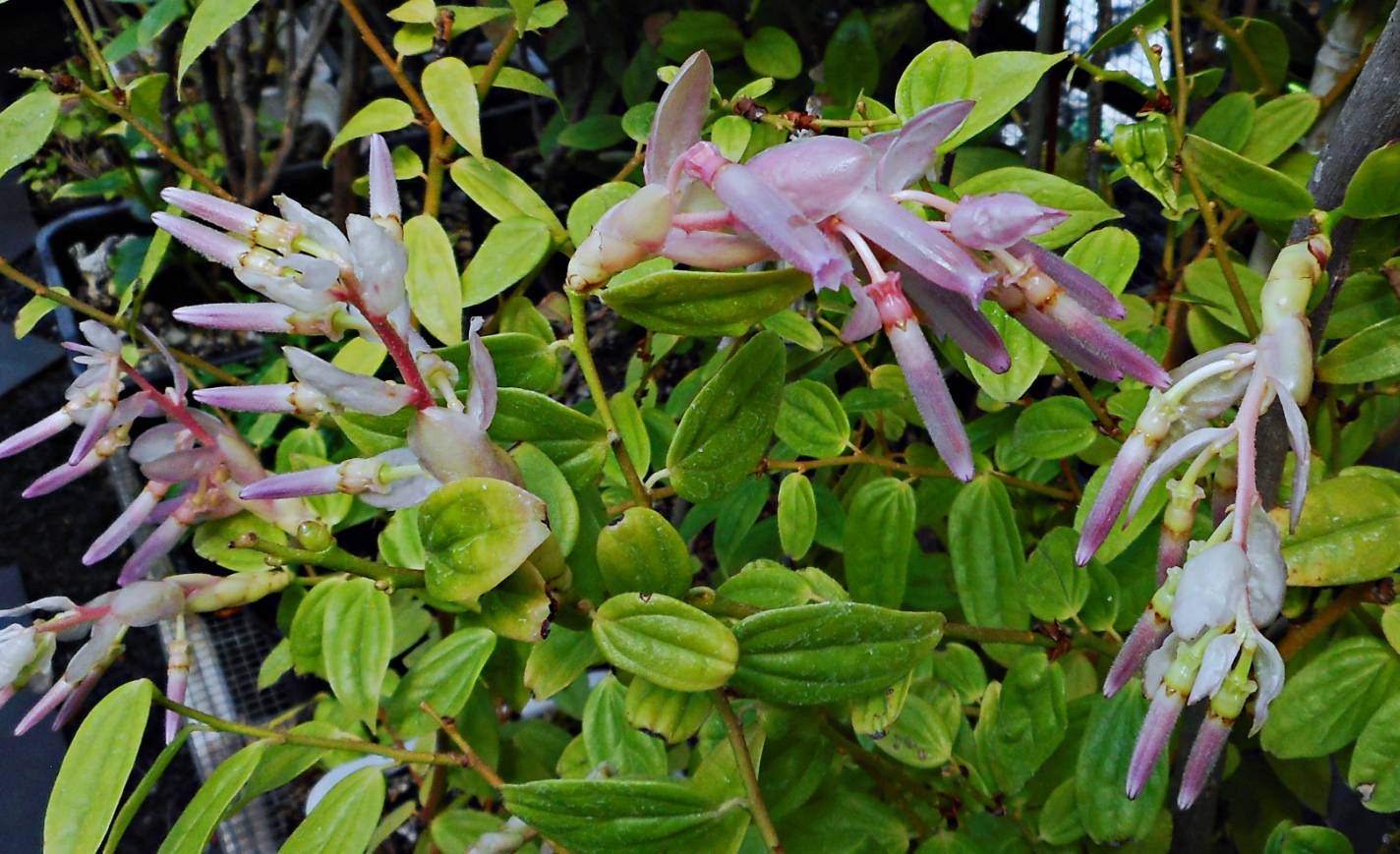
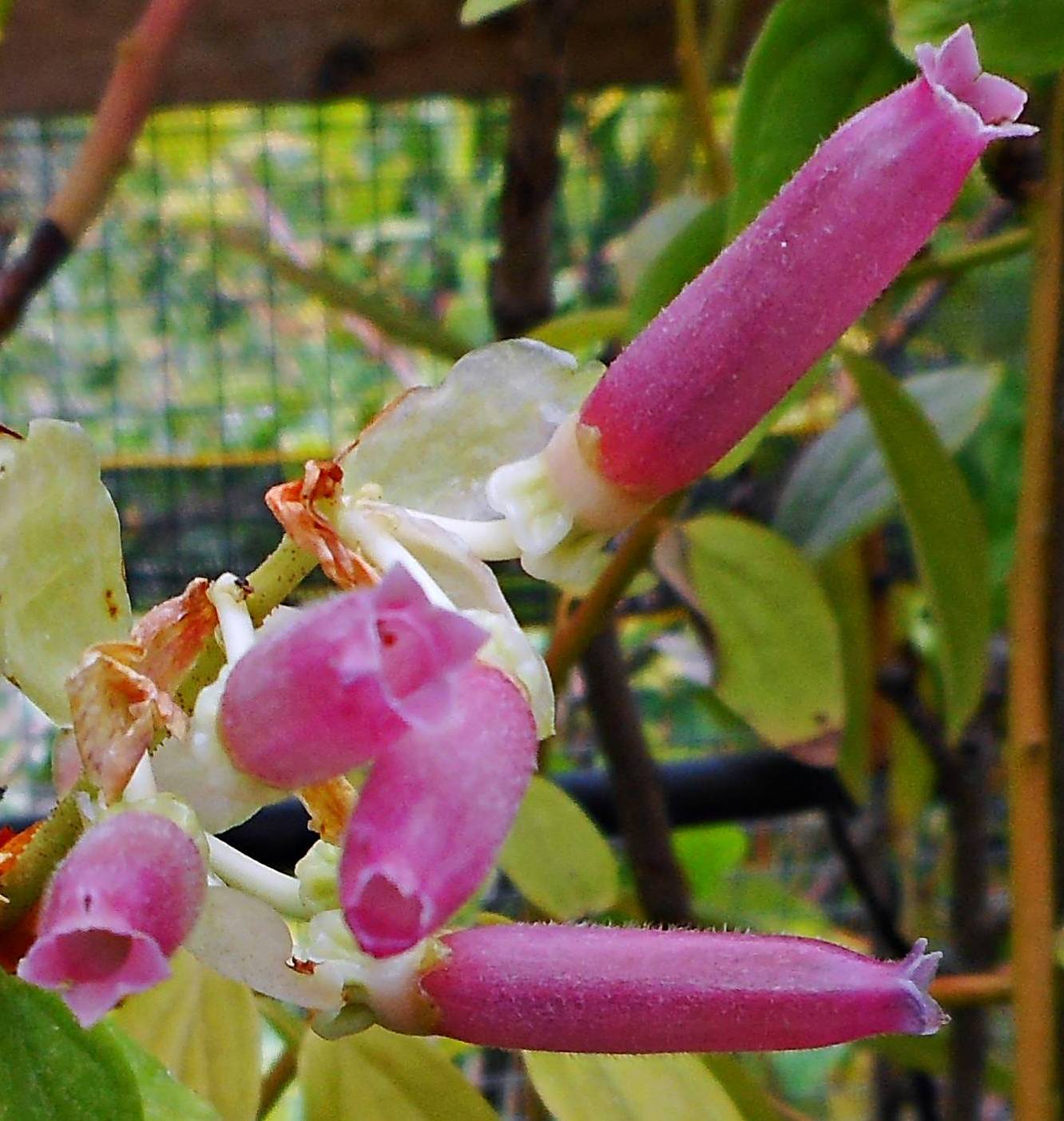
___
Ceratostema amplexicaule
Ericaceae. Terrestrial to epiphytic shrub 5–10’+ tall, may form a woody caudex with age. Attractive coriaceus amplexicaul leaves hug the stems. Large clusters of thick flowers of brick red with blue-black recurved petals. Dark blue black edible berries. A rare and exceptional blueberry relative from the cloudforests of Columbia and Ecuador, 4000–10,000’+. Roots easily from cuttings. We have only offered this unique species a couple times. Z9b?
[ 5 ] → 2 ~ 6–8″+ unrooted cuttings $48.50 each September SALE! $44 each or 2 for $77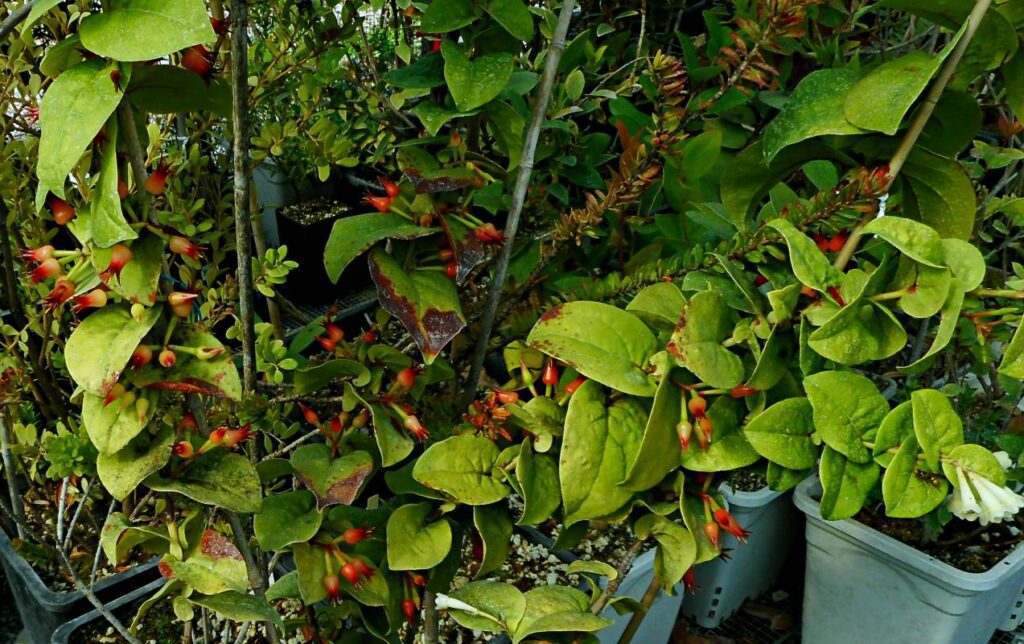
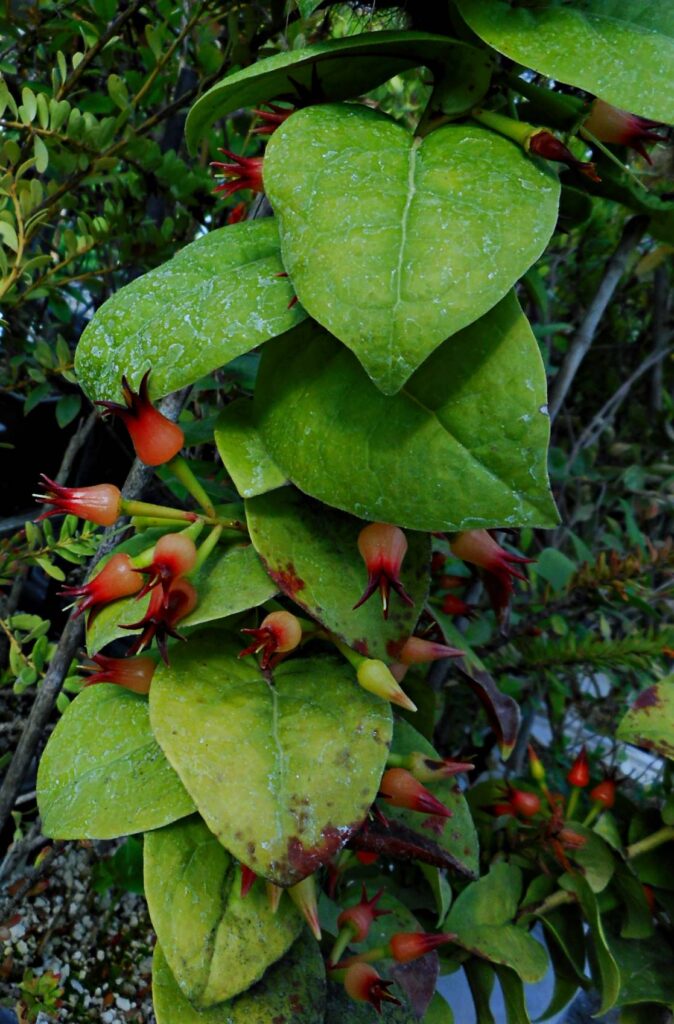
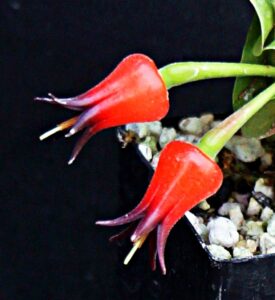
___
Ceratostema lanigerum HBG994812
Epiphytic shrub with liana-like branches 4–10′ long. The leaves and stems are covered in small soft hairs. Triangular cordate leaves, new growth olive to bronze/copper-red. Clusters of 3–7+ flowers of deep red with blue-black recurved petals, lightly lanate. A rare endemic from riverine forests of Pastaza and Morona-Santiago, Ecuador, 2600–5300’+. Grow like other neotropical blueberries, more heat tolerant than some. A gorgeous rarity, first time offered in a couple years. Z10a
[ 6 ] → 1 ~ 6–9″ unrooted cutting $44.50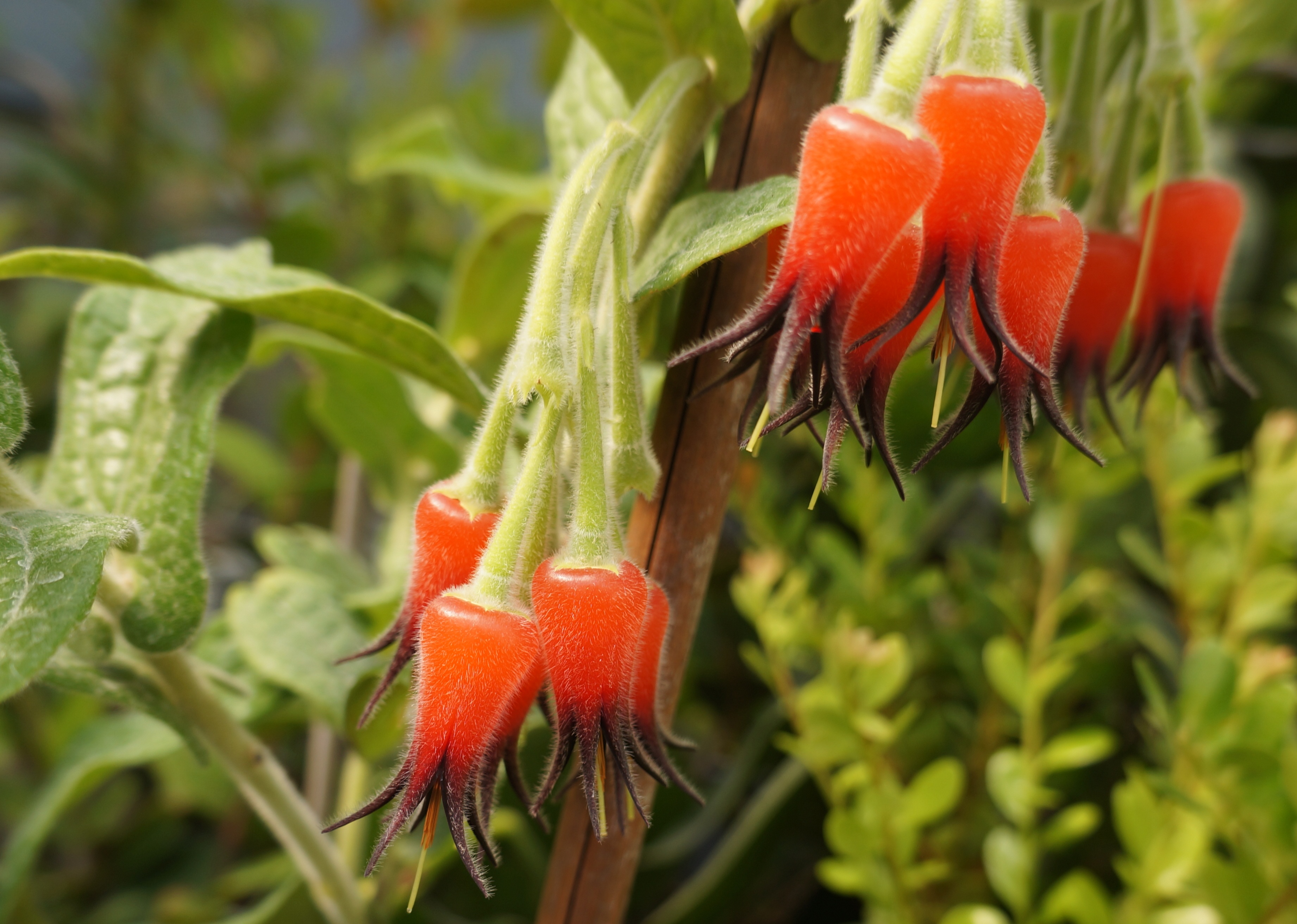
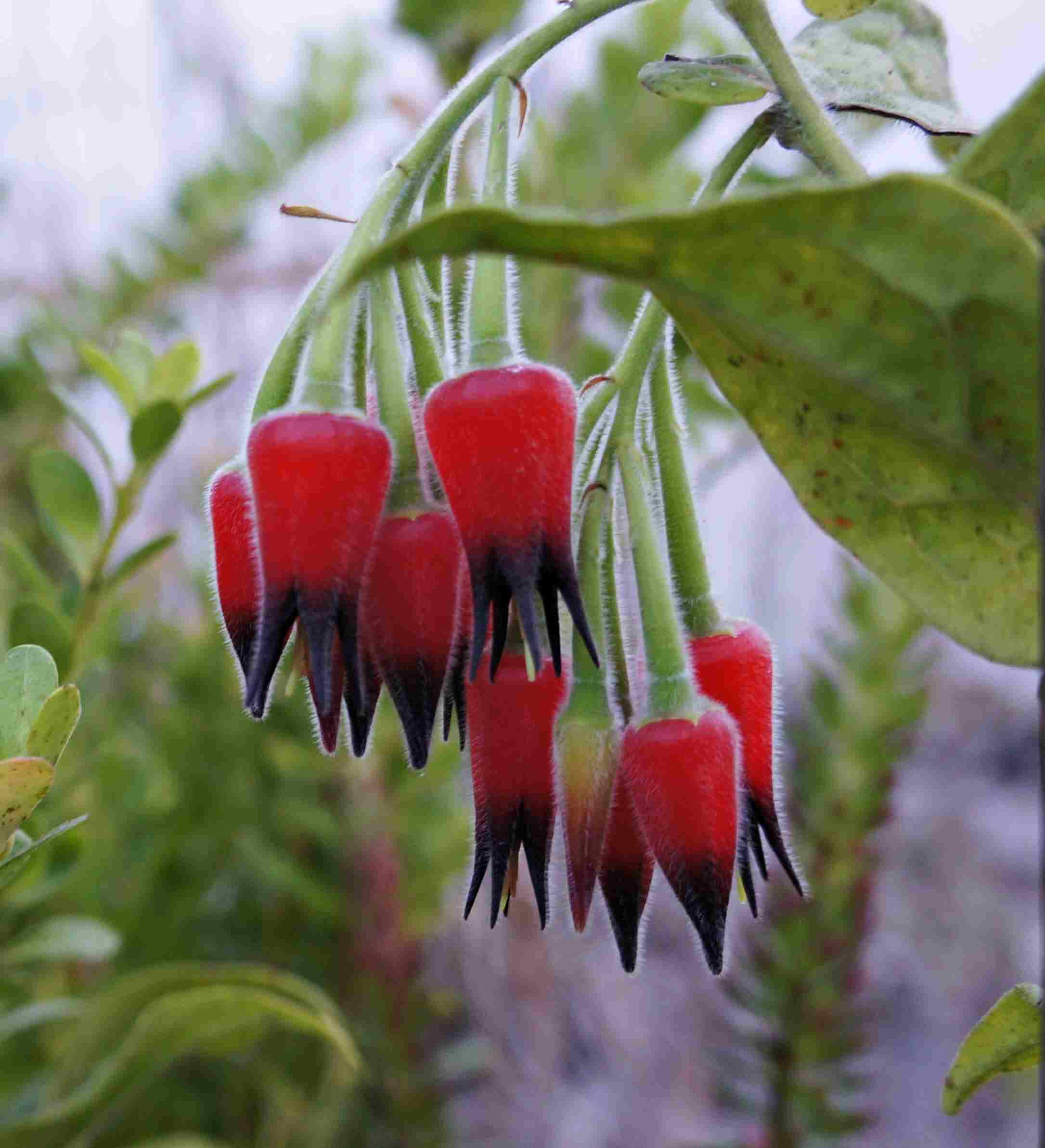
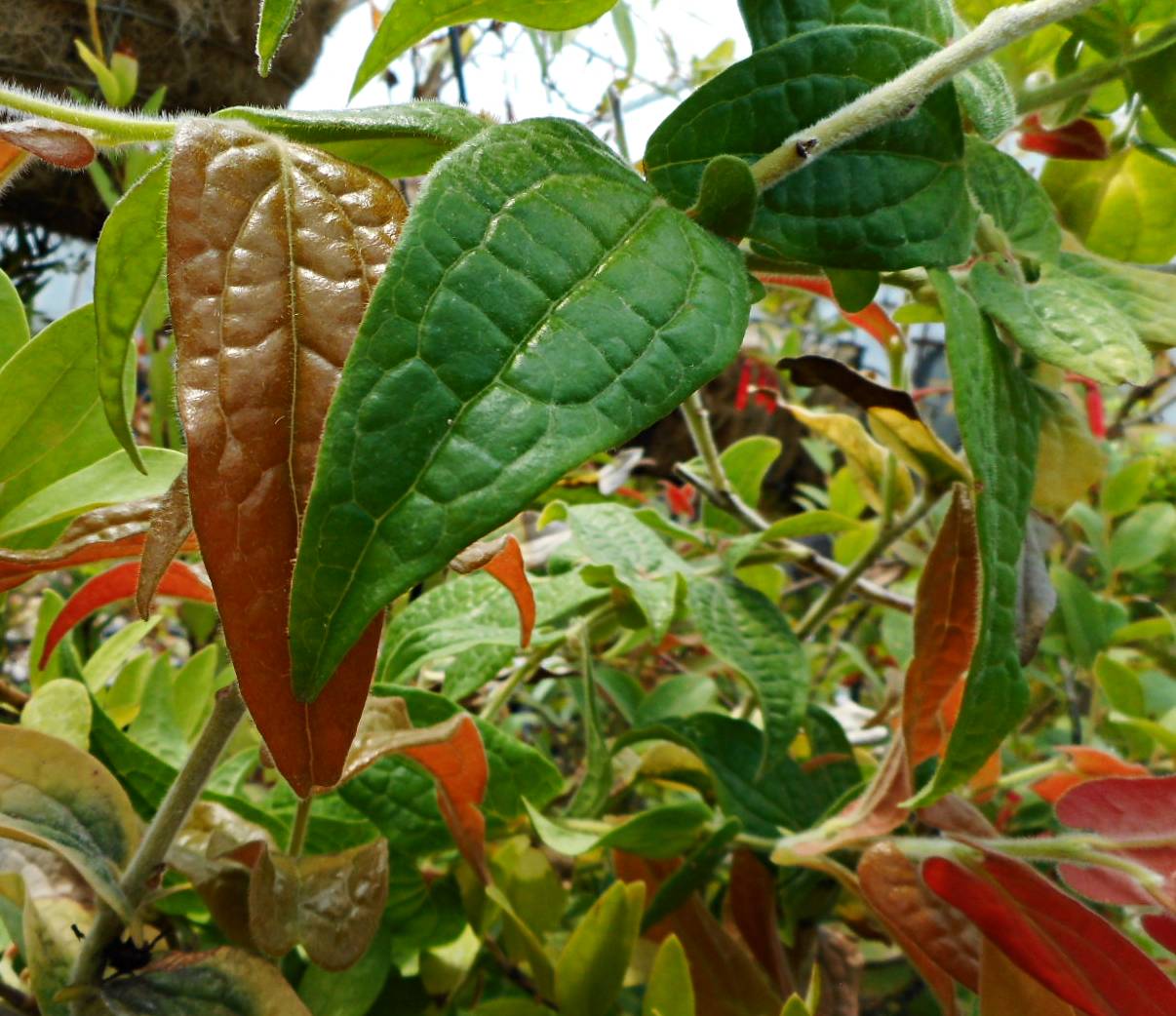
___
Ceratostema cf. silvicola HBG94813 “Sagalita”
A very beautiful semi-epiphyte forming a rounded woody caudex and arching branches to 5’+. Glabrous, dark green, ovate-oblong cordate (heart-shaped) leaves. New growth rusty-bronze. Clusters of urn-shaped brick-red flowers with reflexed petals of dark red-black. Marble-size, edible white berries. An Ecuador endemic known from only a few locales, tropical/cloudforest below 3000′. One of the more heat tolerant species. We’ve only offered this gorgeous plant a few times, your one chance at a cutting this year! Z10a/b
[ 4 ] → 1 ~ 6–9″+ unrooted cutting $54.50
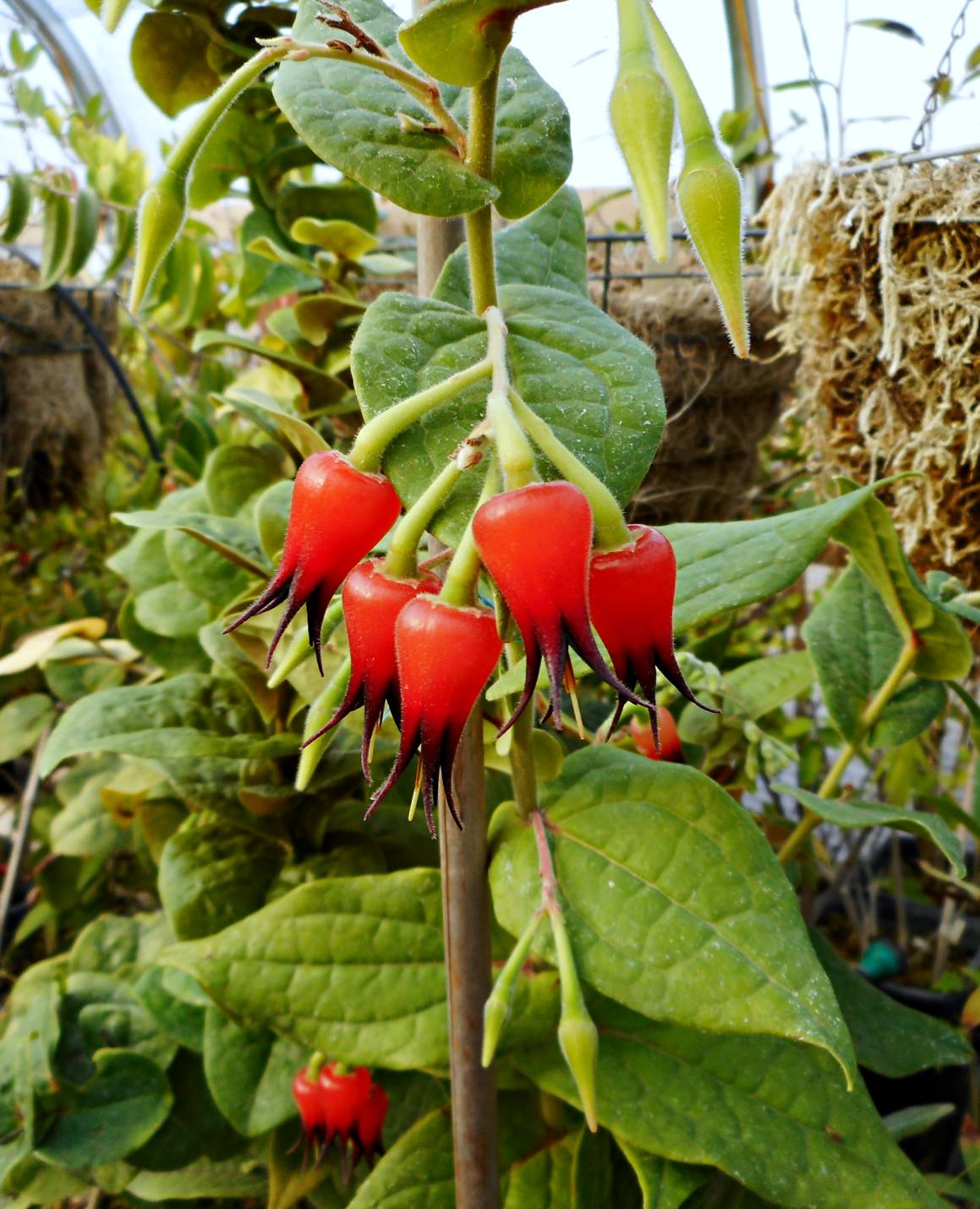
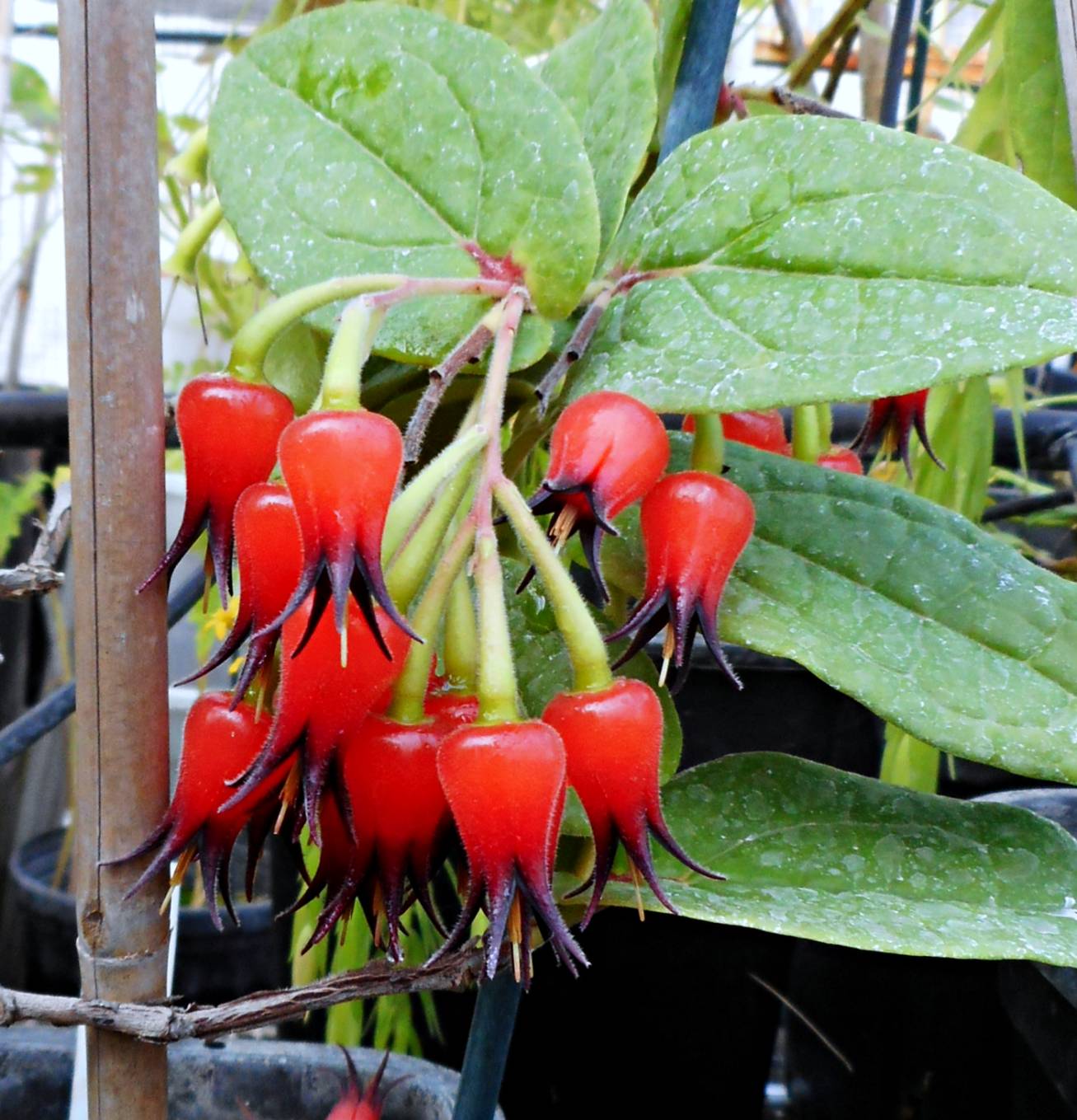
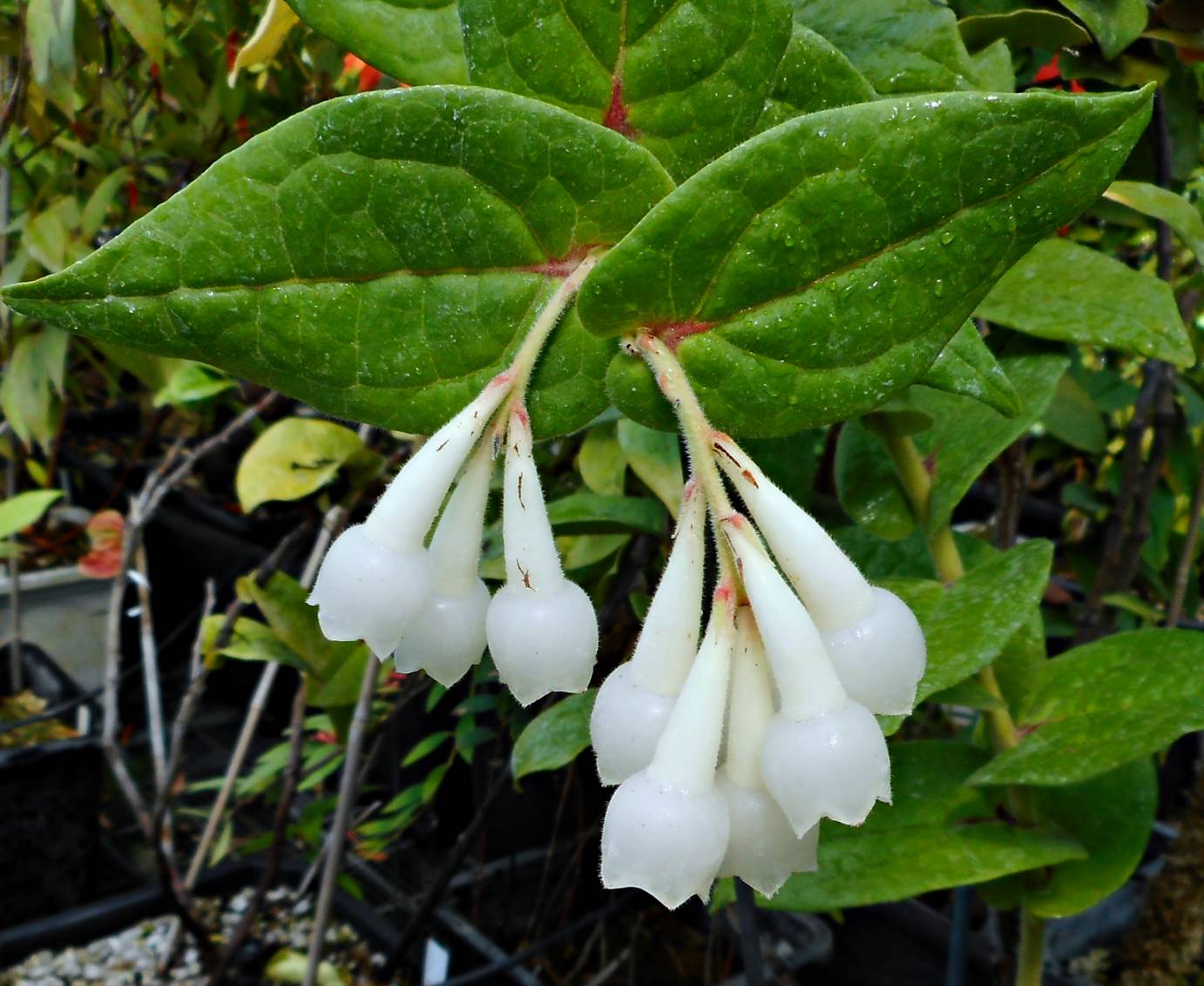 ↑ Ceratostema cf. silvicola flowers & fruit ↑
___
Disterigma rimbachii “Andean Huckleberry”
Ericaceae. One of our favorite plants. Beautiful multibranched shrub to 1–3′. Small, spirally arranged, oval leaves clothe the stems. New growth is deep red. Little, rose-pink tubular flowers borne along the stems. Light indigo-purple berries, sweet and juicy. Blueberry kin endemic to the low mountain forests and cloudforests of Ecuador from 2500–10,700′. We’ve only distributed rooted cuttings in the past, this is our first offering of seedlings of this gorgeous species. Z9b?
[ 12 ] → 2 ~ 6-8″+ plants 3-4 years old $40.50 each SOLD
[ 6 ] → 2 ~ 12–15″+ branched plants 4 years old $54.50* each September SALE! $48 each; or 2 for $88
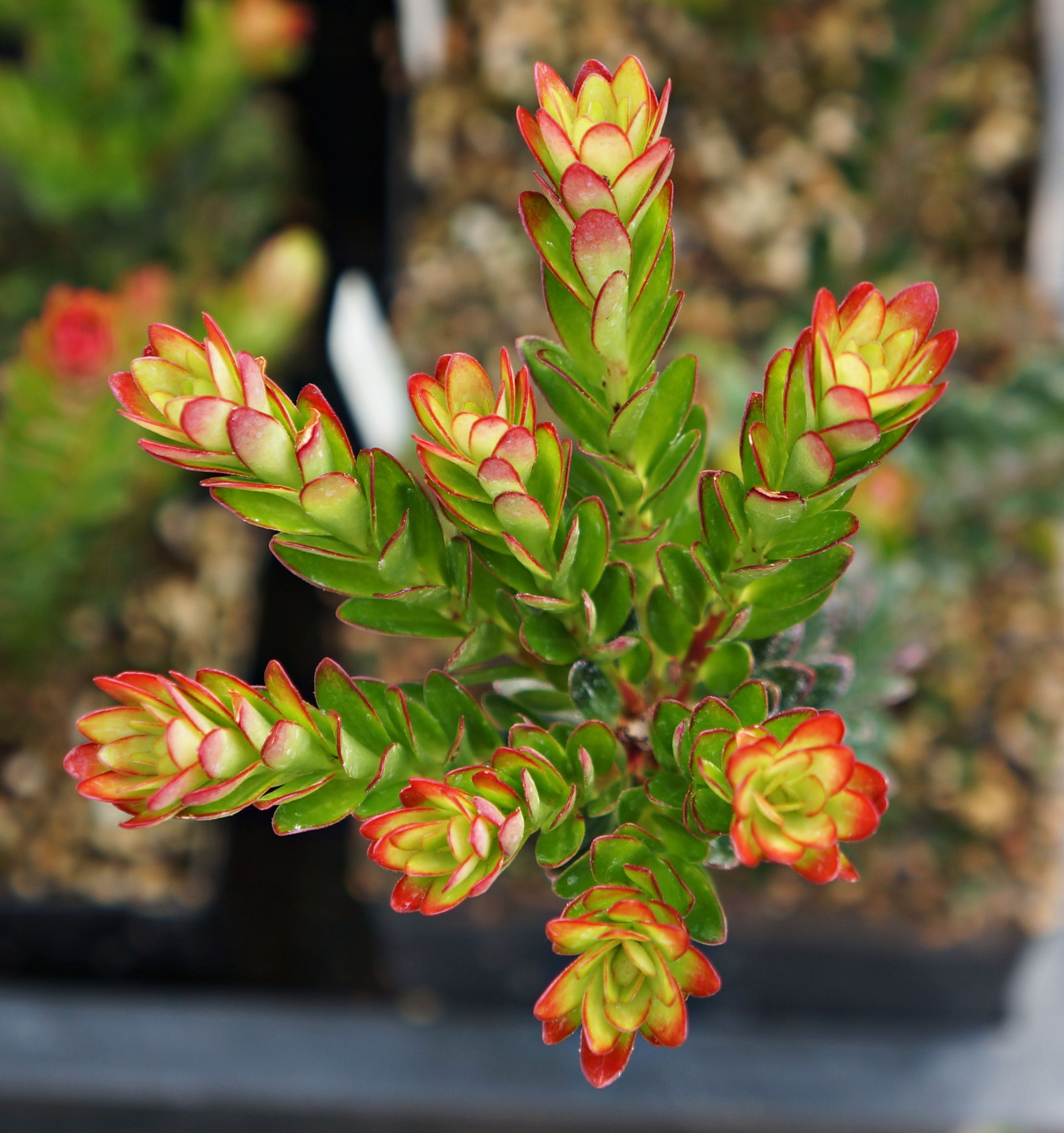
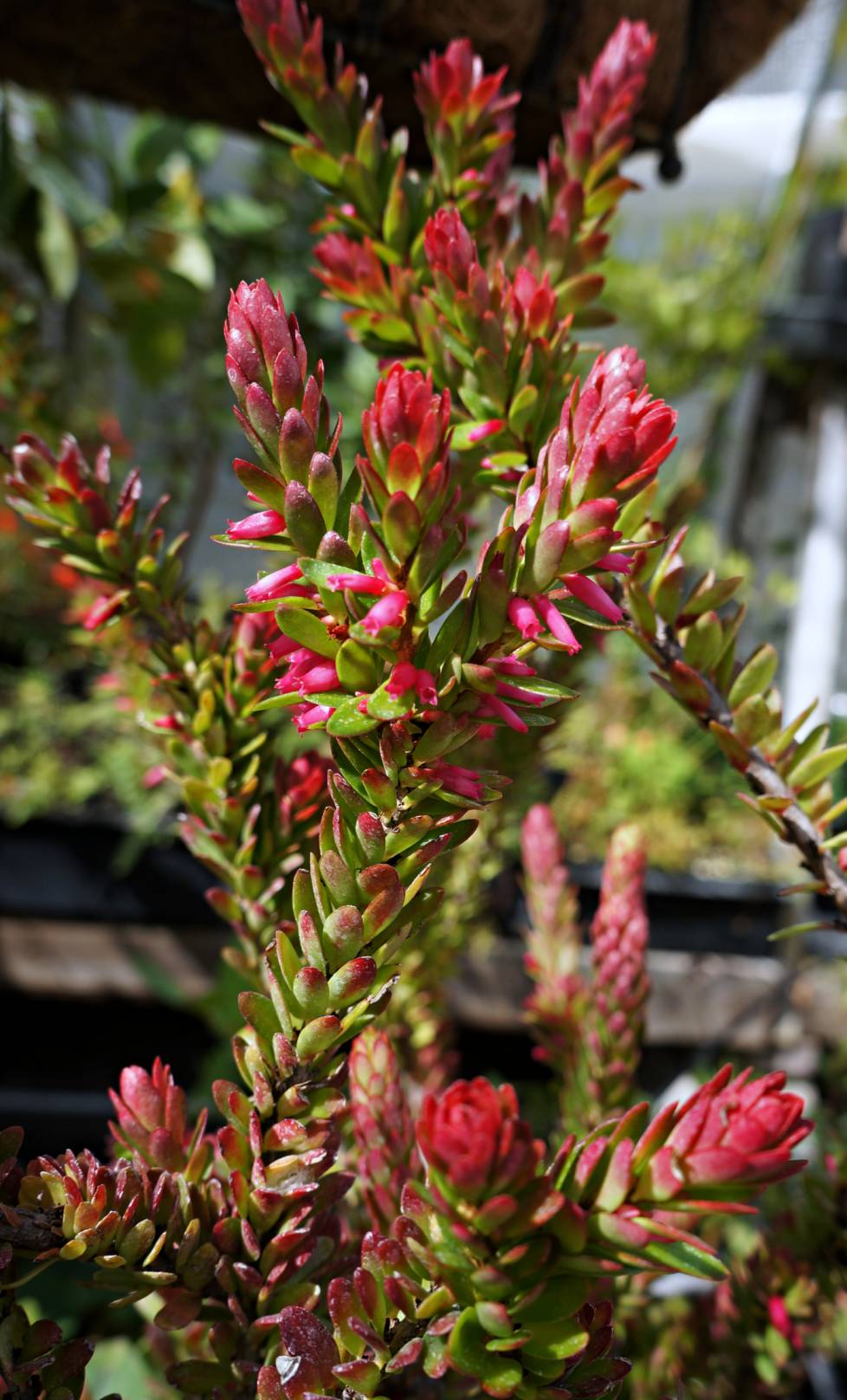
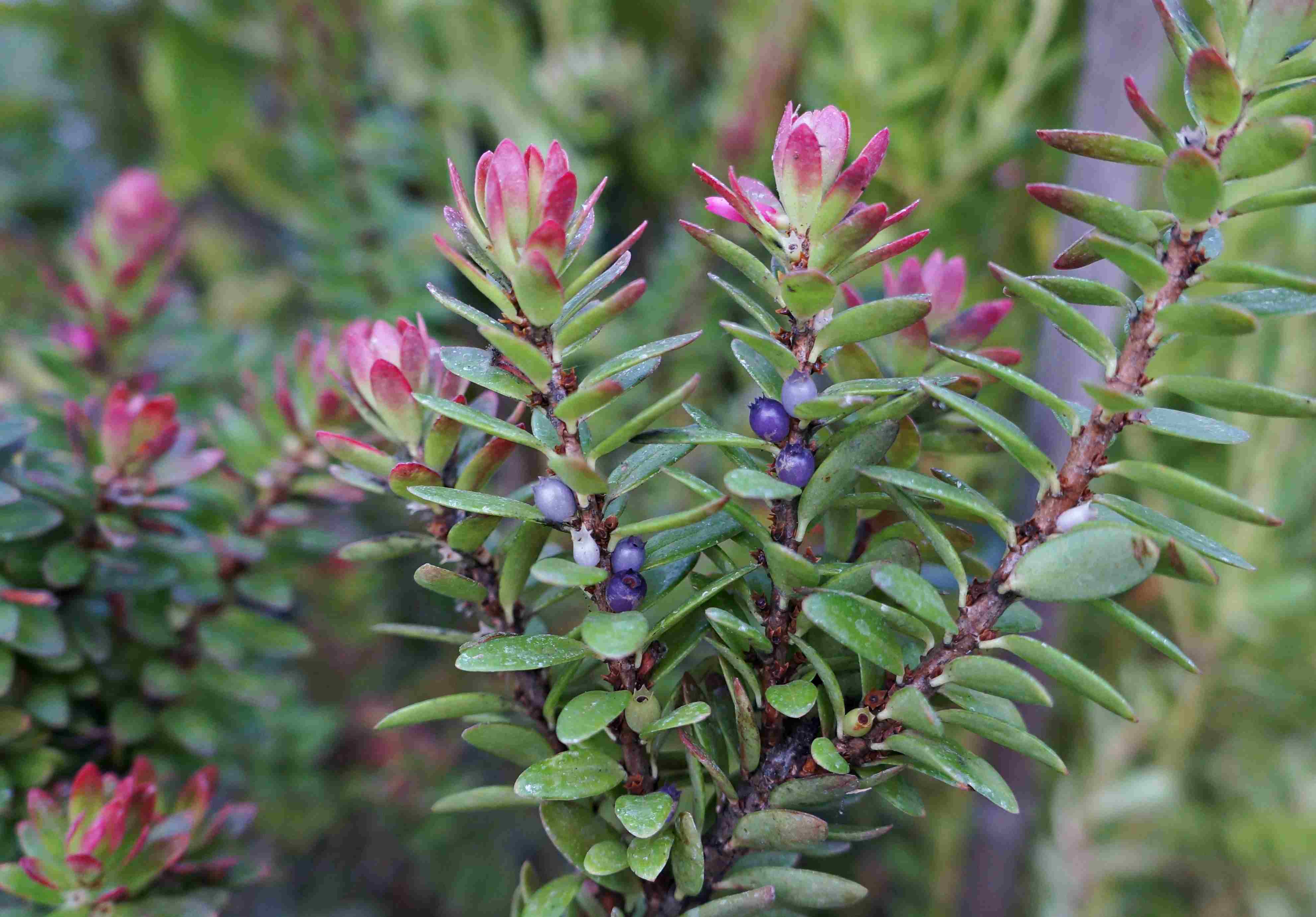 ↑ Distergima rimbachii new growth, blossoms & fruit ↑
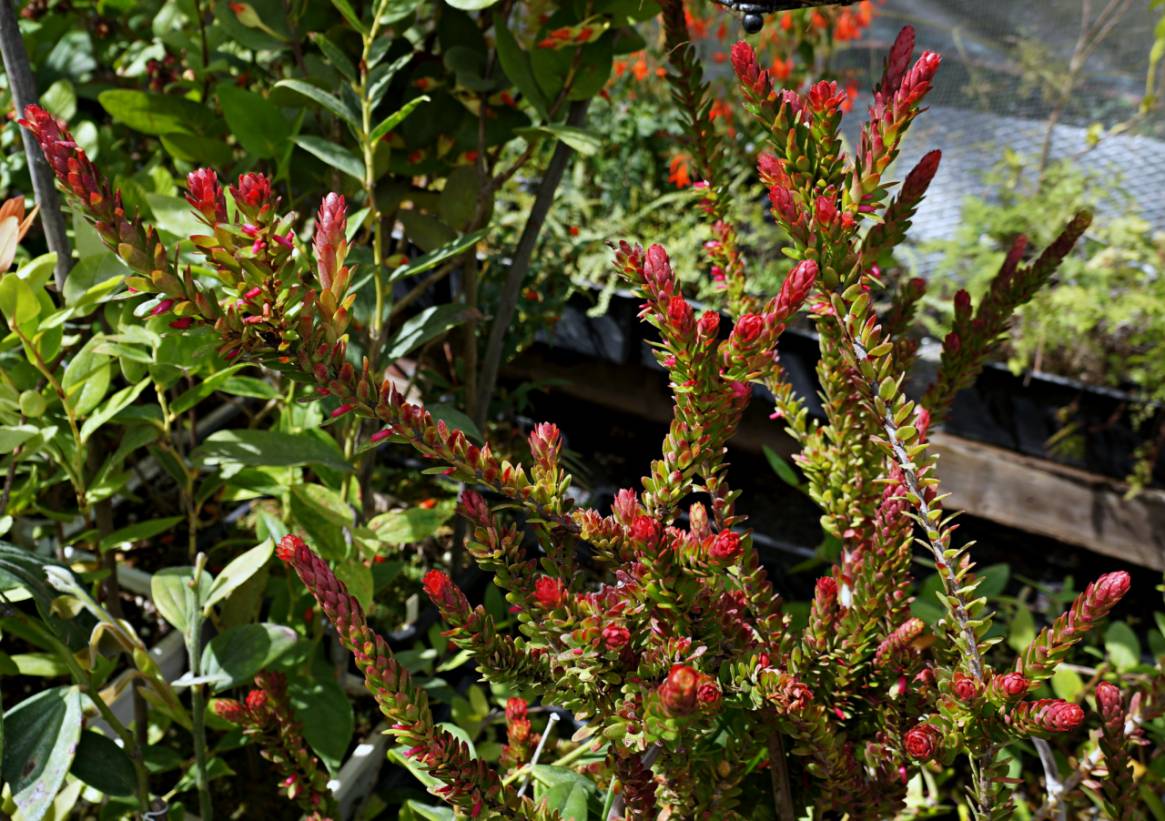 ___
___
About the genus Macleania
Ericaceae. Unusual blueberry relatives from the cloudforests of the Andes and all the way north to southern Mexico. Terrestrial or epiphytic shrubs that form impressive caudiciform lignotubers up to several feet in diameter. Attractive evergreen leaves come in a diversity of ornamental shapes, the young, new growth is often inciting shades of pinks, reds, and copper/bronze. Most species are highly floriferous, with clusters of extremely showy, nectar dripping, tubular flowers to enchant hummingbirds and humans. Large and juicy edible berries are produced, often in great abundance, when multiple clones or species are cultivated, the best fruit set is from hummingbirds or hand pollination. Macleania are still very rare in cultivation but everything about them is awesome. They grow best with a well draining acidic soil, part shade and regular moisture. We grow them in a mixture of orchid bark, pumice/perlite and sphagnum moss. While they prefer consistent moisture to actively grow, we’ve found that once their caudex is developed, many species are surprisingly tolerant of dryness and therefore adaptable for succulent collectors. Great for hanging baskets. All root very easily from cuttings—plant cuts in a pot of perlite or sphagnum with a plastic bag over it for humidity, keep moist and warm to root in 3–8 weeks; caudexes form in 6–18 months. Inquire for additional species. ↑ Macleania rupestris ↑
___
Macleania coccoloboides
Large woody caudex, upright to arching branches 5 to 15′ with leathery leaves 4–5″ long. Clusters of waxy, red tubular flowers tipped white. Purple-blue to black edible fruit rich in antioxidants with high iron chelating abilities. Rare blueberry relative endemic to the cloud forests of Pichincha and Cotopaxi, Ecuador up to 11,000′. This is one of the larger growing species, a real hummingbird’s delight. Larger unrooted cuttings. Z9b?
[ 6 ] → 2 ~ 7–9″ unrooted cuttings $28.50 each
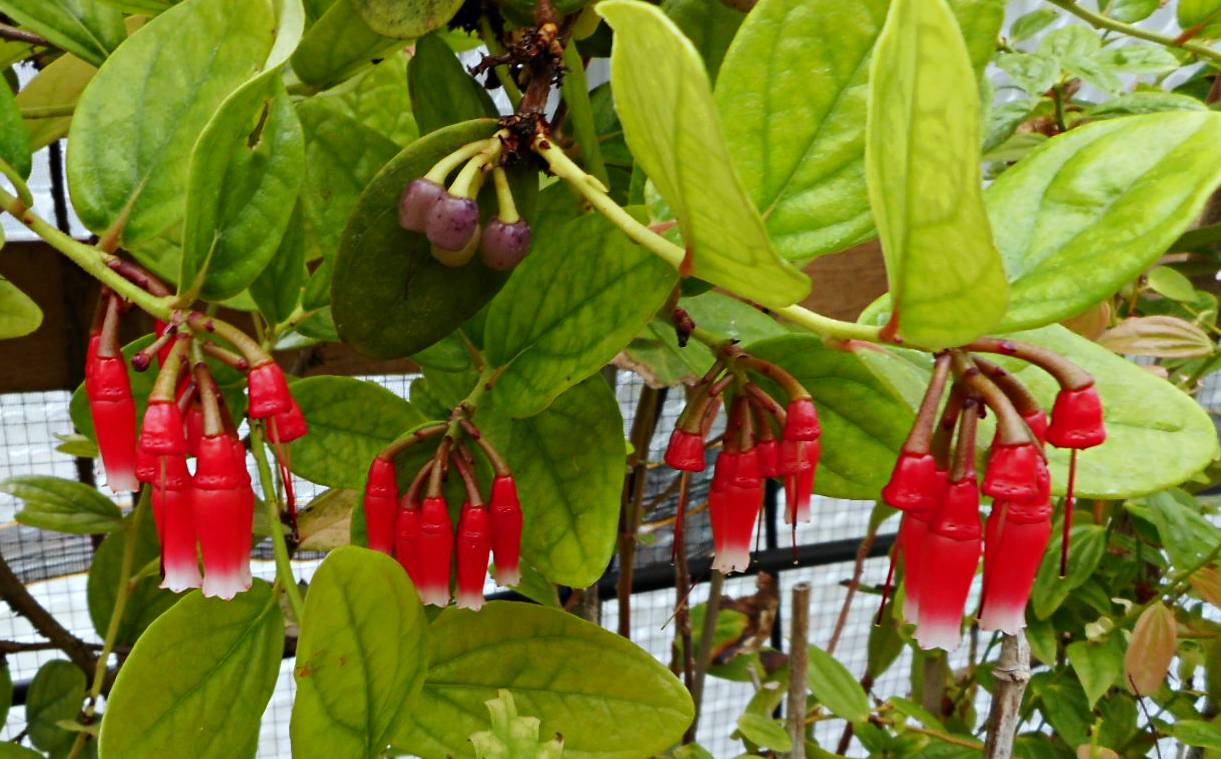
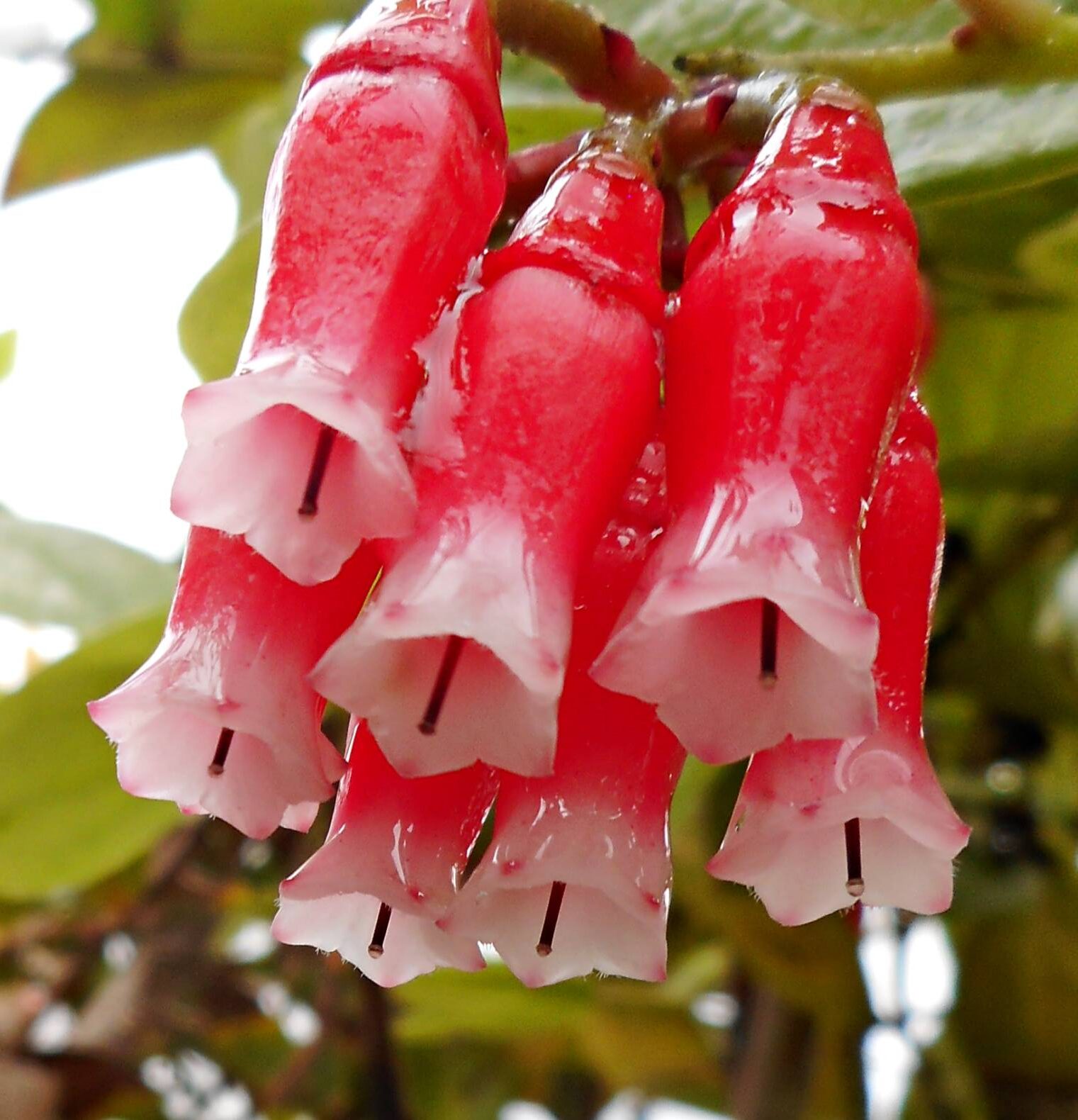
___
Macleania cordifolia
A semi-epiphyte with large caudiciform lignotubers, arching branches to 3’+ with shiny cordate leaves. New growth is bronze. Clusters of bright red tubular flowers with white tips. Translucent purple edible fruit. Native to the cloud forests of Ecuador and northern Peru. Sometimes confused with M. insignis or rupestris in cultivation. Tends to grow a big caudex faster than other species from cuttings. A few larger unrooted cuttings. Z9b
[ 4 ] → 1 ~ 7–9″+ unrooted cutting $24.50 SOLD [ 4 ] → 1 ~ 12–14″+ unrooted cutting $32.50 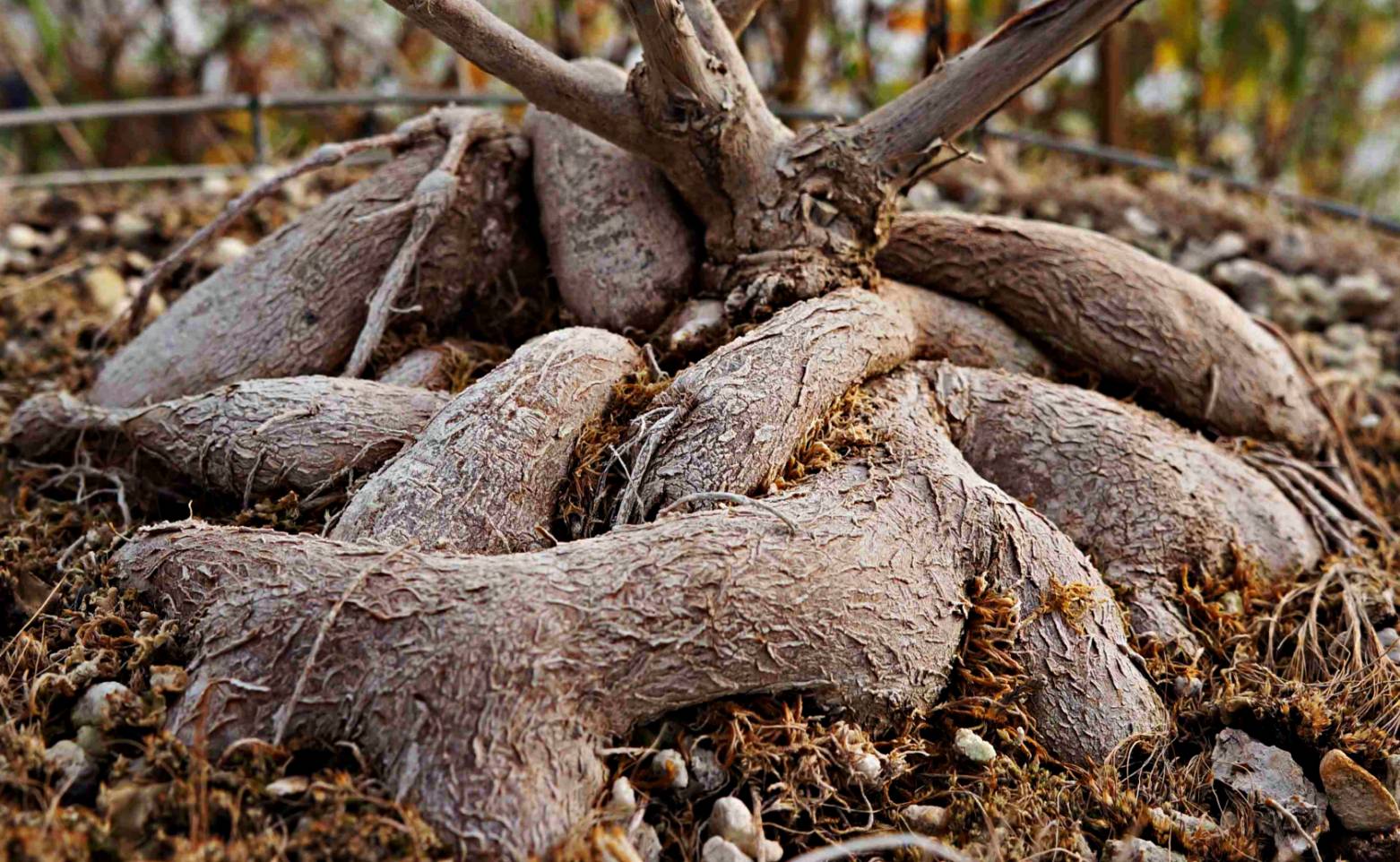
___
Macleania glabra BLM0532
Arching stems with elliptic green to bluish leaves. Tubular rose-red to magenta flowers with pale tips, edible purple-black berries. Forms large woody caudiciform lignotubers up to 3’+ across! Rare semi-epiphyte from the cloudforests of Siberia, Costa Rica. Unrooted cuts available. Z9b
[ 6 ] → 2 ~ 6–9″+ unrooted cuttings $24.50 each
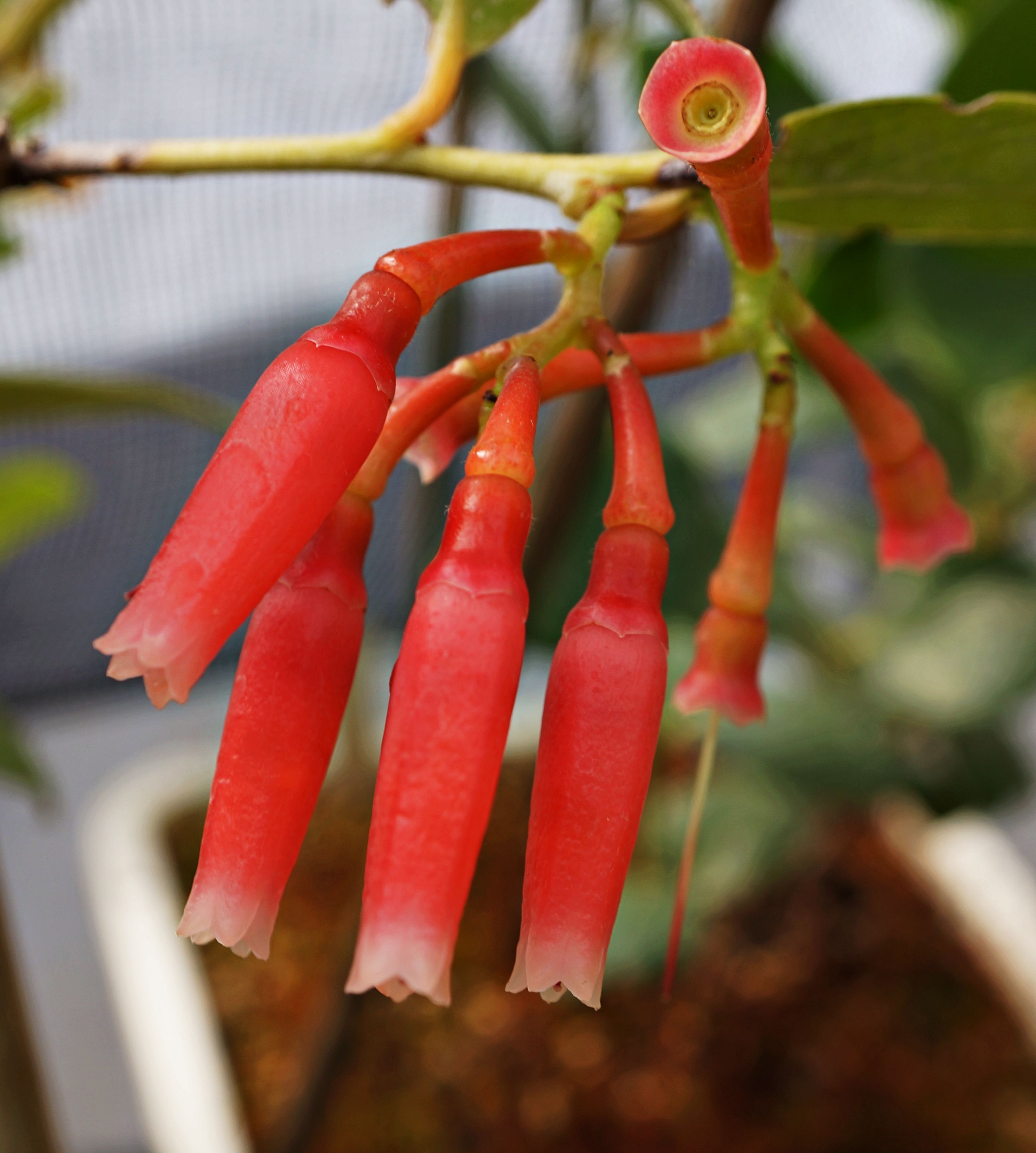 ___
___
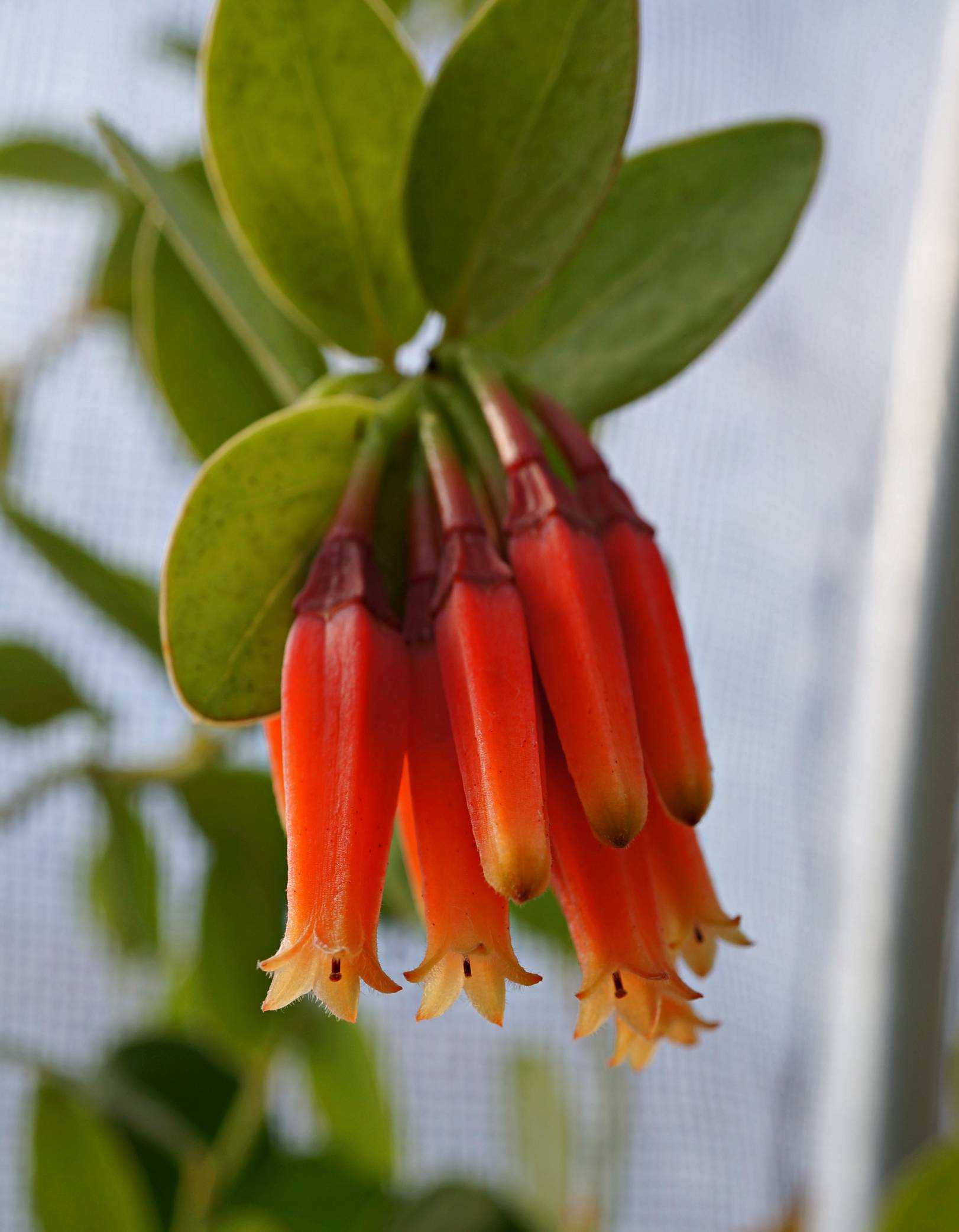
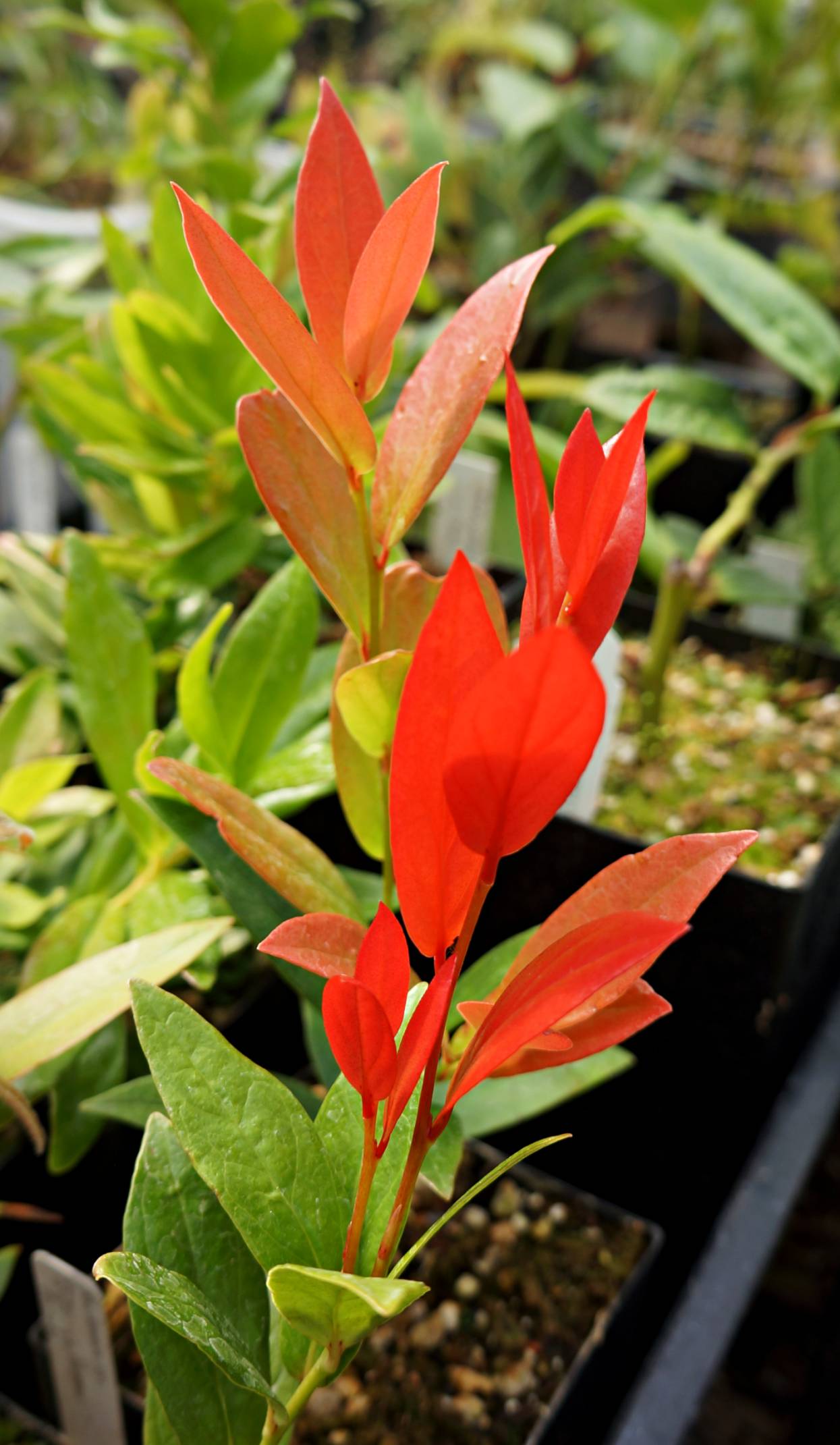
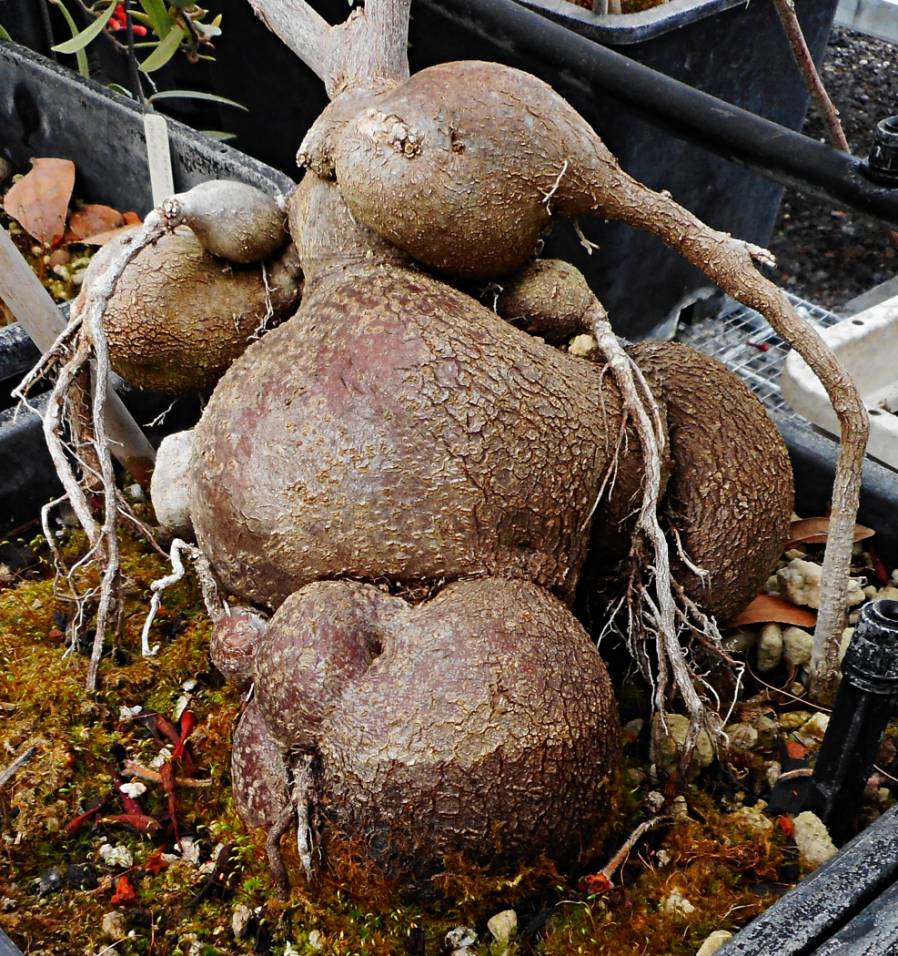 ↑ Caudex of mother plant ↑
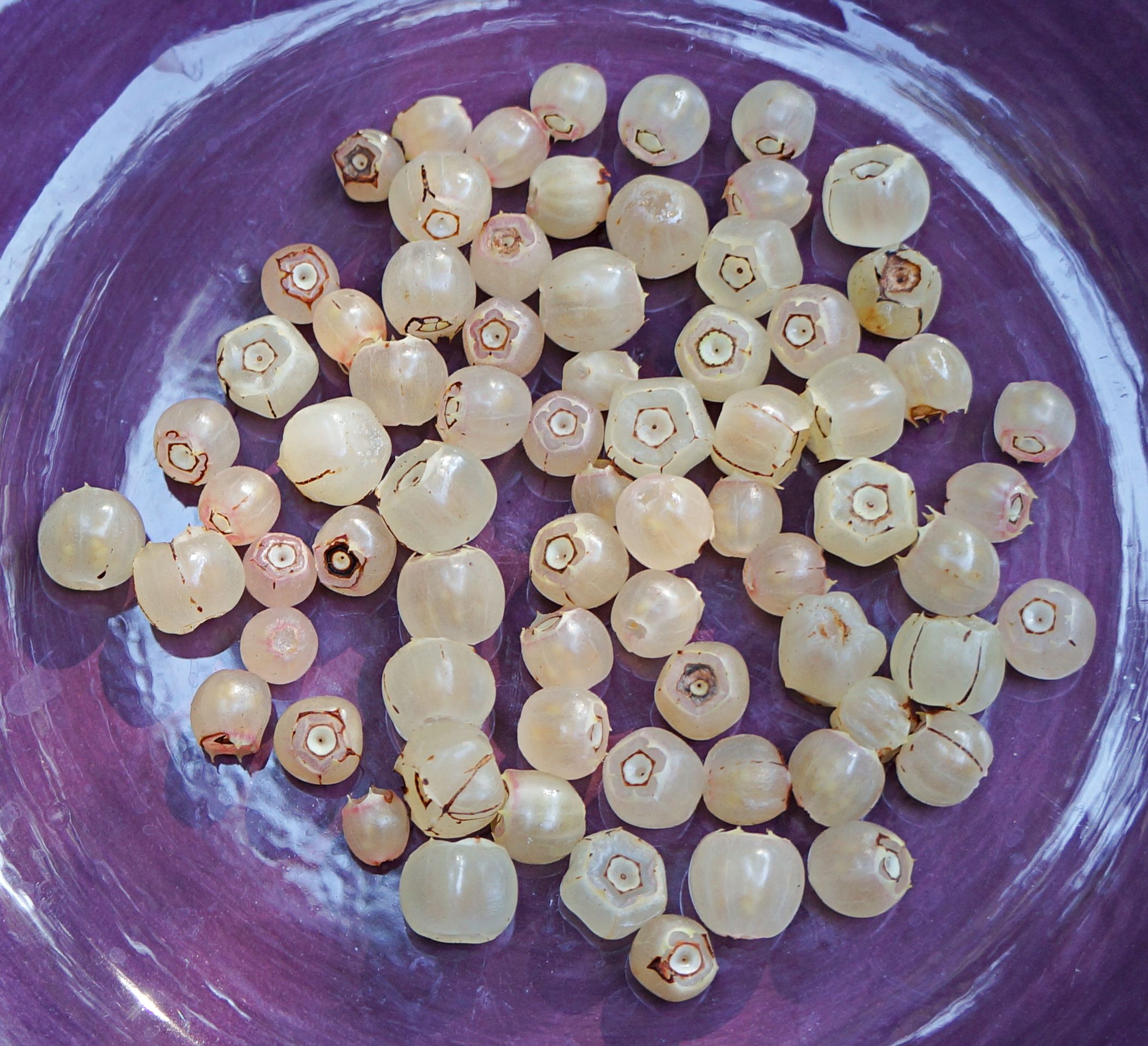 ↑ M. insignis berries ↑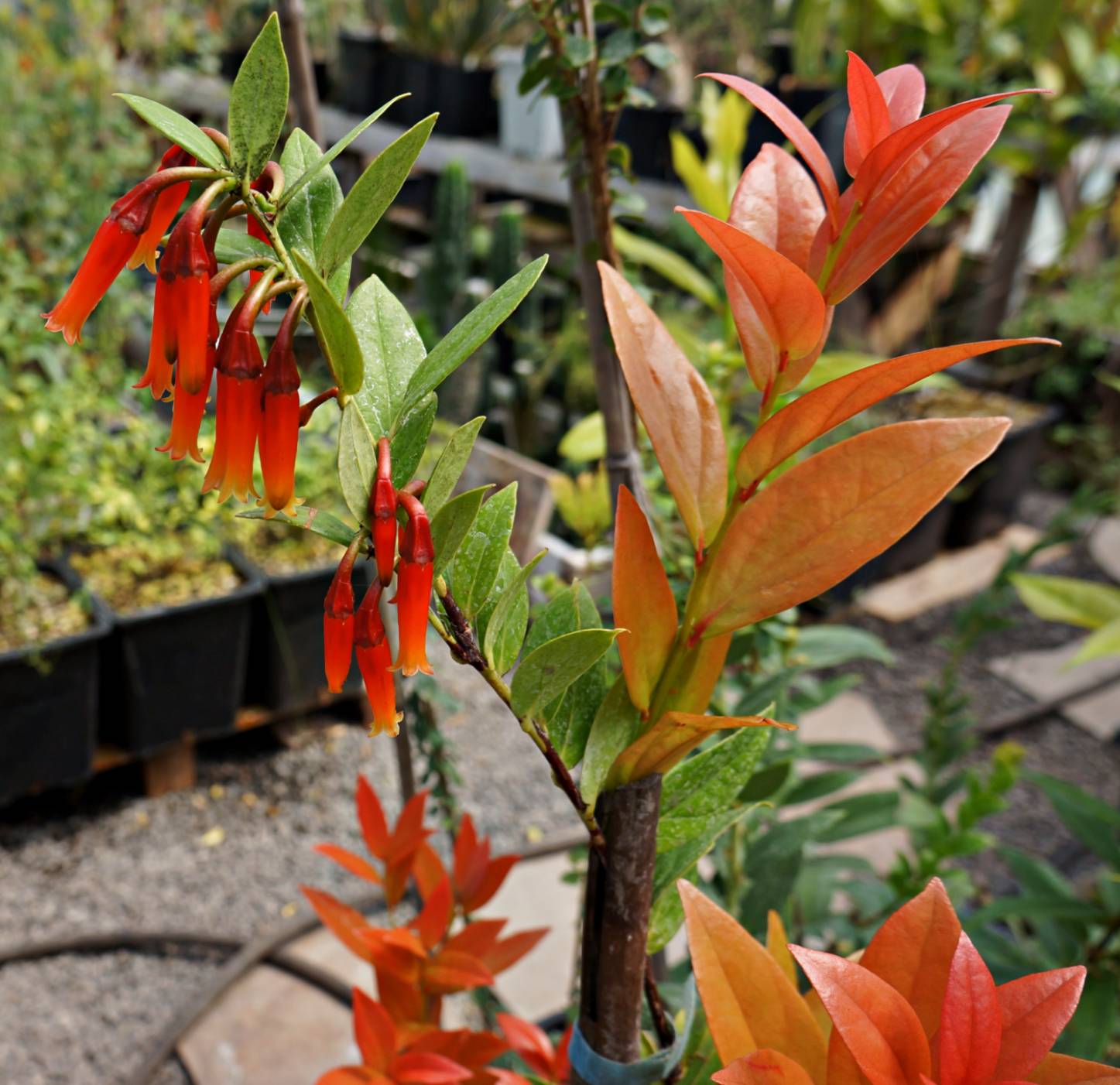
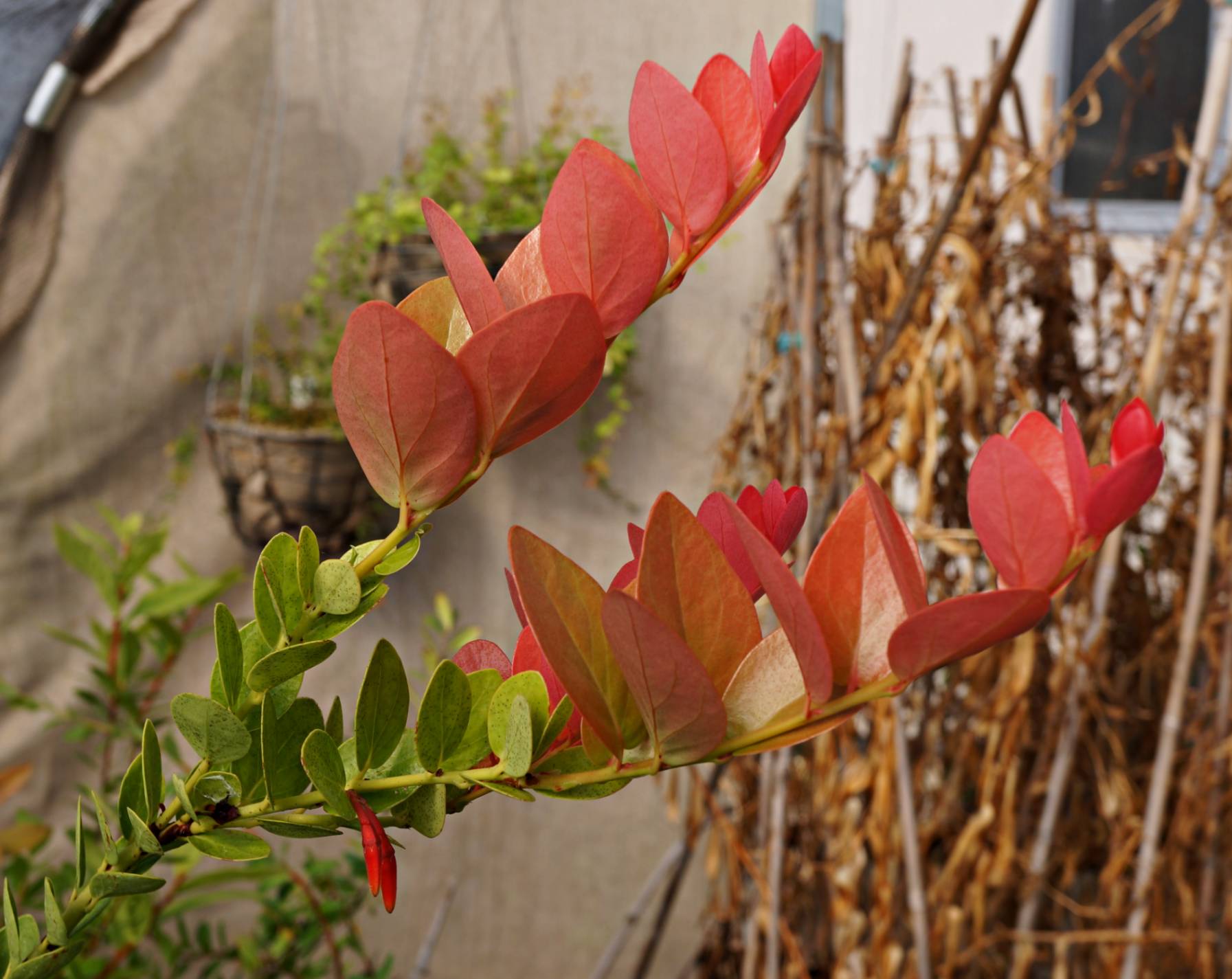
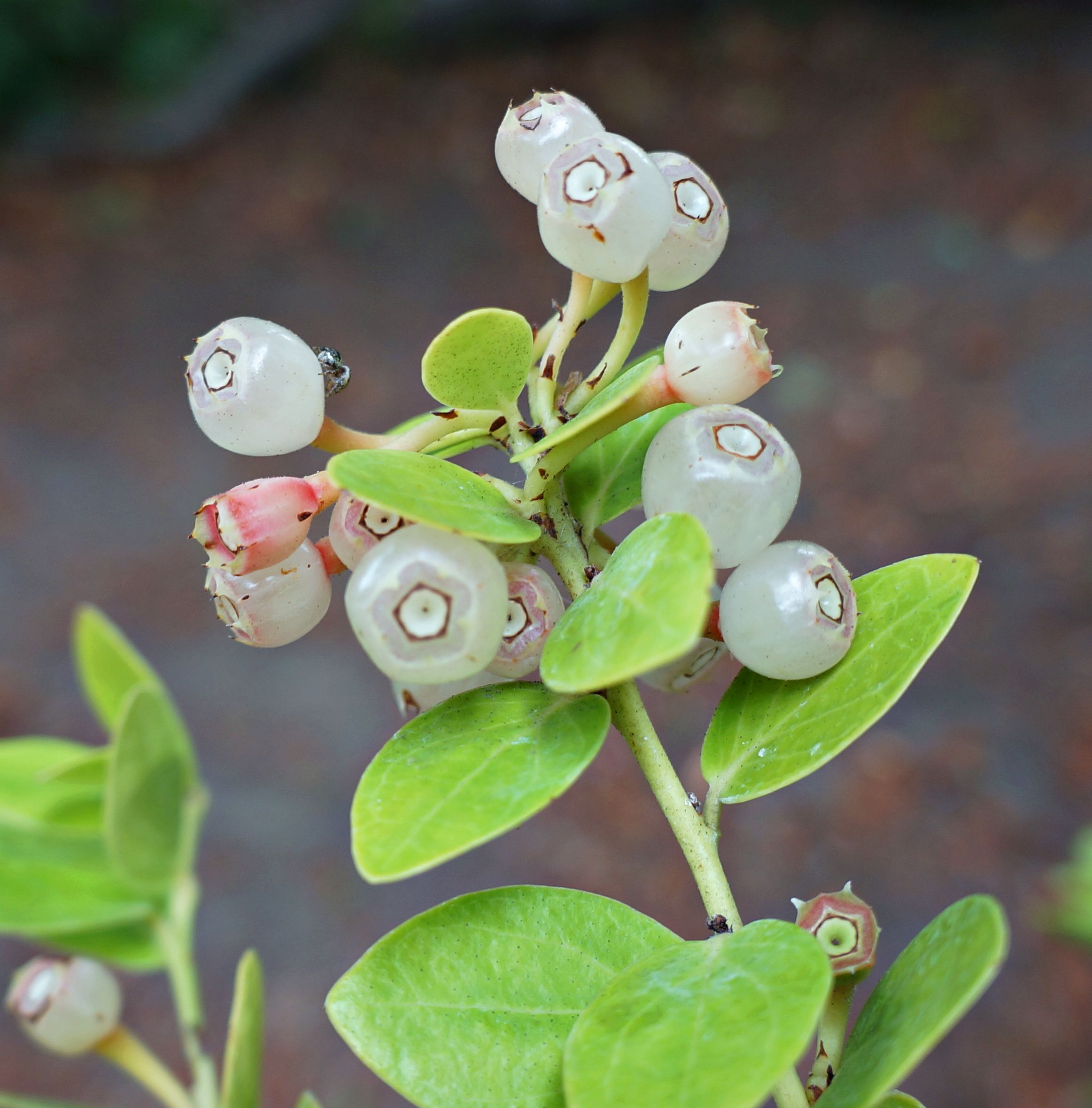
Macleania pentaptera “Hualicon” ♥ New ♥
Woody caudiciform with lignotubers to 12″+ across and upright branches 3–7’+. Shiny dark green ovate leaves, densely arranged along the stems and deeply cordate. Clusters of orange to reddish pentagonal tubular flowers with green and white tips. Marble size, white to translucent berries, very sweet and tasty. Endemic to the forests of Pinchicha, Los Rios and Cotopaxi, Ecuador between 500–7000′. A gorgeous plant, one of the more tropical species and easy to grow under a diversity of climates. Unrooted cuttings, rarely offered. Z9b
[ 6 ] → 2 ~ 5–8″+ unrooted cuttings $33.50 each September SALE! $29 each; or 2 for $49

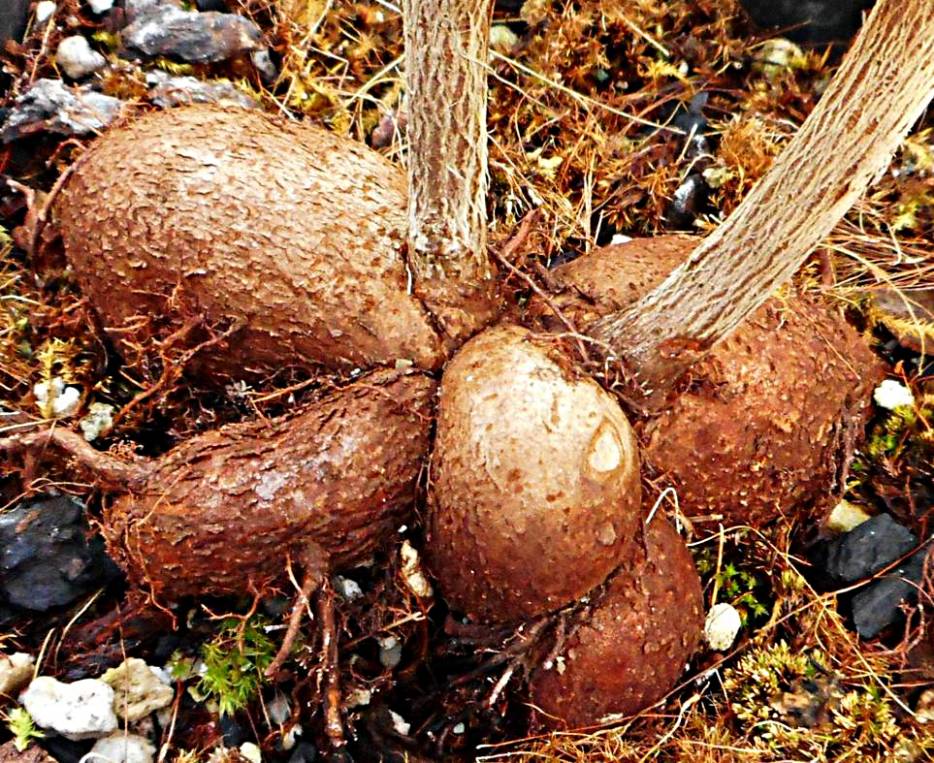
___
Pernettya prostrata ‘minuta’ BK10511.3
Ericaceae. A charming miniature form of this blueberry relative—only 1–2″ tall, creeping to form low mounds to 10–12″+ across. The new growth, stems and tiny leaves take on attractive reddish hues in bright light. White-pink flowers and small black berries, fairly sweet, but should not be eaten in excess. The Quechua recognize that the fruit of other forms of P. prostrata can cause “drunkeness” and delirium if over-eaten. Seed from plants growing near mounds of Mahueniopsis cacti and Stipa bunch-grasses, next to a spring-fed acequia, just below a remnant population of giant Puya raimondii, near Rodeo, Cochabamba Dept., Bolivia, 13,100′. Slow growing, perfect for rock gardens, as an edible ground cover or an adorable companion plant to cold hardy cacti. Z7/8?
[ 2 ] → 1 ~ 1–1.5″+ plant $39.50 ♥ New ♥
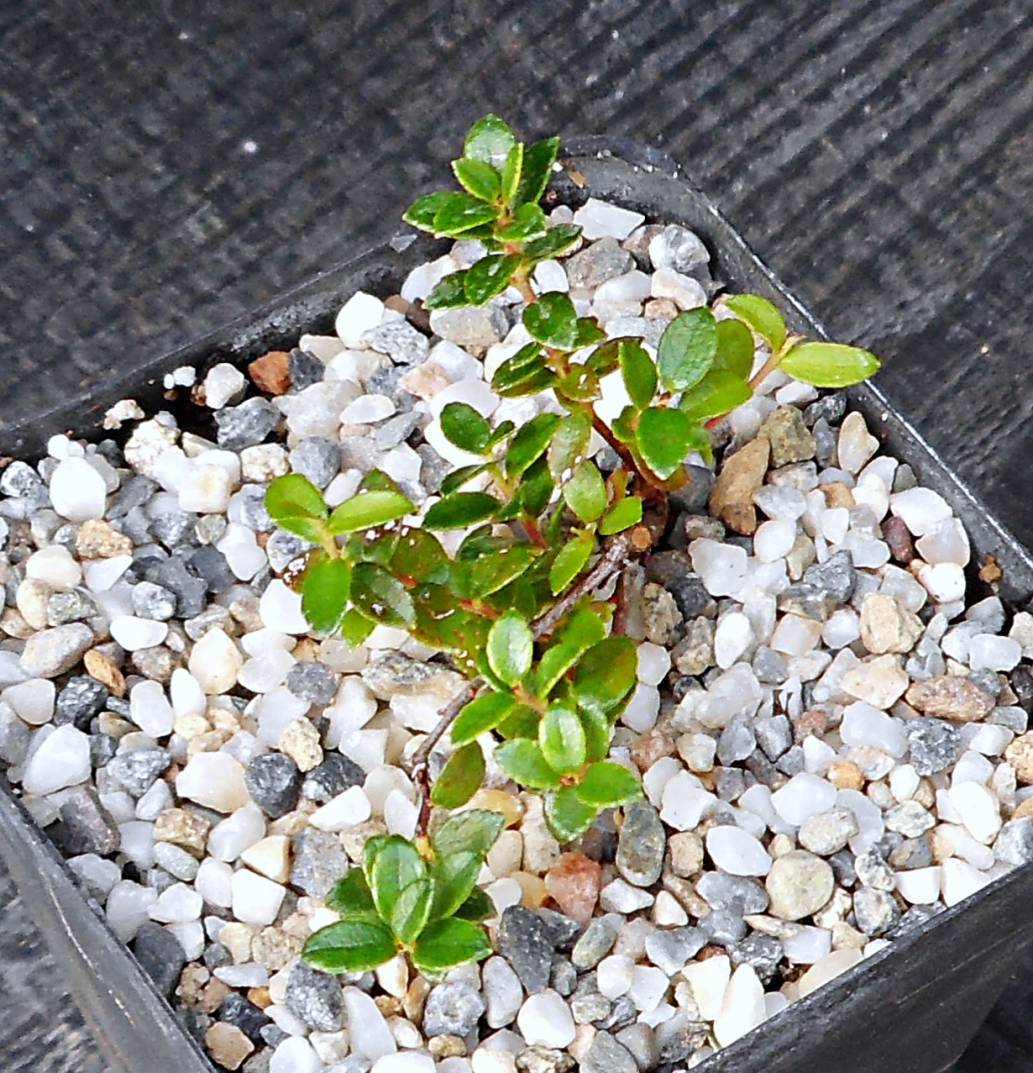 ↑ An example of a specimen plant ↑
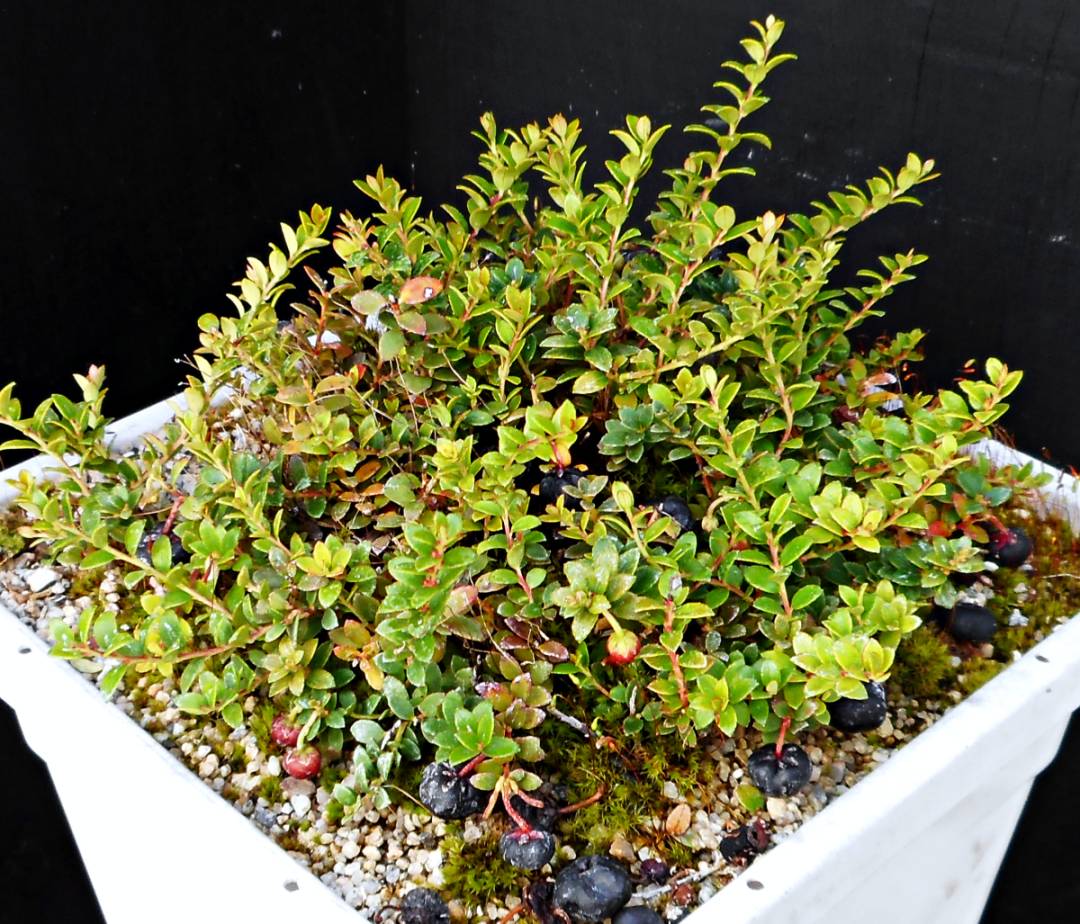 ↑ Mother plant in cultivation ↑
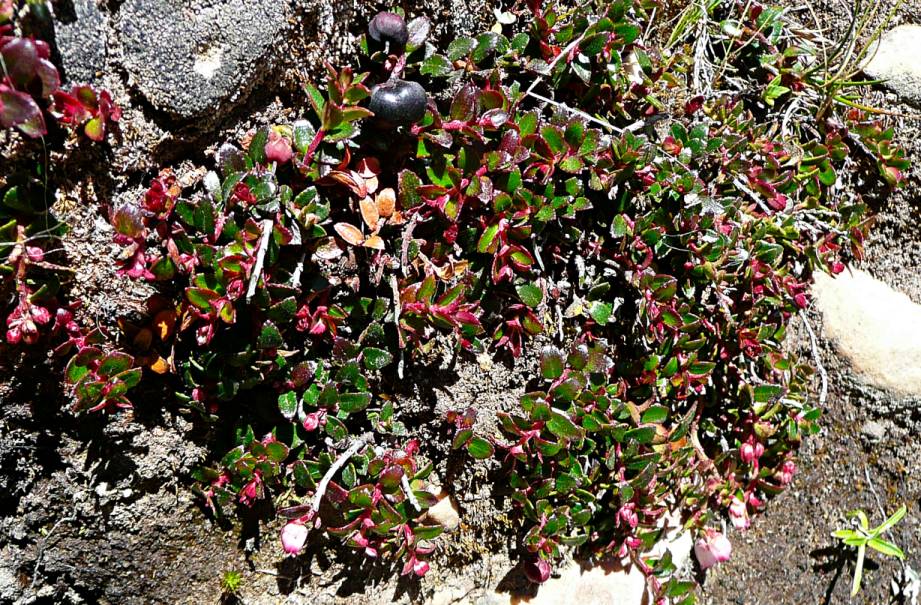 ↑ Pernettya prostrata ‘minuta’ BK10511.3 in habitat ↑
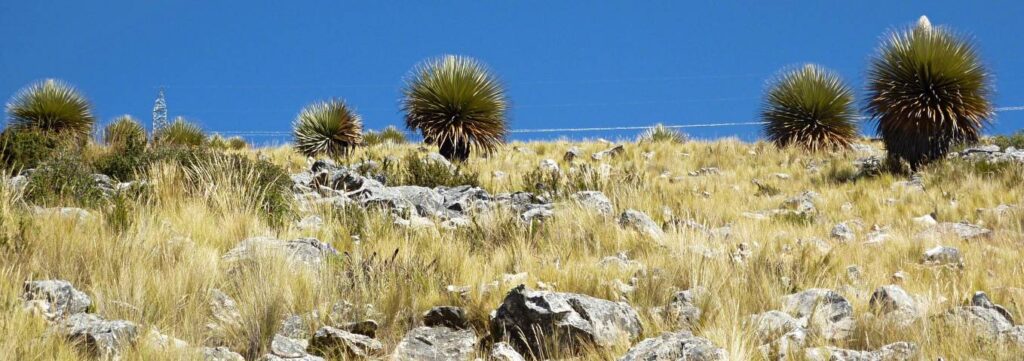 ↑ Habitat of Pernettya prostrata ‘minuta’, Rodeo, Cochabamba Dept., Bolivia ↑
___
Pernettya sp. TB17P.4 “Macha-macha” ♥ New ♥
An exceptional low growing shrub to 12″+ high and sprawling to to 24″+. Small glossy leaves densely arranged on the stems in a spiral formation, giving the branches an unusual cylindrical look a bit reminiscent of Peperomia cereoides; copper to reddish new growth. Tiny, white bell flowers spiral out from under the leaves; relatively large berries clothe the upper stem sections, starting white then ripening to pink, rose and lavender-purple. Probably part of the Pernettya prostrata complex, certainly one of the more distinct plants in this understudied genus. Tom Baldwin seed collection from the edge of Polylepis reticulata forest, highlands of Papallacta, Napo Province, Ecuador, near 10,800′. This Gaultheria and Vaccinium kin has sweet edible berries that should be eaten in moderation since some Andean Pernettya are known to cause an inebriation that has bizarre, possibly long-term, effects on memory and perception if consumed in quantity. Easily cared for, cultivate like a blueberry—acidic soil, sun to part shade; depending on the growing conditions the plants will be more shrubby and upright or sprawling, with the leaves in a looser formation or the dense, cylindrical form. Here’s your chance to obtain this wondrous and cold hardy neotropical blueberry! Z8a/b?
[ 3 ] → 1 ~ 4−7″ plant 4+ years old $64.50 SOLD
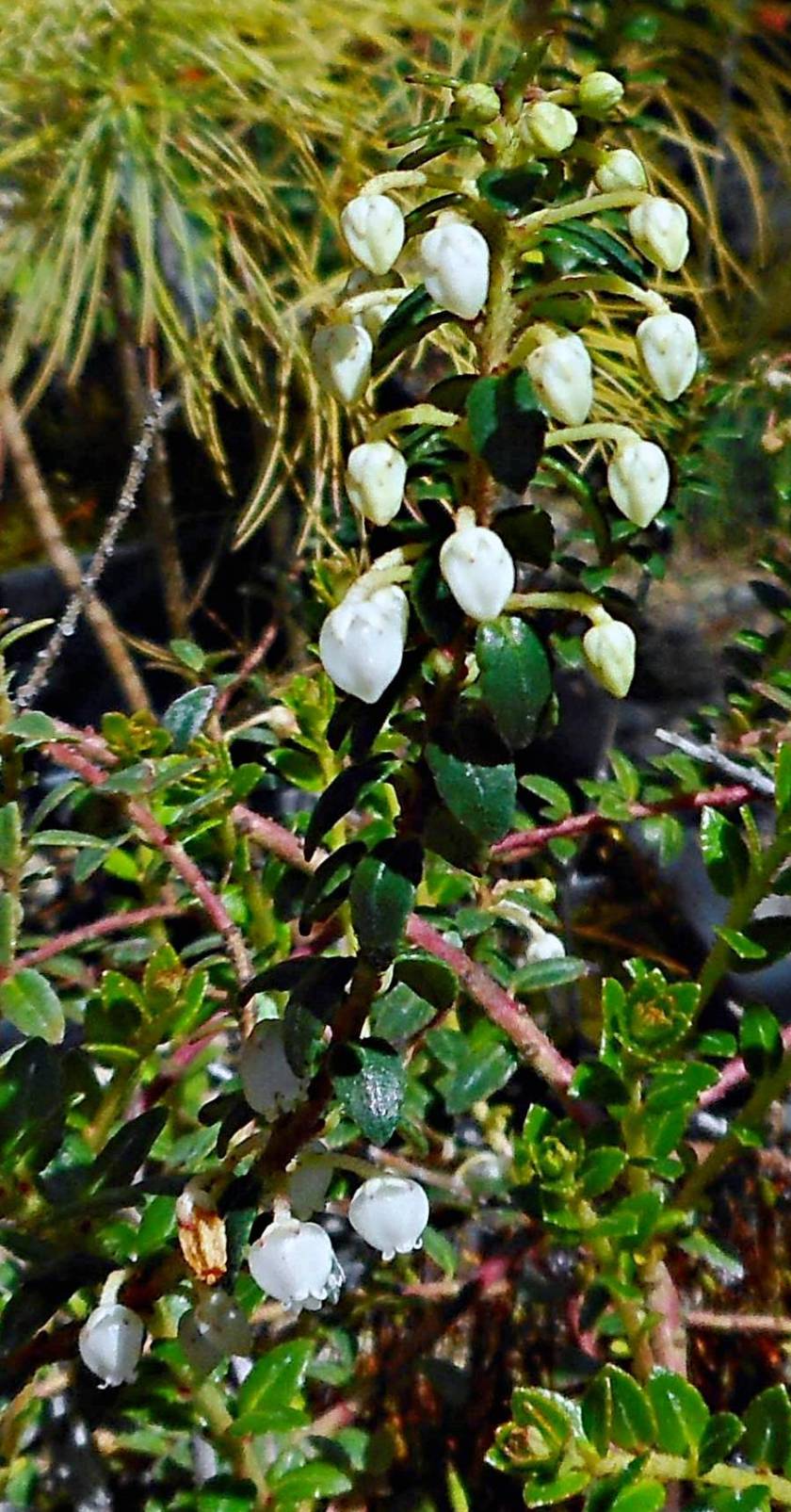 ↑ Flowers—young blossoms at top, mature ones at bottom ↑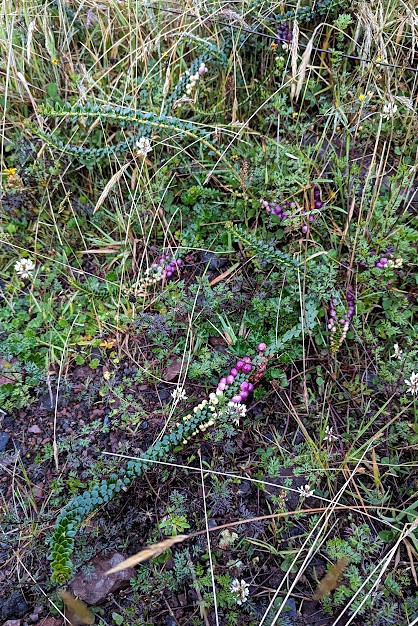
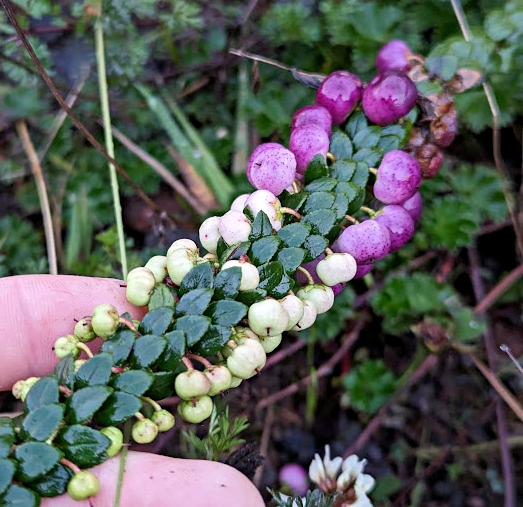
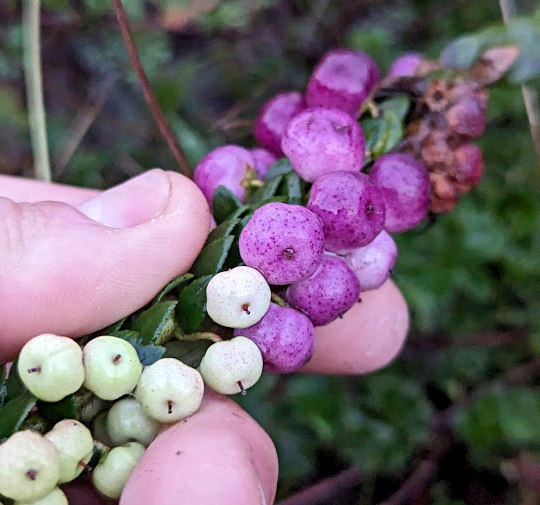 ↑ Pernettya fruiting with sprawling, cylindrical growth, Papallacta, Napo Province, Ecuador ↑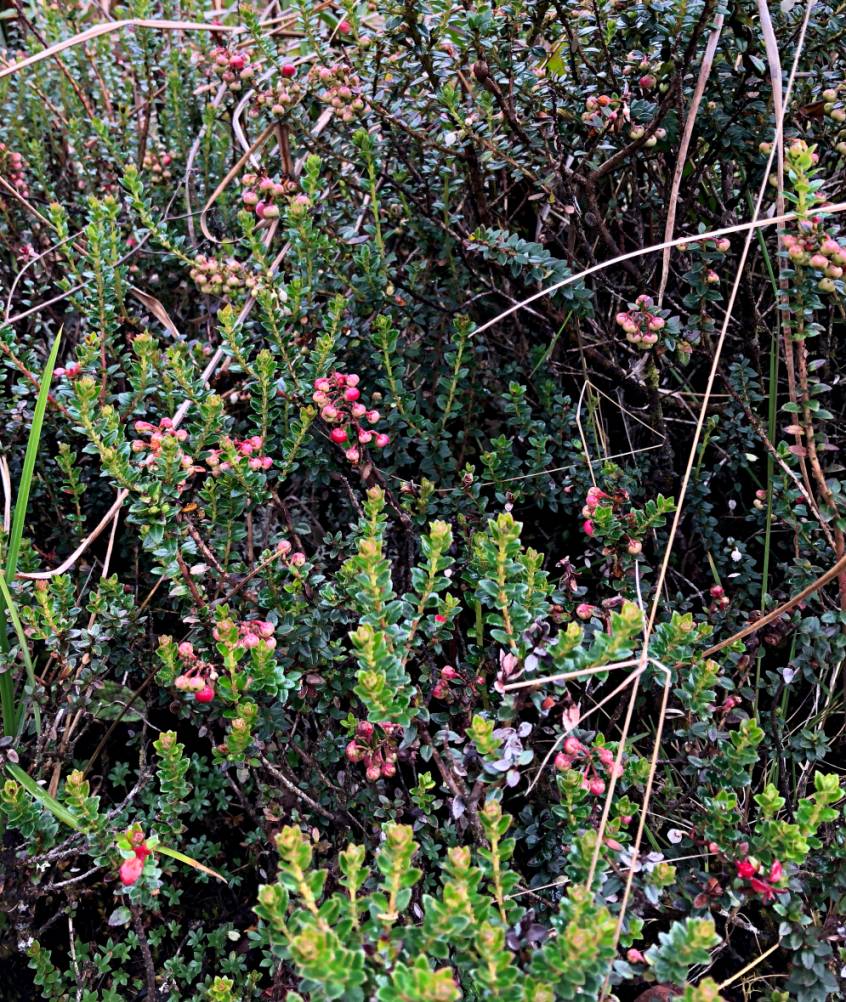
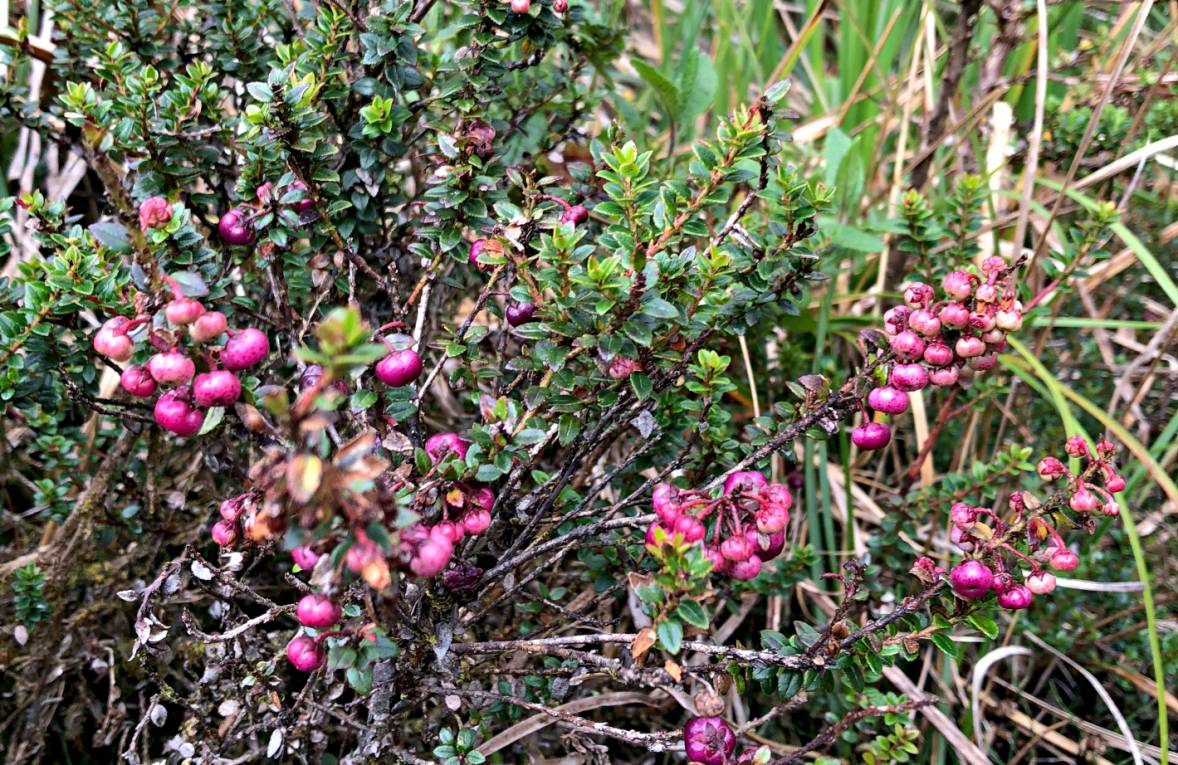 ↑ Pernettya fruiting with upright, shrubby growth, Papallacta, Napo Province, Ecuador ↑
 ↑ Pernettya habitat—Polylepis reticulata forest, Papallacta, Napo Province, Ecuador ↑
___
Psammisia sodiroi “Gualicón”
Ericaceae. Another utterly unique neotropical blueberry! Shrub with upright to almost lianoid branches to 12’+. Highly variable large leaves; lanceolate to ovate-elliptic, up to 12″ long and 6″ wide. New growth an appealing bronze to purple-green to pinkish color. Axillary clusters of up to 20 tubular flowers, an unusual wine-red to orange-red with green tips. Edible berries. Indigenous to Columbia and Ecuador where it grows at lower elevation rainforests up to mountainous cloudforests, from about 700–10,000′. We’ve only offered this impressive plant a couple times via auction, this is our first offering of unrooted cuttings—relatively easy to root and grow like other neotropical blueberries. Z9b?
[ 4 ] → 1 ~ 6–9″ unrooted cutting $49.50
___
Satyria boliviana HBG90802
Ericaceae. Gorgeous semi-epiphytic shrub with pendent branches 2–6′ long. Lime-green, coriaceaus, lanceolate leaves, lightly pilose. New growth pink-bronze. Inflorescence covered in tiny soft white hairs, bearing dozens of flowers with globose urn-shaped corollas, red with white tips. The edible berries are high in antioxidants. This lovely rare and endangered Bolivian endemic is only known from a few collections, Yungas cloud-forest, La Paz and Carrasco, Cochabamba, near 8000’. Grow like other neotropical blueberries. Very seldom offered. Z9a/b?
[ 6 ] → 1 ~ 5-6″ unrooted cutting $36.50 SOLD
[ 5 ] → 2 ~ 10–12″+ unrooted cuttings $56.50 each September SALE! $49 each or 2 for $88
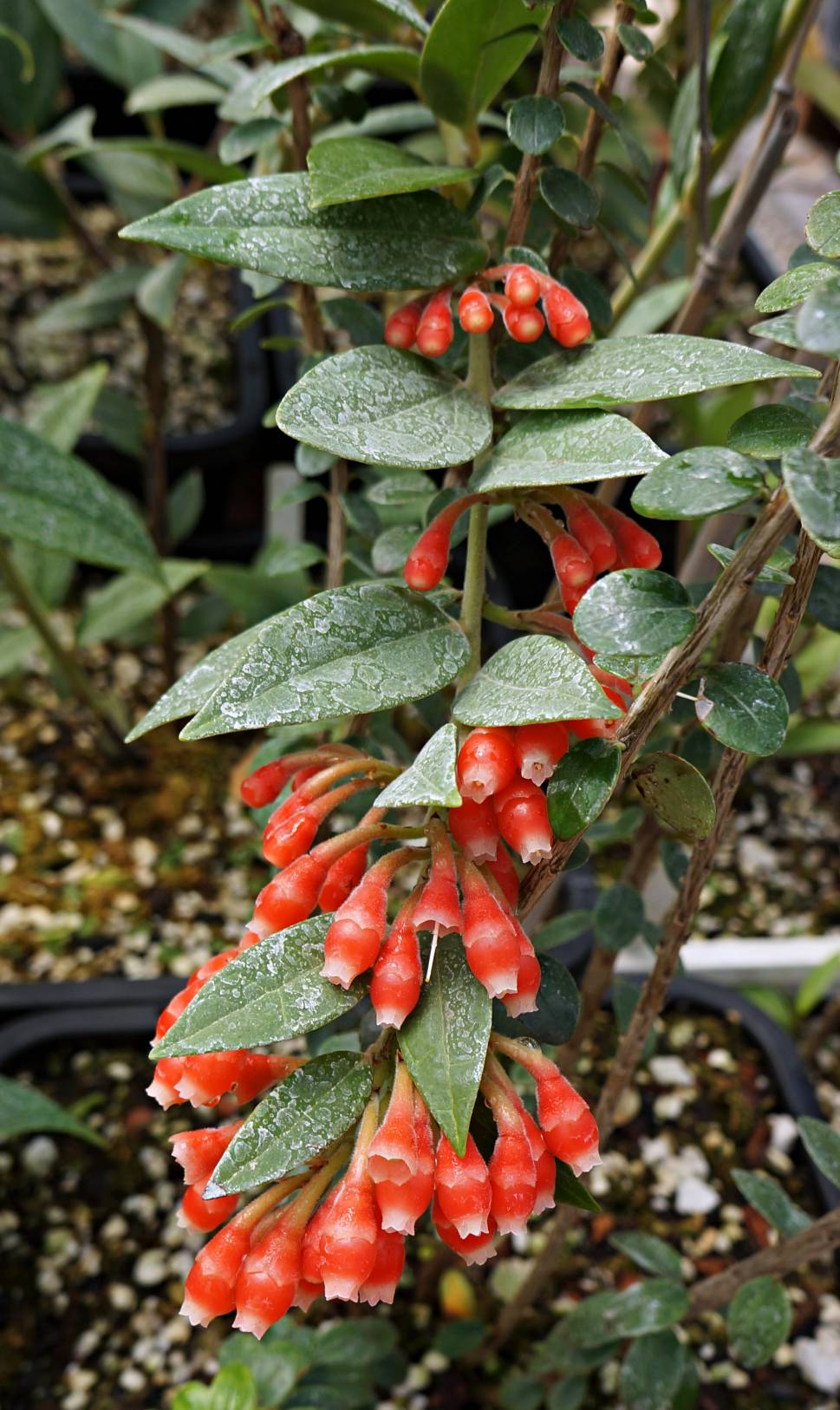
___
Sphyrospermum cf. buxifolium
Ericaceae. Another unique neotropical blueberry. Terrestrial to epiphytic shrublet with slender ascendent or pendent branches 1–5’+ long. Rounded semi-succulent leaves, yellow-pink bell-shaped flowers. Red-orange edible berries. This may actually be a new species. Lower elevation Andean cloudforests. Acid soil, filtered light. Lovely in hanging baskets. Larger, unrooted cuttings, easy to root. Z9b?
[ 5 ] → 2 ~ 8–10″+ unrooted cuttings $19.50 each
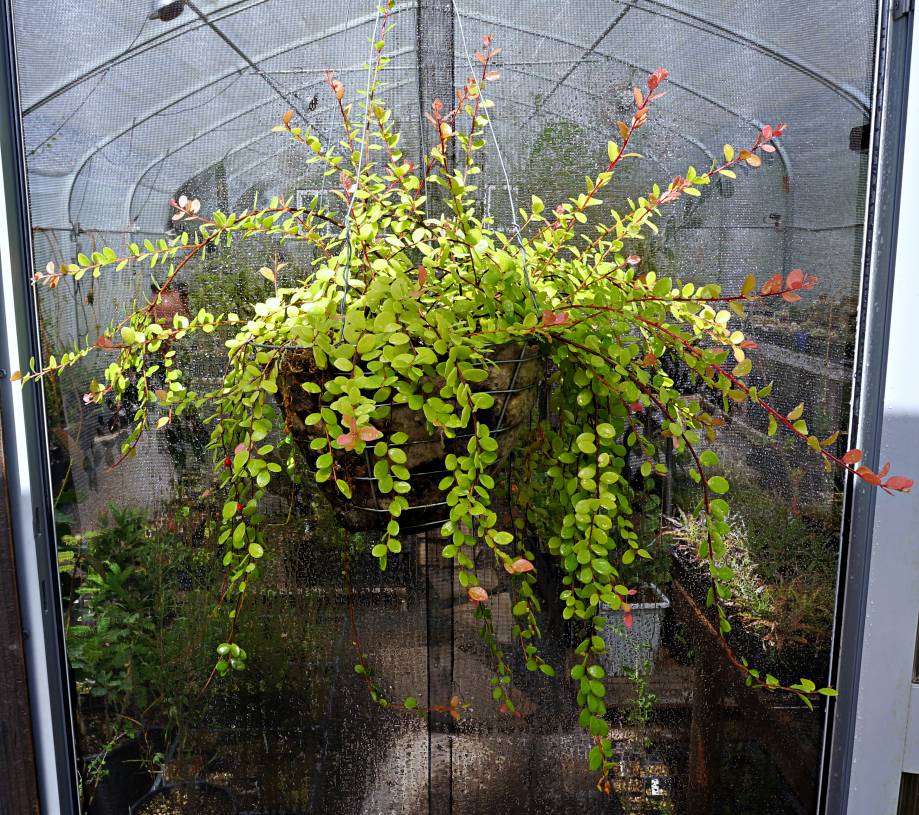
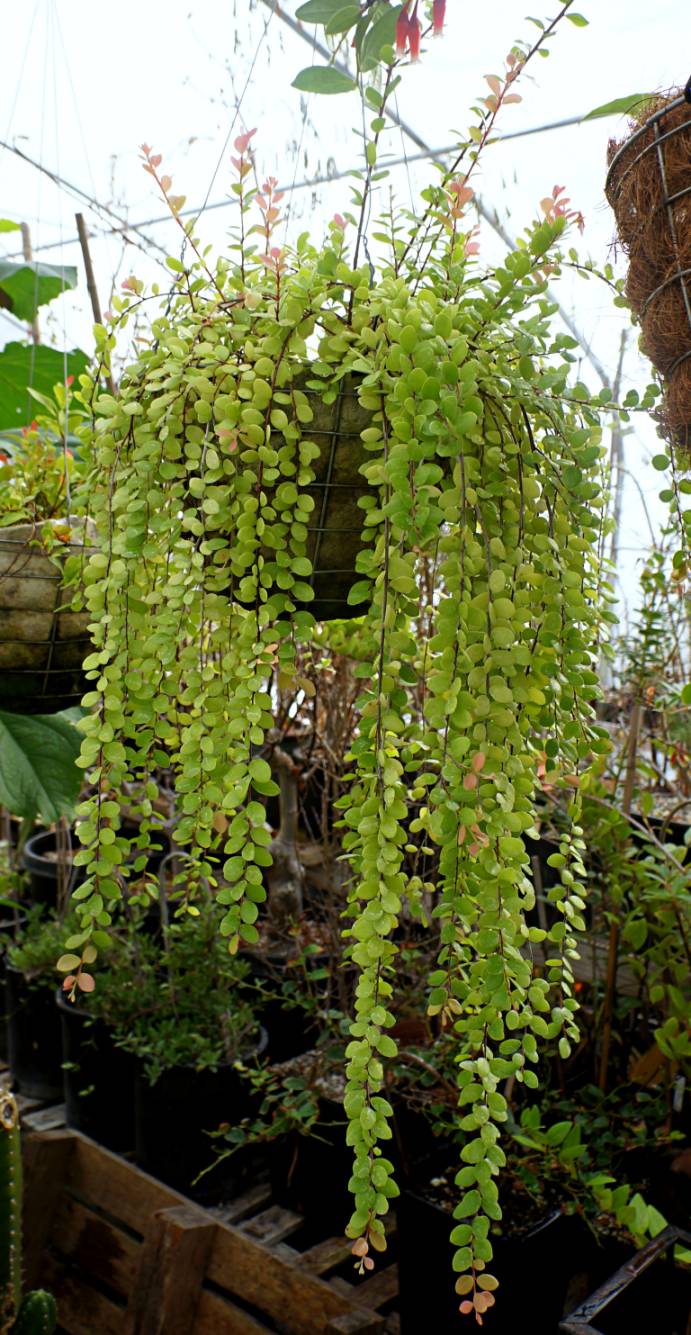
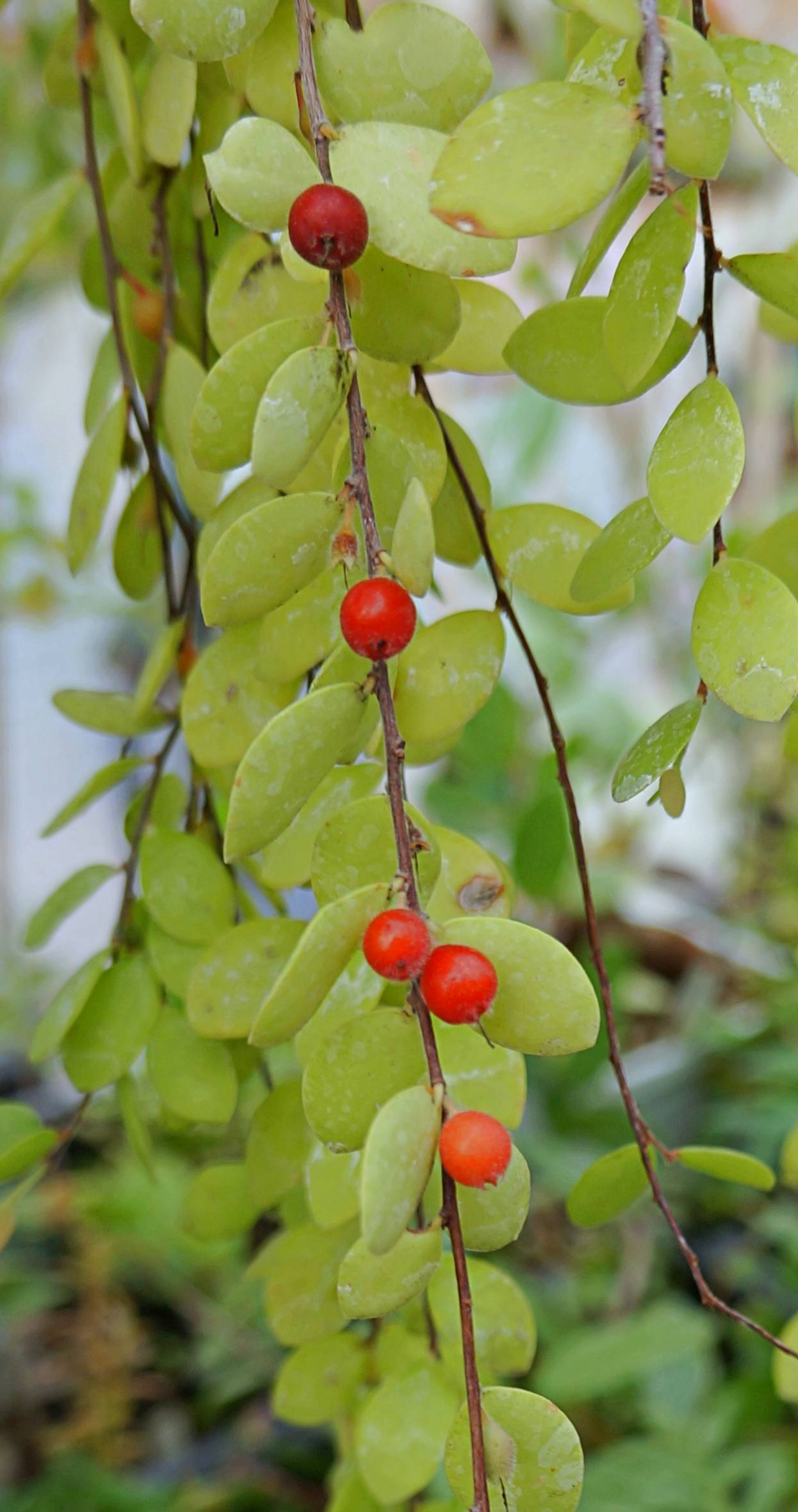
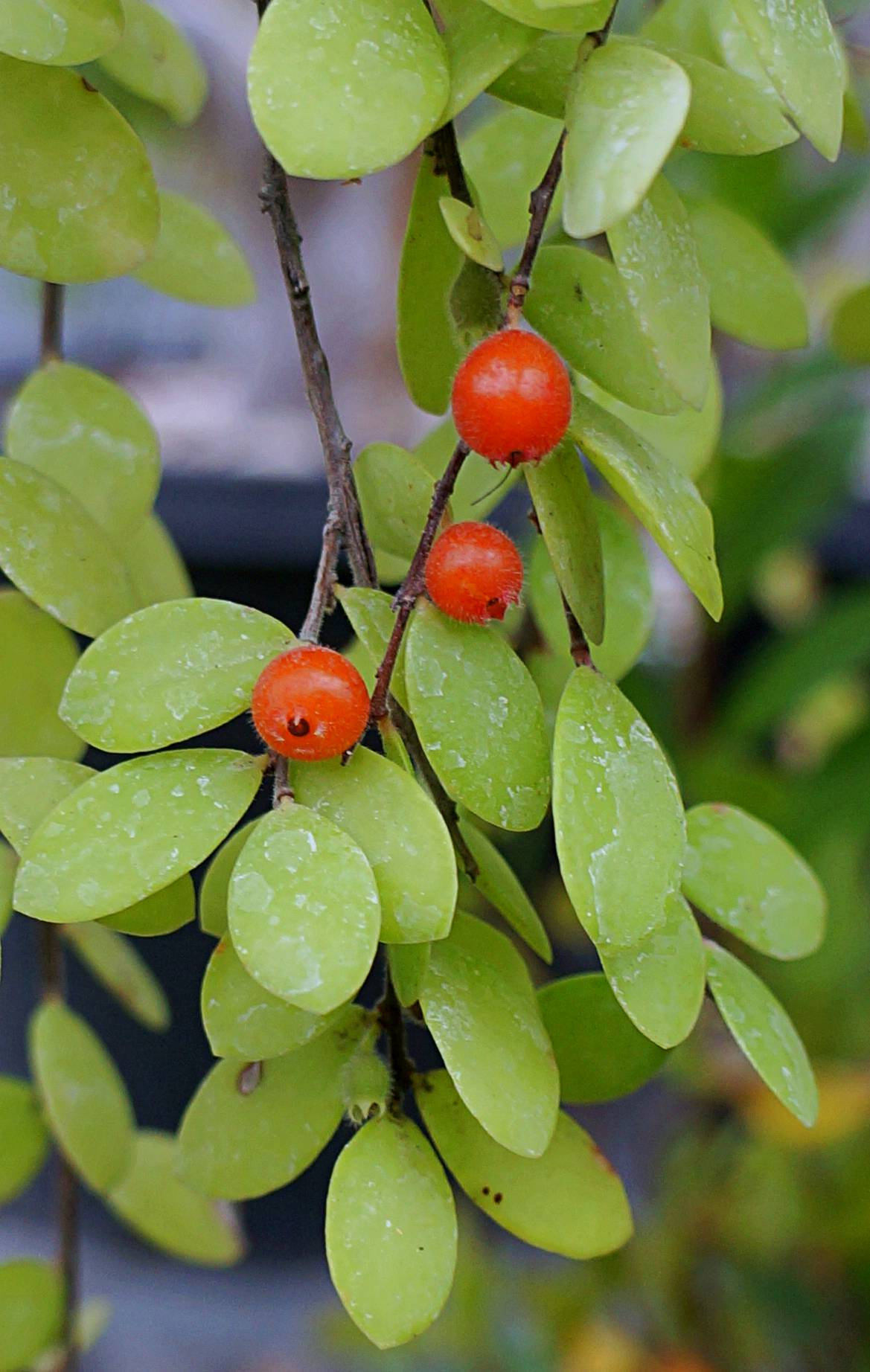 ___
___
Vaccinium floribundum BK10428.6 “Andean Huckleberry” ♥ New ♥
Ericaceae. A beautiful evergreen shrub to 2’+ with small, glaucus-blue leaves. The brazen new growth is often mistaken as blossoms with its erotic rose to reddish-purple colors. Dense clusters of small, pink-white bell flowers precede the bunches of delicious blueberries — dark purple-black with powdery blue blush. Seed collected from thickets of the plant growing in rocky areas above Rio Trapiche, between Huacahuasi and Lares, Cusco Dept., Peru, 12,000′. Cultivated in parts of the Andes for its esteemed berries, has great potential for edible landscapes worldwide. Rarely offered. Unrooted cuttings. Z8a
[ 5 ] → 2 ~ 4–6″ unrooted cuttings $38.50 each
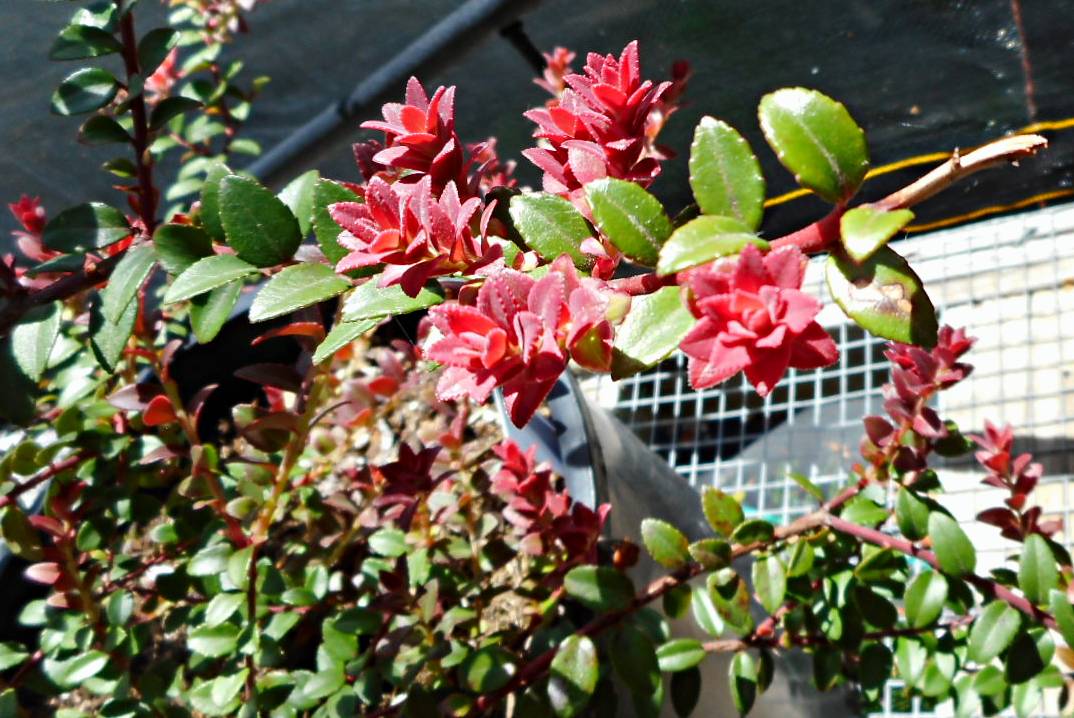
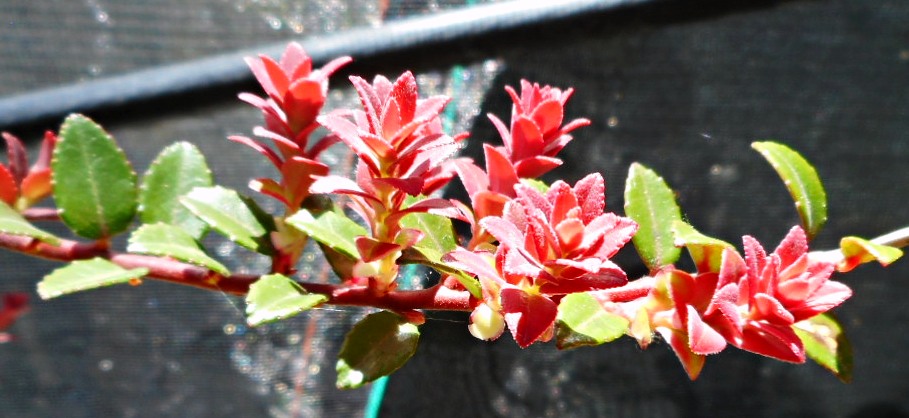
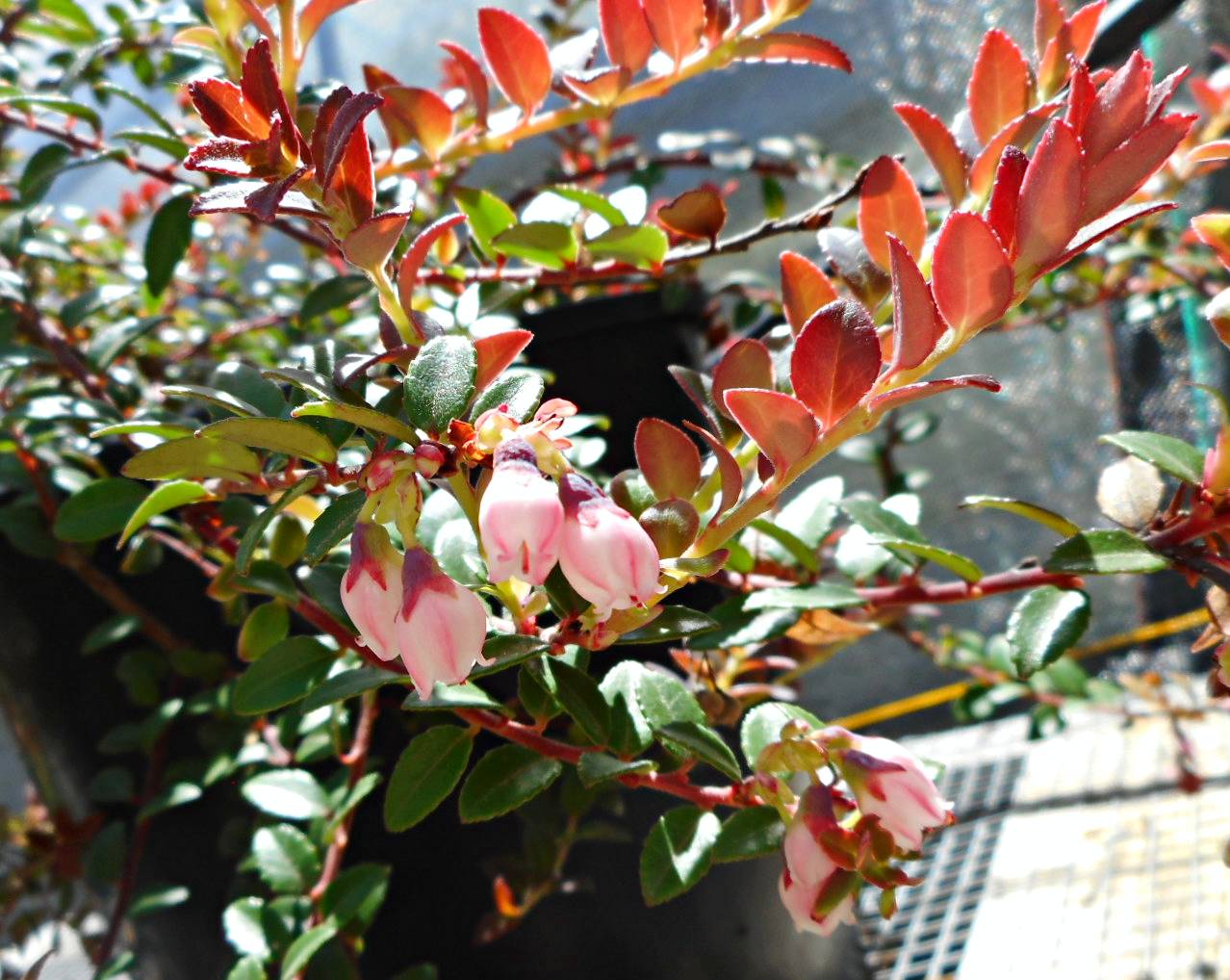
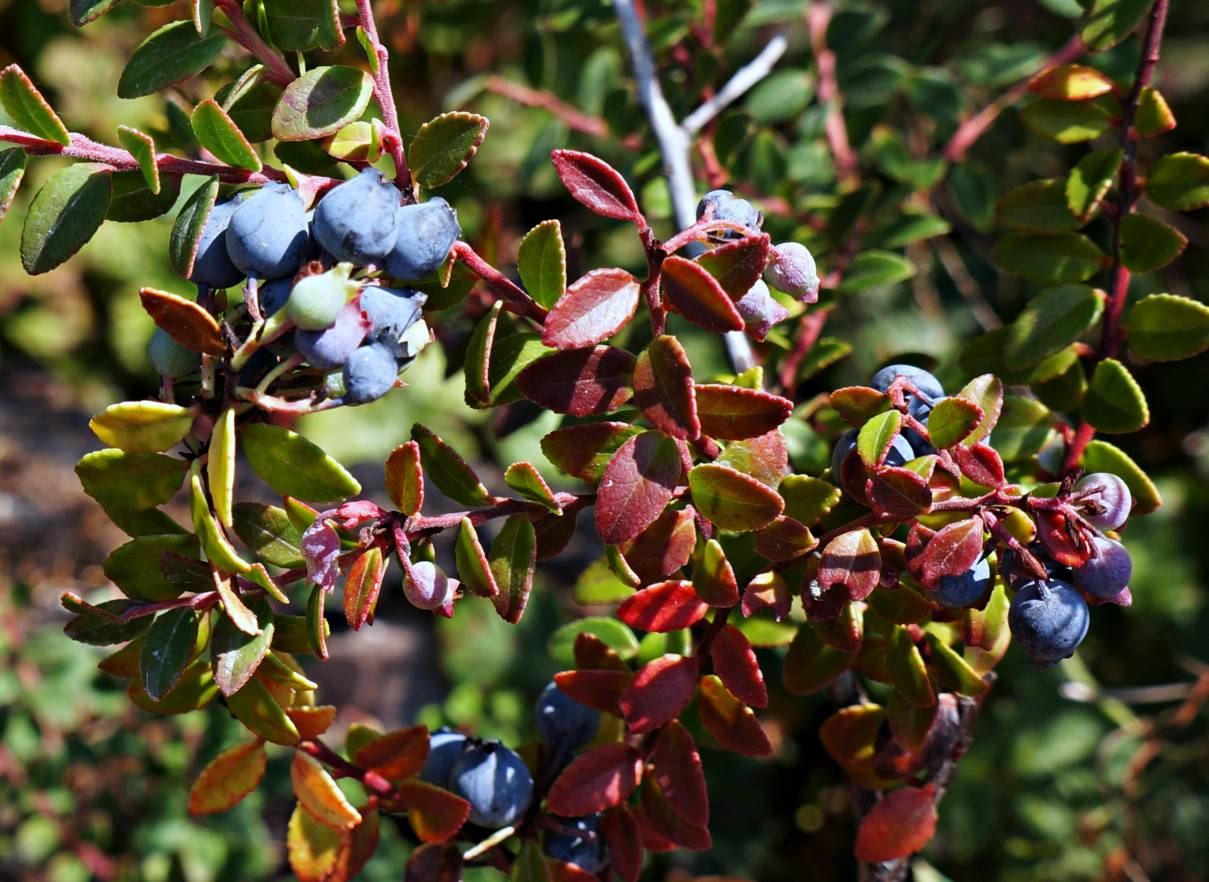 ↑ Vaccinium floribundum new growth, flowers & fruit ↑
______
Additional Neotropical Blueberry Images:
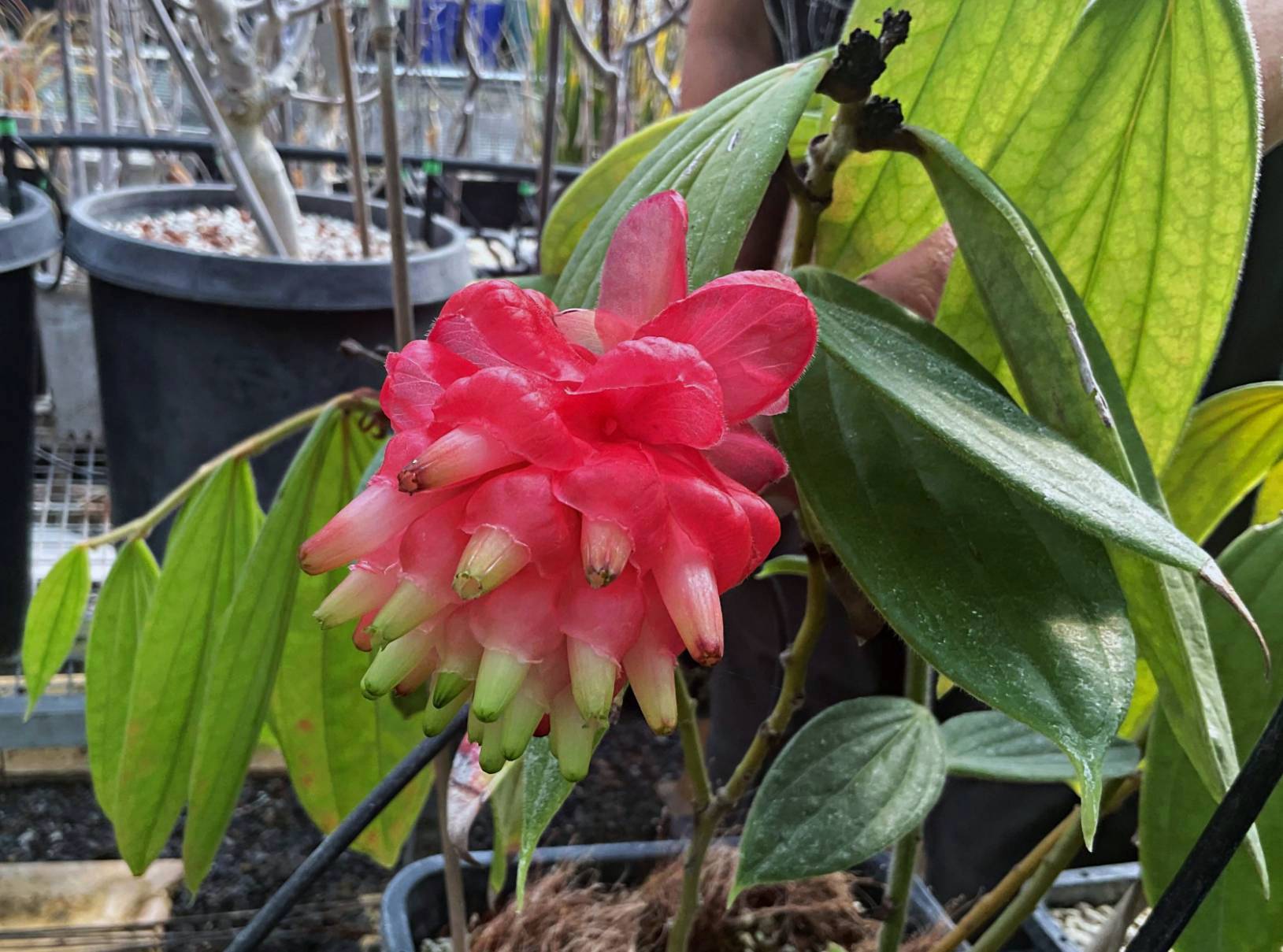
 ↑ Cavendishia micayensis ↑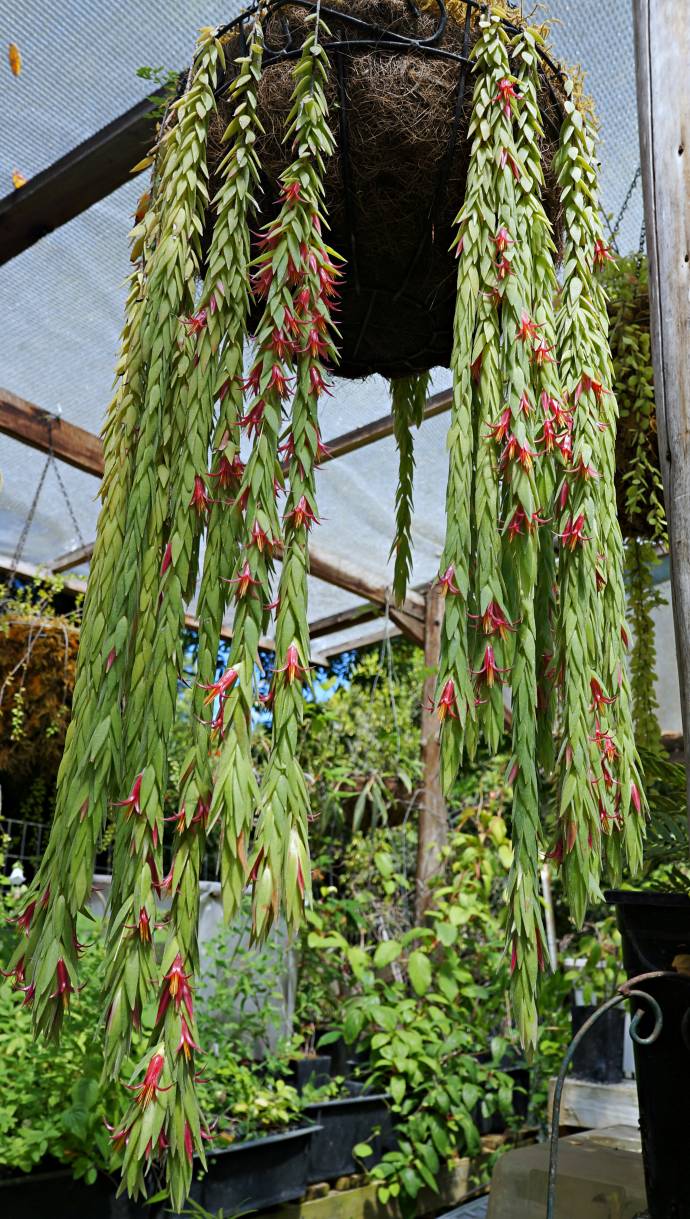
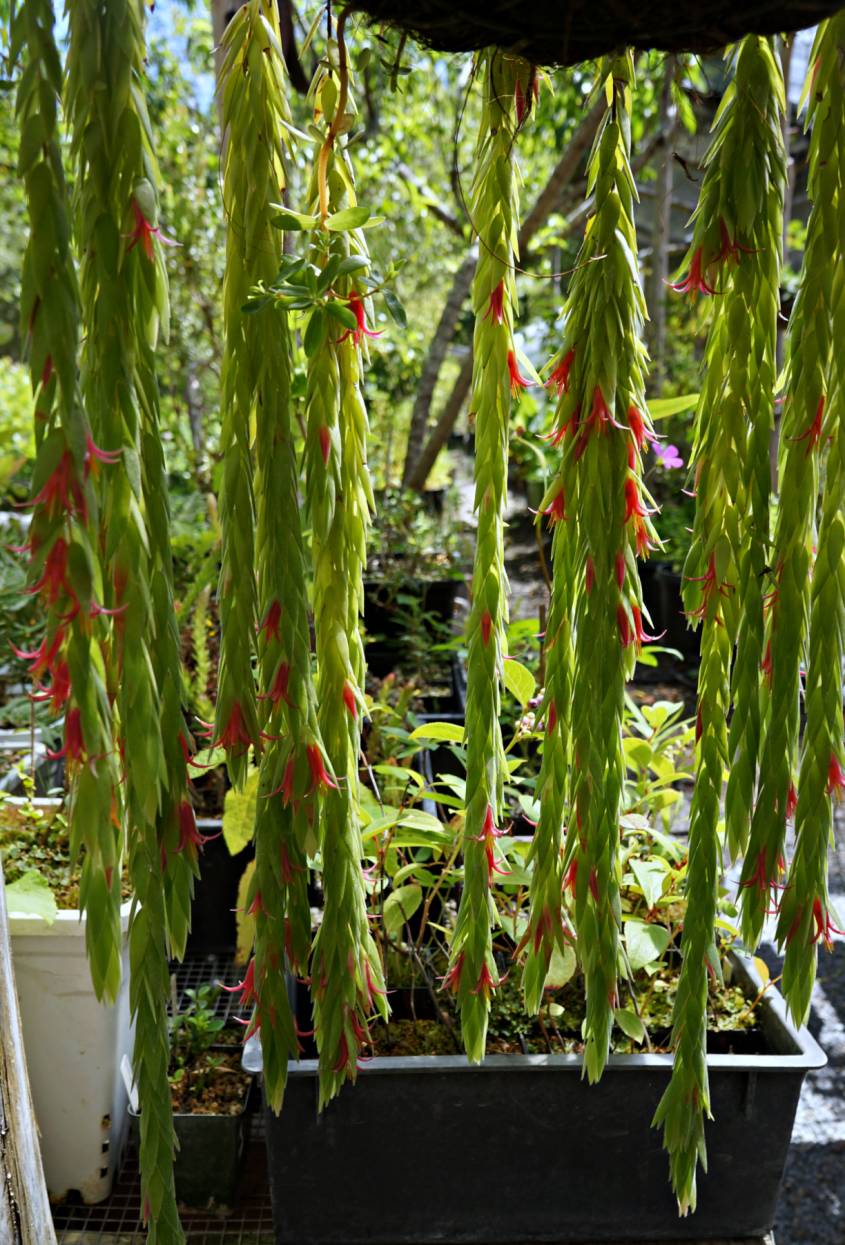
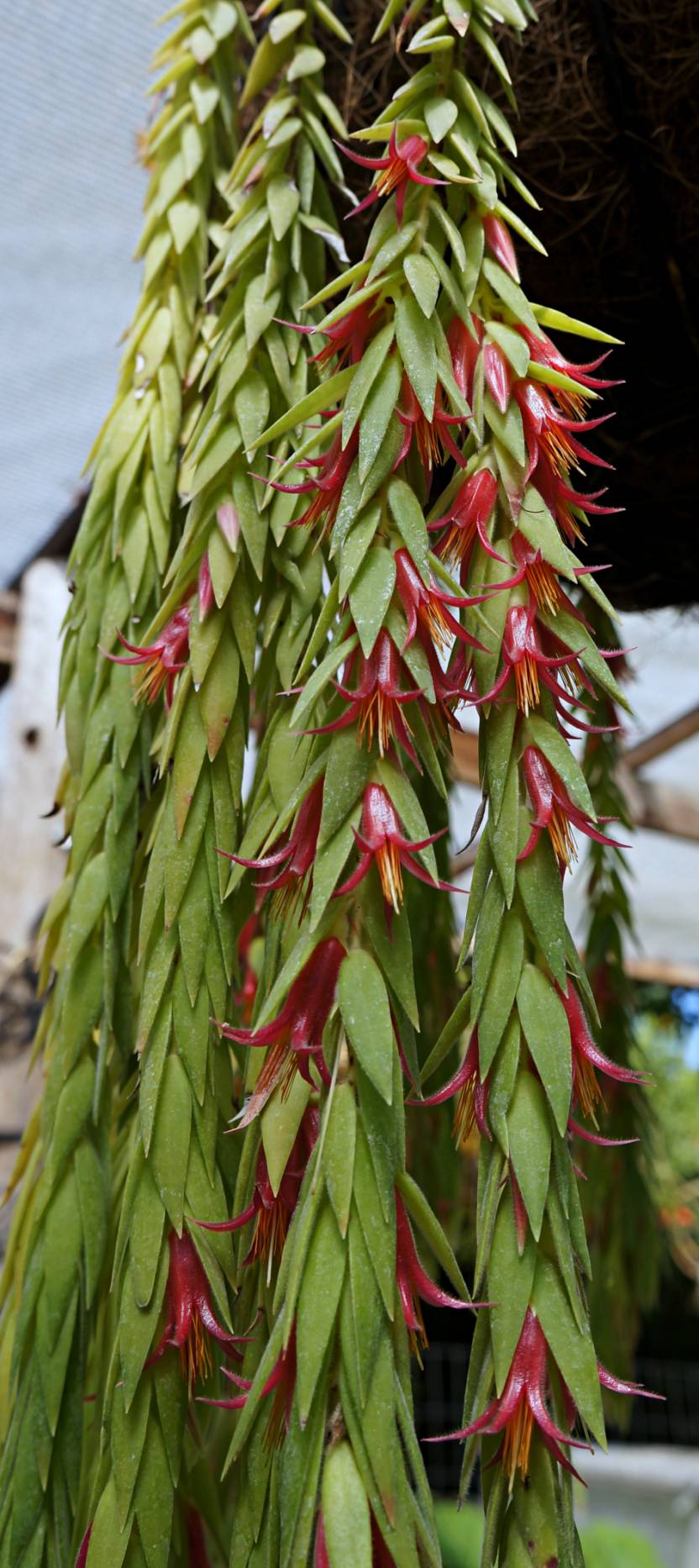
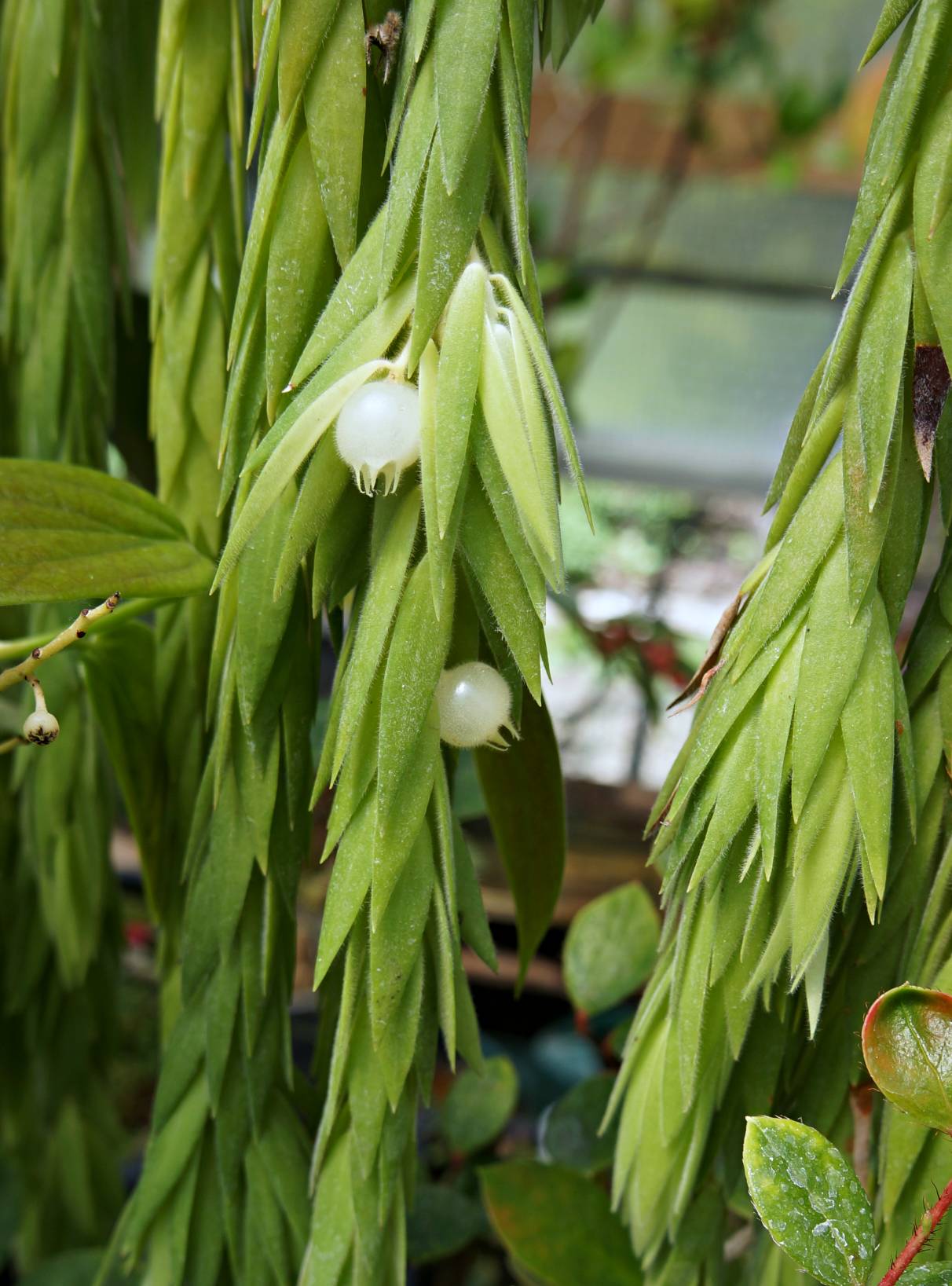 ↑ Ceratostema rauhii flowers & fruit ↑
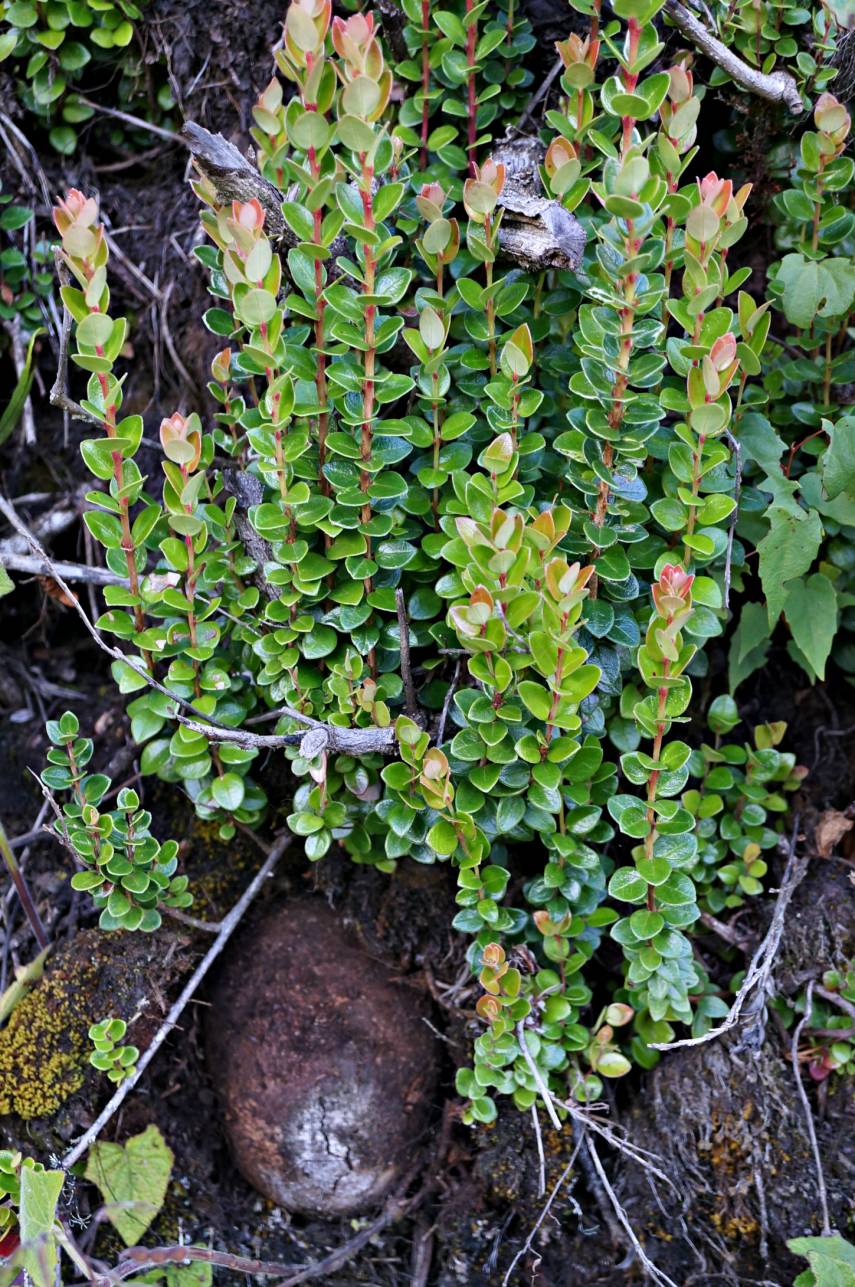 ↑ Disterigma? sp., Cusco Dept., Peru ↑
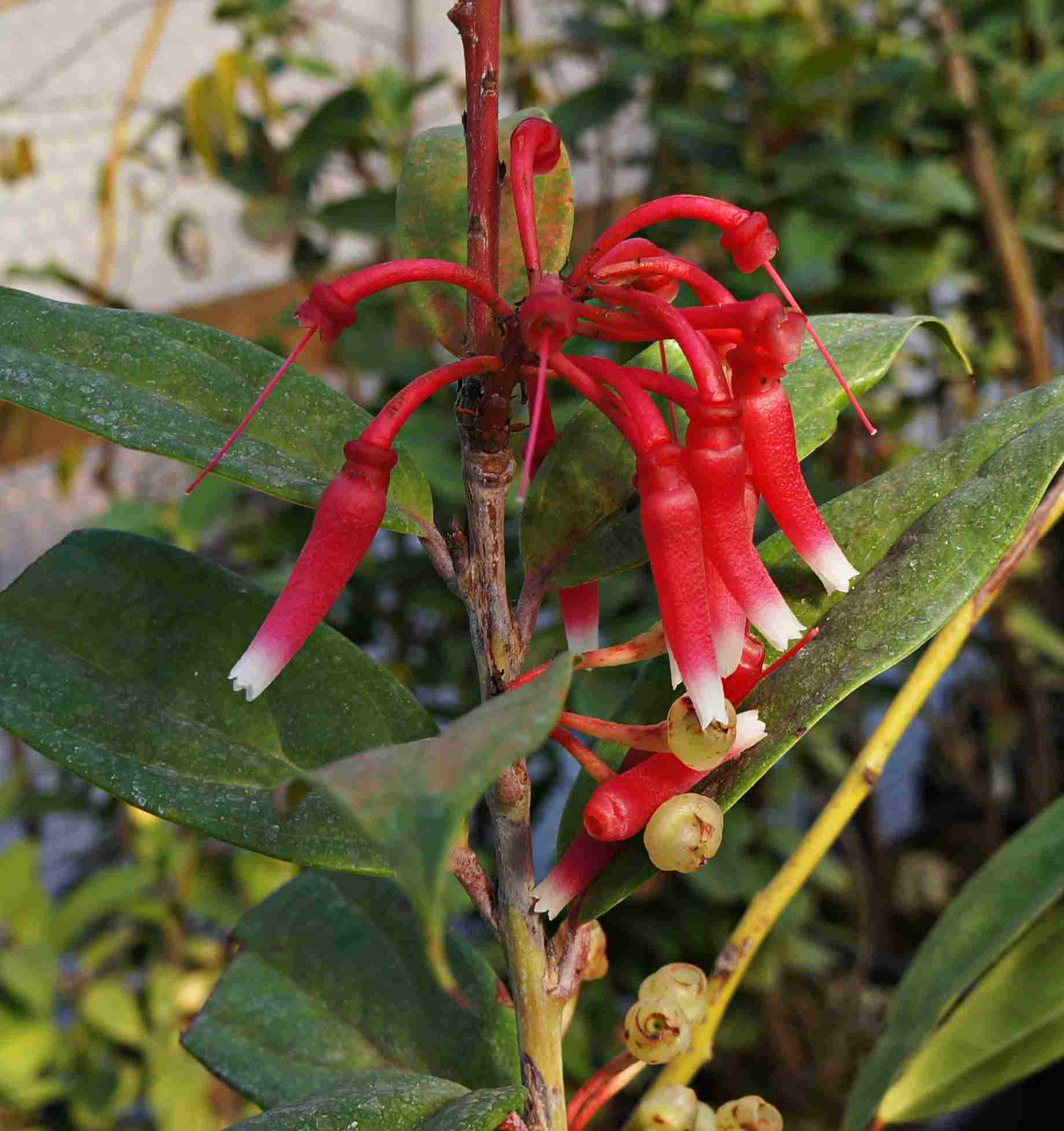
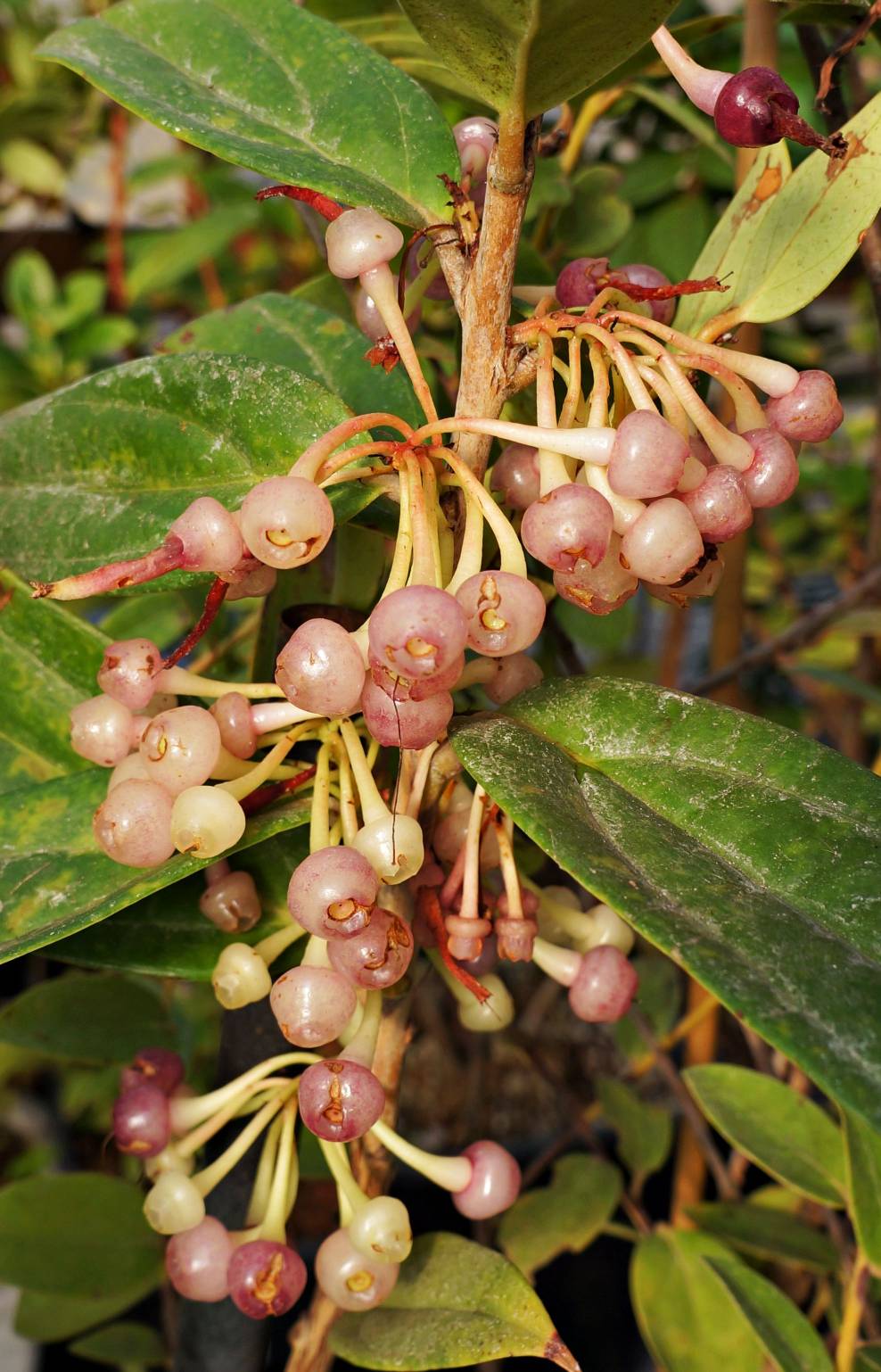 ↑ Psammissia ramiflora ↑
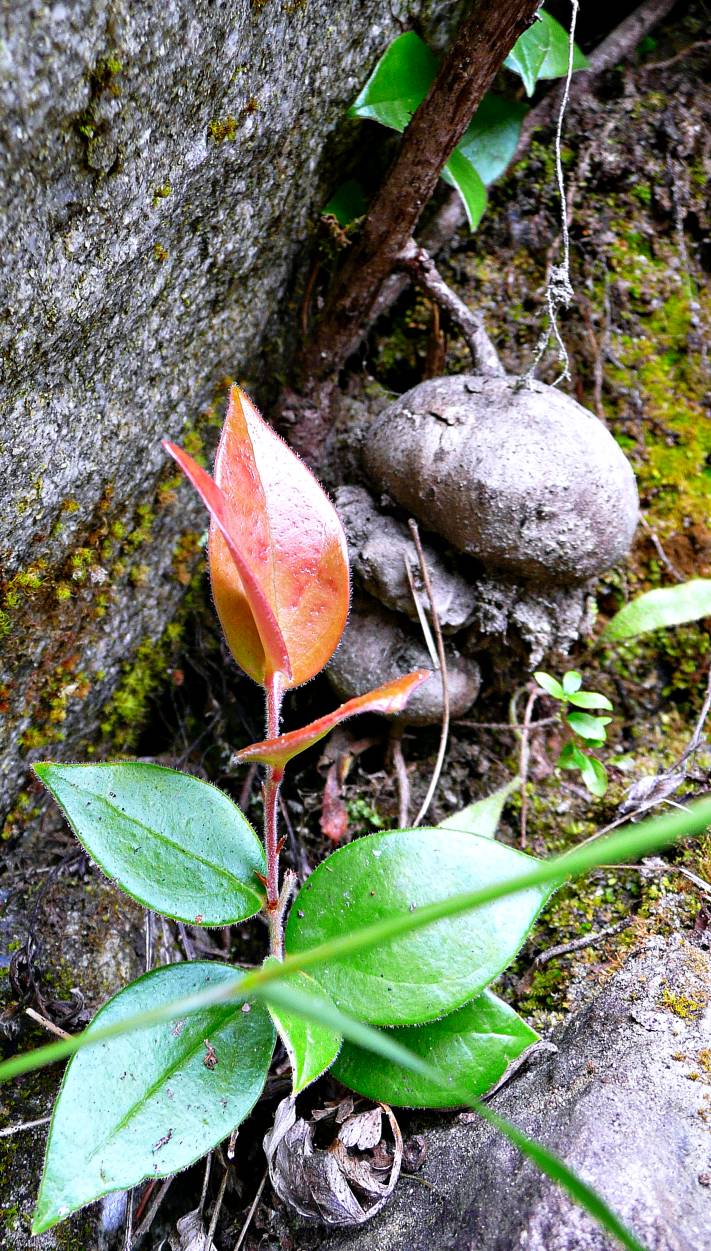 ↑ Ceratostema or Macleania sp., Cusco Dept., Peru ↑
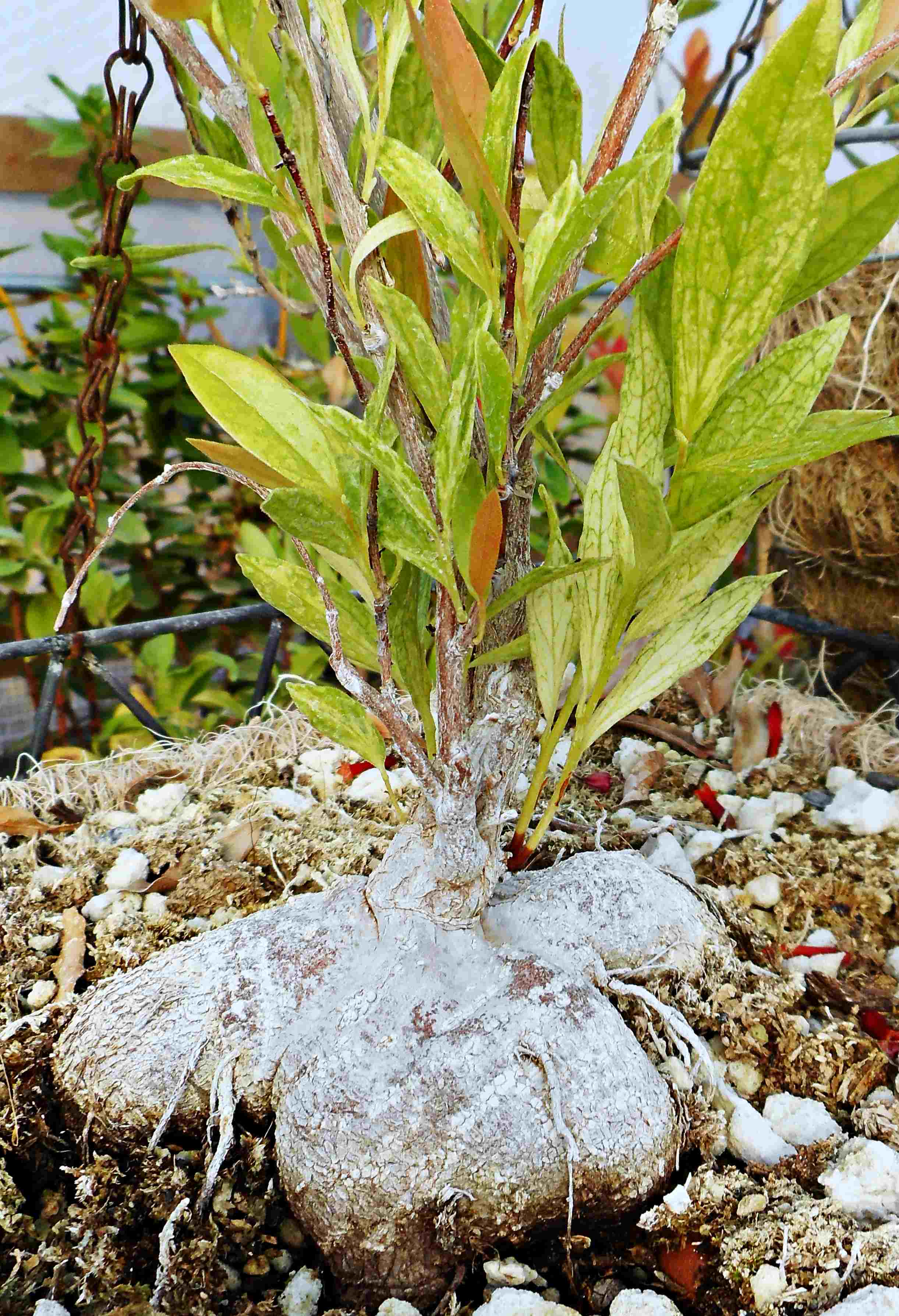 ↑ Macleania insignis f. variegata ↑
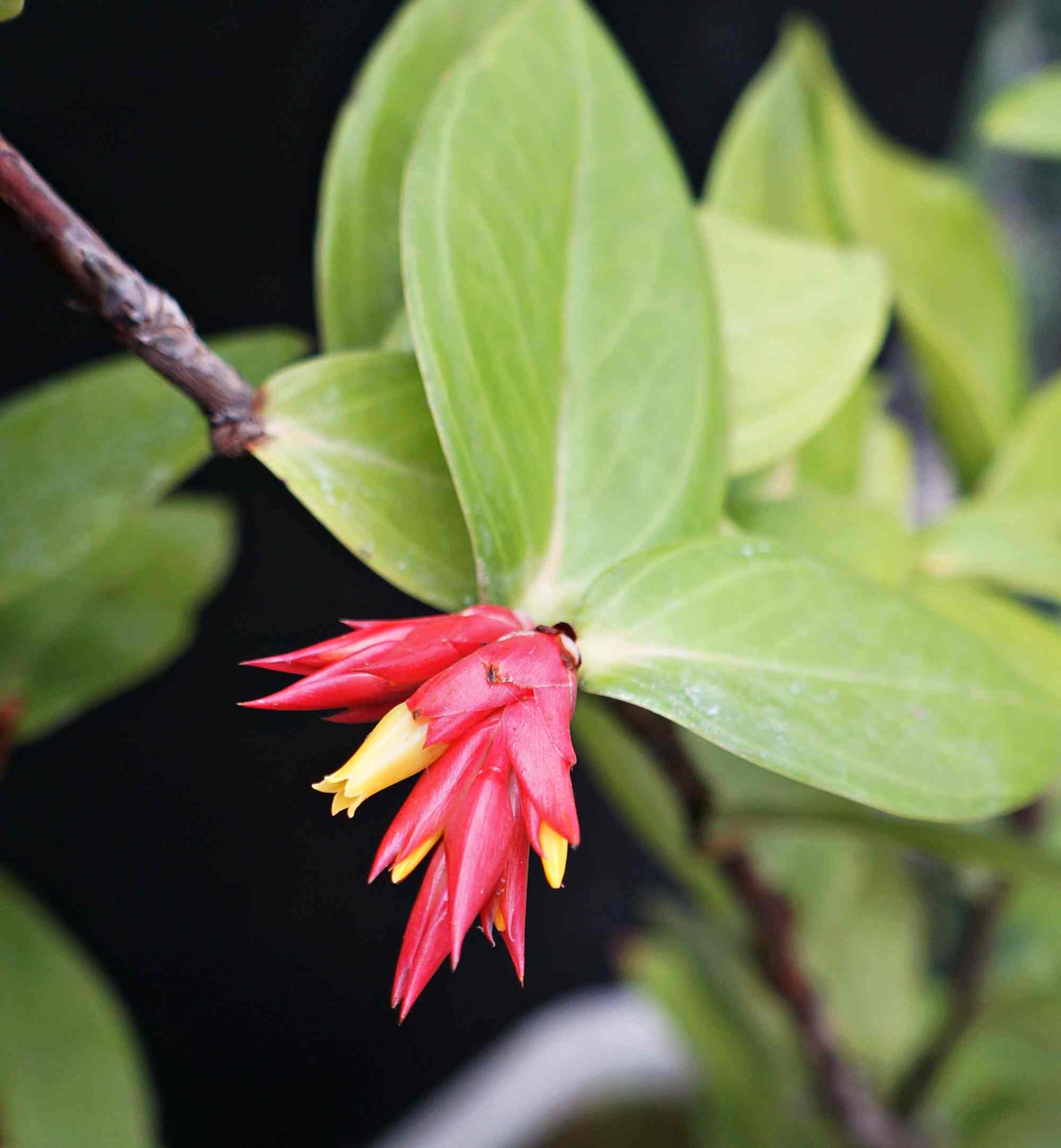 ↑ Cavendishia allenii ↑
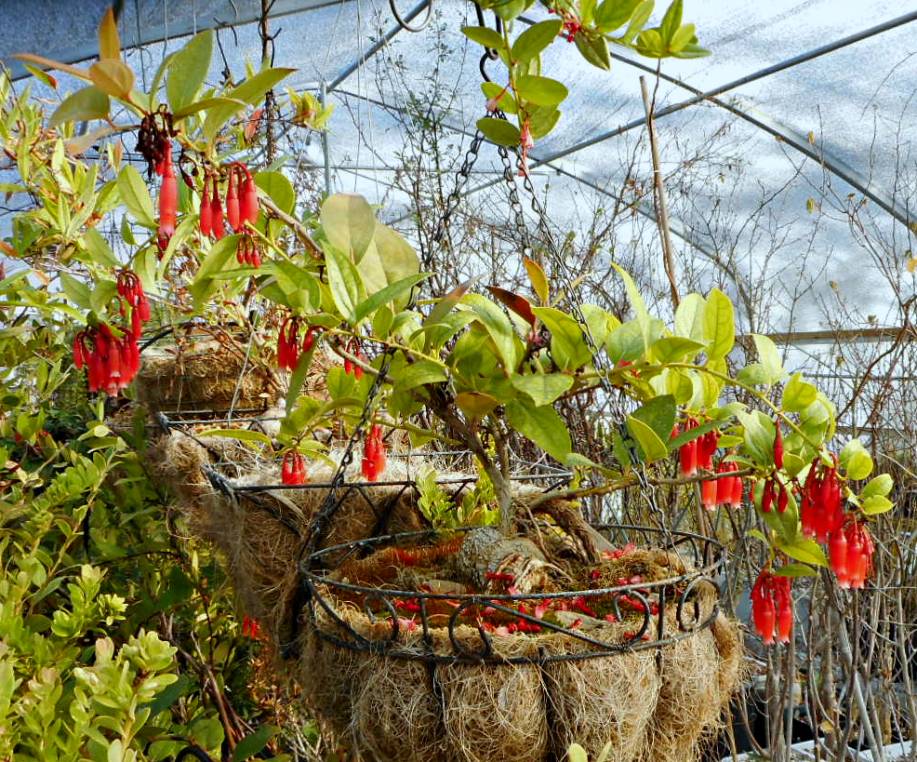 ↑ Macleania aff. insignis DH ↑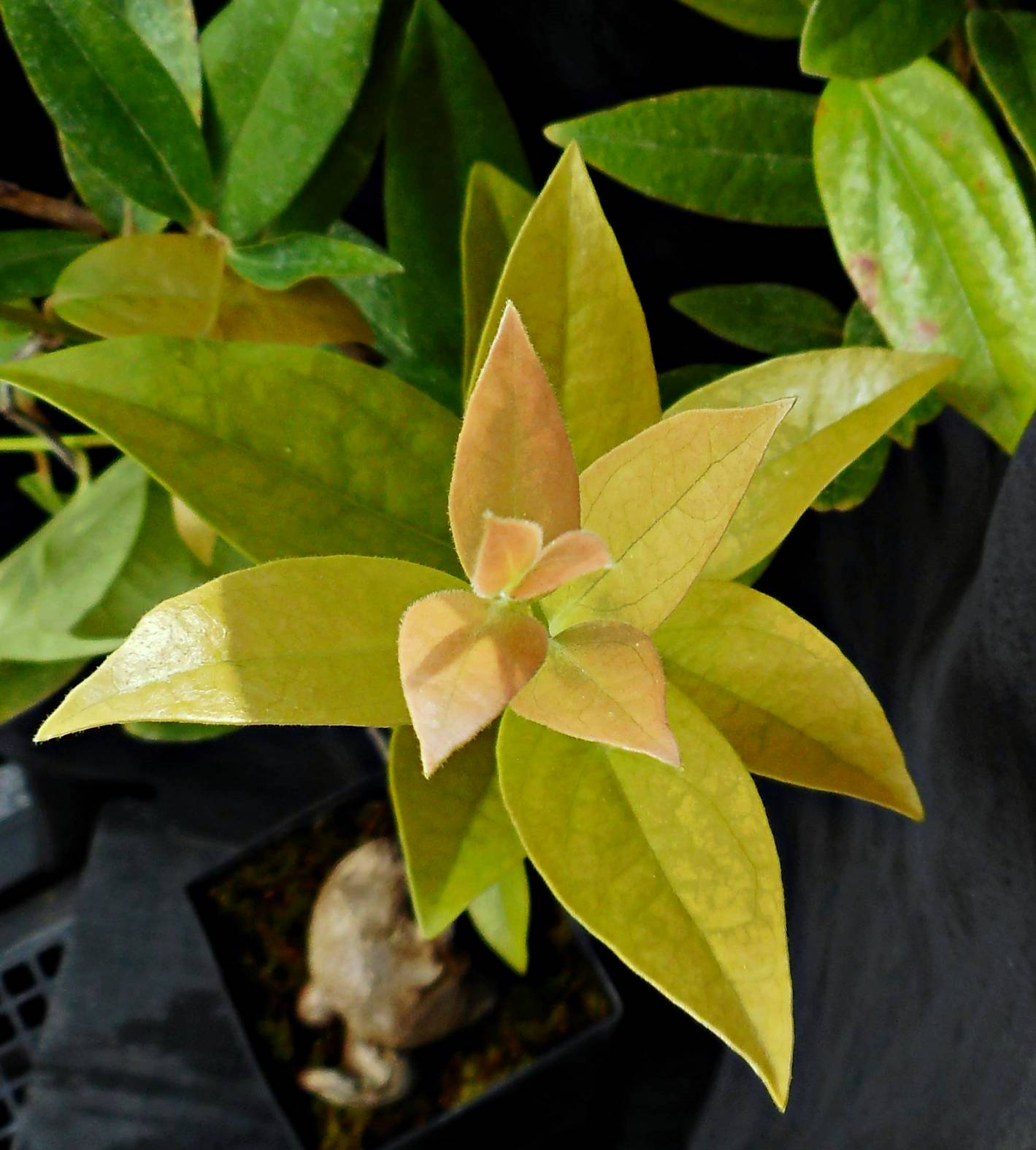
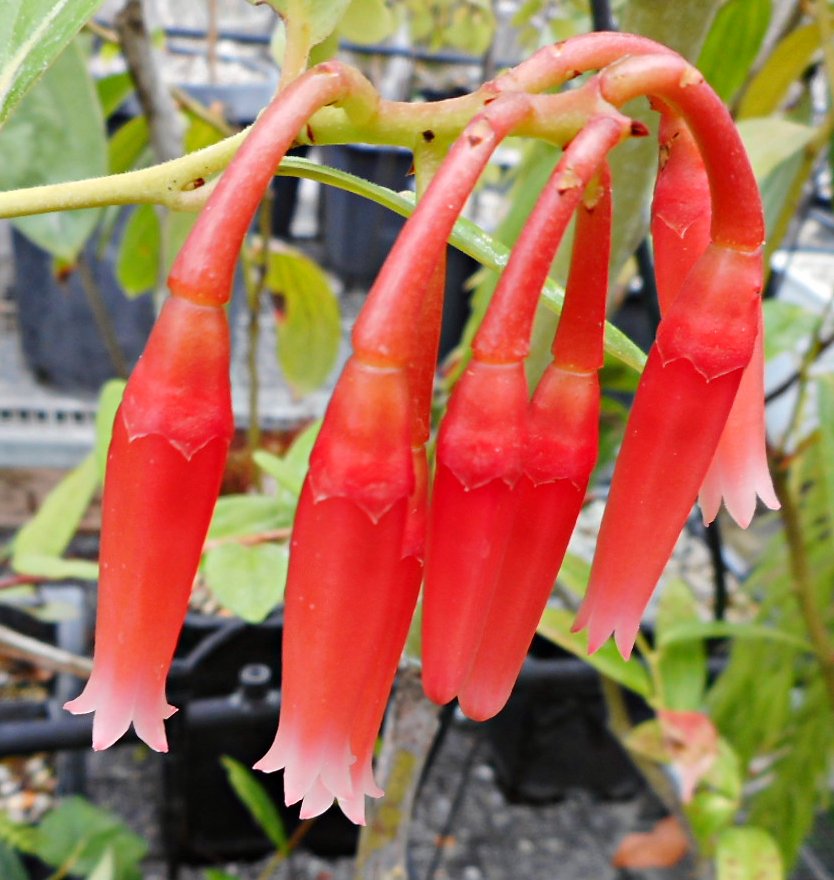
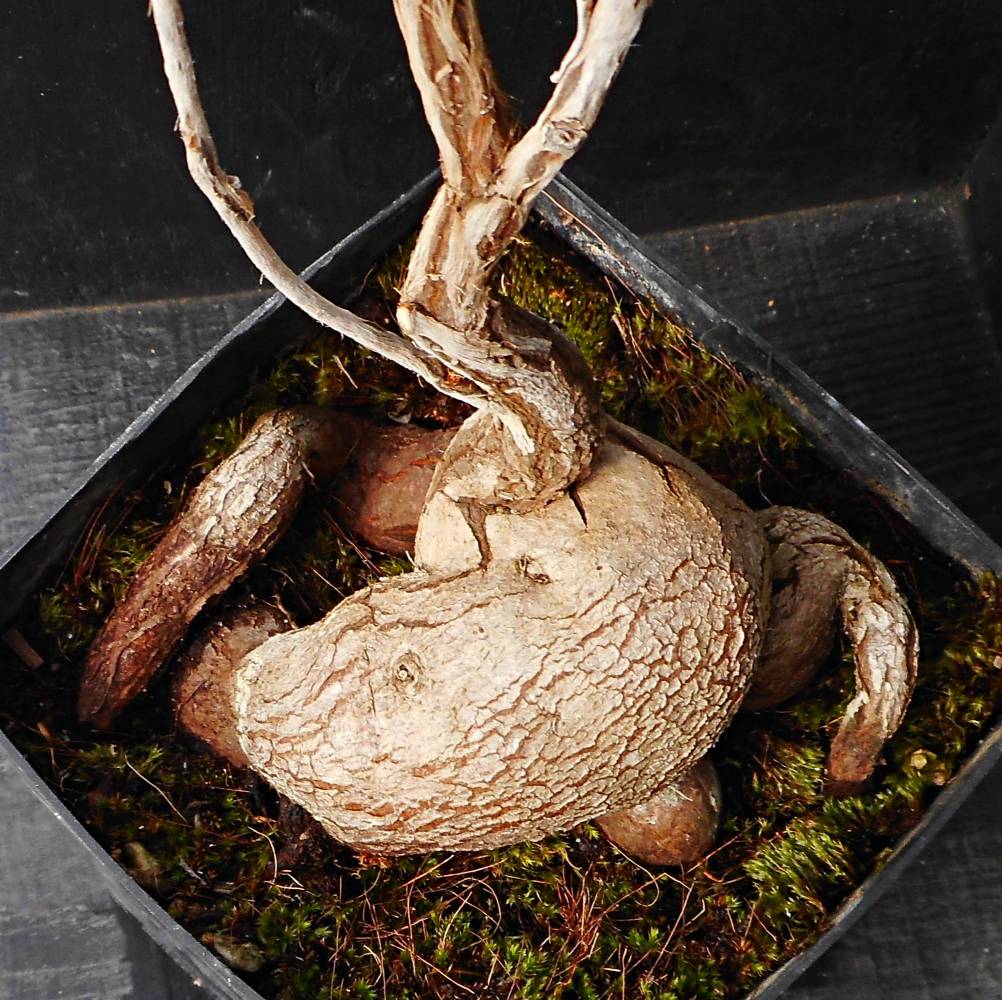 ↑ Foliage, flowers, & caudex of an open pollinated Macleania glabra hybrid ↑
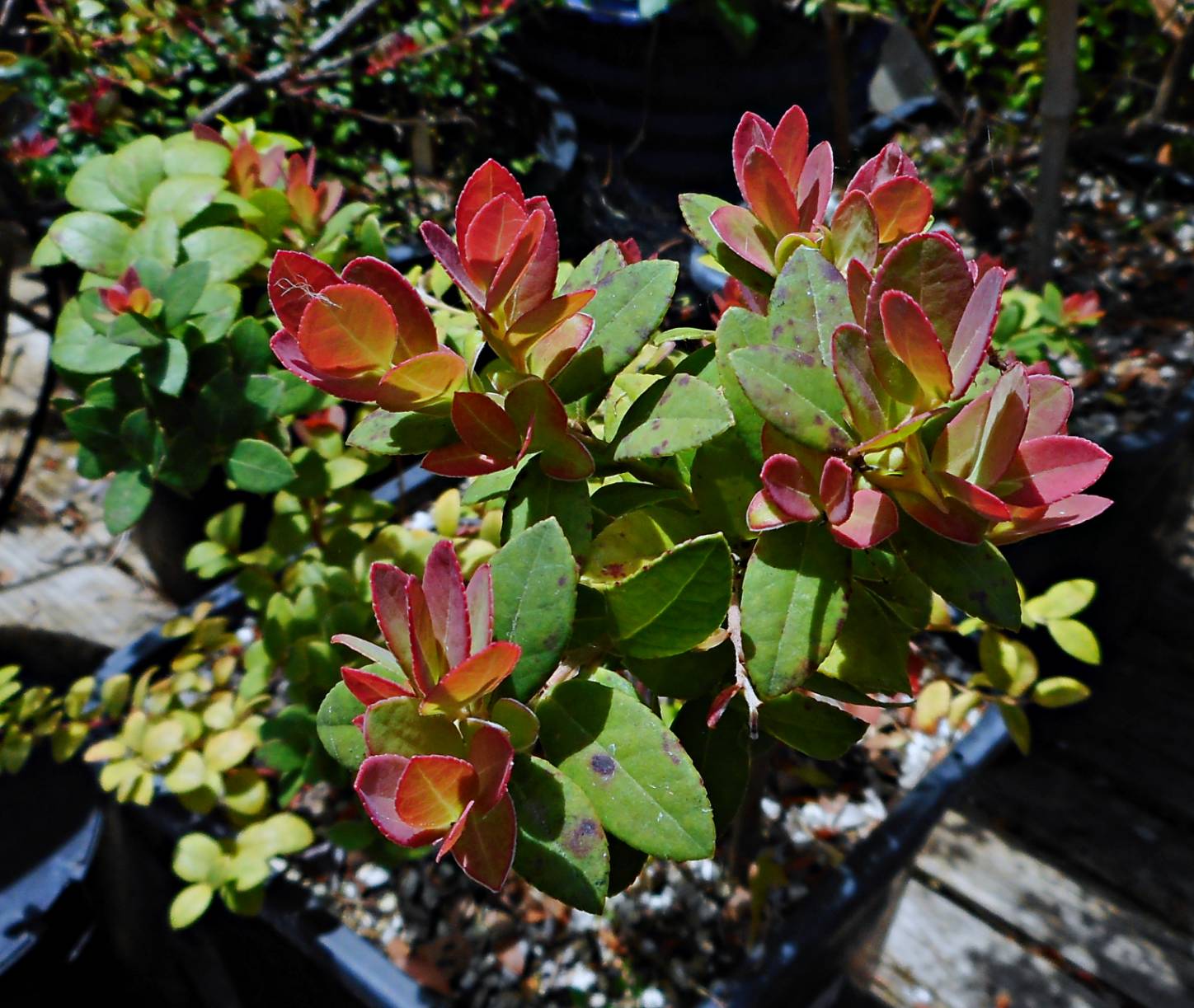 ↑ Vaccinium meridionale new growth ↑
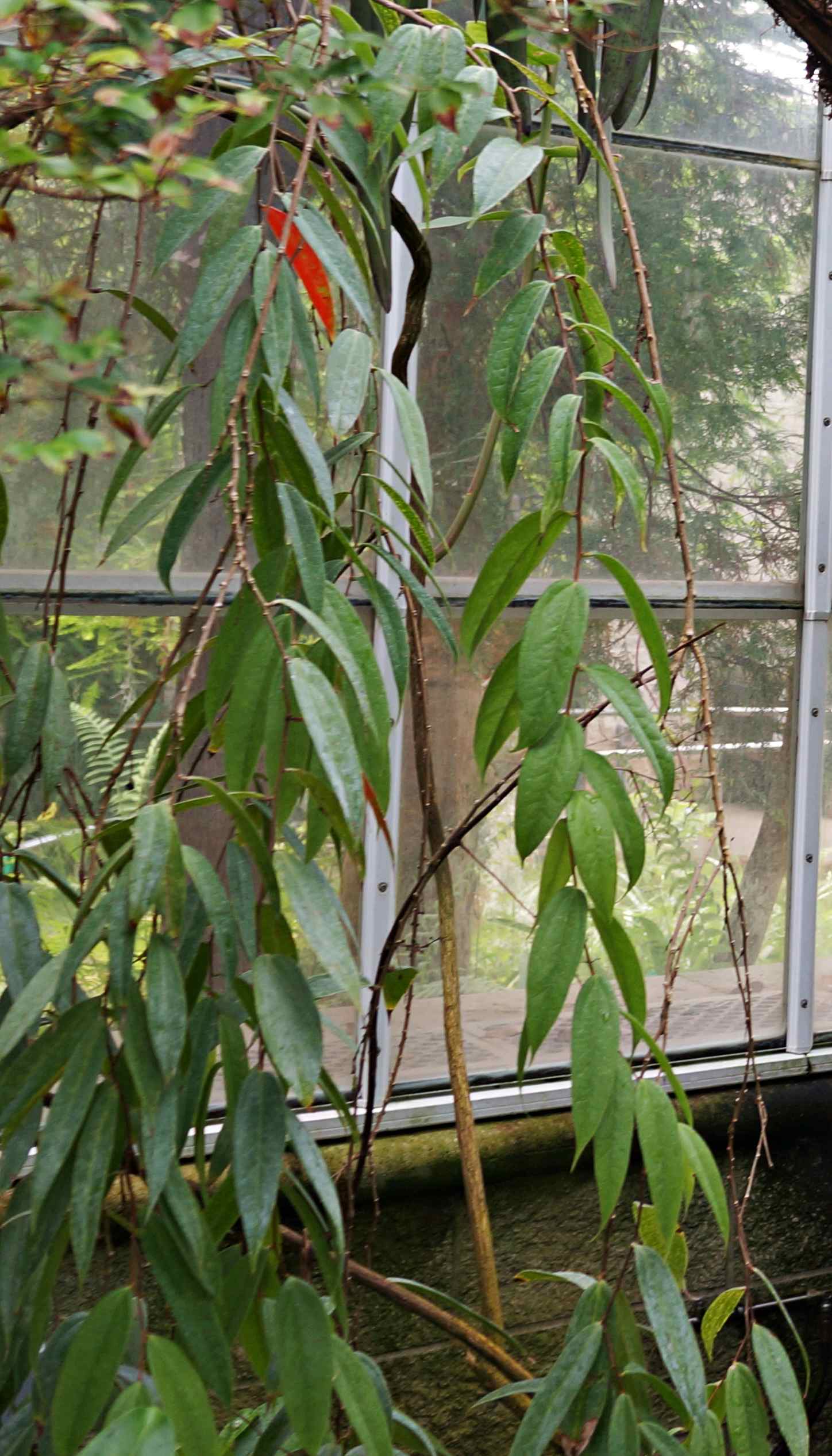 ↑ Satyria panurensis ↑
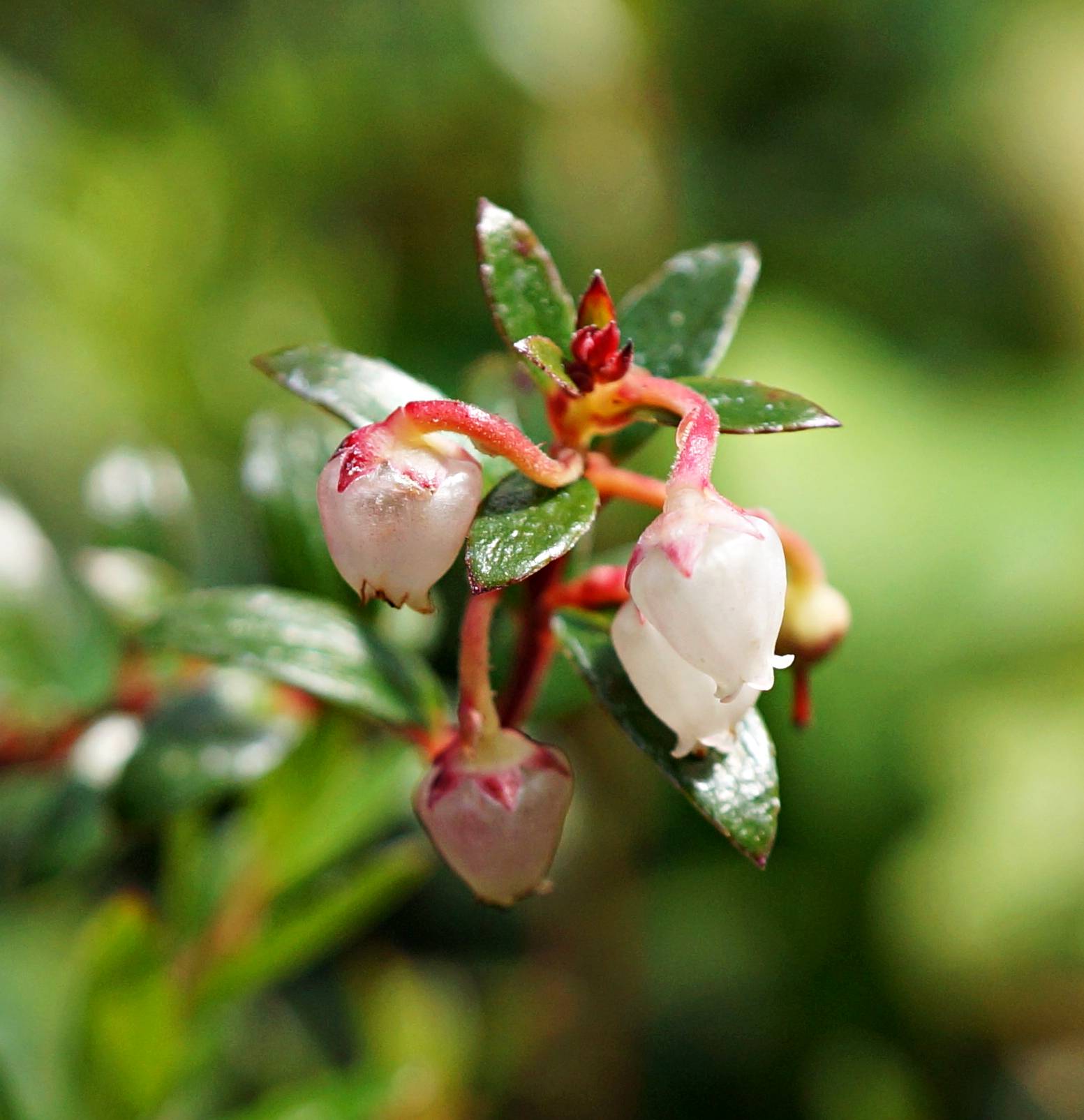 ↑ Pernettya prostrata blossoms ↑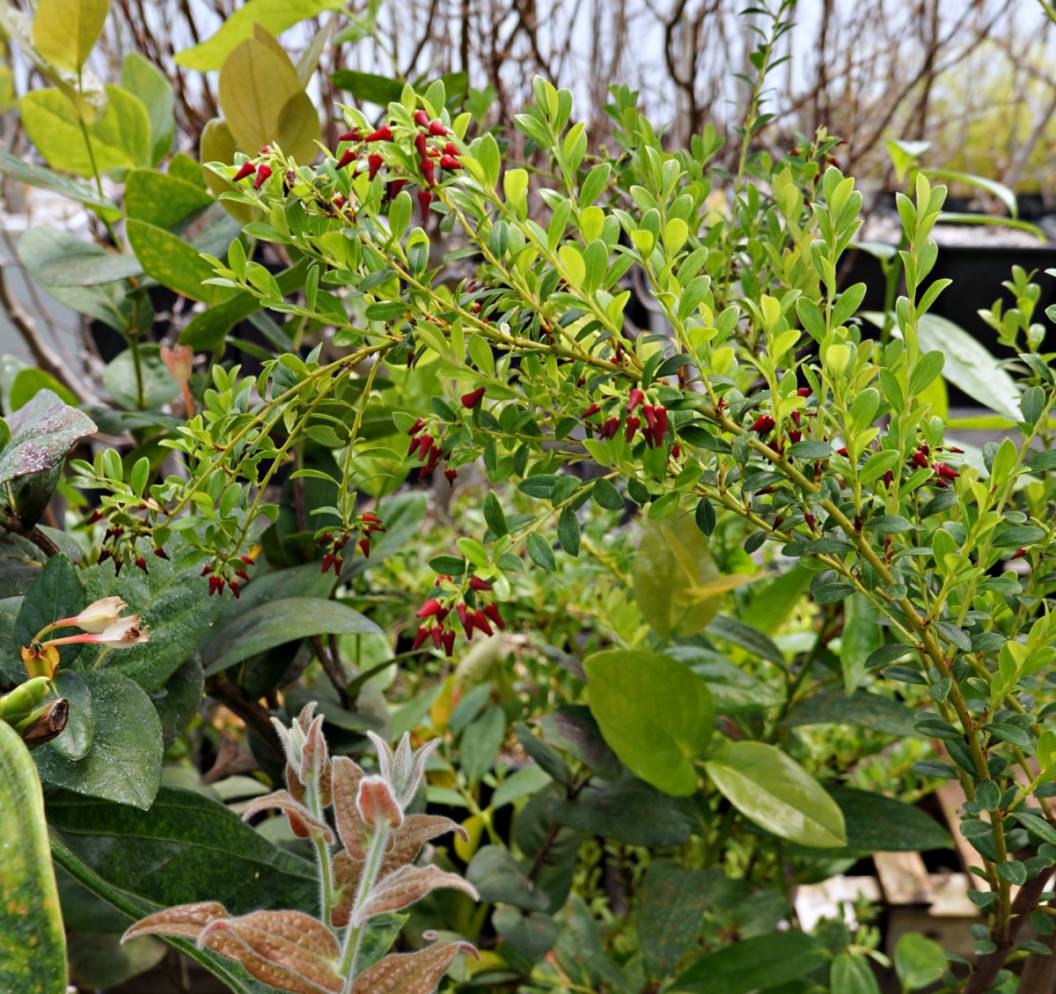
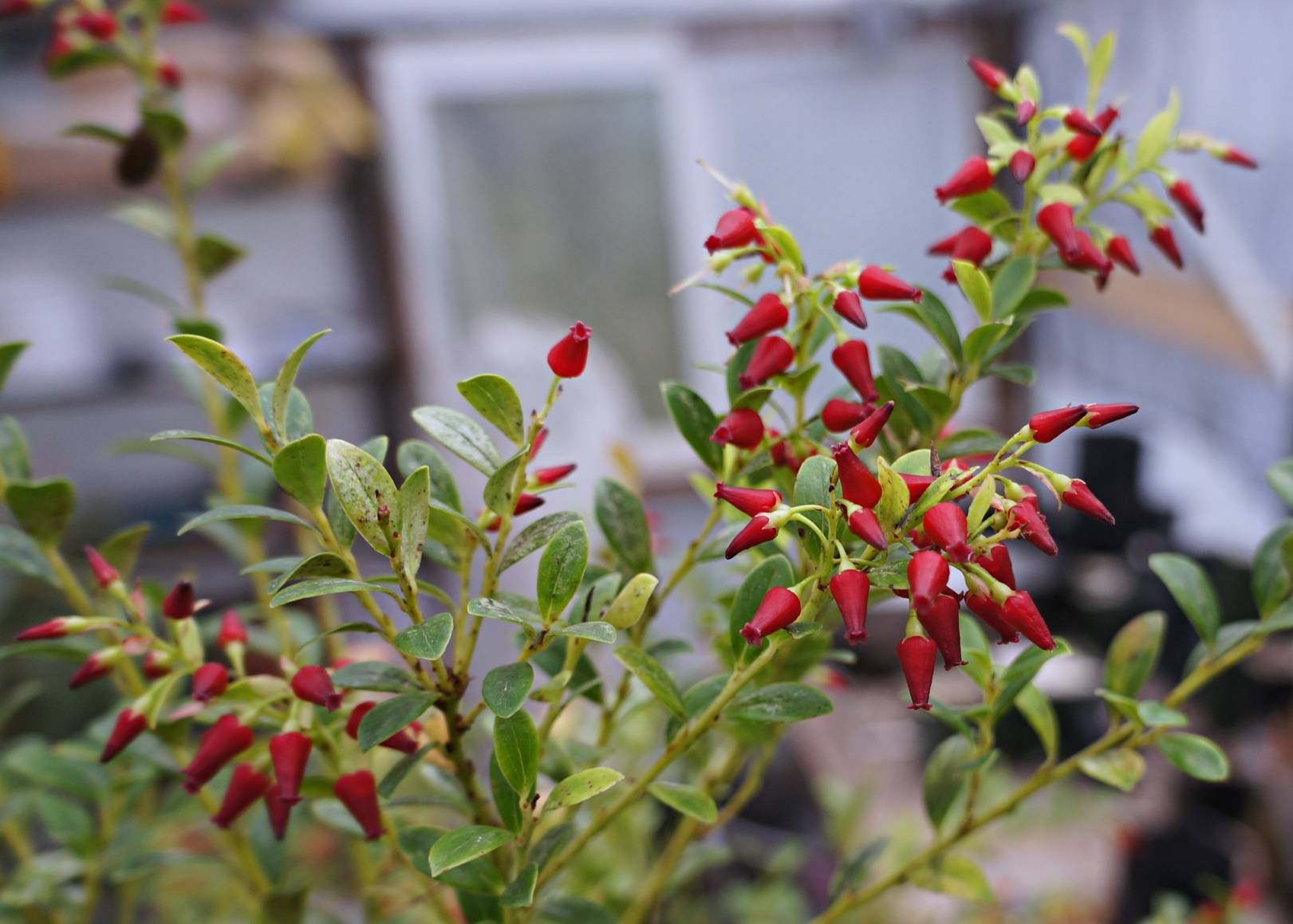 ↑ Vaccinium sp. Panama ↑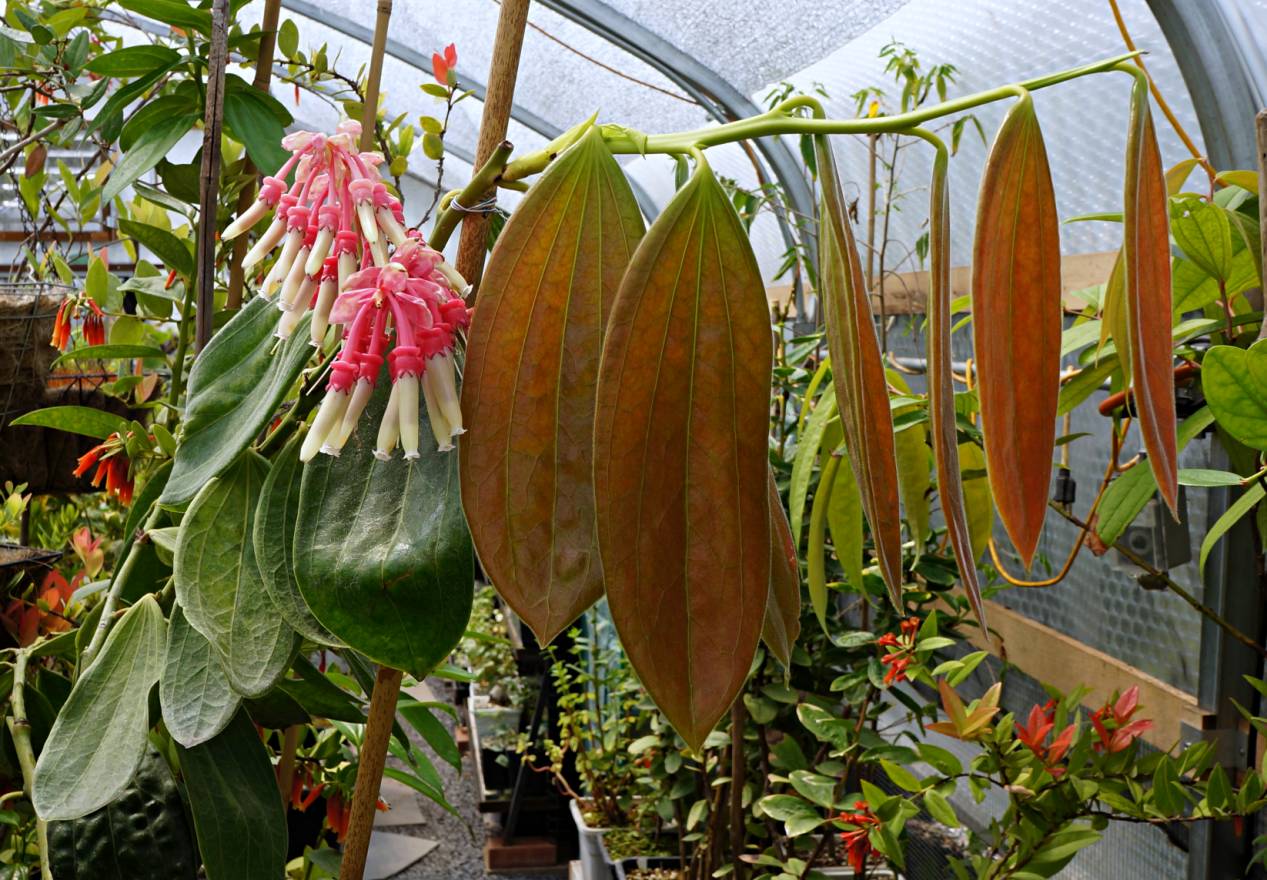
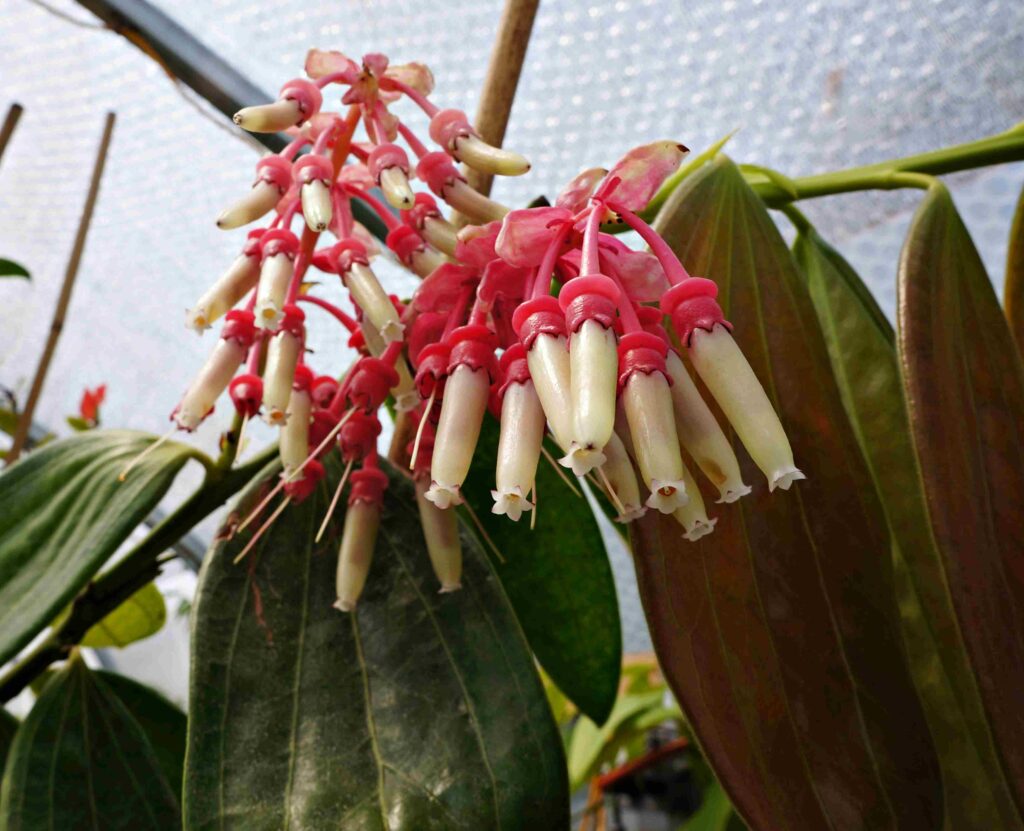 ↑ Cavendishia grandifolia ↑
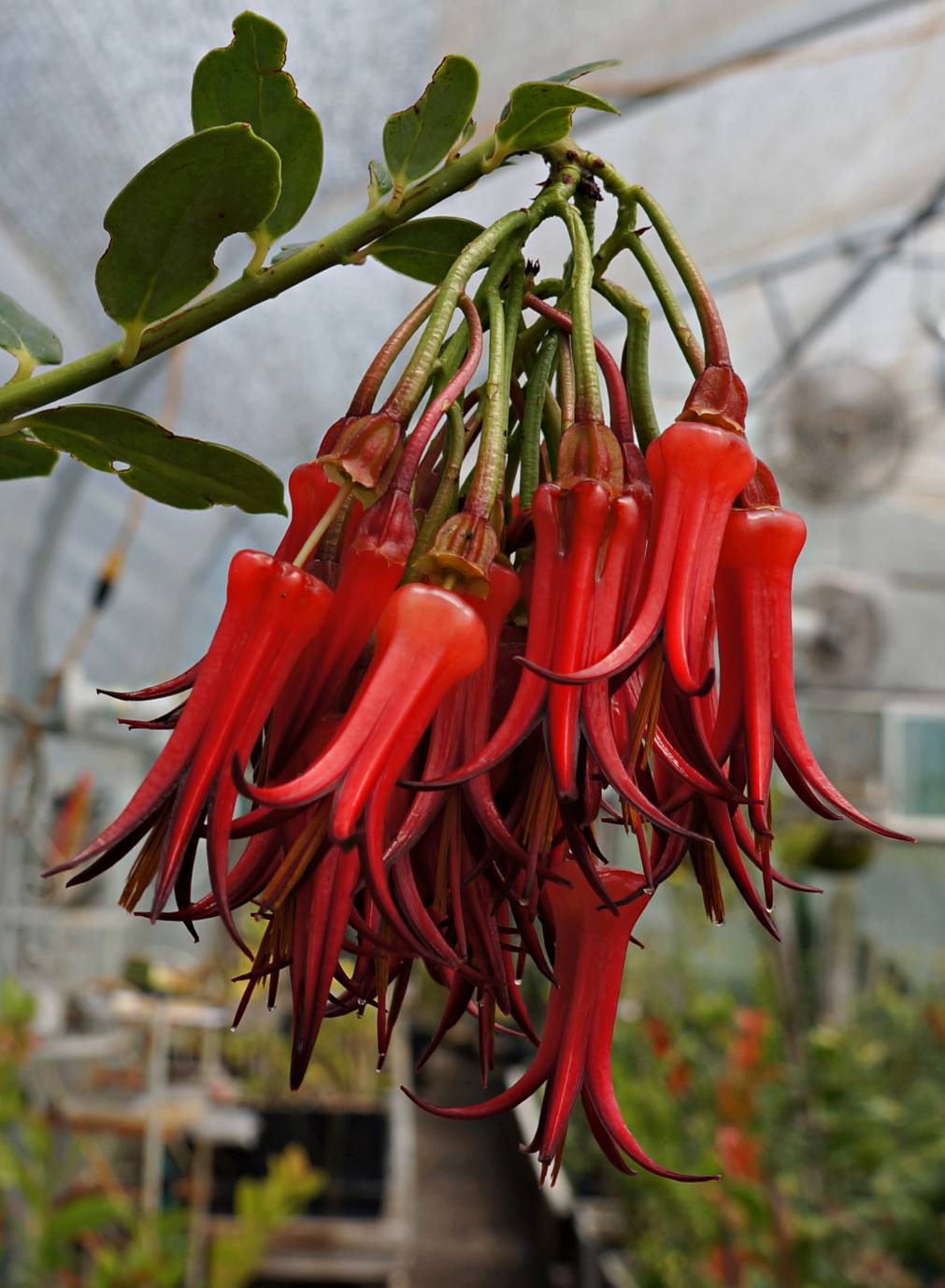 ↑ Ceratostema alata ↑
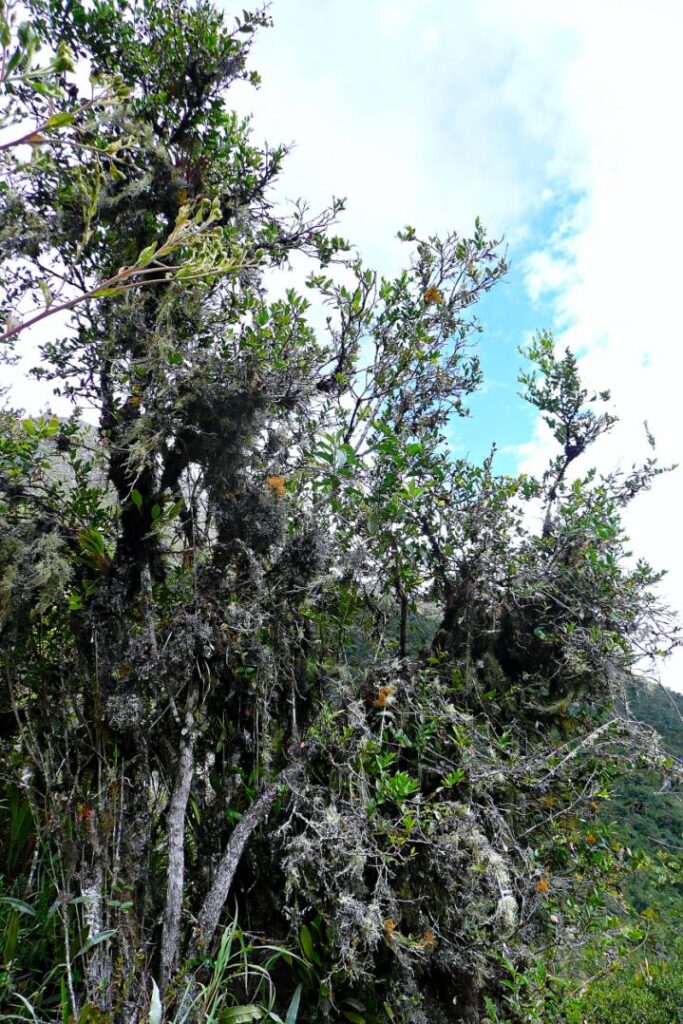 ↑ Cavendishia? sp., Cusco Dept., Peru ↑
 ↑ Ceratostema gualaquizensis v. lacianata ↑
___
♠
 Andean Tuber Crops – Jewels of the Earth
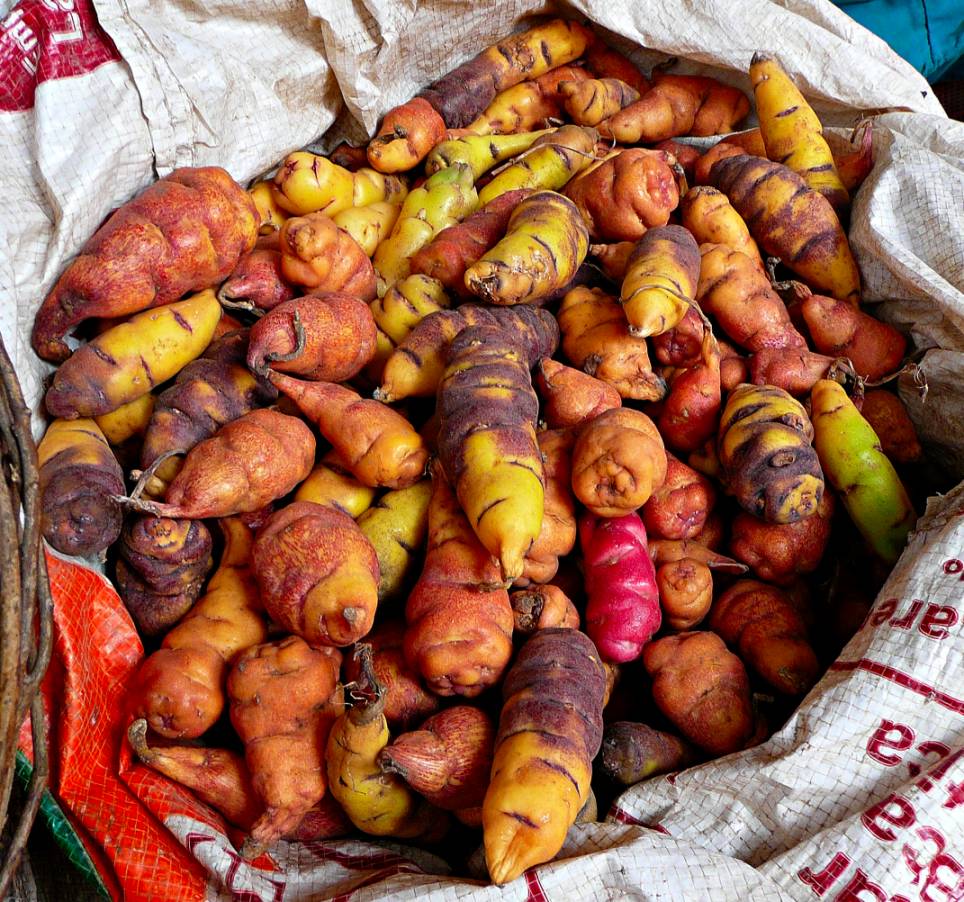
We have long provided one of the foremost public-access collections of Andean tubers in North America.
~
In addition to potatoes, there is a shocking rainbow diversity of brightly colored tubers cultivated in the Andes where they have been a staple of rural communities for millennia. These so-called “lost crops of the Incas” have been largely ignored by the rest of the world. Such “jewels of the earth” deserve to be widely grown. An alarming loss of heirloom cultivars has been observed in recent decades as land is given over to modern crops, such as carrots, that are associated with affluent culture. Climate change is further exacerbating such loss. This makes preservation through integrating these enchanting and delicious tubers into our gardens all the more timely. Most are easily cultivated and can be prepared any way you cook potatoes — baked, steamed, boiled, fried, etc. Studies have shown all of these plants to be nutritious and high in antioxidants.
For Andean tubers see our updated Andean Tuber Crop page.
We have limited seed of a few other Andean Food Crops (kiwicha, kaniwa, quinoa, caigua, tarwi, etc.) listed after the tuber offerings.
 __
__
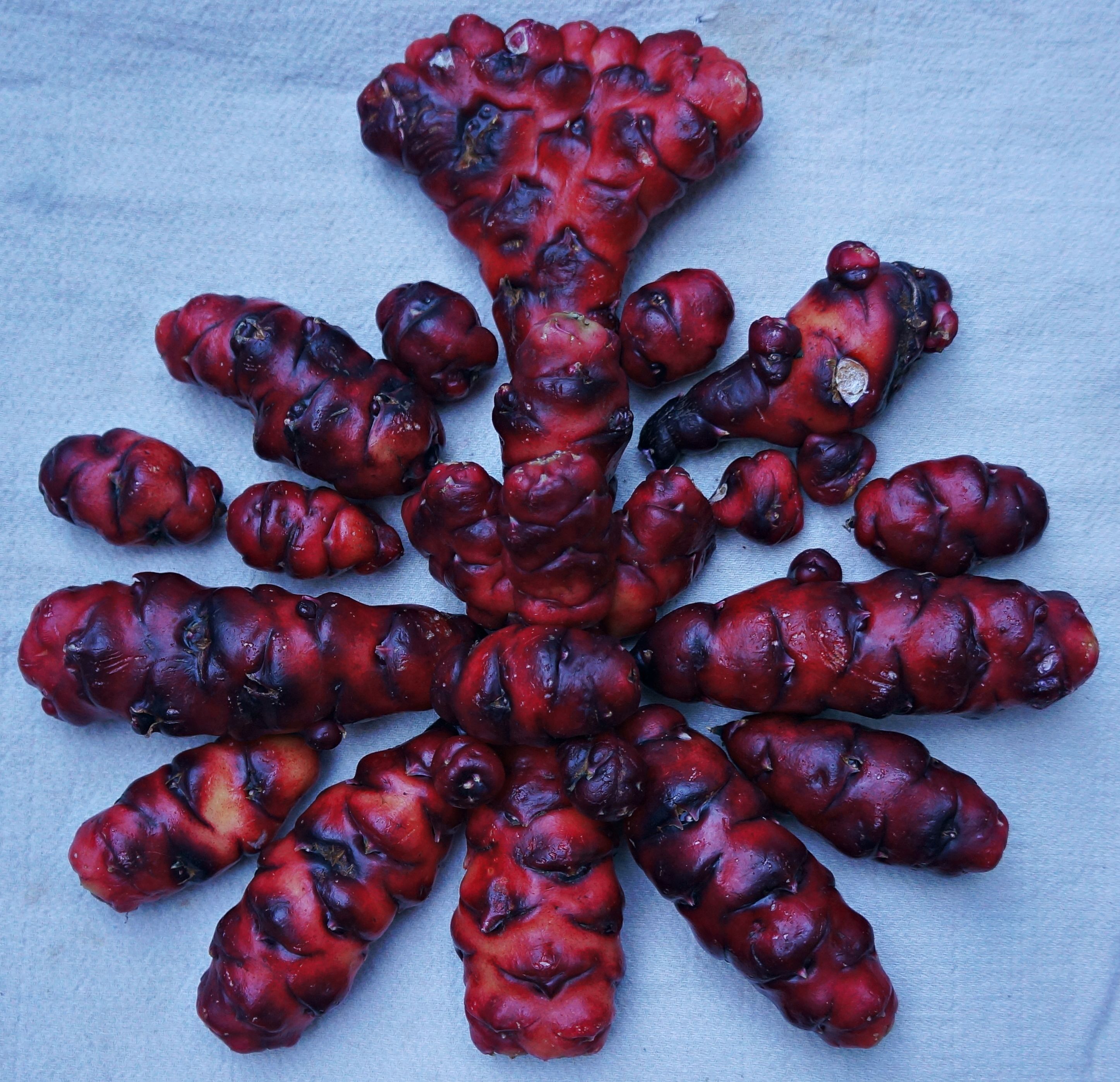
♠
Other Edibles, Medicinals, & Beneficials
Abies pindrow CC6800 “Himalayan Fir”
Pinaceae. Tall, slender, pyramidal evergreen to 200′ in some specimens. Long, spirally arranged, dark green needles. New shoots chartreuse to yellowish. Cylindrical purple cones. Chadwell seed collection, forests of Himachel Pradesh, 8000′. Soft light wood used for building. Prefers high humidity/rainfall. If grown in a container it makes the perfect Solstice tree. We have treelets that have been kept small in tiny pots for years that are very eager for transplanting! Z8a
[ 9 ] → 2 ~ 6–10″+ treelets 9+ years old $17.50 each
___
Acer campbelli CC6648 “Phirphire” “Nepalese Maple”
Aceraceae. An elegant maple tree to 15–40′. Green bark, 5–7 lobed deep-green leaves, new foliage is a bronzy red, which autumn turns yellow to bright red. White pink flowers. Chadwell seed collection from Nepal. Traditionally coppiced for fodder. Lovely landscape tree, sun to part shade. These have remained bonsaid in small pots but will grow to full size when planted out. Z7a
[ 4 ] → 2 ~ 6–12″+ treelets 6+ years old $16.50 each
___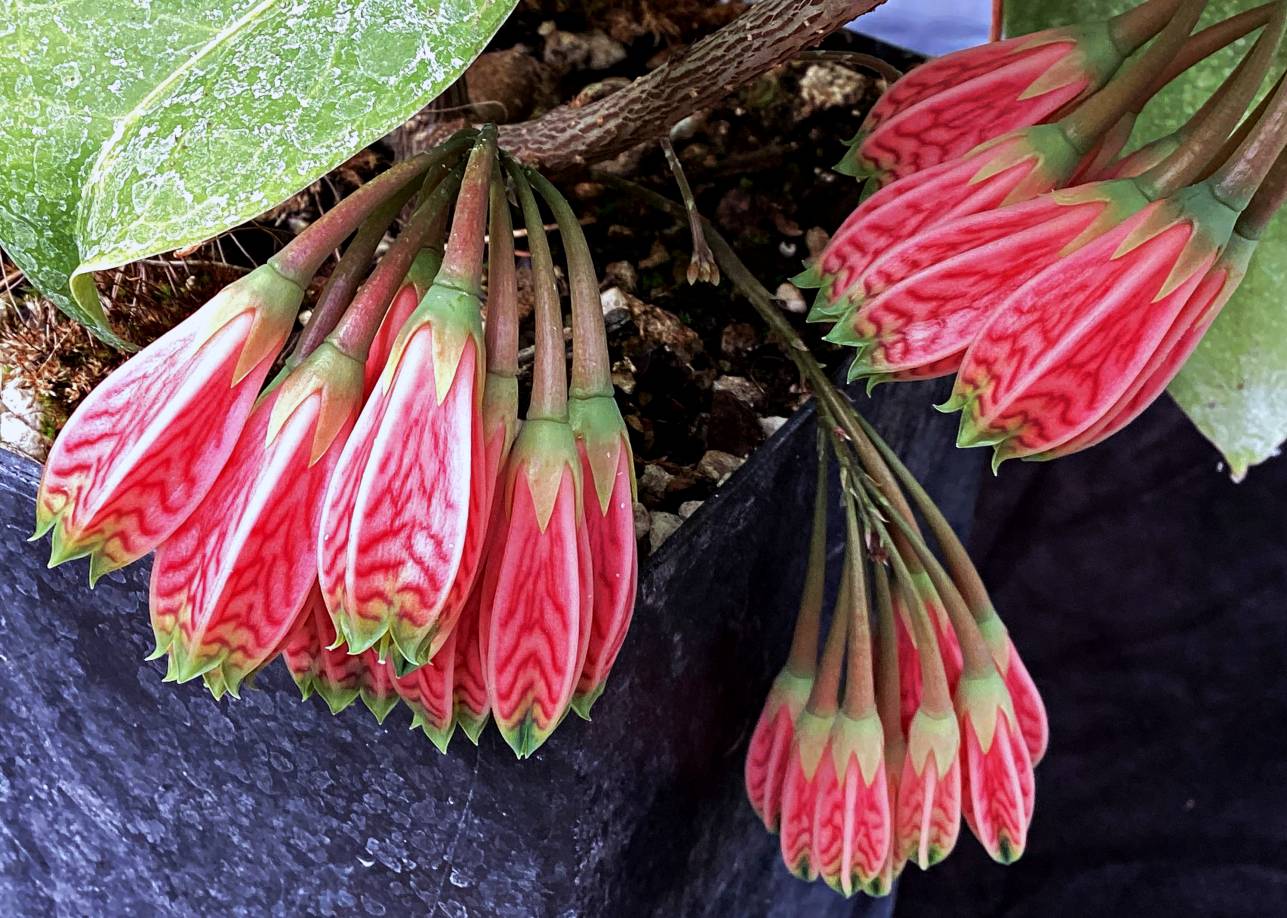 About the genus Agapetes
Ericaceae. Among our favorite plants, Agapetes is a fascinating, floriferous genus of Asian blueberry relatives, largely from the cloudforests of the mid-elevation Himalayas, but dispersed throughout the forests and mountains of South East Asia as well. Evergreen, huckleberry-like, terrestrial or epiphytic shrubs that grow large caudiciform lignotubers up to several feet in diameter. Attractive tubular flowers born en masse along the stems—a hummingbird paradise! Delicious edible berries, produced in great abundance when multiple clones or species are grown. Most Agapetes are rare in cultivation, though quite easy to grow in a well draining acidic soil, with part shade and regular moisture. Treat them like Neotropical Blueberries such as Macleania, with which they share many similarities. While most species prefer consistent moisture to actively grow, we’ve found that once their caudex is developed, many are fairly tolerant of dryness and even adaptable for succulent collectors. All root very easily from cuttings—plant cuts in a pot of perlite or sphagnum with a plastic bag over it for humidity, keep moist and warm to root in 3–8 weeks; caudexes form in 6–18 months. The Agapetes genus has many narrowly distributed, endemic species in need of conservation via propagation. Inquire for additional species.
__
Agapetes ‘Ludgvan’s Cross’ “Himalayan Huckleberry Hybrid”
An awesome hybrid of A. serpens and A. rugosa. Arching branches to 3–5’+ with 2–3″ pointed leaves, eventually forms a fat woody caudex. Pale-pink lantern flowers with deep rose chevron markings are borne in mass along the stems, a sight to see! If pollinated by another Agapetes, this plant produces sweet and chewy, large, edible berries—white to pale purple with darker purple highlights. Cuttings root easily and begin developing a caudex within a year. Does best in part shade with well draining acid soil; as with many epiphytic ‘blueberries’, we use a mix of orchid bark, pumice/perlite and sphagnum or peat. Z8b
[ 6 ] → 2 ~ 7–10″+ unrooted cuttings $19.50 each 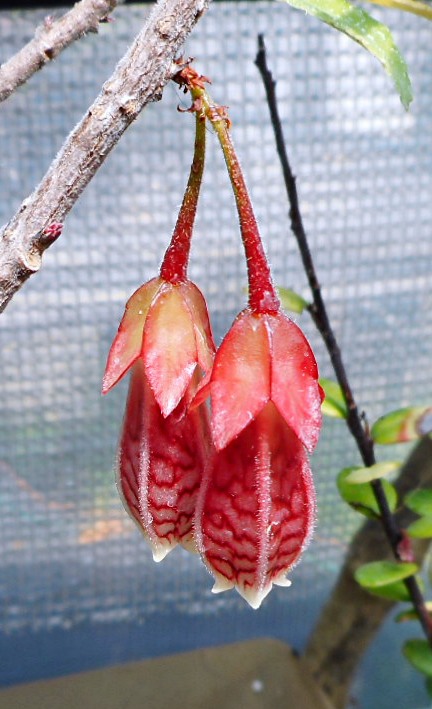
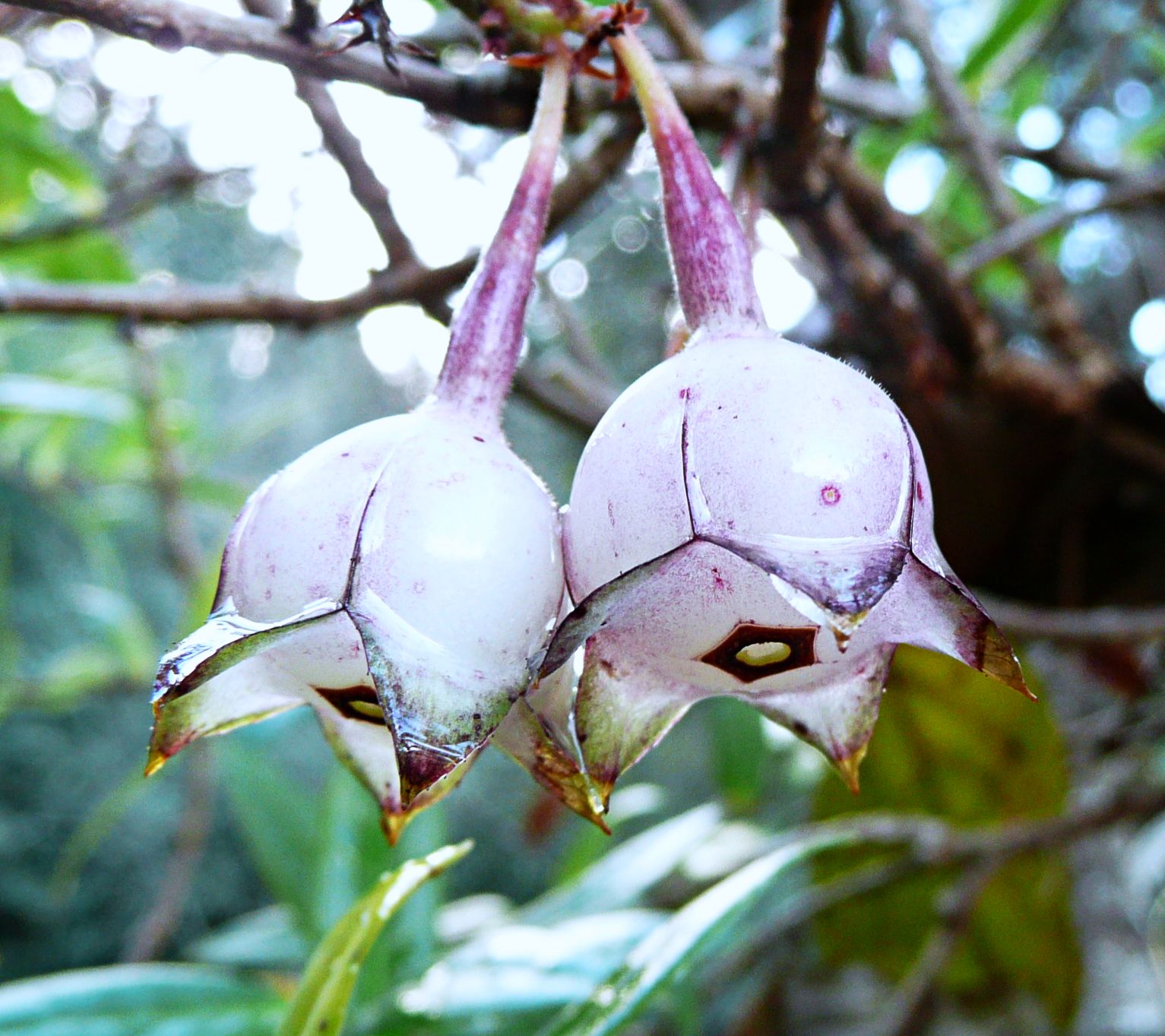
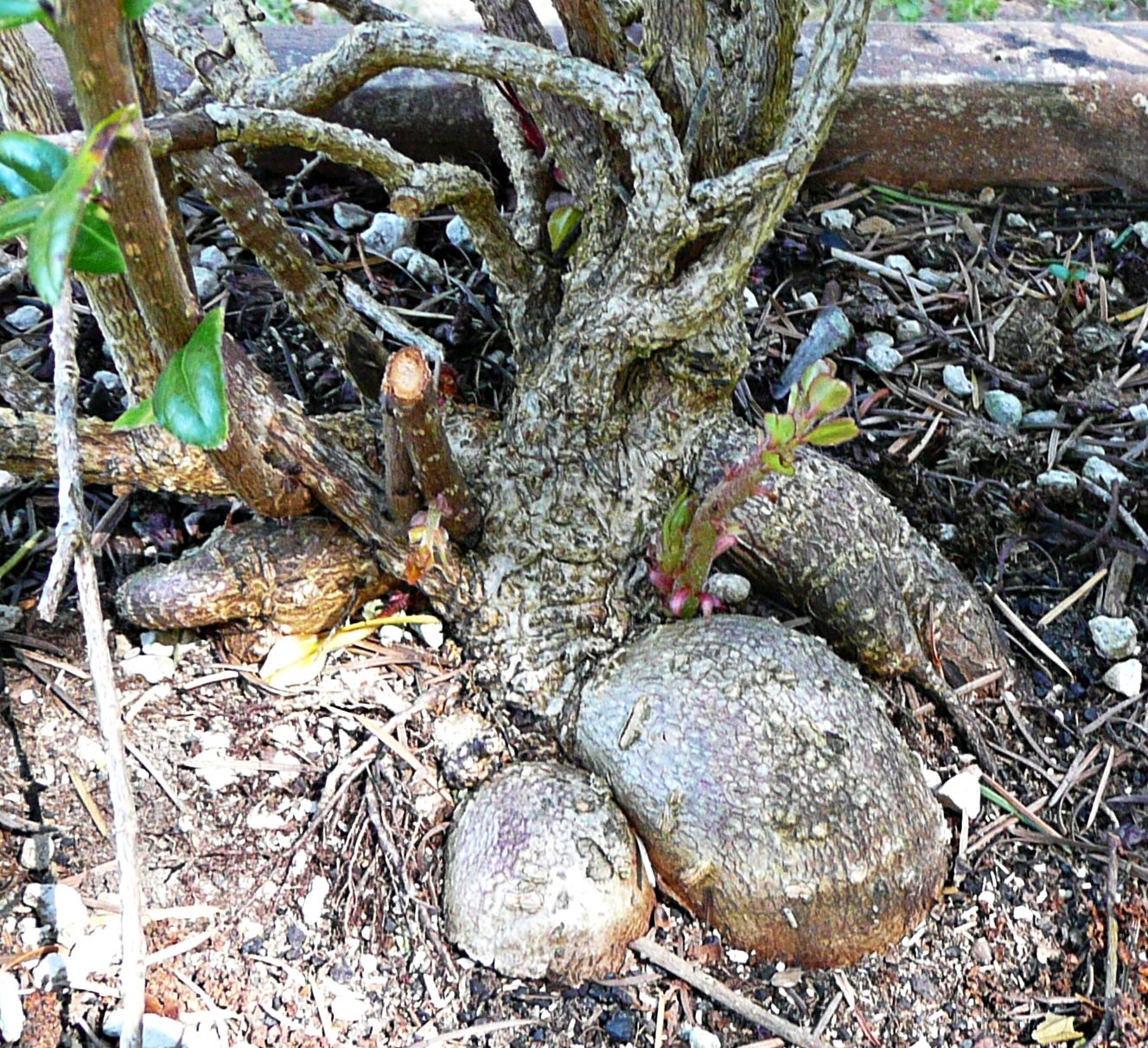
___
Agapetes meiniana (=Paphia meiniana) “Misty Bells” “Oz Huckleberry”
An elegant and floriferous, semi-epiphytic shrub to 3–6’+. Very attractive, glossy green lanceolate leaves; new growth has an lovely pinkish to bronze tinge. Relatively large, waxy, red tubular flowers, sometimes with a a bit of pink near the tips, borne en-masse. Edible purple berries. Rare blueberry cousin native of the high altitudes of North Queensland, Australia. Seldom seen in cultivation. Grow like other Agapetes. Unrooted cuttings. Z9a/b
[ 4 ] → 2 ~ 5–7″ cuttings $26.50 each September SALE! $24 each; or 2 for $42
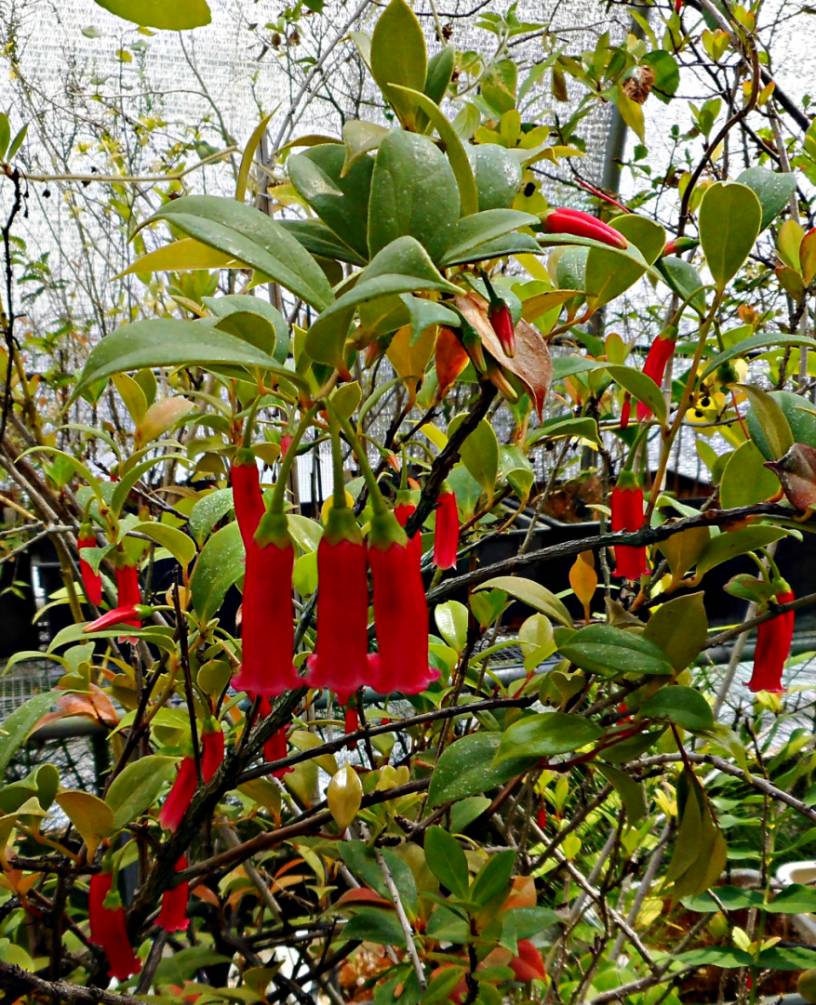
 ___
___
Agapetes oblonga “Yunnan Huckleberry”
Ericaceae. Rare larger species 3–10′ tall. Fuzzy stems, oblong-lanceolate leaves. New growth is lustful pink-red. Develops a large woody caudex to 20″+. Very floriferous with tubular carmine-red flowers borne along the stems. Sweet edible berries, translucent white-pink with tiny hairs. Epiphytic in the evergreen forests of Yunnan, China up to 9000′. We have several clones — we will send cuts from multiple clones when 2 or more are ordered. Cuttings root easily and are relatively quick to develop a caudex. We’re offering larger cuttings here than we ever have before! Z8b/9a?
[ 4 ] → 1 ~ 9–12″ unrooted cutting $29.50
___
Agapetes pyrolifolia “Burmese Huckleberry”
Caudiciform, semi-epiphytic shrub with arching branches to about 2–3′. Rounded lignotuber/caudex to 12″+ diameter. Evergreen obovate leaves. Clusters of awesome blossoms—orangish to creamy-pink tubular flowers with carmine red zig-zag markings and yellow to greenish tips. Edible white berries. A unique, rare species coveted by collectors; native to the evergreen forests of Myanmar, NW Yunnan and Xizang, China up to 9000′. Unrooted cuttings from several clones. Z8b/9a?
[ 6 ] → 2 ~ 5–6″+ unrooted cuttings $24.50 each ♥ New ♥
 ___
___
Agapetes scortechinii (=Paphia scortechinii) “Malaysian Huckleberry”
Semi-epiphyte with arching branches 2–4′ long, rounded shiny leaves with reddish petioles. Clusters of thick, lightly pubescent, rose colored tubular flowers, edible berries. Cloud forests of the Malay Peninsula up to 7000′. Very rare, enigmatic species sometimes included in Paphia, it has also been suggested that it deserves its own genus. It’s been some years since we’ve offered this beauty at all, first offer of unrooted cutting. Z9a/b?
[ 5 ] → 2 ~ 7–10″+ unrooted cuttings $34.50 each September SALE! $32 each; or 2 for $54
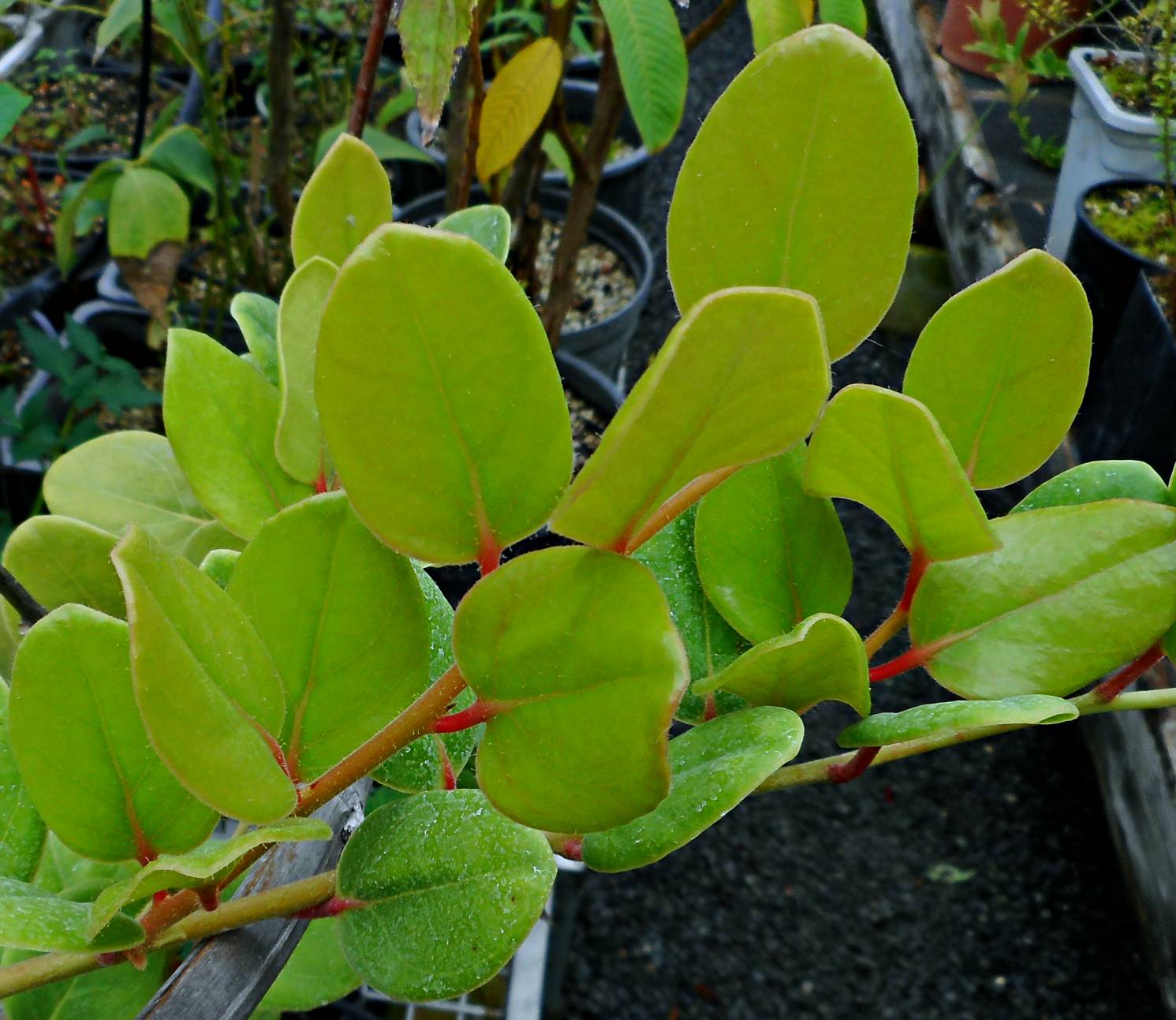
___
Agapetes serpens “Khursani” “Himalayan Lantern Huckleberry”
Semi-epiphytic evergreen shrub to 2–4’+. Graceful arching branches arising from a woody caudex to 18″+. Shocking rose-red lantern-like flowers dangle from the branches, a flamboyant display that appeals equally to hummingbirds and primates. Up to marble size, sweet and juicy lavender colored berries. Native to the Himalayan mid elevation cloud forests, up to about 9,000′. The caudex of some species is edible. Easy and highly rewarding to grow, treat it like a blueberry that wants well draining acid soil; prefers part shade and regular moisture, yet is surprisingly tolerant of sun and dry periods once the caudex develops. Fruits best when cross pollinated with another clone or Agapetes species. Z8b
[ 6 ] → 2 ~ 15-16″+ plants $28.50* each SOLD
[ 8 ] → 4 ~ 7–10″+ unrooted cuttings $18.50 each September SALE! 2 for $33
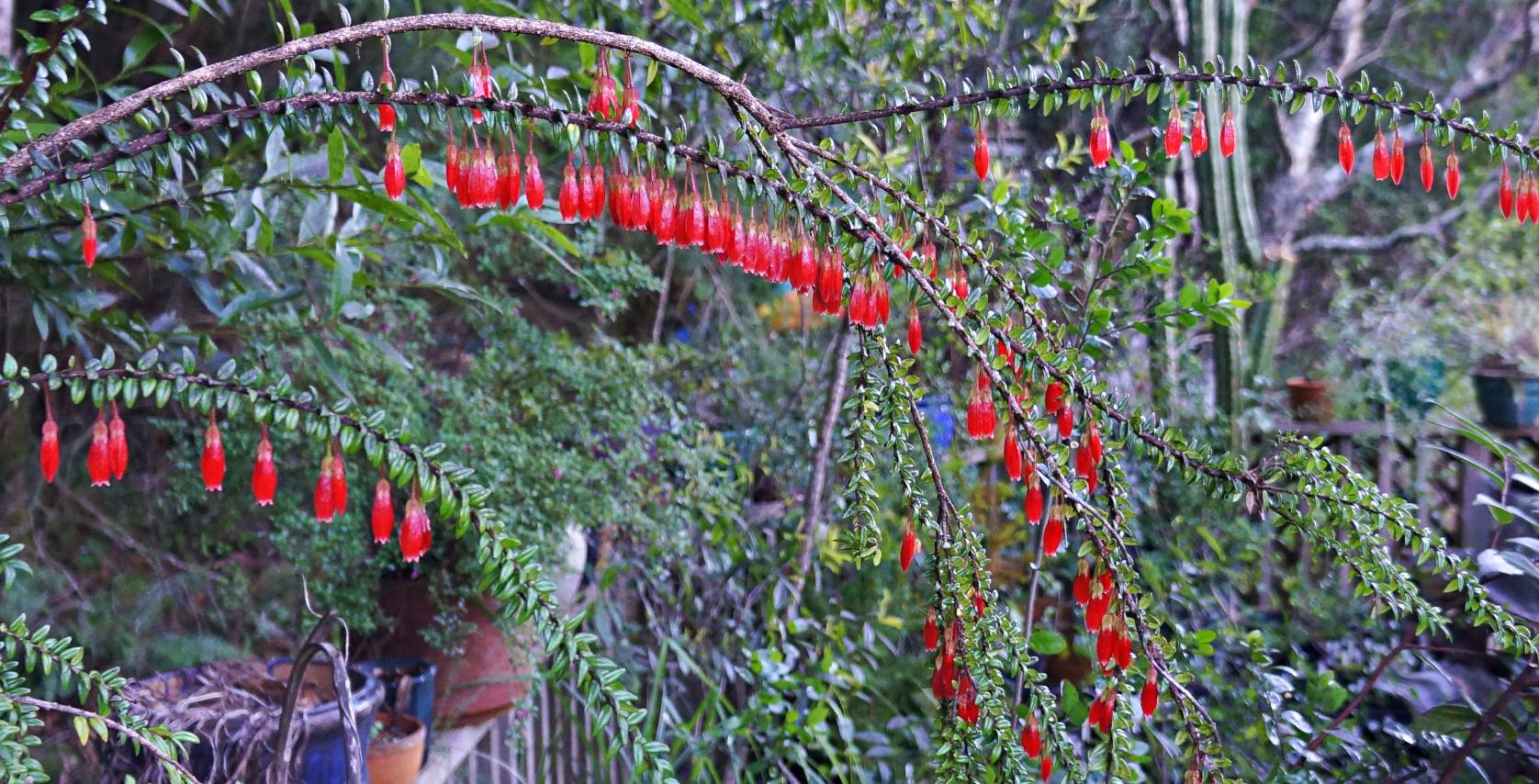
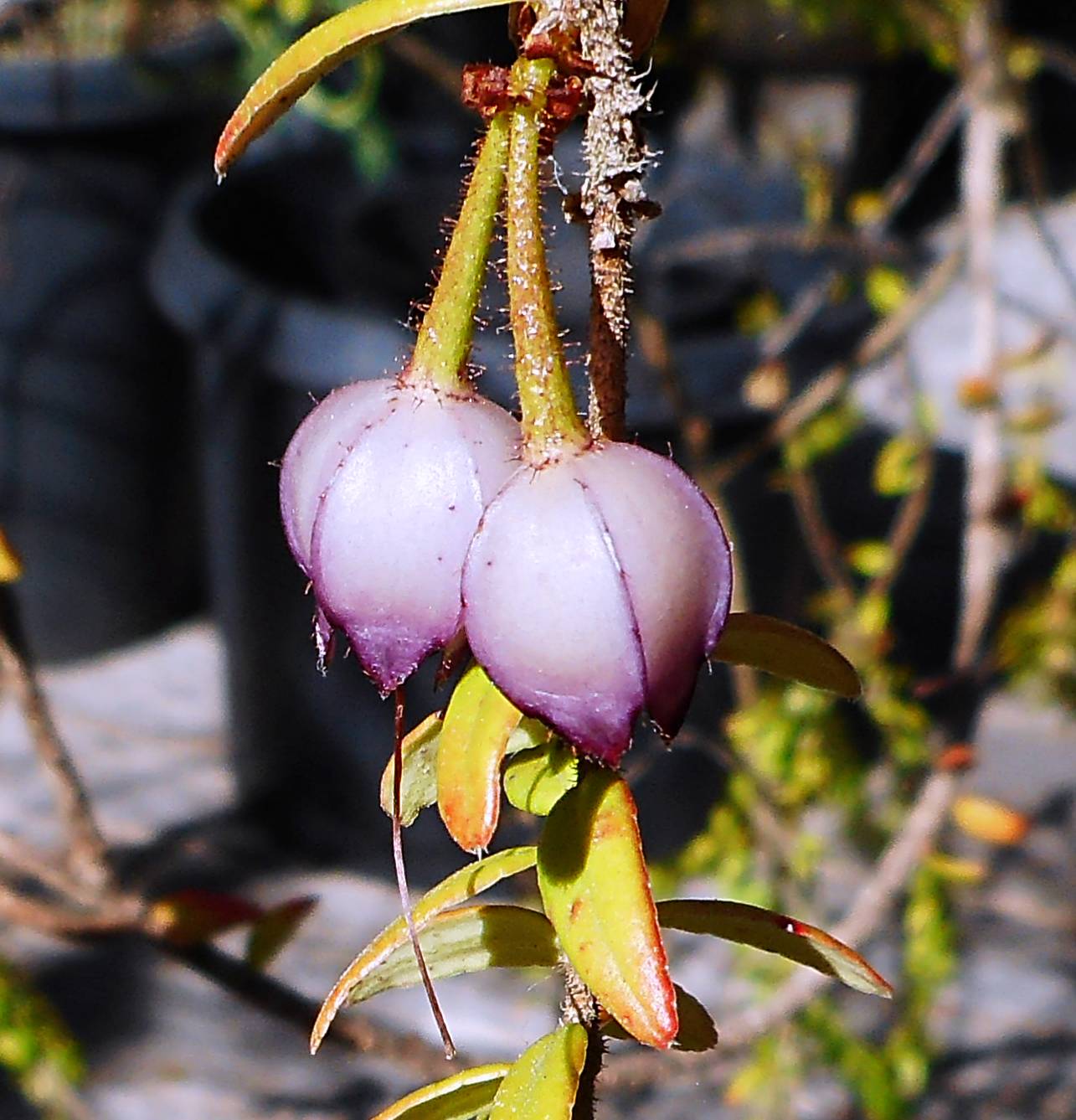
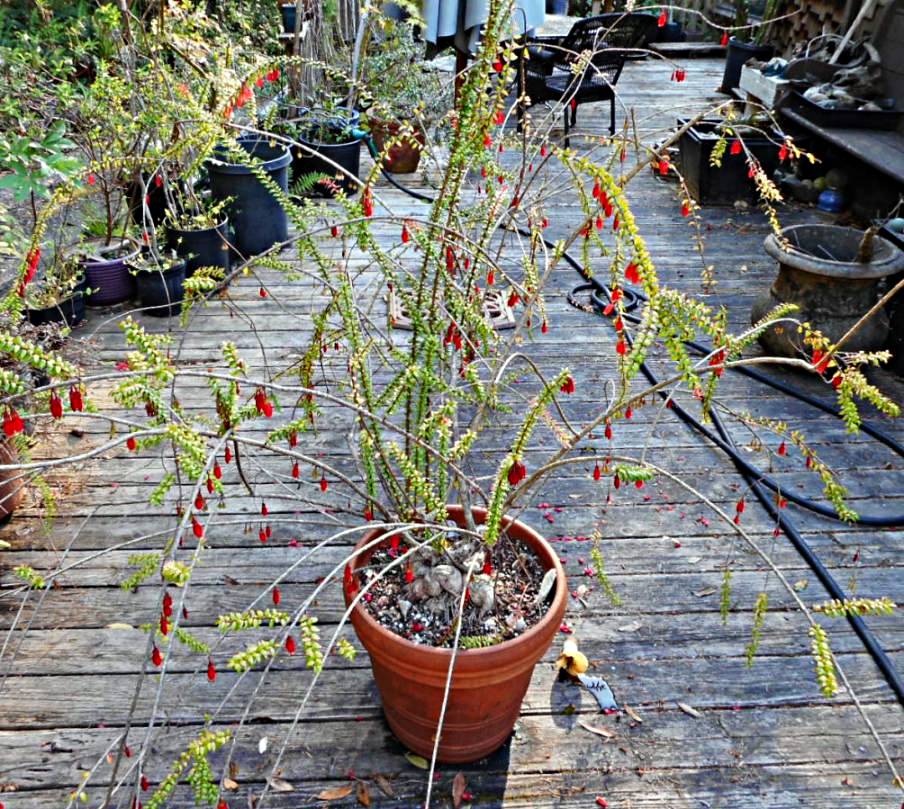
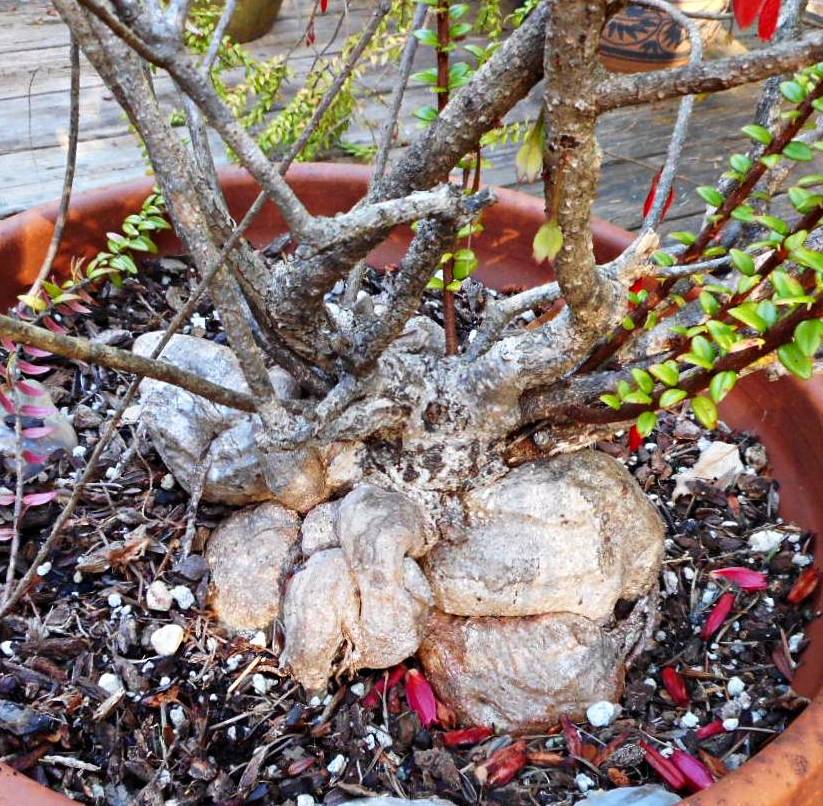
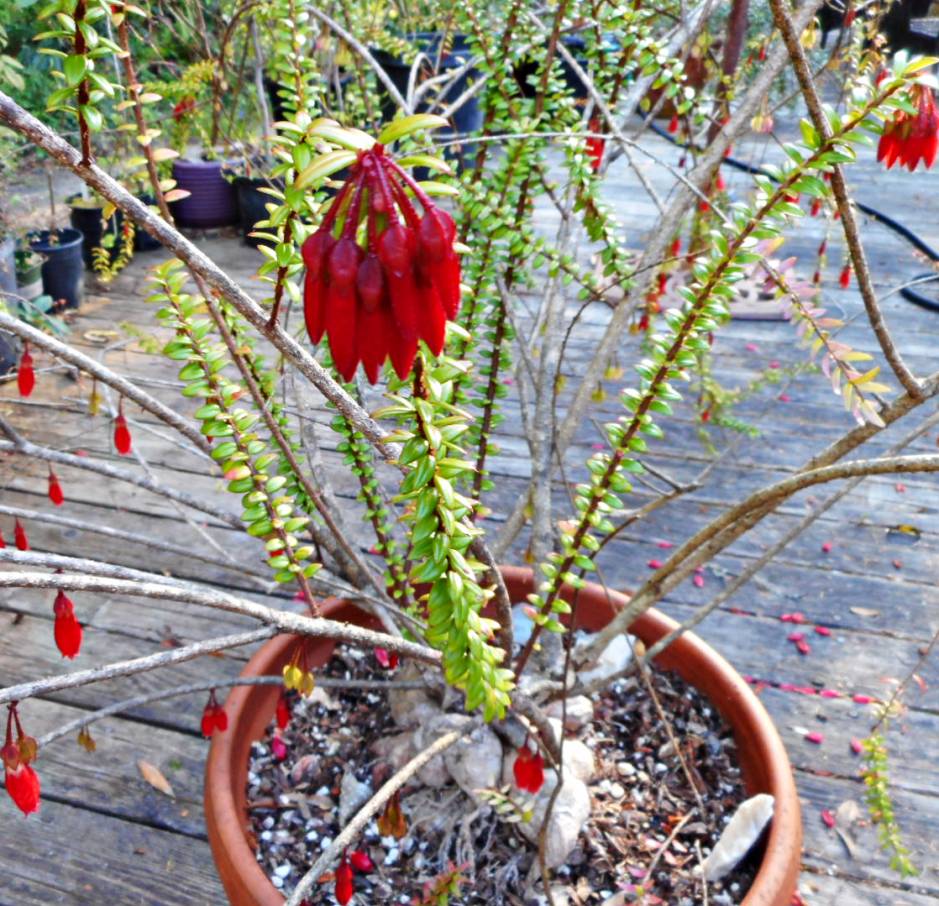 ↑ Mother plant details ↑
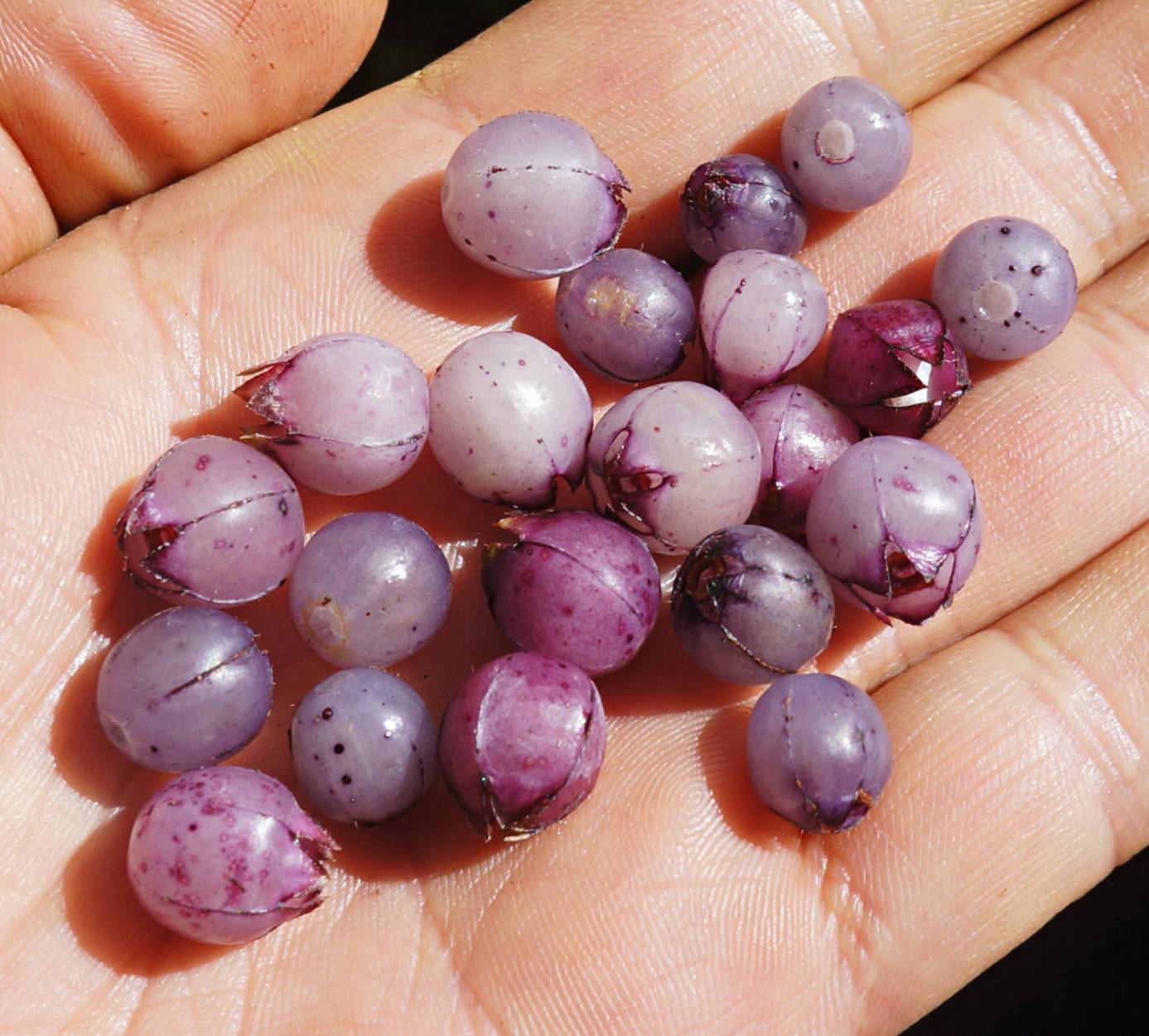 ↑ Delicious Agapetes serpens berries ↑
___
Agapetes serpens ‘Bhutan’ “Himalayan Huckleberry”
A new, large flowered clone of this amazing caudiciform huckleberry. Semi-epiphytic evergreen shrub to 5’+, highly floriferous—a banquet for hummingbirds. Has long and graceful arching branches arising from a globular woody caudex. Compared to the other A. serpens we grow, the leaves of this clone are a bit more densely arranged on the stem, the flowers a deeper red, notably larger and with pronounced recurved tips. In fact, these unique flowers are the biggest of any A. serpens we’ve seen. Purple edible berries, deliciously juicy and delightfully chewy. Originally grown from seed wildcrafted in the cloudforests of Bhutan. Quite easy to care for, prefers part shade, well draining acid soil and regular moisture, yet is surprisingly tolerant of sun and dry periods once the caudex develops. Fruits best when cross pollinated with a separate clone or species. This is the first time we’ve offered this sumptuous clone outside of auction. Z8b?
[ 2 ] → 1 ~ 6–10″+ branched plant $49.50 SOLD
[ 4 ] → 2 ~ 6–9″+ unrooted cuttings $36.50 each ♥ New ♥
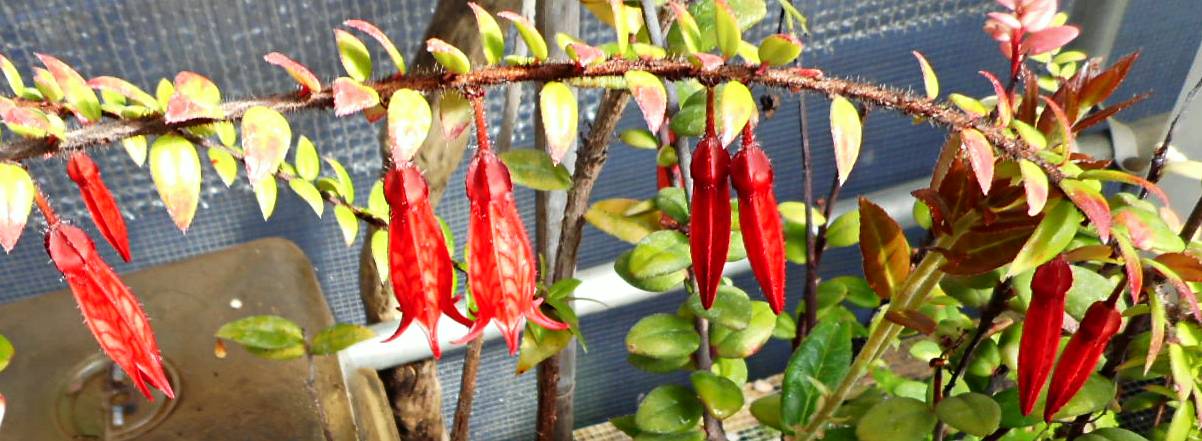 ↑ Unique flowers of Agapetes serpens ‘Bhutan’ ↑
 ↑ Diverse flowers of Agapetes serpens clones, L to R: common clone, Ruby, SS16B, SS16A, Bhutan ↑
___
Agapetes smithiana v. major “Yellow Flowered Himalayan Huckleberry”
An attractive caudiciform shrub that forms distinct lumpy lignotubers and has long arching branches with rounded leaves. Dark yellow tubular flowers hang from the stems in clusters, drawing hummingbirds in from far and wide. Edible berries. A beautiful endangered native of the mid elevation cloud forests of the western Himalaya where it occurs primarily as an epiphyte. Well draining acidic soil, part shade. A good pollinator for other Agapetes species. We have a few large, unrooted cuttings to offer. Z8b/9a
[ 4 ] → 1 ~ 10–14″ unrooted cutting $29.50 
___
Agapetes sp. SEH 25095 “Himalayan Huckleberry” ♥ New ♥
Highly showy caudiciform blueberry relative with a a lobed, swollen lignotuber/caudex to 18″+ and arching branches to 2–4’+. Small, ovate leaves with pointed tips, densely arranged on the stems; new growth is an enticing red to rose-purple. Rather flamboyant, pendent clusters of 4–12+ tubular flowers, light to dark pink with rose to red banding and tips of yellow and green. We’ve yet to observe the berries, though they should be juicy sweet as other Himalayan huckleberries, yet with the benefit of being borne in clusters. A recent introduction from the Eastern Himalayan temperate rainforests. Easy to grow, well draining acidic soil, part sun to shade. Perfect for a hanging basket. Our first offering of this splendiferous huckleberry outside auction. This is one of our favorite’s in this wonderful, diverse genus! Rooted plants. Z8b?
[ 4 ] → 2 ~ 11–16″+ plants $52.50 each September SALE! $44 each
 ↑ Mother plant in bloom ↑
 ↑ Young caudex of Agapetes sp. SEH25095 ↑
___
Agapetes/Vaccinium sp. SEH25066 ♥ New ♥
An exceptional, evergreen caudiciform “blueberry”. The unusual caudex is made up of nobbly clusters of brown lignotubers, from which arise the arching branches to 2’+. Small, rugose, dark green, rounded-ovate leaves densely arranged on stiff stems covered in reddish to dark brown hairs that age gray; new growth is a roseate-rust to lime-green color. Unique lantern-like flowers, unlike anything else we’ve seen, white to very pale pink with yellow-green tips and a rose base that forms a distinct zigzag where the corolla attaches to the pale green pedicel. The pendent blossoms are borne en masse along the branches, followed by glossy white berries, juicy and sweet. Whether this gorgeous Asian huckleberry is an Agapetes or Vaccinium, or some intermediate new genera, it is an unquestionably superlative species! Cultivate like other epiphytic blueberries: well draining acidic soil and filtered light. Full cold tolerance untested, here it has survived freezing in the high 20s F just fine. Slow growing for us, this is the first we’ve offered it outside auction. Rooted cuttings, some already beginning to form a small caudex. Z9a?
[ 4 ] → 1 ~ 4–5″+ plant $46.50 SOLD
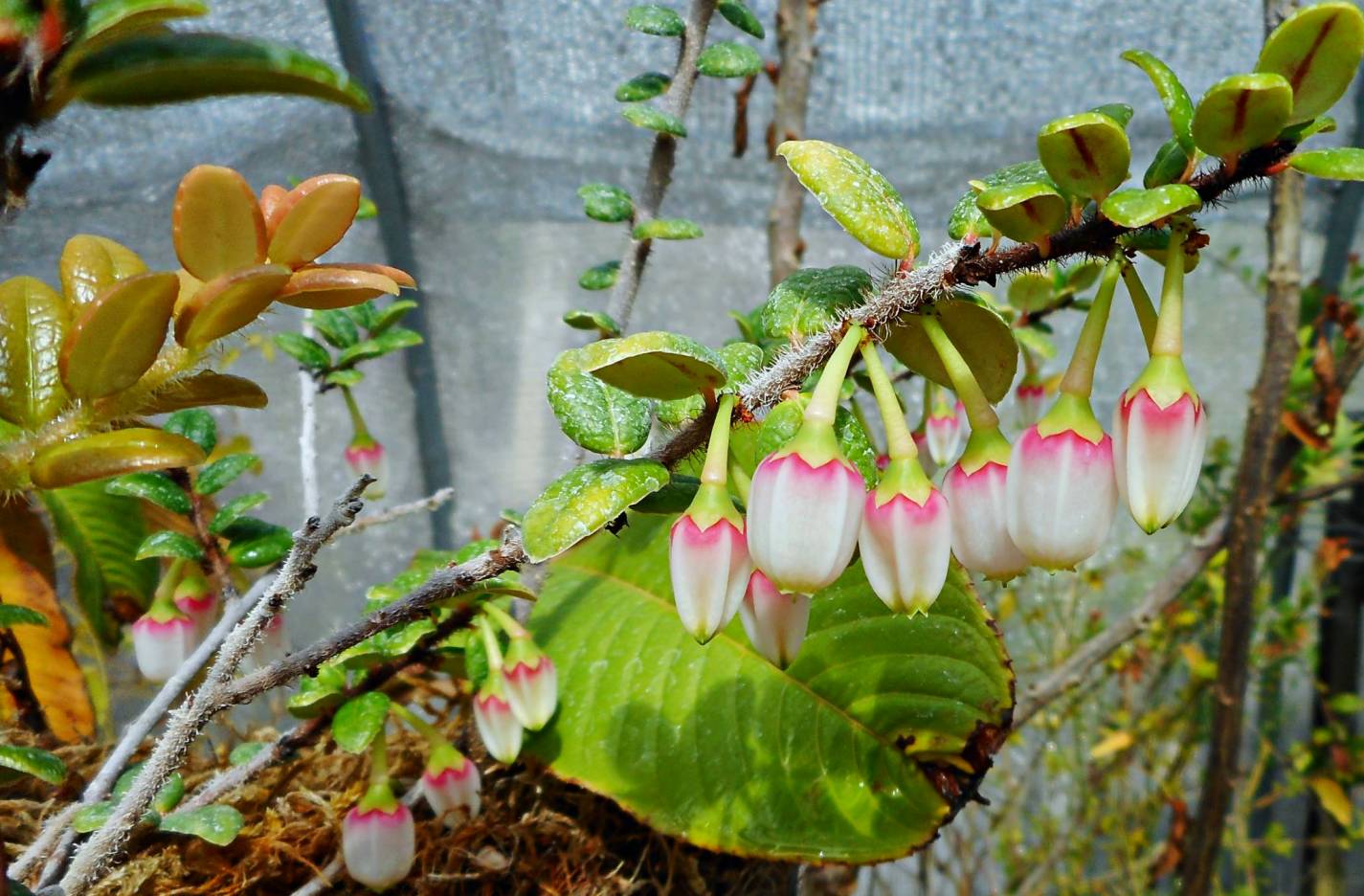
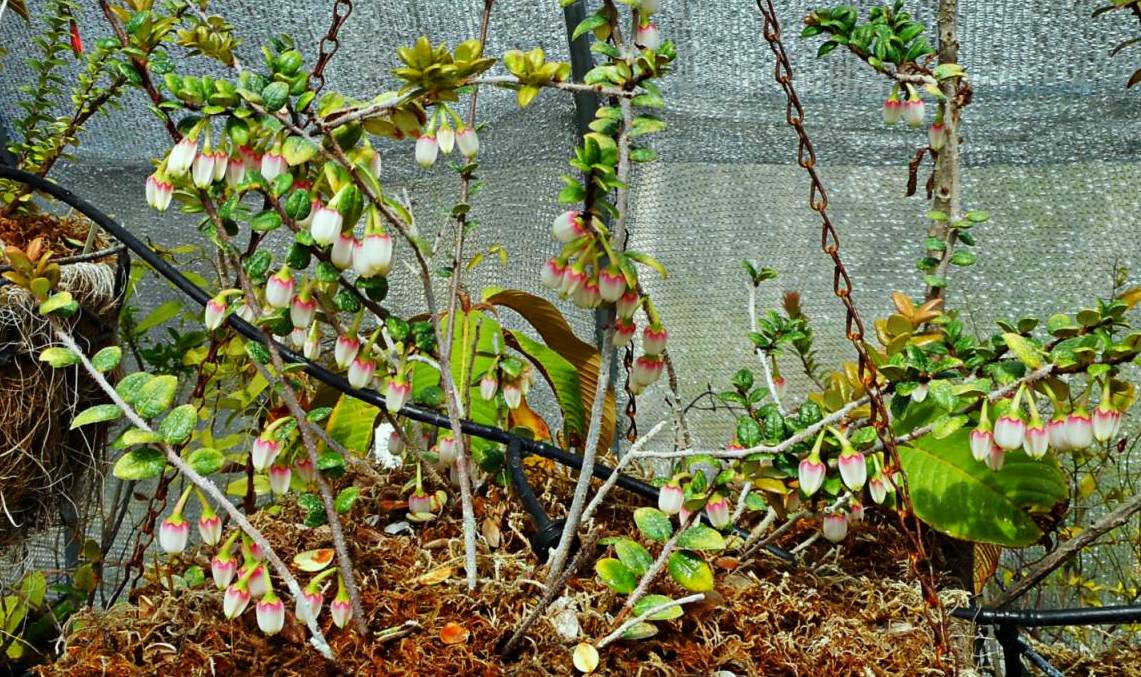
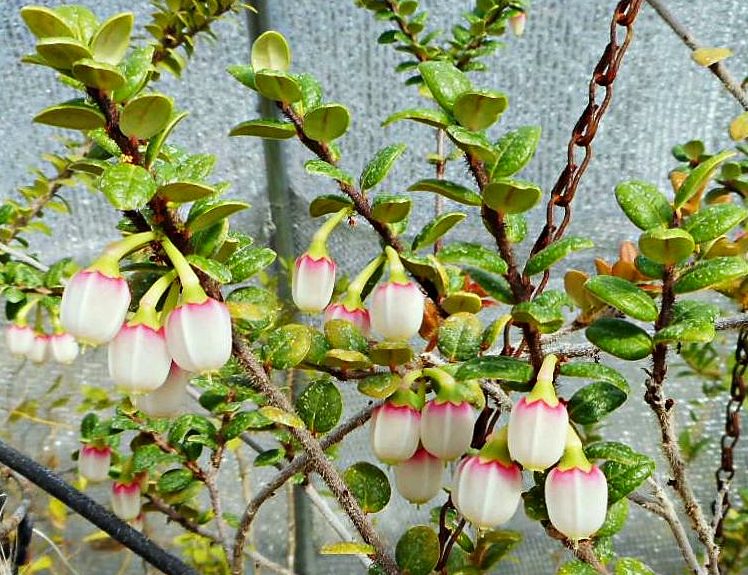
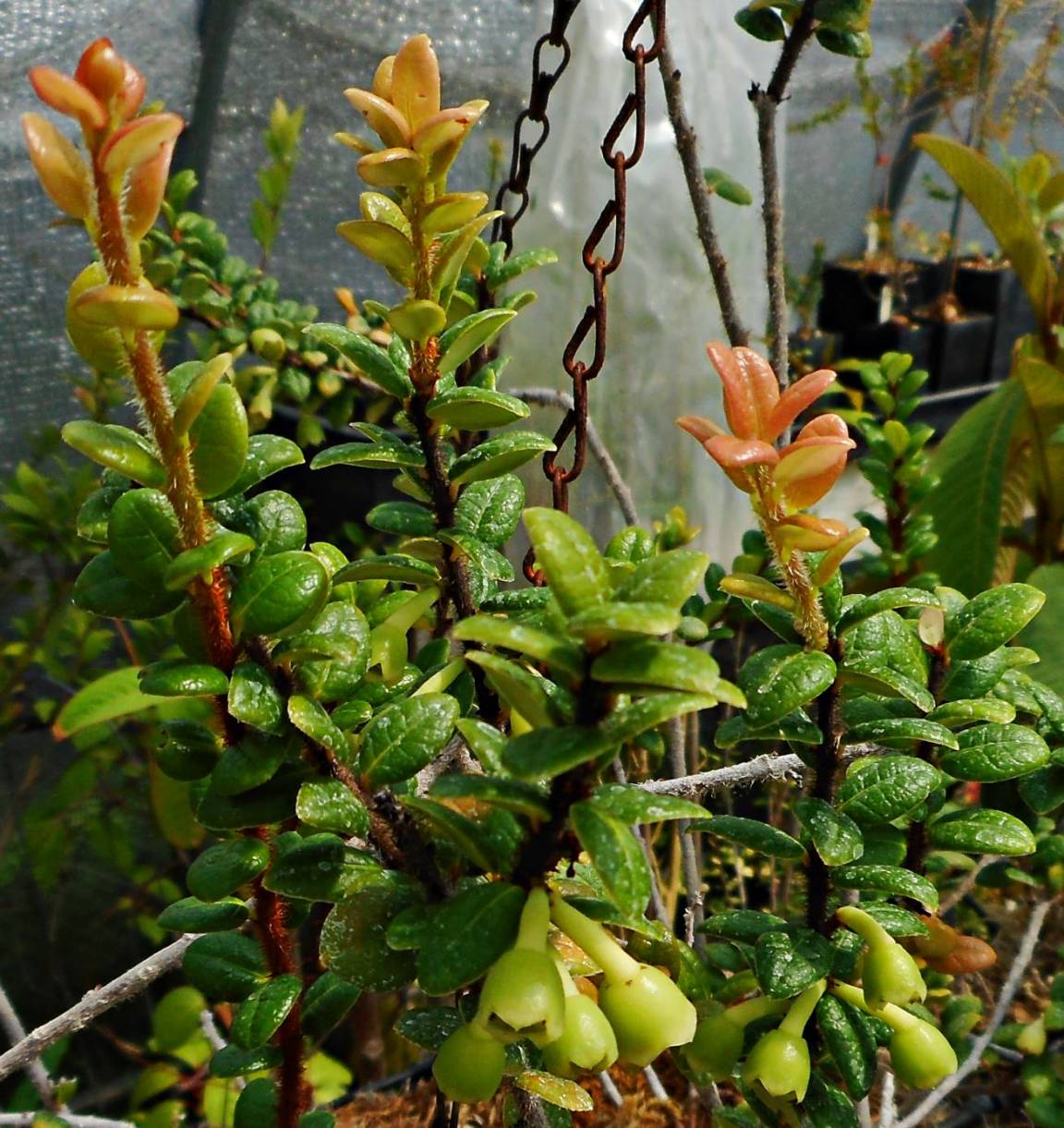
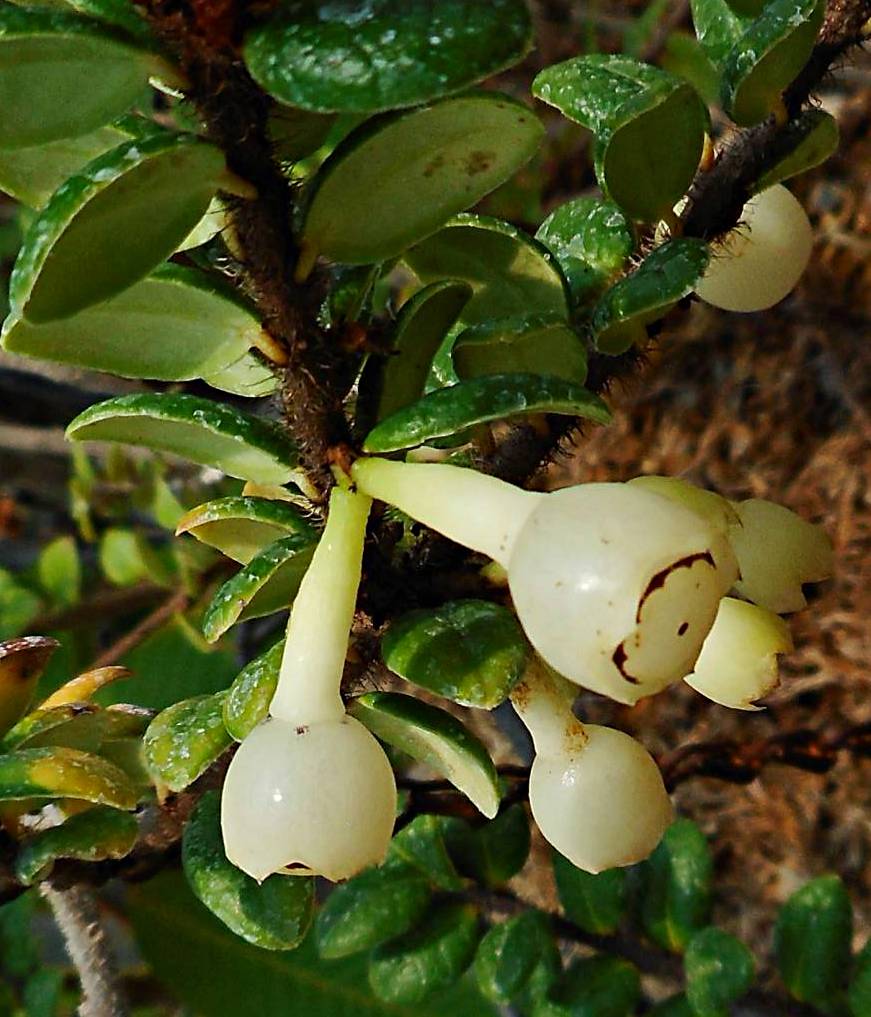 ↑ The many features of Agapetes/Vaccinium sp. SEH25066 ↑
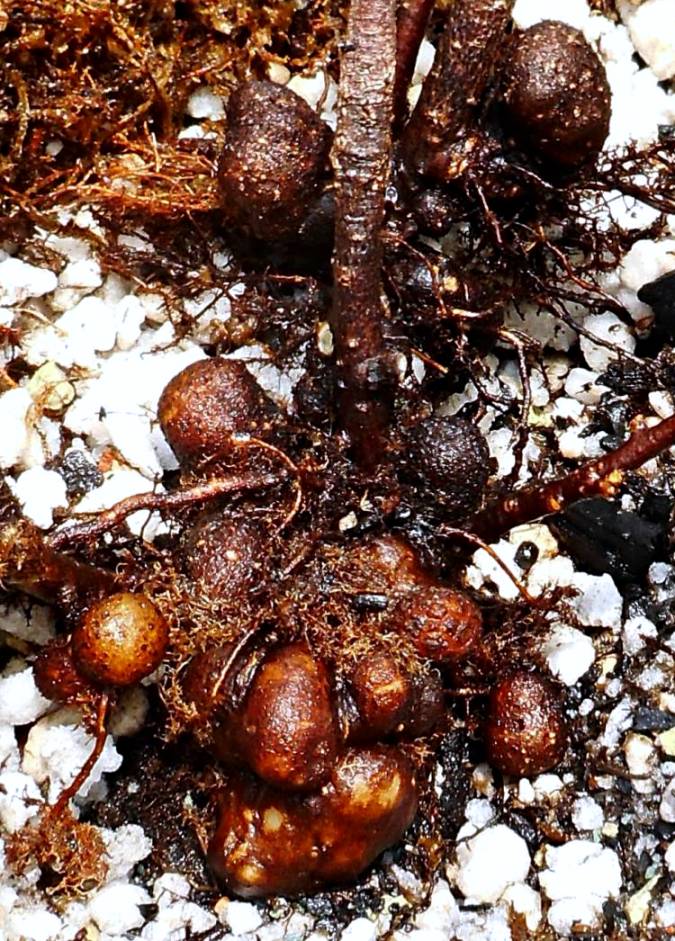 ↑ The caudex of Agapetes/Vaccinium sp. SEH25066 ↑
___
Arisaema fargesii “Pang Xie Qi” “Cobra Lily” ♥ New ♥
Araceae. Perennial corm with huge annual leaves, entire when young, tripartate when mature, to 24’+ across. Stunning maroon and white striped cobra head flowers. Native to western China where it is reported to grow among boulders and scrub. Substances in the corm are being studied for their medicinal applications. The late anthropologist Christian Ratsch reports other species as psychoactive after special preparation. Part sun to part shade. Rich, well draining, moist soil. One of the easier species to grow. The plant goes dormant through winter. Z5a
[ 5 ] → 2 ~ Small corms $17.50 each
___
Arracacia brandegeei BK101106.2 “Chuchupate” “Cape Arracacha”
Apiaceae. Herbaceous perennial to 4’+. Big pinnate leaves, green to purplish in color. Large airy umbels of small white flowers grow up then hang above the plant. Huge thick roots. Cape Mountains, southern Baja, near 5000′. The roots are used for diabetes, rheumatism, stomach and kidney ailments. Relative of the delicious “Arracacha” root that is farmed in the Andes; the edibility of this species is unexplored. Also makes a beautiful ornamental. Prefers part shade and moisture but can tolerate some seasonal dryness. The last few plants we have. Z9a?
[ 5 ] → 2 ~ Plants 9+ years old $26.50 each
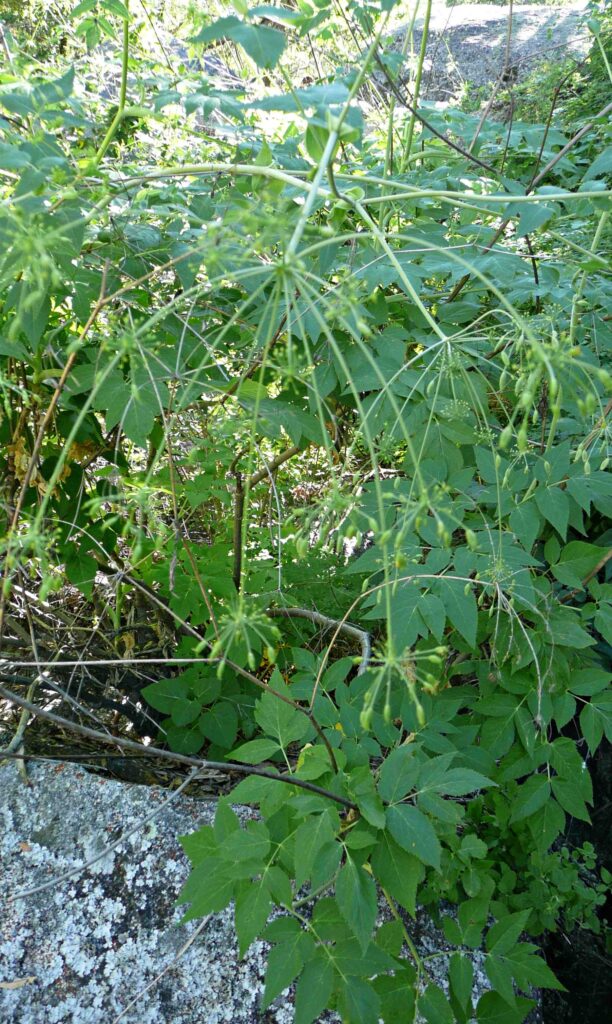 Plant in habitat, Cape Mtns, Baja
___
Begonia grandis “Hardy Begonia”
Begoniaceae. Herbaceous tuber forming species makes clumps to 2′ with very attractive cordate leaves with red veins and pendant clusters of pink flowers. Native to the forests of east Asia. The roots are used for blood circulation and as a painkiller. Light to heavy shade, rich moist soil. Naturalizes well and makes a stunning display when blooming. The tubers are hardy to Z6a/b
[ 16 ] → 6 ~ Plant 3+ years old $8.50 each SALE! 3 for $18.50; or 6 for $27.50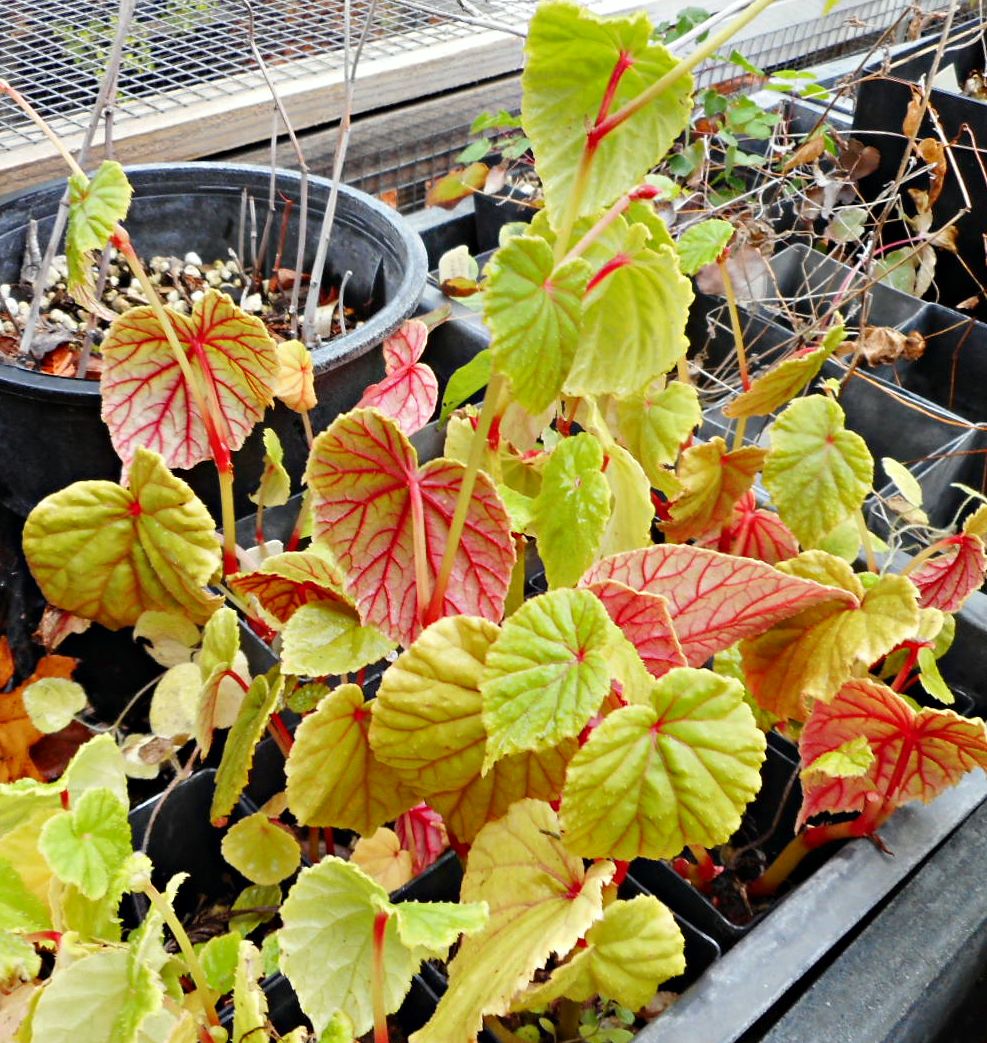
___
Betula utilis CC5763 “Bhojapatra” “Himalayan Birch”
Betulaceae. A gorgeous medium sized birch tree 20–35′ tall. Exceptional white, gold and copper peeling bark. The leaves turn a rich yellow and defoliate in Autumn. From seed collected by Chadwell at 12,500′ Langtang, Nepal, just south of the Tibetan border. An important tree, the bark is used for wound healing and as a carminative. In India the resin is reportedly contraceptive. Widely used for construction, the tree is now considered endangered in some regions due to deforestation. Easy to grow, does well in most soils. These long underpotted specimens will grow quickly with fresh soil. Z7a
[ 4 ] → 2 ~ 36″+ treelets 11+ years old $42.50** each 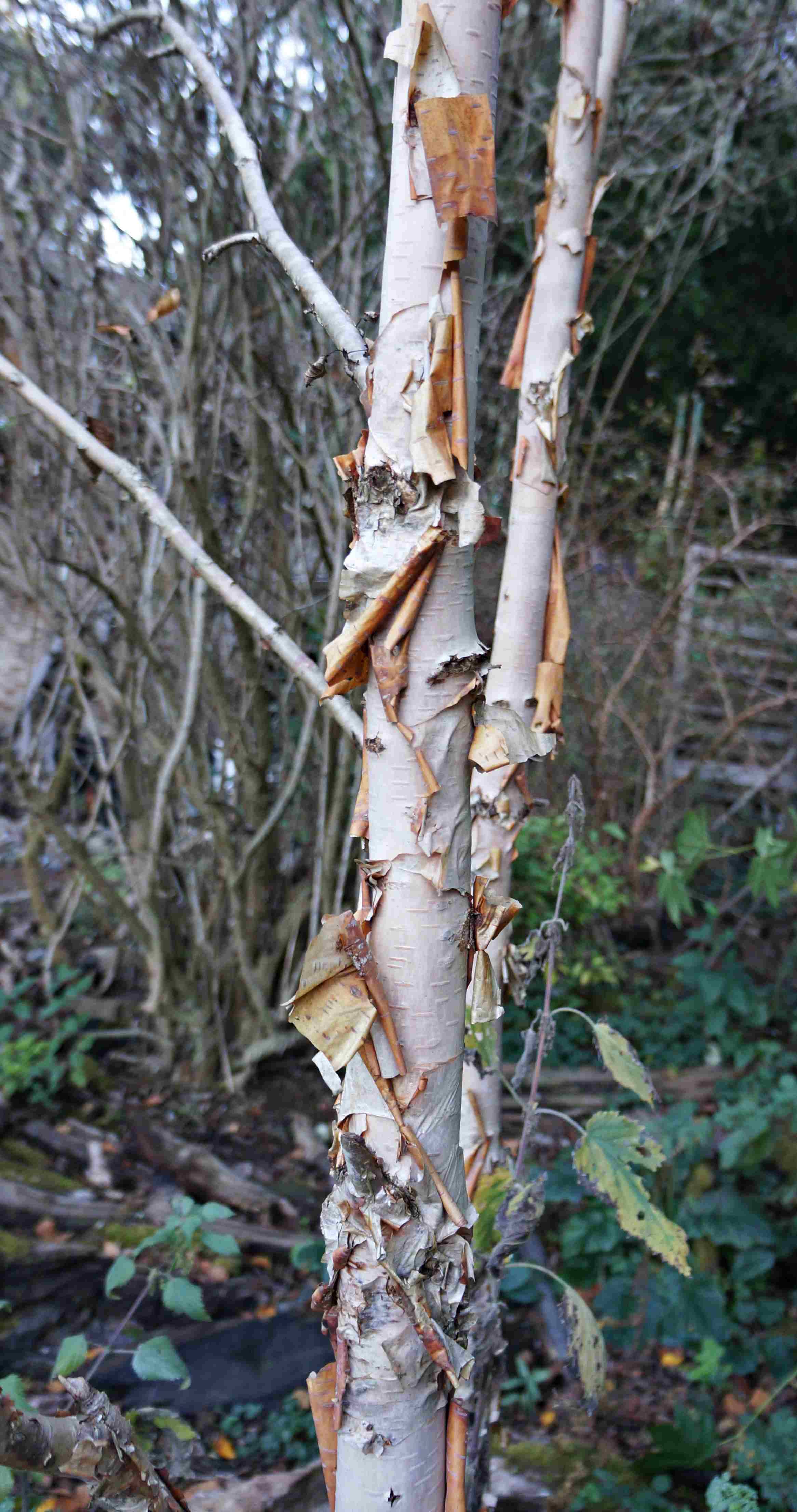
___
Boenninghausena albiflora CC7147 “Dampate”
Rutaceae. Delicate shrub to 4′ high. Highly ornamental foliage — soft blue-green leaves with pinnate rounded leaflets. Feathery white flowers. Chadwell seed collection, forests of northwest Himalaya, 7500′. The plant is rich in oils and has an interesting pungent sweet scent when crushed. Used externally for all manner of wound healing, as an insecticide and to treat malaria. Dried leaf powder is used as a flea repellant. Grow in light shade, moist soil. Z8a
[ 3 ] → 2 ~ 12–14″+ plants 10+ years old $22.50 each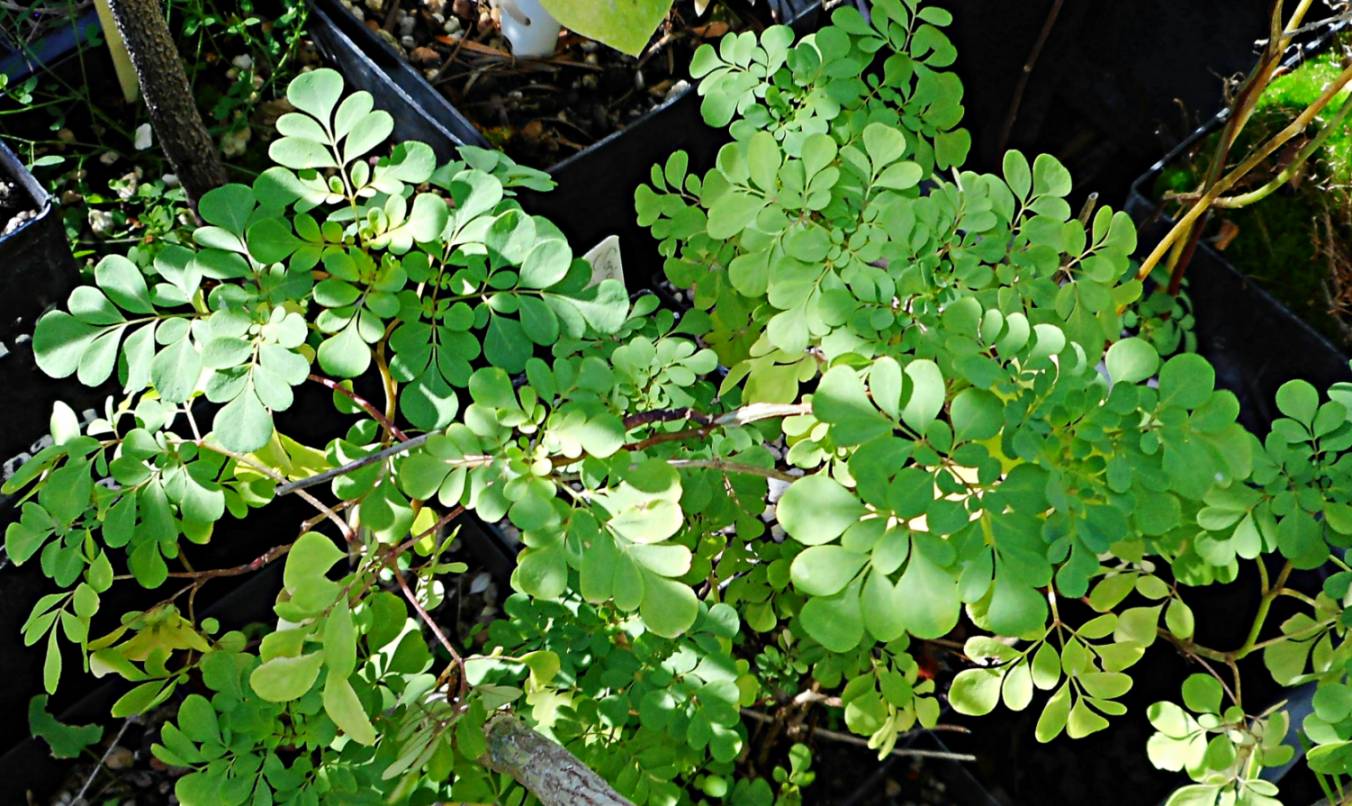
___
Clematis grata CC7449
Ranunculaceae. Ornamental vine to 15–20’+ with clusters of attractive cream-colored flowers. Chris Chadwell seed collection from the Himalayas. The stems are utilized as cordage and the plant is used medicinally as a febrifuge and blood cleanser. Easily grown and hardy. Z5/6?
[ 8 ] → 4 ~ Plants 5+ years old $22.50 each September SALE! $17 each; or 2 for $29
___
Codonopsis convolvulacea “Ludu Dorje”
Campanulaceae. Rounded perennial tubers with annual twining vines to 8′, narrow leaves. 1.5″ star-shaped flowers, a pure vibrant blue color. Native to the forests and mountains of eastern Burma and southwestern China. Has a strong, musky smell similar to Cannabis. The gorgeous flowers are used for skin conditions and the edible, white tuberous roots as a tonic. It is claimed that to those with “spiritual vision” the plant emits a visible glow at dusk! It is rumored to be the “Supreme Herb”. A special decoction made from all parts of the plant is taken by yogis to cure all disease and obtain magical powers, walk on water and fly!! It is also said to be an ingredient in the sacramental “Rainbow Light Pills”, which are known to liberate one from rebirth in the lower realms. Note: these statements have not been fully evaluated by the FDA! Well worth growing for the flowers alone, prefers part shade for the roots, a friend to climb on and rich, well draining soil — easy! Z7a
[ 8 ] → 1 ~ Plants/tuber 3–4 years old $26.50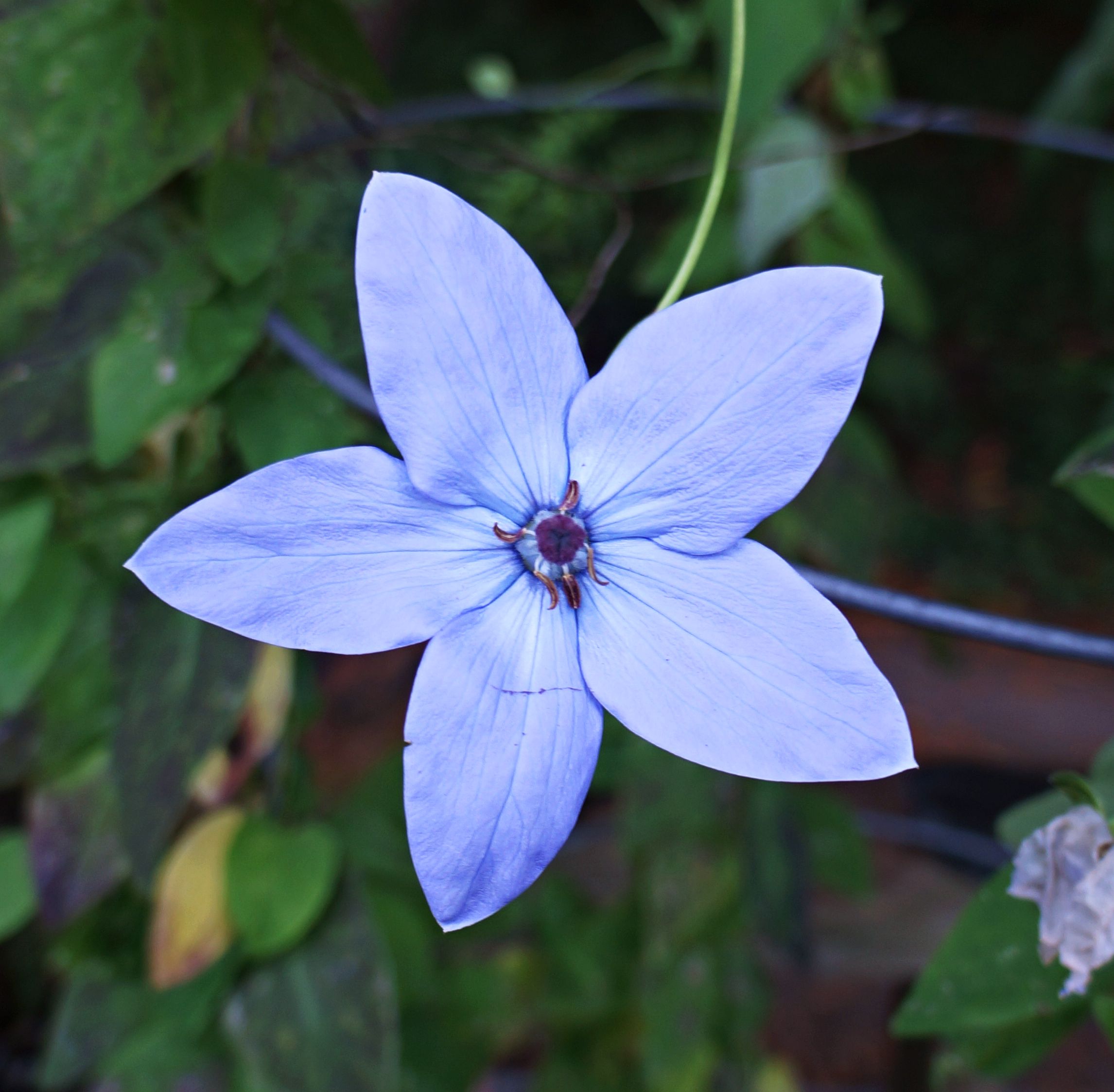
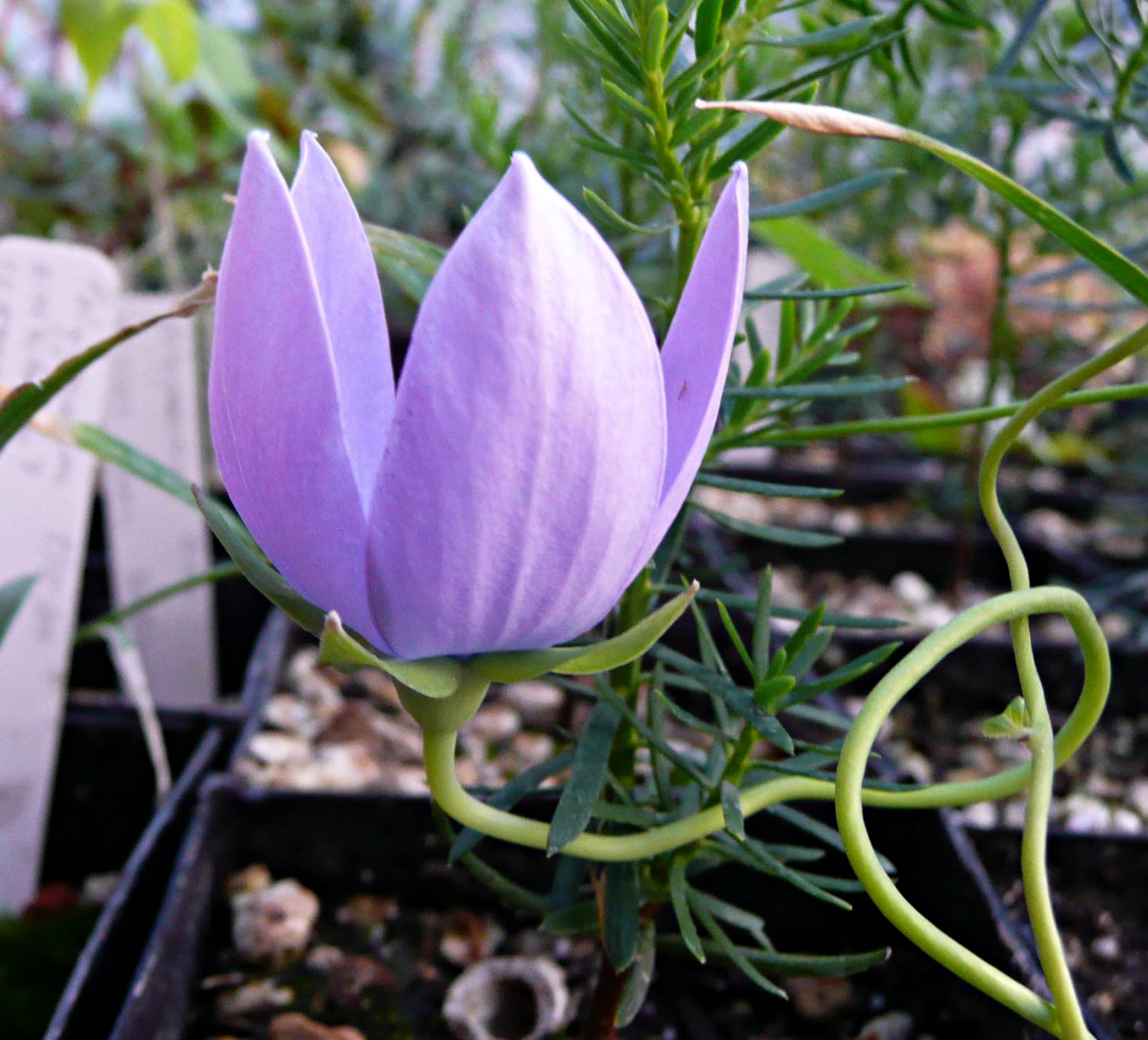
___
Cudrania tricuspidata “Che”
Moraceae. A unique and unusual fruit, closely related to fig and mulberry, which deserves wider attention. Deciduous suckering shrub or small tree 10–30′. Deeply furrowed bark, lightly thorned stems and variably shaped leaves. Dioecious small green flowers followed by 1–2″ rounded fruits described as “chewy dollops of maroon sweetness”. Native to eastern Asia where the leaves were used as silkworm feed like its mulberry kin. An extract of the plant is used for hypertension. Sometimes grafted onto Maclura pomifera (osage orange). Prefers well drained soil, fairly drought and cold hardy once established. Unsexed seedlings. Z6a
[ 8 ] → 3 ~ 8–14″+ treelets 3 years old $18.50 each September SALE! 2 for $33
___
Girardinaria diversifolia ‘Bhutan’ “Zo ch’a” “Aloo” “Giant Himalayan Nettle”
Urticaceae. A strikingly perennial to 10’+. Large leaves, sometimes entire but often deeply cut palmate. Panicles of yellowish flowers. The entire plant is covered in large stinging prickles—like those on common nettles, but on steroids! Though the sting is intense, it’s short lived compared to other nettles and provides excellent relief for arthritic pain. Seed from eastern Bhutan around 4000′. Cultivated for the high quality long fiber that’s obtained from the stems and used to make everything from rope to paper to fine textiles. The young leaves and flowers are a highly nutritious vegetable, they lose their sting when cooked. Roasted seed is pickled in Nepal. The leaves make an excellent tea. This species has numerous medicinal applications similar to common nettle. Likes moisture and dappled light that mimics the subtropical Himalayan forests. For over a decade, we’ve grown our plants in large pots which we move to protected locations each winter and summer. This amazing, multi-use plant is worth growing for the gorgeous foliage alone! Frost tender, but regrows from the stems and ‘rhizomes’ after a freeze—a thick layer of mulch will allow the roots to survive to at least Z9a, otherwise hardy to Z9b/10a.
[ 8 ] → 2 ~ 5–8″+ seedlings $15.50 each SOLD
___
Ilex vomitoria SHL091023.1 “Yaupon” “The Black-Drink”
Aquifoliaceae. Evergreen shrub or small tree to 20’+. Divaricate stems, whitish flowers and ornamental red-orange berries. Native to the south eastern US and north eastern Mexico. Another underappreciated, stimulating holly. Related to Yerba Maté and Guayusa, the leaves are a rich source of caffeine alkaloids. Once a primary sacred plant of our Cherokee ancestors as well as the Creek, Seminole and other tribes. Brews a delicious tea, the top choice for North American caffeine production in your back yard! Seed collected from wild populations, Outer Banks, North Carolina. Easy to grow, tolerant of alkaline and salty soils, sun to partial shade. Seed is very slow to germinate, but we’ve done that part for your—these plants took 5 years to sprout! Z6a
[ 5 ] → 1 ~ 10–14″+ plant 3-4 years old $26.50 SOLD
[ 5 ] → 1 ~ 6–9″+ plant 3-4 years old $22.50
___
Indigofera sp. CC6804 “Himalayan Indigo”
Fabaceae. Elegant tall shrub to 8–12’+. Deciduous pinnate leaves with ovate leaflets. Highly showy racemes of pink to magenta flowers, relatively large for the genus, followed by linear pods. Chadwell’s 2010 seed collection, Himachel Pradesh, NW Himalaya, 8,600′. Kin of the famous blue dye plant. A graceful beauty with the boon of nitrogen fixation to increase soil fertility wherever it’s planted. The first time we’ve offered this alluring ornamental. Z7/8?
[ 5 ] → 1 ~ 36–46″+ plant 6+ years old $49.50**
___
Lycium barbarum ‘Large Leaf’ “Wolfberry” “Gou Qi Zi” “Goji Berry”
Solanaceae. Deciduous shrub with arching branches, 3–5′ tall. Edible lanceolate leaves to 5″ long and 3″ wide. Pale purple flowers, 1/4–1/2″ red berries. Native to the Himalayan foothills of central Asia. The leaves are eaten and the berries are one of the most nutritious foods known to man. A traditional Chinese longevity enhancer and sexual tonic. These are seeds from a plant we selected that has extra large leaves, excellent for food. Though the berries are a little smaller, it actually fruits more heavily and consistently for us than others we’ve grown. Drought tolerant once established. Z6a
[ 3 ] → 1 ~ 10-12″+ plant $18.50 SOLD
___
Mahonia gracilipes
Berberidaceae. Evergreen shrub 2–5’+. Large compound leaves with stiff, pointed leaflets, bluish-purple to dark green, powdery white underneath. Summer sprays of small purple and yellow flowers followed by bluish fruit, edible but very tart. Rare species endemic to shady, moist limestone cliffs, Emei Shan, Sichuan, China. Rich in medicinal antibiotic alkaloids like other Mahonia and Berberis. This is a gorgeous plant that has grown very well for many years in our garden. Sun or shade, somewhat drought hardy once established. Long underpotted specimens eager for out-planting! Last plants. Z7a
[ 6 ] → 2 ~ 6–12″ plants 7–8 years old $18.50 each 
___
Mandragora autumnalis “Mandrake”
Solanaceae. One of the species of the infamous mandrake root. Hardy, herbaceous perennial with rosettes of large, dark green, simple leaves. Purple bell-shaped flowers arise from the center of the plant followed by oval shaped orange-yellow berries. Large roots sometimes resembling the human form and giving rise to a multitude of myths and legends, kept alive in the popular imagination as the screaming mandrakes of Harry Potter and in numerous shows featuring witchcraft. Native to Europe, used since antiquity as a diverse medicine, aphrodisiac, visionary deliriant and poison. Prefers rich, alkaline, moist soil with good drainage. The leaves die back and the plant goes dormant by mid Summer and begins vegetative growth again in Autumn. Does well in a large pot, garden borders or on display in the rock garden. Plants currently going dormant for summer. Z5a
[ 4 ] → 2 ~ Plants 3–4 years old $32.50 each SOLD
___
Myrtus communis ‘Fresno’ “Myrtle”
Myrtaceae. Attractive evergreen shrub to small tree, 5–20′; the entire plant is rich in essential oils. Small, lanceolate leaves, densely arranged on the stems, pleasantly aromatic when crushed. Fragrant white flowers borne en-masse along the stems, followed by dark blue berries, edible with an aromatic sweetness. Smooth gray-brown bark eventually peals in segments to reveal darker inner bark. Native to the Mediterranean, Europe, and the Middle-East. A large diversity in form and growth habit is known with many horticultural selections available. Our plants are grown from seed collected near Fresno, in California’s Central Valley, from the largest Myrtle we’ve seen, trees to over 20′ tall and with a 12’+ wide crown of upright to pendant branches—heirlooms that appeared to be well over 100 years old and distinct from other Myrtle we’ve observed in overall form and with larger, oval shaped, glaucus-blue berries. The berries, flowers and leaves are used in Mediterranean and Middle-Eastern cooking. A refreshing lemonade-like drink is made from the berries, the sweet flavored flowers and buds are added to salads. A traditional digestive tonic sweet liquor is distilled from the berries and leaves. Since biblical times, the plant has been a widely used natural remedy for digestion, respiratory conditions, urinary infections, and externally as an antiseptic. The entire plant is rich in bioactive constituents like polyphenols, anthocyanins, flavonoids and terpenoids. Recent studies have demonstrated Myrtle’s potential as a protective agent against a diversity of toxins via its antioxidant, hepatoprotective, chemoprotective, antitumor and anti‐inflammatory properties. A compound in the plant is antibiotic and the essential oil is also antimicrobial, antifungal, insecticidal, and is being explored for its use in food preservation. Myrtle essential oil is popular in perfumes, body-care products, soaps, etc. The wood is fine grained, supple yet strong, useful for tool handles, cabinets, furniture, etc. Myrtle is esteemed the world over as a multi-use ornamental/medicinal/edible. Cultivated for thousands of years in the Mediterranean where it is known as a symbol of peace and love. Easy to grow and adaptable, makes an excellent hedge, topiary, bonsai, or specimen tree. Sun to part shade. Protect young plants from heavy frost. Tolerates drought once established, but thrives with some moisture. Our plants are underpotted and ready take off in fresh soil. Z8/9a
[ 8 ] → 4 ~ 10–14″ plants 4–5 years old $19.50 each September SALE! $18 each; or 2 for $32; or 4 for $54
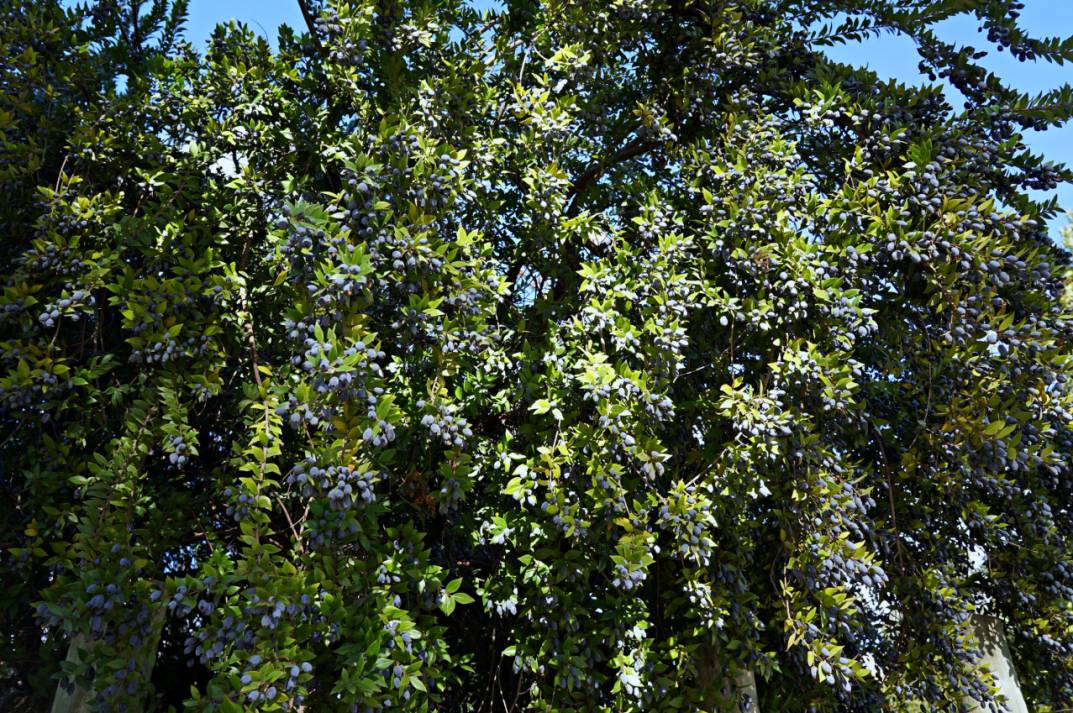
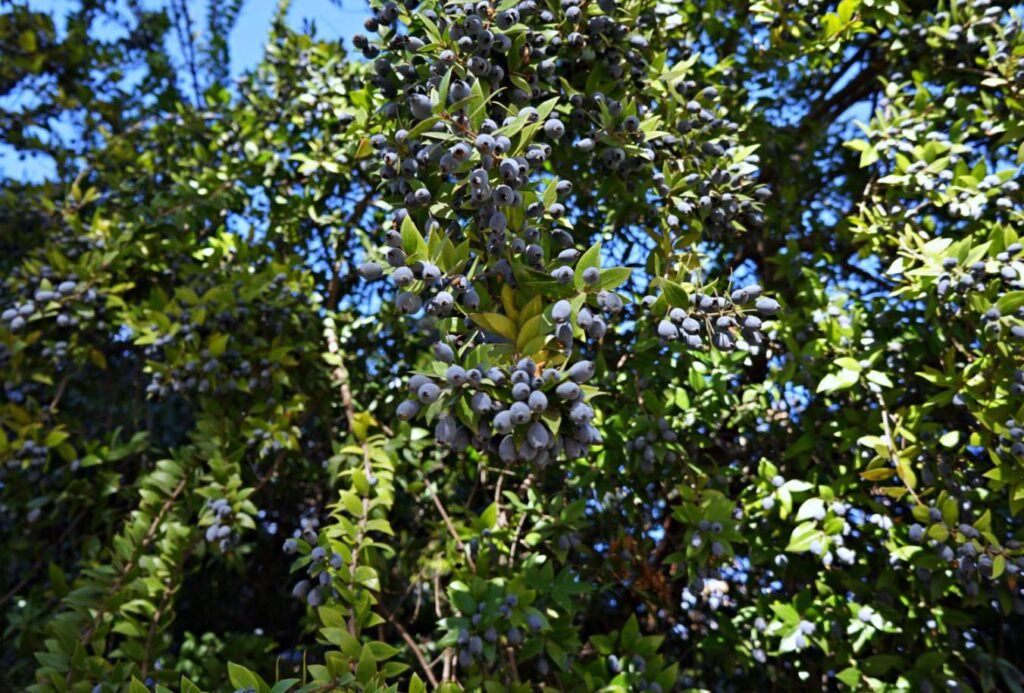 ↑ Myrtus communis ‘Fresno’—mother trees in fruit ↑
___
Polygonatum zanlanscianense “Hu Bei Huang Jing” “Giant Solomon’s Seal”
Liliaceae. Creeping rhizome with annual stems to 6’+ tall bearing whorled leaves with tendrilled tips. White to purplish tubular flowers tipped green dangle from the stem nodes. Black berries. Mountain forests of China up to 9,000′. The rhizome contains saponins with anticancer activity. The fresh spring shoots should be edible, a bit like asparagus. Part shade and moist soil for this beautiful woodland species. Plants overlong rootbound in small pots and eager for the garden. Z6a
[ 4 ] → 2 ~ Plants 9+ years old $24.50 each
___
Rosa roxburghii “Cili” “Tz’uli” “Sweet Chestnut Rose”
Rosaceae. An esteemed edible/medicinal rose! An attractive stout shrub 4–8′ tall, thorned branches with long, deciduous pinnate leaves. 2″+ pale pink to purple-pink flowers, sweetly scented. Unusual orange-yellow fruit blushing red, globose to 1.5–2″ and covered in small prickles. This awesome species is native to southwest China. The fruit can be eaten fresh with a mild pineapple-like flavor! Traditionally made into a jam and wine, the dried fruit is brewed into a sweet tea that is said to “strengthen all faculties” and enhance longevity. The leaves are used as a green tea substitute. The fruit is rich in minerals, vitamin C and E, beneficial polyphenols, polysaccharides and SOD. Studies have shown the fruit is a strong antioxidant with anticancer potential, cardiovascular benefits, and cognitive enhancement. Easily grown, tolerates drought but thrives in rich, moist soil. Plants in full sun tend to remain more compact while those in part shade grow taller. We offer seed grown plants from strains originally selected for their darker fruit color and medicinal value. Z6a
[ 12 ] → 4 ~ 8–12″+ plants 2–3 years old $27.50 each September SALE! $25 each; or 2 for $45; or 4 for $77
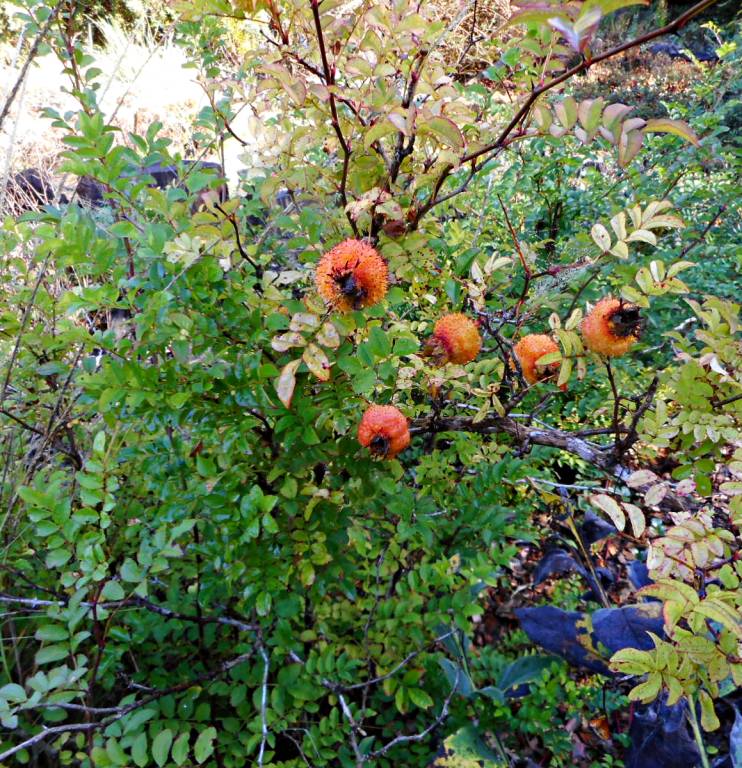
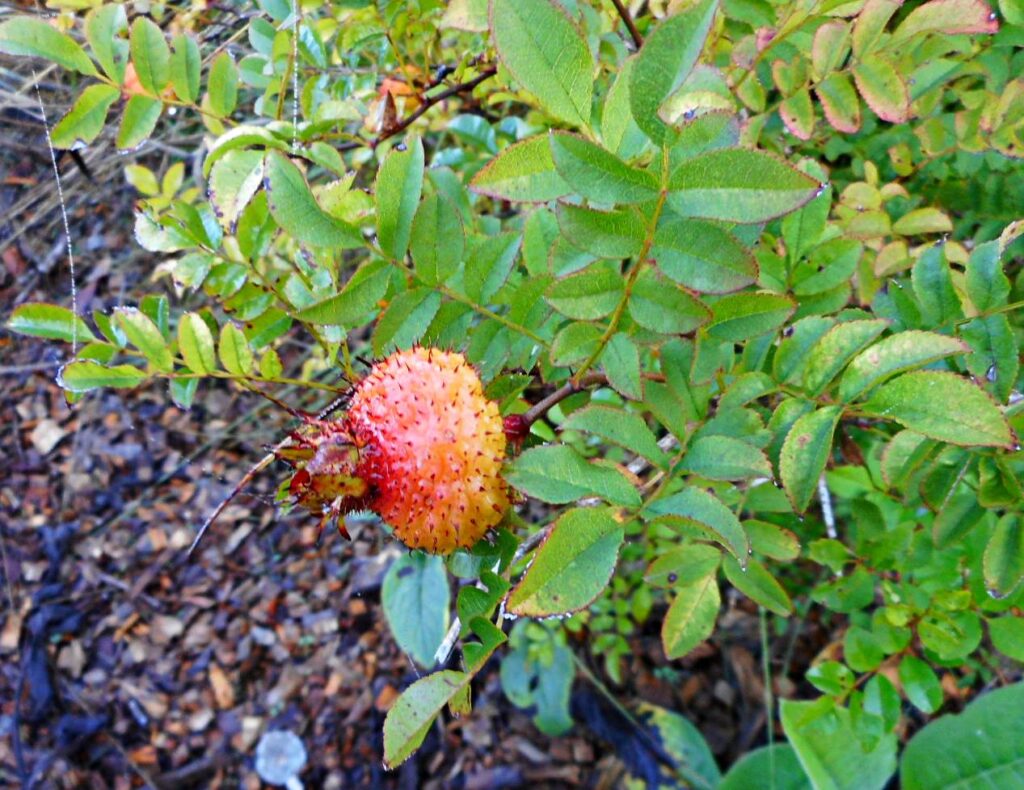
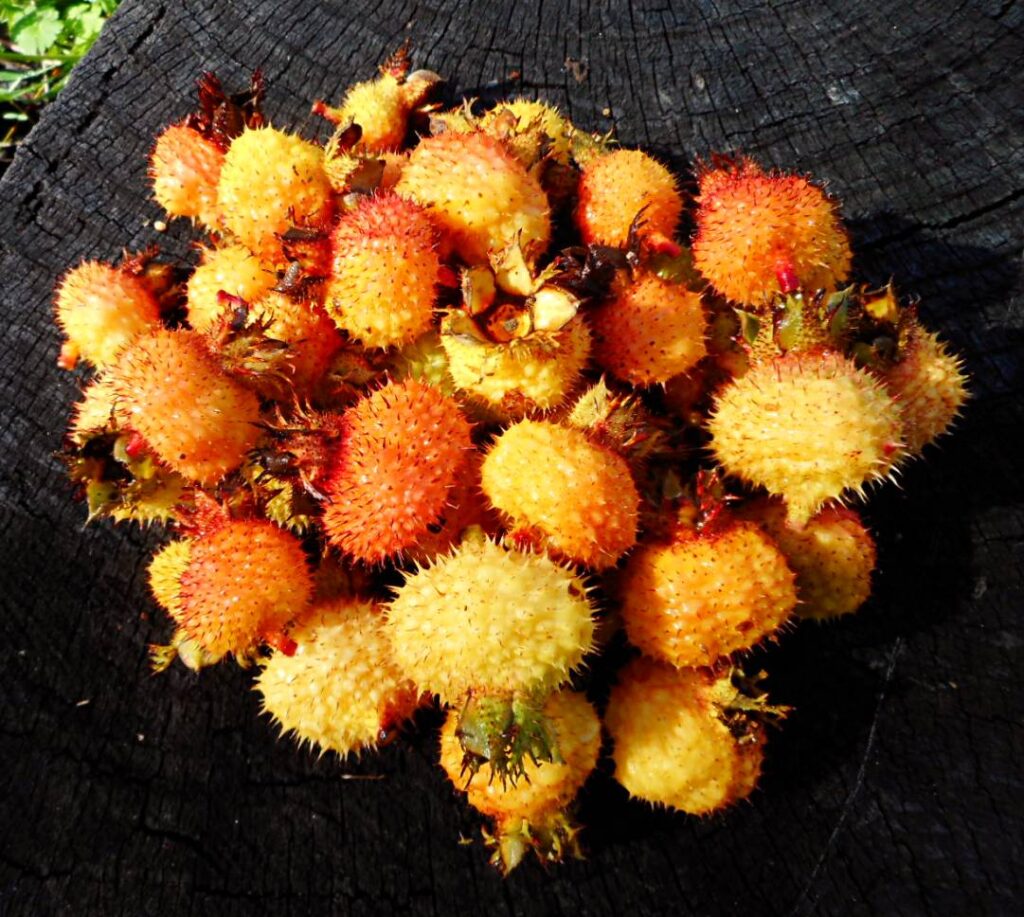
___
Rosa sericea/macrophylla? CC15
A lovely, sparsely thorned upright shrub to 6’+ tall. Pinnate leaves, likely to have solitary, pinkish blossoms. Chadwell accession from the Himalayas, this is either R. sericea or R. macrophylla. The fruit of these species are said to have an excellent flavor and are eaten in Nepal to improve eyesight. A good plant for hedges. We have a few specimens that have been long underpotted and are ready for planting up or out. Z6/7?
[ 4 ] → 2 ~ 18–24″+ plants 8+ years old $29.50* each September SALE! $26* each
___
Salvia nubicola CC6306 “Himalayan Sage”
Labiatae. A lovely and rare herbaceous perennial sage to 3–4′, annual rosettes of strongly aromatic, hairy sagittate leaves. 2–3′ spikes of yellow flowers with flared bottom lip and and purple speckled nose. A Chadwell accession, Himachel Pradesh, India, 9500′. The leaves and roots are used for toothache, fevers, and liver health. A great garden plant, easy to grow, sun to part shade. Tolerates dry conditions, but prefers some summer irrigation; the roots are very cold hardy, especially if well mulched. Plants entering winter dormancy. Z6b
[ 8 ] → 4 ~ Plants 2 years old $14.50 each September SALE! 2 for $25
___
Silene undulata (=Silene capensis) “Xhosa Dream Herb”
Caryophyllaceae. Low growing perennial rosettes of linear leaves. Tubular tobacco-like white flowers borne in mass on branching inflorescenses to 2’+. Native to South Africa. The downy leaves are smoked as a ‘tobacco’ and the Xhosa have made use of the succulent roots to induce “dreaming” and it has become popular in the US among people involved in “dream work”. Very easy to grow, drought tolerant and adaptable to most gardens. A few mature clustering specimens available. Z8b
[ 8 ] → 3 ~ 2–3″+ plants 3-4 years old $17.50 each September SALE! 2 for $29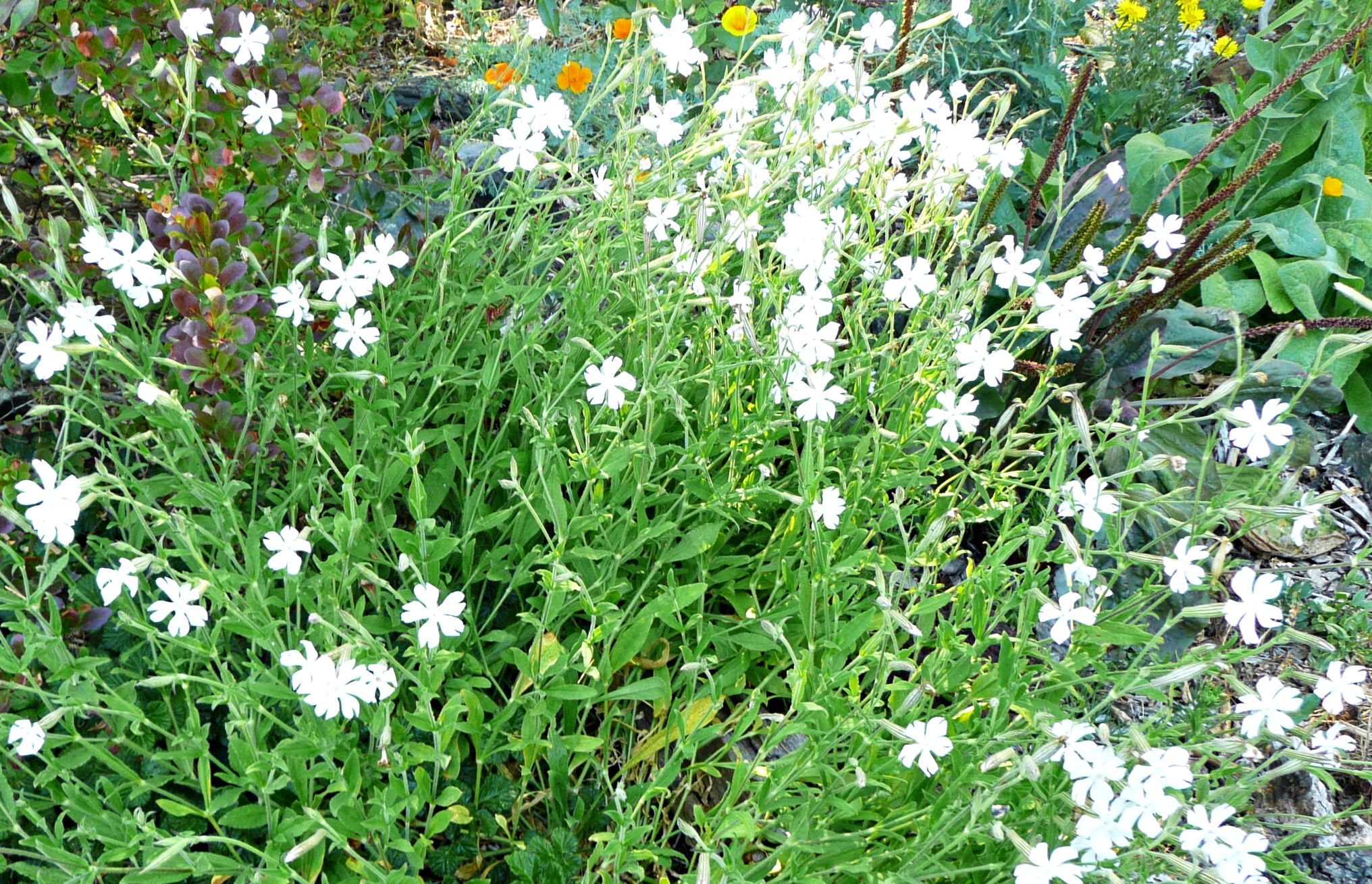
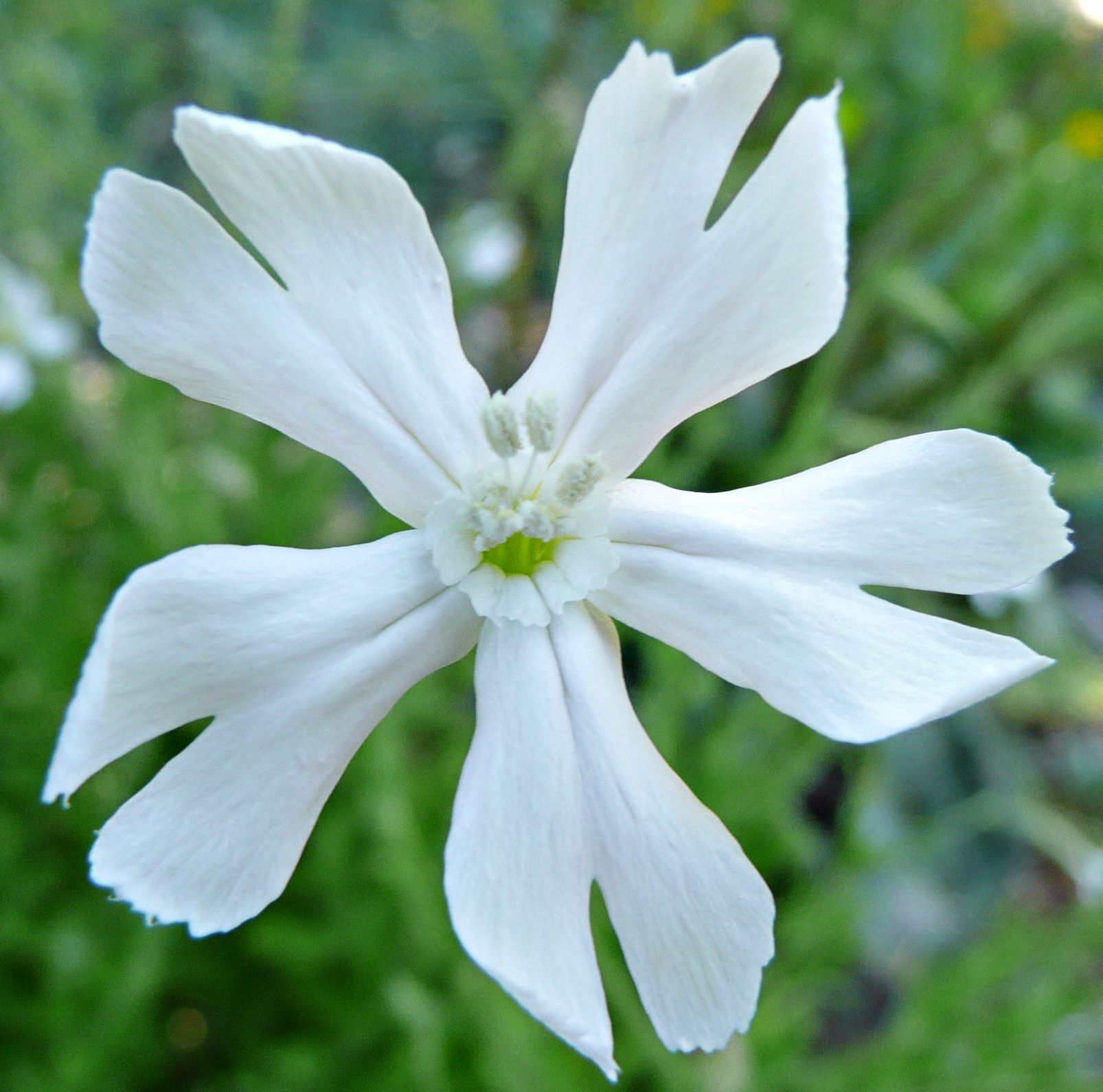
___
Tiliacora triandra “Bai Yanang” “Jello Plant”
Menispermaceae. Large twining vine with lime-green heart to arrow shaped leaves. Clusters of yellow flowers and round red fruit. May form a tuber/caudex with age. Native to forests of Southeast Asia. In Thailand and Laos a juice from the leaves is used as a thickening agent for making kaeng no mai soup and surong sam “jello”. Rich in antioxidant phytonutrients that studies have shown to have anti-intoxicative, neuroprotective and cognitive enhancing effects, especially in alcoholic rats! Leafy shoots are also a traditional cure for dysentry. Easy to grow, give it plenty of room to climb. Rooted cuttings. Tolerates some frost. Z9a/b?
[ 4 ] → 1 ~ Plant $16.50
___
Vaccinium gaultheriifolium “Himalayan Large-leafed Blueberry”
Evergreen shrub with arching branches, 6–12″ tall. Large elliptical leaves, glaucus-blue to green with white undersides. Clusters of white to pink bell flowers adorn the branch tips followed by clusters of round edible blueberries. Native to the mountain forests of the eastern Himalayas, up to 9000′. An elegant and rarely cultivated blueberry. Dappled sun and well drained rich soil. Long underpotted specimens ready for fresh soil. Z7a
[ 5 ] → 2 ~ 10-12″+ plants 8+ years old $22.50 each SOLD
[ 4 ] → 1 ~ 6–8″+ plant 8+ years old $19.50 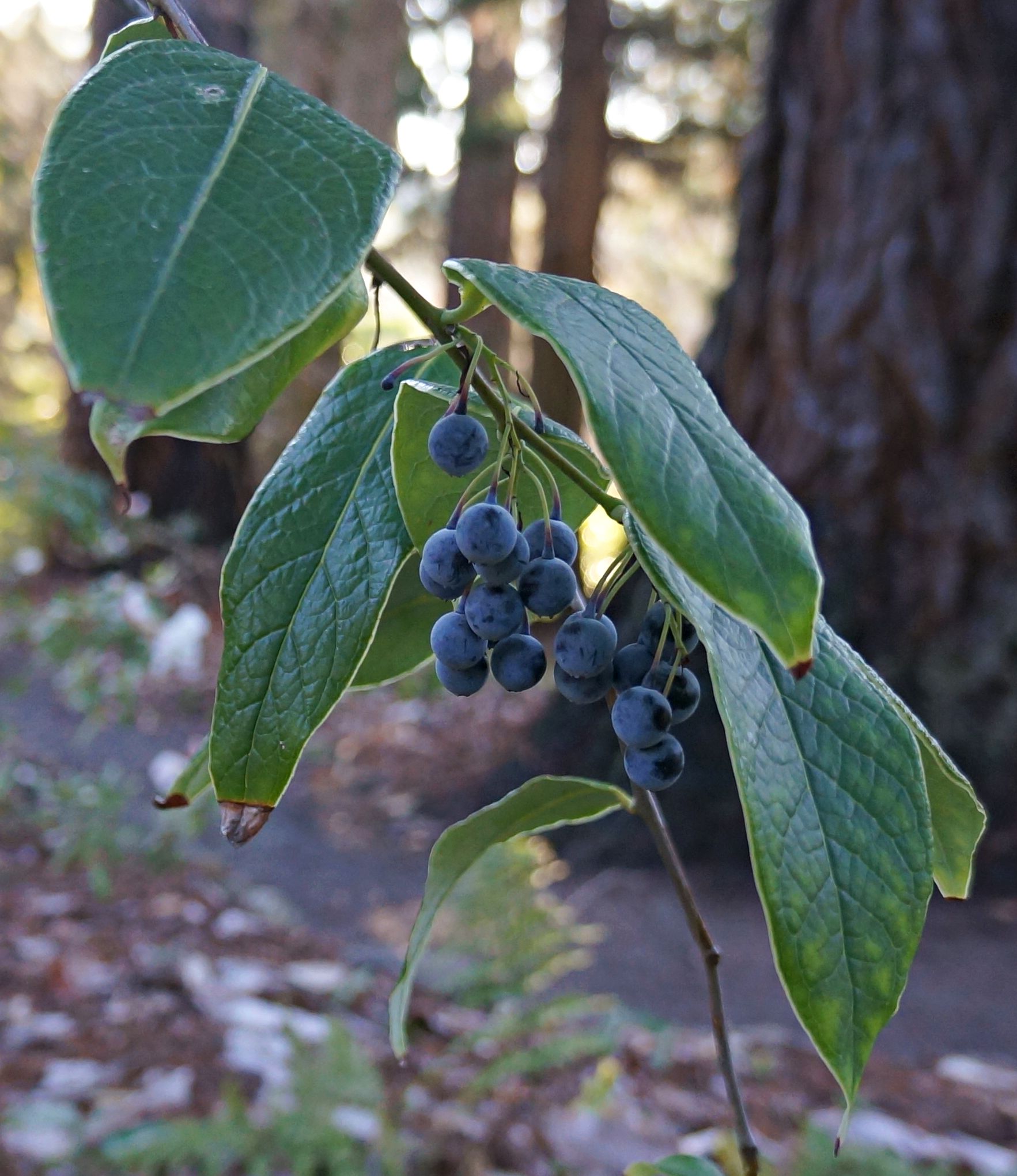
___
Valeriana jatamansi (= V. wallichii) “Indian Valerian” “Mushkbala”
Valerianaceae. A delightful low growing plant with basal rosettes of soft heart shaped leaves. 12″ flower stalk with small white flowers. Native to the temperate forests of the western Himalayas into the mountains of Afghanistan up to 10,000′. The plant has a sweet aroma and is a source of the legendary Spikenard oil. The rhizomes are rich in valepotriates, reported to be effective for leprosy. It also has sedative actions like other valerian species. Easy, does best in part shade and moist soil. Z7b
[ 8 ] → 3 ~ 2–3″ plants 2–3 years old $14.50 each September SALE! 2 for $25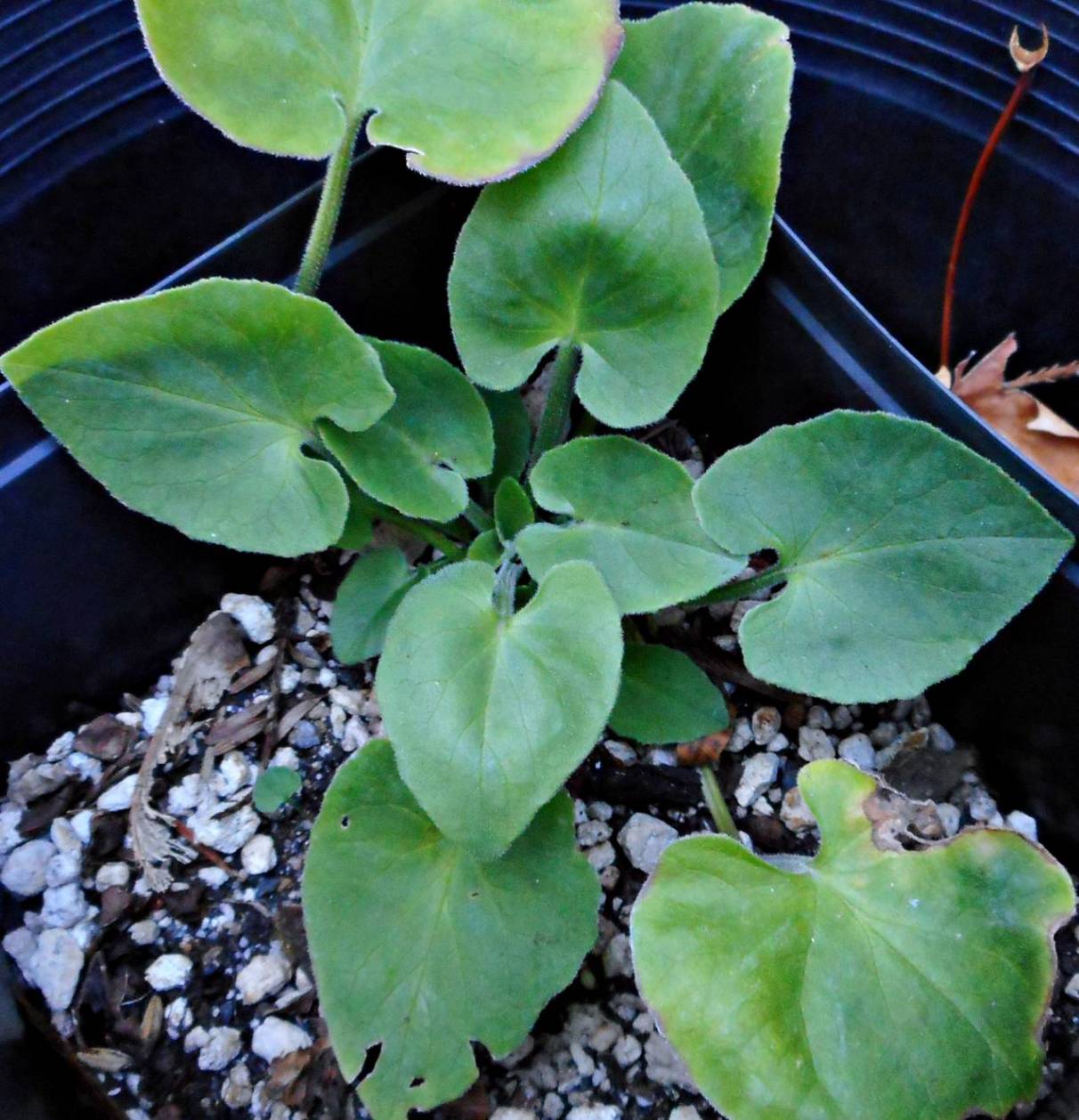
___
Viburnum mullaha CC7127 “Malayo”
Adoxaceae or Caprifoliaceae. Large deciduous shrub to 15’+. Long lanceolate leaves. Rounded umbels of showy white flowers followed by a display of red berries. Chadwell collection, forest of “Little Tibet”, Ladakh, 7600′. A rare and attractive species, the acidic fruit is edible and is eaten as a stimulant, the juice for indigestion. Long underpotted plants eager for your care! Z8?
[ 4 ] → 2 ~ 12–18″+ plants 7+ years old $19.50* each
___
♣
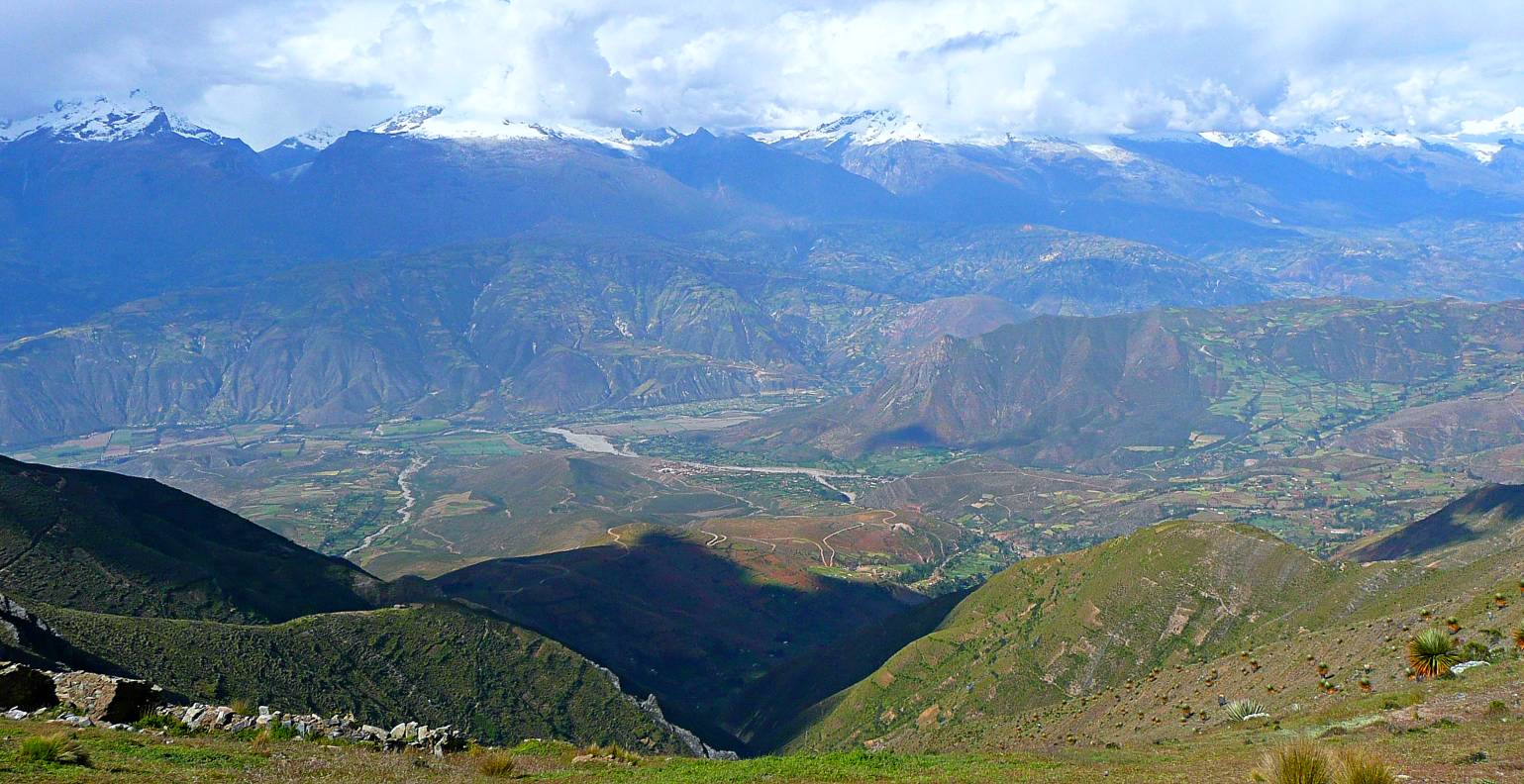 ↑ Puya raimondii habitat in the Cordillera Negra, looking towards the Rio Santa Valley and Cordillera Blanca, Ancash Dept., Peru ↑
Specimen Seed List
This list (& those on the Andean Tubers page) is the only seed we are currently taking orders for.
Specimen Seed can be shipped internationally!
♣
Cactaceae Seed
___
Trichocereus bridgesii ‘SS’ “Achuma” “Bolivian San Pedro”
Seed from controlled pollination of our diverse bridgesii collection. Forms dense candelabra thickets 10–18′ tall. Slender to thick, 2–5″+ diameter, blue-green branches with 4–8 ribs. New spines bright yellow, later turning gray; 2+ spines per areole, from 1–3″+ long. Plants vary from sparsely spined to heavily armed. Heavenly scented nocturnal white flowers, large tasty fruit. T. bridgesii has a higher incidence of unique mutations than any other species we’ve observed. Native to north Bolivia where it occurs up to 12,000’+; often seen planted as a living fence and has an ancient but obscure history of use in traditional medicine. Z9a
[ 12 ] → 2 ~ Packets of 50+ seed $14 each
 ↑ A robust T. bridgesii stand, La Paz, Bolivia ↑
___
Trichocereus huanucoensis ‘SS’ “Huachuma Gigante”
A favorite among collectors and rarely offered. Candelabra like stands up to 20′ tall. Rotund, 4–8″ diameter, dark blue-green stems with (4)5–7 thick ribs. Brown felty areoles that bear up to 7 small radial spines, 3 centrals up to 2″+ long. New growth on older stems is often completely spineless. White nocturnal flowers, edible fruit. This distinct species, which resembles T. bridgesii on steroids, is native to Huanuco in the central Peruvian highlands. True seed from controlled pollination of our mother plants. Z9a
[ 12 ] → 2 ~ Packets of 25 seed $16 each
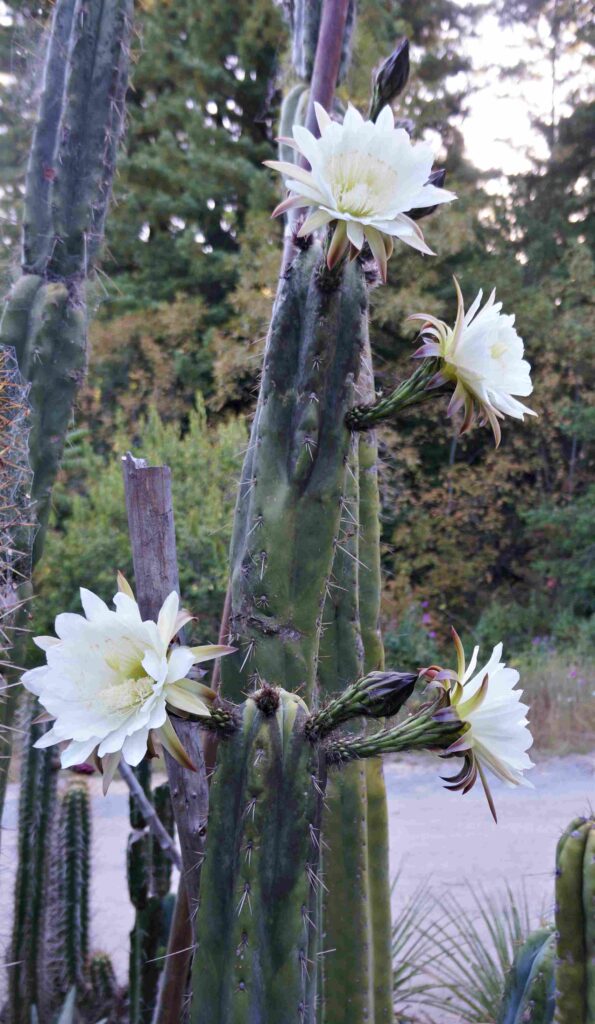
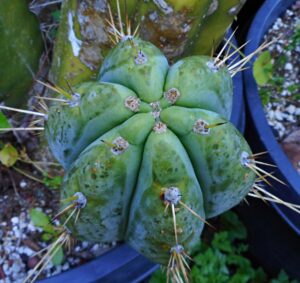 ___
___
Trichocereus sp. nova? BK151013.5
Upright dark green stems to 7’+ tall and 3–4.5″+ diameter. 9–11 ribs, white felty areoles and 1/4 to 1/3″ spines, yellowish aging white. Large, sweetly scented, funnelform white flowers, edible fruit. Looks similar to some of the Trichocereus – Echinopsis hybrids. A unique plant that we discovered in 2015 growing on exposed, steep rocky embankments in Yungas cloudforest, Calilegua, Jujuy, Argentina, near 4500′. Growing among shrubs with Puya sp., Peperomia aff. galioides, and a Begonia species; on the edge of Anadenanthera colubrina forest. Does not fit any description we could find and is likely a new species. First offering of seed outside auction! [For additional info and photos, see our list of BK Trichocereus accessions] Z9a/b?
[12 ] → 2 ~ Packet of 20 seed $24 each September SALE! $20 each
[Seedlings available, see the Cactaceae Plants section ↑]
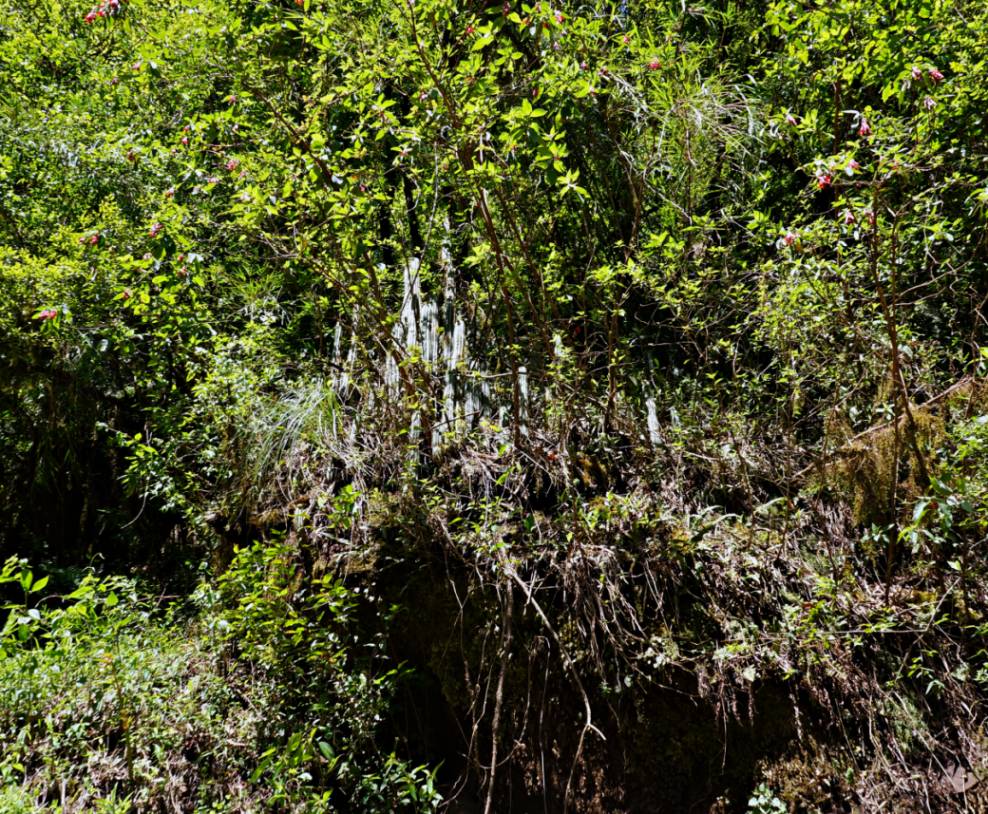 ___
___
♣
Trichocereus Hybrid Seed—New Releases!
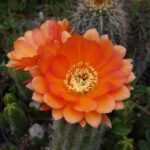
__
Trichocereus bridgesii SS02 X Trichocereus bridgesii f. monstrosus cl. C ♥ New ♥
A new introduction! The long popular and robust bridgesii SS02 clone crossed with the unique T.b.m. clone C [slender, melted-wax to semi-normal stems—often 4 ribbed]. We are hopeful unique new mutant bridgesii will arise from this cross. Be among the first to find out! Z9a
[ 8 ] → 1 ~ Packet of 10 seed $28
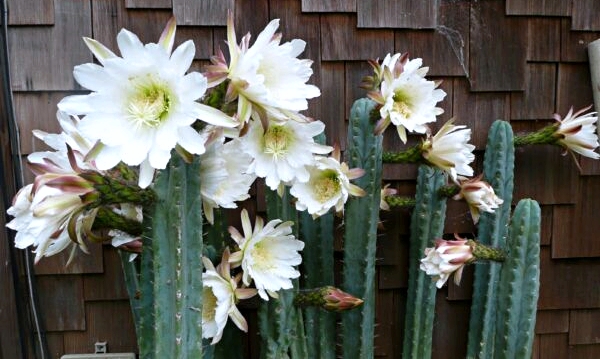 ↑ Mother plant ↑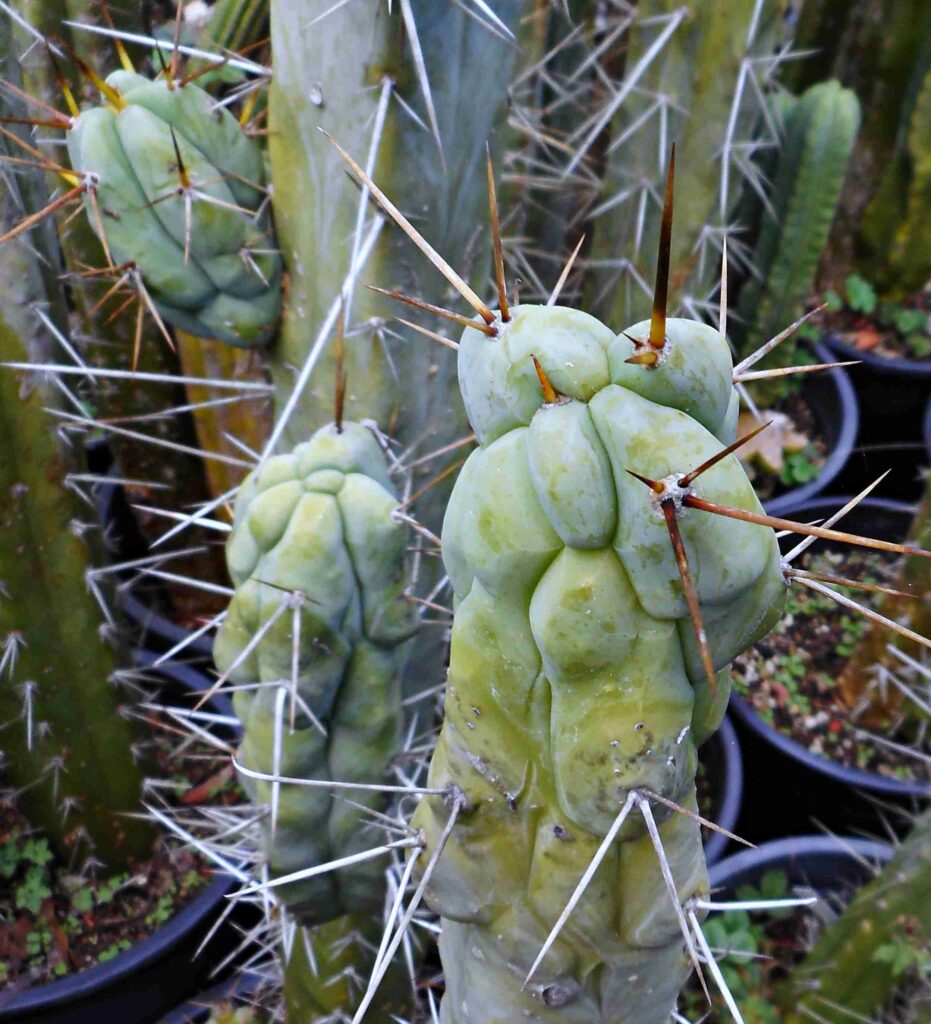
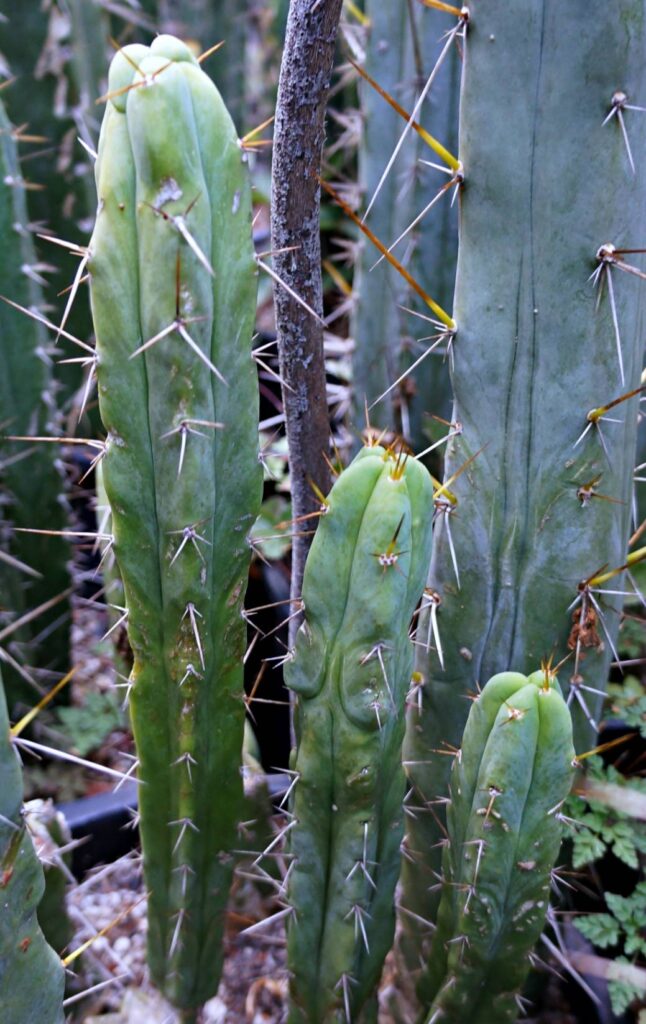 ↑ Father plant ↑
___
Trichocereus bridgesii SS02 X Trichocereus peruvianus/ ‘Juul’s Giant’ hybrid f. monstrosus
Another new release! The ever popular blue-blushed SS02 clone crossed with the unique and robust, blue-green peruvianus/Juul’s mutant. We are certain there will be a high incidence of monstrose and cresting mutants among the children and expect the glaucus skin of all shall push the boundaries of blue hues! Either way, the progeny are sure to become legendary! Z9a
[ 6 ] → 1 ~ Packet of 10 seed $22
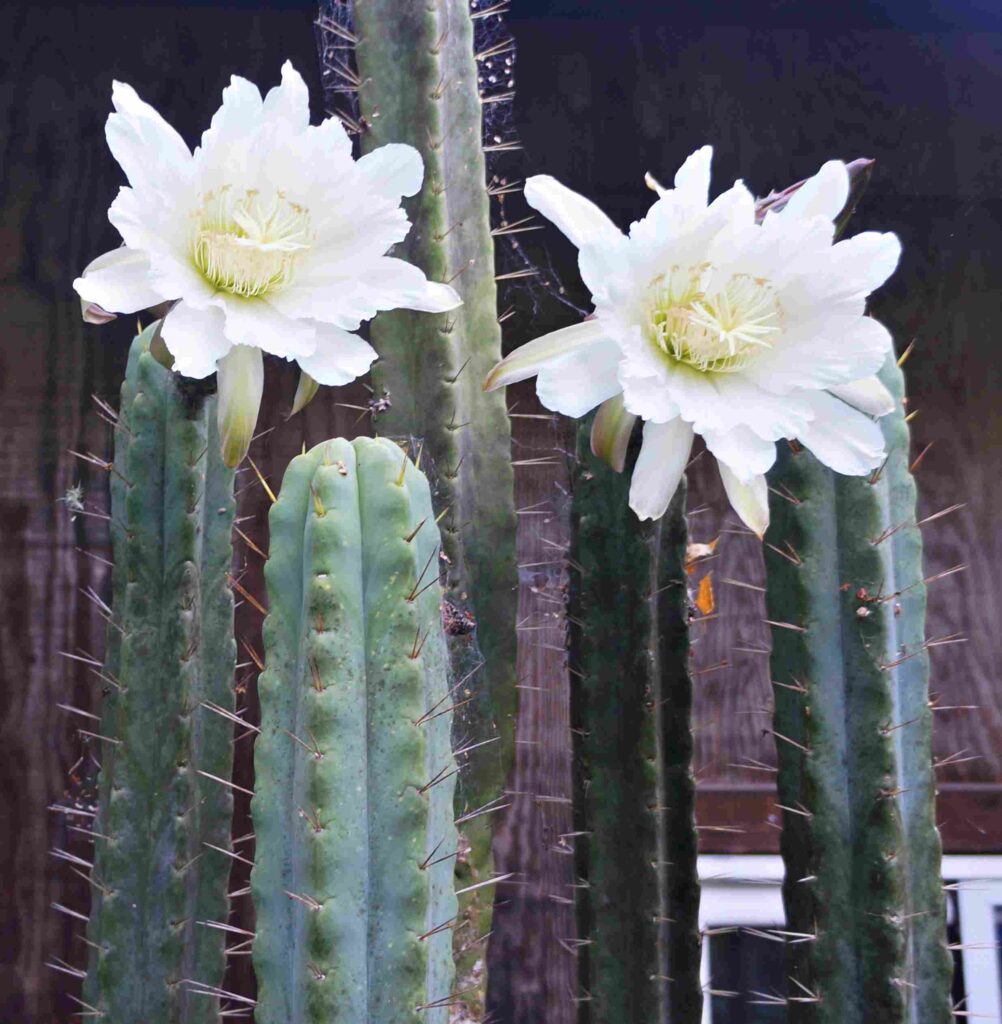 ↑ Mother plant ↑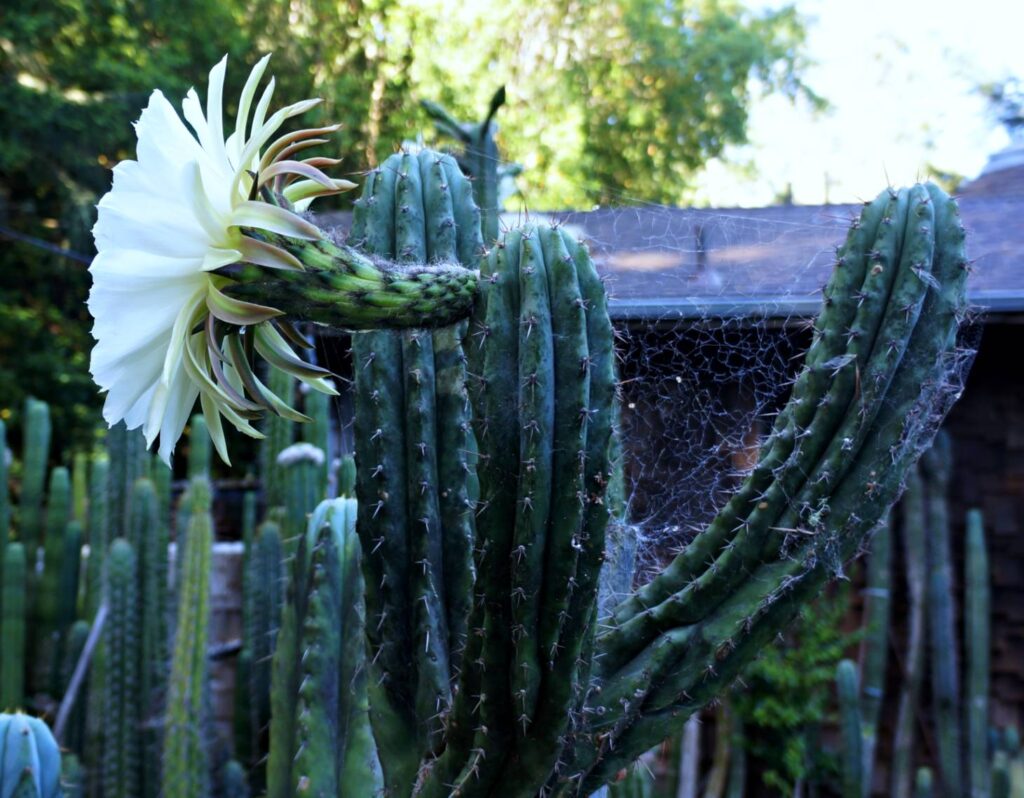
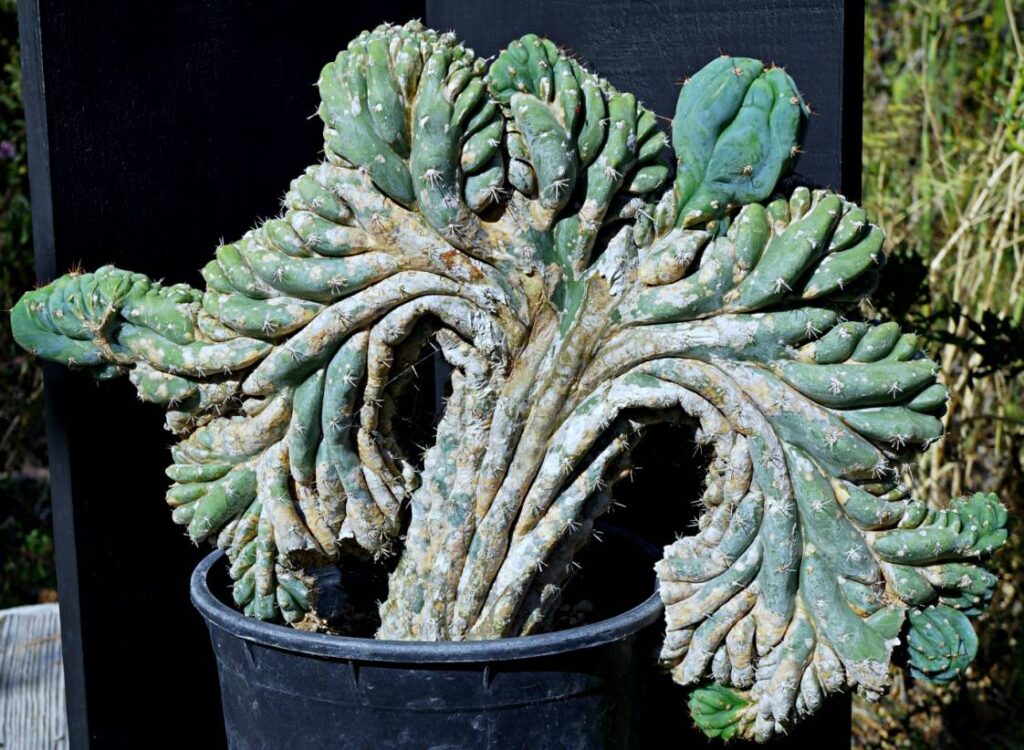
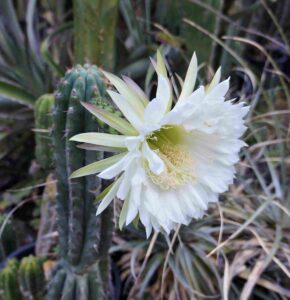 ↑ Father plant ↑
___
Trichocereus bridgesii SS02 X Trichocereus santaensis BK09511.7
A long awaited, stupendous hybrid of our two favorite clones! SS02 crossed with our santaensis accession from the lower Rio Santa Valley. Be among the first to sprout these! Z9a
[ 12 ] → 1 ~ Packet of 10 seed $20
Trichocereus santaensis BK09511.7 X Trichocereus bridgesii SS02
First ever offering of the opposite cross of these superb favorites! Z9a
[ 12 ] → 1 ~ Packet of 10 seed $20
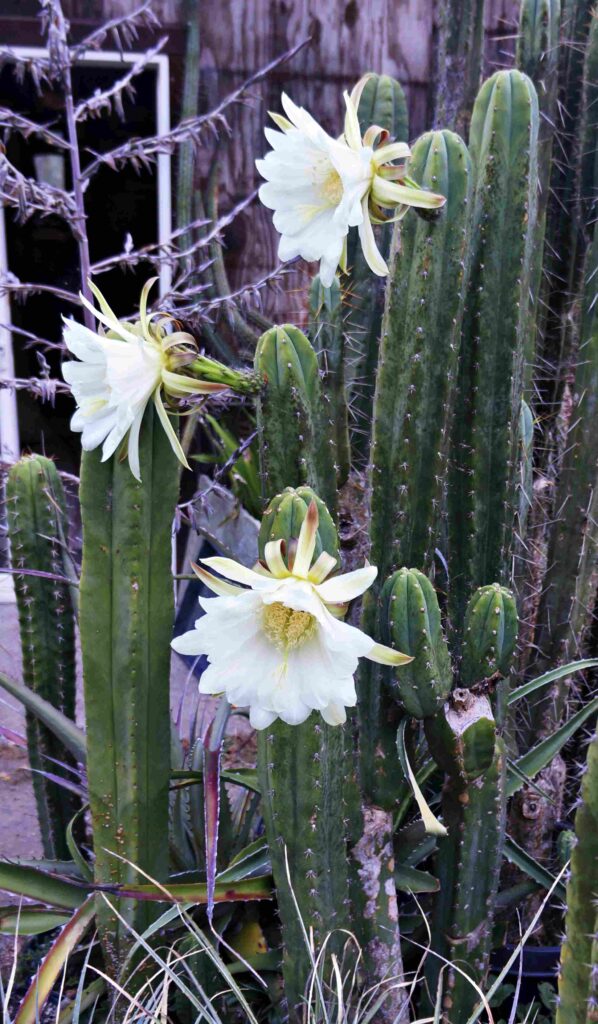 ↑ Trichocereus santaensis BK09511.7 ↑
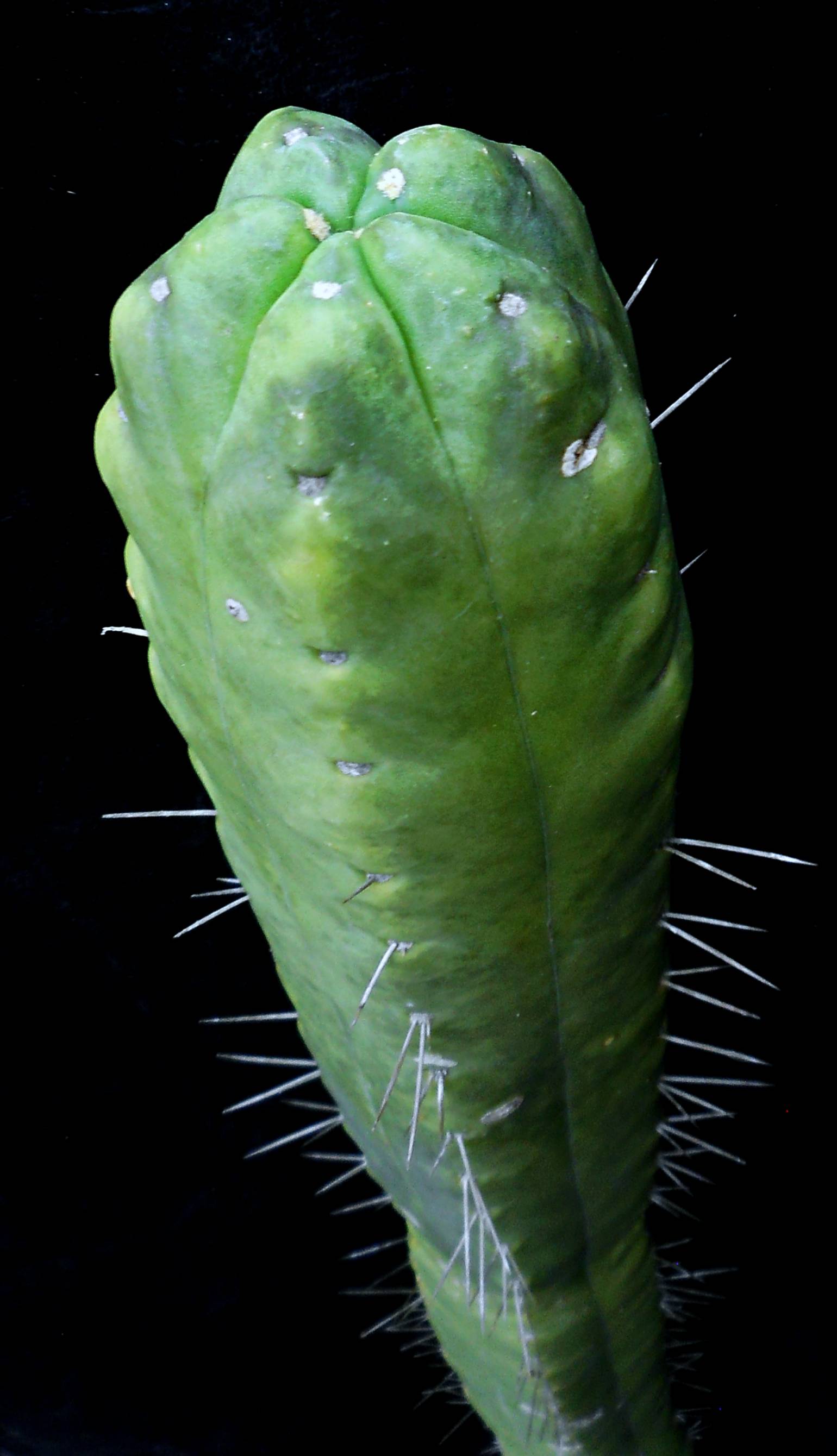 ↑ Trichocereus bridgesii SS02 ↑
___
Trichocereus pachanoi f. monstrosus/cristata X Trichocereus huanucoensis
Another new intro! Classic, clone A, “melted wax” to cresting mutant San Pedro fertilized by the impressive T. huanucoensis—a rare and desirable oversize species with tall blue-green stems, 4–6 rotund ribs, long spines, and white flowers. We expect robust progeny with unique mutations. First release! Z9a
[ 6 ] → 1 ~ Packet of 10 seed $16
↑ Mother plant: Trichocereus pachanoi f. monstrosus cl. A ↑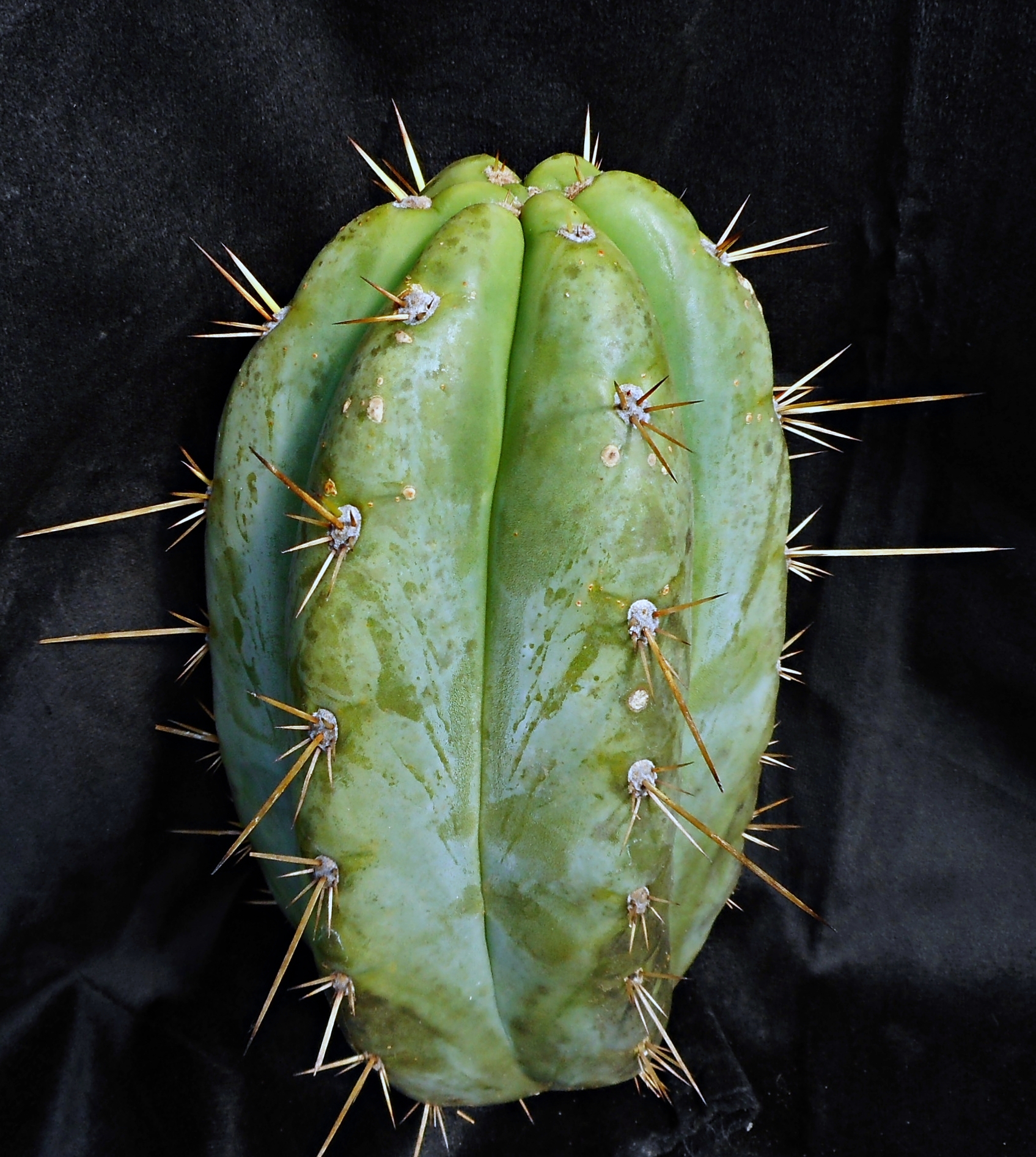 ↑ Father plant: Trichocereus huanucoensis ↑
___
Trichocereus scopulicola/grandiflorus X T. peruvianus/ ‘Juul’s Giant’ hybrid f. monstrosus
A very exciting new hybrid. An orange flowered T. scopulicola X T. grandiflorus hybrid with attractive dwarf stems, fertilized by our large blue-green peruvianus/Juul’s mutant. The monstrose/cristate genes and colored flowers insure great potential for utterly unique new plants! First offer. Z9a
[ 6 ] → 1 ~ Packet of 10 seed $20 SOLD
___
Trichocereus scopulicola X Trichocereus terscheckii/’huarazensis’ #2
A totally cool new hybrid! The coveted and nearly spineless T. scopulicola crossed with a hybrid of a terscheckii (on the spiny pasacana end) and the pachanoi clone T. ‘huarazensis’—thick stems to 8” diameter, numerous long yellow spines, fuzzy areoles and funnel-shaped cream colored blossoms. The resultant offspring are sure to be exceptional! First offering. Z8b/9a?
[ 5 ] → 4 ~ Packet of 10 seed $18 each Back in Stock!
___
Trichocereus tulhuayacensis KK337 X Trichocereus bridgesii f. monstrosus cl. C
One more fantastic introduction! The gorgeous spined, magenta flowered tulhuayacensis mated with the rarely offered T.b.m cl. C [slender, melted-wax to semi-normal stems—often 4 ribbed]. We are excited to see what strange stem forms, spines and flowers the progeny shall bear! Z8b/9a?
[ 5 ] → 1 ~ Packet of 10 seed $28
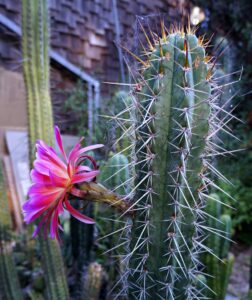
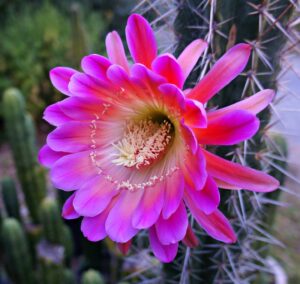 ↑ Mother plant: Trichocereus tulhuayacensis ↑↑ Father plant ↑
___
Trichocereus tulhuayacensis KK337 X Trichocereus huanucoensis
An exceptional new introduction! The gorgeous spined, magenta flowered tulhuayacensis mated with the robust T. huanucoensis—a desirable oversize species with tall blue-green stems, 4–6 rotund ribs, long spines, and white flowers. We expect amazing offspring with obese stems, unique spination and blossom colors. Due to extreme weather, we lost over 90% of the new hybrid fruit/seed which we’d painstakingly produced via careful and controlled hand pollination last season; this hybrid is from one of the few fruits we managed to salvage from the storms. Be the first to grow this hybrid! Z8b/9a?
[ 5 ] → 2 ~ Packets of 10 seed $16 each SOLD
___
Trichocereus tulhuayacensis KK337 X Trichocereus scopulicola/grandiflorus
Another fabulous new hybrid introduction! The gorgeously spiny, magenta flowered tulhuayacensis mated with an orange flowered T. scopulicola X T. grandiflorus hybrid with attractive dwarf stems. We expect exquisitely unique, floriferous progeny. Z8b/9a?
[ 4 ] → 1 ~ Packet of 10 seed $18 SOLD
___
♣
Succulent Seed
Aloe haemanthifolia (=Kumara haemanthifolia)
Liliaceae or Asphodelaceae. One of the rarest, unique and bizarre looking Aloe. 6–12” tall stemless clusters of thick, tongue-like green leaves with red margins, arranged like the pages of an open book. Scarlet-orange flowers. Looks like a dwarf, compact Aloe plicatilis. Endemic to rocky cliffs of the high mountains of the Fynbos, South Africa, between 4300–5300’. Considered critically rare. Said to be impossible to grow, but we’ve found them to be quite easy as long as you remember this is not a desert species but a plant from a cool, high rainfall alpine ecosystem. Provide a soil with excellent drainage, regular water, bright light and avoid prolonged hot temperatures. Seed can take a year+ to germinate and needs cool temperatures to sprout, best between 45–60° F—if they do not sprout this season for you, expect germination next autumn/winter. Z7/8a?
[ 6 ] → 2 ~ Packets of 5 seed $20 each ♥ New ♥—Fresh Harvest!
[Seedlings available, see the Succulent Plants section ↑]
___
♣
Andean Ethnobotanical Seed
[We have a few other seed of Andean Food Crops on the Andean Tuber Crops page]
Bomarea sp. ‘Andean Climbing Hybrids’
Alstroemeriaceae or Liliaceae. Open pollinated mix from our various Andean Bomarea accessions of climbing species with annual twining vines and clusters of perennial edible tubers. Should produce some very lovely and unique new hybrids. The Andes boasts 80+ species of these fantastic climbing lilies. Known regionally as “sullu-sullu”, “orq-orqo” or “paicha-paicha”, some species are used to treat venereal disease, infertility, kidney pain and hemorraging. They produce clusters of round edible tubers, some species were cultivated as a tuber crop in pre-Columbian times, though the palatability of many wild species is untested. The young shoots are also eaten like asparagus. Extremely showy clusters of multicolored tubular flowers and ornamental seed pods. Bomarea can have slow, erratic germination, scarifying the seed and warm/cold/warm periods help. Easily grown, well draining soil, sun to part shade. The vines/stems die back and are dormant winter to late spring/summer. Bomarea are another species often found with Trichocereus in habitat. Hardy to Zone 8 and possibly lower if well mulched.
[ 8 ] → 2 ~ Packets of 20 seed $12 each
[ 3 ] → 1 ~ Packet of 100 seed $35
(For Bomarea plants, see the Andean section ↑)
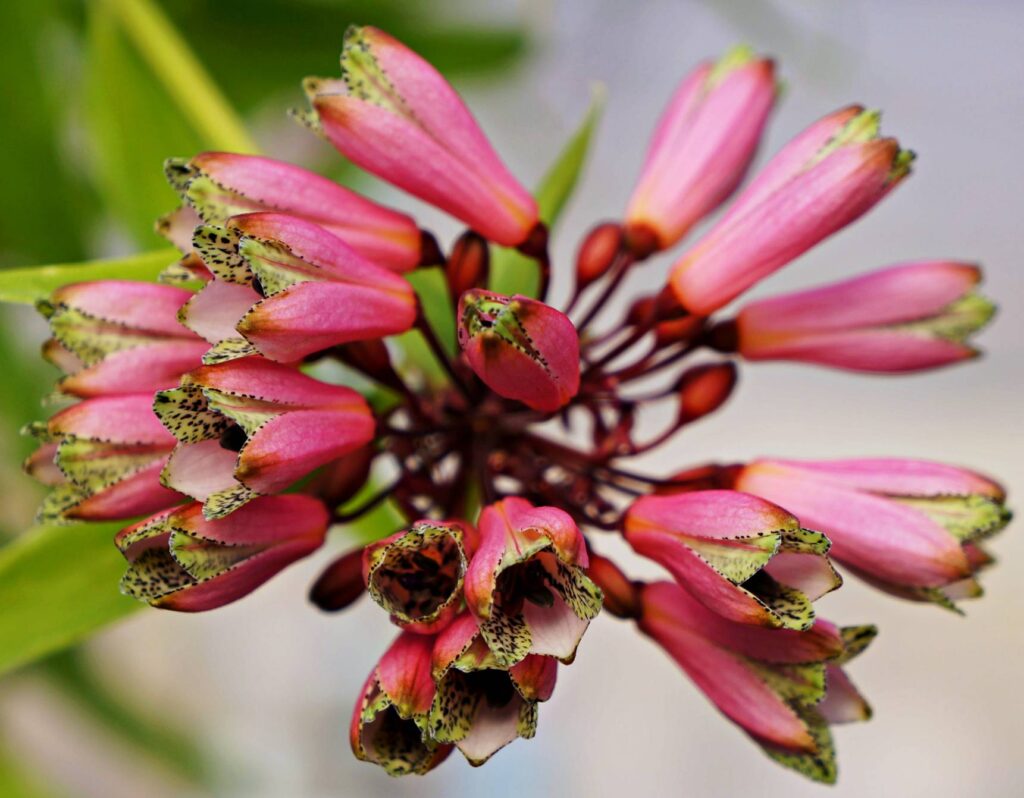 ↑ Bomarea aff. tarmensis BK08608.1 ↑
 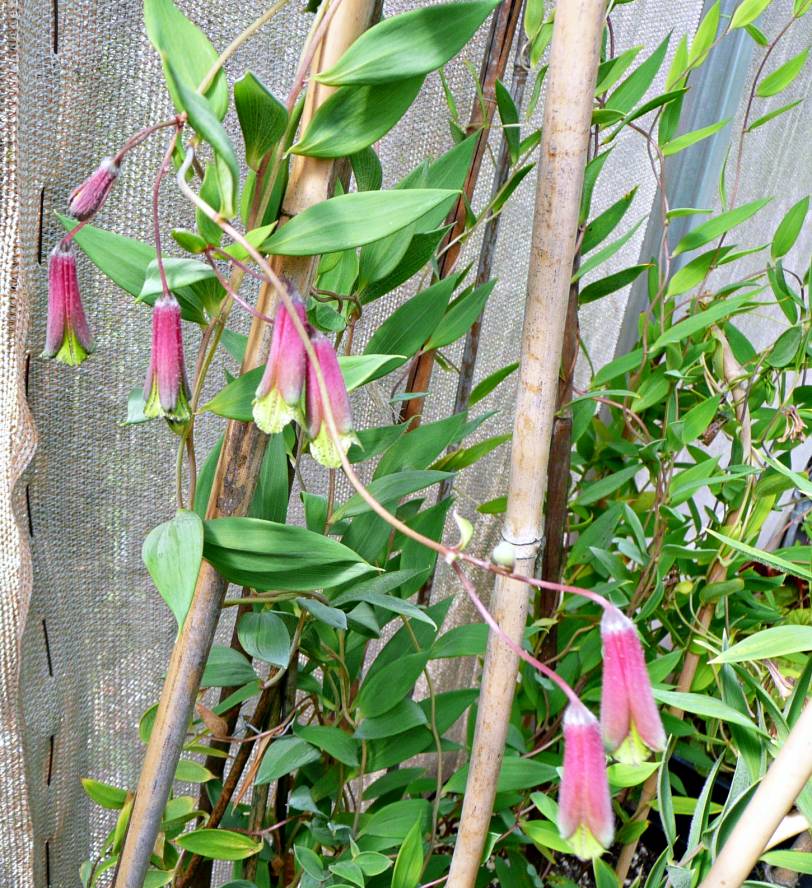 ↑ Bomarea sp. BK08517.13 ↑
 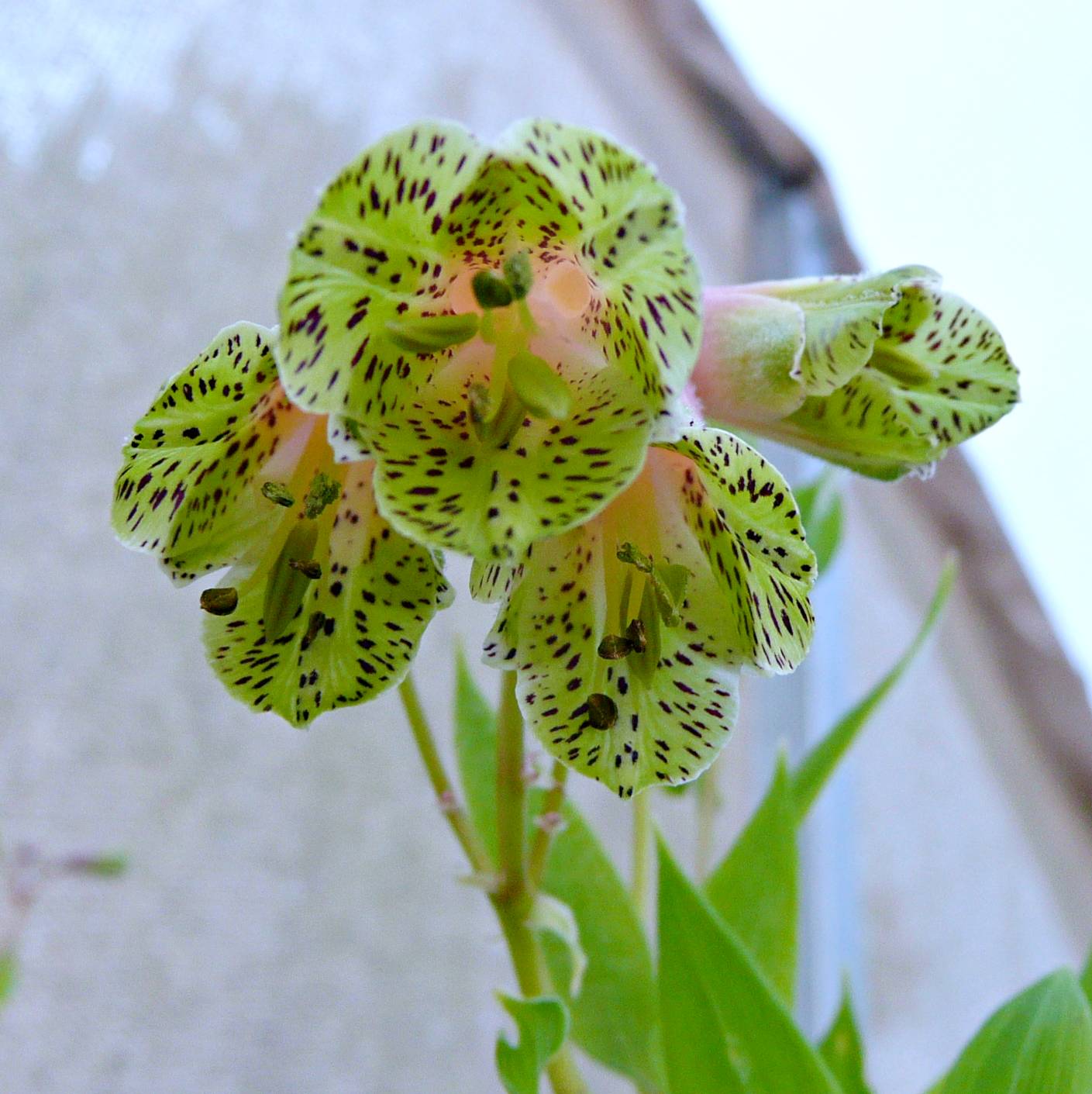 ↑ Bomarea sp. BK085264.8 ↑
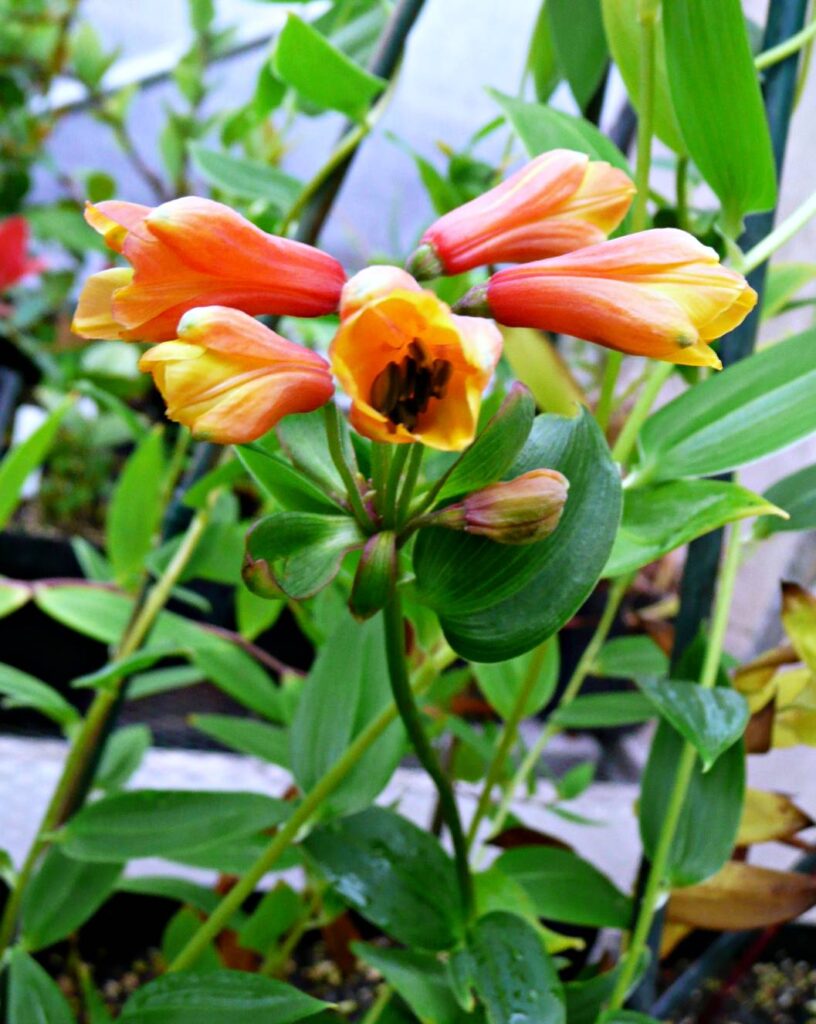 ↑ Bomarea aff. macusanii BK08524.11 ↑
 ↑ Bomarea aff. ovata BK14513.17 ↑
↑ Examples of some of the mother & father Andean Bomarea species ↑
___
Brugmansia sanguinea NL61708 “Tree Datura” “Huanto” “Borrachero” “Huanduj” Fresh harvest!
Solanaceae. Arborescent shrub to 6–15’+ tall with large downy leaves. 6″+ trumpet-like flowers that fade from yellow to blood red. Egg shaped fruit. Neil Logan accession originally from bushes that grew with Trichocereus bridgesii at Urimiri Hot Springs, Bolivia. All parts of the plant are widely used in ethnomedicine. Potentially toxic and a visionary deliriant used shamanically. A key ingredient in the Cimora elixirs of Peru. Easy to grow, may bloom in the first year from seed. Fresh harvest! Z9a/b
[ 12 ] → 8 ~ Packets of 20 seed $12 each
[ 4 ] → 2 ~ Packets of 100 seed $36 each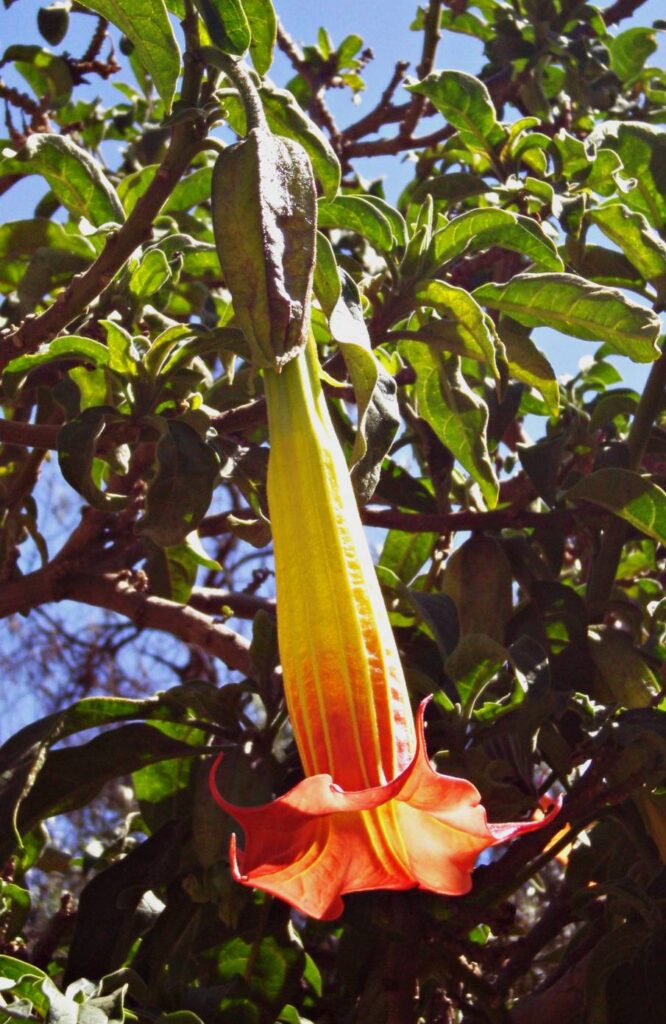
___
Buddleja tucumanensis BK10512.2 “Yurak-wasa” “Yurayuraj”
Buddlejaceae. Lovely shrub to 5–8’ tall. Downy, dark green and silver-grey, lanceolate leaves 4–8″ long with a refreshing fruity-citrus scent! Terminal spikes of rounded, yellow and orange flower clusters, sweetly perfumed. Growing on dry hillsides with Trichocereus riomizquensis and Cleome boliviensis, Totora, Cochabamba, Bolivia, 9,000′. Used for respiratory and cardiovascular issues, urinary troubles and to wash wounds. The essential oil of the leaves has shown insecticidal activity and is made up of 28 components including thujene, pinene, limonene, bergamotene, etc. We were pleased to introduce this unique aromatic species into cultivation. Fairly drought tolerant. Regrows from base after a hard frost. An alluring companion for your Trichocereus plantings. Surface sow seed, germinates in 3–8 weeks. Z9a
[ 8 ] → 2 ~ Packets of 75+ seed $10 each
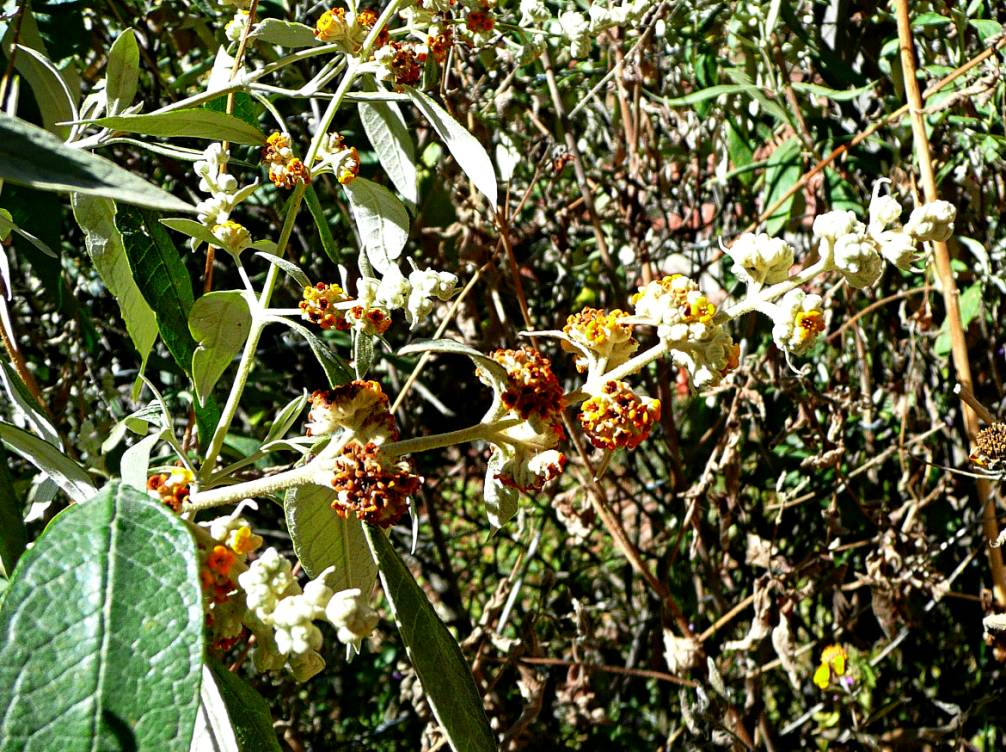 ↑ Plant in habitat, Totora, Cochabamba, Bolivia ↑
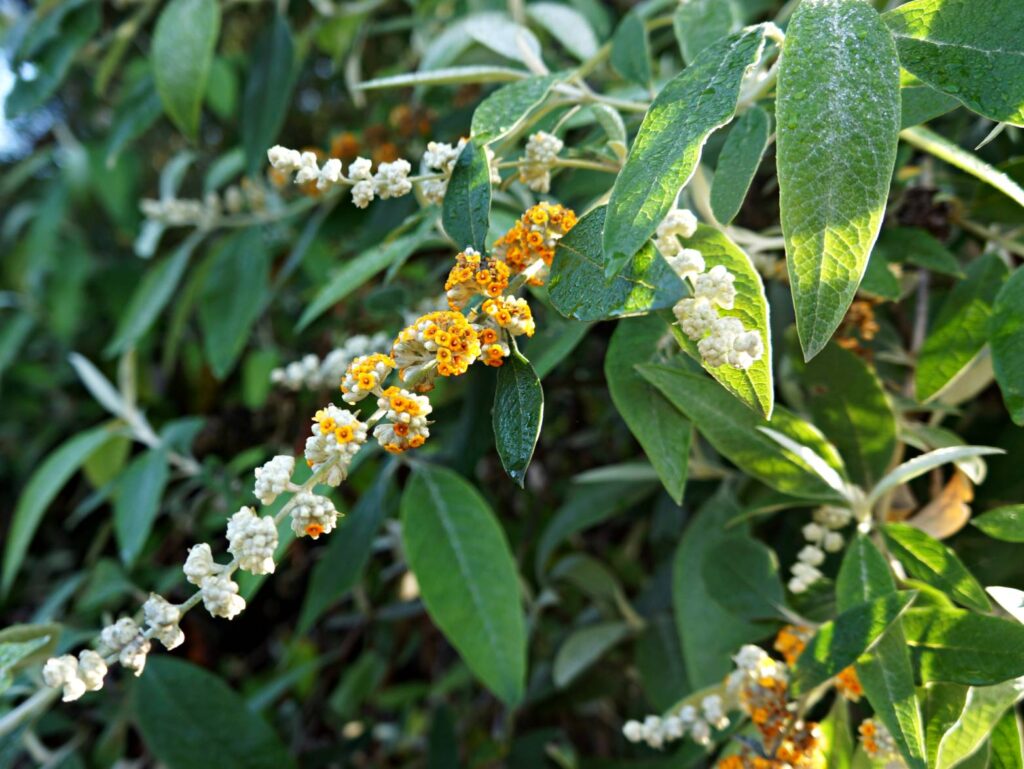 ↑ Plant in cultivation ↑
___
Calceolaria sp. BK14514.10
Scrophulariaceae. Large vine to 15’+. Downy soft, dark green simple leaves in arranged in whorls of 2–3 along the stem. Cascading inflorescence with hundreds of lemon-yellow pouch flowers, a ‘waterfall’ cascade of brightness! We encountered this magnificent plant growing up through shrubs and trees in the cloud forest near an Incan canal above Choquequirao, Cusco Dept., Peru, 10,000’. Prefers rich soil, filtered light and something to climb on. Resprouts from lower stems after hard frost. Surface sow the tiny seed and keep warm to sprout in 1–3 weeks. A rare chance to grow this stunning, peerless species! Z9a?
[ 5 ] → 1 ~ Packet of 30–40+ seed $14 SOLD
___
Chenopodium sanctae-clarae
Chenopodiaceae. An ornamental, semi-woody shrub to 3’+. Deep green, oak-like, edible leaves. Quinoa relative endemic to the arid coast of Santa Clara Island, Juan Fernandez Archipelago, Chile. Only one small restricted population of just over 100 plants remain, hovering on the precipice of extinction. Propagation and distribution is vital to survival! Surface sow the small seeds; 3–6 weeks warm to sprout. Easy to grow, makes a great addition to the perennial garden; protect from heavy frost. Save the seed your plants produce and pass it along. Z9b
[ 5 ] → 2 ~ Packets of 20–30+ seed $14 each 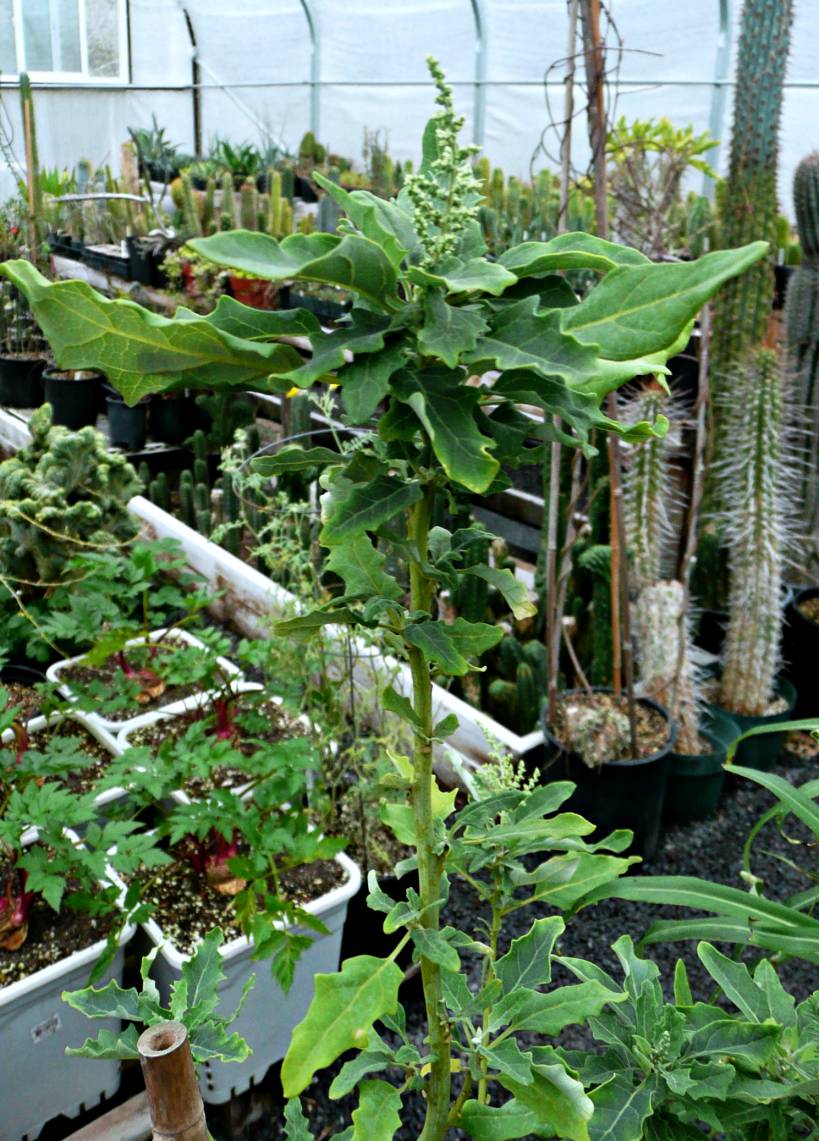
___
Ipomoea sp. BK09508.8 “Chavín Morning Glory”
Convolvulaceae. Small, floriferous vine with heart shaped leaves and cute 1″ lavender colored morning glory flowers. Growing on Dodonaea viscosa and Kageneckia lanceolata bushes, near several of our Trichocereus sp. BK09 accessions, along with Agave cordillerensis, Commelina fasciculata, Valeriana sp., Tagetes sp., Pseudonoseris glandulosa, Bomarea rosea, Puya sp., Peperomia galioides, etc.; western slopes above the north end of the modern town and ancient ruins of Chavín de Huántar, 10,700’; eastern slopes of the Cordillera Blanca, Ancash Dept., Peru. We only distributed a few seeds of this delightful species once over 15 years ago to individuals who supported our 2009 expedition, then we nearly lost this accession entirely. Luckily, the scant, aged seed proved highly viable after a decade; the plants bloomed prolifically, producing a decent seed harvest. So far, this has been a reseeding annual species for us but it may perennialize in milder climates. Knick seed for quickest germination. A great natural companion to grow with your Trichocereus. Z9a?
[ 6 ] → 2 ~ Packets of 10 seed $12 each
[ 2 ] → 1 ~ Packet of 50 seed $38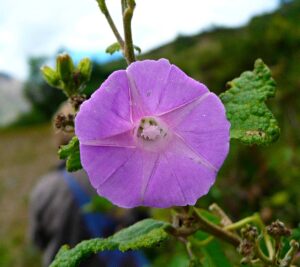
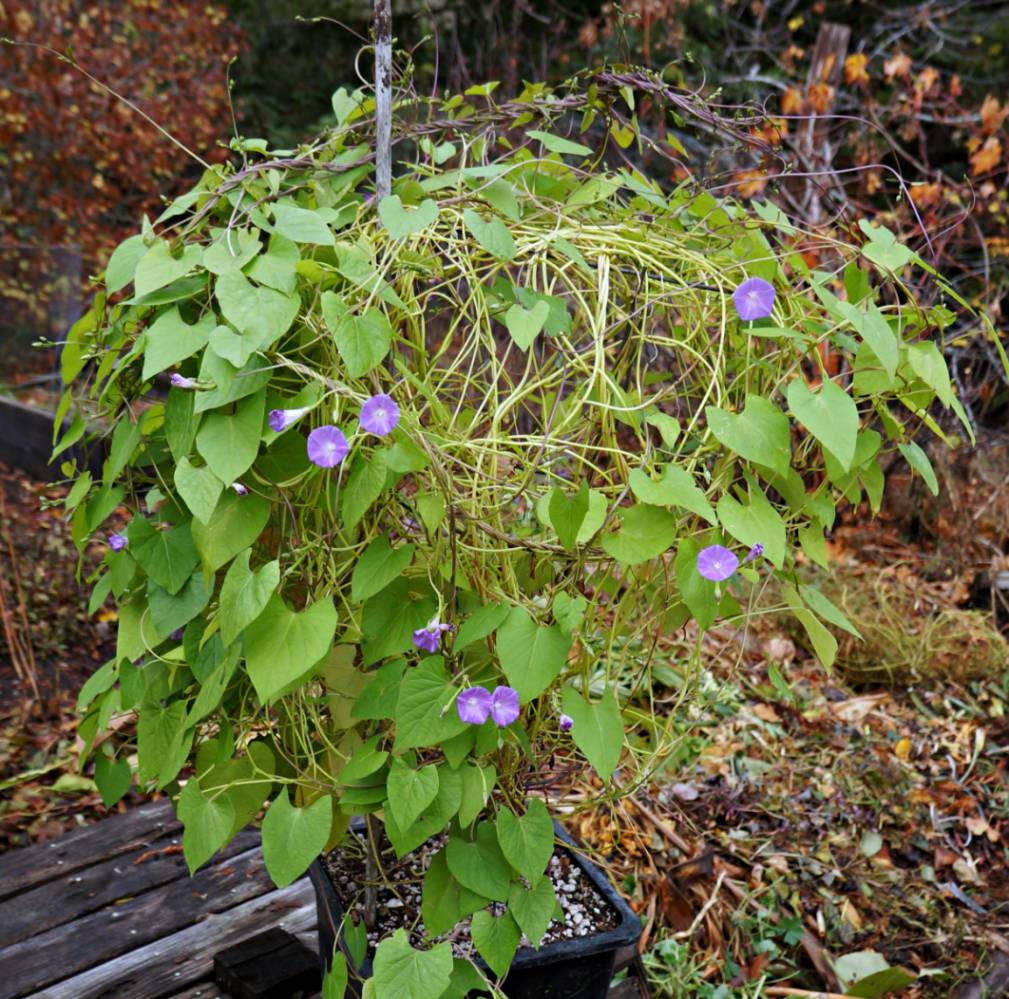
___
Nicotiana rustica BK09508.1 “Tutuma” “Chavín Tobacco”
Solanaceae. Rounded leafed annual to 2–3′ with yellow-green flowers. The classic, high nicotine, shamanic tobacco. Our collection from edge of cultivated fields near the 3000 year old site of Chavín de Huántar, Ancash Dept., Peru, 10,000′. We originally thought this was N. thrysiflora, but once it flowered for us at home it’s clear that it’s a distinct, extra floriferous N. rustica strain. Widely utilized in traditional healing, heated leaves used for rheumatism. Easy to grow, surface sow seed. Z9b
[ 12 ] → 1 ~ Packet of 40–50+ seed $12 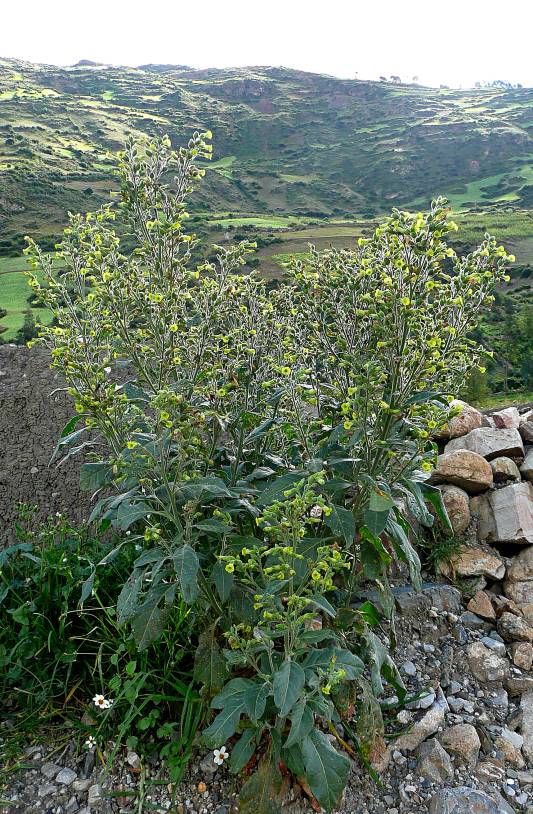
___
Oenothera sp. BK10511.4 “Andean Primrose”
Onagraceae. A superb ornamental! Small perennial species that forms rosettes of slender dark green leaves blushed purple in strong light, growing erect to 12–24″ tall when blossoming. Deep, fiery-orange primrose flowers all along the stalk. One of the nicest primrose we’ve met, found growing amongst rocks in Puya raimondii habitat at 13,300′ along with Puya herzogii BK10511.5, bunch grasses, Mahueniopsis sp. BK10511.6, the miniature Pernettya prostrata BK10511.3, Berberis sp., Phacelia sp., Cajophora sp., Bacharis sp., etc., Cordillera de Vacas, near Rodeo, Cochabamba Dept., Bolivia. Leaves of Oenothera species are used for wound healing in the Andes. This striking species has done very well in our flower garden and growing with the potted Trichocereus and Puya. Surface sow seed. We suspect it could be hardy to Z7 or 6.
[ 6 ] → 2 ~ Packets of 30–40+ seed $9 each
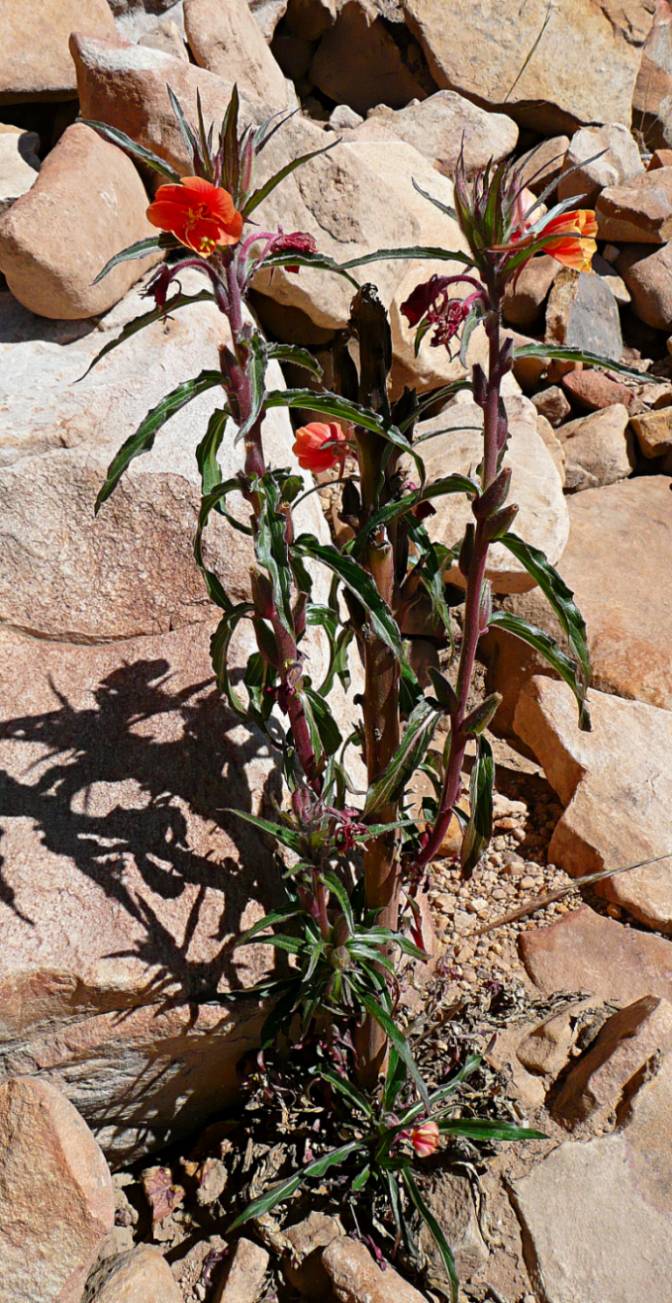
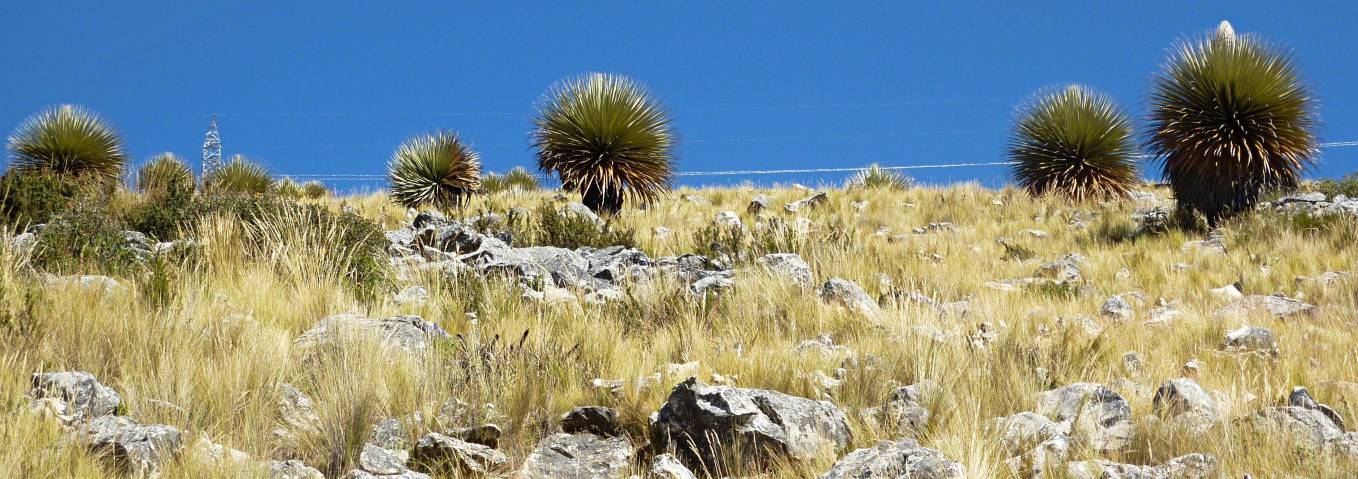 ↑ Oenothera sp. BK10511.4 habitat, 13,300′, Cochabamba, Bolivia ↑
___
Passiflora umbilicata BK10511.13 “Locoste”
Passifloraceae. Large tendrilled vine, 10–30’+, with dark-green, tri-lobed leaves. Astonishing blue-purple and lavender flowers to nearly 6″ across, probably the most beautiful passion flower we’ve seen! 2–3″+ round to cylindrical fruit with edible seeds and pulp. Leaves used medicinally for gastrointestinal disorders. Growing on Barnadesia shrubs in remnant Polylepis and Podocarpus cloud forest, near Kewina Casa, about 11,500′, Cochabamba, Bolivia. Has grown very well for us and seems perfectly hardy. Slow, erratic germination in 1–6+ months, cold stratification helps. Z8a?
[ 6 ] → 2 ~ Packets of 10 seed $9 each
[ 3 ] → 1 ~ Packet of 50 seed $33 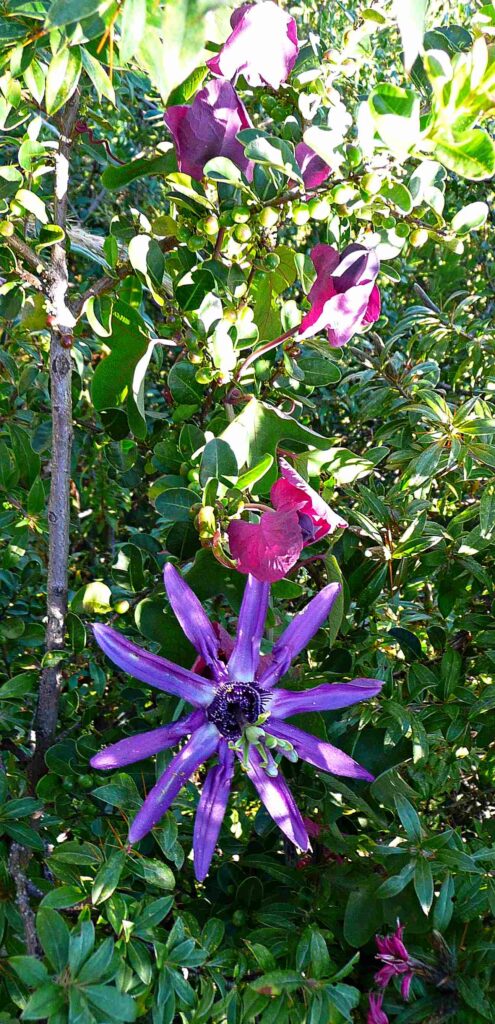
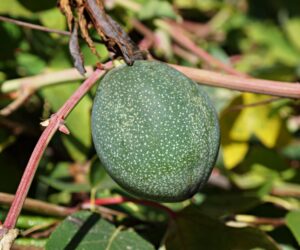
___
Rhaphithamnus spinosus
Verbenaceae. Unusual and alluring shrub 5 to 10’+. Young branches are spiny and new shoots often resemble a Pereskia cactus. Boasts a generous profusion of tubular lavender flowers followed by glossy purple-blue fruits — reportedly edible, but unlikely to become anyone’s favorite with an odd flavor similar to Trametes mushrooms! The foliage turns an inciting purple during winter. This beautiful Chilean species makes a unique addition to any garden or landscape. Part shade to sun, hardy once established. Seed can be slow to sprout, 1-12+ months; does best with 30+ days cold stratification. Z7b
[ 5 ] → 2 ~ Packets of 10 seed $14 each
[ 2 ] → 1 ~ Packet of 50 seed $44
(For plants, see the Andean section ↑)
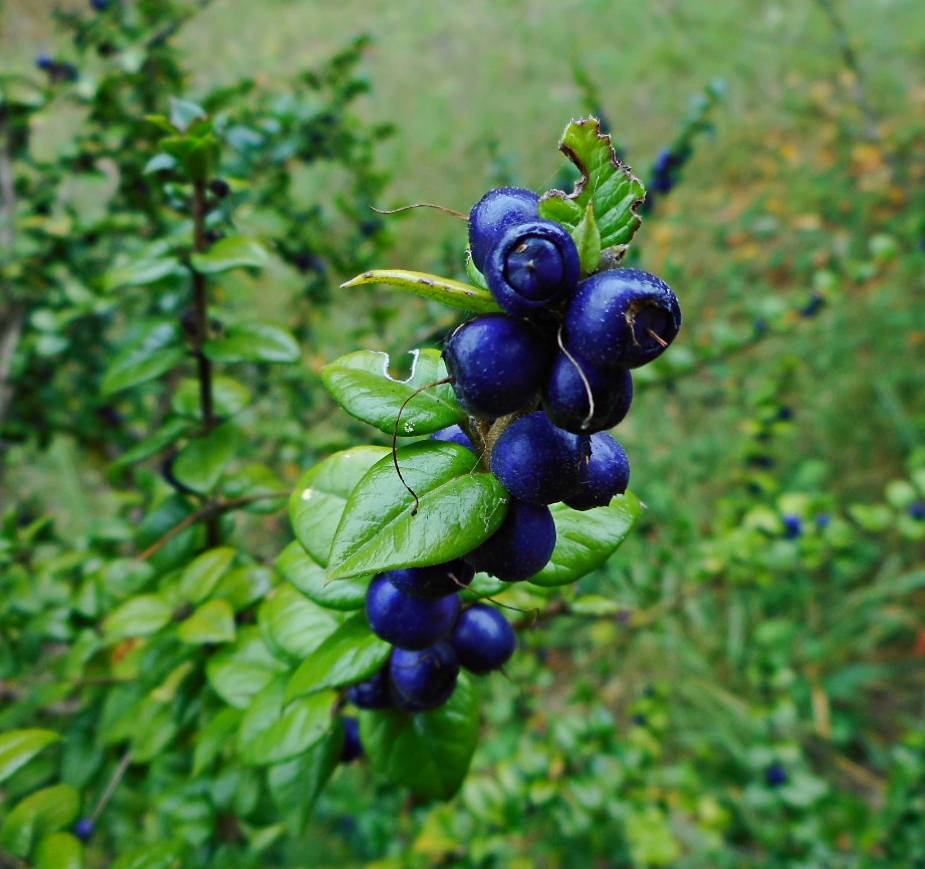 ___
___
♣
Order Form
~~~~~~
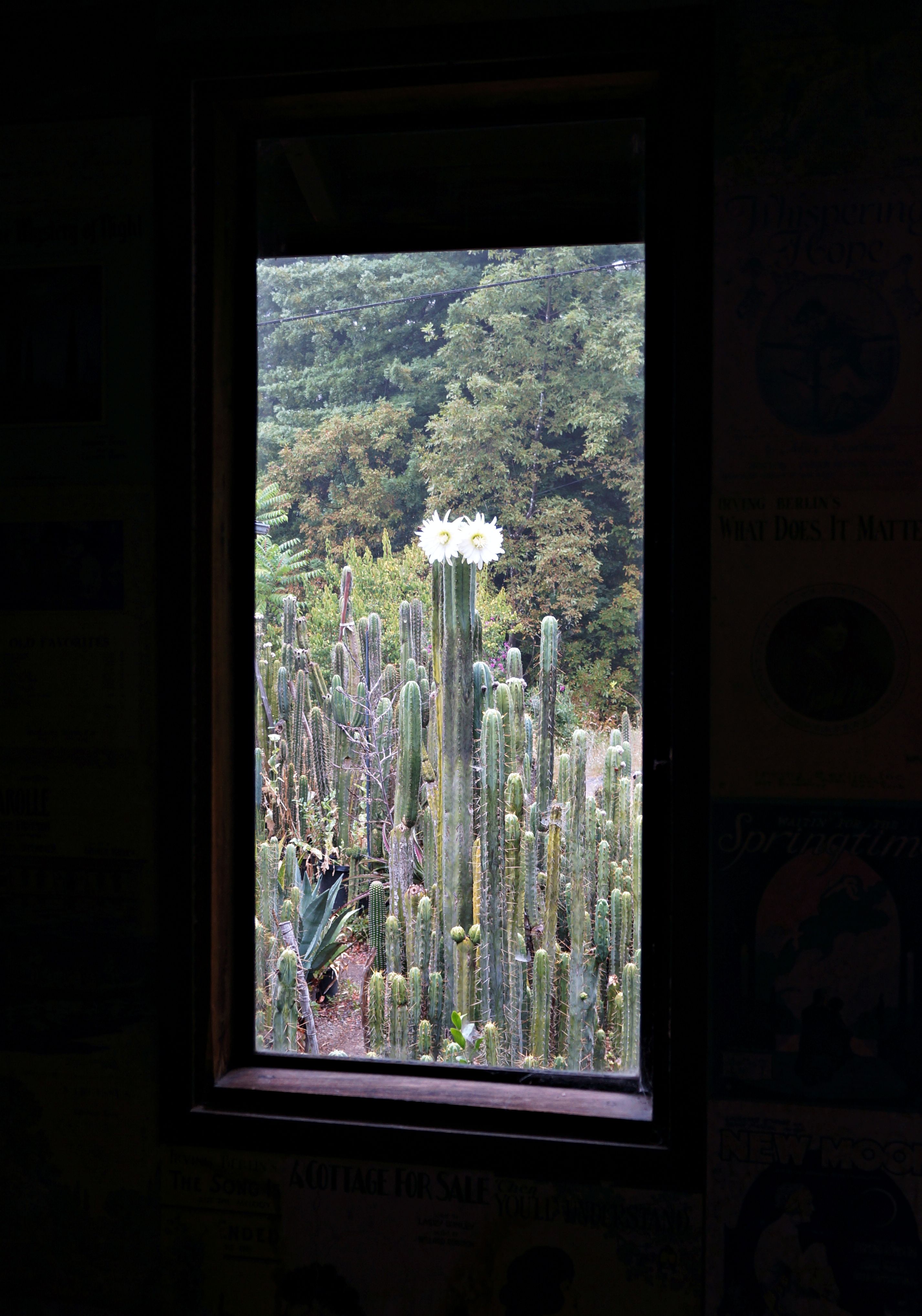
BOOKS
Support your Independent Bookseller!
See below the listings for book shipping rates ↓
Please email to confirm availability prior to sending payment –
benkamm@monitor.net or sacredsucculents@hushmail.com
Books are shipping year round!
__
Trichocereus pachanoi scanned at St. Lawrence University’s Microscopy & Imagery Center,
used with permission of J. Pflugheber & S. F. White, © 2023.
Microcosms: Sacred Plants of the Americas ♥ New ♥
by Jill Pflugheber, Steven F. White
Stunningly beautiful confocal microscopy images of sacred plants of the Americas are accompanied by their scientific, historical, and cultural narratives. For years I’ve contributed plants to Steve White and Jill Pflugheber’s fascinating scientific art project that birthed this gorgeous book. Wondrous images of sacred plants, a stunning hidden dimension revealed through confocal microscopy. I’ve also contributed photographs from the nursery and my Andean expeditions to the book, as well as writing sections on wild Ullucus tubers and the Andean keystone tree, Polylepis. Follow a transformative journey through the book which brings together anthropology, art, spirituality, and ancient wisdom together with the mesmerizing detail of Jill’s cutting-edge confocal plant microscopy. Microcosms reveals the inner lives of plants and fungi revered by Indigenous communities as healers, storytellers, and guides. Illustrating over 50 culturally-significant plants, Microcosms opens a portal into a world where ancestral knowledge and contemporary science converge. I encourage you to read my commentary on the project: https://www.microcosmssacredplants.org/commentary/ben-kamm
[ 6 ] → 4 ~ Oversize, hardcover copies, 264 pages $55 each (5 lbs)
__
GRAFTING GUIDE
By Ben Kamm
Grafting of a slower growing cactus species onto a faster growing stock increases plant growth significantly. It is a viable means of quickly producing mature specimens for seed production and vegetative propagation. This illustrated guide covers all aspects of grafting, from week old seedlings to mature specimens. Includes tricks we have learned over the years that help make this valuable conservation technique accessible and practical. Focuses mainly on Cactaceae but coverage is given to Euphorbiaceae, Apocynaceae and other succulent families.
[ 8 ] → 2 ~ Copies, staple-bound softcover $9.00 each (8 oz)
__
GROWING PLANT MEDICINE: Volume 1
by Richo Cech illustrations by Sena Cech
Brand new book from master plantsman Richo Cech, a much-expanded version of his classic The Medicinal Herb Grower. Draws on the author’s lifetime of cultivating and living with an amazing diversity of medicinal plants. Pretty much everything you need to know about natural organic gardening techniques, from seed to harvest, for a great majority of healing herbs. Newly augmented with bioregional medicinal plant recommendations, garden plans and materia medica. Arranged by plant families, alphabetically by kinship and common name—covers families A through H. Volume 2, which is in production, will cover the rest of the alphabet. This is hands down the best reference for medicinal plant cultivation there is. Delightfully illustrated by Richo’s daughter Sena, full of personal anecdotes and life stories—not only useful, this book is a joy to read!
[ 6 ] → 1 ~ Copy, softcover, 354 pages $29.95 SOLD
__
The Health Professional’s Guide to Dietary Supplements
by Shawn M. Talbott and Kerry Hughes
This useful quick-glance reference helps students and health professionals educate themselves and their patients/clients about the scientific evidence for and against more than 120 popular dietary supplements. Supplements are logically grouped into 12 chapters based on their primary desired effect, such as weight loss, joint support, and sports performance enhancement. The authors give each supplement a one-to-five-star rating based on the level of scientific substantiation for each of its major claimed effects. The book highlights crucial safety issues regarding each supplement and sets forth recommended dosages for particular effects. A quick-reference appendix lists all the supplements alphabetically with their star ratings. First edition. We have just one copy left of this helpful volume!
[ 3 ] → 1 ~ Copy, softcover, 444 pages $60 (2 lbs) September SALE! $32
__
The PLEASURE: Animist Encounters with Poison Oak ~Signed Copies!~
by Erik Davis, illustrations by David Y. D’Andrea
Lessons from the Poison Path
A lively and fascinating essay by our good friend Erik Davis, inspired by a hike we took just downstream of Sacred Succulents the first summer of the pandemic. Poison oak is a integral member of California’s ecology, a plant that demands attention and prudence, yet little has be written about this adaptable species and many mysteries still surround the wily nature of Toxicodendron diversilobum. Scratching beneath the surface of science and legend, Erik keenly discerns poison oak’s anthropomorphic qualities, including that of a fierce and mercurial guardian, a tricky teacher, and a vigorous ally to the endangered “wilds”. A must read for all who’ve encountered the plant and it’s troublesome effects—what some perversely describe as the pleasure. With a gorgeous full color cover and interior black & white illustrations, this informative chapbook is a lovely limited collector’s item. Our copies are signed by the author.
[ 12 ] → 2 ~ Copies, Signed Chapbook, 24 pages $20 each (8 oz) 
__
PLANTS USED BY AMAZON SHAMANS IN THE AYAHUASCA DRINK
by Luis Alberto Lopez Vinatea
This hard to find little book covers over 120 plants that are known to be used in the Ayahuasca potions of Peru. Lists the scientific name of each plant, plant family it belongs to, common and indigenous names, geographical distribution, chemical composition, herbariums where voucher specimens are deposited, and its reported effect as an additive to the brew. Introduction and a brief overview of the ayahuasca phenomenon in Spanish. A good reference source.
[ 15 ] → 2 ~ Copies, softcover, 80 pages $15 each (8 oz) 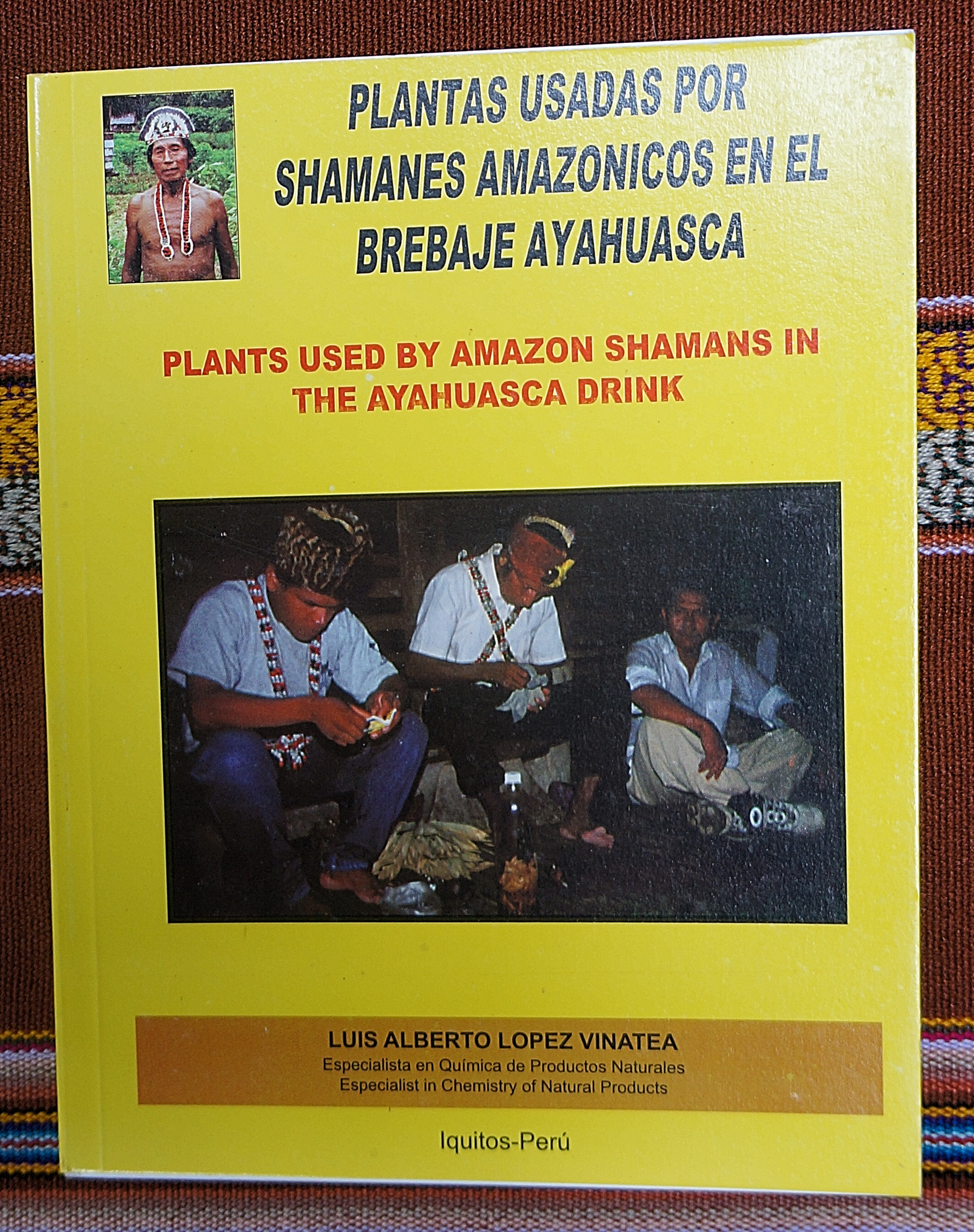
__
… BOOKS BY JONATHAN OTT …
Natural products chemist, ethnobotanist, scholar, conservationist, linguist and author, Jonathan Ott is one of the world’s foremost authorities on the botany, history, and chemistry of shamanic plants. Mentored by mycologist R. Gordon Wasson, ethnobotanist Richard Evans Schultes, and chemist Albert Hofmann. Jonathan currently manages a biological preserve in eastern Mexico. We are the US distributor for his books, bulk inquiries are welcome.
We are heartbroken to report the unexpected death of Jonathan Ott on July 3rd due to complications with sepsis.
We miss our dear friend terribly. The world is so much richer for the 76 years he was here…
♥
To stay informed about deluxe edition book releases and the work of Jonathan Ott, sign up for the email list at –
https://lists.sonic.net/mailman/listinfo/jonathanottbooks
__
THE AGE OF ENTHEOGENS & THE ANGELS DICTIONARY
by Jonathan Ott
A fantastic read, one of Ott’s most accessible books. “A radical re-examination of the history of our western civilization, exploring the brutal suppression of ecstatic, experiential, natural religions from The Age of Entheogens, by the 1600-year-old Pharmacratic Inquisition, leading up to the contemporary Entheogenic Reformation.” Followed by a dictionary-style lexicon of words pertaining to shamanism and entheobotany; made in response to R. Gordon Wasson’s call for “a vocabulary to describe all the modalities of a Divine Inebriant”.
[ 25 ] ⇒ 4 ~ Softcover copies, 160 pages $26 each (1 lb)
Bulk Wholesale offer: 5 softcover copies for $90 [inquire for availability]
[ 12 ] ⇒ 2 ~ Hardcover copies $55 each (1 lb)
Bulk Wholesale offer: 5 hardcover copies for $195 [inquire for availability]
__
PHARMACOTHEON: Entheogenic Drugs, Their Plant Sources & History, 2nd edition
by Jonathan Ott
If you get only one book on the topic of entheogenic plants and compounds, this is it, the most complete reference book, a dense 640 pages covering 1,110 species with the largest bibliography ever compiled on the subject: 122 pages of 2,570 references; plus a botanical Index of 16 pages and a densified index of 30 pages with 2,310 topics. Here you will find everything you ever wished to know, and much more. Accurate, definitive, and surprisingly entertaining—even more than three decades after its first publication. Foreword by Albert Hofmann. This is the updated, densified 2nd edition, only released in softcover (other than deluxe signed copies that sold out 25+ years ago).
[ 15 ] ⇒ 3 ~ Softcover copies, 640 pages (2nd edition, densified) $55 each (3 lbs)
Bulk Wholesale offer: 5 hardcover copies for $195 [inquire for availability]
PHARMACOTHEON: 1st edition — long out of print & collectible!
The original, released in 1993. We had a few remnant hardcover and sold out of this recently, though we just discovered an untouched case of the 1st edition softcover, which had originally sold out in the mid-90s! We offer them here for the serious collector. A historical artifact and sound investment, we’ve seen them go for hundreds elsewhere online.
[ 6 ] ⇒ 1 ~ Hardcover copy (1993, 1st edition) $110 SOLD OUT
[ 12 ] ⇒ 2 ~ Softcover copies, 640 pages (1st edition) $80 each (3 lbs) 
__
PHARMACOPHILIA or The Natural Paradises
by Jonathan Ott
An irresistible, even poetic book addressing the spirituality, law, pleasure and science of psychoactives. Here Ott erects a theoretical framework behind our eternal enthusiasm for psychoactive plants and compounds. The book consists of a concise, entertaining and readable exposition of this theory, followed by detailed end-notes which substantiate this through more than 700 detailed references: tied-together with a index of more than 1,000 topics. Ott’s essential contribution towards edulcorating and excising ethnopharmacology’s errant epistemes. Through this delightful book, Ott educes the melodious and beneficent paradigm of pharmacophilia—a completely natural and healthy love of “drugs”, our shortest route to the Natural, not Artificial, Paradises. A must read!
[ 25 ] ⇒ 4 ~ Softcover copies, 192 pages $26 each (1 lb)
Bulk Wholesale offer: 5 softcover copies for $88 [inquire for availability]
[ 12 ] ⇒ 2 ~ Hardcover copies $55 each (1 lb)
Bulk Wholesale offer: 5 hardcover copies for $195 [inquire for availability]
__
… SIGNED DELUXE EDITIONS of JONATHAN OTT’S BOOKS …
We are currently working with Jonathan on the publication of what is sure to become an historical phenomenon—a deluxe series of twelve volumes, including five new titles and five new editions of his long-out-of-print books. These hand-made limited editions will be leather-bound, signed & numbered, slipcased collector’s volumes. We are elated to report that renowned ethnobotanical painter Donna Torres is producing original art for the full-color frontispieces. These are one-time Editions which will not be reprinted! We’ll endeavor to release two titles a year as part of a collectible set in this series. Production is underway, the launch to this exceptional series is a two-book box set of Ayahuasca Analogues and Shamanic Snuffs—the first of these deluxe sets are now available!!
NOTE: With the unexpected death of the author on July 3rd, only about 30 sets were ever signed. Only a few of these sets remain, but sales are suspended until there is clarity with his estate—this could be months or longer. Beyond this, the future of the book project remains uncertain. Check back for updates.
[Ayahuasca Analogues and Shamanic Snuffs have long been out of print. The original editions of each individual title have recently sold online for more than the price of the entire, deluxe, new two-book set. Handmade with a level of artistic craftsmanship far beyond what you normally find in deluxe or limited edition books, this magnificent set is more than just a beautiful new edition of these engaging and historically important ethnobotanical monographs, but a work of art in itself! This gorgeous artifact is a worthwhile investment—made to last for generations, destined to become coveted by collectors and ever more valuable with time. Don’t pass up your chance to invest in this historical set now!]
To stay informed about the latest releases and the work of Jonathan Ott, sign up for the email list at – https://lists.sonic.net/mailman/listinfo/jonathanottbooks
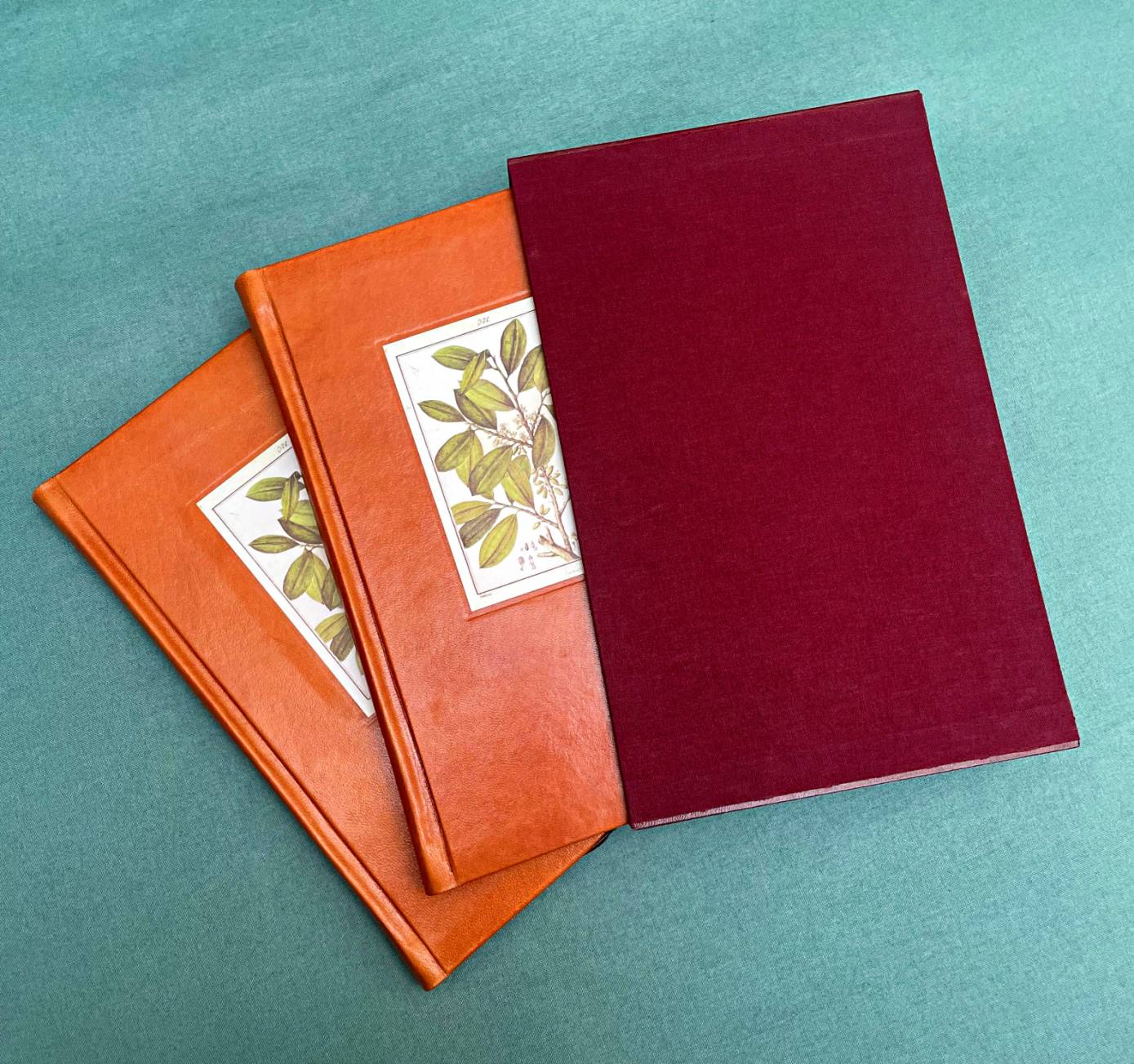
__
RARE & USED BOOKS
We endeavor to update this section periodically. Many titles offered here come from the library of our late friend—the celebrated ethnobotanist Richard Felger.
Unless noted otherwise, only one copy (or set) is available of each listing.
Please email to confirm availability prior to sending payment –
benkamm@monitor.net or sacredsucculents@hushmail.com
Books are shipping year round!
__
Baja California Plant Field Guide
by Norman Roberts
Excellent field guide which remains our main in-the-field reference when exploring Baja. Generously packed with color photos and illustrations. 324 pages. Used book—heavy wear to cover yet pages are crisp and clean. A good working copy.
1st edition Softcover in good condition $15 (2 lbs) SOLD
__
FLOWERING PLANTS:
The Santa Monica Mountains, Coastal & Chaparral Regions of Southern California
by Nancy Dale
A really fantastic field guide to the plants of SoCal. The book includes: * Plants organized within family groups * 214 color photographs and 51 original botanical drawings accompanying text * Details on 260 species 63 families * Simple explanations of botanical terms * Early California botanical history as it relates to specific plants * The cultural history of specific plants * Maps of the Santa Monica Mountains and suggested wildflower trips * Flowers indexed by color, name, and family * Facts on Indian uses of plants, ancient medicinal practices, cultivation requirements for home gardening, and some recipes. 1986 first edition softcover in very good condition, minor shelf wear. Title page signed by the late, great ethnobotanist R. Felger. 240 pages.
1st edition Softcover in very good condition $25 SOLD
__
Flora of the Galapagos Islands
by Ira L. Wiggins and Duncan M. Porter
Unparalleled work by the powerhouse botanist Ira Wiggins. A massive, awesome book with numerous breathtaking black & white illustrations and 96 color photos. For those who have interest in South America’s most famous island, Darwin’s living inspiration, this book is a must! Ex-library copy—front interior has standard library stickers and markings and moderate wear from library circulation, the dust jacket has some rubs and is tattered along the top (yet pretty good after 60 years!), otherwise a clean and excellent working/reference copy. 1971 first edition, 1020 pages. Armchair journeys through this fantastic flora are much more affordable and ecologically responsible than actual travel to the island these days!
1st edition Hardcover in good+ condition $120 (5 lbs) 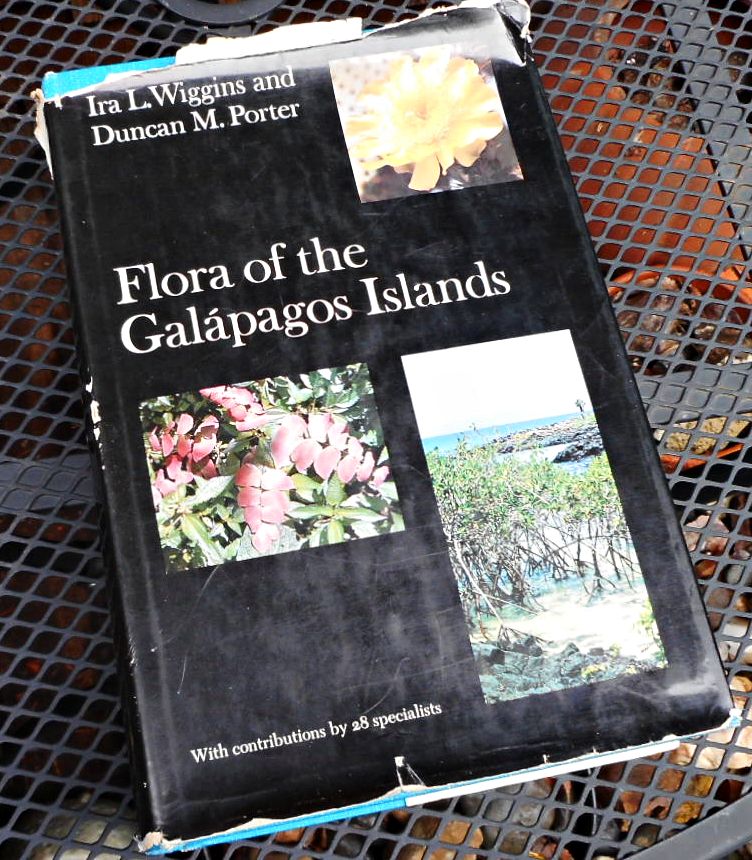
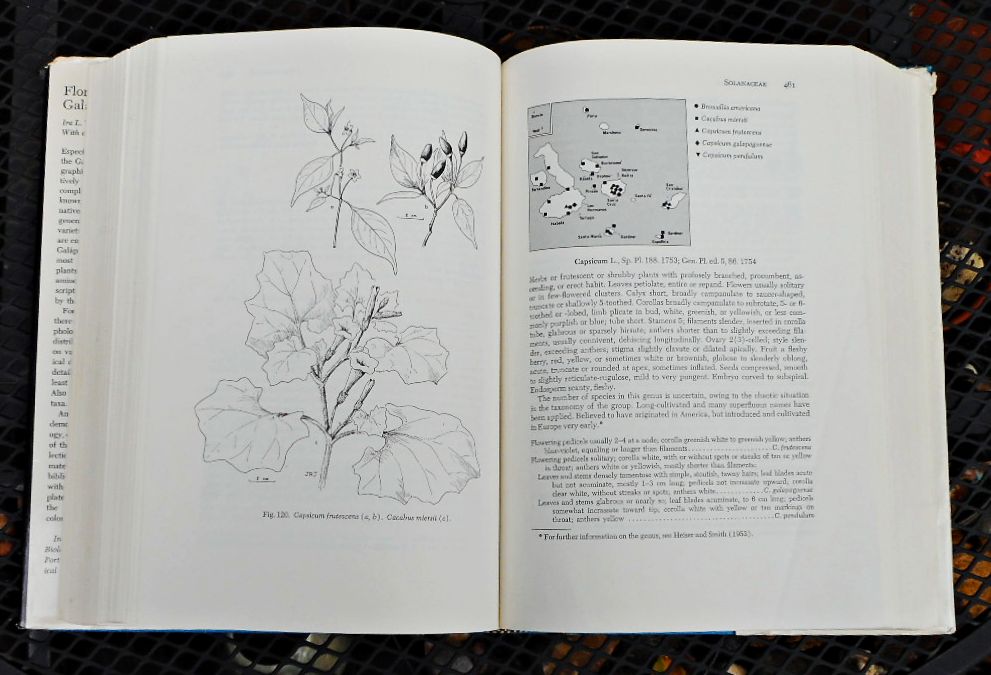
__
Flora Silvestre de Chile: Zona Austral
by Adriana Hoffmann
Adriana Hoffmann’s wonderful series of botanical books are classic field guides to Chilean flora and difficult to acquire outside Chilé. This volume covers the flora of the temperate southern regions of Chilé. Includes many of the fantastic species we’ve offered over the years and many we’ve only dreamed of growing. The glossy pages are copiously illustrated with gorgeous color paintings; hundreds of thorough descriptions; notes on distribution, ecology, and ethnobotany—in Spanish. This excellent reference volume is long out of print and nearly impossible to find! 1982 first edition softcover in very good condition, 260 pages.
1st edition book Softcover in very good condition $75 (2 lbs) SOLD
__
The Genus Echinocereus (Kew Magazine Monograph)
by Nigel P. Taylor
A botanical and cultural guide to the hedgehog cactus genus, including a full taxonomic revision with a key to and descriptions of the 44 accepted species. Illustrated with 12 color plates and numerous black & white drawings. 160 pages. 1985 first edition, dust jacket shows some minor wear to the edges, otherwise the book is in very good condition. Interior board signed by the late, great ethnobotanist Richard Felger.
1st edition Hardcover in very good condition $50 (2 lbs) SOLD
__
The Genus Encyclia In Mexico
by Robert L Dressler and Glenn E. Pollard
Rare book on the amazing Encylcia orchids of Mexico, a collector’s “must have”. Black and white illustrations and 24 color photos. Revised 1976 second edition with a limited print run of 2000 copies. Softcover in very good condition, minor shelf wear. 151 pages.
2nd limited edition Softcover in very good condition $40 (1 lb) SOLD
__
THE GENUS FEROCACTUS: Taxonomy and Ecology, Explorations in the USA and Mexico
by George Lindsay
A gorgeous limited edition volume printed in 1996. This colorful work contains a key to the species, distribution and ecology, propagation, new species, and more. Additional contributions by Larry Mitich and Frank Thrombley. Color illustrations by Thor M. Bock, Lucretia Breazeale Hamilton, Dallas Hanna, Sandra Reed, and Gerhard Marx. 187 illustrations (40+ color photographs), 9 maps. Color pictorial cloth, pictorial endpapers. 444 pages. A rare and utterly awesome collector’s item!
1st edition Hardcover in like new condition $195 (2 lbs) September SALE! $160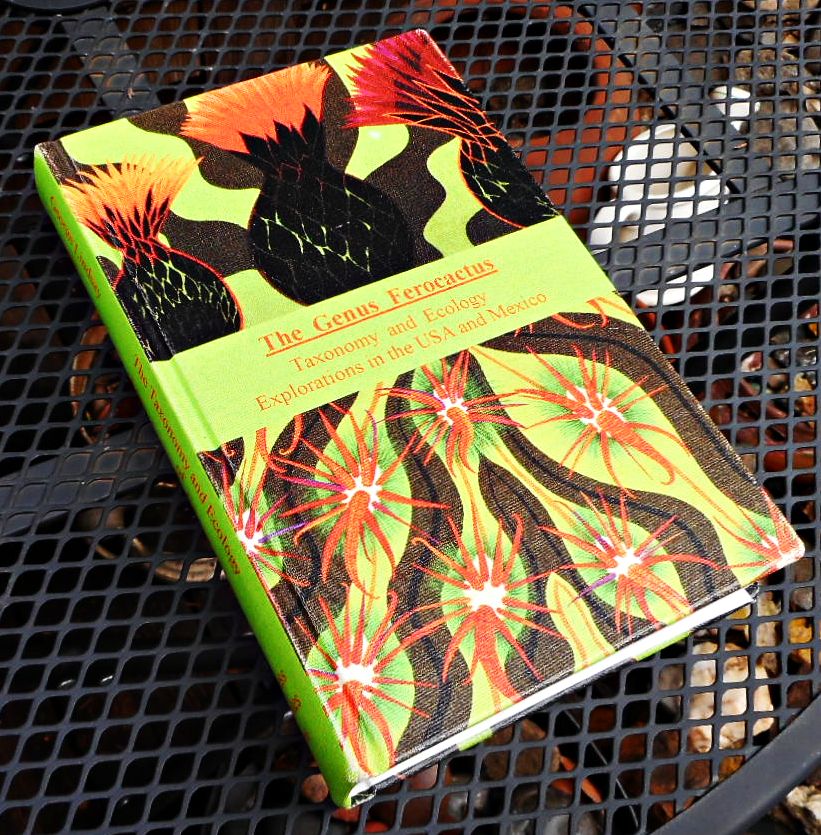
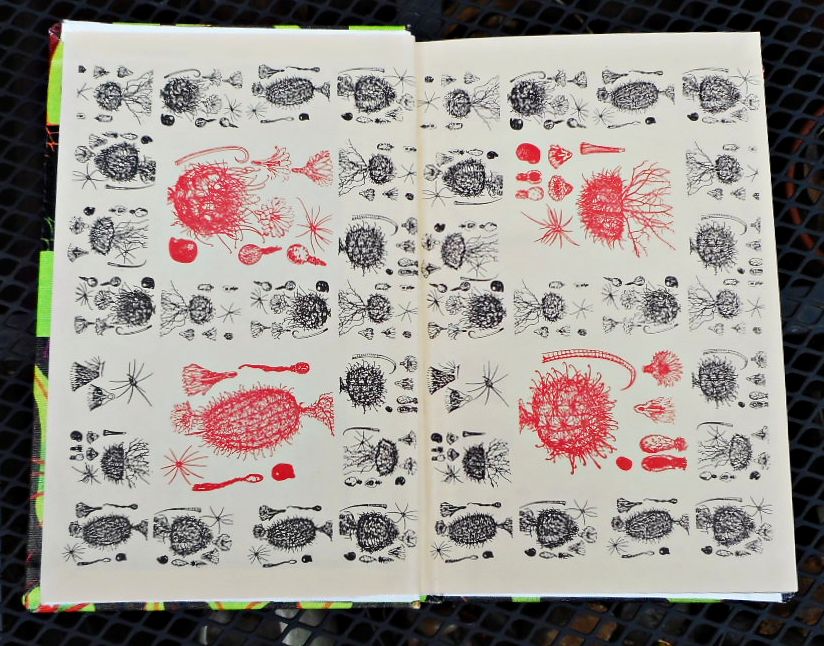
__
Guia de Arboles de Bolivia
edited by Timothy Killeen, Emilia Garcia, and Stephen Beck
We’ve made extensive use of this excellent and thorough guide to the trees of Bolivia. The keys are in easily referenced Spanish. Gorgeous black & white line drawings and handy maps. 958 pages. A well handled, 1993 first edition hardcover copy in relatively good condition. The book has some mild moisture damage but the pages are clean and readable. The dust jacket is intact but worn with rubs, creases, and some tears. An excellent working copy of this hard to find and long out of print book.
1st edition Hardcover in good condition $60 SOLD
__
HASELTONIA: Yearbook of the Cactus & Succulent Society of America, Number 1–7 (1993–2000)
+ 1975 Yearbook Cactus & Succulent Society Journal [an early version of Haseltonia]
Each softcover volume is 100–150 glossy pages of fascinating scientific articles [email for article list] with black & white and color photos/illustrations. Excellent and essential reference material for the cactus & succulent afficionado. A little shelf wear, but otherwise in good to very good condition.
Set of all 8 volumes $250 (6 lbs) September SALE! $200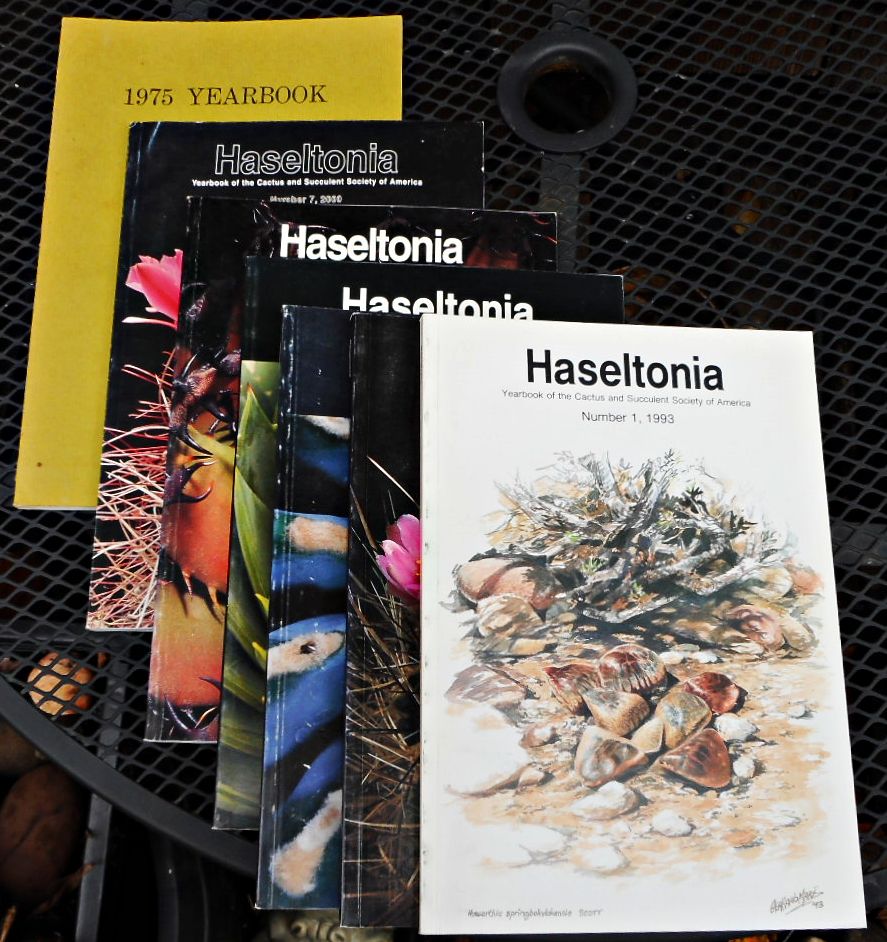
__
The Pacatnamu Papers, Volume 1
edited by Christopher B. Donnan & Guillermo A. Cock
This volume presents the results of the first three years (1983-1985) of a five-year excavation at Pacatnamu, north Peru, combining archaeological excavation with physical anthropology, botany, zoology, textile analysis, ethnography, and ethnohistory. Focuses on the period of Lambayeque occupation. A very cool book with copious black & white illustrations and a handful of color photos. Comes with a fold-out map insert. Bilingual in English and Spanish. 192 pages. First edition softcover with some shelf wear and minor dings but overall in very good condition.
1st edition Softcover in very good condition $20 (2 lbs)
__
PiHKAL: Phenethylamines I Have Known and Loved
by Alexander & Ann Shulgin
A rare collector’s item. We have a few copies of the original deluxe hardcover slipcased edition of this monumental work by the late Dr. Shulgin and his wife Ann. Originally printed as only 300 signed copies, these are unsigned copies of which only a handful exist! We had thought we’d sold the last of these earlier in the year but just discovered a few more copies!
[ 5 ] → 1 ~ Copy, deluxe slipcased Hardcover edition $120 SOLD
[ 4 ] → 2 ~ Copies, deluxe slipcased Hardcover edition with slightly damaged slipcase &/or cover $85 each (3 lbs) ♥ NEW! ♥
__
Plant Hunters in the Andes
by Thomas Harper Goodspeed,
After 8 decades this book remains one of the most enjoyable and informative texts on Andean plant exploration. 1941 first edition hardcover bound in red cloth, very good condition minus dustjacket. Numerous black & white photos, map endpapers, 454 pages.
1st edition Hardcover in very good condition $150 SOLD
__
The Pollination Biology of North American Orchids: Volumes 1 & 2
by Charles L. Argue
A must have for serious orchid collectors and connoisseurs! Recent studies have revealed remarkable complexity and diversity in orchid-pollinator relationships. These studies comprise a vast literature currently scattered in numerous, often obscure, journals and books. The Pollination Biology of North American Orchids brings together, for the first time, a comprehensive treatment of this information for all native and introduced North American orchids found north of Mexico and Florida. It provides detailed information on genetic compatibility, breeding systems, pollinators, pollination mechanisms, fruiting success, and limiting factors for each species. Distribution, habitat, and floral morphology are also summarized. In addition, detailed line drawings emphasize orchid reproductive organs and their adaptation to known pollinators. Hard to find, nearly new, 2012 first edition 2 volume set — often goes for over $400. Volume 1 is 240 pages, vol. 2 is 211 pages.
2 volume set; 1st edition Hardcovers in like new condition $245 (3 lbs) September SALE! $190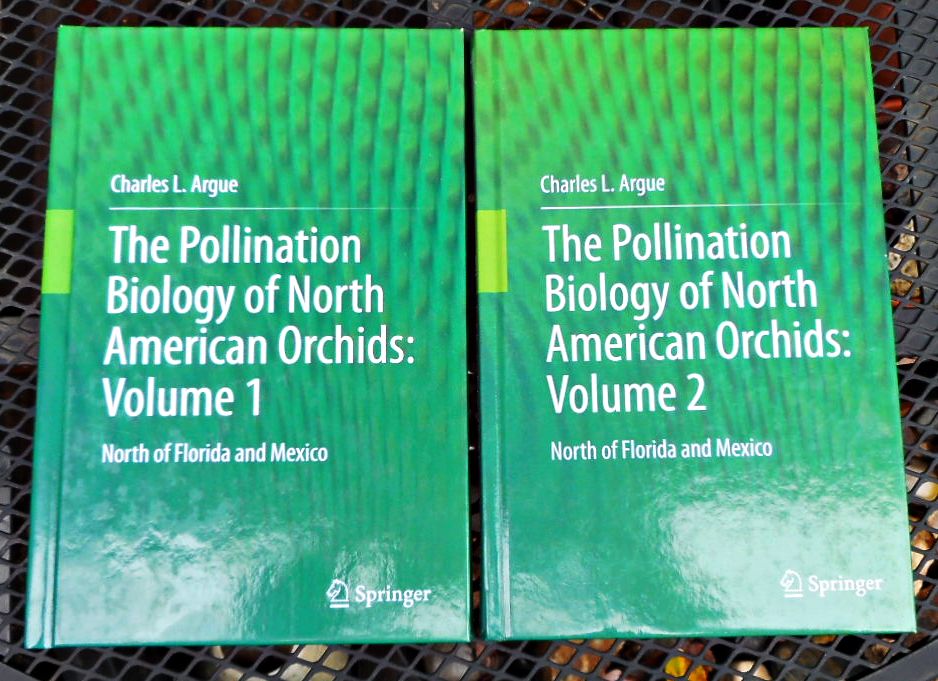
_____
Little, Big
by John Crowley
We’ve assisted the publication of a new archival, art book edition of our friend John Crowley’s beloved novel Little, Big. Winner of the World Fantasy Award when it was first published in 1981, the novel is esteemed by a broad diversity of fans—from Yale literary critic Harold Bloom to ethnobotanist Kat Harrison, from musician Maynard James Keenan to acclaimed storyteller Ursula K. LeGuin and counterculture historian Erik Davis and psychedelic philosopher Terence McKenna. For many readers Little, Big is more than a novel, it is an enchantment, an alchemical engine of the imagination. Publishing this unique, collectible edition has been a 20 year saga! The gorgeous hardcover edition is finally available, but with a limited print run it’s expected to sell out soon. A wonderful gift and worthy investment—order a copy while you still can!
Only around 150 copies of the Trade Hardcover and less than 10 signed, Numbered edition remain. Don’t pass up your chance to invest in these gorgeous literary artifacts made to last for generations.
The Trade Hardcover edition can be purchased through: https://store.deepvellum.org/products/little-big
The signed, Numbered edition can be purchased at: https://store.deepvellum.org/products/little-big-numbered-edition
Limited edition posters: https://store.deepvellum.org/products/little-big?variant=43187529875705
Essay: One of our integral supporters, in bringing the anniversary edition of Little, Big out of the realm of the phantasmal and into the physical, is our friend and author Erik Davis, who has written a lovely essay on Little, Big – https://www.burningshore.com/p/big-little-big
Affirmation of the Imagination Podcast: Listen to a delightful conversation the folks at Weird Studies recently had with our friend Erik Davis about Little, Big. They use the novel as a springboard to talk about enchantment and the imagination, anomalous experiences, and the transporting power of prose. See – https://www.weirdstudies.com/187

Shipping & Handling for Books
To determine shipping costs, add up the number of lbs in parentheses ( ) that is listed after the price.
Priority Mail– add $12 for up to the first lb, $2 for each additional lb.
When ordered to be shipped together with plants – just add $2 for each lb
Books only sent Media Mail – add $6 for up to the first lb, $1 for each additional lb
Please email us for international shipping costs:
benkamm@monitor.net or sacredsucculents@hushmail.com
♣
Order Form
___
 BOTANICAL PRODUCTS

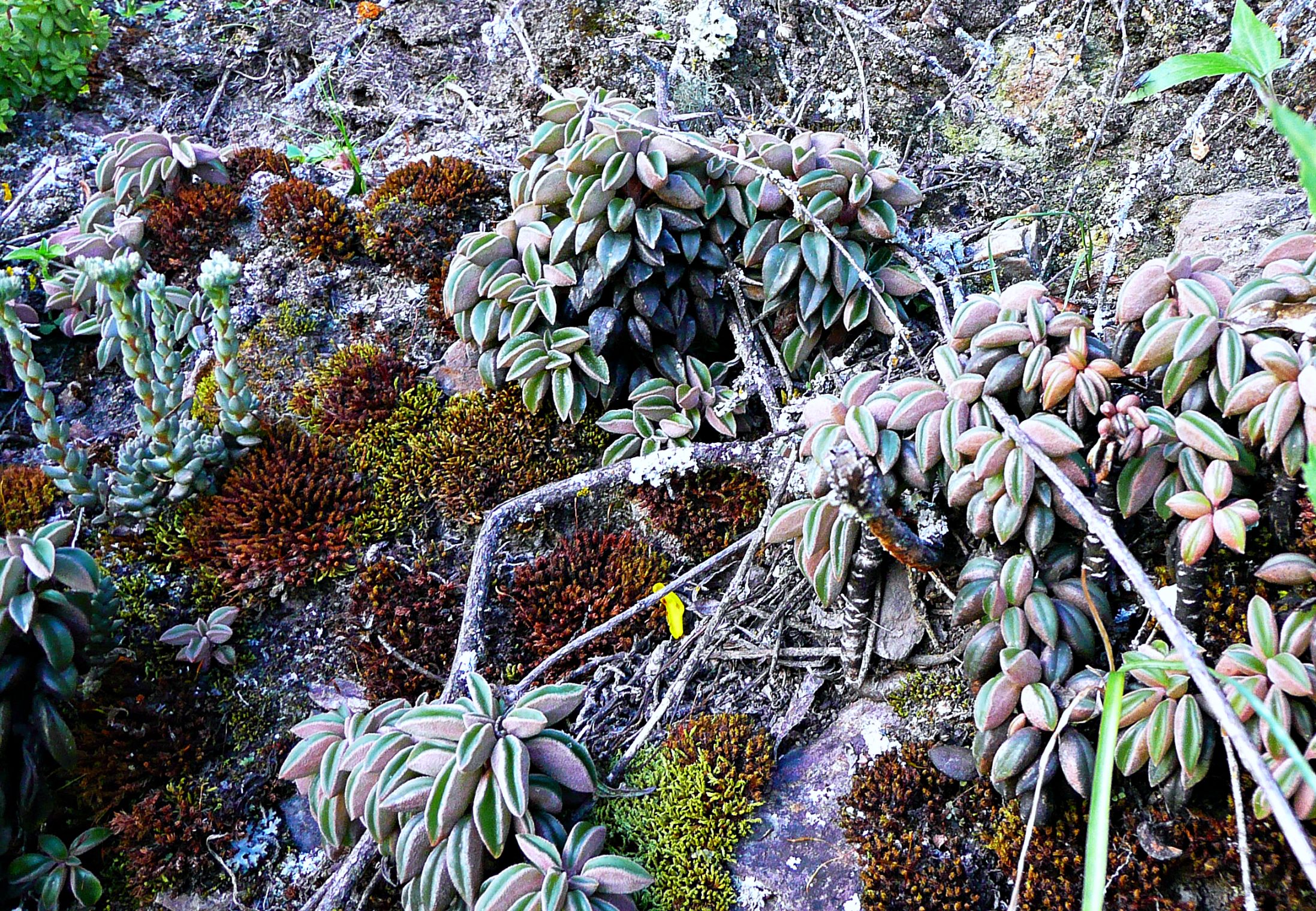
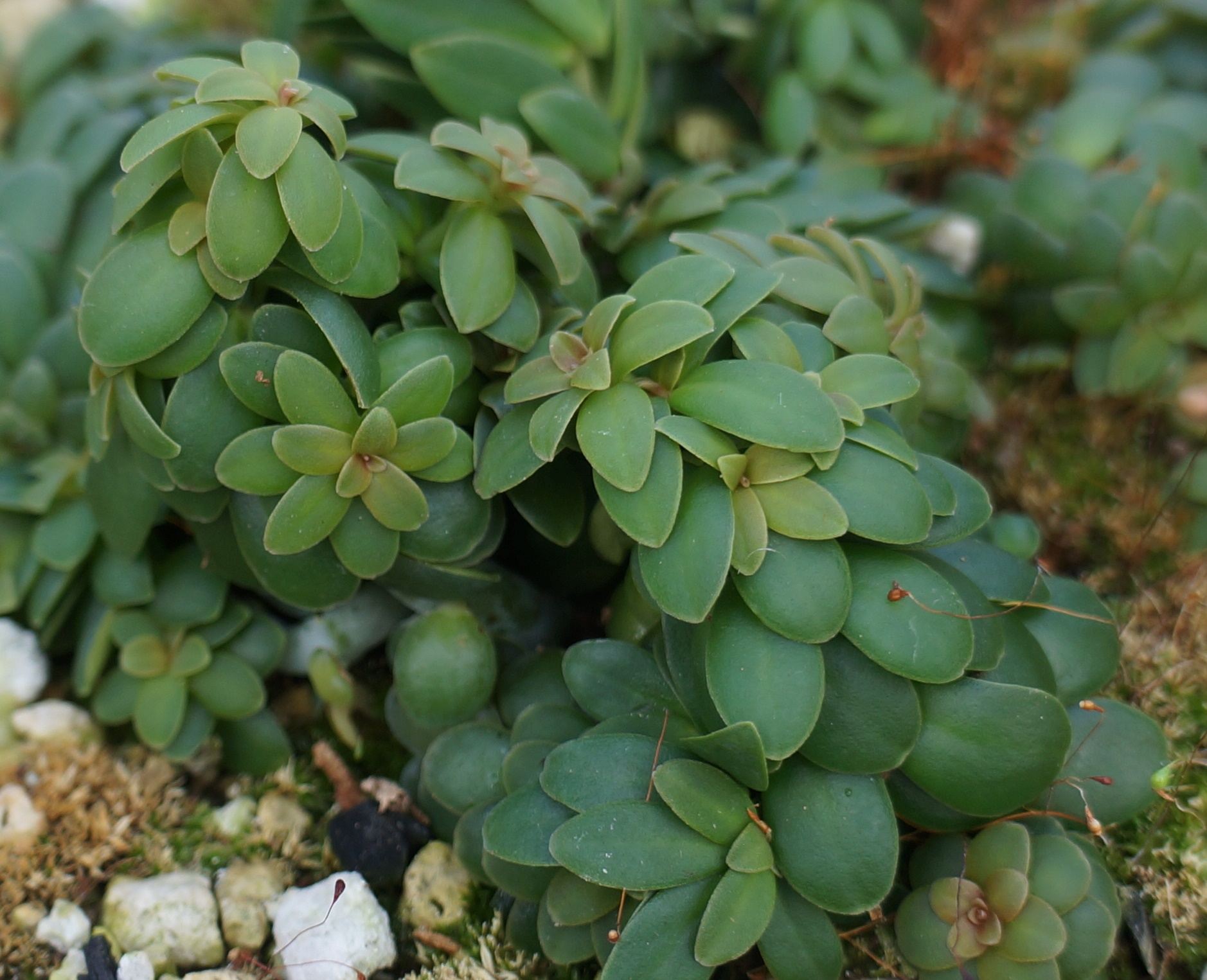
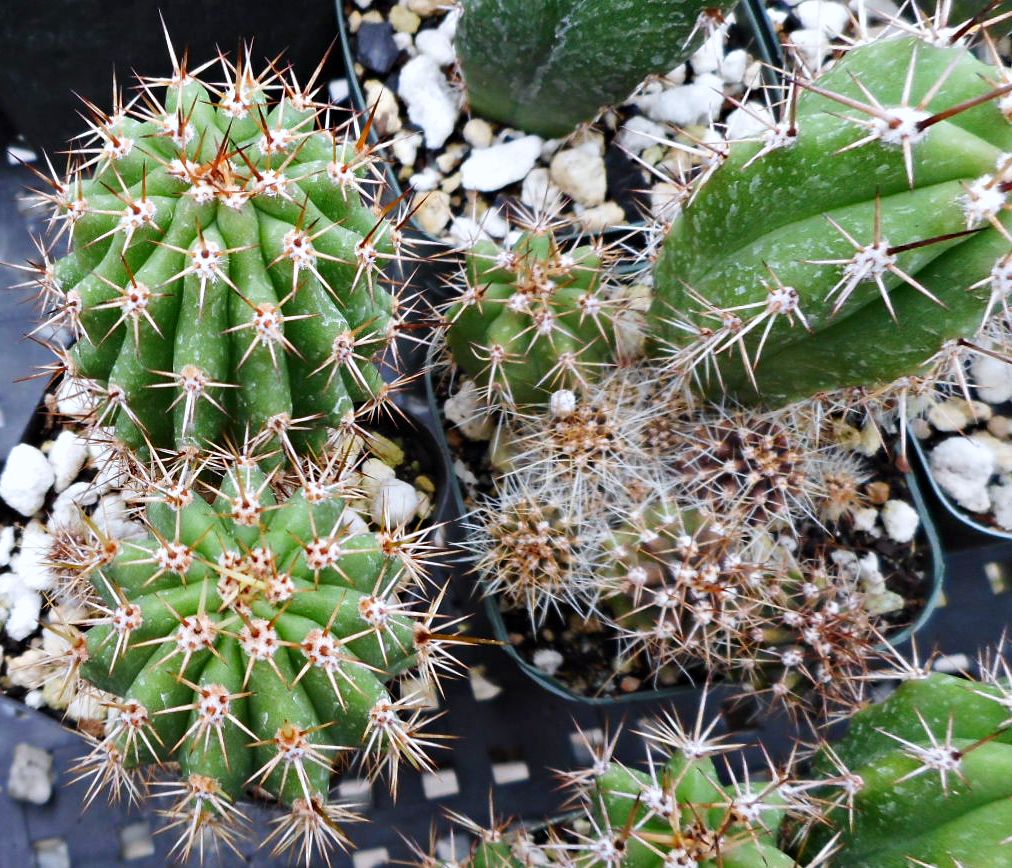

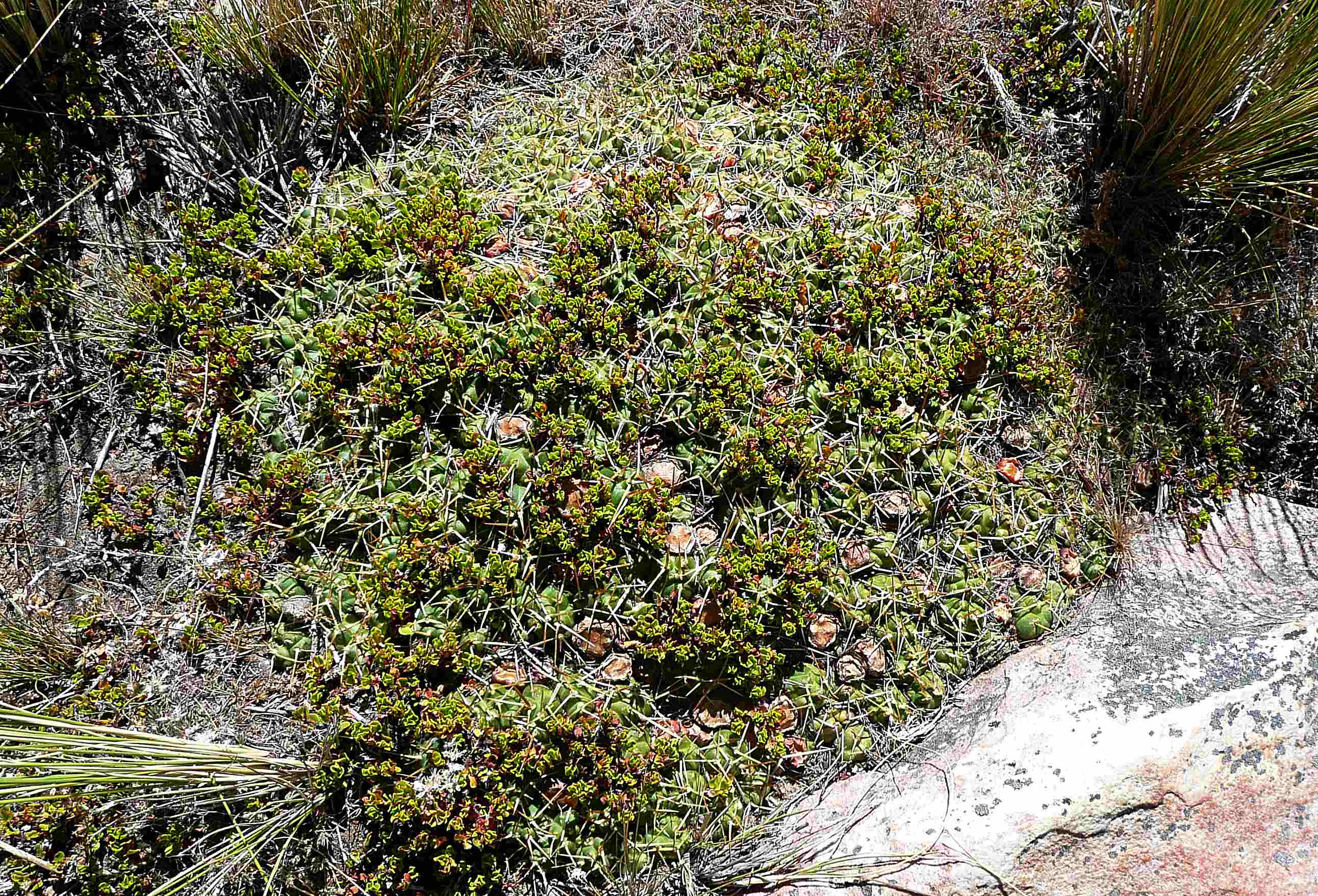

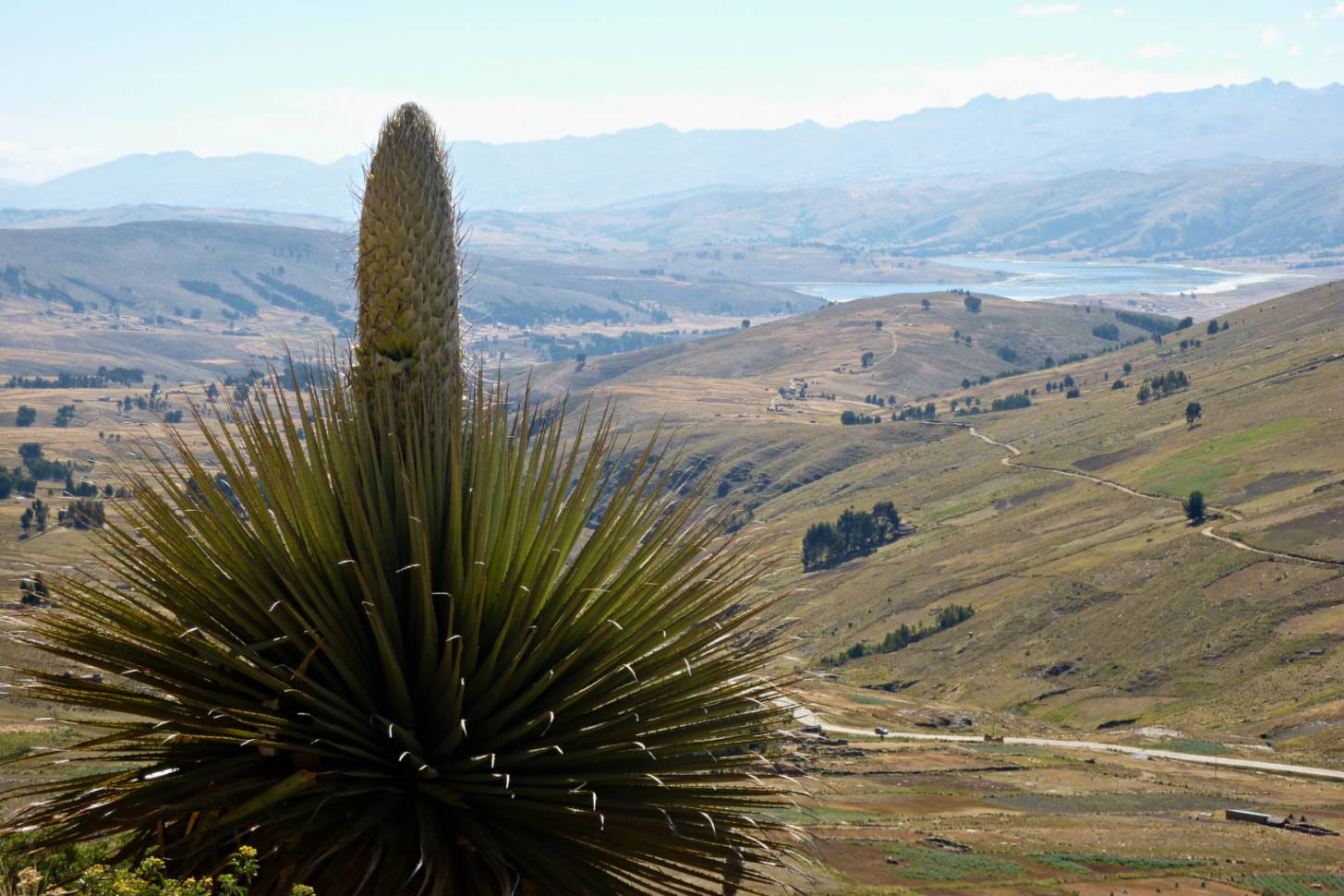
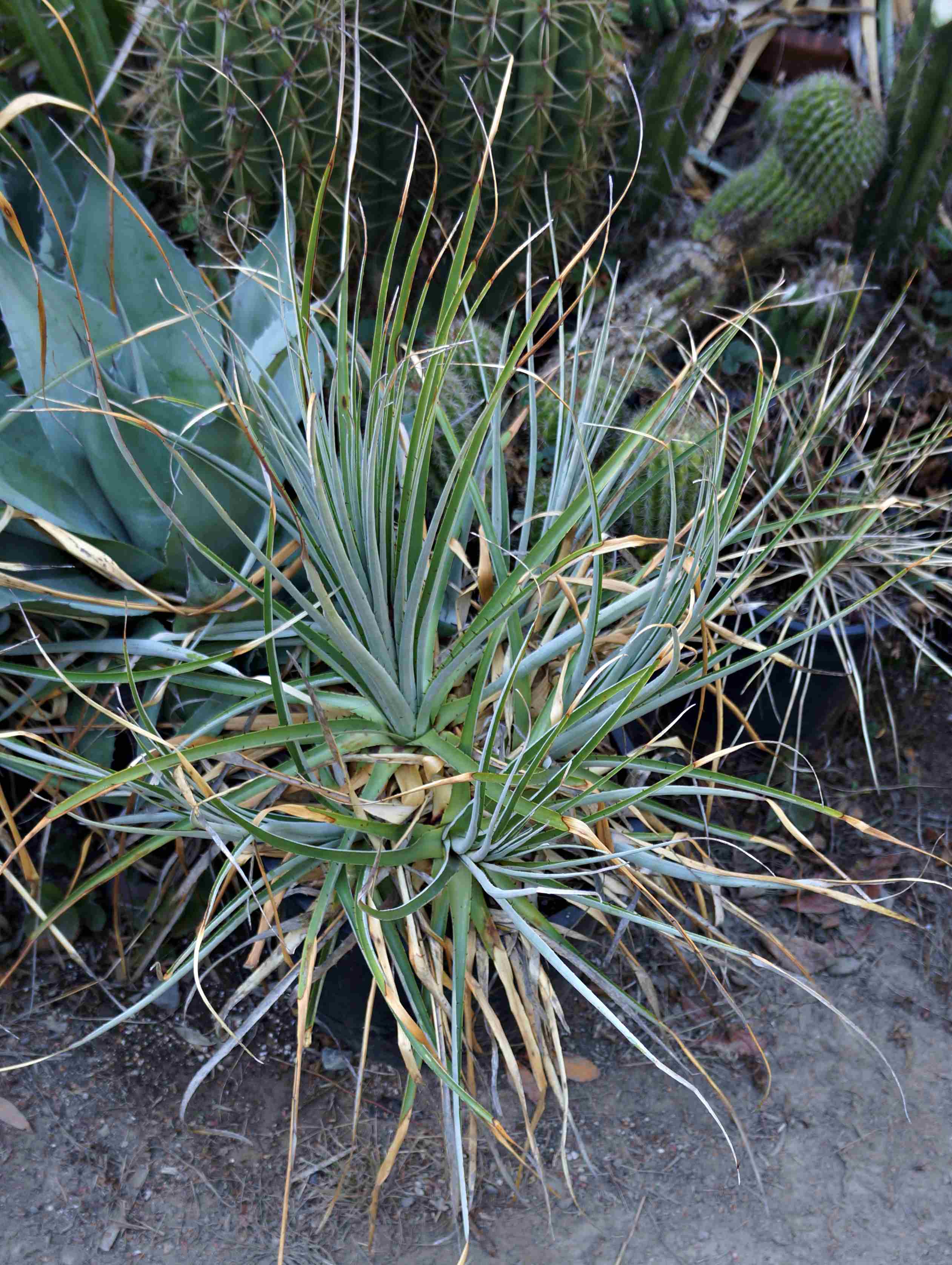

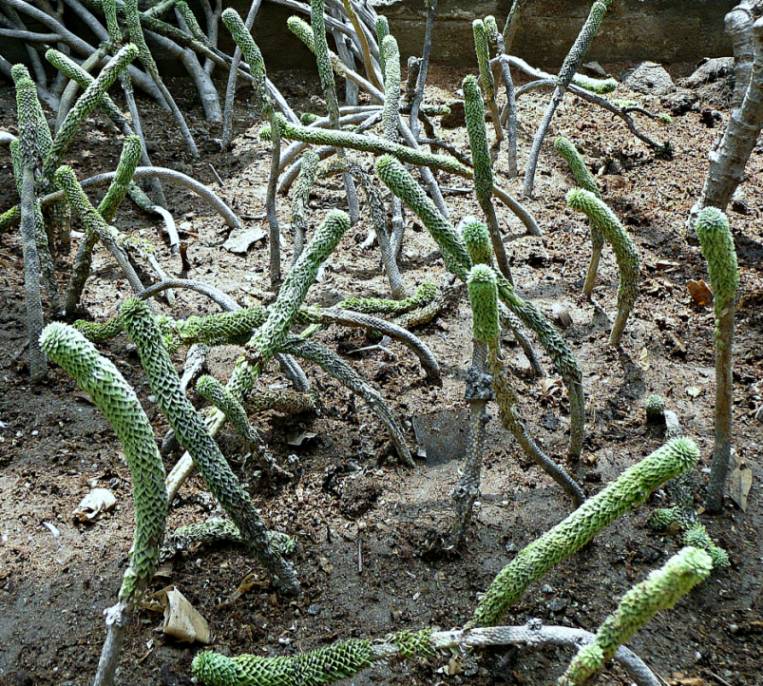
Note: These are all custom batch, limited offerings,
once sold-out it is unlikely they will be available again!
BALSAM OF PERU Myroxylum toluifera balsamum
Dried balsamy tree resin from Columbia. The common name comes form the 17th century when the resin was sent to Peru for export to Europe. Also known as “Balsam of Tolu”. Trees must be 20 years old before they can be tapped for the resin. It has a rich, earthy, balsam and vanilla-like fragrance. It makes a wondrous incense and enthralling body scent. Traditionally used for skin disease, wound healing, fungal infections, coughs and lung ailments, colds, and rheumatism. It has clearly documented antibacterial, antiseptic and antiparasitical actions. We have a small, limited quantity of dried chunks of the pure tree resin. Final offering of this exceptional resin!
[ 2 ]→ 1 ~ 50 grams Balsam of Peru pieces $42 SOLD
[ 6 ]→ 1 ~ 10 grams Balsam of Peru pieces $10
__
COPAL BLANCO Bursera sp. “White Copal”
The light colored dried resin of this wildcrafted sap from central Mexico is one of the most highly valued Copals. This “Food of the Gods” can be burned as a delightfully sweet incense, for purification or as a holy offering. Strongly antiseptic. This is the highest quality Copal Blanco, not to be confused with the “White Copal” from Indonesia. Some years back we were able to procure a small supply, which quickly sold out — we set aside a small amount which we offer now. This is the last time we are a likely to ever offer this amazing Copal!
[ 6 ]→ 1 ~ 5 grams Copal Blanco resin $12 SOLD
__
GOLD ROOT Heliopsis longipes
Composite endemic to the mountains of central Mexico up to 8,000’. The fleshy lateral roots produce a very intense tingling sensation in the lips and mouth when chewed, much stronger than Echinacea or Spilanthes which have similar properties. Traditionally used for toothache (very effective!) and oral health. Rich in alkamides with impressive analgesic, antiinflammatory, antibacterial, antifungal, insecticidal and immune boosting effects. Demand for its insecticidal activity nearly lead to its extinction during World War 2. The pleasant tingling effect from the chewed root can be transferred to other areas of the body and has been used as topical anesthetic and for interesting erotic purposes. Wildcrafted in Mexico.
[ 10 ]→ 5 ~ Packets of dried roots $5 each (count as a seed packet for shipping)
[ 5 ]→ 2 ~ Large packets [=5 regular packets] $20 each
Limited bulk offer – Normally only available in very tiny amounts, here is your chance to stock up!
[ 4 ]→ 2 ~ 1 oz dried roots $66 each SOLD
__
MUNA ESSENTIAL OIL Minthostachys andina or setosa
One of the signature scents of the Andes comes from this mint relative. This lovely plant is sometimes used as a flavoring in soups and is a popular digestive aid, nervine, cold remedy and antiparasitical. Also reported as an aphrodisiac. The essential oil is best used externally and is said to help with altitude, skin fungus, sore muscles; to repel insects and to “cleanse negativity”. Steam distilled in small batches by a friend in Peru. Very limited stock, when we’re sold out, that’s it!
[ 8 ]→ 2 ~ 1/8 oz bottle $10 each (1 oz for shipping)
[ 6 ]→ 1 ~ 1/2 oz bottle $30 (4 oz for shipping)
[ 4 ]→ 1 ~ 1 oz bottle $50 each (6 oz for shipping)
[ 2 ]→ 1 ~ 2 oz bottle $86 each (1 lb for shipping) SOLD
___
Natural Products Shipping & Handling:
Up to 8 ounces $8
9 ounces to 1 pound $12
then $2 each additional pound
$2 per pound when ordered with plants.
Under 6 ounces ordered with plants = free product shipping
___
Please email us for international shipping costs:
benkamm@monitor.net or sacredsucculents@hushmail.com
Order Form
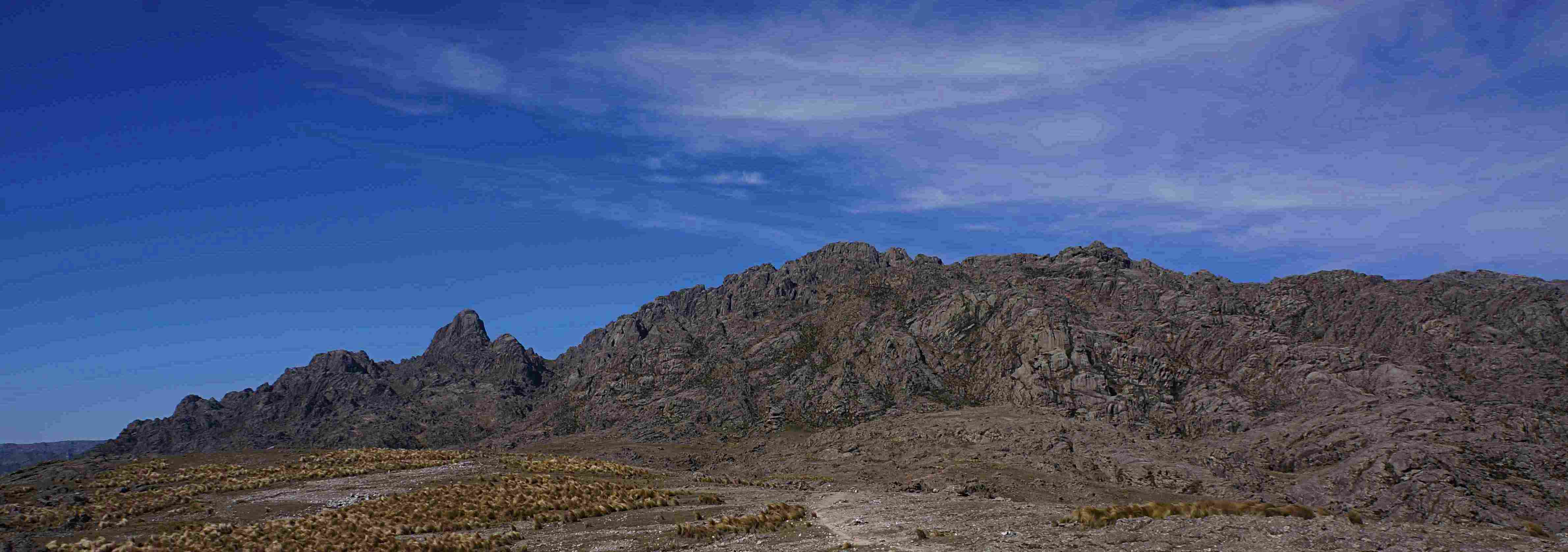 ↑ Los Gigantes, Sierras Grandes, Cordoba, Argentina ↑
Our Old Catalog Lists for Historical Reference:
Our coveted paper catalog was beautifully illustrated and full of ethnobotanical and horticultural information including detailed seed germination and propagation techniques. Some of what we offered:
- Cacti– endangered Ariocarpus, Aztekium, Pelecyphora, Turbinicarpus species… we have one of the most diverse selections of Trichocereus species including new hybrids and mutant San Pedros. We are involved with ongoing studies of this genus in South America: mapping distribution, ecology, ethnobotany and taxonomy through genetic analysis to aid preservation.
- Other Succulents & Xerophytes– Aloe, rare and hardy Agave & Yucca, Baobabs & caudiciforms, aromatic Bursera (Copal, Palo Santo), Commiphora (Myrrh, Guggul) & Boswellia species (Frankincense), rare Echeveria, a large selection of Ephedra species, Hoodia gordonii, medicinal Peperomia, uncommon Puya, obscure Rhodiola & Sedum species, Sceletium tortuosum…
- Unusual & Rare Perennial Edible Plants– Gaultheria, Vaccinium, Amelanchier, Lycium, Elaeagnus, Rubus, Ribes, Ugni, Agapetes … Chufa, Capers, Ramps & rare Alliums, Rampion, Breadroot, Vigna subterranea & edible bulbs, tubers, vines, fruit trees and more for adventurous gardeners, permaculturalists, and food forest fanatics.
- Obscure Medicinals– Codonopsis species, Gold Root, Green tea, Honeybush & Rooibos, Maralroot, Mandrake, Sea Buckthorn, heirloom Tobacco, Yaupon, Yerba Mate, Dioscorea, Dan Shen & other Salvia species, Shatavari, Umckaloaba, Silene capensis…
- Rare & Endangered Chilean Endemics– Latua pubiflora, Gomortega keule, Desfontainia spinosa, Ugni, Coriaria, Chilean Macnut, Fabiana, Macqui Berry, Bell Flower, Nothofagus…and from the Juan Fernandez Archipelago- Dendroseris, Ochagavia elegans, Chenopodium sanctae-clarae, Nicotiana cordifolia, and more…
- Andean Ethnobotanicals– From our annual expeditions. Ancient medicinals and species from one of the most imperiled forest ecosystems on the planet- Polylepis, Buddleja, Hesperomeles, Alnus, Escallonia, Erythrina, Anadenanthera, Puya raimondii, Calceolaria, Macleania, Cavendishia, Pernettya, Bomarea, Cypella, Phaedranassa, Stenomesson, etc. Traditional Andean food plants- Caigua, Kaniwa & Quinoa, Tarwi, Aguaymanto, Naranjilla, Tamarillo, Sauco Berries, Ulupica Pepper, Lacayote squash, Congona, Jaltomata, wild Tomatoes, Passiflora and a large selection of heirloom tubers- Ajipa, Oca, Ulluco, Achira, Mashua, Mauka, Arracacha, Yacon, Maca.
- Plants of California – a focus on forgotten feral foods like Brodiaea, Calochortus, Triteleia, Lilium, Yampah, Chia, plus medicinals and endemic rarities.
- A diversity of wild crafted seed from South Africa, China, Himalayas & other remote regions… rock garden & alpine miniatures…and much more!
- Books– Hard to find titles on ecological horticulture and ethnobotany.
___
We are not currently taking payment for our excessively lengthy & highly informative catalog. We have not had sufficient time for laborious process of updating it from Pagemaker to InDesign, though we still hope to complete this one day. Our apologies to those who have sent payment in the past—you can request credit for your $2. For reference you can download the full PDFs of the various catalog sections. However, we are currently only taking orders from the above Specimen Plant List, which is updated monthly.
Seed deliveries world-wide. [Currently we are not taking seed orders, except from the Specimen List.]
___
PDF text downloads for each section of our old Retail Catalog:
[For reference only!]
( Updated 3/27/23 – these replace any previous version and web listings, yet are only for reference.)
Note: due to the intractable events of recent years, and the losses and extensive damage to many plants these past seasons, these lists are primarily for reference right now. You can inquire about plants, but know we are NOT shipping ANY SEED. For now, we are almost exclusively taking orders from our Specimen Plant List. This will continue until our retail stock has sufficiently recovered and our lists have been adequately revised—we hope to update the retail PDFs and resume shipping seed sometime in 2026.
Currently these PDFs ARE FOR REFERENCE, many of the plants are not available as listed;
please email to confirm availability & updated pricing – benkamm@monitor.net
♣
Cactaceae
Trichocereus List
Other Succulents & Xerophytes
Andean Ethnobotanical Offerings
Andean Tubers
Medicinals, Edibles, CA Natives
Books & Products
Order Form
♣
___
Microcosms:
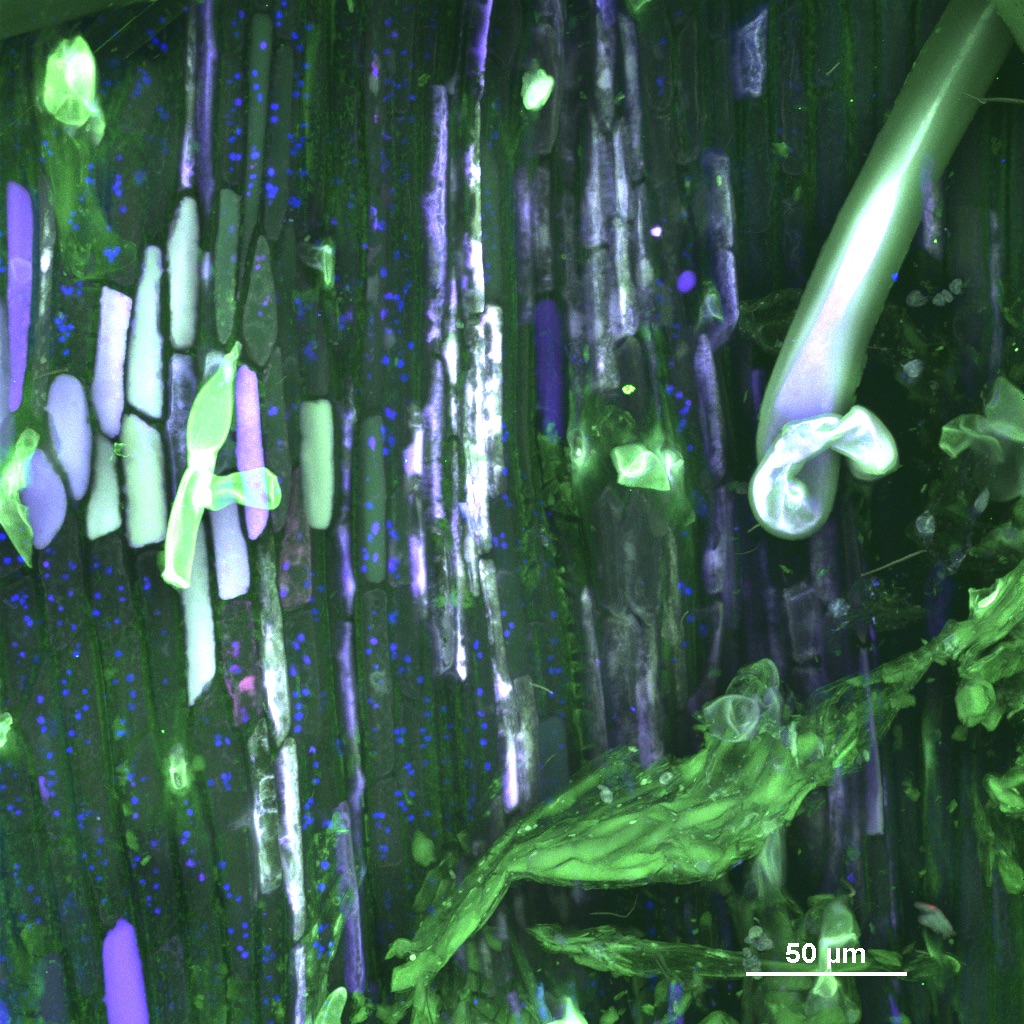 ↑ Polylepis incarum scanned at St. Lawrence University’s Microscopy & Imagery Center, from Microcosms: A Homage to Sacred Plants of the Americas (https://www.microcosmssacredplants.org/), used with the permission of Jill Pflugheber & Steven F. White, © 2023. ↓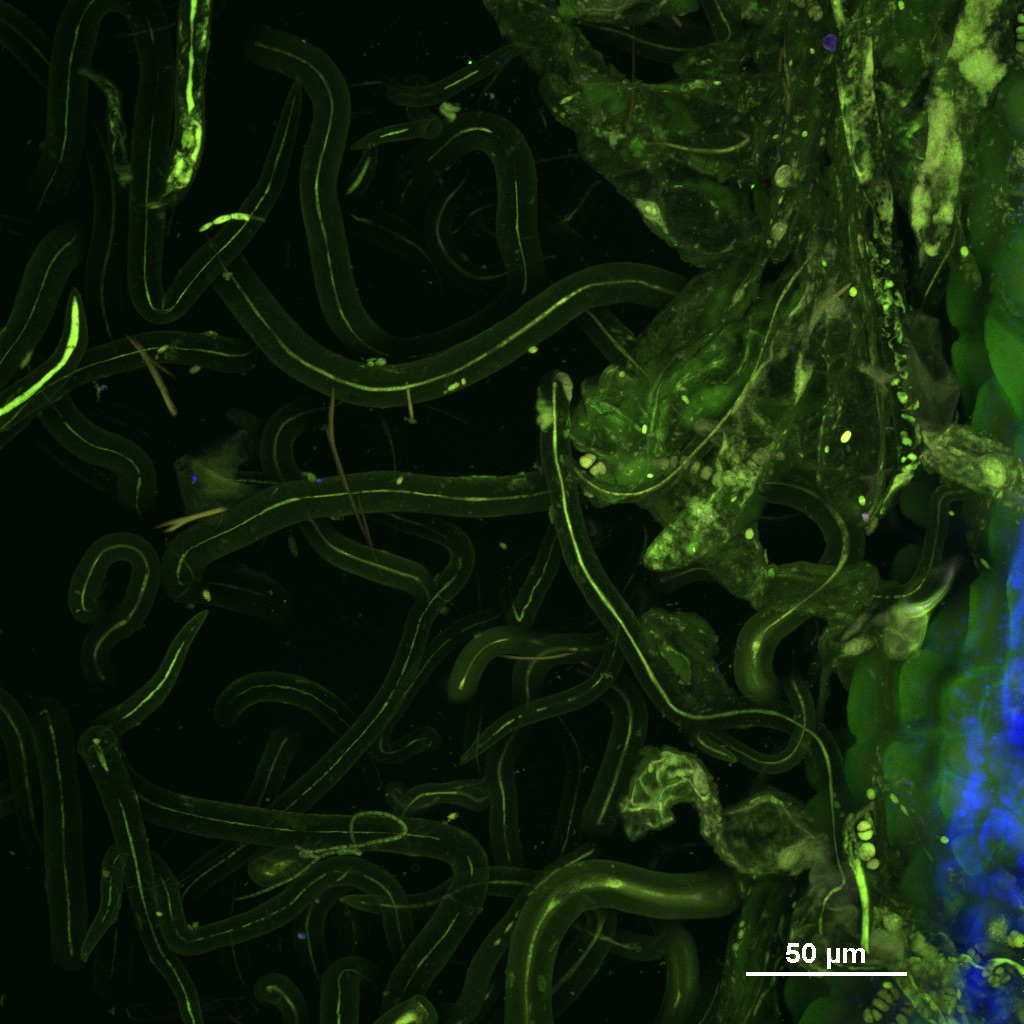
♦
For several years I’ve been contributing plants to Steve White and Jill Pflugheber’s fascinating scientific art project, Microcosms —wondrous images of American sacred plants produced through confocal microscopy. A few sections also feature my Andean photos.
You can read my commentary on the project: https://www.microcosmssacredplants.org/commentary/ben-kamm/
I’ve also contributed a short article on the Andean keystone tree Polylepis: https://www.microcosmssacredplants.org/plant/polylepis-spp/
You can now order a copy of the new book!!:
Microcosms: Sacred Plants of the Americas ♥ New ♥
by Jill Pflugheber, Steven F. White
Stunningly beautiful confocal microscopy images of sacred plants of the Americas are accompanied by their scientific, historical, and cultural narratives. For years I’ve contributed plants to Steve White and Jill Pflugheber’s fascinating scientific art project that birthed this gorgeous book. Wondrous images of sacred plants, a stunning hidden dimension revealed through confocal microscopy. I’ve also contributed photographs from the nursery and my Andean expeditions to the book, as well as writing sections on wild Ullucus tubers and the Andean keystone tree, Polylepis. Follow a transformative journey through the book which brings together anthropology, art, spirituality, and ancient wisdom together with the mesmerizing detail of Jill’s cutting-edge confocal plant microscopy. Microcosms reveals the inner lives of plants and fungi revered by Indigenous communities as healers, storytellers, and guides. Illustrating over 50 culturally-significant plants, Microcosms opens a portal into a world where ancestral knowledge and contemporary science converge.
[ 6 ] → 4 ~ Oversize, hardcover copies, 264 pages $55 each (5 lbs)
Peruse the comments of other colleagues such as Neil Logan, Manolo Torres, Dennis McKenna, Luis Eduardo Luna, etc.: https://www.microcosmssacredplants.org/commentaries/
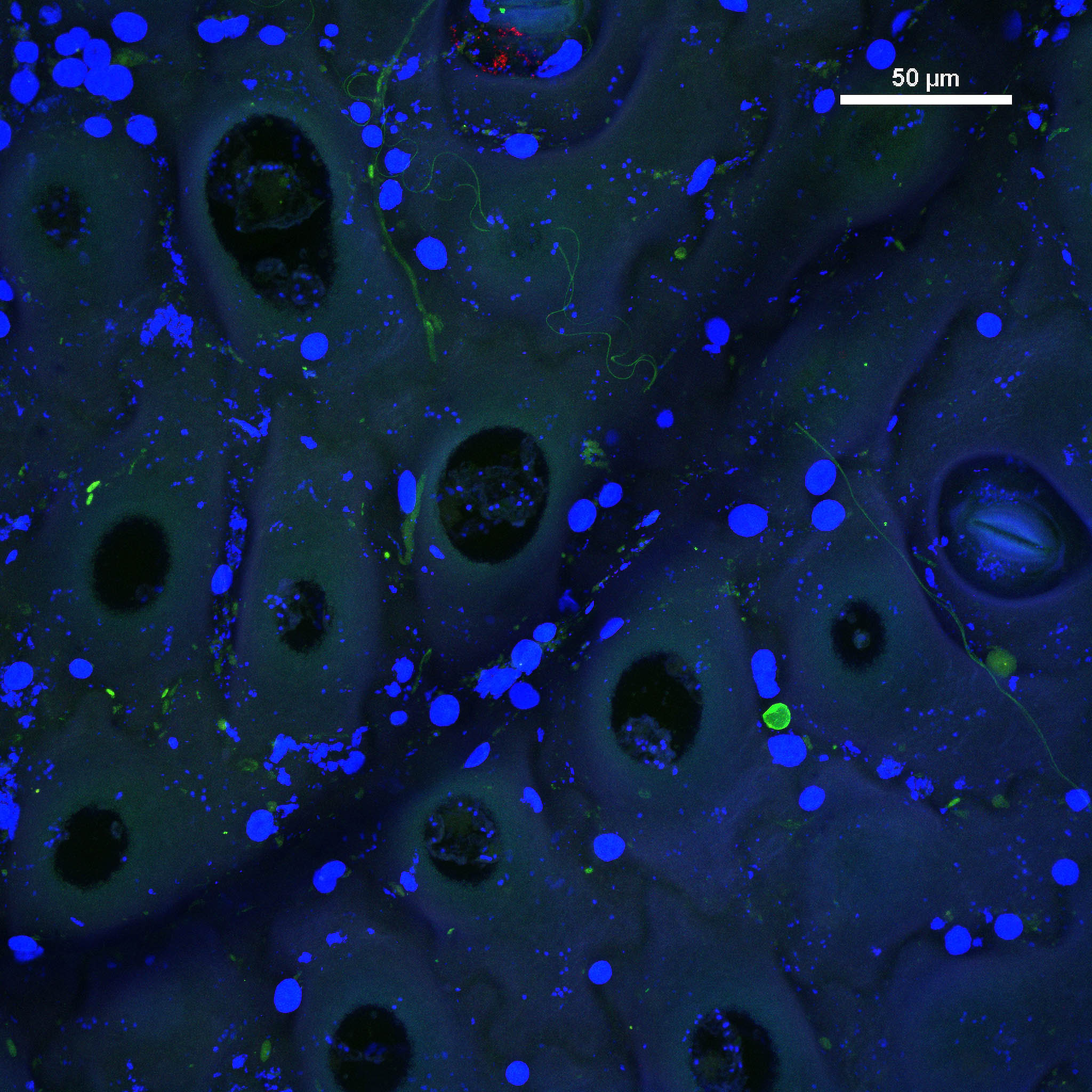 ↑ Trichocereus pachanoi scanned at St. Lawrence University’s Microscopy & Imagery Center,
from Microcosms: A Homage to Sacred Plants of the Americas, used with the permission of Jill Pflugheber & Steven F. White, © 2023.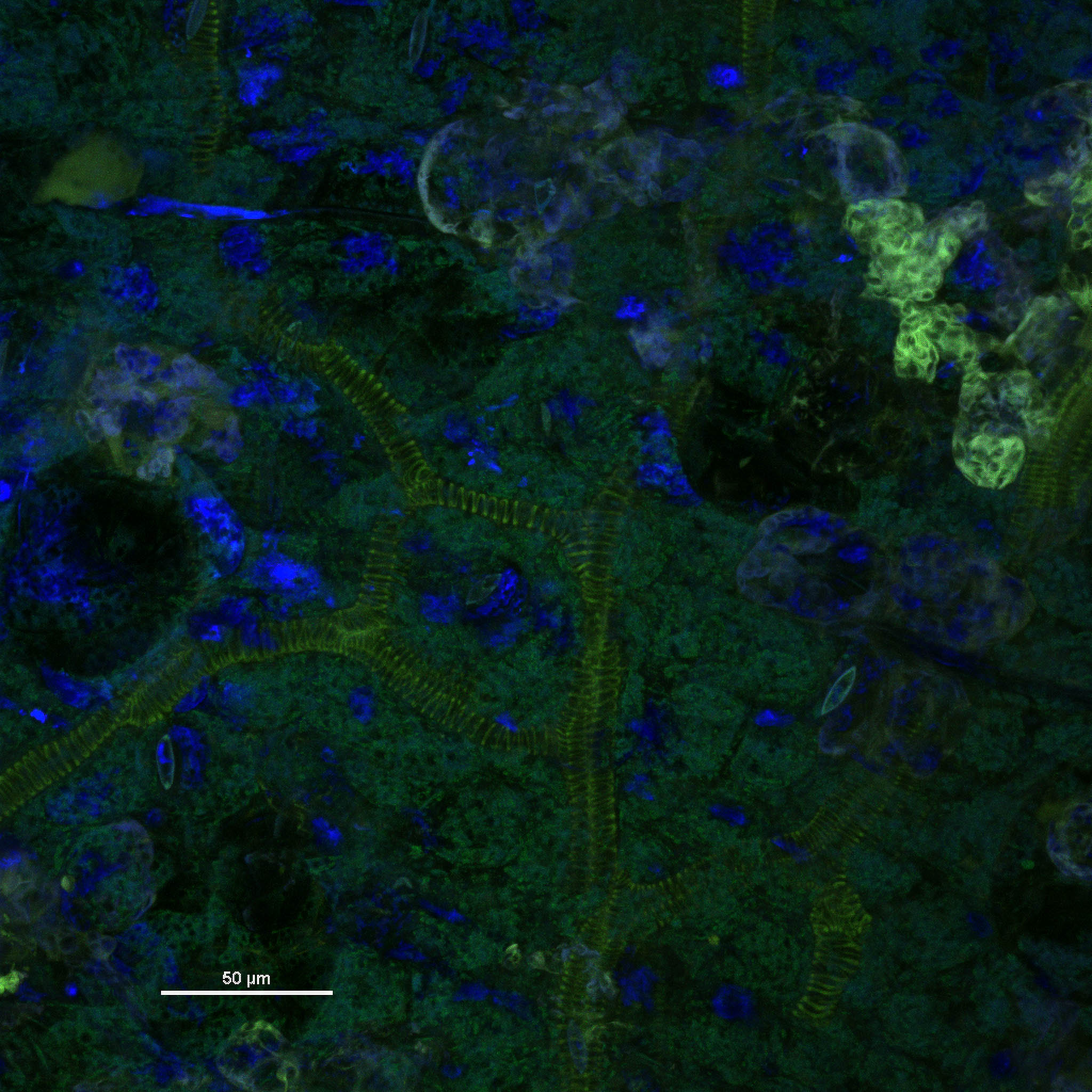 ↑ Ullucus tuberosus ssp. aborigineus, Jill Pflugheber & Steven F. White, © 2023 ↑
♦
___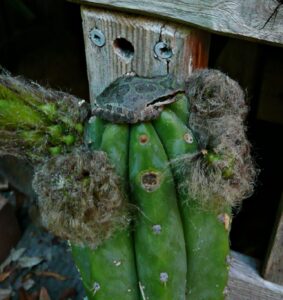
Herpetological Kin:
In addition to the diversity of rare and endangered plants here, the nursery and gardens also provide habitat for a medley of ‘wildlife’. We rejoice that the herpetological denizens are really thriving in recent years—for a full report see our NEWS PAGE
♣
_______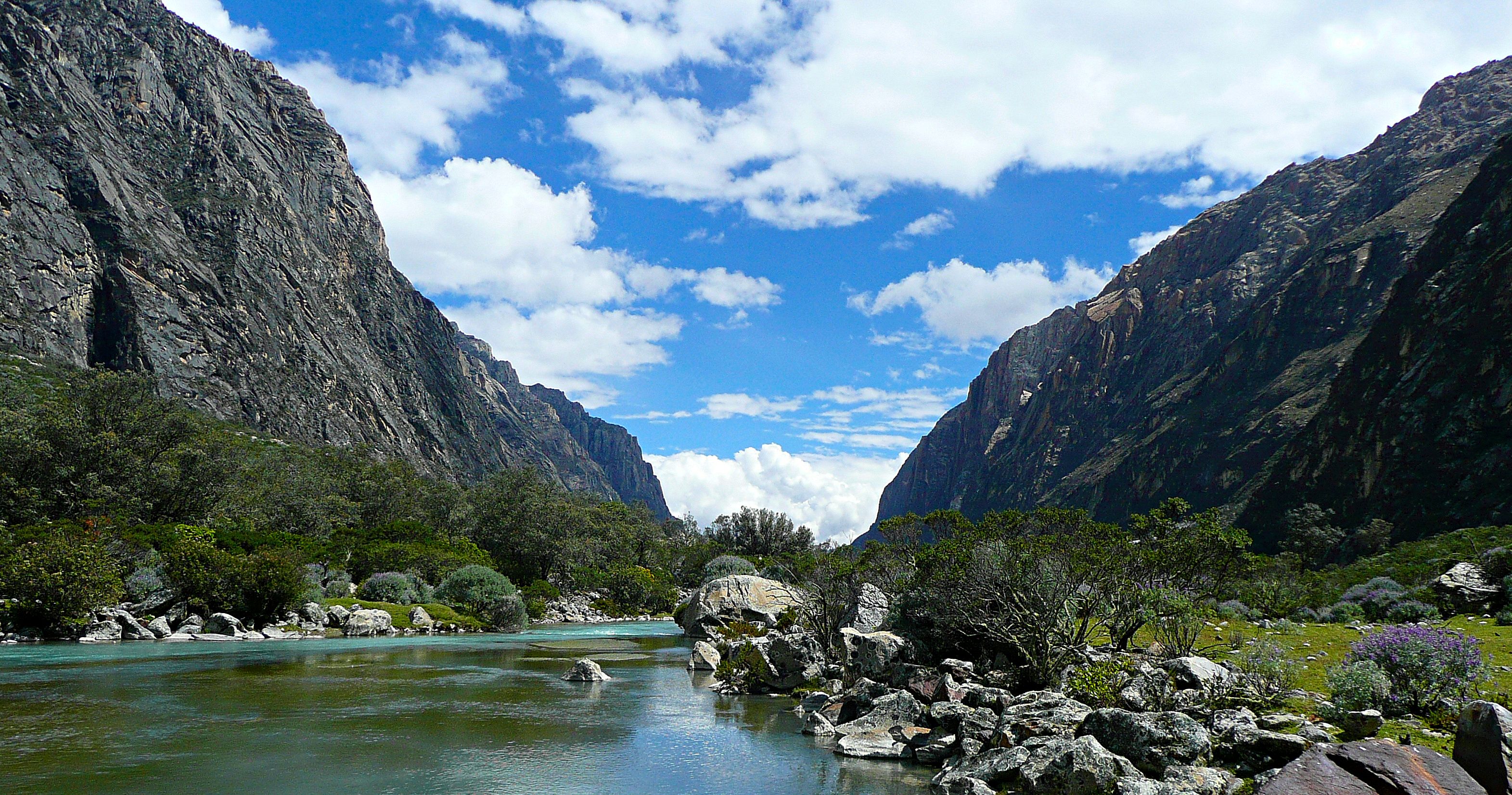 ↑ Orconcocha & Polylepis weberbaueri forest, Lagunas de Llanganuco, Cordillera Blanca, Ancash, Peru ↑
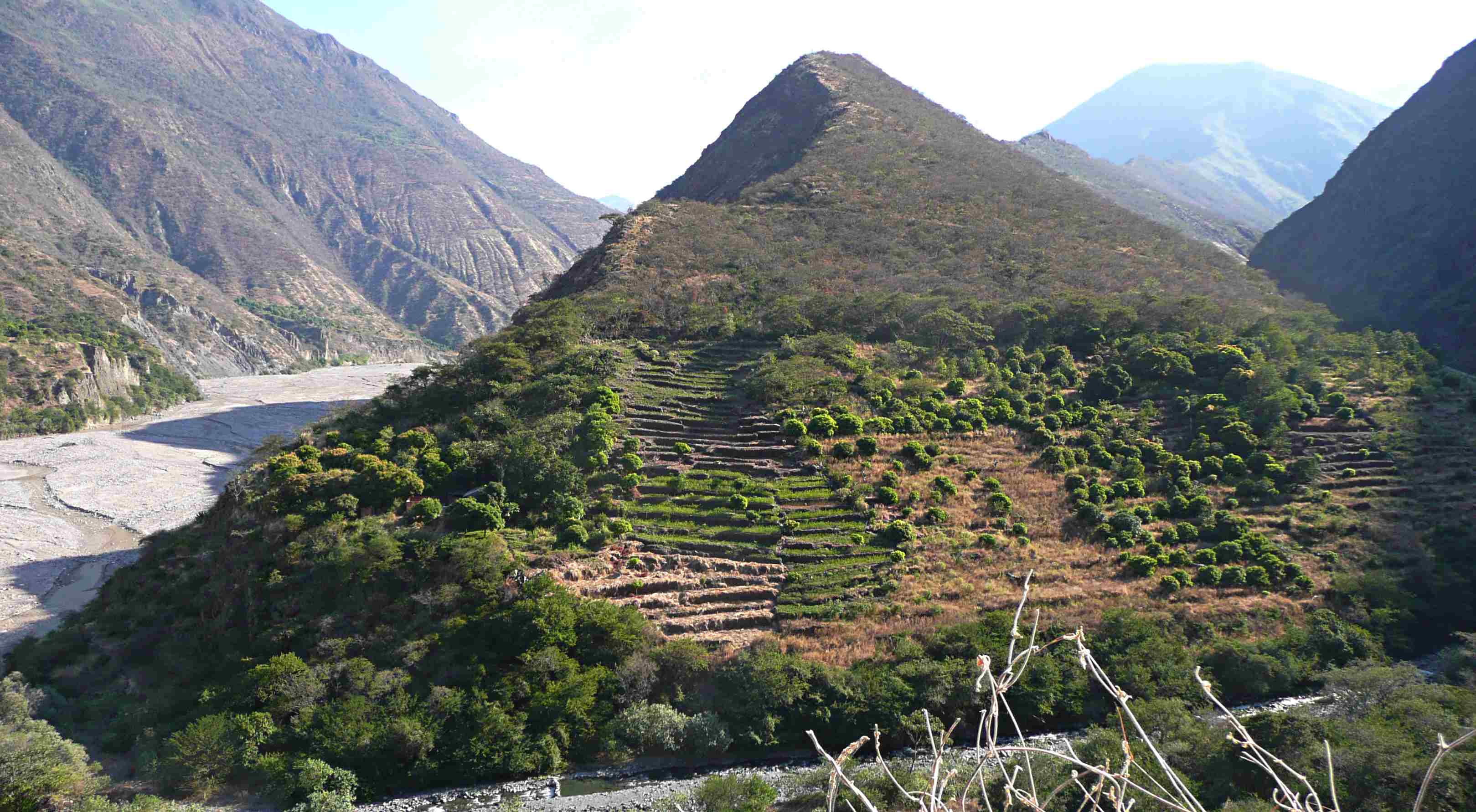 ↑ Anadenanthera dry-forest and ancient terracing still in use, Pasto Grande, Yungas, Bolivia ↑
_______
You should check out our compadre Neil Logan’s work with Regenerative Agroforestry Systems: https://www.agroforestry.com/press-release
Our compadre Neil Logan, ethnobotanist and agroforester extraordinare, has helped develop a highly useful free online platform Agroforestry Design Tool™ (see www.AgroforestryX.com ) With roots in the indigenous agricultural systems of Pacific Islands and tropical world, the Agroforestry Design Tool™ helps you to customize an agroforest for a particular site and goals in an easy-to-follow framework. This tool also has untapped potential for use in other biomes and for restoration design, contact Neil to discuss possibilities: farmcenter2015@gmail.com
~~~~
♥ Our deepest gratitude for your support! ♥
♥
Sacred Succulents
P.O. Box 781, Sebastopol, CA 95473 USA
benkamm@monitor.net
((((((( Plant seeds. Plant lots of seeds. Plant them without fear. Plant them with love. )))))))
♣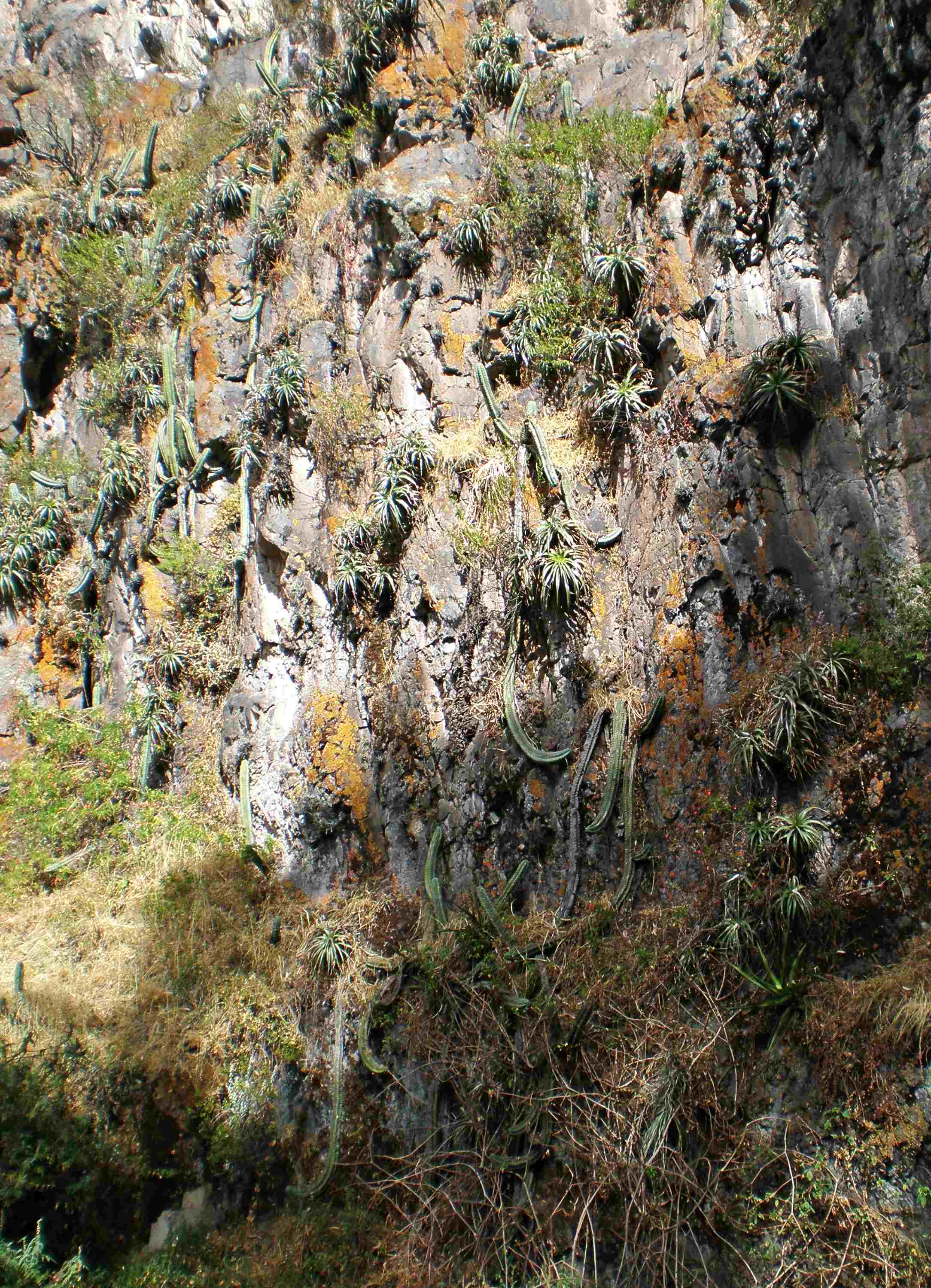 ↑ Trichocereus peruvianus and Puya, above Matucana, Huarochiri Prov., Lima Dept., Peru ↑
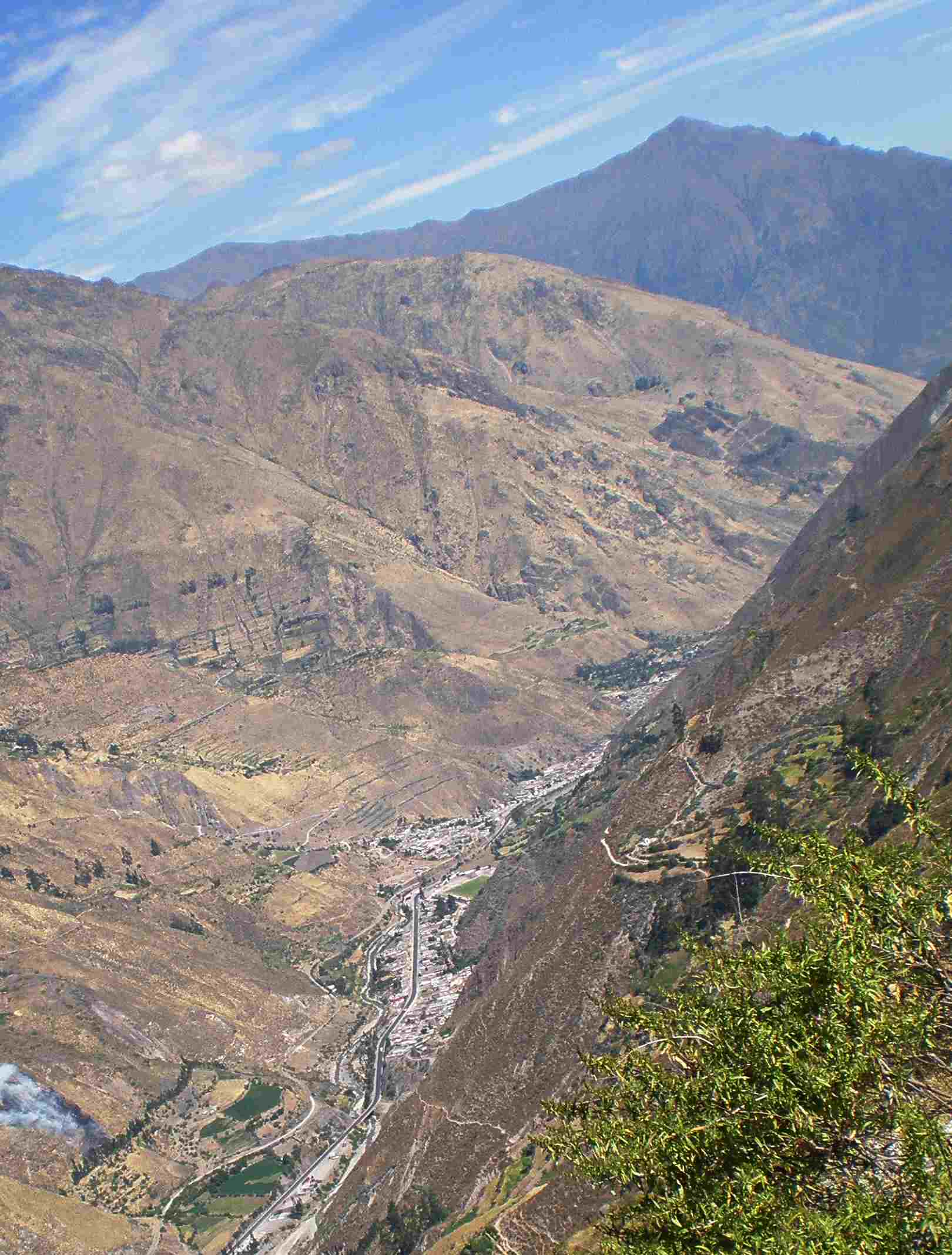 ↑ Looking down on the town of Matucana, Huarochiri Prov., Lima Dept., Peru ↑
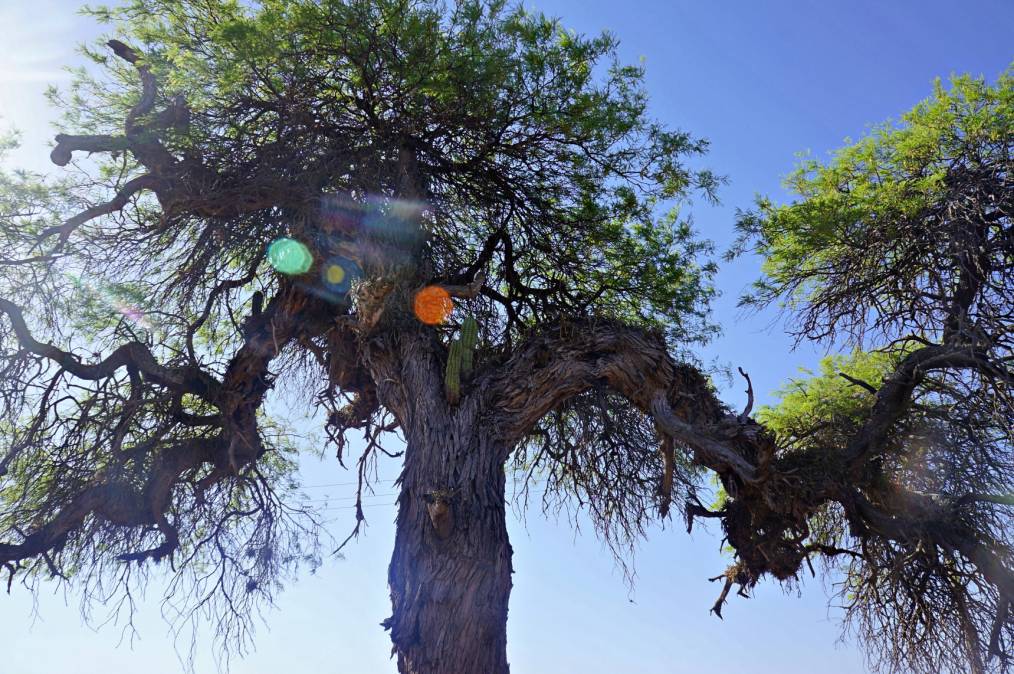 ↑ Ancient Prosopis with Trichocereus terscheckii growing in its branches, south Salta, Argentina ↑
___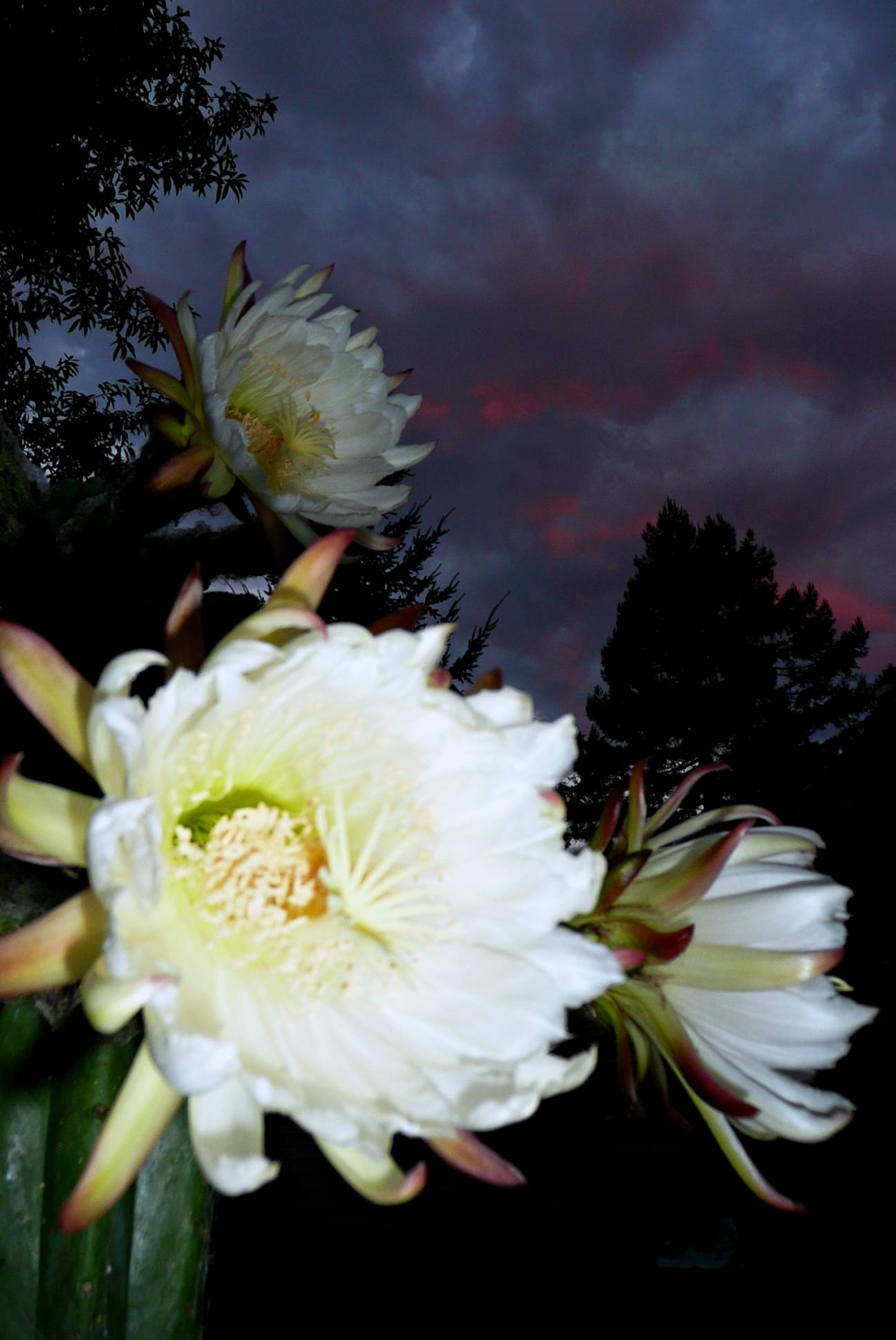 A good night with Huachuma, Trichocereus pachanoi
♥
For those interested in our idiosyncratic writing and musing on all manner of topics beyond the botanical, check out and subscribe for free to our new Substack: https://benkamm.substack.com/about
© Unless noted otherwise, all sacredsucculents.com web text and images copyright Ben Kamm ©